Archive | April 2021

Łamanie praw człowieka, o którym nikt nie mówi

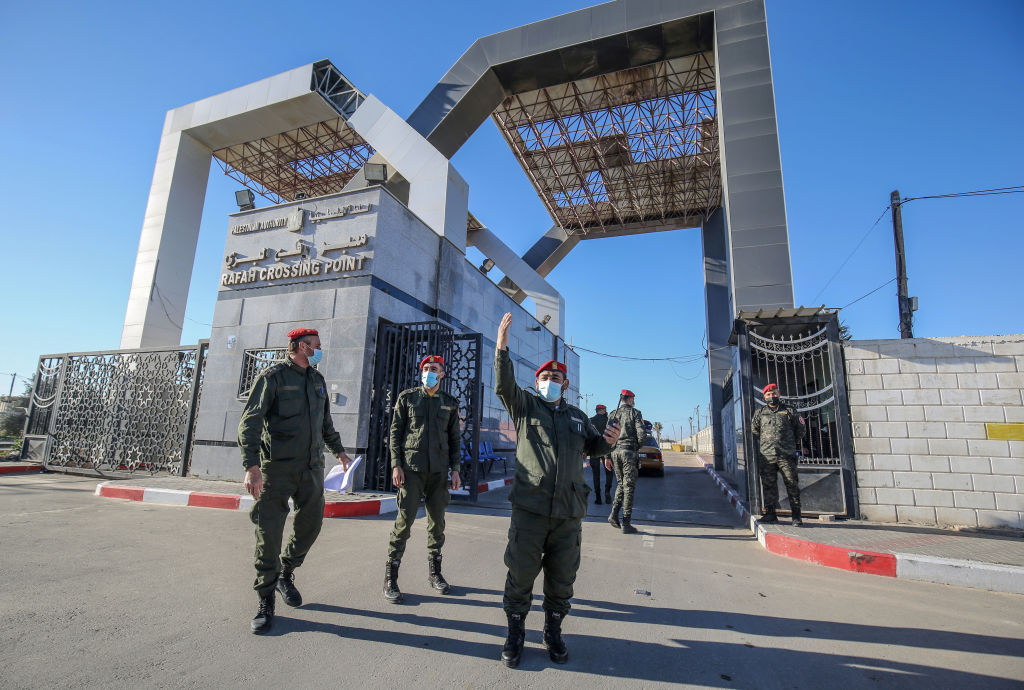
W zeszły miesiącu kontrolowany przez Hamas Palestyński Urząd Zarządzania Ziemią w Strefie Gazy “usunął” trzy domy, zrównał buldożerami około 30 dunamów (30 tysięcy metrów kwadratowych) ziemi rolnej i zawiadomił kilku farmerów, że skonfiskuje ich ziemię w celu rozbudowy przejścia granicznego Rafah do Egiptu. Na zdjęciu: wojownicy Hamasu na przejściu granicznym Rafah w Gazie, 1 lutego 2021 roku. (zdjęcie: Said Khatib/AFP via Getty Images)


Łamanie praw człowieka, o którym nikt nie mówi

Khaled Abu Toameh
Tłumaczenie: Małgorzata Koraszewska


3 stycznia 2021 roku kontrolowany przez Hamas Palestyński Urząd Zarządzania Ziemią w Strefie Gazy “usunął” trzy domy – w jednym z nich mieszkała trójosobowa rodzina – i zniszczył buldożerami około 30 dunamów (30 tysięcy metrów kwadratowych) ziemi rolnej w osiedlu as-Salam na zachód od przejścia granicznego z Egiptem, Rafah.

Decyzja zburzenia domów i zrównania pól – która przyszła niemal bez uprzedzenia i nie obejmowała bezpośredniej informacji do ludzi tym dotkniętych – spowodowała finansowe szkody i wysiedlenie kilku rodzin Palestyńczyków z ich domów, jak informuje mieszczące się w Gazie Centrum Praw Człowieka Al Mezan.

“Decyzja wywołała publiczne oburzenie, a niektórzy protestujący starli się z policją [Hamasu]” – powiedziało Centrum.

“Dziewięcioro protestujących, w tym trzy kobiety, odniosło rany w wyniku pobicia przez policję, a 16 innych aresztowano. W dodatku rany odniosło sześciu policjantów, włącznie z oficerem dowodzącym, kiedy tłum, głównie składający się z osób dotkniętych tym posunięciem, obrzucał ich kamieniami”.

Urząd powiadomił także kilku farmerów o decyzji skonfiskowania ich ziemi dla celów rozbudowy przejścia granicznego Rafah.

To wydarzenie w rządzonej przez Hamas Strefie Gazy, nie pierwsze tego rodzaju, nie przyciągnęło uwagi organizacji praw człowieka ani mediów świata. Społeczność międzynarodowa systematycznie ignoruje takie łamanie praw człowieka, ponieważ dokonują ich Palestyńczycy wobec Palestyńczyków.

Gdyby zburzenia domów, zniszczenie pól uprawnych buldożerami i konfiskaty ziemi dokonał Izrael, wiele organizacji praw człowieka i zagranicznych dziennikarzy wykazałoby olbrzymie zainteresowanie ciężkim losem palestyńskich rodzin i farmerów.

Łamanie praw człowieka dwóch milionów Palestyńczyków w Stefie Gazy przez Hamas, pod którego rządami żyją, nie jest niczym niezwykłym. Od przejęcia siłą władzy w Strefie Gazy w 2007 roku Hamas, odgałęzienie Bractwa Muzułmańskiego, rządził żelazną pięścią, systematycznie rozprawiając się z politycznymi przeciwnikami i krytykami, i dławiąc swobody obywatelskie.

W ostatnich kilku latach Hamas zburzył i skonfiskował domy wielu Palestyńczyków. W zeszłym roku buldożery Hamasu zburzyły dom Mohammeda al-Astala na południu Strefy Gazy twierdząc, że był zbudowany nielegalnie na “państwowej ziemi”.

W zeszłym roku Autonomia Palestyńska (AP) na Zachodnim Brzegu ujawniła, że Hamas planuje skonfiskowanie dużych obszarów prywatnej ziemi w Strefie Gazy. Według AP, Hamas utworzył Palestyński Urząd Zarządzania Ziemią w Strefie Gazy, by ułatwić “kradzież ziemi”.

Po skonfiskowaniu ziemi Hamas ma zamiar zaoferować ją na sprzedaż tym samym właścicielom, powiedziała AP. “Hamas zbierze dziesiątki milionów [jordańskich] dinarów, jeśli uda mu się zrealizować ten plan – powiedziała AP. – Od przejęcia władzy siłą w Strefie Gazy, Hamas kradł ziemię i dawał ją swoim funkcjonariuszom i zwolennikom”.

Propalestyńskie grupy na całym świecie, jak również międzynarodowe media i organizacje praw człowieka całkowicie ignorują tę “kradzież ziemi” przez Hamas. Jeśli łamanie praw człowieka nie zawiera antyizraelskiego aspektu, wielu ludzi w społeczności międzynarodowej woli odwrócić wzrok.

Niedawny raport Centrum Praw Człowieka Al Mezan, także ignorowany przez międzynarodowe media i grupy praw człowieka, wylicza szereg naruszeń praw człowieka w strefie Gazy w 2020 roku.

Raport wzywa Hamas, by kontrolował użycie i szerzenie broni, zapobiegał składowaniu broni i materiałów wybuchowych na gęsto zaludnionych terenach i szanował prawo do tworzenia organizacji obywatelskich oraz przestrzegał prawa do pokojowych zgromadzeń i wolności słowa.

Centrum Al Mezan dokumentuje również w tym raporcie śmierć w 2020 roku co najmniej 30 Palestyńczyków w rozmaitych incydentach “wewnętrznej przemocy” w Strefie Gazy, w tym sześcioro dzieci i czterech kobiet. Kolejnych 155 Palestyńczyków odniosło rany, w tym 17 dzieci i 19 kobiet.

Mówiąc o zakazaniu przez Hamas publicznych zgromadzeń, Centrum podkreśla w raporcie, że jest to “wyraźne pogwałcenie palestyńskiego Prawa Podstawowego”.

Ponadto dowiadujemy się z raportu, że w 2020 roku co najmniej 23 palestyńskich dziennikarzy w Strefie Gazy padło ofiarą rozmaitych incydentów przemocy i zastraszania, włącznie z aresztowaniem, wezwaniem na przesłuchanie i konfiskatą wyposażenia.

Ponadto, jak informują w raporcie, dwóch Palestyńczyków zmarło w więzieniach Hamasu w Strefie Gazy w 2020 roku w wyniku tortur i nieludzkiego traktowania.

13 stycznia Hamas aresztował palestyńskiego dziennikarza, Omaję al-Kahlouta, po tym, jak opublikował on na Facebooku krytykę Hamasu za kroki wymierzone w hodowców drobiu.

Dwa dni później, Hamas zatrzymał palestyńskiego działacza, Sabaha Karibeha, za organizowanie protestu online przeciwko lokalnej firmie telefonów komórkowych. Funkcjonariusze Hamasu skonfiskowali jego telefon komórkowy i laptop zanim wypuścili go za kaucją.

Trwające łamanie praw człowieka przez Hamas pokazuje, że ten ruch islamistyczny nie dba o raporty wydawane przez takie grupy jak Centrum Al Mezan. Władcy Strefy Gazy z Hamasu wiedzą, że mogą nadal robić, co chcą, ponieważ społeczność międzynarodowa reaguje tylko wtedy, kiedy widzi możliwość obwinienia Izraela.

Obecnie, kiedy Palestyńczycy mówią o możliwości przeprowadzenia nowych wyborów prezydenckich i parlamentarnych – w których przywódcy Hamasu wyrazili chęć uczestniczenia – ważne jest zwrócenie uwagi na praktyki Hamasu w Strefie Gazy. Hamas, który w 2006 roku wygrał palestyńskie wybory parlamentarne, ma dużą szansę na kolejne zwycięstwo – jeśli wybory rzeczywiście się odbędą.

W 2006 roku USA i Unia Europejska popełniły błąd przez pozwolenie Hamasowi, którego Karta otwarcie wzywa do unicestwienia Izraela, na uczestniczenie w parlamentarnych wyborach. Jeśli Amerykanie i Europejczycy powtórzą ten błąd, Palestyńczycy na Zachodnim Brzegu dołączą do swoich braci w Strefie Gazy i znajdą się pod władzą represyjnego, islamistycznego reżimu Hamasu, który nie ma żadnego respektu wobec praw człowieka.


Zawartość publikowanych artykułów i materiałów nie reprezentuje poglądów ani opinii Reunion’68,
ani też webmastera Blogu Reunion’68, chyba ze jest to wyraźnie zaznaczone.
Twoje uwagi, linki, własne artykuły lub wiadomości prześlij na adres:
webmaster@reunion68.com



Israel needs to stop the chatter about secret operations – editorial

Israel needs to stop the chatter about secret operations – editorial

JPOST EDITORIAL


Although Israel did not officially accept responsibility, the military censor took the unusual step of imposing no censorship restrictions on local media.

Iran’s Supreme Leader Ayatollah Ali Khamenei delivers a televised speech in Tehran, Iran March 11, 2021. /  (photo credit: OFFICIAL KHAMENEI WEBSITE/HANDOUT VIA REUTERS)

Intelligence sources were quoted by many media outlets as confirming that Israel was behind a cyberattack at the Natanz nuclear facility on Sunday that knocked out power at the plant. The New York Times, for example, quoted two intelligence officials as saying it could take at least nine months to restore Natanz’s uranium enrichment production.

Although Israel did not officially accept responsibility, the military censor took the unusual step of imposing no censorship restrictions on local media, which explicitly credited the Mossad for the covert operation.

IDF Chief of Staff Lt.-Gen. Aviv Kohavi dropped more than a hint when he said in a speech honoring fallen soldiers that “the IDF’s actions throughout the Middle East are not hidden from our enemies’ vision.”

Prime Minister Benjamin Netanyahu appeared to be referring to it when he told an Independence Day toast that “the fight against Iran and its proxies and the Iranian armament is a giant mission. The situation that exists today doesn’t say anything about the situation that will exist tomorrow.”
For his part, Defense Minister Benny Gantz told visiting US Defense Secretary Lloyd Austin in Tel Aviv that Israel views Washington as a key ally against all threats, including Iran. “The Tehran of today poses a strategic threat to international security, to the entire Middle East and to the State of Israel,” Gantz said.

The attack on Natanz appears to have been designed to counter Iran’s efforts to put pressure on the US as it negotiates a return to the 2015 nuclear deal with Iran. It notably came as Austin landed in Israel for the first high-level visit by a member of the Biden administration, and a day after Iranian President Hassan Rouhani inaugurated new centrifuges at Natanz in a ceremony broadcast live on television.

It also occurred after nuclear talks in Vienna by delegates from Iran, China, France, Germany, Russia and the United Kingdom concluded what was termed a “constructive” opening week on Friday. They are scheduled to resume on Wednesday.

On the one hand, the Natanz attack is an important development, as is the message conveyed to the Iranians and the Americans. Iran’s nuclear plans must be stopped, the US should be paying attention, and international powers must not give Iran whatever it wants in the nuclear negotiations.
On the other hand, we are concerned about the blatant leaks and media reports and credit fights between the Mossad, the IDF and the political echelon. And we cannot but ask: How does all this benefit Israel?

In the past, classified operations were kept under wraps, allowing Israel to operate with impunity and carry out successful missions without claiming responsibility for them.

Dramatic strikes that “according to foreign reports” were carried out by Israel against targets such as Syria’s nuclear facility in 2007 are a good example for when officials kept silent and there were no deliberate leaks to the media.

Another example is the series of Stuxnet attacks uncovered more than a decade ago that caused substantial damage to Iran’s nuclear program. While neither Israel nor the US openly admitted responsibility, the cyber-weapon behind Stuxnet was “widely understood” to have been built jointly by both countries in a collaborative effort known as the “Olympic Games.”

In all these examples, the people who needed to know – Israel’s enemies – knew, but Israeli officials stayed mum to give the country the ability to maneuver and follow a policy of deliberate ambiguity.

Leaking reports of a cyberattack – or any other clandestine operations, for that matter – on the same day as the incidents themselves is a clear break with tradition. And if politicians talk, then it’s also difficult to separate the attack from the political mess the country is currently facing.

Of course, there is also the danger of Israel’s enemies not only pointing a finger at the Jewish state, but also threatening and carrying out retaliatory action. Iran’s Nournews website said the person who caused the electricity outage had been identified, and “necessary measures” were being taken.

Israeli officials may have gone too far this time in saying too much, too soon. We urge them to reinstate the dictum made famous by The Good, the Bad and the Ugly: “When you have to shoot… shoot! Don’t talk.”


Zawartość publikowanych artykułów i materiałów nie reprezentuje poglądów ani opinii Reunion’68,
ani też webmastera Blogu Reunion’68, chyba ze jest to wyraźnie zaznaczone.
Twoje uwagi, linki, własne artykuły lub wiadomości prześlij na adres:
webmaster@reunion68.com


German Foreign Minister Rebuked After Saying Sabotage of Iranian Nuclear Facility ‘Not a Positive Contribution’

German Foreign Minister Rebuked After Saying Sabotage of Iranian Nuclear Facility ‘Not a Positive Contribution’

Algemeiner Staff


German Foreign Minister Heiko Maas speaks during a joint news conference with his Russian counterpart Sergei Lavrov, following a meeting in Moscow, Russia, May 10, 2018. Photo: Reuters / Sergei Karpukhin.

The foreign minister of Germany was criticized on Monday after he expressed disapproval of the sabotaging over the weekend of Iran’s Natanz nuclear facility, which has been widely attributed to Israel.

The details of the Natanz incident remain unclear, but reports indicate that it involved a systemic power failure caused by a massive cyber-attack, resulting in serious damage to the facility. There were no casualties in the incident.

The Iranian regime blamed Israel for the attack, which it called “nuclear terrorism,” and said it would take revenge.

On Monday, the Associated Press reported that German Foreign Minister Heiko Maas said the Natanz incident was “not a positive contribution” to the diplomatic process underway in Vienna, where the US and Iran are holding indirect talks on a possible return to the 2015 nuclear deal from which former president Donald Trump withdrew in 2018.

Abraham Cooper, Associate Dean of the Simon Wiesenthal Center, criticized Maas and the diplomatic process, telling The Algemeiner, “Foreign Minister Maas is 100% correct. The sabotage won’t help talks whose main agenda is to get rid of tough sanctions on Iran.”

“This is a regime that has violated the nuclear agreement time and time again, threatens genocide against Israel, poses an existential threat to the Gulf States, and blatantly puts in place a spy/terror network across Europe,” he noted of Iran.

“The sabotage at the nuclear facility was only necessary because European powers have blinked every time Tehran advances its nuclear weapons development,” Cooper asserted. “Germany has made it abundantly clear that its deep economic ties with Iran override all other concerns.”

Hillel Neuer, head of the NGO UN Watch, also criticized Maas, saying, “While the foreign minister speaks officially for the German government, I know many German people who do understand the murderous nature of the Iranian regime and think otherwise than Mr. Heiko Maas.”

Meanwhile, the Biden administration appeared to back away from the fallout over the Natanz incident.

According to Axios, a senior White House official said, “We have seen reports of an incident at the Natanz enrichment facility in Iran. The United States had no involvement, and we have nothing to add to speculation about the causes.”


Zawartość publikowanych artykułów i materiałów nie reprezentuje poglądów ani opinii Reunion’68,
ani też webmastera Blogu Reunion’68, chyba ze jest to wyraźnie zaznaczone.
Twoje uwagi, linki, własne artykuły lub wiadomości prześlij na adres:
webmaster@reunion68.com

Palestyńczycy: Co znaczy prawdziwa edukacja

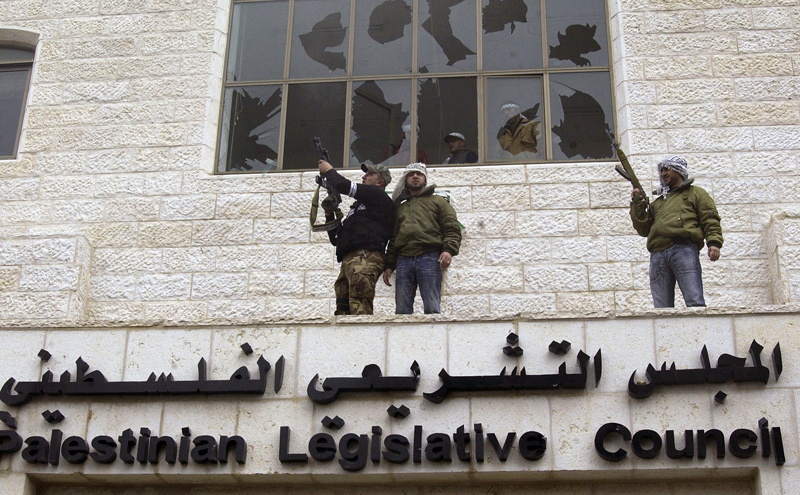
Wybory do palestyńskiej Rady Legislacyjnej wyznaczono na 15 maja 2021 roku. Poprzednie wybory w 2006 roku wygrał Hamas. W obecnej sytuacji, kiedy antyizraelskie nastroje są skrajnie wysokie, można zastanawiać się, czy przeprowadzenie wyborów teraz jest dobrym pomysłem. Z pewnością tylko jeszcze bardziej wzmocnią radykalny obóz wśród Palestyńczyków. (Zdjęcie: Zharan Hammad/Getty Images)


Palestyńczycy: Co znaczy prawdziwa edukacja

Khaled Abu Toameh Tłumaczenie: Małgorzata Koraszewska


Ostatnie palestyńskie wybory parlamentarne, przeprowadzone 25 stycznia 2006 roku, dały zwycięstwo Hamasu, islamistycznego ruchu, który panuje w Strefie Gazy. Kolejne wybory parlamentarne są wyznaczone na 15 maja 2021 roku, chociaż parlament, znany jako Palestyńska Rada Legislacyjna (PLC) był wybrany na czteroletnią kadencję.

Zwycięstwo Hamasu w 2006 roku wywołało zażarty spór z frakcją Fatah prezydenta Autonomii Palestyńskiej, Mahmouda Abbasa, skutecznie paraliżując PLC i tworząc dwa odrębne minipaństwa dla Palestyńczyków – jedno na Zachodnim Brzegu i drugie w Strefie Gazy.

Hamas wygrał w 2006 roku głównie dlatego, że jego kandydaci startowali z listy o nazwie Blok Zmiany i Reformy.

Hasłem listy było: “Islam jest rozwiązaniem; jedna ręka buduje, druga stawia opór”. Hamas w programie wyborczym obiecywał zwalczać wszystkie rodzaje korupcji i “uczynić islamskie prawo [szariatu] głównym źródłem legislacji w Palestynie”. Ponadto zobowiązywał się do “użycia wszystkich metod, włącznie ze zbrojnym oporem” przeciwko Izraelowi..

Dzięki tym obietnicom Hamas zdobył 74 ze 132 miejsc w PLC. Jego rywale z Fatahu zdobyli 45 miejsc.

Wyniki wyborów 2006 roku pokazały, że większość Palestyńczyków w pełni popierała wezwanie Hamasu do zakończenia korupcji Autonomii Palestyńskiej, narzucenia islamskiego prawa i, co najważniejsze, kontynuowania walki zbrojnej przeciwko Izraelowi.

Hamas uzasadniał swoją decyzję uczestniczenia w wyborach tym, że było to w kontekście jego “wszechstronnego planu wyzwolenia Palestyny”.

Zwycięskim przesłaniem Hamasu do Palestyńczyków było wówczas: nasze uczestnictwo w wyborach nie znaczy, że uznajemy Umowy z Oslo i prawo Izraela do istnienia. Jest to tylko krok ku osiągnięciu celu wyzwolenia całej Palestyny od rzeki Jordan do Morza Śródziemnego.

Hamas nie uznaje prawa Izraela do istnienia. Zbojkotował pierwsze parlamentarne wybory w 1996 roku pod pretekstem, że głosowanie odbywało się pod parasolem Umów z Oslo, podpisanych trzy lata wcześniej między OWP a Izraelem.

Hamas nadal jest przeciwny Umowom z Oslo, ponieważ nie wierzy w żaden proces pokojowy z Izraelem. Jak bowiem może Hamas zaakceptować jakikolwiek proces pokojowy, skoro jego Karta otwarcie wzywa do unicestwienia Izraela?

Polityczny program Fatahu także obiecywał “całkowite zakończenie wszelkiego rodzaju korupcji i nadużyć władzy”. Fatah jednak nie obiecywał “walki zbrojnej” przeciwko Izraelowi ani narzucenia islamskiego prawa jako “głównego źródła legislacji w Palestynie”.

Palestyńczycy nie uwierzyli słowom Fatahu o zakończeniu korupcji: widzieli jak przywódcy Fatahu wzbogacili się po ustanowieniu Autonomii Palestyńskiej w 1994 roku dzięki setkom milionów dolarów, którymi zasypywali ich USA, Unia Europejska i inni zachodni darczyńcy bez żądania jakichkolwiek sprawozdań i odpowiedzialności.

Chociaż Fatah używał ostrej, antyizraelskiej retoryki w swoim programie wyborczym, niemniej Palestyńczycy woleli Hamas. Powodem, dla którego Fatah w odróżnieniu od Hamasu nie mówił o “wyzwoleniu całej Palestyny” ani nie obiecywał rozpoczęcia walki zbrojnej przeciwko Izraelowi, jest to, że jego przywódcy obawiali się, że USA i UE zatrzymają finansową pomoc.

Wszystko, co Fatah powiedział wówczas, to że Palestyńczycy są “uprawnieni do opierania się okupacji zgodnie z międzynarodowymi konwencjami”.

Te niejasne słowa o antyizraelskim “oporze” nie wystarczyły, by przekonać większość Palestyńczyków do głosowania na Fatah. Gdyby Fatah wspomniał “zbrojny opór” w swoim programie wyborczym, udałoby mu się zdobyć poparcie większej liczby wyborców.

Kolejna lista, która stanęła do wyborów 2006 roku nosiła nazwę Trzecia Droga. Na jej czele stał Salam Fajjad, który miał doktorat z ekonomii z University of Texas w Austin. Lista Fajjada zdobyła zaledwie 2,41% głosów w wyborach parlamentarnych 2006 roku. Fajjad był potem premierem Autonomii Palestyńskiej w latach 2007- 2013.

Dlaczego Trzecia Droga zdobyła tak mało głosów? W odróżnieniu od większości kandydatów z list Fatahu i Hamasu, Fajjad nie brał udziału w antyizraelskich działaniach terrorystycznych; co najważniejsze, nigdy nie spędził ani jednego dnia w więzieniu. Dla wielu Palestyńczyków jest dużo ważniejsze być absolwentem izraelskiego więzienia niż absolwentem University of Texas.

Program wyborczy Fajjada skupiał się na potrzebie “zakończenia anarchii w dziedzinie bezpieczeństwa i chaosie w sprawie broni, zbudowanie silnych i profesjonalnych sił bezpieczeństwa i zrealizowanie programu reform” w instytucjach AP.

Innymi słowy, Fajjad obiecywał rozwiązanie zbrojnych gangów i milicji przemierzających palestyńskie ulice i zapewnienie, że siły bezpieczeństwa będą działać zgodnie z prawem. Najwyraźniej te obietnice nie były atrakcyjne dla przeważającej większości Palestyńczyków.

Palestyńczycy, którzy nie głosowali na Trzecią Drogę Fajjada, mówili w rzeczywistości, że sprzeciwiają się rozbrojeniu zbrojnych grup Fatahu i Hamasu.

Jeśli Fajjad zdecyduje się kandydować w wyborach parlamentarnych 22 maja z tym samym programem, nie jest prawdopodobne, by otrzymał więcej głosów niż w 2006 roku. Właściwie jest całkowicie możliwe, że otrzyma mniej głosów niż wtedy. Każdy Palestyńczyk, który tak jak Fajjad, stanie do wyborów z platformą mówiącą o pokoju i koegzystencji z Izraelem, przegra.

Jak może kandydat, który głosi normalizację stosunków i pokój z Izraelem, wygrać w czasie, kiedy Palestyńczycy są codziennie radykalizowani (przez swoich przywódców)? Jak może jakikolwiek kandydat, który nie siedział w izraelskim więzieniu, wygrać w czasie, kiedy palestyńscy więźniowie w Izraelu są gloryfikowani przez palestyńskich przywódców jako “bohaterzy“?

Czy jakikolwiek kandydat może stanąć w centrum Ramallah, de facto stolicy palestyńskiej, i mówić o promowaniu pokoju i normalizacji stosunków z Izraelem? Każdy kandydat, który zrobiłby to, miałby szczęście, gdyby nie został potępiony jako zdrajca – albo gorzej.

Jedynym sposobem wydobycia się z tego bagna jest edukacja. Prawdziwa edukacja zaczyna się w domu, niekoniecznie w klasie szkolnej. Prawdziwa edukacja zaczyna się wraz z tym, co rodzice przekazują swoim dzieciom. Prawdziwa edukacja zaczyna się od tego, co dziecko widzi i słyszy w swoim środowisku domowym. Prawdziwa edukacja zaczyna się od tego, co przywódcy i media mówią dzieciom.

Codzienne antyizraelskie podżeganie w mediach, meczetach i w słowach palestyńskich przywódców wyjaśnia, dlaczego nie ma miejsca dla ludzi takich jak Fajjad w palestyńskim dyskursie politycznym.

Palestyńscy przywódcy muszą powiedzieć swojej ludności, że Izrael ma prawo istnieć. Muszą powiedzieć swojej ludności, że pokój i normalizacja stosunków są dobre nie tylko dla Izraela, ale także dla Palestyńczyków. Muszą powiedzieć swojej ludności, że współpraca z Izraelem jest lepsza niż bojkot.

Nazywanie Izraela “syjonistycznym tworem” lub “państwem okupacji” służy tylko dalszej delegitymizacji Izraela i demonizacji Żydów.

Wzywanie do wszystkich form oporu przeciwko Izraelowi uniemożliwia orędownikom pokoju wygranie palestyńskich wyborów. Oświadczenia Fatahu i Hamasu, które wzywają do pozywania Izraelczyków za “zbrodnie wojenne”, oznaczają, że większość Palestyńczyków będzie głosowała na każdą listę, która obiecuje wojnę, a nie pokój z Izraelem. Jedynymi kandydatami, którzy prawdopodobnie wygrają wybory są ci, którzy podżegają do przemocy wobec Izraela.

W obecnej sytuacji, kiedy antyizraelskie nastroje są skrajnie silne, można zastanawiać się, czy przeprowadzenie wyborów teraz jest dobrym pomysłem. Z pewnością tylko jeszcze bardziej wzmocnią radykalny obóz wśród Palestyńczyków.


Zawartość publikowanych artykułów i materiałów nie reprezentuje poglądów ani opinii Reunion’68,
ani też webmastera Blogu Reunion’68, chyba ze jest to wyraźnie zaznaczone.
Twoje uwagi, linki, własne artykuły lub wiadomości prześlij na adres:
webmaster@reunion68.com

Does a Third Lebanon-Israel War Lie Ahead?

Does a Third Lebanon-Israel War Lie Ahead?

Steven Emerson


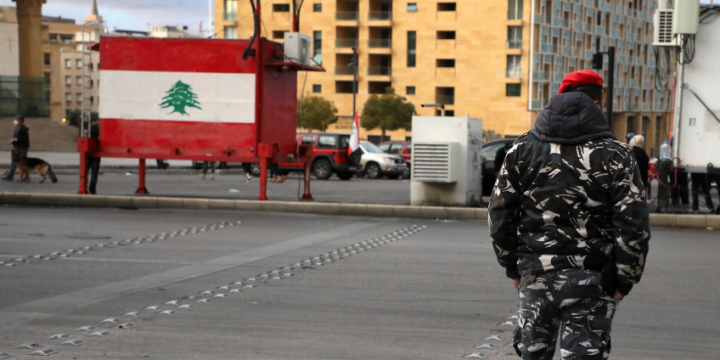
A Lebanese police officer walks in Beirut, Lebanon on March 4, 2021. REUTERS/Mohamed Azakir

Despite a collapsing Lebanese economy and considerable political turmoil, Hezbollah continues to threaten Israel. These threats must be taken seriously, given that Hezbollah — the Iranian-backed proxy army — has an incredible stockpile of long-range, medium range, and short-range missiles that can reach every square inch of Israel.

spoke last Friday with the Middle East Forum about the worst-case scenarios for a conflict between Israel and Hezbollah. The possibilities include a surprise attack by Hezbollah, an Israeli pre-emptive strike, an unplanned escalation, and a multi-front war against Israel. The situation is a powder keg, and one false move could set any of these scenarios in motion.

Israelis understood the surprise attack possibility in 2019, when they discovered several well-built tunnels that started more than a half mile inside of Lebanon, but crossed into Israel. Hezbollah could have used them to attack northern Israeli communities, trying to kill as well as take Israeli civilians hostage. This kind of terrorist attack would have sparked a full-blown war.

Israel already lives under constant threat from Hezbollah’s missile arsenal, much of which has been smuggled into Lebanon and retrofitted with advanced GPS guidance systems.

A multi-front war against Israel appears more possible now that Iraqi militias can use Iranian-supplied missiles, which can strike inside Israel. From the south, Yemeni Houthis now have projectiles capable of reaching Israel’s port city of Eilat along the Red Sea. In Syria, Hezbollah has battle-tested forces capable of attacking, and there are Iranian and Russian weapon systems ready to strike. Finally, Gaza is home to Hamas and Palestinian Islamic Jihad, two terrorist groups that have been firing rockets at Israeli civilian communities for years. If they all acted together, a five-prong multi-front war against Israel is the worst-case scenario.

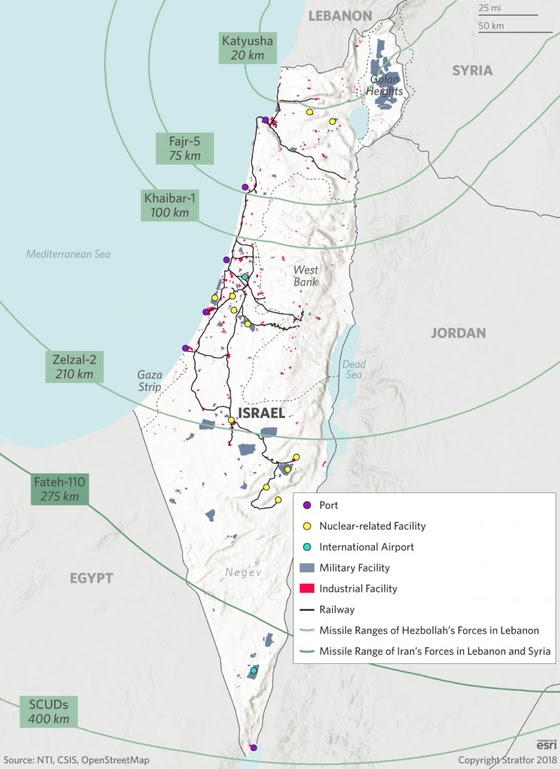
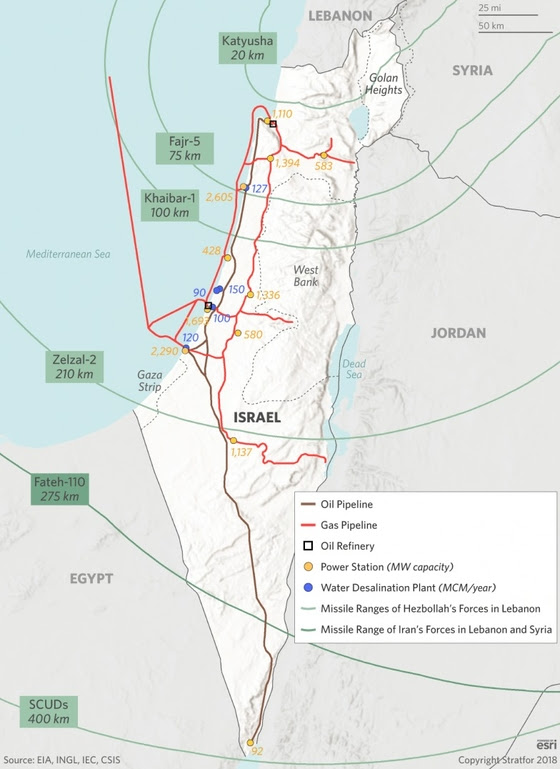
In 2019, Hezbollah leader Hassan Nasrallah went on Hezbollah’s Al Manar television station with his list of Israeli strategic targets that he wants destroyed during the next war with Israel.

These strategic targets include Ben Gurion Airport near Tel Aviv, power plants, water desalination plants, nuclear sites, seaports, gas production facilities and natural gas rigs, petro-chemical production facilities near Haifa, IDF Headquarters/Ministry of Defense in Tel Aviv, air bases, naval bases, army bases, military industries, and important financial and commercial centers.

Source: https://worldview.stratfor.com/article/missile-arsenal-heart-israeli-iranian-rivalry

The 2006 war between Israel and Hezbollah was started after Hezbollah kidnapped two Israeli reservists and killed three others in an unprovoked cross-border raid Hezbollah. This is a perfect example of a war that neither side wanted, but still took place.

During the 34-day war, Hezbollah launched more than 100 rockets per day — for a total of about 4,000 of its estimated 10,000 total rockets and missiles at the time. In the next war, Hezbollah could launch a minimum of 2,000 rockets a day from its 150,000 estimated inventory, a senior IDF official told a Jerusalem conference on March 15.

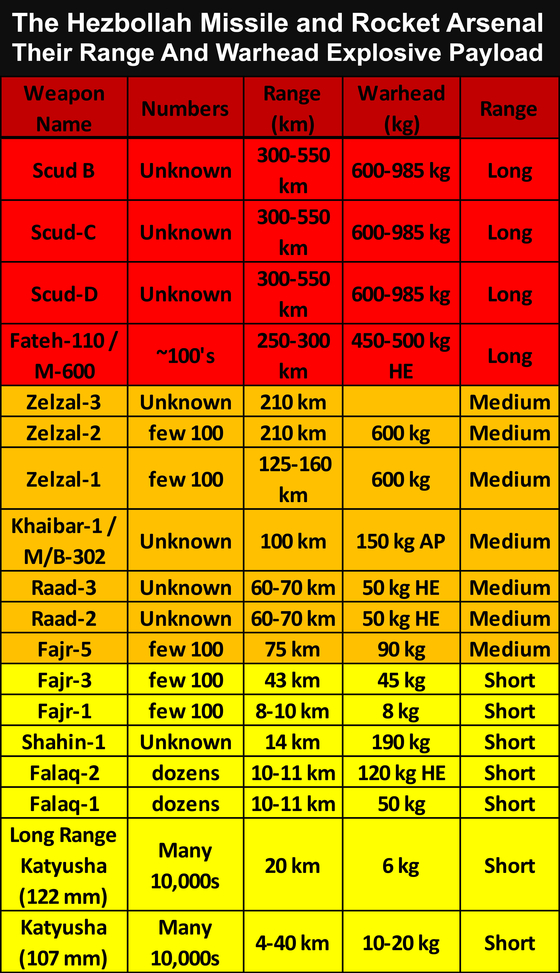
Hezbollah’s arsenal is believed to include 130,000 short range rockets that can travel less than 70 km, about 500 medium range rockets (greater than 70 km and less than 250 km), and about 100 long range rockets (greater than 250 km) missiles. According to a 2018 report from the Jewish Institute for National Security Affairs (JINSA), “Hezbollah now possesses more firepower than 95 percent of the world’s conventional militaries, and more rockets and missiles than all European NATO members combined.”

Analysts believe that Hezbollah has between 500-1,000 precision guided munitions outfitted with enhanced GPS guidance systems that can hit every square inch of Israel, with devastating accuracy.

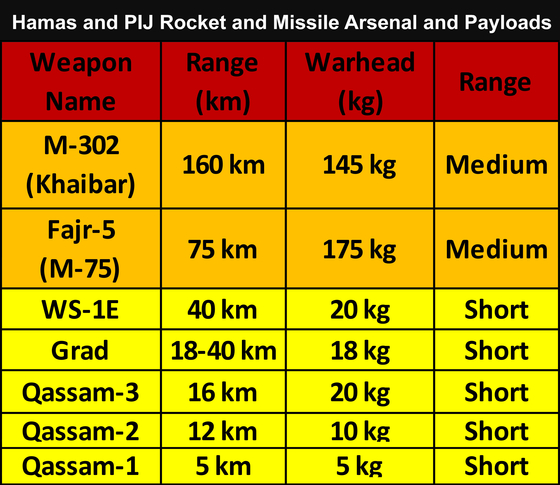
With long range advanced GPS Scud B warheads carrying as much as 2,200 pounds of high grade explosives, these missiles could easily destroy top strategic targets in Israel such as the Dimona nuclear power plant, Ben Gurion Airport, Israeli power plants, Israeli military bases, and sites that could cause massive civilian carnage — all targets that Nasrallah has personally threatened to attack in the next war with Israel. (For comparative damage assessments, the unguided Qassam rockets launched by Hamas carry a payload of only 12 pounds of explosives.)

Additionally, Hezbollah reportedly has several dozen anti-ship missiles, such as the three C-802 anti-ship missiles that they fired at the Israeli Navy ship Hanit during the 2006 war, killing four Israeli sailors.

Source: https://jinsa.org/wp-content/uploads/2018/10/Israels-Next-Northern-War_Operational-and-Legal-Challenges_web.pdf
.

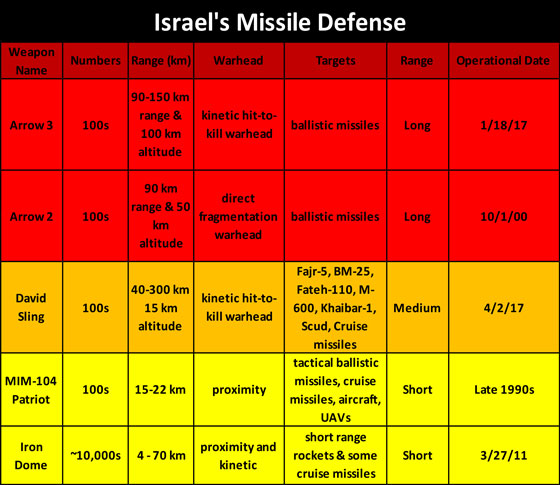
In response to the Hezbollah threat, Israel has a three-tiered system to protect its citizens and its strategic assets. These three tiers include: missile defense, bombing by Israeli Air Force (IAF) fighter aircraft, and civilian bomb shelters. The missile defense tier is a multi-layered missile defense system that includes missile intercept systems like Iron Dome, PATRIOT, David’s Sling, Arrow 2, and Arrow 3 (see graphic for estimated numbers, ranges, type of warhead, targets, range, and the date when the system became operational).

The second tier is the IAF’s fighter jets, which would attack Hezbollah missile launch and storage sites. The IAF has more than 425 fighter aircraft, which including almost 50 new F-35s, 50 F-15s, 25 F-15Es, and 300 F-16s. If war does break out, Israel believes it can hit 3,000 Hezbollah targets per day. Finally, the third layer of Israeli defense would be the civilian bunkers that are in many Israeli homes or part of local city and village infrastructures.

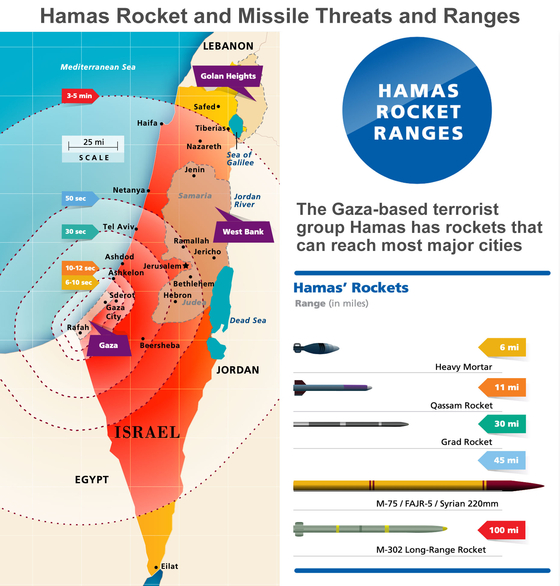
In addition to the massive Hezbollah rocket and missile threat, the Gaza-based terrorist groups Hamas and Islamic Jihad also could attack Israel with their estimated 15,000-20,000 rockets and missiles.

.
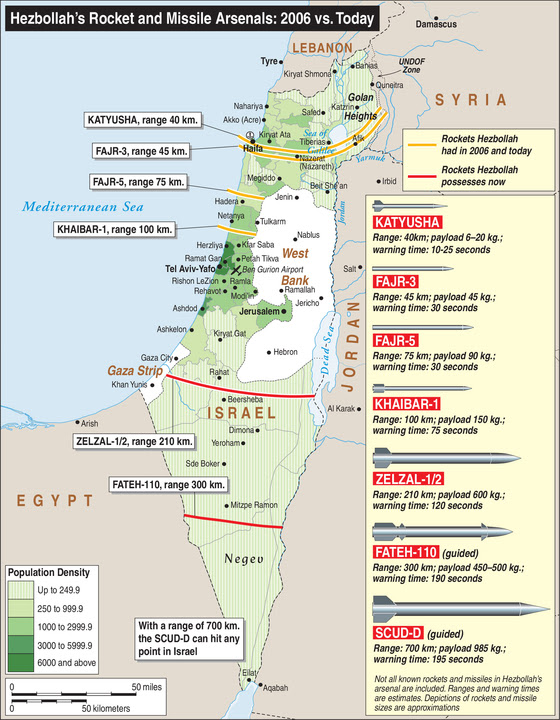
Source: https://aipacorg.app.box.com/s/u1oih9tblawwhzsu1ak6vs83znpu0hky

The map showing ranges and flight times from Lebanon and from Gaza provide an idea of how much time someone in Tel Aviv has to reach shelter once the alarm system detects an incoming rocket. For example, a rocket launched by Hezbollah in Lebanon takes about 75 seconds to hit Tel Aviv, whereas a rocket fired from Gaza takes only 30 seconds. People living close to the northern border of Israel and near the Gaza Strip have only 10-15 seconds to react during a rocket attack.

In response, Israel’s Iron Dome missile defense system would target those rockets heading toward population centers and strategic targets. David’s Sling, with hundreds of interceptors, would target the longer-range rockets and missiles. But, despite their sophistication, those systems would be overwhelmed in a war in which 2,000 missiles were launched into Israel each day.

In May 2019, Hamas and Islamic Jihad launched around 690 rockets and mortars at Israel, with Iron Dome shooting down approximately 240 projectiles. This means that unguided munitions launched from Gaza were about a third on target, or happened to be on target.

Using the same percentages, and assuming the same capabilities, 2,000 Hezbollah rockets per day launched from Lebanon would require about 660 Iron Dome interceptors and an unknown number of David’s Sling interceptors. In the meantime, the IAF would be destroying launchers and missile storage and assembly locations throughout Lebanon. Therefore, the rate of Hezbollah rocket and missile fire would probably decrease over time, especially those with longer ranges. This would force Hezbollah to fire more of its shorter-range rockets, with less effect on strategic targets.

With approximately one-third of all Israelis having bomb shelters in their homes or apartments, the rest would go to local city bomb shelters or to their neighbors’ shelters. In 2006, Israel did not have a missile defense system that would intercept short and medium range missiles and rockets.

The fact that the IAF can strike 3,000 targets per day offers a strong deterrent message to Hezbollah about what a preemptive attack by the IAF could do.

If Hezbollah tried to launch a surprise attack against Israel, in addition to rocket and missile fire, the Iranian-terror proxy could attempt a ground attack to kill or capture Israelis living along the border with Lebanon. Most estimates put the number of active Hezbollah combatants rising from 14,000 in 2006 to 25,000 today, with a reserve force of 20,000-30,000.

Nasrallah has said that he is not interested in a war with Israel at this time. He said that he would not have instigated the 2006 war if he knew the tremendous damage that would be done to Lebanon’s infrastructure. However, Iran could have different plans for Hezbollah.

Beyond missiles and rockets, Hezbollah’s capabilities have increased since 2006. Its fighters helped the Syrian army fight for almost a decade, growing more proficient in combat. The question is whether the new Israeli tank active protection system (called Trophy), that the US Army is purchasing, can protect tanks against the Hezbollah arsenal of a variety of approximately a thousand Russian anti-tank systems (AT-3,4, 5, 13, and 14).

Any escalating conflict would cause significant casualties and a lot of destruction on both sides. The damage from a 34-day war in 2006, when Hezbollah had a fraction of the firepower it can unleash today, makes this reality clear.

There is reason for skepticism that deterrence can work with actors like Nasrallah or Hamas. As for Hezbollah’s ultimate goal, Hezbollah’s stated goal is the same as Iran’s — the destruction of the Zionist state. The only thing stopping Hezbollah right now is that the Israelis have a more powerful military and can inflict more damage against Lebanese infrastructure, for which Hezbollah will be blamed.

Today, Lebanon is suffering the worst economic debacle in its history. The Lebanese currency has been devalued by up to 90 percent in just the last year. Hezbollah is being blamed by much of the Lebanese population for the massive corruption that has led to this unprecedented economic crisis. A war could do further damage to it.


Steven Emerson is the Executive Director of the Investigative Project on Terrorism, where a version of this article originally appeared.


Zawartość publikowanych artykułów i materiałów nie reprezentuje poglądów ani opinii Reunion’68,
ani też webmastera Blogu Reunion’68, chyba ze jest to wyraźnie zaznaczone.
Twoje uwagi, linki, własne artykuły lub wiadomości prześlij na adres:
webmaster@reunion68.com