Archive | April 2021

Facing outcry, Kerry denies he told Iran’s Zarif about Israeli strikes in Syria

Facing outcry, Kerry denies he told Iran’s Zarif about Israeli strikes in Syria

TOI STAFF


Former US secretary of state cites Israeli minister’s 2018 speech mentioning raids, and State Department notes generally that such operations were public knowledge
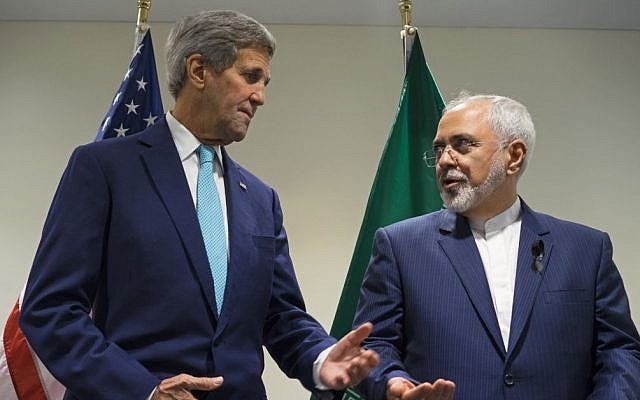
In this photo from Sept. 26, 2015, US Secretary of State John Kerry (left) meets with Iranian Foreign Minister Mohammad Javad Zarif at United Nations headquarters. (AP Photo/Craig Ruttle, File)

Former US secretary of state John Kerry on Monday denied Iranian Foreign Minister Mohammad Javad Zarif’s claim that the top US diplomat told him Israel had carried out 200 strikes on Iranian targets in Syria.

“I can tell you that this story and these allegations are unequivocally false. This never happened — either when I was Secretary of State or since,” Kerry tweeted.

The tweet cited a 2018 article by the Reuters news agency in which then-intelligence minister Israel Katz said that Israel had carried out over 200 airstrikes against Iranian targets in Syria over the previous two years.

Kerry’s denial came amid pressure from some parts of the Republican party after The New York Times published a report on a leaked interview Zarif gave last year.

Finance Minister Israel Katz at Tel Aviv’s Ichilov Medical Center on December 20, 2020 (Miriam Alster/Flash90)

Zarif said that he was often kept in the dark about security matters, and that “to his astonishment,” Kerry told him that Israel had attacked Iranian interests in Syria at least 200 times.

In the recording, Zarif told the interviewer that he hadn’t been told about key issues.

“Kerry has to tell me that Israel has attacked you 200 times in Syria?” said Zarif.

“You did not know?” the interviewer asked twice, according to direct quotes published by the Times for the first time on Monday evening, to which Zarif responded “no, no” on both occasions.

Zarif did not clarify when the purported conversation with Kerry took place. Kerry served as a chief negotiator for the 2015 nuclear deal between Iran and world powers and dealt closely with Zarif over the years.

Israel acknowledges having launched hundreds of strikes in Syria since the start of the civil war there in 2011, aimer to counter Iranian moves to establish a permanent military presence in the country and to transport advanced, game-changing weapons to terrorist groups in the region, principally Hezbollah.

Still, Israel’s official policy is to neither officially confirm nor deny specific operations in Syria, save for those in retaliation for an attack from the country.

US State Department spokesman Ned Price speaks at the State Department in Washington, March 31, 2021. (AP Photo/Carolyn Kaster, Pool)

State Department spokesman Ned Price on Monday noted the widespread reporting on Israel’s strikes and implied that even if Kerry had made the comments, the existence of the strikes was public knowledge.

“I would just make the broad point that if you go back and look at press reporting from the time, this certainly was not secret,” Price said. “And governments that were involved were speaking to this publicly, on the record.”

Some Republican officials attacked Kerry in the wake of the Times report, accusing him of leaking Israeli military secrets. Kerry, who now serves as US President Joe Biden’s special envoy on the climate crisis, was already under fire from the GOP over those policies.

“People are talking about treason — and I don’t throw that word around a lot,” said Alaska’s Sen. Dan Sullivan. “John Kerry does all kinds of things that I can’t stand. But this is the one that broke the camel’s back.”

Nikki Haley, who served as US ambassador to the UN under the Trump administration and is widely thought to be considering a 2024 presidential run, called the reported conversation between Kerry and Zarif “disgusting.”

However, others in the party urged a more cautious approach to Zarif’s comments.

Sen. Lindsey Graham, Republican-South Carolina, speaks during a Senate Judiciary Committee hearing on Capitol Hill in Washington, November 10,2020. (Susan Walsh/AP)

“I don’t know if we should trust that tape or not. If it’s true, it’s very damaging,” said Sen. Lindsey Graham. “I like John Kerry, but that would not be helpful and it would be very problematic if it were true. But let’s wait and see how authentic this is.”

Ahead of Kerry’s public response , Sen. Mitt Romney also said that the matter should be examined in light of the fact it was based only on the Iranian envoy’s comments, Politico reported.

“It’s very troubling, and there needs to be full transparency to understand exactly what was done, by whom, for what purpose, and an accounting of what occurred,” said Romney, a member of the Senate Foreign Relations Committee. “We have one recording by an Iranian official, but this is something that has to be evaluated and looked into.”

The most recent time a high-level US official was accused of divulging Israeli military secrets was 2017, when then-president Donald Trump told Russia of intelligence that reportedly came specifically from a spy embedded in the Islamic State terrorist group on behalf of Israel. The spy was also reportedly a major asset in gaining information on the actions of Iran in Syria — through its Revolutionary Guard Corps and Lebanese proxy Hezbollah. The leak reportedly placed the person’s life at risk and Israeli intelligence officials were said to have been outraged by Trump’s actions.

Zarif made the comments about Kerry in an hours-long taped conversation that took place last March as part of an oral history project. A copy was leaked to the UK-based Persian language news channel Iran International, which is viewed as hostile to Iran and is owned by Saudi Arabians.
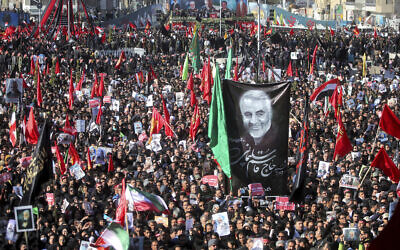
Mourners attend a funeral ceremony for Iranian Gen. Qassem Soleimani and his comrades, who were killed in Iraq in a US drone strike, in the city of Kerman, Iran, January 7, 2020.
(Erfan Kouchari/Tasnim News Agency via AP)

In the interview, Zarif also criticized the power of Qassem Soleimani, saying the assassinated head of the Islamic Revolutionary Guard Corps had been setting Tehran’s policy.

Zarif said that Soleimani had worked with Russia to sabotage the nuclear deal and acted in Syria’s long-running war in a way that damaged Tehran’s interests, as well as undermining him on a number of occasions, the Times reported.

“In the Islamic Republic the military field rules,” Zarif said. “I have sacrificed diplomacy for the military field rather than the field servicing diplomacy.”

The extracts also suggested Soleimani refused to listen to a request by Zarif’s Foreign Ministry that Tehran show less overt support for Syrian leader Bashar Assad, including not using state airline Iran Air to transport military equipment and personnel to Syria and not deploying ground forces to the war-torn country.

Zarif also criticized Soleimani for allowing Russian planes to fly over Iran on their way to bomb Syria.

According to the Times, Zarif could be heard on a number of occasions in the interview emphasizing that his words were not for publication.

Zarif also claimed that Soleimani traveled to Moscow to “demolish our achievement” and try to stop Russia’s support for the nuclear deal struck with world powers.


Zawartość publikowanych artykułów i materiałów nie reprezentuje poglądów ani opinii Reunion’68,
ani też webmastera Blogu Reunion’68, chyba ze jest to wyraźnie zaznaczone.
Twoje uwagi, linki, własne artykuły lub wiadomości prześlij na adres:
webmaster@reunion68.com


TV7 Israel News 26.4

TV7 Israel News 26.4

TV7 Israel News


1) Tensions escalated on Israel’s southern front with the Hamas-controlled Gaza Strip, over the weekend; when Palestinian Islamists launched at-least 45 rockets and mortar-shells toward Israel’s southern communities.

2) The Islamic Revolutionary Guards Quds Force Deputy Commander for Economic Affairs, former Iranian Oil Minister Rostam Ghasemi reveals that the Iranian-backed Houthi militia was the one which targeted Israeli vessels in recent months on Tehran’s behalf.

3) The Iranian-backed Houthi militia in Yemen announced that it “carried out (yet another) attack on the King Khalid Air Base in Saudi Arabia.


Zawartość publikowanych artykułów i materiałów nie reprezentuje poglądów ani opinii Reunion’68,
ani też webmastera Blogu Reunion’68, chyba ze jest to wyraźnie zaznaczone.
Twoje uwagi, linki, własne artykuły lub wiadomości prześlij na adres:
webmaster@reunion68.com


Czy Ameryka nadal stoi za Izraelem? Zapytajcie jego wrogów


Czy Ameryka nadal stoi za Izraelem? Zapytajcie jego wrogów

Vic Rosenthal
Tłumaczenie: Małgorzata Koraszewska


Znów żyjemy w ciekawych czasach. Jest napięcie na północnej granicy, gdzie Iran kontynuuje wysiłki dostarczenia niebezpiecznie celnych pocisków Hezbollahowi w Libanie i buduje bazy w Syrii, podczas gdy Izrael nadal próbuje te dostawy przechwytywać. Niedawno balistyczny pocisk ziemia-powietrze, wystrzelony w kierunku izraelskiego samolotu, nie trafił w cel i kontynuował lot aż w końcu eksplodował kilkaset kilometrów na południe, w pobliżu Dimony (spekulacje, że w rzeczywistości była to próba ataku na ośrodek badań jądrowych, są prawdopodobnie błędne).

Tymczasem negocjacje nuklearne z Iranem posuwają się szybko w kierunku powrotu do oryginalnej, bezwartościowej umowy i do prawdopodobnego zakończenia sankcji – włącznie z sankcjami za terroryzm, które nie są związane z umową.

Prawdopodobnie słyszeliście o rozruchach w Jerozolimie. Zachodnie media (oczywiście) skupiły się na demonstracjach, na których antyarabscy Żydzi skandowali „śmierć Arabom”, ale pominęły lub zminimalizowały fakt, że wywołały je filmy wideo w mediach społecznościowych, które pokazują Arabów bijących i kopiących Żydów Charedim w tramwajach w Jerozolimie. Arabowie od kilku dni organizują rozruchy wokół Starego Miasta, rzucają kamieniami, petardami i koktajlami Mołotowa w policję, atakują żydowskich przechodniów. Widziałem straszne wideo pokazujące grupy młodych Arabów jak otaczają ortodoksyjnych Żydów, bezlitośnie bijąc ich i kopiąc. Z tego, co wiem, nikt jeszcze nie został zabity, ale jeśli rozruchy będą trwały, z pewnością to się zdarzy. Demonstracje solidarności z jerozolimskimi Arabami mają miejsce w innych arabskich miastach.

Jakby tego nie było dość, Hamas i inne frakcje w Gazie zaatakowały wczoraj południowy Izrael gradem co najmniej 36 rakiet i moździerzy. Albo przechwyciła je Żelazna Kopuła, albo spadły na otwarte tereny, z niewielkimi szkodami dla budynków i rolniczego wyposażenia. Pozostaje jednak potencjał do poważnej eskalacji.

Jest Ramadan, więc część z tego jest inspirowana religijnym oburzeniem, że Żydzi mają chucpę istnienia w miejscach, w których muzułmańscy Arabowie uważają, że nie powinno ich być. Wszystkie te zjawiska mają jednak jeden wspólny, wzmacniający czynnik: narastające przekonanie części wrogów Izraela, że Ameryka stoi za nimi, a przynamniej, że Ameryka nie stoi już za Izraelem.

Jasny komunikat wysyła seria mianowań na wysokie stanowiska w USA ludzi o wyraźniej, antyizraelskiej postawie, w wielu sprawach związanych z bezpieczeństwem i polityką zagraniczną – z których najgorszy jest wybór Roba Malley’a jako głównego wysłannika na irańskie rozmowy nuklearne, jak również wznowienie pomocy dla Autonomii Palestyńskiej i toksycznej agencji dla “uchodźców”, UNRWA, oraz ponowne przystąpienie do absurdalnie wręcz antyizraelskiej Komisji “Praw Człowieka”.

Tymczasem coraz potężniejsze lewe skrzydło partii Demokratycznej napręża muskuły: senatorowie Elizabeth Warren i Bernie Sanders, jak również inni Demokratyczni dygnitarze, przemawiali na konwencji J Street, pseudo-“proizraelskiej, propokojowej” organizacji, wzywając do obalenia premiera Netanjahu i ograniczenia militarnej pomocy dla Izraela oraz kłamali twierdząc, że Izrael jest zobowiązany zgodnie z prawem międzynarodowym dostarczyć szczepionek na Covid Palestyńczykom w AP i Gazie. Potępiali również także byłego prezydenta Trumpa za jego proizraelskie działania. Przemówienie Warren było szczególnie ostre.

W kongresie USA reprezentantka Betty McCollum (D, MN) przedstawiła projekt ustawy, która:

Zakazuje Izraelowi używania pieniędzy podatników USA na okupowanym Zachodnim Brzegu i we Wschodniej Jerozolimie do militarnego internowania, maltretowania lub złego traktowania palestyńskich dzieci w izraelskich militarnych ośrodkach internowania; popierania przejmowania i niszczenia palestyńskiej własności i domów wbrew międzynarodowemu prawu humanitarnemu; lub udzielania jakiejkolwiek pomocy lub wsparcia dla jednostronnej aneksji przez Izrael palestyńskiego terytorium w [akcie] łamiącym międzynarodowe prawo humanitarne.  

Szanse uchwalenia tego prawa są mikroskopijne i Kongres już odpowiedział listem podpisanym przez około 330 członków, sprzeciwiających się narzuceniu warunków na użycie pomocy militarnej USA dla Izraela. Niezależnie jednak od tego zaciekle antyizraelski i wręcz antysemicki ton projektu McCollum, wraz z listą jego sponsorów, wskazuje na głębię opozycji wobec Izraela wśród amerykańskich ustawodawców.

Można zrozumieć, jak wszystkie te sygnały są odbierane i rozszyfrowywane w Teheranie, Ramallah i Gazie i jak arabskie media przedstawiają je palestyńskiej ulicy. Sam prezydent Biden powiedział niewiele i jak dotąd, w odróżnieniu od byłego prezydenta Obamy, unikał otwartego konfliktu z izraelskim premierem. Jednak, działania jego administracji i duże frakcje jego partii mówią wystarczająco głośno, a słyszą to i powtarzają ci w regionie, którzy chcą zniszczyć Izrael.

Izraelczycy niepokoją się, że rozruchy w Jerozolimie mogą się rozwinąć w kolejną “intifadę noży” jak w okresie między 2015 a 2018 rokiem, kiedy palestyńscy terroryści zamordowali dziesiątki Żydów. Są powody do obaw, że ogień rakietowy z Gazy rozwinie się w jeszcze jedną wojnę, w której setki rakiet będzie codziennie spadać na izraelskie miasta i wsie, aż do Tel Awiwu. Można wyobrazić sobie, że północna granica wybucha, jak latem 2006 roku; tylko tym razem Hezbollah ma 130 tysięcy rakiet, które mogą uderzyć w każde miejsce w Izraelu. I, oczywiście, widzimy Iran dążący do zdobycia bomb jądrowych pod osłoną międzynarodowego porozumienia, które powoduje, że wszelkie działania Izraela, by temu zapobiec mogą być uznane za niezgodne z prawem.   

Wrogowie Izraela wiedzą, że zachodnie media będą informować o tych wydarzeniach według standardowej już obecnie formuły: “wszystko zaczęło się, kiedy Izrael oddał uderzenie”. Rozruchy w Jerozolimie już przedstawiano jako rzekomo wspierany przez państwo żydowski ekstremizm, zamiast pokazać to, czym były, a mianowicie wybuchem brutalnej arabskiej przemocy wobec “miękkich” celów, które wywołały (rzadkie i powszechnie potępione) żydowskie reakcje. Mogę sobie tylko wyobrazić, jak kolejna wojna z Hamasem lub Hezbollahem byłaby przedstawiana przez “New York Times” oraz CNN i NPR.

Prawdopodobnie pamiętacie te koszulki z obrazkiem izraelskich myśliwców odrzutowych i napisem „Nie martw się Ameryko, Izrael stoi za tobą”. Rzeczywistość była odwrotna, wtedy Ameryka stała za Izraelem. Niestety, tak może już dłużej nie być.


Vic Rosenthal – Urodzony w Stanach Zjednoczonych, studiował informatykę i filozofię na University of Pittsburgh. Zajmował się rozwijaniem programów komputerowych. Mieszka obecnie w Izraelu. Publikuje w izraelskiej prasie. Jego artykuły często zamieszcza Elder of Ziyon.


Zawartość publikowanych artykułów i materiałów nie reprezentuje poglądów ani opinii Reunion’68,
ani też webmastera Blogu Reunion’68, chyba ze jest to wyraźnie zaznaczone.
Twoje uwagi, linki, własne artykuły lub wiadomości prześlij na adres:
webmaster@reunion68.com


Coin from 2nd Temple Mount era found during Tower of David conservation

Coin from 2nd Temple Mount era found during Tower of David conservation

TOBIAS SIEGAL


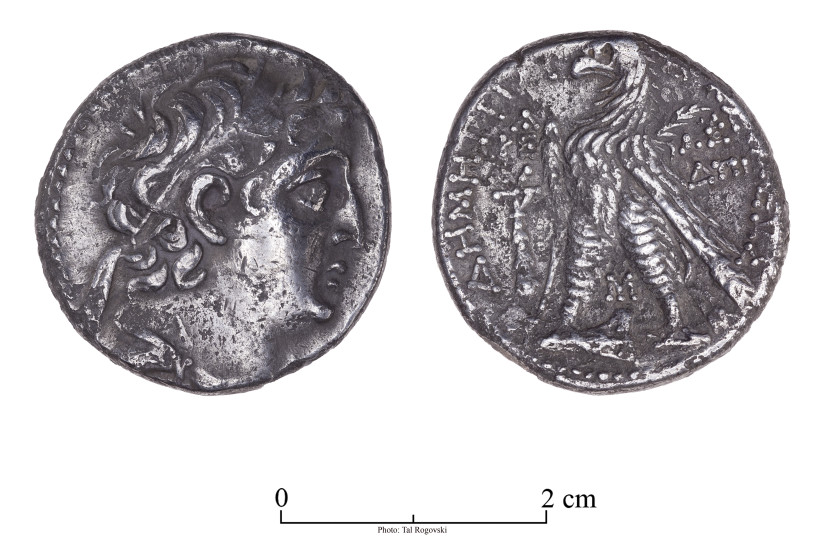
Tyrian shekels are often mentioned in historical accounts from the Second Temple Period, but a very few have actually been found.

The Tyre coin recently discovered at the Tower of David Museum. / (photo credit: TAL ROGOVSKY)

In the midst of one of the most comprehensive conservation projects currently taking place in Israel, archeologists in Jerusalem’s Old City discovered a Tyre coin, believed to have been used to pay the Temple tax by pilgrims making their way to the Temple for Passover, Shavuot or Sukkot.

The ancient coin was found inside a box of artifacts originally excavated in the 1980s, when the last conservation project took place at the site.

The box was somehow lost and only discovered recently as part of a well-needed conservation project currently taking place at the Tower of David Museum.

The box included the rare silver coin, called a “Tyre shekel,” which was used during the Second Temple Period and produced in the ancient city of Tyre, where Tyrian shekels were minted from 125 BCE until the outbreak of the Great Revolt in 66 CE.

Tyrian shekels are often mentioned in historical accounts from the Second Temple Period, but very few have actually been found.
The Tower of David complex, where the exciting finding was made, includes the ancient palace of Herod, where many theologians and historians believe that the trial of Jesus took place. The tallest tower in the complex is called the Phasael Tower, which was the first to be identified as the “Tower of David” in the 5th century CE.

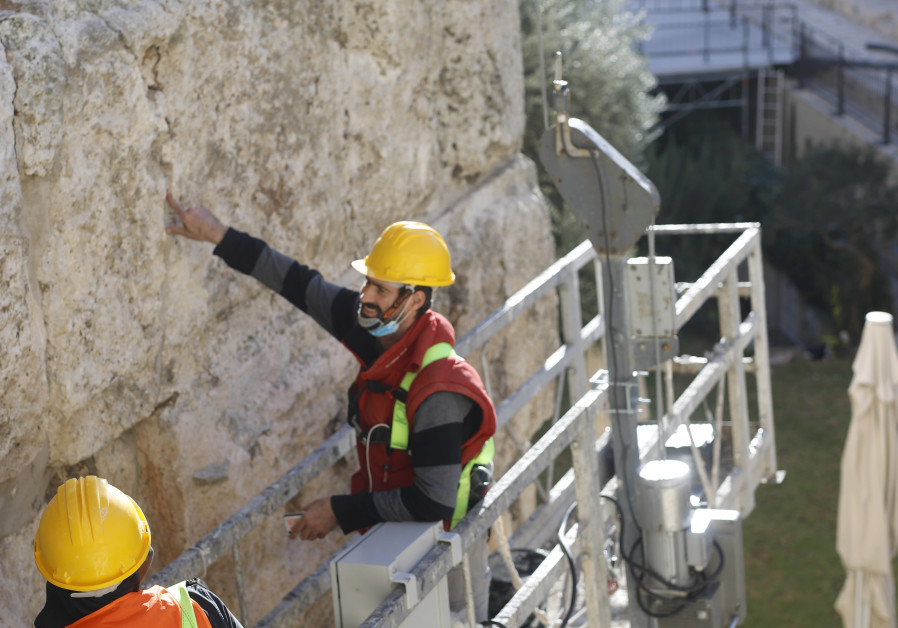
conservation work taking place at the Phasael tower. A wide crack running from top to bottom is threatning the tower’s entire structural integrity. (Credit: Tower of David Museum)

It is that tower that is currently undergoing major conservation. A large crack running from top to bottom is threatening the tower’s entire structural integrity, which has led the conservation team leading the project to expedite its efforts to restore the 2,000-year-old damaged stones.

“The Tower of David is one of the most important structures in Israel, both in terms of its history and location,” said Yotam Carmel, conservation manager at Ken HaTor, the company put in charge of the project. “The last conservation project at the Tower of David was carried out in the 1980s. Since then the citadel has been in desperate need of conservation.”

Eilat Lieber, director and chief curator of the Tower of David Museum, noted the importance of the conservation project for future generations.
“At this holiday time, we are grateful for this unique opportunity to physically preserve the walls and towers of this ancient site that stood during the time of the Second Temple thousands of years ago, helping to preserve and conserve the site so that it continues to be a beacon in Jerusalem for future generations to come,” Lieber said.

The Tower of David Museum, located in the ancient citadel at the Jaffa Gate entrance to the Old City, will remain open for the general public throughout the year, in accordance with Health Ministry guidelines.

The coin that was recently discovered will be displayed next year in a new and permanent exhibit at the museum.


Zawartość publikowanych artykułów i materiałów nie reprezentuje poglądów ani opinii Reunion’68,
ani też webmastera Blogu Reunion’68, chyba ze jest to wyraźnie zaznaczone.
Twoje uwagi, linki, własne artykuły lub wiadomości prześlij na adres:
webmaster@reunion68.com


Orthodox Jewish Rapper Nissim Black on Experiencing Racism and Turning Struggles Into ‘Greatness’

Orthodox Jewish Rapper Nissim Black on Experiencing Racism and Turning Struggles Into ‘Greatness’

Shiryn Ghermezian


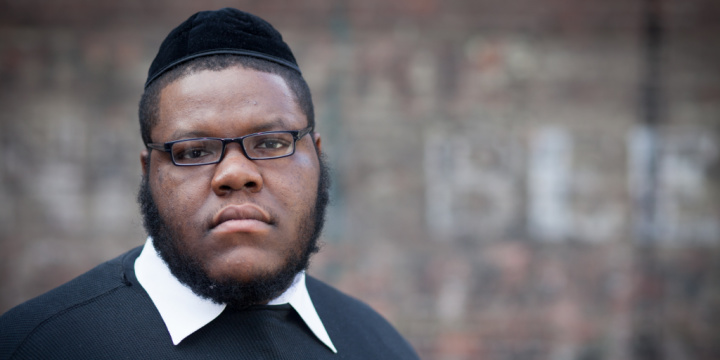
Nissim Black. Photo: Wikimedia Commons.

Rapper Nissim Black spoke about facing discrimination for being a Black Orthodox Jew in a new interview with the Jewish News’ Life Magazine.

A native of Seattle, where his parents were part of the hip-hop scene, Black grew up Muslim and then, after joining a youth group, converted to Christianity. By the age of 19 he was interested in music, but after a friend shot a rival rapper who had disrespected Black, he stepped back to reflect on his life, began praying, and ultimately turned to Judaism.

He and his wife converted in 2012 and made aliyah in 2016. They initially lived in Jerusalem’s ultra-Orthodox neighborhood Mea She’arim, but after some of Black’s six children faced racial prejudice, the family moved to Beit Shemesh.

Asked about the racism he has faced, Black told Life Magazine he had a tough time adjusting to people staring at him. “You know, I don’t think it’s always a bad thing in terms of what they may be thinking, that somebody where I came from decided to become Jewish,” he added.

The musician said he believes there would be more understanding between the Jewish and the African-American communities if they were educated and aware of each other’s strugglesGiving himself as an example, he admitted that he knew nothing about the Holocaust until he was age 20 and starting learning about Judaism. He noted that has also been asked about the African American experience by otherwise educated people.

Black also said he has been approached by people in the Jewish community who voice their concerns to him because they believe he will listen without prejudice. He explained, “They tell me, ‘If we go to a rabbi, they’re going to judge us, but with you I’m comfortable, because I know you’re not going to judge me as you are open about where you came from.’” 

Black said he’s taking all his life experiences and making them work in his favor.

“Everything that’s ‘wrong’ for me — I’ve had all these problems, I’m a ger (convert), I come from the worst of the worst, my parents sold drugs — I’m taking them, and I’m going to make them my greatness.”


Zawartość publikowanych artykułów i materiałów nie reprezentuje poglądów ani opinii Reunion’68,
ani też webmastera Blogu Reunion’68, chyba ze jest to wyraźnie zaznaczone.
Twoje uwagi, linki, własne artykuły lub wiadomości prześlij na adres:
webmaster@reunion68.com