
Archive | January 2022

A Coen Brother’s Brilliant Macbeth

A Coen Brother’s Brilliant Macbeth

DAVID MIKICS
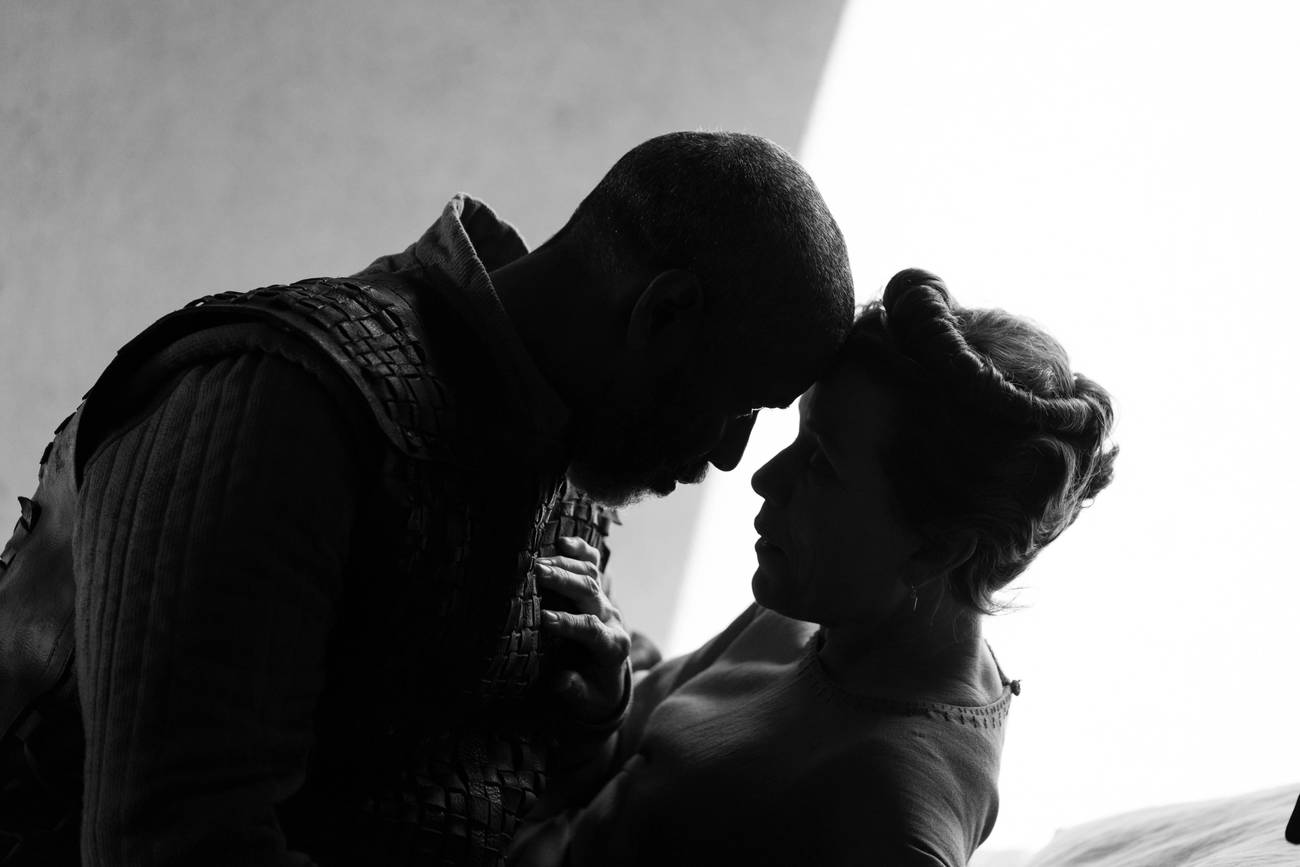

Denzel Washington and Frances McDormand in ‘The Tragedy of Macbeth’A24 FILMS

Joel Coen’s new film is a surprising capstone to the brothers’ razor-sharp oeuvre.

.

The director Sam Raimi once remarked that the Coen brothers’ movies obey three rules—the innocent must suffer, the guilty must be punished, and you must taste blood to be a man. There might be a fourth rule, Raimi added: The dead must walk. Shakespeare’s Macbeth embodies all these traits of the Coen canon. But Joel Coen’s Macbeth goes beyond the movies he made with Ethan, which were infected by a glorious wiseass sensibility. There is no virtuoso madcap side to this Macbeth, and no trace of sarcasm. Here the older Coen brother is as serious as fate itself, and dark as blood. He has made by far the best film Macbeth, outshining the famous versions by Welles and Polanski.

The Tragedy of Macbeth, the first movie directed by Joel without Ethan as producer, will open on Dec. 25. Ethan, now writing plays in LA, has announced that he wants to devote himself to theater rather than cinema. There’s no better time than this to look back on the Coens’ oeuvre—and to gaze more deeply into Joel Coen’s new Macbeth, which turns out to be a surprising capstone to the Coens’ films.

Starting with Blood Simple (1984), these smartass Jewish zanies from Minnesota have been the most happily volatile presence in American movies. Steeped in film noir and with a strong taste for bloodshed, they also inherited Preston Sturges’ roguish screwball talent—but the Coens’ movies have a steel-trap sensibility and a grain of vicious fun that Sturges never possessed. Applying the sadistic acumen of a Road Runner cartoon to grown-up storylines, the Coens were merciless parodists, yet so thorough and pitch-perfect that they seemed to honor their victims, like the Hollywood communists in the underrated Hail, Caesar! or the studio fat cat Jack Lipnick in Barton Fink.

The Coens gave us a series of mocking, spit-polished parables illustrating the symbiosis of three crucial American traits, ingenuity, stupidity, and recklessness. They studied the fablelike lessons told by old Westerns for The Ballad of Buster Scruggs. And they adored the hardboiled novels of James M. Cain, especially Mildred Pierce. Cain’s heroine looks to my mind exactly like Frances McDormand (Joel’s wife), whose tough yet tender small-town vibe is central to so many Coen brothers movies. (The Coens told an interviewer that the façade of Columbia’s Butler Library ought to read “Sophocles … Plato … Aristotle … James M. Cain.”)

The Coens’ movies almost always revolve around a fall guy or shlemiel. Sometimes the shlemiel triumphs in his foolishness (The Big Lebowski, The Hudsucker ProxyO Brother, Where Art Thou?). Other times he ends up a survivor matured by trauma (Barton Fink). Sometimes, like Llewyn Davis or Bernie Birnbaum in Miller’s Crossing, he is a doomed sacrifice or also-ran.

To counterbalance the shlemiel, the Coens often provide a moral compass: Mike Mannix in Hail Caesar!, detective Marge in Fargo, the elderly Black timekeeper in The Hudsucker Proxy (who seems straight from the pages of Ellison’s Invisible Man), the wife in O Brother, Where Art Thou?, Sheriff Ed Tom Bell (Tommy Lee Jones) in No Country for Old Men.

The Coens feel most Jewish when they put together the shlemiel and the moral compass, suggesting that ignorance and wisdom are two sides of life’s coin. In A Serious Man, the Coens’ most overtly Jewish movie, hapless physics professor Larry Gopnik is both shlemiel and highly fallible moral compass.

A Serious Man, “our Jew movie,” as Joel Coen once called it, remains an exception in the Coen canon. The Coens have mostly focused on the classic American gentile fueled by bluff overconfidence. America puts foolishness into overdrive, and the results are sometimes lucky, sometimes not. A hearty idiocy drives the north country murderers of Fargo. The Coens love dumb people, spectacularly in Burn After Reading, that delectable moronic scherzo, but quietly and respectfully in The Man Who Wasn’t There, with its morose existentialist barber Ed Crane (Billy Bob Thornton), a dullard everyman facing the void.

The Coen brothers have at times shown us implacable, force-of-nature serial killers—Mad Man Mundt (John Goodman) in Barton Fink and Anton Chigurh in No Country for Old Men. But for the most part, the Coens’ criminals are bunglers (Raising Arizona, Burn After Reading). Ethan once noted that “in most cases criminals belong to the strata of society least equipped to face life, and that’s why they’re caught so often.”

Enter Macbeth, one of Shakespeare’s more intellectually challenged heroes. Macbeth is a lousy tyrant who can’t get anything right. No one dreads his authority, since he has none—he has only the power to kill, and when that runs out, a fierce willingness to die.

When he wrote Macbeth, Shakespeare invented the gangster movie. And gangsters, as Robert Warshow told us in a classic essay from the 1940s, subvert the American dream. Warshow wrote that “the gangster speaks for us, expressing that part of the American psyche which rejects … ’Americanness’ itself.” America promises that family values, good neighbors, and grabbing the next promotion will make us happy, but such “optimism is fundamentally satisfying to no one,” Warshow adds.

The gangster is never happy—at least not in the movies, where our myths live. High-stakes dissatisfaction fuels him. He must make his mark because either “one emerges from the crowd or else one is nothing,” Warshow writes (true in both Macbeth’s archaic Scotland and Prohibition-era Chicago). Since the gangster’s success is “simply the unlimited possibility of aggression,” with no end in sight, his frustration and death are foretold from the start. He’s trapped, a nothing despite all his firepower. “Even to himself he is a creature of the imagination,” Warshow says of the gangster, perfectly describing Macbeth, that poor player who struts and frets for his allotted time, and then is heard no more.

The Coens have always known that gangsters, nihilism, and loneliness all go together, and that these are the true dark American themes, at the heart of the hardboiled fiction and movies that explode this country’s claim to a perpetual can-do cheerfulness.

Noir skates on the thin ice that separates the ordinary man from an outlandish yet all too real possibility, murder. Like many film noir gangsters, Macbeth is a relative nobody who bursts into the big time—a nondescript thane just doing his brutal job, until the witches come to set him on fire. Then he burns with a visionary torment, and speaks some of Shakespeare’s most staggering poetry.

As Macbeth paces steadily toward Duncan’s murder, a pang of conscience stops him. He fears that

… pity, like a naked newborn babe
Striding the blast, or heaven’s cherubim, horsed
Upon the sightless couriers of the air,
Shall blow the horrid news in every eye,
That tears shall drown the wind.

Such galvanizing poetic lightning can be found outside Shakespeare only in Greek tragedy and the Hebrew prophets. That naked newborn babe strips us bare, too. The only way for Macbeth to recoup this decimated innocence, the wound in nature caused by Duncan’s death, is to press boldly forward to more killings, and rip out all compassion and pity. Blood will have blood.

Visually, the new Macbeth fits into the spare, beautifully bleak strain in the Coens’ work, especially The Man Who Wasn’t There, which like Macbeth is in black and white. Macbeth’s cinematographer, Bruno Delbonnel, gives us a world of bleary opaque whiteness, influenced by Peter Brook’s superstark King Lear but also the complex northern moods of the Danish director Carl-Theodor Dreyer. In Dreyer’s movies characters swim up to the viewer like uncanny ghosts. He holds shots a little too long so he can study how emotions emerge and dissolve in a human face. Like Dreyer’s, Coen’s camera patiently watches his actors’ faces, but Coen also dwarfs their presence with a soaring bizarre German Expressionist architecture borrowed from Fritz Lang’s Siegfried (courtesy of set designer Stefan Dechant).

Joel Coen has acknowledged Dreyer’s influence on his Macbeth, along with that of F.W. Murnau’s Sunrise. When Macbeth (Denzel Washington) returns home from the wars, having sent his wife (Frances McDormand) the letter telling her about the witches’ prophecy, she seems to waken from a healing trance, her face softly glowing. She resembles the Woman in Sunrise happily welcoming her beloved. The fragile health evoked by Murnau turns ill here, for this is Lady Macbeth’s first and last smile.

In their mid-60s, Washington and McDormand are the oldest Macbeths I have seen on either stage or screen. McDormand’s Lady Macbeth is no temptress, and there is no sexual heat between her and Macbeth. Their plot is not an act of passion but a somber duty to themselves—this is their last chance at the throne. Shadowing each other, at one point they touch foreheads affectionately. The mood passes quickly. Soon they will become as numb to each other as a pair of married heroin addicts. The husband and wife end up cordoned off in solitary wretchedness—the misery of killers, let’s not forget. “She should have died hereafter,” Macbeth intones when told of his wife’s suicide, as if she were never really there.

Coen’s Macbeth stays faithful to Shakespeare, with only a few cuttings and pastings. As if to prove this is not a Coen brothers movie, he doesn’t allow anything to become a freestanding tour de force—not the acrobatic contortions of the witches (Kathryn Hunter plays all three) and not the hungover Porter’s stand-up shtick (ably performed by Stephen Root).

Coen’s main innovation is to make the usually faceless Ross a pivotal figure in the story. Here is a man poised between evil and good and finally forced to choose, as if acting out Macbeth’s own early doubt—“I dare do all that may become a man,/Who dares do more is none.” Ross becomes a moral compass, as in earlier Coen movies. Alex Hassell, who plays Ross, wears a short cape resembling an angel’s or perhaps a devil’s wings, lean and sharply defined, slicing through the fog and filthy air of the story. (Mary Zophres’ costumes for the film are artful and pointed throughout.) Banquo, superbly played by Bertie Carvel, bears a more anguished ambivalence, full of foreboding. When Macbeth dandles the head of Fleance, the air is thick with mistrust—this is Banquo’s son, whom the witches have said will become king after Macbeth. Both Ross and Banquo resonate with a dilemma for all eras, including our own: how to react to the tyrant who has power over you, when resisting him would be suicidal, and staying loyal to him an offense to your soul?

Washington’s Macbeth is a man on the brink—resolute, hesitant, trapped by his own boldness. When he recites the “Is this a dagger I see before me” soliloquy, Washington chuckles softly under his breath, steeling himself. He speaks Macbeth’s words rapidly, eschewing the pointed pauses and heavy underlinings most actors embrace in this role. The point is clear: Macbeth is the servant of these words, not their master. Hamlet plays with words, but Macbeth’s words play him. So Denzel says the words swift and lowdown, like a knife to the heart.

This Macbeth is shaky, too, haunted by terror just like the nerdy Barton Fink awakening next to a bloody corpse. “How full of scorpions is my mind, dear wife,” Macbeth broods. He cannot again become the naive bloody soldier he was at the beginning of the play, not even with Lady Macbeth’s help, for she too is haunted. Lady Macbeth would like to resemble Fargo’s Marge, an utterly practical Midwestern spirit, for whom a body in a woodchipper is nothing so special. The Macbeths try to pull the same trick—a dead body is just a dead body. It doesn’t work. The dead will walk.

Washington stays subdued until he launches into reckless fury near the film’s end. Then he vaunts and pivots like a samurai who dares all. With nothing left to lose, he will never know who or what has opposed him, whether the witches were allies or enemies. He strikes out wildly at emptiness. If only there were someone to fight, rather than a hurly burly cosmos signifying nothing.

Finally there is no future, only ceaseless, sleepless tomorrows, exactly resembling the vacant present day. Each noise signals a dreadful monotony. A steady, leaden thumping punctuates Coen’s Macbeth: the thudding of boots, heavy knocking on gates, battleaxes hitting their target. There is also an old Coen brothers effect, the slow ooze of blood dripping from a dead body, tick-tock, and puddling like motor oil—a viscous, mesmerizing token of the fate that plays tricks on you.

Macbeth, his horrid deeds exposed to all, resembles those American bad hombres whose sense of nakedness before cosmic judgment is rooted in our age-old Puritan fear of God. Steve Rojack, the narrator hero of Norman Mailer’s An American Dream, says he was “buried in fear” after killing his wife, since “I no longer had the confidence my thoughts were secret to myself … a killer attracted the attention of the gods; then your mind was not your own, your anxiety ceased to be neurotic, your dread was real.”

An America where dread is real and summed up in the dispossessed mind of the outlaw—perhaps Joel Coen will return from his Shakespearean bloodbath ready to film an acid new world nightmare. After all, James M. Cain is your favorite novelist, right, Joel?


David Mikics is the author, most recently, of Stanley Kubrick (Yale Jewish Lives). He lives in Brooklyn and Houston, where he is John and Rebecca Moores Professor of English at the University of Houston.


Zawartość publikowanych artykułów i materiałów nie reprezentuje poglądów ani opinii Reunion’68,
ani też webmastera Blogu Reunion’68, chyba ze jest to wyraźnie zaznaczone.
Twoje uwagi, linki, własne artykuły lub wiadomości prześlij na adres:
webmaster@reunion68.com



More Than 120 Celebrities Sign Open Letter Against Boycott of Sydney Festival Over Israeli Dance Sponsorship

More Than 120 Celebrities Sign Open Letter Against Boycott of Sydney Festival Over Israeli Dance Sponsorship

Shiryn Ghermezian


Gene Simmons. Photo: Wikimedia Commons.

Kiss frontman Gene Simmons, actress Emmanuelle Chriqui, and filmmaker Nancy Spielberg are among the more than 120 members of the entertainment industry who have signed an open letter against the boycott of the 2022 Sydney Festival, after dozens of acts pulled out of the event over its $20,000 sponsorship deal with an Israeli embassy.

The open letter, published on Thursday by the non-profit group Creative Community for Peace, calls the boycott “an affront to both Palestinians and Israelis who are working to advance peace through compromise, exchange, and mutual recognition.” It also said the boycott “turns the festival from an opportunity for unity into a weapon of division.”

The letter continued saying that “while we all may have differing opinions on the Israeli-Palestinian conflict and the best path to peace, we all agree that a cultural boycott is not the answer.”

An estimated 30 acts have so far reportedly cancelled their participation in the festival because it signed a $20,000 sponsorship agreement with the Israeli Embassy in Canberra, Australia, which will support a performance of “Decadance,” a piece by acclaimed Israeli choreographer Ohad Naharin. The festival said on Tuesday that despite the boycott by pro-Palestinian artists, it will not terminate its sponsorship deal with the Israeli embassy.

The festival is set to take place Jan. 6-30 and will include more than 120 events. It opened on Thursday night mere hours after another act, Tropical F**k Storm, pulled out after failing to convince the festival to refund and end their deal with the Israeli embassy. The boycott also resulted in a pro-Palestinian protest outside the Sydney Opera House this week.

CCFP’s open letter quoted comments made by Australian singer-songwriter Nick Cave in 2018 when he said: “The cultural boycott of Israel is cowardly and shameful. Israel is a real, vibrant, functioning democracy – yes, with Arab members of parliament – and so engaging with Israelis, who vote, may be more helpful than scaring off artists or shutting down means of engagement.” However, Cave has not signed the new open letter.

The letter also argued that,”while art can reflect politics, and artists can choose to reflect their politics in their own art, art should never become subservient to politics and artists and cultural events should never be forced to be politicized.”

Others signatories include songwriter and producer Diane Warren; singer Deborah Conway, actor Eric Balfour, Disturbed frontman David Draiman, comedian Elon Gold, actress and producer Noa Tishby and composer Aaron Symonds.

Simmons further slammed anti-Israel activists boycotting the Sydney Festival in a recent interview with an Australian morning show, accusing the campaign of”punishing young, talented people who have nothing to do with politics.”

“I fully respect people who have a different point of view — but right time, right place. Don’t take it out on young people in the arts. They have nothing to do with politics,” he said on air. “Leave young talents alone. The arts should be free of political pressure.”

CCFP Director Ari Ingel said in a released statement, “The organizers of the Sydney Festival boycott intentionally misrepresent the truth about Israel and make provocative statements, to try and bully artists into backing out of the festival. Their messages deceptively involve an element of dishonesty and deny the truth of Jewish indigeneity to the land of Israel. Their actions only further hostility and dampen hope for peace, which all of us so urgently desire.”

“The Sydney Festival is a beautiful event celebrating Sydney’s diverse and rich culture – bringing the entire community together. Unfortunately, it’s now being used for political purposes to divide, rather than unite,” Ingel added. “The boycott movement is also counterproductive and instead of amplifying the voices of coexistence trying to effect real change on the ground, those who support the calls for a boycott are only creating more hostility, division, and mistrust.”


Zawartość publikowanych artykułów i materiałów nie reprezentuje poglądów ani opinii Reunion’68,
ani też webmastera Blogu Reunion’68, chyba ze jest to wyraźnie zaznaczone.
Twoje uwagi, linki, własne artykuły lub wiadomości prześlij na adres:
webmaster@reunion68.com


Premiera książki “Pojednanie ze złem” – niezwykle przejmująca historia chłopca z łódzkiego getta

Premiera książki “Pojednanie ze złem” – niezwykle przejmująca historia chłopca z łódzkiego getta

Magda Jaros i Leon Weintraub


Kliknij na obrazek aby powiększyć.


Pobierz w PDF


Na obrazie widzimy okładkę książki "Pojednanie ze złem"FOT. WYDAWNICTWO BELLONA

“Moje miasto Łódź, tam wszystko się zaczęło” – mówi Leon Weintraub. W 1939 roku miał pójść do gimnazjum, tymczasem wraz z matką i siostrami trafił do getta. Praca, głód, codzienna walka o przetrwanie, Wielka Szpera, wreszcie wywózka i gehenna obozowa. Jego losy możemy poznać dzięki Magdzie Jaros, która doprowadziła do publikacji szczerej, intymnej rozmowy, czyli książki “Pojednanie ze złem”.

Leon Weintraub był jeszcze dzieckiem, kiedy został więźniem łódzkiego getta. Stamtąd trafił do obozów – najpierw Auschwitz-Birkenau, a później kolejno Gross-Rosen, Flossenburga i Offenburga, podobozu Natzweiler. Dziś bohater tej trudnej historii ma 95 lat i próbuje odpowiedzieć na pytanie: Czy po takich doznaniach można znaleźć sobie miejsce wśród ludzi?

Czy można wybaczyć te niegodziwe zbrodnie?

Jak przekonuje w książce “Pojednanie ze złem”: “Często spotykałem się z pytaniem o moje stanowisko wobec sprawców. Wybaczenie, czy też usprawiedliwienie tych przekraczających ludzką wyobraźnię zbrodni nie jest dla mnie możliwe.

Pozostaje więc pojednanie, które po zaprzestaniu wysuwania wzajemnych zarzutów i zakończeniu nakręcania spirali wrogości i zła pozwala wspólnie tworzyć ludzką przyszłość. Jako ocalały z Zagłady świadomie przyjąłem tę postawę: gotowość do pojednania”.

Dziś Leon Weintraub pomimo zaawansowanego wieku intensywnie podróżuje by przekazywać podczas licznych spotkań z młodzieżą informacje o tych dziejach, które są dowodem, że byliśmy, jesteśmy i będziemy, wbrew temu, co naziści zamierzali zrobić – unicestwić ludzi żydowskiego pochodzenia.

“Pojednanie ze złem” to też jego spojrzenie na to, co dzieje się dziś, na widmo odradzającego się nacjonalizmu. Leon Weintraub chce mówić o przeszłości głośno, żeby uświadamiać, jakie są konsekwencje dzielenia ludzi, umniejszania im.

Książka ukazuje się pod honorowym patronatem Muzeum Historii Żydów Polskich oraz Centrum Dialogu im. Marka Edelmana.

“Pojednanie ze złem” polecają między innymi Marian Turski, przewodniczący Rady Muzeum Historii Żydów Polskich POLIN: “Czym różnią się wspomnienia Leona Weintrauba od poprzednich tego typu pamiętników? Relacja obdarzonego znakomitą pamięcią ocaleńca z getta łódzkiego, z Auschwitz, Gross-Rosen i Flossenbürga  daje nam dodatkowy, bardzo osobisty wgląd w ten ponury rozdział dziejów. Lecz co najważniejsze: autor, wybitny lekarz, dzieli się z nami wyznaniem, jak odbudowywał swoje życie po Zagładzie. A musiał czynić to trzykrotnie! Jak współżyć z otoczeniem bardzo często nieprzyjaznym? Czy można współżyć?”

Natomiast Joanna Podolska, dyrektor Centrum Dialogu im. Marka Edelmana w Łodzi, pisze: “Mimo potworności, jakich Leon Weintraub doświadczył w swoim życiu, nieustająco wierzy, że dialog i wzajemny szacunek są drogą do poprawienia świata. I nie są to tylko słowa, ale idą za nami czyny. Wszystkim bliskim sobie i znajomym ludziom nieustannie powtarza, że należy do każdego podchodzić z szacunkiem, bo nie liczy się religia, narodowość, kolor skóry, ale najważniejsza jest relacja człowiek-człowiek. Determinacja, z jaką chce ze swoim przesłaniem dotrzeć do Polaków, Niemców i Żydów, których połączyła i podzieliła historia, wzbudza mój wielki podziw.”

“Pojednanie ze złem”, to nie jest wielka historia, to opowieść o człowieku, o jego sile, ale i o słabościach. Trudna, zaskakująca, a momentami – wbrew pozorom – zabawna.

O autorach:Magda Jaros, filolożka z instynktem reporterskim. Pasję rozmowy realizowała w cyklu wywiadów z wielkimi postaciami kultury na łamach pisma “Twój STYL”. Łódzka lokalna patriotka, długo zbierała okruchy trudnych losów miasta, by były tłem opowieści łodzianina, który stał się obywatelem świata. Leona i Magdę dzieli prawie pół wieku, historia , życiowe szczęście, ale połączyła potrzeba, by razem zastanowić się, czy człowiek ma w sobie wystarczające zasoby dobra, by pokonać największe zło.


od autora:
“Zwracam się do redakcji Reunion 69 z uprzejmą prośbą o umieszczenie informacji o tej publikacji na łamach Reunion68,

Książkę napisałem wspólnie z Magdą Jaros i Wydawnictwo Bellona opublkowało ją w czerwcu 2021 r. Wydawnictwo Weilstein w Göttingen opublikuje ją w sierpniu 2022 roku. A wydania po angielsku i po szwedzku (szwedzkie w przekladzie Ireny Grönberg) są w toku. Książka znalazła uznanie u czytelników, o czym świadczą załączone wypowiedzi.

Pozdrawiam serdecznie i życzę pomyślności w Waszej, tak bardzo ważnej działalności

Leon Weintraub. Sztokholm


Leon Weintraub, więzień Litzmannstadt ghetto, obozów Auschwitz-Birkenau, Gross-Rosen, Flossenbürga oraz Offenburga, podobozu Natzweiler. Choć w Holokauście stracił większość rodziny, nie czuje nienawiści do sprawców, nie szuka odwetu. Mówi o sobie, że jest szczęściarzem niebywale obdarzonym przez los.


Zawartość publikowanych artykułów i materiałów nie reprezentuje poglądów ani opinii Reunion’68,
ani też webmastera Blogu Reunion’68, chyba ze jest to wyraźnie zaznaczone.
Twoje uwagi, linki, własne artykuły lub wiadomości prześlij na adres:
webmaster@reunion68.com


„Ironiczna sytuacja”

„Ironiczna sytuacja”

Eugeniusz Noworyta


W swej korespondencji z Waszyngtonu dla Studia Opinii Waldemar Piasecki odnotował pewien szczegół z senackiego wysłuchania Marka Brzezińskiego, powołanego na ambasadora Stanów Zjednoczonych w Polsce przez prezydenta Bidena. W tej procedurze prezydencki nominat staje przed Komisją Spraw Zagranicznych Senatu USA, gdzie składa oświadczenie i odpowiada na pytania senatorów, co poprzedza zatwierdzenie kandydata w głosowaniu całego składu Senatu.

Nim doszło do wysłuchania w Senacie, polska strona podjęła żenującą próbę zablokowania prezydenckiego kandydata do objęcia placówki w Warszawie, powołując się na posiadanie przez niego polskiego oprócz amerykańskiego obywatelstwa po ojcu, Zbigniewie Brzezińskim, byłym doradcy do spraw bezpieczeństwa narodowego prezydenta Jimmy Cartera… aby po kilku miesiącach ustąpić i wycofać sprzeciw pod pretekstem, że Brzeziński jest Czechem po matce. Przy odrobinie dobrej woli i rozsądku (bo kto nieskutecznie blokuje kandydata, od którego opinii w dużej mierze zależeć będzie nastawienie jego rządu do kraju urzędowania) można było skorzystać ze wskazówki wynikającej z doktryny i praktyki rozwiązywania kontrowersyjnych sytuacji w licznych przypadkach podwójnego i wielokrotnego obywatelstwa na rzecz rzeczywistego i efektywnego obywatelstwa opartego na ściślejszych związkach osoby z jednym z państw, z uwzględnieniem takich okoliczności, jak miejsce stałego zamieszkania i działalności zawodowej, związków rodzinnych i uczestnictwa w życiu publicznym. Już ten początkowy epizod, porażający falstart, mówi dużo o jakości praktykowanej obecnie u nas dyplomacji.

Podczas senackiego wysłuchania przyszły ambasador zapowiedział wspieranie fundamentalnych swobód i praworządności, jako wartości niezbędnych dla demokracji i kluczowych dla stosunków Polski z USA, ze szczególnym uwzględnieniem bezstronnego sądownictwa, niezależności mediów i poszanowania praw mniejszości. Nominat jednoznacznie dał do zrozumienia, że sojuszniczego polsko – amerykańskiego partnerstwa nie można sprowadzać tylko do współpracy obronnej, lecz należy pamiętać, że obejmuje ono również zobowiązanie do stania na straży wartości demokratycznych, „a te wymagają odnowy”. Właśnie w tym kontekście zauważył, że sytuacja jest nieco „ironiczna, zważywszy drogę, jaką Polska przebyła od obalenia komunizmu oraz nadchodzące przewodnictwo Polski w OBWE”.

Pierwsza kwestia nie wymaga żadnych wyjaśnień: podważanie demokratycznych zasad, zwalczanie niezawisłości sądów i wolnych mediów, zamach na samorządy i organizacje pozarządowe należą do stałego repertuaru rządzącej w Polsce prawicy ukierunkowanej na ryzykowny dla narodowych interesów konflikt z opartą na tych pryncypiach Unią Europejską.

Druga sprawa na pierwszy rzut oka nie jest taka oczywista. OBWE, czyli Organizacja Bezpieczeństwa i Współpracy w Europie to począwszy od 1995 roku dawna Konferencja Bezpieczeństwa i Współpracy w Europie, powstała w 1973 roku z inicjatywy ministra spraw zagranicznych, Adama Rapackiego przedstawionej na forum Zgromadzenia Ogólnego ONZ w 1964 roku. Do organizacji, która obecnie skupia 57 państw, od początku przyłączyły się Stany Zjednoczone i Kanada jako państwa zaangażowane w sprawy europejskie.

W działalności OBWE kluczowe są dwa wymiary: pierwszy, polityczno-wojskowy, do którego należą konsultacje i współpraca w dziedzinach związanych z bezpieczeństwem oraz negocjowanie porozumień o kontroli zbrojeń i rozbrojeniu i drugi wymiar, którym jest wymiar ludzki, obejmujący okazywanie pomocy w budowie instytucji demokratycznych, poszanowanie praw człowieka, promocję społeczeństwa obywatelskiego i umacnianie wolności mediów. Do realizacji tych zadań ma służyć zwłaszcza Biuro Instytucji Demokratycznych i Praw Człowieka, instytucja z siedzibą w Warszawie, a także ścisła współpraca OBWE z innymi organizacjami międzynarodowymi, zwłaszcza z ONZ, Radą Europy i Unią Europejską.

W świetle powyższego nikogo nie może dziwić spostrzeżenie Brzezińskiego, że sytuacja jest nieco ironiczna. Obejmując w nadchodzącym roku przewodnictwo OBWE, państwo PiS ma promować na świecie demokratyczne wartości i rozwijać współpracę z ONZ znajdującą się na marginesie priorytetów polityki zagranicznej obecnego rządu oraz europejskimi organizacjami, z którymi jest on skonfliktowany i pozbawiony tam poważania. Do tego jeszcze dochodzi niedawne ostentacyjne pomijanie usytuowanego również w Warszawie unijnego Fronteksu przy (nie)radzeniu sobie z kryzysem migracyjnym na polsko-białoruskiej granicy.

MSZ mógłby skorzystać z doświadczeń swych poprzedników, bo Polska przewodniczyła już OBWE w 1998 roku i robiła to z powodzeniem m.in. w zakresie promowania dialogu przy rozwiązywaniu konfliktów i ochronie wartości demokratycznych we współpracy ze wspomnianym wcześniej warszawskim biurem. Taka konsultacja to oczywistość… ale w normalnym kraju.

Nie ulega wątpliwości, że ambasador Brzeziński nie będzie miał łatwego życia w Warszawie.


Zawartość publikowanych artykułów i materiałów nie reprezentuje poglądów ani opinii Reunion’68,
ani też webmastera Blogu Reunion’68, chyba ze jest to wyraźnie zaznaczone.
Twoje uwagi, linki, własne artykuły lub wiadomości prześlij na adres:
webmaster@reunion68.com


Israel’s Military Reports It Shot Down Hezbollah Drone

Israel’s Military Reports It Shot Down Hezbollah Drone

i24 News


An IDF soldier stands next to an Iron Dome aerial defense battery, near Israel’s northern border with Lebanon, July 27, 2020. Photo: Reuters / Amir Cohen.

 Israel’s military on Tuesday announced it shot down a Hezbollah drone, according to an announcement from the army’s official Twitter account.

“The drone was tracked by the aerial control units for the entire duration of the event,” the country’s armed forces explained, adding that the device crossed into Israel after crossing Lebanon’s border.

There was no immediate response on the matter from Hezbollah or media outlets linked to the organization.

“The IDF will continue to act in order to prevent any violation of Israel’s sovereignty,” the military declared following the incident.


Zawartość publikowanych artykułów i materiałów nie reprezentuje poglądów ani opinii Reunion’68,
ani też webmastera Blogu Reunion’68, chyba ze jest to wyraźnie zaznaczone.
Twoje uwagi, linki, własne artykuły lub wiadomości prześlij na adres:
webmaster@reunion68.com