Archive | January 2022

December 31, 1940, A costume party marking the new year of 1941 in Riga, Latvia

December 31, 1940, A costume party marking the new year of 1941 in Riga, Latvia

Yad Vashem Photo Archives 8449/38


By December 1940, Riga had been occupied for some six months by the Soviet Union. Some of the wealthier Jews had lost their property, which was nationalized by the regime, but others benefited from the equal opportunity and anti-discrimination policies adopted by the Communist regime, including its approach to higher education.

In June 1941, on the eve of the German invasion, the Soviet authorities arrested thousands of Riga’s Jews and sent them to Siberia. Some 40,000 Jews remained in Riga, most of whom were murdered in the Holocaust.
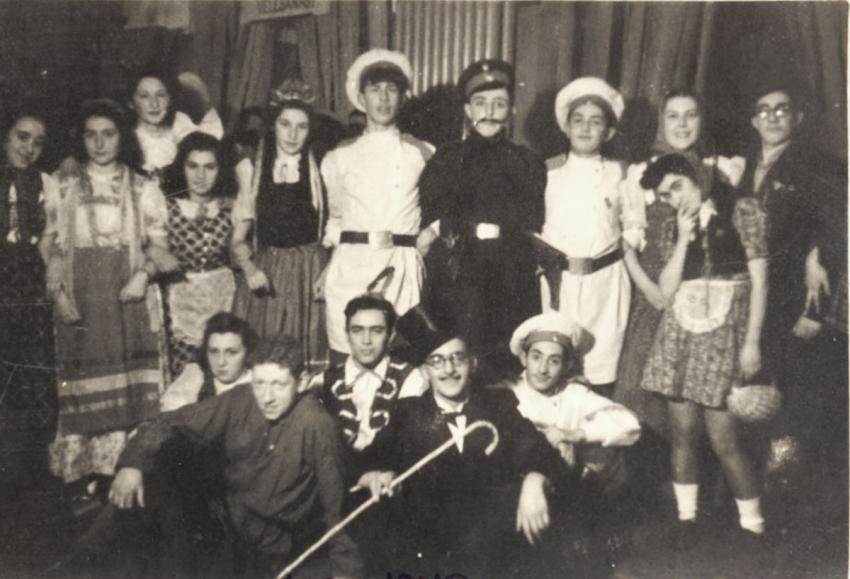
Yad Vashem Photo Archives 8449/38

Riga was the capital of Latvia and the cultural center of Latvian Jewry. In the mid 1930s, there were approximately 43,000 Jews living there, about one tenth of the total population.  The Jews had an important economic role in the city: More than half of Riga’s large factories, close to half its big businesses, and five of its merchant banks were owned by Jews.  Many of the Jews of Riga owned small and medium-sized businesses, or were artisans and bureaucrats.  Approximately half of Riga’s doctors were Jewish, and 25 percent of its lawyers. Zionist parties and youth movements were active there, as well as the Bund and Agudat Israel parties.  In addition, there were Jewish student and sports unions, Jewish newspapers and periodicals, and a Jewish theater, conservatory and choir.

After the Latvian coup d’etat in 1934, democracy became a thing of the past in Latvia.  Management of Jewish matters, including schooling, was handed over to Agudat Israel, as a response to which, many Jewish parents chose to send their children to Latvian public schools.

In June 1940, Riga was annexed, along with the rest of Latvia, by the Soviet Union. Many of the Jews, who were communists or communist supporters, expressed their satisfaction with this development.  In contrast, most Christian Latvians saw the Soviet occupation as undesirable, and this difference of opinion deepened the hostility between Latvians and Jews.

The Soviet occupiers nationalized the banks, large factories and businesses. The Jews were more affected by this than the general population, due to the high proportion of Jewish business owners, although many of them subsequently found work as consultants.  The Jews also started entering municipal and state institutions that had previously been closed to them, including the police and security forces.  The number of Jewish students in academic institutions doubled.  As a result of these new opportunities, many young Jews flocked to Riga from the surrounding cities and towns, raising the number of Jews in the city to some 50,000. 

At the same time, Jewish political activity was brought to a halt.  The Jewish parties and youth movements were disbanded, communal institutions were closed, and the Jews had to work on the Sabbath and holidays.  The Jewish educational system was forced to follow communist curricula, but Jewish schools changed their language of instruction to Yiddish, and the State Yiddish Theater was dedicated in Riga in October 1940.

On 14 June 1941, the authorities started to arrest thousands of Riga Jews defined as “hostile to the Soviet regime” and to deport them to Siberia.  These included Zionist activists, Revisionists, Bundists, members of Agudat Israel, “bourgeois” Jews, and about 250 Jewish refugees from Germany and Austria.

When the Germans invaded the Soviet Union on 22 June 1941, the Red Army retreated from Riga.  They were joined by at least 5,000 Jews, but many Jewish refugees from other cities were trapped in the city. 

On the eve of the German occupation, there were approximately 40,000 Jews in Riga.  Riga fell into German hands on 1 July 1941. In the course of July, Latvians who were members of extremist nationalist organizations arrested thousands of Jews.

Between July and October, the Germans issued a series of anti-Jewish decrees. The Riga ghetto was established in August, and by October: 32,000 Jews were confined there.

On 30 November 1941,German SS soldiers entered the ghetto accompanied by Latvian policemen.  Some 800 Jews, including babies and the elderly, were murdered in the ghetto, and some 15,000, mostly women, were forced to march in the freezing cold to the Rumbula forest, 8 km away, while Latvian locals looked on.  They were murdered and their bodies were thrown into pits that had been prepared in advance.   A further 950 German Jews who had arrived that day to Riga on the transport that left Berlin on 27 November 1941, were murdered during this Aktion, in the course of which the Germans were assisted by Latvian policemen.

The vast majority of Riga Jewry was murdered by the end of the war.  Most were murdered in Aktions, the remainder in forced labor camps.

The Red Army liberated Riga in October 1944.


Photograph:  

Bottom row, right to left: Izchak Garber (perished); Bubi Lewenberg (perished); Levitan (perished); Jakov Jacki Breitbord (served and died in combat in the Red Army); Ance Arkin (perished).

Top row, right to left: Maks Siegel (died in Israel); Fani Gorschuni (died in Israel); the submitter Schulamit (Mea) Fuhr (exiled to Siberia and later immigrated to Israel); unknown; Isja Schlomovitsch (perished); Jeheskiel Zigler (perished); Riva Berkowitsch (perished); Meri Mura Pevsner (immigrated to Israel); Ludsin Liuba (perished); Isja Maimin (a German refugee, perished); unknown.


Zawartość publikowanych artykułów i materiałów nie reprezentuje poglądów ani opinii Reunion’68,
ani też webmastera Blogu Reunion’68, chyba ze jest to wyraźnie zaznaczone.
Twoje uwagi, linki, własne artykuły lub wiadomości prześlij na adres:
webmaster@reunion68.com



New York: Dozens Protest Antisemitism After Jews Attacked

New York: Dozens Protest Antisemitism After Jews Attacked

i24 News


The ‘No Hate, No Fear’ march against antisemitism, in New York City, Jan. 5, 2019. Photo: Seth Harrison / The Journal News, Rockland / Westchester Journal News via Imagn Content Services, LLC.

Roughly 100 people gathered in New York City on Sunday to protest against antisemitism after two Jewish men were attacked last week.

Ilan Kaganovich and Blake Zavadsky, who was wearing an Israel Defense Forces sweatshirt, were assaulted in Brooklyn on December 26.

Zavadsky was punched and had coffee thrown on him, while the two 21-year-olds were asked why they were in the neighborhood.

One of the attackers “didn’t like it, told me I had five seconds to take [the sweater] off and then he called us dirty Jews and punched me in the face twice,” Zavadsky said, the Times of Israel (ToI) reported.

Following the incident, the two Jewish men reached out to New York City Councilwoman Inna Vernikov, who organized Sunday’s protest.

“This is what we ran from, this is why our families brought us to America, and this is exactly what we’re seeing happening in this country again,” said Vernikov.

The NYPD deemed the incident a hate crime and are working to identify the perpetrators.

New York Governor Kathy Hochul took to Twitter to condemn the attack, calling it “abhorrent and unacceptable.”

“Hatred should not be anywhere,” Zavadsky said, ToI reported.

“There should be no type of hatred in any type of religion, any culture, and we’re not going to stop fighting until this is all over.”

Protestors carried signs that read “End Jew Hatred” across the street from pro-Palestinian activists who held a counterprotest.

The NYPD recorded 144 confirmed attacks against Jews between January and October 2021, out of 416 total hate crimes in the city.


Zawartość publikowanych artykułów i materiałów nie reprezentuje poglądów ani opinii Reunion’68,
ani też webmastera Blogu Reunion’68, chyba ze jest to wyraźnie zaznaczone.
Twoje uwagi, linki, własne artykuły lub wiadomości prześlij na adres:
webmaster@reunion68.com
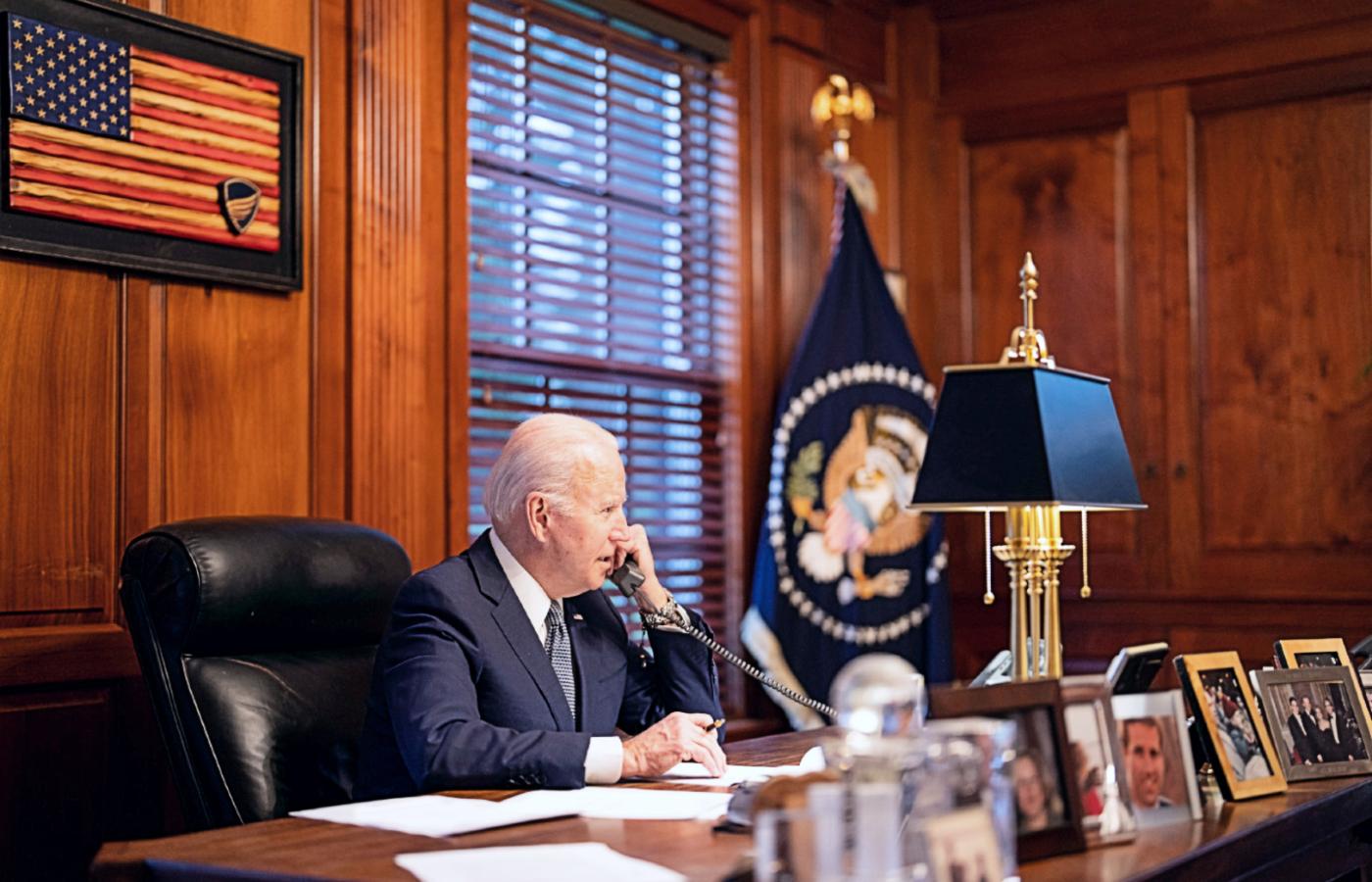

Biden znów na łączach z Putinem. Rosja sprawdza, na co może liczyć

Biden znów na łączach z Putinem. Rosja sprawdza, na co może liczyć

TOMASZ ZALEWSKI


White House / Reuters / Forum

Prawie godzinę Joe Biden rozmawiał w czwartek przez telefon z Władimirem Putinem. Jak poinformował Biały Dom, rozmowa odbyła się na prośbę Moskwy. Bezpośrednio po niej żadna ze stron nie ogłosiła komunikatu o jej przebiegu ani wyniku.

Zdaniem komentatorów w USA, proponując ten kontakt, Putin chciał wysondować Bidena, czy może liczyć na ustępstwa z jego strony. Rozmowa miała przygotować grunt do wyznaczonych na 10 stycznia negocjacji rosyjsko-amerykańskich w Genewie z udziałem czołowych dyplomatów obu państw i doradców ds. bezpieczeństwa ich prezydentów.

Długa lista postulatów Putina

Rosja będzie tam oczekiwać odpowiedzi na swoją listę postulatów-żądań wobec USA i NATO przedstawioną przed świętami z sugestią, że jeśli Zachód ich nie spełni, może dokonać kolejnej inwazji na Ukrainę. Od początku grudnia zgromadziła na ukraińskiej granicy ok. 100 tys. wojsk. W ostatnich dniach doniesiono, że blisko 10 tys. żołnierzy zostało wycofanych znad granicy, ale według ustaleń amerykańskiego wywiadu nie oznacza to istotnej deeskalacji napięcia.

Putin domaga się, aby USA zagwarantowały na piśmie, że Ukraina nie zostanie przyjęta do NATO, i aby Zachód przestał udzielać jej pomocy wojskowej. Żąda też, by NATO wycofało swe wojska i infrastrukturę militarną z przyjętych od 1999 r. krajów środkowowschodniej Europy – jak Polska – i zaprzestało manewrów na ich terenie. Żądania te uzasadnia domniemanym zagrożeniem Rosji, otaczanej od zachodu wyrzutniami rakietowymi i bazami obrony przeciwlotniczej. Kreml prawdopodobnie domagał się tego wszystkiego już wcześniej, ale podczas rokowań przy drzwiach zamkniętych, tymczasem obecnie ogłosił je – w formie quasi-projektu traktatu USA-Rosja – publicznie, co wobec zmasowania wojsk grożących Ukrainie nadaje im charakter swoistego ultimatum.

Rosyjski prezydent pomija oczywiście fakt, że wzmocnienie wschodniej flanki NATO było po prostu odpowiedzią na aneksję Krymu i agresję we wschodniej Ukrainie, gdzie Moskwa wsparła swoich agentów separatystów w Donbasie. Zwiększenie liczby wojsk sojuszu w Polsce i krajach bałtyckich jest też ripostą na rozmieszczenie rakiet Iskander w Obwodzie Kaliningradzkim oraz prowokacyjną obecność sił rosyjskich na Białorusi i ich ćwiczenia z wojskami białoruskimi. Prezydent tego kraju Aleksandr Łukaszenka zapowiedział na jesieni, że Białoruś dołączy do Rosji w razie wojny z Ukrainą.

USA nie opuszczą Polski?

Przedstawiciele administracji USA oraz NATO powiedzieli już, że nie ma mowy o spełnieniu „postulatów” Rosji. Oświadczono, że tylko sam sojusz może decydować, kto zostanie jego członkiem. Rzecznicy NATO dają przy tym do zrozumienia, że Putin niepotrzebnie podnosi sprawę ewentualnego członkostwa Ukrainy, ponieważ sojusz – który wprawdzie nie wykluczył tego w 2008 r. – obecnie nie planuje zaproszenia jej w swoje szeregi. Ważniejsze zatem byłoby potwierdzenie w formie oficjalnego „nie”, stanowczego sprzeciwu wobec żądania wycofania wojsk oraz baz NATO i USA z Polski i krajów bałtyckich. Spełnienie takiego żądania oznaczałoby oczywiście przekazanie kontroli nad sojuszem Moskwie i w konsekwencji finlandyzację Europy Środkowo-Wschodniej. Telewizja CNN przypomniała, że doradca Bidena ds. bezpieczeństwa narodowego Jake Sullivan zapewnił ostatnio Polskę, że USA nie zamierzają jej opuścić.

Biden zagroził, że w razie militarnej akcji Rosji przeciw Ukrainie USA wprowadzą sankcje, jakich dotychczas nie stosowały: godzące osobiście w rosyjskich oligarchów, a może i samego Putina, oraz blokujące finansowe transakcje Rosji na Zachodzie przez wykluczenie jej z bankowego systemu SWIFT. Administracja USA zasugerowała też, że w wypadku inwazji nie dopuści do uruchomienia gazociągu Nord Stream 2 – co wymagałoby współpracy Niemiec i Unii Europejskiej. Na sankcjach ekonomicznych nie ma się skończyć. Waszyngton ostrzegł Moskwę, że napadniętej Ukrainie będzie pomagał, dostarczając jej najnowocześniejszej broni i sprzętu wojskowego, wyśle też dodatkowe wojska do graniczących z Rosją krajów NATO.

Politycy i eksperci w USA zastanawiają się, czy wszystko to wystarczy, by odstraszyć Putina od inwazji. Nad wschodnią Ukrainą przeleciał amerykański samolot szpiegowski; chociaż podkreśla się, że samolot nie naruszył rosyjskiej przestrzeni powietrznej, lot był prawdopodobnie próbą zorientowania się w zamiarach Rosji na podstawie ruchów jej wojsk. Niektórzy komentatorzy krytykują Bidena, że explicite wykluczył z góry interwencję sił amerykańskich w razie ataku na Ukrainę – chociaż nikt nie wierzy, by wysłał je do kraju niebędącego członkiem NATO, ryzykując wojnę z Rosją.

Inwazja już przesądzona?

Przeważa opinia, że Putin raczej nie zdecyduje się na inwazję, która byłaby ogromnie kosztowna militarnie (straty w ludziach) i politycznie (sankcje USA). Zdaniem ekspertów, jeśli do niej dojdzie, to najprawdopodobniej na przełomie stycznia i lutego, kiedy zamrożony grunt ułatwi przemieszczanie ciężkiego sprzętu. Pojawia się opinia, że Putin może zaatakować tylko wąski pas lądu na wschodniej Ukrainie, którym Donbas połączyłby się z Krymem. Odwetem za uruchomione wtedy sankcje byłoby wówczas – uważają niektórzy komentatorzy – wstrzymywanie dostaw gazu ziemnego do Europy Zachodniej. Putin liczy, że manipulacje gazem ułatwią mu dzielenie zachodniego sojuszu. Niemcy – jak uważają niektórzy – już teraz niechętnie odnoszą się do stosowania najostrzejszych sankcji wobec Rosji.

Jeżeli jednak w obawie o reakcję Zachodu Putin zrezygnuje z inwazji, nie uzyskawszy od USA żadnych korzyści przewidzianych w proponowanym traktacie, może – wprowadzając w błąd opinię – twierdzić publicznie, że Biden coś mu obiecał, na przykład, że Ukraina nie wejdzie do NATO, że sojusz nie będzie już rozszerzany o nowe państwa albo że wschodnia flanka sojuszu nie będzie więcej wzmacniana. Niezależnie od tego, czy będzie to prawda, tego rodzaju komunikat z Moskwy może się stać tematem dla republikańskiej opozycji w USA, która od dłuższego czasu oskarża prezydenta, że jest zbyt miękki w relacjach z przeciwnikami Ameryki i skory do nadmiernych ustępstw wobec nich. Podsycanie wewnętrznego konfliktu w USA, osłabiającego supermocarstwo, to także jeden z głównych celów polityki Kremla.


Tomasz Zalewski – Korespondent „Polityki” z USA. W latach 1987–93 pracował w nowojorskim „Nowym Dzienniku”, potem był korespondentem PAP. Z „Polityką” współpracuje od 1997 r. Za książkę reportażową „Szczecin: Grudzień-Sierpień-Grudzień” napisaną z Małgorzatą Szejnert otrzymał w 1985 r. Nagrodę Solidarności.


Zawartość publikowanych artykułów i materiałów nie reprezentuje poglądów ani opinii Reunion’68,
ani też webmastera Blogu Reunion’68, chyba ze jest to wyraźnie zaznaczone.
Twoje uwagi, linki, własne artykuły lub wiadomości prześlij na adres:
webmaster@reunion68.com


Israel, US sign deal for 12 helicopters and refueling aircraft

Israel, US sign deal for 12 helicopters and refueling aircraft

ANNA AHRONHEIM


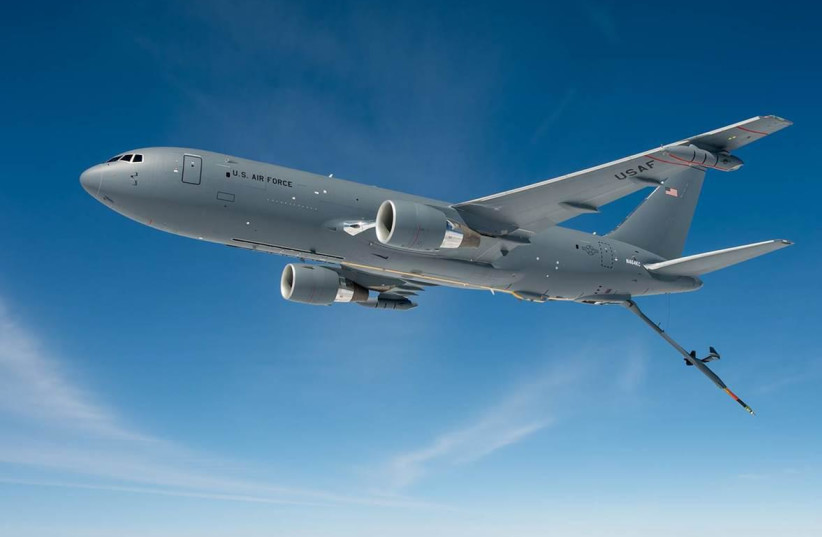
With a range of 11,830 km and the capacity to carry 207,000 pounds of fuel, the KC-46 can refuel over 64 different types of aircraft and allow dozens of jets to remain airborne for up to 12 hours

The KC-46 refueler / (photo credit: BOEING)

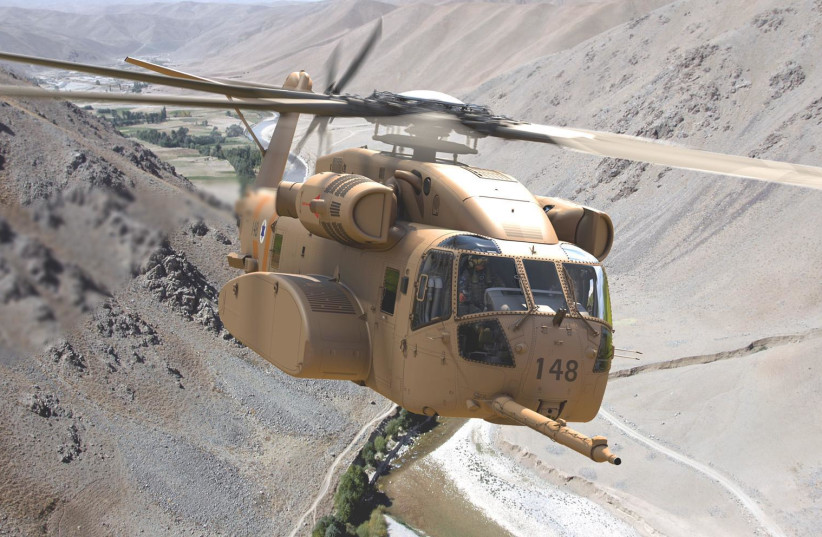
Israel’s Defense Ministry has signed an agreement with the US government to acquire 12 Lockheed Martin CH-53K helicopters and two additional Boeing KC-46 refueling aircraft.

The US Defense Department’s Procurement Delegation signed the letters of acceptance (LOAs) with Israel on Thursday evening to replace the Israel Air Force’s CH-53 Yasur heavy-lift helicopters and Ra’am (Boeing 707) tanker aircraft that are required for long-range missions.

“These procurement agreements are significant milestones in the IDF’s force buildup processes,” said Defense Minister Benny Gantz. “We continue to strengthen our capabilities and to change and adapt our Air Force to face future challenges both near and far.”

The deal regarding the helicopters is estimated at USD $2 billion with the first expected to arrive in Israel throughout 2026 and the option to procure an additional six helicopters. The agreement was signed with the US Navy by the head of the Defense Ministry Mission to the US Brig.-Gen. (ret.) Michel Ben Baruch.

Israel announced last February that it would purchase one squadron of CH-53K over Boeing’s CH-47 to replace its fleet of Yasur helicopters at Tel Nof Air Base. First used by the IAF in 1969, the Yasur is the air force’s primary helicopter used to transport soldiers and equipment and has taken part in a wide variety of missions, including secret operations as well as search and rescue missions.

A CH-53K helicopter (credit: LOCKHEED MARTIN)

Joshua (Shiki) Shani, chief executive, Lockheed Martin Israel, said that the company “remains committed to supporting the Israeli Air Force and providing them with the premier heavy-lift helicopter for their critical missions, which will help strengthen Israel’s national security for decades to come. We are confident that the CH-53K helicopter, designed and built by Lockheed Martin, is the most capable, efficient, and reliable solution to meet the needs of the IAF.”

Another agreement worth approximately $1.1 billion, was signed for the procurement of an additional two Boeing KC-46 refueling aircraft, to add to the two already purchased.

The US State Department approved the possible sale of up to eight KC-46 tanker aircraft and related equipment to Israel last March, marking the first time that Washington has allowed Jerusalem to buy new tankers. Two weeks ago Washington denied Jerusalem’s request to expedite the delivery of two KC-46 refueling jets.

The platform will be adapted to meet the IAF’s operational requirements and Israeli systems will be integrated into aircraft.

Israel’s fleet of Ram planes, the number of which remains confidential, are former civilian aircraft adapted for military uses such as aerial refueling for fighter jets, as well as its fleet of transport aircraft.

The new KC-46 tankers can refuel jets with 1,200 gallons of fuel per minute by its fly-by-wire 55-foot refueling boom. It also can have wing air refueling pods allowing three jets to be refueled at once within three to four minutes.

With a range of 11,830 km with the capacity to unload some 207,000 pounds of fuel, the KC-46 can refuel over 64 different types of aircraft and would allow dozens of jets to remain airborne for up to 12 hours at a range of 11,000 kilometers.

“The procurement of these platforms is part of a large-scale program undertaken by the Ministry of Defense together with the IDF over the last year and a half, with the aim of strengthening the IDF’s capabilities, force buildup, and preparedness to face existing and future threats,” the ministry said in a statement. “The procurement plans include the purchase of a new fleet of F35 aircraft, refueling aircraft, CH-53K helicopters, advanced air munition, air defense systems, new marine, and land platforms as well as cyber systems.”


Zawartość publikowanych artykułów i materiałów nie reprezentuje poglądów ani opinii Reunion’68,
ani też webmastera Blogu Reunion’68, chyba ze jest to wyraźnie zaznaczone.
Twoje uwagi, linki, własne artykuły lub wiadomości prześlij na adres:
webmaster@reunion68.com


The Israeli military has launched missile strikes against targets in the Gaza strip

The Israeli military has launched missile strikes against targets in the Gaza strip

WION


About Channel:

WION -The World is One News, examines global issues with in-depth analysis. We provide much more than the news of the day. Our aim to empower people to explore their world. With our Global headquarters in New Delhi, we bring you news on the hour, by the hour. We deliver information that is not biased. We are journalists who are neutral to the core and non-partisan when it comes to the politics of the world. People are tired of biased reportage and we stand for a globalised united world. So for us the World is truly One.

The Israeli military has launched missile strikes against targets in the Gaza strip. A video coming in from the region shows three huge explosions as Israeli fighter jets were heard flying over the area.


Zawartość publikowanych artykułów i materiałów nie reprezentuje poglądów ani opinii Reunion’68,
ani też webmastera Blogu Reunion’68, chyba ze jest to wyraźnie zaznaczone.
Twoje uwagi, linki, własne artykuły lub wiadomości prześlij na adres:
webmaster@reunion68.com