Archive | May 2022

8-Year-Old Israeli Chess Player Displays Flag After Winning European Championship

8-Year-Old Israeli Chess Player Displays Flag After Winning European Championship

Shiryn Ghermezian


Israeli chess prodigy Noam Sasson (center) holding an Israeli flag upon receiving his award at the 2022 European School Chess Championship. Photo: Screenshot.

An eight-year-old chess player from Israel won an international chess competition for children ages nine and under on Friday in Rhodes, Greece.

Chess prodigy Noam Sasson from Ganei Tikva took home the gold medal after winning seven out of nine rounds in his division at the 2022 European School Chess Championship, beating opponents from Turkey, Greece, Bulgaria, Ukraine, and other countries. More than 200 children participated in the competition, which had separate categories for players under seven, nine, 11, 13, 15, and 17 years old.

Sasson is a trainee of the “Chess4All” club in Savyon, Israel. The club’s director, Lior Eisenberg, spoke with Israeli media about Sasson’s performance in the championship, saying, “we watched the game live and it was really tense. After the eighth round there was a draw between him and the Turkish player. Only in the last round did Noam finish in a draw and the Turk lost, and thus he won first place in the championship.”

At the competition’s award ceremony, Sasson stood on a podium and held the Israeli flag as his national anthem, “Hatikvah,” played in the background.

Israeli Minister of Culture and Sports Hili Trooper congratulated Sasson after his win, saying, “we are proud of you.”

https://twitter.com/i/status/1521108669211029504


Zawartość publikowanych artykułów i materiałów nie reprezentuje poglądów ani opinii Reunion’68,
ani też webmastera Blogu Reunion’68, chyba ze jest to wyraźnie zaznaczone.
Twoje uwagi, linki, własne artykuły lub wiadomości prześlij na adres:
webmaster@reunion68.com


Why Is the Biden Administration Determined to Help Terrorist Iran Get a Bomb?

Why Is the Biden Administration Determined to Help Terrorist Iran Get a Bomb?

Majid Rafizadeh


  • Why would any administration in its right mind permit an official state sponsor of terrorism, the Islamic Republic of Iran, to have nuclear weapons, as well as billions of dollars that will assuredly not be used for a “GI Bill for returning members of the Revolutionary Guard”?
  • Just this week, National Security Advisor Jake Sullivan called Iran, a “sponsor of terrorism.”
  • With Biden’s deal, restrictions on the regime’s nuclear program would be lifted only two years after the agreement is signed, permitting the regime to enrich uranium at any level it desires and spin as many uranium enrichment centrifuges as it wants.
  • Astonishingly, Russia will be trusted to be the country that stores Iran’s enriched uranium, and Moscow will get paid for this mission. More uranium for Russia? How nifty: maybe Putin can use it for his next “Ukraine” — in Poland, Sweden or France?
  • The new deal will not address Iran’s ballistic missile program, meaning that the Tehran regime will continue attacking other nations with its ballistic missiles, provide missiles to its proxy militias in other countries, and advance the range of its intercontinental ballistic missiles to reach the US territories. Iran could even use shorter-range ballistic missiles to reach the US, perhaps launched from Venezuela or Cuba, where Iran is already deeply entrenched.
  • To meet the Iranian leaders’ demands, the new deal will most likely include removal from the terrorist list of the IRGC, which has killed countless Americans, both on American soil and off.
  • The Islamic Republic of Iran began murdering Americans in Beirut in 1983, and also had a hand in the 9/11 attacks.
  • The Biden administration, if it actually cares about peace in the region — a subject that seems open to question — would do well to listen to the warnings of these many US military leaders and Congressmen, and refuse to revive the disastrous nuclear deal. It will only a make even more dangerous a country that the US State Department itself has called “the world’s worst sponsor of state terrorism,” as well as frankly creating an unnecessary security threat in the region, Europe and the US.
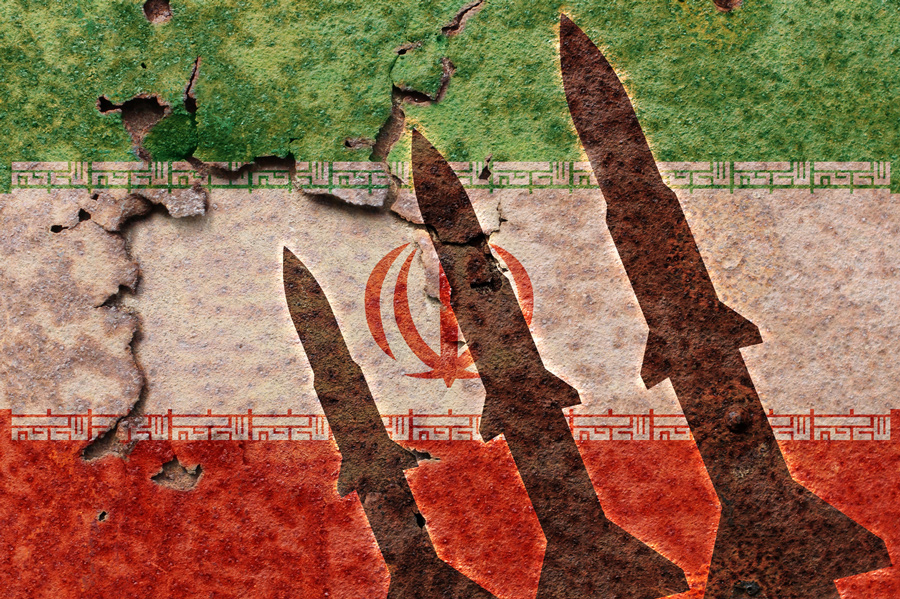
Why would any administration in its right mind permit an official state sponsor of terrorism, the Islamic Republic of Iran, to have nuclear weapons, as well as billions of dollars that will assuredly not be used for a “GI Bill for returning members of the Revolutionary Guard”? (Image source: iStock)

Why would any administration in its right mind permit an official state sponsor of terrorism, the Islamic Republic of Iran, to have nuclear weapons, as well as billions of dollars that will assuredly not be used for a “GI Bill for returning members of the Revolutionary Guard”?

Just this week, National Security Advisor Jake Sullivan called Iran, a “sponsor of terrorism.”

Calls and warnings against reviving the 2015 nuclear, however, seem to be falling on deaf ears, as the Biden administration appears determined to reach a deal that would enable a state that has been trying to take over the entire Middle East for decades — and already controls Lebanon, Yemen, Syria and Iraq — to have nuclear weapons, the ballistic missiles to deliver them, and billions of dollars to further its well-documented terrorism.

Last week, 45 retired US Generals and Admirals sent an entreaty, titled “Open Letter from U.S. Military Leaders Opposing Iran Nuclear Deal”, to the Biden administration, warning against reviving of the nuclear deal. They wrote:

“In Ukraine, we are bearing witness to the horrors of a country ruthlessly attacking its neighbor and, by brandishing its nuclear weapons, forcing the rest of the world largely to stand on the sidelines.

“The new Iran deal currently being negotiated, which Russia has played a central role in crafting, will enable the world’s leading state sponsor of terrorism to cast its own nuclear shadow over the Middle East.

“As retired American military leaders who devoted their lives to the defense of our nation, we oppose this emerging deal that is poised to instantly fuel explosive Iranian aggression and pave Iran’s path to become a nuclear power, threatening the American homeland and the very existence of America’s regional allies.”

While the Biden administration is indefatigably trying to appease the ruling mullahs by lifting sanctions against the Iranian regime, the Islamic Republic has been ratcheting up its threats and attacks against the US bases and its allies, presumably as a nudge.

In addition, the head Iran’s Islamic Revolutionary Guard Corps (IRGC) Quds Force, Esmail Qaani, recently commended “Palestinian martyrs” and threatened Israel as well:

“We are in the middle of the battlefield. The Islamic Republic of Iran is at the forefront of the scene against global arrogance and international Zionism, and we will continue on the path of their honor and greatness, thanks to the martyrs.”

Qaani also boasted about the Houthis’ access to weapons:

“Today, the heroes of Yemen and the new sons of the revolution are building the major weapons they use inside their country… they build missiles with a range of over 1,000 kilometers and drones with a range of over 1,500 kilometers, and all of these operations are carried out using tools and facilities in tunnels and basements, under enemy bombardment…”

The Biden administration is not only empowering the ruling mullahs of Iran and its militia groups, but grievously alienating US allies in the region. As the retired American US Generals and Admirals accurately stated in their letter:

“America’s closest regional partners, attacked regularly by Iran, already strongly oppose the proposed deal. If we will not help protect them against Iran, we cannot expect their help addressing threats like Russia and China. We instead support diplomacy that would genuinely end the threat posed by Iran’s military nuclear program and counter Iran’s regional aggression, backed up by credibly drawn and enforced redlines against Iranian nuclear and regional escalation.”

Worse, the Biden administration’s new deal with the Iranian regime is much weaker than Obama’s 2015 nuclear deal. With Biden’s deal, restrictions on the regime’s nuclear program would be lifted only two years after the agreement is signed, permitting the regime to enrich uranium at any level it desires and spin as many uranium enrichment centrifuges as it wants.

The new deal will not force the Iranian regime to reveal its past nuclear activities, which had military dimensions.

Astonishingly, Russia will be trusted to be the country that stores Iran’s enriched uranium, and Moscow will get paid for this mission. More uranium for Russia? How nifty: maybe Putin can use it for his next “Ukraine” — in Poland, Sweden or France?

The new deal will not address Iran’s ballistic missile program, meaning that the Tehran regime will continue attacking other nations with its ballistic missiles, provide missiles to its proxy militias in other countries, and advance the range of its intercontinental ballistic missiles to reach the US territories. Iran could even use shorter-range ballistic missiles to reach the US, perhaps launched from Venezuela or Cuba, where Iran is already deeply entrenched.

To meet the Iranian leaders’ demands, the new deal will most likely include removal from the terrorist list of the IRGC, which has killed countless Americans, both on American soil and off.

The Islamic Republic of Iran began murdering Americans in Beirut in 1983, and also had a hand in the 9/11 attacks.

Last but not least, economic sanctions will be lifted against the Iranian regime will facilitate the flow of billions of dollars to the ruling mullahs. This will further assist the terrorist regime of Iran to destabilize the region, target and attacks US allies, and continue arming, funding and sponsoring its militia and terror groups across the world.

The Biden administration, if it actually cares about peace in the region — a subject that seems open to question — would do well to listen to the warnings of these many US military leaders and Congressmen, and refuse to revive the disastrous nuclear deal. It will only a make even more dangerous a country that the US State Department itself has called “the world’s worst sponsor of state terrorism,” as well as frankly creating an unnecessary security threat in the region, Europe and the US.


Dr. Majid Rafizadeh is a business strategist and advisor, Harvard-educated scholar, political scientist, board member of Harvard International Review, and president of the International American Council on the Middle East. He has authored several books on Islam and US foreign policy. He can be reached at Dr.Rafizadeh@Post.Harvard.Edu


Zawartość publikowanych artykułów i materiałów nie reprezentuje poglądów ani opinii Reunion’68,
ani też webmastera Blogu Reunion’68, chyba ze jest to wyraźnie zaznaczone.
Twoje uwagi, linki, własne artykuły lub wiadomości prześlij na adres:
webmaster@reunion68.com


Allah Brought The Jews To Palestine So We Can Finish Them Off; Iran Gave Us Weapons While The Arabs Gave Us School Supplies

Allah Brought The Jews To Palestine So We Can Finish Them Off; Iran Gave Us Weapons While The Arabs Gave Us School Supplies

MEMRI


Senior Palestinian Islamic Jihad Official Muhammad Shalah: Allah Brought The Jews To Palestine So We Can Finish Them Off; Iran Gave Us Weapons While The Arabs Gave Us School Supplies
.


Zawartość publikowanych artykułów i materiałów nie reprezentuje poglądów ani opinii Reunion’68,
ani też webmastera Blogu Reunion’68, chyba ze jest to wyraźnie zaznaczone.
Twoje uwagi, linki, własne artykuły lub wiadomości prześlij na adres:
webmaster@reunion68.com


40 lat temu, w święta 1 i 3 maja, doszło do protestów przeciwko reżimowi stanu wojennego

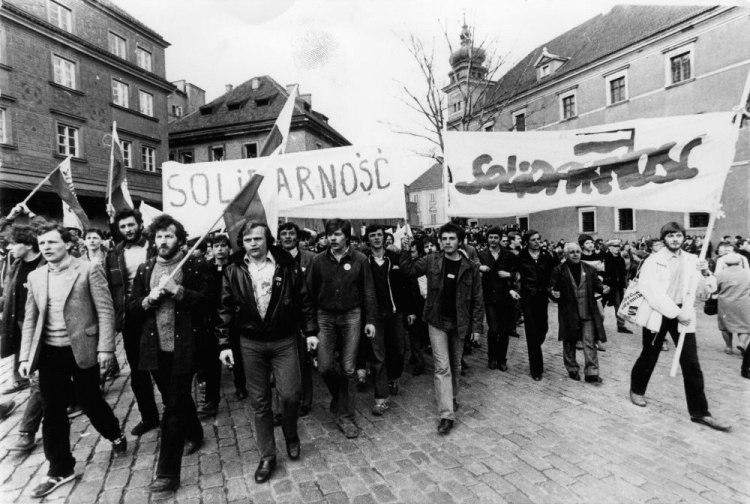
Kontrdemonstracja w Warszawie. 01.05.1982. Fot. PAP/CAF/Archiwum


40 lat temu, w święta 1 i 3 maja, doszło do protestów przeciwko reżimowi stanu wojennego

Michał Szukała


40 lat temu, 1 i 3 maja 1982 r., w wielu miastach Polski odbyły się protesty przeciwko reżimowi stanu wojennego. W nieuznawane przez władze komunistyczne Święto Konstytucji 3 maja doszło do gwałtownych starć, które doprowadziły do śmierci dwóch osób.

.

Po wprowadzeniu stanu wojennego w szeregach podziemnej „Solidarności” wielką popularnością cieszyło się hasło „Zima wasza, wiosna nasza”. Wierzono, że powszechny sprzeciw społeczeństwa wobec junty Wojciecha Jaruzelskiego doprowadzi do szybkiego złagodzenia rygorów stanu wojennego. Zupełnie inne nadzieje wyrażali polscy komuniści oraz ich towarzysze na Kremlu. Byli przekonani, że po przywróceniu w Polsce porządku reżim Jaruzelskiego przystąpi do umacniania swojej pozycji i ostatecznego rozprawienia się z „kontrrewolucją”. Podczas wizyty na Kremlu w marcu 1982 r. Leonid Breżniew z troską o pozycję swoich klientów w Warszawie ostrzegał Jaruzelskiego, że „kontrrewolucjoniści” szykują się do kontrataku. „Wydarzenia nas nie zaskoczą” – odpowiedział przywódca PZPR.

Za organizacją masowych manifestacji opowiadali się działacze Ogólnopolskiego Komitetu Oporu. Tymczasowa Komisja Koordynacyjna NSZZ „Solidarność” opowiadała się za zorganizowaniem manifestacji w miesięcznicę wprowadzenia stanu wojennego – 13 maja 1982 r. Te rozdźwięki w łonie opozycji antykomunistycznej doprowadziły do sytuacji, w której 1 maja 1982 r. manifestacje odbyły się tylko w niektórych miastach.

Władze PRL zdawały sobie sprawę, że dla „Solidarności” nadchodzące, kluczowe dla propagandy komunistycznej, Święto Pracy i nieuznawane przez nich Święto Konstytucji 3 maja będą okazją do sprzeciwu wobec stanu wojennego. Niewiadomą była forma zamanifestowania oporu wobec junty. Część ukrywających się działaczy uznała, że organizowanie antypochodów pierwszomajowych jest zbyt ryzykowne. Nawoływali m.in. do uczestnictwa w nabożeństwach, ponieważ zakładano, że kościoły nie zostaną zaatakowane przez milicję i ZOMO. Według informacji zgromadzonych przez SB w całej Polsce 1 maja zorganizowano 92 msze za ojczyznę lub ku czci świętego Józefa, patrona robotników.

Za organizacją masowych manifestacji opowiadali się działacze Ogólnopolskiego Komitetu Oporu. Tymczasowa Komisja Koordynacyjna NSZZ „Solidarność” opowiadała się za zorganizowaniem manifestacji w miesięcznicę wprowadzenia stanu wojennego – 13 maja 1982 r. Te rozdźwięki w łonie opozycji antykomunistycznej doprowadziły do sytuacji, w której 1 maja 1982 r. manifestacje odbyły się tylko w niektórych miastach.

Władze przyjęły strategię zastraszania mieszkańców największych ośrodków przemysłowych, którzy mogliby zakłócić atmosferę radosnego święta. Już 30 kwietnia ulicami Warszawy przemieszczały się kolumny samochodów milicyjnych, a nad miastem krążyły śmigłowce. Wielką rolę w zastraszeniu społeczeństwa odgrywała propaganda. Dyktator PRL wzywał do „walki ze złem” i z „burzącą ład społeczny działalnością wroga”. „Interes ojczyzny, ludzi pracy, polskiej klasy robotniczej był i jest jeden – socjalizm. Będziemy go budować, będziemy go bronić” – mówił Jaruzelski w przemówieniu podczas centralnego pochodu pierwszomajowego. Ton jego słów nie pozostawiał złudzeń, że władze nie zamierzają podejmować negocjacji z nielegalną „Solidarnością”. Szef SB podczas jednej z narad poprzedzających 1 maja przekonywał podwładnych, jak kompromitujące dla reżimu mogą być działania podziemnej „S”. „Możemy być pewni, że każda petarda, która w tym dniu wybuchnie, zamieni się w bombę propagandową naszych przeciwników. Każda udana prowokacja zwiększy poczucie siły i bezkarności przeciwników socjalizmu w naszym kraju” – mówił gen. Władysław Ciastoń.

W Warszawie oficjalny pochód pierwszomajowy maszerował u stóp symbolu sowieckiej dominacji – Pałacu Kultury i Nauki. Zwolennicy podziemnej „Solidarności” zebrali się na placu Zwycięstwa, miejscu mszy Jana Pawła II z czerwca 1979 r. Tam z kwiatów ułożono krzyż upamiętniający miejsce, w którym stał prawie trzy lata wcześniej papieski ołtarz. W pobliżu milicja legitymowała składających kwiaty i zabierała klisze fotograficzne dokumentujących te wydarzenia. Około godz. 10 przed nieodległą katedrą św. Jana Chrzciciela zgromadził się tłum ponad 10 tys. wiernych biorących udział w mszy. Wokół zbierała się milicja, która w pobliżu kościoła św. Anny zablokowała Krakowskie Przedmieście. ZOMO odcięły także okolice Barbakanu. Zwieńczeniem demonstracji był wiec na Podzamczu. Tam przedstawiciele Międzyzakładowego Robotniczego Komitetu „Solidarności” ogłosili, że kolejna manifestacja odbędzie się 3 maja na placu Zamkowym. Na koniec odśpiewano Mazurka Dąbrowskiego.

Również w innych miastach gromadzono się w miejscach symbolizujących wartości uosabiane przez „Solidarność”, m.in. przy grobach robotników poległych w Szczecinie w 1970 r. lub w kościele Arka Pana w Nowej Hucie. W Gdańsku kilkadziesiąt tysięcy osób zebrało się u stóp Pomnika Poległych Stoczniowców. Większość dotarła później przed blok na gdańskim osiedlu Zaspa, w którym mieszkała rodzina Lecha Wałęsy. Tego dnia do największych starć doszło w Toruniu. 200 osób zatrzymano. Wiele z nich przeszło przez ścieżki zdrowia na komisariatach MO. Znacznie większe zamieszki wybuchły dwa dni później.

W centrum uwagi sił reżimu znalazła się Warszawa. W ramach operacji „Baszta” w stolicy zgromadzono ok. 6 tys. zomowców wspieranych przez kursantów szkół milicyjnych, żołnierzy Nadwiślańskich Jednostek Wojskowych i Wojskowej Służby Wewnętrznej. Około godz. 16 tłum na placu Zamkowym został zaatakowany przez siły ZOMO wspomagane przez armatki wodne. Jednocześnie milicja zaatakowała Barbakan. Średniowieczna budowla kilkukrotnie przechodziła z rąk do rąk, a na jednej z jej wieżyczek powiewała flaga „Solidarności”. Według wielu relacji walkami dowodzili weterani Powstania Warszawskiego, którzy nadzorowali budowę barykad. W Warszawie i innych miastach z wyjątkową starannością usuwano czerwone flagi traktowane jako symbole reżimu i sowieckiej okupacji.

Później walki przeniosły się w okolicę Rynku Nowego Miasta oraz na most Śląsko-Dąbrowski. Atakowano również pojazdy milicji na Wisłostradzie. Kilkuset demonstrantów dotarło aż do Sejmu. Wśród protestujących krążyły plotki o panice wśród władz, ewakuacji Wojciecha Jaruzelskiego i bitwach w wielu częściach miasta. „W powietrzu wciąż jeszcze utrzymywał się słodkawy, gryzący czad gazu. Gęstniał on w miarę zbliżania się do Krakowskiego Przedmieścia. Tu oczy zaczynały już łzawić. Chodniki i jezdnie zaśmiecone były tekturowymi gilzami petard, plastikowymi torebkami o nieznanym mi przeznaczeniu, spalonymi szmatami i odłamkami szkła. Rynek Starego Miasta przedstawiał obraz rzeczywistego pobojowiska” – wspominał pisarz Jan Józef Szczepański, który dotarł na Starówkę kilka godzin po zamieszkach. Aresztowano kilkaset osób. Jeden z demonstrujących zmarł, po tym jak milicja zwlekała z wezwaniem karetki, kiedy stracił przytomność.

Brutalne stłumienie protestów pokazało determinację reżimu stanu wojennego i jego niechęć do jakichkolwiek kompromisów. Masowy udział w demonstracjach udowodnił zaś, że podziemna „Solidarność” jest wciąż żywa. Ujawnił on również liczne podziały i ożywił dyskusję o sposobach stawiania oporu. Wydarzenia z 1 i 3 maja 1982 r. stanowiły jeden z impulsów do powstania najbardziej radykalnej organizacji podziemia – „Solidarności Walczącej”.

Walki z milicją i ZOMO toczyły się także w Szczecinie. Na ataki armatek wodnych odpowiadano kostką brukową i butelkami z benzyną. Na głównych ulicach miasta wznoszono barykady. Kilkadziesiąt osób zostało rannych. Spalony został hotel milicyjny przy ul. Potulickiej. W Szczecinie zmarł właściciel jednego z mieszkań, który zaczął dusić się z powodu zagazowania dokonanego przez milicję. Starcia trwały jeszcze 4 maja. Gwałtowne zamieszki wybuchły również w Toruniu. W najstarszej części miasta milicja polowała na ukrywających się demonstrantów. Planowała też atak na akademiki, które stanowiły centra oporu. Interwencję powstrzymały władze uczelni, do których należała profesor prawa Alicja Grześkowiak, późniejsza marszałek Senatu RP.

Wyroki wydawane przez komunistyczne sądy na aresztowanych „prowodyrów zamieszek” sięgały czterech lat pozbawienia wolności. Brutalne stłumienie protestów pokazało determinację reżimu stanu wojennego i jego niechęć do jakichkolwiek kompromisów. Masowy udział w demonstracjach udowodnił zaś, że podziemna „Solidarność” jest wciąż żywa. Ujawnił on również liczne podziały i ożywił dyskusję o sposobach stawiania oporu. Wydarzenia z 1 i 3 maja 1982 r. stanowiły jeden z impulsów do powstania najbardziej radykalnej organizacji podziemia – „Solidarności Walczącej”.(PAP)


Zawartość publikowanych artykułów i materiałów nie reprezentuje poglądów ani opinii Reunion’68,
ani też webmastera Blogu Reunion’68, chyba ze jest to wyraźnie zaznaczone.
Twoje uwagi, linki, własne artykuły lub wiadomości prześlij na adres:
webmaster@reunion68.com


More Mariupol residents died in Russian invasion than under Nazi occupation – mayor

More Mariupol residents died in Russian invasion than under Nazi occupation – mayor

GADI ZAIG, REUTERS


5.5 million Ukrainians evacuated since invasion began * 219 children dead so far * Azovstal steel plant mostly destroyed by Russian strikes

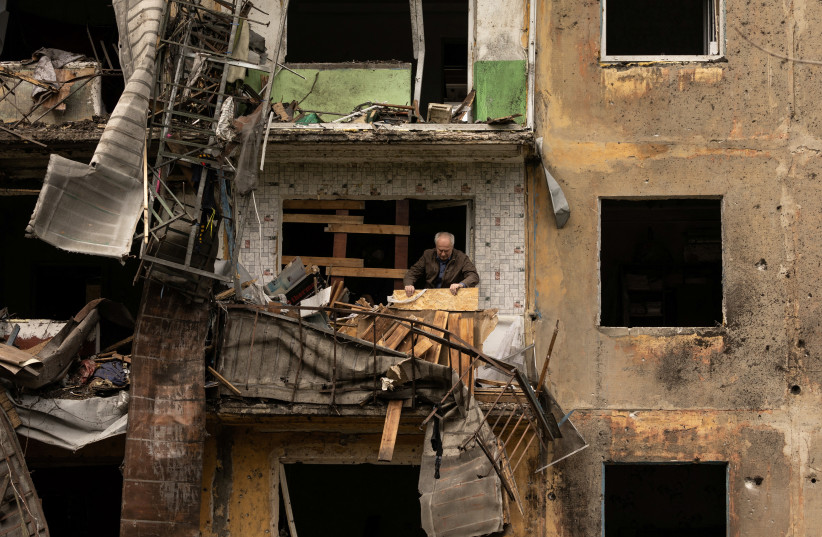
A man stands on the balcony of his apartment after a missile strike damaged a residential building, amid Russia’s invasion, in Dobropillia, in the Donetsk region, Ukraine, April 30, 2022 / (photo credit: REUTERS/JORGE SILVA)

“In two months, the Russian army killed twice as many people in Mariupol than the Nazis did in the two years of occupying the city during World War II,” said Mariupol Mayor Vadym Boychenko in a Telegram message on Saturday.

“In two years, the Nazis killed 10,000 civilians in Mariupol. And the Russian occupiers in two months killed more than 20 thousand Mariupol residents. More than 40,000 people were forcibly deported. This is one of the worst genocides of civilians in modern history. The Russian army is purposefully and ruthlessly destroying our city and its inhabitants,” he continued.

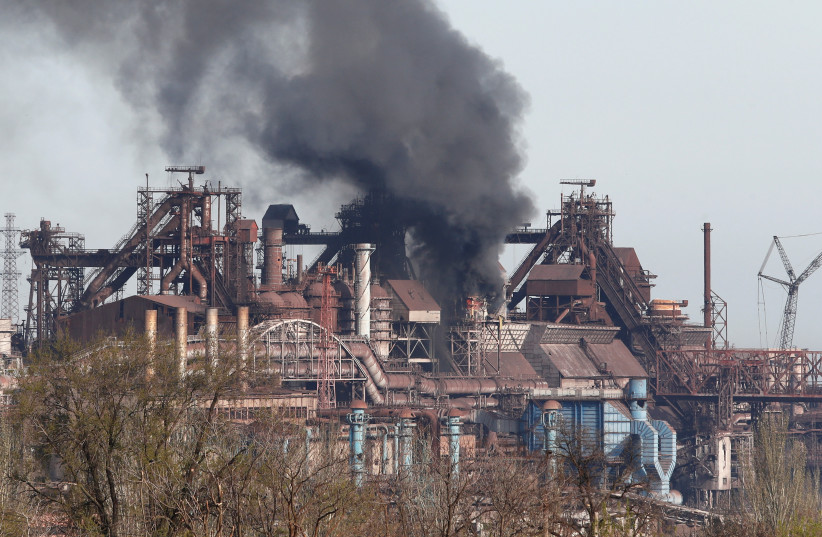
Mariupol’s Azovstal steel plant — Which has served as the last bastion for pro-Ukraine fighters — Has been shown to be “significantly destroyed” by Russian attacks, according to an exclusive report by CNN citing satellite images by Maxar Technologies of the power plant on Saturday. Photos show damaged roofs and buildings reduced to rubble, the report said. Another CNN report the following day stated that Russia is reinforcing its offensive operations in eastern Ukraine with weapons and military equipment.

Ukrainian Armed Forces destroyed nine Russian air targets since Saturday, according to Ukinform.

Russia’s defense ministry said on Sunday its missiles had destroyed a runway and a hangar with foreign weapons at a military airfield near the Ukrainian city of Odesa.

The ministry also said its air defense systems had shot down two Ukrainian Su-24m bombers over the Kharkiv region. Russian Armed Forces fired on the Kharkiv city hospital and nearby residential buildings, according to the Ukrainian Foreign Ministry.

Pope says Ukraine’s Mariupol has been ‘barbarously bombarded’

Pope Francis on Sunday described the war in Ukraine a “macabre regression of humanity” that makes him “suffer and cry,” calling for humanitarian corridors to evacuate people trapped in the Mariupol steelworks.

Speaking to thousands of people in St. Peter’s Square for his noon blessing, Francis again implicitly criticized Russia, saying that Mariupol had been “barbarously bombarded and destroyed.”

Evacuations

Two groups of civilians left the residential area around the Azovstal steelworks in the southern Ukrainian city of Mariupol on Saturday, the Russian defense ministry said on Sunday.

The ministry said a total of 46 civilians had left the area and were provided with food and shelter.

Hundreds of Ukrainian fighters and some civilians are believed to be holed up in the vast plant following the Russian siege of the port city.

Many efforts to arrange a ceasefire to allow residents to leave the city have broken down, with Moscow and Kyiv repeatedly blaming each other.

On Saturday alone, 78,000 people evacuated Ukraine into bordering countries, according to the State Border Guard Service of Ukraine.

An evacuation of civilians from Ukraine’s mostly Russian-controlled southeastern port city of Mariupol could be possible on Sunday, local officials said.

Mariupol’s city council and the local governor told residents who wished to leave for the Ukrainian city of Zaporizhzhia to gather at an evacuation point in Mariupol at 4 p.m. local time (1300 GMT).

Approximately 5.5 million Ukrainians have fled the country since the invasion began, according to a Sunday morning update by the United Nations High Commissioner for Refugees, with the vast majority of refugees comprising women and children due to Ukrainian men of military service age not allowed to leave the country.

The refugees have largely settled around Europe, with some trying to enter the United States through the Mexican border. Poland has the largest amount of Ukrainian refugees as of Sunday, with about 3 million entering the country since February 24.

Securing control of Kherson

Russia probably aims to exert strong political and economic influence on Ukraine’s southern region of Kherson in the long term, after ruling out its return to Ukrainian control and initiating a currency switch to the rouble, Britain said.

“Since seizing … Kherson in early March, Russia has sought to legitimize its control of the city and surrounding areas through installing a pro-Russian administration,” the Defense Ministry said in a Twitter bulletin on Sunday.

 Smoke rises above a plant of Azovstal Iron and Steel Works during Ukraine-Russia conflict in the southern port city of Mariupol, Ukraine April 25, 2022. (credit: Alexander Ermochenko/Reuters)Smoke rises above a plant of Azovstal Iron and Steel Works during Ukraine-Russia conflict in the southern port city of Mariupol, Ukraine April 25, 2022. (credit: Alexander Ermochenko/Reuters)

Russia’s enduring control of the region and transport links will benefit its ability to sustain advances to the north and west and improve its security control of the nearby Crimea, the update added.

Current casualties

The Russian invasion as of Sunday has killed a minimum of 219 children and injured another 404, according to the Ukrainian Prosecutor General’s Office.

Russian casualties since the start of the invasion include 23,500 personnel, 1,206 tanks, 451 artillery systems, 80 anti-aircraft warfare systems, 155 helicopters, 1,796 vehicles and fuel tanks and 84 cruise missiles, according to a Sunday morning update by the Ukrainian General Staff of Armed Forces. President Zelensky stated that the Ukrainian military has managed to destroy more than 1,000 Russian tanks.


Zawartość publikowanych artykułów i materiałów nie reprezentuje poglądów ani opinii Reunion’68,
ani też webmastera Blogu Reunion’68, chyba ze jest to wyraźnie zaznaczone.
Twoje uwagi, linki, własne artykuły lub wiadomości prześlij na adres:
webmaster@reunion68.com