Archive | December 2022

Komu wierzymy i dlaczego tak niechętnie?

(Źródło zdjęcia: Virtual Learning)


Komu wierzymy i dlaczego tak niechętnie?

Andrzej Koraszewski


Najnowsze badania Gallupa pokazują, że blisko 40 procent Amerykanów nie ma cienia zaufania do mediów, kolejne 28 procent ma ograniczone zaufanie do ścisłości przekazywanych przez media informacji. Wierzących w uczciwość i rzetelność dziennikarzy pozostaje już niewielu.

Kiedy w 1972 roku zaczynano badania nad zaufaniem społeczeństwa amerykańskiego do środków masowego przekazu, 68 procent społeczeństwa wyraziło przekonanie, że są przez media uczciwie i rzetelnie  informowani, a w cztery lata później 72 procent (co było utrzymującym się do dziś rekordem).     

Co się zmieniło? Na przestrzeni kolejnych dziesięcioleci wiele się zmieniło i to nie tylko w Stanach Zjednoczonych.

W latach siedemdziesiątych ubiegłego wieku byliśmy świadkami wielkiej tabloidyzacji. Zaczęła się epoka wykupywania renomowanych tytułów przez magnatów prasowych i pogoń za masowością. Charakter dziennikarstwa zaczął się jednak zmieniać już wcześniej pod wpływem przemian technologicznych. Radio i telewizja narzuciły nie tylko nową konkurencję dla prasy drukowanej, ale odebrały monopol na pierwszeństwo. Redaktorzy prasy drukowanej musieli się liczyć z faktem, że ich czytelnicy najważniejsze informacje mogli dostać o dzień wcześniej z mediów elektronicznych, tym samym komentarz stawał się istotniejszy od informacji. Zmiany w technikach drukarskich podniosły status fotografii w prasie drukowanej (który gazety takie jak „Bild” podniosły do absurdu), walka o czytelnika skłaniała do rezygnacji z nudnej rzetelności na rzecz plotkarskiego tabloidu. Wielka rewolucja miała jednak przyjść wraz z Internetem.

Nowe dziennikarskie pokolenie było zachęcane do pogoni za sensacją, Internet zwielokrotnił szybkość i ilość informacji. Wiadomości lecą ciurkiem jak z kranu, tych ważnych nikt nie sprawdza, bzdurnych nikt nie wyrzuca do kosza na śmieci. Już to wystarczyłoby, żeby stracić zaufanie do mediów.

Medialny biznes podległa również przemianom politycznym. Idea dziennikarstwa ponadpartyjnego została zastąpiona dziennikarstwem zaangażowanym. Media publiczne coraz częściej były zawłaszczane przez partie aktualnie sprawujące rządy, media prywatne, zaczęły się upodabniać do biuletynów partyjnych. Pojawiła się otwarcie deklarowana filozofia, że fakty są mniej istotne od Sprawy. Zaangażowany dziennikarz nie tylko nie czuł powołania do sprawdzania faktów, ale coraz częściej był zatrudniany przez redakcję z powodu swojego zaangażowania, a nie na podstawie kompetencji w jakiejś dziedzinie, umiejętności sprawdzania faktów  i rzetelności w przekazywaniu informacji.        

W przeszłości redakcje nie ukrywały swoich sympatii politycznych, ale dbały o etos obiektywizmu. Nigdy  media nie były idealnie bezstronne, ale bezstronność była na sztandarach, dziennikarze zapewniali o swojej bezstronności, a niektórzy zyskiwali sławę właśnie dzięki rzetelności i obiektywności.

Czy to się zmieniło? Obiektywizm przestał być uważany za dziennikarską cnotę. Język propagandy przestał być wstydliwy, przepuszczanie komentarzy do niemal wszystkich wydarzeń przez pryzmat wewnętrznych walk partyjnych stało się wszechobecne.

Podczas gdy partie polityczne walcząc o władzę miały zawsze tendencję do demonizowania swoich przeciwników, media, określające się jako „czwarta władza” walczyły o odbiorców reklamując swoją bezstronność. Można powiedzieć, że dziś też to robią, ale dostarczany towar powoduje, że odbiorcy mają wrażenie, że te reklamy nie mają wiele wspólnego z rzeczywistością.

Kiedy w połowie lat siedemdziesiątych przeprowadzono w Szwecji badania nad orientacją polityczną dziennikarzy okazało się, że partia komunistyczna, która w wyborach powszechnych z trudem przechodziła przez pięcioprocentowy próg, miała wśród dziennikarzy 20 procent poparcia. Kiedy zapytałem o ten fenomen zaprzyjaźnionego dziennikarza telewizyjnego, odpowiedział pół żartem pół serio, że policja przyciąga sadystów, a dziennikarstwo marzycieli, którzy chcą zaczarować rzeczywistość słowami. Zwrócił uwagę na fakt, że jest to typ dziennikarza, który częściej pisze o tym, jak być powinno niż o tym jak jest.

Coraz szybsze tempo informowania, walka o czytelnika/widza/słuchacza, tabloidyzacja (również renomowanych mediów) i polityzacja informacji, to wszystko wskazuje na to, że zaufanie do mediów będzie nadal dramatycznie maleć, zaś odbiorcy będą szukać rozproszonych źródeł wiedzy o świecie, co może dla większości oznaczać zwrot w kierunku mediów społecznościowych i jeszcze bardziej wykoślawiających rzeczywistość przekazów środowiskowych. (Również w Polsce widać, że młode pokolenie coraz częściej bardziej ufa informacjom znajomych w sieci niż zawodowcom utrzymującym się z przekazywania informacji.)

Czy ma sens próba odbudowy dziennikarskiego etosu opartego na obiektywności, kompetencji i rzetelności? Prawdopodobnie nie ma na to większych szans. Wielkie redakcje nie wydają się być zainteresowane budowaniem swojego autorytetu na rzetelności kierując się uzasadnioną obawą przed konkurencją ze strony  handlarzy sensacją. Nowym zjawiskiem są samotne wilki, często doświadczonych dziennikarzy, mających duże kompetencje w takiej czy innej dziedzinie, którzy tworzą niszowe strony dla zainteresowanych. Te oazy dziennikarskiej rzetelności nie zmieniają i nie mogą zmienić opinii społecznej o marniejącej profesji.

Kiedy widzisz wielki tytuł, że Iran nie rozwiązał policji ds. moralności. Świat błędnie odczytał słowa prokuratora generalnego, jesteś informowanych o żałosnej próbie oddalenia od siebie winy za zawodowe partactwo. To nie świat „odczytywał”, to najpierw dziennikarze AFP a potem BBC i inni wprowadzali świat w błąd.  

Każdego dnia w dziesiątkach spraw „świat” jest raz za razem wprowadzany w błąd przez ludzi trudniących się informowaniem.                                

Trendu, który pokazują badania Gallupa, prawdopodobnie odwrócić się nie da, niektóre środowiska dziennikarskie mogą jednak spojrzeć w lustro w przerwach między jedną a drugą pogonią za opowieścią, która przyciągnie maksimum uwagi.

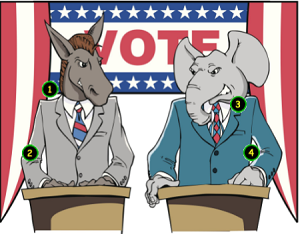
Kiedy na początku transformacji Eugeniusz Smolar zaproponował z Londynu utworzenie w Polsce radia czysto informacyjnego, reakcją był pusty śmiech i stwierdzenie, że na takie dziwactwo to w Polsce nie będzie odbiorców. Radio powstało w nieco innym formacie i ostatnio dowiedziałem się z niego, że o pewnym raperze należy mówić „oni” ponieważ ta osoba jest niebinarna. Jest to anglicyzm, mechaniczne przełożenie słowa “they” jak każą mówić o sobie takie osoby. Tymczasem mamy w polskim języku zaimek odzwierciedlający niebinarność: “ono”. W przekładzie książki znakomitej biolożki, Olivii Judson, Porady seksualne doktor Tatiany dla wszystkich stworzeń, tłumacz, Marcin Ryszkiewicz, znalazł nawet sposób na uwzględnienie niebinarności w czasownikach. Tak więc stworzenia niebinarne w tej biologicznej książce mówiły: byłom, zrobiłom, zjadłom. Jaka szkoda, że wypowiadająca się w tej sprawie ekspertka nie sprawdziła, jak o stworzeniach niebinarnych mówią polscy biolodzy. Wyszedłem z łazienki poinformowany o jednej z najważniejszych spraw dzisiejszego świata, uświadamiając sobie, że podczas gdy amerykańskie media donoszą o wszystkim w cieniu nieustającej walki słonia z osłem, u nas jest podobnie, ale nam wszystko przesłania walka pawia z papugą.       

P.S. Amerykańskie partie polityczne ożenił ze słoniem i osłem słynny rysownik Thomnas Nast, który w 1879 przedstawił na rysunku republikanów jako słonia a demokratów jako osła. A jeśli idzie o pawia i papugę to trudno powiedzieć skąd się to wzięło.


Zawartość publikowanych artykułów i materiałów nie reprezentuje poglądów ani opinii Reunion’68,
ani też webmastera Blogu Reunion’68, chyba ze jest to wyraźnie zaznaczone.
Twoje uwagi, linki, własne artykuły lub wiadomości prześlij na adres:
webmaster@reunion68.com


For The New York Times and The Washington Post, Even the World Cup Is About the Palestinians

For The New York Times and The Washington Post, Even the World Cup Is About the Palestinians

Mitchell Bard


Soccer Football – FIFA World Cup Qatar 2022 – Fans gather in Brussels for Morocco v Portugal – Brussels, Belgium – December 10, 2022 Morocco fans celebrate after the match as Morocco progress to the semi finals. Photo: REUTERS/Yves Herman

The anti-Israel online magazine +972 has hailed “The First Palestinian World Cup.” The New York Times called the Palestinians “the World Cup’s Unofficial Team.” The Washington Post declared, “At the World Cup, the Arab world rallies to Palestinian cause.” Much of the rest of the media has played along.

Given the media’s obsession with the Palestinian cause and need to cover it out of all proportion to its importance in world affairs, it was not surprising the two major papers would find a way to make the World Cup about the Palestinians, even though it wasn’t.

Yes, the Moroccan team unfurled a Palestinian flag, and there have been examples of support for the Palestinian cause among fans. But did this merit a story? Maybe, but if you’re going to report it, shouldn’t journalists at least place the activities in context and admit that it was pre-planned and supported by the Qatari government?

Alas, that is always too much to expect from the Times and the Post.

The papers briefly mentioned the double standard employed by the Qataris and FIFA, the governing body of the World Cup, which banned all other political displays, such as Iran’s revolutionary flag and symbols of the LBGTQ community. The Palestinians, as they always do, got a free pass. Given the much-publicized corruption involved in FIFA’s decision to award the Cup to Qatar, it is not surprising that the soccer federation kowtowed to the Qataris rather than uphold its commitment to keep politics out of the tournament.

The Times and the Post also refused to report that the Qataris encouraged the obsession with the Palestinians to divert attention from Qatar’s abysmal human rights record, including the use of slave labor to build the venues for the tournament.

Instead of noting this, the Post quoted a Qatari professor—obviously an objective source—who said, “The presence of Palestinian flags at stadiums was ‘not organized by states, but something genuine from within the people themselves.’”

The press has parroted this claim that the expressions of support for the Palestinians were spontaneous. Yet it is all but impossible for a building in Doha to be lit with a Palestinian flag alongside a sign reading “Gaza is in our hearts” without it being planned long in advance. In addition, shopkeepers in Qatar were selling Palestinian flags and armbands, which could not have happened without the government’s tacit approval.

The Meir Amit Intelligence and Terrorism Information Center has noted that the Palestinians planned a major publicity campaign before the Cup. Among other things, it urged captains of Arab teams to wear the colors of the Palestinian flag and encouraged spectators to wave Palestinian flags in the stands and outside the stadiums, as well as hang them from cars and buildings. The campaign also included the dispatch of “ambassadors of Palestine” to talk to fans about the Palestinian cause, and calls for mainstream and social media to promote Palestinian propaganda.

The Times and Post articles further conflate fans rooting for the Moroccan team with supporters of the Palestinians. However, as Steven Cook noted in Foreign Policy, “It is reasonable to assume that most of these people were not actually pro-Palestinian activists. It was football fans who supported Palestinian rights and took advantage of the world stage that is the largest football tournament in the world.”

While reporters for the two papers quoted fans espousing the Palestinian cause, most of those who supported the Moroccan team almost certainly did so for non-political reasons. Some wanted to see an Arab, Muslim and African team win, while others love to see an underdog defeat the soccer powerhouses. Acknowledging such facts, however, would not fit the narrative endorsed by the Times and the Post.

The papers also used the pro-Palestinian demonstrations to denigrate the Abraham Accords, one of the most important events in the Middle East for at least a half-century. Is it because the Accords were negotiated under the Trump administration? Or because they undermined the journalists’ belief that the Palestinian issue is the root of all the region’s problems? Perhaps both?

Moreover, people in the Abraham Accords countries have been indoctrinated with anti-Israel and often antisemitic propaganda by state media and the educational system for their entire lives. So, why is anyone surprised that they have not instantly become Zionists? It may take decades for them to come around, if they ever do, given that they remain exposed to incessant attacks on Israelis and Jews by the UN, human rights organizations, educators, religious extremists and the media.

The Times and the Post also don’t mention that Qatar is behind the most popular media source in the region, Al Jazeera, which is an anti-Israel propaganda arm of the government.

The Post further diminished the Accords by claiming they “only reflect top-level elite interests in the region.”

Really?

What about the collaboration between Israel and the Gulf states in fighting Covid? What about all the businesses that benefit from the burst of tourism from Israel? What about cooperation relating to agriculture in desert conditions, water management and irrigation? What about the agreement for a joint R&D fund to commercialize solutions to challenges like climate change and clean energy? What about the efforts to promote religious coexistence? What about the Israeli intelligence and weapons systems that protect citizens of those countries from Iran?

It is nothing new for the media to cheer the Palestinians or ignore their incitement, terrorism, abuse of human rights and corruption. Such virtue-signaling during the World Cup gives Palestinians a warm and fuzzy feeling without changing their circumstances. They still are under the thumb of the Abbas and Hamas regimes, whose commitment to Israel’s destruction guarantees their flag may be unfurled at a soccer match in Qatar, but not over a capital in Jerusalem.


Mitchell Bard is a foreign policy analyst and an authority on U.S.-Israel relations who has written and edited 22 books, including The Arab Lobby, Death to the Infidels: Radical Islam’s War Against the Jews and After Anatevka: Tevye in Palestine.


Zawartość publikowanych artykułów i materiałów nie reprezentuje poglądów ani opinii Reunion’68,
ani też webmastera Blogu Reunion’68, chyba ze jest to wyraźnie zaznaczone.
Twoje uwagi, linki, własne artykuły lub wiadomości prześlij na adres:
webmaster@reunion68.com


US: Israeli Accused of Smuggling Military Components to Russia

US: Israeli Accused of Smuggling Military Components to Russia

i24 News


A Ukrainian firefighter tackles a blaze caused by a Russian missile strike on a thermal power plant in Kyiv. Photo: Reuters/State Emergency Service of Ukraine

An Israeli citizen is among seven people charged by US prosecutors this week with smuggling sensitive electronics to Russia that could be used to make nuclear weapons.

US prosecutors say the group worked with two Moscow-based companies controlled by Russian intelligence to acquire electronic components from the United States for civilian use, but which can also be used to build nuclear and hypersonic weapons and in quantum computing.

One of those charged is Alexey Brayman, 35, born in Kyiv, Ukraine, an Israeli national, but residing in Merrimack, New Hampshire. The indictment, cited by CBS, says Brayman “repeatedly used his residence as a trans-shipment point to repackage sensitive military-grade and export-controlled items and transport them to intermediate locations in Europe and in Asia, from where they were trans-shipped to Russia.”

According to the Boston Globe, prosecutors believe the equipment may “contribute significantly to the military capability or nuclear proliferation of other nations or have the potential to harm the national security of the United States.”

The newspaper said the supplies smuggled to the Brayman family home included semiconductors, which are critical to the production of the ballistic missiles Russia has deployed to deadly effect in Ukraine. The export of the technology involved in the case is heavily regulated and took place in violation of US sanctions, according to an indictment made public Monday in Brooklyn.

“The Department of Justice and our international partners will not tolerate criminal maneuvers aimed at supporting the war efforts of the Russian military,” Attorney General Merrick B. Garland said in a statement announcing the charges.

The Boston Globe, however, reported that Brayman had posted a clip on Facebook of Ukrainian artists participating in the television show “America’s Got Talent,” which highlighted the conflict between Moscow and Kyiv, suggesting that the Israeli national-Ukrainian was not, a priori, a supporter of Russia, while his wife, Daria, appealed for donations in favor of a charity organization which helps Ukrainians in the context of the invasion.


Zawartość publikowanych artykułów i materiałów nie reprezentuje poglądów ani opinii Reunion’68,
ani też webmastera Blogu Reunion’68, chyba ze jest to wyraźnie zaznaczone.
Twoje uwagi, linki, własne artykuły lub wiadomości prześlij na adres:
webmaster@reunion68.com


Princess Hanukkah

Princess Hanukkah

GABRIELLE KAPLAN-MAYER


How I got the name, and why I’m struggling to find my magic this year.
.


I met Mitch at a party the weekend before Christmas. A friend introduced us, explaining that Mitch was an aspiring writer, too. Hanukkah overlapped with Christmas that year and when Mitch invited me to a movie on Christmas Day, I imagined us lighting candles together that evening–if things felt right.

He was late to the cinema; in those days before cellphones, I figured he’d either blown me off or been run over by a taxi. I was about to get a ticket to The English Patient for myself when he finally showed. The movie had started and he insisted that he couldn’t go in if he’d missed the first five minutes—what about getting something to eat instead?

I suggested hopping on the train to Chinatown but Mitch proclaimed that he hated Chinese food. I tried to stay open-minded as we walked through the quiet Chicago streets, finally stumbling on an open diner.

Mitch launched into a monologue about the new play he was writing, describing the winding plot in great detail and asking for my advice on the ending and whether I could introduce him to my theater friends. I finally got it: He didn’t want a date with me, he wanted a free playwriting workshop.

I finished my coffee, threw a few dollars on the table and said goodbye. He asked where I was going. To pick up Chinese food, I replied. I was happy to go light the Hanukkah candles on my own.

It was dark but for my landlord’s Christmas lights as I entered my apartment building, cartons of veggie lo mein and broccoli with garlic sauce in tow. I filled my hanukkiyah with the primary-colored candles that my mom had mailed me.

I said the blessings then turned on the radio for company. That’s when I heard her: Linda Lavin. I knew that voice, from Alice, a TV show I watched every week growing up. She was telling the tale of a Jewish girl named Shirley Abromowitz, who was starring in her school’s Christmas show. I was riveted. The Selected Shorts announcer explained the story was Grace Paley’s “The Loudest Voice.” In it, her parents were immigrants, trying to make sense of their precocious child as the Christmas pageant star:

My father couldn’t think of what to say to that. Then he decided: “You’re in America, Clara, you wanted to come here. In Palestine the Arabs would be eating you alive. Europe you had pogroms. Here you got Christmas . . . Some joke, Ha?”

“Very funny, Misha. What is becoming of you? If we came to a new country a long time ago to run away from tyrants, and instead we fall into a creeping pogrom, that our children learn a lot of lies, so what’s the joke? Ach, Misha, your idealism is going away.”

“So is your sense of humor.”

The radio, the candles, Linda Lavin, and Grace Paley had given me the Hanukkah gift that I didn’t know I was seeking.

The story reminded me of my grandmother Minerva, a first-generation child of Eastern European immigrants who, like Shirley, was chosen for the leads in her school plays and who often translated the new world for her Yiddish-speaking parents.

I was the fourth generation here in America. It hit me then, the power of simply turning on the radio to hear a story about a Jewish girl navigating Christmas written by a Jewish woman and starring a Jewish actress. All of the sacrifices made by those who came before so that I could be here, have that moment, my Jewish-Christmas Hanukkah in safety and peace.

I forgot about the botched date. My ancestors felt close to me as I placed the Hanukkah candles in the window. As they melted, their reflection seemed to dance in the winter wind.

From that year on, I leaned into my love for Hanukkah; I wore my Jewishness proudly through December. I was the friend who invited everyone over for latkes and vodka. I wrote Hanukkah plays for my students and helped a friend stage a version of Hershel and the Hanukkah Goblins. When I met and married my Jewish-Buddhist husband, we started hosting the annual Hanukkah party for his extended family, making playlists with Erran Baron Cohen and the Maccabeats, filling bowls with fair trade gelt, creating latke recipes to satisfy even the gluten-free and vegan among us. Every year, I make time to listen to “The Loudest Voice.”

One night, when a friend coming for dinner stepped into my kitchen decorated with silver and blue sparkling stars and dreidels, Hanukkah potholders and tablecloths and salad tongs—this in the years before you could buy such kitsch at Target—she dubbed me Princess Hanukkah, and I’ve worn the name proudly ever since. Some may dismiss my extravagance, consider Hanukkah a minor holiday, imagine that all my luster is just a competition with Christmas. But that’s not what I feel; for me, Hanukkah is an ongoing portal toward meaning and joy.

Living as a religious minority in the U.S., I’ve always felt that we can’t compete with the Christmas culture around us—nor do I want to—but I can create a Hanukkah sanctuary in our home: a Holy Temple in time, light in the darkness of Kislev, Eric Kimmel books and Adam Sandler playlists, the smell of oil that stays in the house when we fry our own latkes and sufganiyot. Plus eight nights of presents for the kids. The connection of it all tethering them to their ancestors.

My favorite part of the eight days is sitting with the candles, catching the light and shadows they cast in the windows.

By this point in December, in 2022, I would have normally taken out my hanukkiyot collection to scrape off any bits of wax remaining from last year. I would have put up the decorations that I hang outside of my house: the Hanukkah flag and matching banner.

Instead, I’m ruminating about which community candle lightings feel safe to go to, wondering what security measures are in place.

I was riding the train with my 17-year-old son last week and saw his gold Star of David necklace hanging out of his shirt and my impulse was to tell him to tuck in the necklace. I stopped myself from saying anything and let him wear it out, but I hated that it’s a question, and how I don’t know whether in a month or in a year things may be worse and I’ll have to tell him to hide his star.

I’m thinking back to the conversation of Clara and Misha, Shirley Abromowitz’s parents, their 1930s, new-to-America conversation about whether living in a Christian country is no big deal or whether in fact, there might be a slow-building pogrom here that we just don’t see.

My grandmother Minerva is no longer here on earth, but sometimes she speaks to me when my fear becomes a knot inside me. Princess Hanukkah, she says, this moment in time is what all of the Hanukkahs in your life were preparing you for.

I know that she is right and when the first night of Hanukkah comes, we will fill our home with light and shine it out the window.


Gabrielle Kaplan-Mayer is a writer and educator based in Philadelphia. She teaches online workshops at the intersection of writing and spiritual growth. She is drafting a memoir about ongoing conversations with her ancestors.


Zawartość publikowanych artykułów i materiałów nie reprezentuje poglądów ani opinii Reunion’68,
ani też webmastera Blogu Reunion’68, chyba ze jest to wyraźnie zaznaczone.
Twoje uwagi, linki, własne artykuły lub wiadomości prześlij na adres:
webmaster@reunion68.com


University of Toronto medical school’s antisemitism epidemic exposed

University of Toronto medical school’s antisemitism epidemic exposed

BOAZ EDIDIN


A study detailing a Jewish professor’s personal experiences with antisemitism was published soon after the dean apologized for 20th-century quotas on Jewish med school applicants.

.
University of Toronto / (photo credit: Wikimedia Commons)

Jewish-Canadian professor Dr. Ayelet Kuper detailed her personal encounters with antisemitism and discrimination throughout her tenure at the University of Toronto (U of T)  in a peer-reviewed study published earlier this week by the Canadian Medical Education Journal.

“While I describe in this paper my personal experience of discrimination, my purpose is not to name or shame the behavior of the individuals (whom I will not name) who perpetrated that discrimination,” the former senior adviser on antisemitism and current associate professor at the university’s Temerty Faculty of Medicine (TFOM), writes in the study. “My goal is to call attention to a growing social justice issue that is larger than any individuals.” 

“It is, put plainly, the equivalent of a group of white people telling Black people how to define anti-Black racism–and it is just as unacceptable”

Dr. Ayelet Kuper

Kuper cites what was perhaps the most well-publicized antisemitic event at TFOM this year, when the honorable Irwin Cotler, a former Canadian federal justice minister, attorney-general and current Canadian Special Envoy on Preserving Holocaust Remembrance and Combatting Antisemitism, gave a speech at TFOM on International Holocaust Remembrance Day.

Months after Cotler’s speech, a previously confidential letter signed by 45 U of T faculty members falsely accusing Cotler of attempting to oppress Palestinians and of using a definition of antisemitism forbidden by U of T was leaked. School leadership never publicly responded to the letter, so TFOM’s Jewish community partnered with a local Jewish physician group to draft an open letter explaining why the leaked complaint was antisemitic; they convinced over 300 TFOM faculty members to sign this letter.

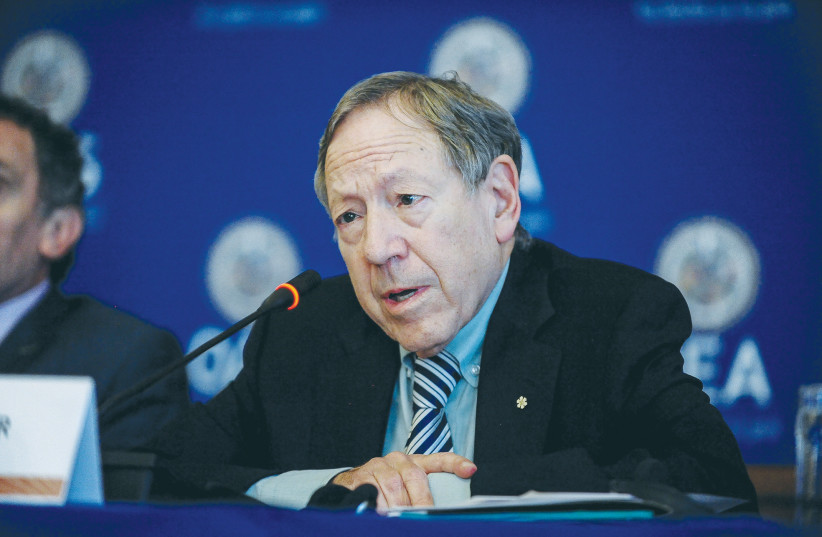
UNIVERSITY FACULTY accused international human rights activist Prof. Irwin Cotler of prejudice against Palestinians (credit: REUTERS)

“It is, put plainly, the equivalent of a group of white people telling Black people how to define anti-Black racism–and it is just as unacceptable,” Kuper says in regard to the leaked complaint’s condemnation of Cotler’s definition of antisemitism.

Antisemitism on the rise in Canadian universities

While most blame the TFOM’s antisemitic environment on the recent conflicts in Gaza, “hateful attitudes about Jews have been on the rise at TFOM for at least three years.”

In the years prior to the war in Gaza, Kuper reports overhearing colleagues belittling the Holocaust, hearing about non-Jewish students believing their Jewish classmates had the power to block their residency matches, and having to address the refusal of student groups to provide kosher food at TFOM events. She also details personally experiencing antisemitism on campus in the form of accusations that she lies to, oppresses, and controls others for her own personal gain. Kuper has even been told, “that antisemitism can’t exist because everything Jews say are lies, including any claims to have experienced discrimination.”

“Dr. Kuper’s experiences with antisemitism are not unique, but they are deeply disturbing.”

Noah Shack, Centre for Israel and Jewish Affairs Vice President of the Greater Toronto Area

“Growing support for antisemitism at TFOM has been carefully re-framed since the spring of 2021 as political activism against Israel and as scholarly positions held under the protection of academic freedom,” explains Kuper.

“Calling someone a Zionist in the Canadian context is almost the same as calling them a Jew,” Kuper says, citing recent data that 79% of Canadian Jews define themselves as being emotionally attached to Israel. “Nonetheless, there are those at TFOM who have insisted (to me and to others) that [Zionist] means various racist and hateful things, ranging from ‘hating  all  Muslims’ to ‘wanting to murder all Palestinians.’ Such false definitions are then used to justify hatred of any Jews who ‘admit’ to being Zionists.”

The rise in antisemitism at U of T reflects an increase in Canada as a whole: A record 2799 verified anti-Jewish hate crimes were committed in Canada in 2021. Following the mainstreaming of antisemitism by celebrities Kanye West and Kyrie Irving, the number should only continue to rise.

“Dr. Kuper’s experiences with antisemitism are not unique, but they are deeply disturbing,” said Noah Shack, vice president of the greater Toronto area at the Centre for Israel and Jewish Affairs, in response to Kuper’s newly published study.

“The pernicious tropes, discrimination, victim-blaming, and hateful attitudes about Jews that Dr. Kuper details confirm the serious concerns that prompted the TFOM to establish the role of Senior Advisor on Antisemitism in 2021. We look forward to learning what action the faculty will be taking to address this distressing situation. In September, the dean of the TFOM formally apologized for its quotas on Jewish medical school applicants in the 1940-50s. While recognition of past failures is important, urgent action to support Jewish faculty, staff, and students is essential today.”


Zawartość publikowanych artykułów i materiałów nie reprezentuje poglądów ani opinii Reunion’68,
ani też webmastera Blogu Reunion’68, chyba ze jest to wyraźnie zaznaczone.
Twoje uwagi, linki, własne artykuły lub wiadomości prześlij na adres:
webmaster@reunion68.com