
Archive | 2026/09/01

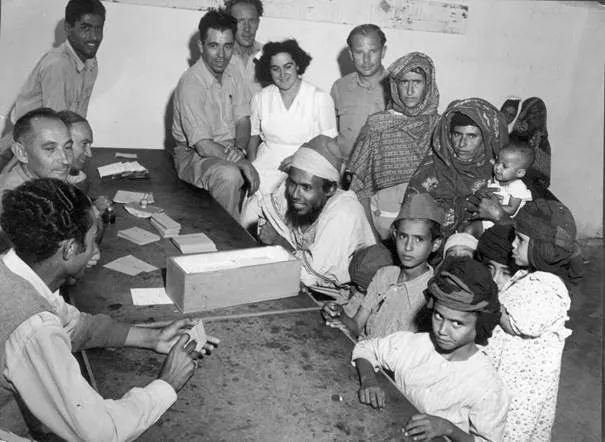
Kiedy Żydzi mizrahi skorzystali ze swojego „prawa powrotu”


Kiedy Żydzi mizrahi skorzystali ze swojego „prawa powrotu”

Lyn Julius


Nie da się cofnąć zegara w kwestii wymiany uchodźców


Jeśli kiedykolwiek czytaliście znakomitą książkę The War of Return Einat Wilf i Adiego Schwartza, zrozumielibyście, że sednem sprawy palestyńskiej jest „prawo powrotu” palestyńskich uchodźców oraz milionów ich potomków do Izraela. Cała reszta – rozwiązanie dwupaństwowe czy jego brak – to odwracanie uwagi od istoty sprawy.

Już w latach 70. przywódcy arabscy zdali sobie sprawę, że nie mogą domagać się „prawa powrotu” dla swoich arabskich pobratymców, skoro sami wypędzili niemal milion Żydów. Dlatego w 1975 roku Liga Arabska wystąpiła z apelem do Żydów mizrahi – zwłaszcza tych mieszkających w Izraelu – aby powrócili do krajów, w których się urodzili. Irak i Maroko należały do państw najgłośniej popierających tę inicjatywę. Dzięki temu państwom arabskim nie można już było zarzucać, że odmawiają swoim byłym żydowskim obywatelom „prawa powrotu”.

Trzydzieści lat wcześniej żydowska społeczność świata arabskiego została zdziesiątkowana: Żydzi uciekali przed pogromami oraz usankcjonowanymi przez państwo prześladowaniami i wywłaszczeniami. Pod każdym względem była to bezprecedensowa, choć w dużej mierze przemilczana, „czystka etniczna”.

Do 1975 roku w Libii pozostała już tylko garstka Żydów ze społeczności liczącej niegdyś 38 tysięcy osób. W 2004 roku pułkownik Muammar Kaddafi zaprosił libijskich Żydów, by „wrócili do domu”, a następnie niewielka delegacja żydowska odwiedziła Libię. Nie był to jednak pierwszy przypadek, gdy libijski przywódca wzywał Żydów do powrotu do kraju ich urodzenia. Kiedy podobną propozycję złożył w 1975 roku („Czyż nie jesteście Arabami tak jak my, arabskimi Żydami?”), Albert Memmi, urodzony w Tunezji francuski pisarz i intelektualista, odpowiedział z drwiną:

„Owszem, rzeczywiście byliśmy arabskimi Żydami – pod względem naszych obyczajów, kultury, muzyki, kuchni. Ale czy trzeba pozostać arabskim Żydem, jeśli w zamian trzeba drżeć o własne życie i przyszłość swoich dzieci oraz zawsze mieć odmawiane prawo do normalnego życia? Chcielibyśmy być arabskimi Żydami. Jeśli porzuciliśmy tę ideę, to dlatego, że przez stulecia muzułmańscy Arabowie systematycznie uniemożliwiali jej urzeczywistnienie swoją pogardą i okrucieństwem.”

Kto przy zdrowych zmysłach wróciłby do krajów, które pozostawały równie wrogie wobec Żydów jak w dniu, w którym zostali z nich wypędzeni?

W 1975 roku iracka Rada Dowództwa Rewolucji wydała dekret – którego istnienie potwierdza amerykański raport dyplomatyczny – zezwalający irackim Żydom, którzy wyemigrowali po 1948 roku, na powrót do Bagdadu i odzyskanie praw wynikających z irackiego obywatelstwa.

Jednym z ludzi, którzy odpowiedzieli na ten apel, był Mordechaj Khabaza, iracki Żyd mieszkający w Izraelu.

Gdy tylko Khabaza przybył z „syjonistycznego tworu”, natychmiast wzbudził podejrzliwość i gniew kilkuset Żydów, którzy pozostali w Iraku. Unikali z nim kontaktu, obawiając się, że władze oskarżą ich o utrzymywanie kontaktów z syjonistą. Syjonizm uznano za przestępstwo zagrożone karą śmierci, a Żydom powszechnie stawiano sfabrykowane zarzuty szpiegostwa.

Według jednej z relacji Khabaza zachęcał iracki wywiad do skonfiskowania wszystkich zwojów Tory z synagog, „z wyjątkiem garstki potrzebnej do modlitw”. Pomógł władzom zgromadzić zbiór żydowskich dokumentów, który – jak na ironię – został później odnaleziony przez Amerykanów, w wodzie, w zalanej piwnicy siedziby tajnej policji. W 2003 roku przewieziono go z Bagdadu do Teksasu w celu konserwacji.

O Mordechaju Khabazie więcej nie słyszano. Społeczność żydowska uważała, że Saddam kazał go zabić, gdy przestał być użyteczny.

Do Iraku z Izraela powróciło również troje członków rodziny Nawi. Małżeństwo, którego oboje członkowie aktywnie działali w partii komunistycznej w Petach Tikwie, przeprowadziło się wraz z synem z powrotem do Bagdadu. Pani Nawi powiedziała reporterom na bagdadzkim lotnisku, że teraz, kiedy znów zaczęła oddychać bagdadzkim powietrzem, czuje się, jakby wróciła do raju. Jednak po pewnym czasie również ta rodzina zniknęła bez śladu.

Według jednej z opowieści społeczność żydowska otrzymała trumnę oraz polecenie pochowania jej na żydowskim cmentarzu w Bagdadzie. Funkcjonariusze służb bezpieczeństwa towarzyszyli członkom społeczności na cmentarzu, aby dopilnować, że trumna nie zostanie otwarta. Niektórzy Żydzi natychmiast uznali, że w trumnie znajdowały się ciała małżeństwa Nawi. Inni sądzą, że była to trumna Mordechaja Khabazy.

Niewielka liczba Żydów powróciła do Maroka, jednak wezwanie arabskich przywódców, by Żydzi skorzystali ze swojego „prawa powrotu”, zakończyło się fiaskiem. Jedyna droga prowadząca do pokoju i pojednania wymaga od nich uznania, że doszło do wymiany uchodźców między Żydami mizrahi a palestyńskimi Arabami. Zegara nie da się cofnąć: żadna z tych grup nie może wrócić.

Jednak UNRWA, która utrwala problem uchodźców palestyńskich w nieskończoność, nadal daje Palestyńczykom płonną nadzieję, że kiedyś powrócą. Żydzi już dawno przestali być uchodźcami, dlatego – jak twierdzą Wilf i Schwartz – rozwiązaniem musi być likwidacja UNRWA.


Link do oryginału:

Lyn’s Substack
When Mizrahi Jews exercised their ‘right of return’
If you have ever read the excellent book, The War of Return by Einat Wilf and Adi Schwartz, you would understand that the Palestinian cause is all about ‘the right of return’ to Israel of Palestinian refugees and their millions of descendants. Everything else – two-state solution or not – is a red herring…

Zawartość publikowanych artykułów i materiałów nie reprezentuje poglądów ani opinii Reunion’68,
ani też webmastera Blogu Reunion’68, chyba ze jest to wyraźnie zaznaczone.
Twoje uwagi, linki, własne artykuły lub wiadomości prześlij na adres:
webmaster@reunion68.com

America’s New Scam?: Hamas Elections by Another Name is Still Hamas


America’s New Scam?: Hamas Elections by Another Name is Still Hamas

Khaled Abu Toameh


  • Hussein al-Sheikh, vice president of the Palestinian Authority (PA) and deputy chairman of the Palestine Liberation Organization (PLO), revealed this week that Hamas… has reached an understanding with the US permitting figures affiliated with the terrorist organization to participate [in the upcoming November 29 PA elections] through a “new political framework.”
  • If this account is accurate, the scheme amounts to a dangerous exercise in deception.
  • Changing Hamas’s name does not change Hamas. Pretending that Hamas-affiliated election candidates are somehow different from Hamas because they are running under another banner is a scam.
  • Perhaps they could call themselves the “Palestinian Peace Movement,” or the “Palestinian Party for Democracy and Transparency”?
  • Hamas does not recognize Israel’s right to exist. It has never accepted the PLO as the “sole legitimate representative of the Palestinian people.” It rejects the Oslo Accords. Its ideology remains centered on “resistance” and the claimed “liberation” of Palestine — which in fact has never existed — wishfully from the Jordan River to the Mediterranean Sea.
  • Most importantly, Hamas has still not demonstrated that it is prepared to surrender its weapons and cease functioning as an armed organization.
  • Hamas will promise anything if doing so helps it survive and return to political legitimacy.
  • Hamas has proved itself adept at telling outsiders what they want to hear while pursuing its long-term objectives.
  • The same danger applies to elections
  • Why, after October 7, should anyone, let alone the Trump administration, be searching for formulas to facilitate Hamas’s return to Palestinian political life?
  • Why, nearly three years after October 7, 2023, does a terrorist organization such as Hamas continue to be treated by various international and regional parties as some kind of indispensable political actor? Hamas officials continue to participate in negotiations and meetings through regional mediators, while discussions increasingly seem aimed not at removing Hamas from Palestinian political life but at finding ways to accommodate it.
  • There can be no loophole called “Hamas-affiliated independents.” There can be no cosmetic rebranding and no supposedly “new political framework” designed to disguise the identity of candidates who continue to embrace Hamas and its jihadist ideology.
  • Stop the deception. Stop searching for ways to sneak Hamas back into Palestinian political life through the back door. It is not good for either their election or America’s.

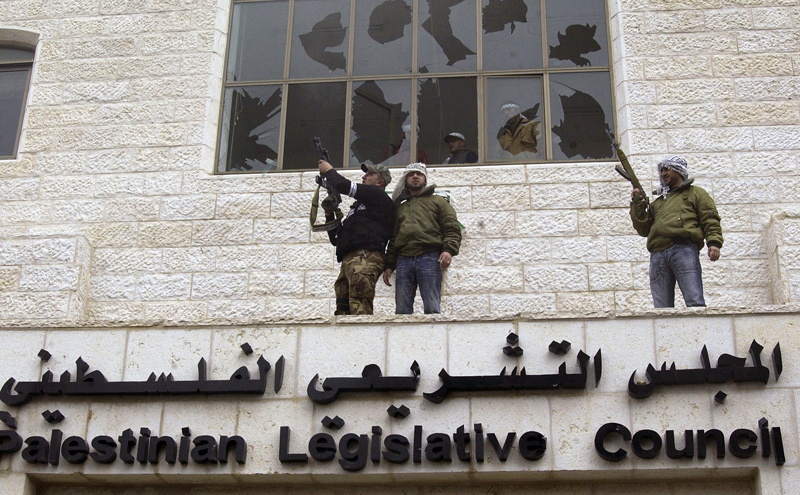
Changing Hamas’s name does not change Hamas. Pretending that Hamas-affiliated election candidates are somehow different from Hamas because they are running under another banner is a scam. If candidates are affiliated with Hamas, support Hamas or subscribe to its extremist ideology, what difference does the name of their electoral list make? Pictured: The Palestinian Legislative Council building in Ramallah on January 28, 2006, three days after its last election. (Photo by Zharan Hammad/Getty Images)

If reports about an agreement between the United States and Hamas concerning the terrorist group’s participation in the upcoming Palestinian Authority elections are true, the arrangement is not only outrageous, it is a fraud.

Hussein al-Sheikh, vice president of the Palestinian Authority (PA) and deputy chairman of the Palestine Liberation Organization (PLO), revealed this week that Hamas would not participate in the November 28 parliamentary elections under its own name or in its current form. According to al-Sheikh, Hamas has reached an understanding with the US permitting figures affiliated with the terrorist organization to participate through a “new political framework.”

If this account is accurate, the scheme amounts to a dangerous exercise in deception.

Changing Hamas’s name does not change Hamas. Pretending that Hamas-affiliated election candidates are somehow different from Hamas because they are running under another banner is a scam. If candidates are affiliated with Hamas, support Hamas or subscribe to its extremist ideology, what difference does the name of their electoral list make?

Would indirect affiliation with Hamas somehow be acceptable? Would Hamas supporters become moderates simply because the word “Hamas” does not appear on the ballot?

Perhaps they could call themselves the “Palestinian Peace Movement,” or the “Palestinian Party for Democracy and Transparency”? Would that suddenly transform an Islamist terrorist organization committed to jihad (holy war) against Israel into a collection of liberal democrats?

This farce has been tried before. In January 2006, Hamas contested the PA parliamentary election not under the name Hamas, but under the seemingly innocuous banner Change and Reform. It won 74 of the 132 seats in the Palestinian Legislative Council, compared to 45 for the ruling Fatah faction.

What “change” and “reform” did Hamas ultimately bring?

The “change” was the establishment of a heavily armed Islamist regime in the Gaza Strip after Hamas violently seized control of the territory in 2007.

The “reform” consisted of building tunnels, manufacturing and smuggling rockets and other weapons, recruiting terrorists and indoctrinating generations of Palestinians in jihad and hatred of Israel.

The world saw the ultimate expression of Hamas’s “Change and Reform” on October 7, 2023, when Hamas and other Palestinians invaded Israel, murdered 1,200 Israelis and foreign nationals and kidnapped hundreds more, and committed atrocities that triggered a devastating war whose consequences have been disastrous for Israelis and Palestinians alike.

After nearly three years of bloodshed, are Washington and other international actors really contemplating another experiment in pretending to rebrand Hamas?

The 2006 election should have taught everyone a lesson.

At the time, the United States and its European allies did not require Hamas, as a condition for participating in the election, to recognize Israel, renounce terrorism, and accept agreements signed between Israel and the PLO.

These conditions should have been imposed before Hamas was allowed to enter the political system, not after it had won control of parliament.

Hamas’s participation was especially cynical because the elections themselves were rooted in the Oslo Accords, which Hamas had always rejected.

The 1995 Israeli-Palestinian Interim Agreement, “Oslo II,” explicitly provided for “direct, free and general political elections” for the Palestinian Legislative Council and the head of its executive authority. It also established detailed arrangements governing Palestinian Authority elections.

Hamas, in other words, rejected Oslo while exploiting the political institutions created by Oslo to reach power.

Now history appears in danger of repeating itself. PA President Mahmoud Abbas has made clear that Palestinian political factions seeking participation in the political system must accept the PLO’s political program and international obligations, United Nations resolutions, and the principle of one authority, one law, and one legitimate security force.

Hamas, in practice, accepts none of these conditions. Hamas does not recognize Israel’s right to exist. It has never accepted the PLO as the “sole legitimate representative of the Palestinian people.” It rejects the Oslo Accords. Its ideology remains centered on “resistance” and the claimed “liberation” of Palestine — which in fact has never existed — wishfully from the Jordan River to the Mediterranean Sea.

Most importantly, Hamas has still not demonstrated that it is prepared to surrender its weapons and cease functioning as an armed organization.

So, what exactly would qualify a Hamas-affiliated candidate to participate in elections? A declaration signed on a piece of paper?

Hamas will promise anything if doing so helps it survive and return to political legitimacy.

Before October 7, 2023, Hamas persuaded many people that it was just eager to improve economic conditions in the Gaza Strip. Hamas insisted that it was only interested in preserving the relative calm, increasing the number of Gazans permitted to work in Israel, and securing additional aid. Hamas, presumably as part of its deception, even publicly punished Gazans who tried to break the intermittent ceasefires.

Then came October 7, 2023. That event should have destroyed forever the fantasy that Hamas’s tactical behavior can be confused with ideological moderation. Hamas has proved itself adept at telling outsiders what they want to hear while pursuing its long-term objectives.

The same danger applies to elections. A Hamas candidate does not stop being a Hamas candidate because he removes the Hamas logo from his campaign posters. A terrorist organization does not become moderate because it establishes a front party, recruits self-proclaimed “independent” candidates, or hides behind “technocrats.”

If al-Sheikh’s description of the understanding with the Americans is correct, the question Washington needs to answer is simple: Why?

Why, after October 7, should anyone, let alone the Trump administration, be searching for formulas to facilitate Hamas’s return to Palestinian political life?

Why, nearly three years after October 7, 2023, does a terrorist organization such as Hamas continue to be treated by various international and regional parties as some kind of indispensable political actor? Hamas officials continue to participate in negotiations and meetings through regional mediators, while discussions increasingly seem aimed not at removing Hamas from Palestinian political life but at finding ways to accommodate it.

This message tells Palestinians, Hamas and other designated groups that terrorism carries no lasting political price — an outcome the Taliban in Afghanistan are enjoying all too well.

The lesson all these groups — including the Islamic Revolutionary Guard Corps (IRGC) savagely ruling Iran — will inevitably draw is that if you survive long enough, the world will rehabilitate you.

The international community should instead make one principle clear: Hamas cannot remain both an armed terrorist organization and a legitimate political actor. There can be no loophole called “Hamas-affiliated independents.” There can be no cosmetic rebranding and no supposedly “new political framework” designed to disguise the identity of candidates who continue to embrace Hamas and its jihadist ideology.

Stop the deception. Stop searching for ways to sneak Hamas back into Palestinian political life through the back door. It is not good for either their election or America’s.


Khaled Abu Toameh is an award-winning journalist based in Jerusalem.


Zawartość publikowanych artykułów i materiałów nie reprezentuje poglądów ani opinii Reunion’68,
ani też webmastera Blogu Reunion’68, chyba ze jest to wyraźnie zaznaczone.
Twoje uwagi, linki, własne artykuły lub wiadomości prześlij na adres:
webmaster@reunion68.com


Metropolitan Museum of Art Cancels Met Gala Exhibit on John Galliano Following Backlash Over Antisemitic Comments


Metropolitan Museum of Art Cancels Met Gala Exhibit on John Galliano Following Backlash Over Antisemitic Comments

Shiryn Ghermezian


View of the Metropolitan Museum of Art, The Met, founded in 1870, the largest art museum in the Americas, New York City. Photo: IMAGO/Robert Harding via Reuters Connect

The Metropolitan Museum of Art on Monday canceled its scheduled 2027 Met Gala exhibit highlighting British fashion designer John Galliano, after facing backlash for honoring a designer with a history of making antisemitic comments.

The museum and fashion designer announced in a joint statement that the exhibit “John Galliano: Horizons,” previously scheduled to open in May 2027, will “not proceed as planned” and information about a new spring Costume Institute exhibition and 2027 Met Gala will be announced at a later date.

“After much reflection and discussion with The Met and all those involved, I have decided, with great sadness, that it is best for the exhibition not to take place at this time,” Galliano said. “I remain fully accountable for the pain caused by my words in the past, particularly the hurt I caused to the Jewish and Asian communities, and I remain deeply sorry for it. I understand that meaningful atonement is not achieved through an exhibition, institutional recognition, or a single public gesture. It is a continuing responsibility, demonstrated through listening, learning, and one’s conduct over time.”

“I do not want the debate surrounding me to place The Met in a difficult position or to distract from the remarkable work of the Costume Institute. I also recognize and respect that an exhibition honoring my work would be painful for some,” added the former creative director of Christian Dior and Givenchy.

Andrew Bolton, curator in charge of The Met’s Costume Institute, said he supports the decision to cancel the exhibit. “I believe deeply in the responsibility of museums to examine difficult histories with rigor, candor, and care. I also recognize the pain and concern this exhibition has caused,” he said.

Vogue‘s global editorial director and Met trustee Anna Wintour also commented on the cancellation of the exhibit. “John’s decision that the exhibition devoted to his work should not take place at this time is very courageous and a measure of the man he is. I believe this is the right decision, and both he and the Museum have my full support,” she noted.

The decision was praised by Jonathan Greenblatt, CEO of the Anti-Defamation League. “With antisemitism at crisis levels, the Met honoring John Galliano at this moment was misguided, and even Galliano ultimately recognized what the Met should have done from the start,” he said. “This was the wrong move at the wrong moment. Timing matters.”

It was announced in late July that the Met’s 2027 Costume Institute exhibition and Gala next year would highlight Galliano’s influence on fashion. Since then, executives at the Metropolitan Museum of Art and Vogue have been highly criticized for choosing to honor a designer who made antisemitic comments in the past. The Met Gala always takes place the first Monday in May and many observers also found it concerning that the 2027 event would be held on May 3, which coincides with Holocaust Remembrance Day (Yom HaShoah) on May 4. The national day of commemoration in Israel will open with a ceremony held at Yad Vashem, the Jewish state’s national memorial to the Holocaust, on May 3.

“A second chance for John Galliano is one thing. Making him only the third living designer ever granted a solo retrospective at the Met Gala is not forgiveness. It is canonization. Scheduling its gala for Yom HaShoah is not merely appalling. It is obscene,” said Auschwitz Jewish Center Foundation President and Director General Jack Simony in a statement on Sunday.

“Then again, perhaps the timing is perfect. Anna Wintour has always known what is in vogue. This year, it is antisemitism,” he added, referring to Vogue’s global editorial director and Met trustee Anna Wintour.

In 2011, Galliano was convicted of a hate crime in France after he went on a drunken antisemitic tirade against a couple at a bar in Paris. He told the couple, a Jewish woman and her Asian boyfriend, “Dirty Jewish face, you should be dead” and “f–king Asian bastard, I will kill you.” The incident resulted in him being fired from Dior. A video then surfaced that showed Galliano making antisemitic comments at the same bar while drunk in October 2010. During the antisemitic rant, Galliano said, “I love Hitler” and “People like you would be dead today. Your mothers, your forefathers, would be f–king gassed and f–king dead.” Galliano has repeatedly apologized for his antisemitic remarks, blaming his actions on alcohol and drug addiction.

The Metropolitan Museum of Art had said the 2027 Costume Institute exhibition would “directly address the rupture caused by [Galliano’s] antisemitic, racist, and anti-Asian conduct in 2010 and 2011.”

New York City Council Speaker Julie Menin said last week the museum was making a “serious mistake” in honoring Galliano and that the designer’s antisemitic remarks “is not behavior that should be easily overlooked or normalized.”

“At a time when our city is confronting a serious rise in antisemitism, anti-Asian hate, and other forms of hatred, I find the decision to so prominently honor someone who has engaged in this behavior to be wholly inappropriate,” Menin stated. “Our cultural institutions, particular those that receive funding from the City of New York, have a responsibility to demonstrate that hatred and bigotry carry consequences. Words matter, and whom we choose to elevate is a direct statement of our values and what we are willing to tolerate.”

Galliano was set to be only the third living designer to receive a solo exhibit at The Met, following Yves Saint Laurent in 1983 and Rei Kawakubo of Comme des Garçons in 2017.


Zawartość publikowanych artykułów i materiałów nie reprezentuje poglądów ani opinii Reunion’68,
ani też webmastera Blogu Reunion’68, chyba ze jest to wyraźnie zaznaczone.
Twoje uwagi, linki, własne artykuły lub wiadomości prześlij na adres:
webmaster@reunion68.com