Archives

Nine inspiring Jews who died in 2019

Nine inspiring Jews who died in 2019

JTA STAFF


This year, there were victims of violence and old age, survivors who made it through the Holocaust to tell their fateful stories, and others who revolutionized their fields.

A memorial candle / (photo credit: Wikimedia Commons)

The end of each year offers the opportunity to remember the Jewish figures who we lost over the past 12 months who left outsized impressions on our world.

This year, there were victims of violence and old age, survivors who made it through the Holocaust to tell their fateful stories, and others who revolutionized their fields.

Here are some whose stories inspired us the most.

Harold Bloom

Born to Yiddish-speaking Orthodox Jewish immigrants in New York City, Harold Bloom didn’t learn to speak English until age 5. He would grow up to become one of the most influential American literary critics of all time, a fierce defender of the Western literary canon and perhaps the leading authority of his time on what belongs in it. But he never shook his affinity for Yiddish, telling an interviewer shortly before his death that he still dreamed in the language of his youth. Bloom died on Oct. 14 at 89.

Lori Gilbert-Kaye

When a gunman burst into the Chabad of Poway synagogue on April 27, Lori Gilbert-Kaye reportedly leapt in front of the rabbi to shield him from the bullets. Gilbert-Kaye, 60, was the only fatality in the attack on the San Diego-area congregation. Remembered as a pillar of the community and a regular hostess of Shabbat meals filled with guests, Gilbert-Kaye was survived by her husband, Dr. Howard Kaye, and their daughter, Hannah.

Robert Frank

Robert Frank was among the most influential photographers of the 20th century. His groundbreaking book “The Americans” was produced from 28,000 photos he took on road trips across the United States in the 1950s. According to The New York Times, the Nazi threat raging in neighboring Germany during his youth formed his understanding of oppression. Frank died on Sept. 9 at 94.

Peggy Lipton

Actress Peggy Lipton was descended from Russian-Jewish immigrants and raised in a heavily Jewish enclave on Long Island, New York, but she became the quintessential American flower child as the star of the crime drama “The Mod Squad.” In 1974, she married the legendary music producer Quincy Jones, with whom she had two daughters — including Rashida Jones, the actress and writer. She died of cancer in May at 72.

Moshe Arens

Over the course of his three decades in Israeli public life, Moshe Arens served as a lawmaker, ambassador and defense minister under three prime ministers. Born in Lithuania, Arens immigrated to the United States in 1939 and served in the U.S. Army Corps of Engineers during World War II. Prior to entering politics, he was a professor of aeronautics and an executive in the Israeli aerospace industry. Arens died on Jan. 7 at 93.

Herman Wouk

When Time put Herman Wouk on its cover in 1955, it found the Orthodox novelist’s blend of literary achievement and religious practice to be paradoxical. But over the course of his nearly seven-decade career, Wouk would help usher Judaism into the American mainstream through more than two dozen novels and works of nonfiction, several of which were adapted for the screen. He died on May 17 at 103.

Barbra Siperstein

On Feb. 1, the Babs Siperstein law went into effect in New Jersey, allowing residents to change their gender identity without proof they had undergone gender reassignment surgery. Two days later, the law’s namesake died at 76. Barbra Siperstein was a fierce advocate for gender equality and transgender rights. In 2009, after completing sex reassignment surgery, she officially changed her Hebrew name from Eliezer Banish to Baila Chaya at a ceremony at her Conservative synagogue in Freehold.

Yechiel Eckstein

History will remember Yechiel Eckstein as the man who raised hundreds of millions of dollars, mostly from Christians, to benefit needy Jews in Israel and beyond. But to thousands of Jews in conflict zones who he helped bring to Israel, Eckstein was something of a guardian angel. Eckstein founded the International Fellowship of Christians and Jews in 1983, and through a combination of pluck, charisma and tireless legwork made unprecedented progress in raising money for Jewish causes from evangelicals. In February, he died of heart failure in Jerusalem at 67.

Eva Mozes Kor

Eva Mozes Kor was born in Romania and, along with her twin sister, sent to Auschwitz in 1944. At the concentration camp, they underwent medical experiments at the hands of the infamous Nazi doctor Josef Mengele. But Kor was not the type to hold grudges, even against Nazis. She publicly forgave Mengele and made headlines in Germany for embracing Auschwitz guard Oskar Groening at his trial in 2015. Kor died in July in Poland while on a trip organized by the Candles Holocaust Museum and Education Center, which she founded in Terre Haute, Indiana, in 1995.


Zawartość publikowanych artykułów i materiałów nie reprezentuje poglądów ani opinii Reunion’68,
ani też webmastera Blogu Reunion’68, chyba ze jest to wyraźnie zaznaczone.
Twoje uwagi, linki, własne artykuły lub wiadomości prześlij na adres:
webmaster@reunion68.com


Your News From Israel – Dec. 5, 2019

Your News From Israel – Dec. 5, 2019

ILTV Israel News


ILTV is an independent English-language media company based in Tel Aviv that provides daily news and entertainment to its viewers.

Launched in 2015, ILTV is committed to producing high quality content in a broad array of subjects, from reporting news and current events to programming which highlights technology, art and entertainment, sports and culture.

In today’s media, biased reporting and anti-Israel agendas are prevalent, as the State of Israel is under relentless attack.
From the “spinning” of unfolding political events in order to display Israel in a negative light, to the misrepresenting facts, media outlets are providing the fuel which shapes negative public opinion and contributes to the Delegitimization of the State of Israel.


Zawartość publikowanych artykułów i materiałów nie reprezentuje poglądów ani opinii Reunion’68,
ani też webmastera Blogu Reunion’68, chyba ze jest to wyraźnie zaznaczone.
Twoje uwagi, linki, własne artykuły lub wiadomości prześlij na adres:
webmaster@reunion68.com


Your News From Israel – Dec. 3, 2019

Your News From Israel – Dec. 3, 2019

  ILTV Israel News


Israeli Ambassador to the UN, Danny Dannon, pushes for recognition of Jewish Refugees… the IDF sends relief teams to Albania… and ILTV reveals this year’s Top 5 Israeli-made gifts to consider for the holidays.

Get the latest news from Israel –
SUBSCRIBE: https://bit.ly/2IMxJdB

ILTV is an independent English-language media company based in Tel Aviv that provides daily news and entertainment to its viewers.

Launched in 2015, ILTV is committed to producing high quality content in a broad array of subjects, from reporting news and current events to programming which highlights technology, art and entertainment, sports and culture.

In today’s media, biased reporting and anti-Israel agendas are prevalent, as the State of Israel is under relentless attack.
From the “spinning” of unfolding political events in order to display Israel in a negative light, to the misrepresenting facts, media outlets are providing the fuel which shapes negative public opinion and contributes to the Delegitimization of the State of Israel.


Zawartość publikowanych artykułów i materiałów nie reprezentuje poglądów ani opinii Reunion’68,
ani też webmastera Blogu Reunion’68, chyba ze jest to wyraźnie zaznaczone.
Twoje uwagi, linki, własne artykuły lub wiadomości prześlij na adres:
webmaster@reunion68.com


Antisemitism caused by BDS unmasked in new gov’t report

Antisemitism caused by BDS unmasked in new gov’t report

ILANIT CHERNICK


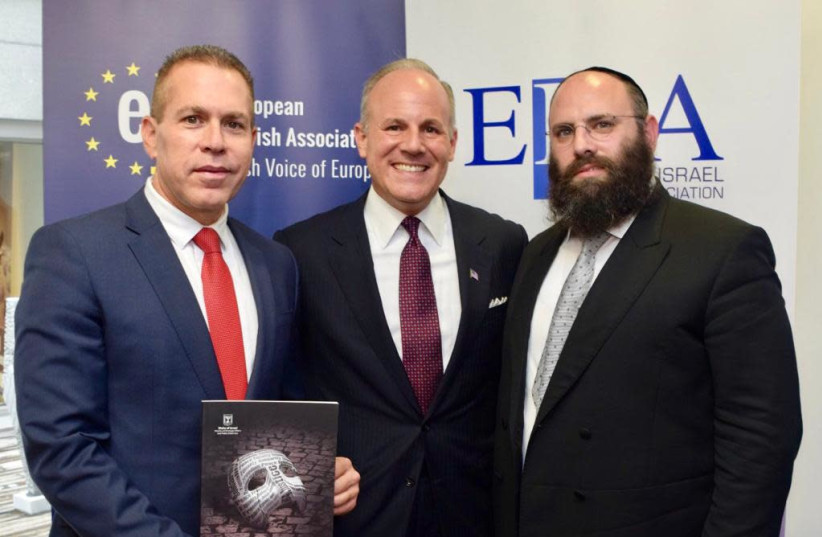
Strategic Affairs Minister Gilad Erdan, US Special Envoy for Combatting Antisemitism and European Jewish Association chairman Rabbi Menachem Margolin / (photo credit: YONI KREIGER)

BRUSSELS – Strategic Affairs Minister Gilad Erdan unveiled a new ministry report at the EU Parliament on Wednesday that details how the Boycott, Divestment and Sanctions movement has intensified antisemitism for Jews around the world.

The 94-page report, titled “Behind the Mask: The Antisemitic Nature of BDS Exposed,” was published in English and calls on Western governments and leaders to “remain vigilant against antisemitism in all its forms, including that practiced by the BDS movement, and to take proactive steps to stem this hate.”

Erdan stressed that the aim of BDS “is to mainstream antisemitism.”

“We have exposed BDS and its connections to Hamas and the Popular Front for the Liberation of Palestine,” he explained. “The blatant antisemitism that was used to single out the Jews is being used to attack the Jewish state.”

During the briefing, EJA chairman Rabbi Menachem Margolin said that BDS “is responsible for vast majority of violent and online attacks in Europe.”

Margolin added that it shouldn’t be normal that Jews in “London, France and here in Brussels are prepared to be attacked.”

“If there is clear legislation, policy and education, antisemitism can’t grow but European governments allow and support BDS,” Margolin said.

Erdan also called on European governments to adopt the IHRA definition and to implement legislation to fight BDS “and end funding” to the movement.

US Special Envoy for Combating Antisemitism Elan Carr stressed that “antisemitism isn’t only about the Jews, and that the fight is not only just about protecting the Jewish people – it’s about the fight for our collective future,” stressing that the Holocaust was one of the lowest barometers in human history.

In the fight against antisemitism, Carr said that world leaders need to ask “what kind of world” they want for future generations.

“We have to fulfill our promise to the next generation, who is deserving of a better world,” he said. “If all governments stand together on this, we will see a better world.”

Carr reminded those present that the official policy of the US is that “anti-Zionism is antisemitism.” He also made it clear that he is positive “we will win this fight if we work together,” concluding that if he wasn’t optimistic about this, he “would never have taken this job.”

Polish EU Parliament member Anna Fotyga told the panel that although she is not Jewish, she lost family in World War II and identifies with the Jewish people deeply.

“Israel is the only democracy in the Middle East,” she stressed, adding that BDS is damaging to the ideals and values of EU countries because “you can’t separate sport, education, and economy… when it comes to boycotts.”

Greek EU Parliament member Anna-Michelle Asimakopoulou said that “antisemitic acts and incidents are increasing all over the world,” highlighting that this is “very concerning.”

“The Greek government will continue to fight against antisemitism,” Asimakopoulou vowed.


Zawartość publikowanych artykułów i materiałów nie reprezentuje poglądów ani opinii Reunion’68,
ani też webmastera Blogu Reunion’68, chyba ze jest to wyraźnie zaznaczone.
Twoje uwagi, linki, własne artykuły lub wiadomości prześlij na adres:
webmaster@reunion68.com


Fighting Anti-Semitism With A Millennial Focus

Fighting Anti-Semitism With A Millennial Focus

STEVE LIPMAN


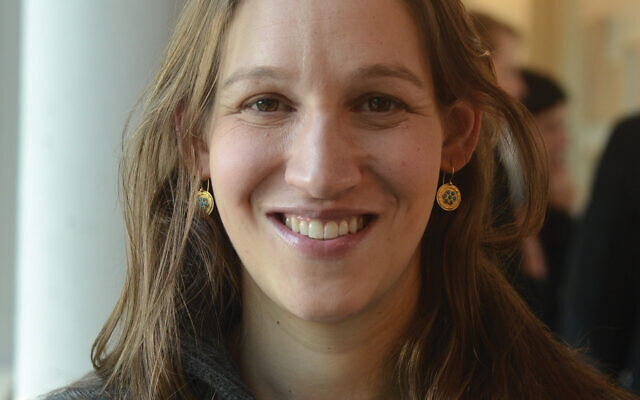
Rachel Fish: “Calls for the destruction of Israel are absolutely a form of anti-Semitism.”

Ten months after Robert Kraft, philanthropic owner of the New England Patriots football team, won the $1 million Genesis Prize and announced that he would use the prize money to establish a new organization to fight anti-Semitism, Rachel Fish was recently named the first executive director of his Foundation to Combat Ant-Semitism.

Fish, who started her job last month, had worked at the Paul E. Singer Foundation in New York, where she served as a senior adviser and resident scholar of Jewish/Israel philanthropy. She previously was executive director of Brandeis University’s Schusterman Center for Israel Studies. Fish earned a doctorate in Near Eastern and Judaic Studies from Brandeis, with a dissertation about the idea of binationalism and alternative visions for constructing the State of Israel. The Jewish Week interviewed her by email. This is an edited transcript:

Q: The Jewish community has no lack of established organizations dedicated to cataloging and fighting anti-Semitism. Among them, the ADL and Simon Wiesenthal Center. Why do we need another one?

A: As anti-Semitism is on the rise, no individual or organization can alone solve this problem. There is always an advantage to new eyes on the problem, along with additional resources, brain power and strategies. Our goal is to focus on combatting this hate in very specific ways through targeted avenues; our target audience is 35 years old and younger, and we intend to focus on leveraging social media while making efforts to address online hatred.

The more we create informed citizenry who are empathetic and recognize the complexity of history, the better off we are. Education alone is not enough. We also have to be willing to clearly expose those who hate, label from where the anti-Semitism emerges, and demand accountability for those who act in a prejudicial and discriminatory manner towards the Jewish people, Judaism and the Jewish state.

In the U.S. recently, White Plains and Brooklyn. In Germany, Halle. Is anti-Semitism getting worse, or is the media coverage, especially via the internet, getting better?

Is anti-Semitism getting worse? I would argue yes, and the confluence of sources share a common thread – the elimination of Judaism, the Jewish people and the Jewish homeland. The phenomenon of anti-Semitism was never erased from our societies.

Even within the American Jewish experience, anti-Semitism has always existed. In the U.S. and Europe today, this hatred manifests itself not only among white supremacist movements but within hard-left progressive circles and within radical Islam. We can’t allow anti-Semitism to become politicized and have a debate over one form of anti-Semitism being worse than the other. They are all bad.

Do you accept the premise that anti-Zionism and anti-Israel animus is automatically a form of anti-Semitism? Will defense of Israel be part of your mandate?

Calls for the destruction of the State of Israel are absolutely a form of anti-Semitism. This is very different from discussing Israeli policy and debating particular ideas of various Israeli governments and decisions. Israelis engage in those debates on a daily basis. But that is quite different than questioning Israel’s right to exist. If organizations call for the delegitimization of the State of Israel and the demonization of Israel, that is anti-Semitism. Too many people from the radical left and from within the academy cloak their political positions and animus under the guise of academic language, academic freedom and political discourse, but they are simply calling for Israel’s destruction.

You appear to have had a typical, middle-class upbringing in this country. Whence comes your interest in anti-Semitism?

I grew up in a small town in the northeast corner of Tennessee — Johnson City — in the foothills of the Smoky Mountains. In many ways growing up in Johnson City was incredible; there was a real sense of community and value placed on knowing your neighbor and caring for one another. But when you are part of a small Jewish community, you learn at an early age what it means to be different and how you need to be able to articulate that, whether it is over a mundane reason like why you don’t eat pepperoni on your pizza at the sleepover or something more serious like why you don’t believe in Jesus.

My parents made sure we understood our Jewish heritage and identity and that we had pride in our people. My father, a retired pediatrician, explained every year to the School Board why you can’t have prayer in the public school. During graduate studies at Harvard Divinity School, I felt a responsibility to stand up against hate money that was coming from the United Arab Emirates and attempting to influence how Islam would be studied. I led a campaign to seek reputable funding.

The influence of foreign funding from the Arab world into universities has an enormous impact on what is taught about Judaism, Israel, and how many faculty in Middle East Studies programs feel empowered to abuse their classrooms for political purposes. This issue has not been adequately addressed; the influence of funding often taints scholarship and trickles into the K-12 public education space.

Combatting anti-Semitism requires something more powerful than merely fighting against ignorance and hatred. Judaism and Jewish life do not survive with a victimhood mentality; rather, we must instill in our community, particularly our Jewish youth, a sense of pride in our Jewish cultures, traditions, and civilization.


Zawartość publikowanych artykułów i materiałów nie reprezentuje poglądów ani opinii Reunion’68,
ani też webmastera Blogu Reunion’68, chyba ze jest to wyraźnie zaznaczone.
Twoje uwagi, linki, własne artykuły lub wiadomości prześlij na adres:
webmaster@reunion68.com