Archives

REMEMBERING THE ‘EXODUS 1947’, IN THE CARMEL MOUNTAINS

REMEMBERING THE ‘EXODUS 1947’, IN THE CARMEL MOUNTAINS

KKL-JNF


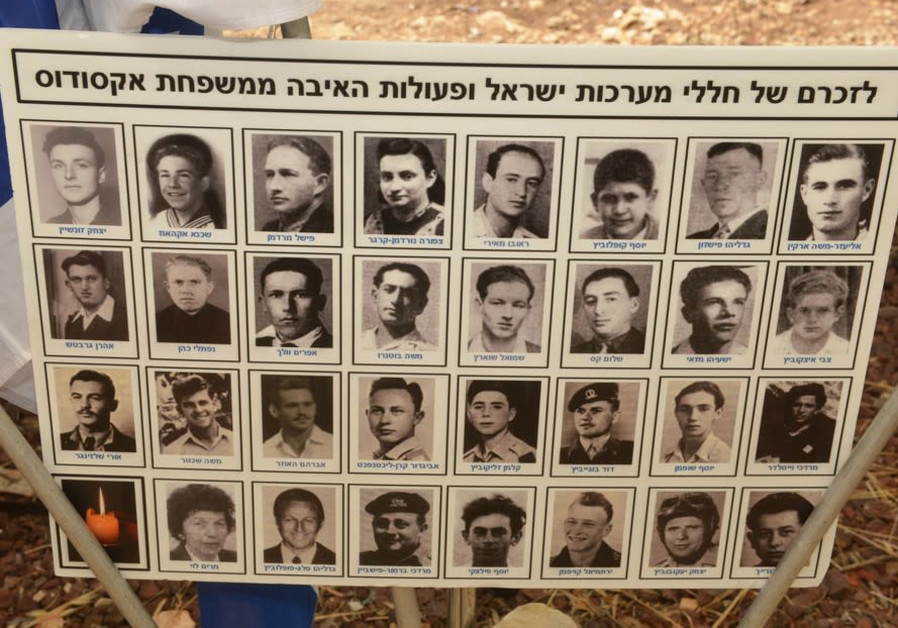
Exodus passengers who later fell in Israel’s wars. Photo: Guy Assayag, KKL-JNF Information Network. (photo credit: GUY ASSAYAG/KKL-JNF)

On July 5, 2019, KKL-JNF dedicated a plaque commemorating the Exodus 1947 (Flight from Europe 5707) immigration ship, at the Donor Appreciation Center in Ofer Forest. The forest sits on the Carmel Mountain range, not too far from the Haifa shore where the British Navy had towed the Exodus in order to return its passengers back to DP camps in Europe. The commemorative plaque was donated by Friends of KKL-JNF from around the world in order to perpetuate the legacy of the Exodus and its courageous passengers. 

The dramatic story of the Exodus 1947 illegal immigration ship was perhaps the most iconic symbol of the Aliya Bet Jewish immigration campaign, which took place just before the establishment of the Jewish State, in the face of continuous British restrictions.

Aboard the ship, which departed the Port Sète in France for Eretz Yisrael, were 4,530 Holocaust survivors who came from displaced persons camps in Germany and Austria. Before they could reach Haifa, the ship was boarded by the British Navy and a bloody battle ensued, during which three passengers were killed and dozens more wounded. The British did not allow the immigrants to enter Israel, banishing them back to their DP camps in Germany and Austria. The story of the Exodus shifted world opinion on the plight of the Jewish refugees, and helped advance the political struggle against the British occupation, eventually leading to the historic November 29, 1947 UN Partition Plan for the establishment of the Jewish State.

Several dozen participants took part in the moving ceremony, including some of those who had been abroad the Exodus, together with their children, grandchildren and great-grandchildren – a total of four generations.

Speaking at the ceremony, Dr. Zvi Hatkevich, whose parents had been on the Exodus while his mother was pregnant with him, said, “The story of the ship Exodus and its eviction is the story of the heroism of 4,554 illegal immigrants – Holocaust survivors and refugees from Europe and North Africa who were aboard the ship. Ruth Gruber immortalized this saga in her book ‘Exodus 1947: The Ship That Launched a Nation’. This is a story of the heroism of the Palmach, Palyam and Machal (volunteers from abroad) fighters. This is the story of the heroism of the ship’s crew, the last of whom, Sam Shulman, passed away this week. I would like to thank all the KKL-JNF personnel for their support in preserving the legacy of the Exodus.”

KKL-JNF Western Galilee-Carmel Region Director Shali Ben-Yishai, moved at the presence of four generations of Exodus immigrants, said, “The Exodus illegal immigrants are a symbol of morality and the unswerving determination to make Aliya to Eretz Yisrael, a story that should never be taken for granted. As the next generation, we are obligated to protect the land of Israel, whatever the cost. KKL-JNF will do whatever is necessary so that this amazing and moving story, which expresses the very essence of the Zionist ethos, will be told and retold from generation to generation.”


Zawartość publikowanych artykułów i materiałów nie reprezentuje poglądów ani opinii Reunion’68,
ani też webmastera Blogu Reunion’68, chyba ze jest to wyraźnie zaznaczone.
Twoje uwagi, linki, własne artykuły lub wiadomości prześlij na adres:
webmaster@reunion68.com


And this is just the beginning

And this is just the beginning

  Israel Defense Forces


This is an IDF Navy Officer.


Zawartość publikowanych artykułów i materiałów nie reprezentuje poglądów ani opinii Reunion’68,
ani też webmastera Blogu Reunion’68, chyba ze jest to wyraźnie zaznaczone.
Twoje uwagi, linki, własne artykuły lub wiadomości prześlij na adres:
webmaster@reunion68.com


The White Paper: 80 Years Later

The White Paper: 80 Years Later

Larry Domnitch


An aerial view of the Temple Mount in the Old City of Jerusalem. Photo: Wikimedia Commons.

Eighty years ago, an ominous and devastating policy was enacted by the British government that would wreak severe destruction upon the Jewish people.

The MacDonald White Paper, named after the colonial Foreign Secretary Malcolm MacDonald, was proposed on May 17 and ratified on May 22, 1939. That week, British commitments to facilitate a Jewish state under the terms of the 1917 Balfour Declaration were essentially nullified. The White Paper also denied Jews desperately needed refuge as the Nazi threat emerged.

On November 9, 1938, the British government announced its intention to invite representatives of the Arabs in Palestine and nearby countries to confer with Jewish representatives at a London conference in search of a solution to the vast differences between them. The proposed meetings were a futile venture, as the Arabs refused to even sit with the Jews. Separate meetings were held, and they ended predictably with no resolution.

Under the MacDonald White Paper, the Peel Commission’s 1937 recommendation of the partition of the land of Israel was rejected. Jewish immigration would be restricted to 15,000 per year over the next five years, and land purchases by Zionists would be severely restricted as well. Any further immigration after the five years would be determined by the Arab majority, which would essentially terminate the Zionist enterprise.

This move by the British came as the culmination of over 20 years of intermittent waves of Arab terror, and at the end of three years of devastating Arab riots in British Mandatory Palestine.

The fact that the British Mandate over Palestine was a responsibility granted by an outside party, the League of Nations at San Remo in 1922, and therefore did not exclusively grant carte blanche to the British to act as they pleased, meant little since that organization was now of minimal importance. Anyway, who would hold the British accountable when their respective nations also had imposed severe quotas on Jewish immigration?

In section one, paragraph two, line one, of the White Paper, the following line sums up British intentions: “His Majesty’s government believe the framers of the mandate in which the Balfour declaration was embodied could not have intended that Palestine should be converted into a Jewish State against the will of the Arab population of the country.”

The Jewish Agency swiftly responded with indignation: “The Jewish people regard this policy as a breach of faith and a surrender to Arab terrorism. … It is in the darkest hour of Jewish history that the British Government proposes to deprive the Jews of their last hope and to close the road back to their homeland.”

The following day, a general strike was called for Jews in Palestine, and 300,000 Palestinian Jews attended protests, in which 120 Jews were wounded during clashes with the British police. At one protest, the Ashkenazi Chief Rabbi, Yaakov Herzog, burned a copy of the White Paper. The protests continued over the following weeks.

Chaim Weizmann called it a “Death sentence for the Jewish people.” David Ben-Gurion famously stated that Zionists “would fight the war as if there was no White Paper and fight the White Paper as if there was no war.”

recomended by: Leon Rozenbaum

Emergency funds were sent to Palestine by the Jewish National Fund to purchase land while the opportunity still existed.

On May 21, protests in the United States began, where thousands of Jews protested in cities throughout the country. At the same time, 230 American Jewish leaders urged Secretary of State Cordell Hull to refuse recognition of the White Paper.

On May 22, the House of Commons held a debate on a motion that the White Paper was a violation of the terms of the Mandate. It was defeated by a vote of 268 to 179. Among those who voted for it was the soon-to-be prime minister, Winston Churchill. Another supporter of the motion, former prime minister Lloyd George, who had a significant role in the promulgation of the Balfour Declaration, called the White Paper an “act of perfidy.”

In the US, Senator William King of Utah called the White Paper a “betrayal of the Jews.” New York Congressman Hamilton Fish, from the House floor, called the British vote a “shocking repudiation of the Balfour pledges.”

Numerous appeals were sent to Prime Minister Neville Chamberlain to fulfill the Balfour commitments. Messages were also directed to US President Franklin Roosevelt and Secretary Hull to intercede.

On May 27, there were protests throughout Latin America. On May 28, an ill-fated ship carrying German Jewish refugees, the St. Louis, arrived in Cuba soon to be turned away.

Hundreds of desperate Jews seeking entry into Palestine were stopped and detained near the cities of Netanya and Haifa.

Eighty years later, we recall those tragic, traumatic, and trying times.


Larry Domnitch is an author and instructor of History at Touro College.


Zawartość publikowanych artykułów i materiałów nie reprezentuje poglądów ani opinii Reunion’68,
ani też webmastera Blogu Reunion’68, chyba ze jest to wyraźnie zaznaczone.
Twoje uwagi, linki, własne artykuły lub wiadomości prześlij na adres:
webmaster@reunion68.com


Spór o modlitwy Żydów na Wzgórzu Świątynnym

Spór o modlitwy Żydów na Wzgórzu Świątynnym

  Malgorzata Koraszewska


Dr Mordechai Kedar jest arabistą, znawcą kultury arabskiej i muzułmańskiej. Islam, mówi, miał powstać na gruzach judaizmu i chrześcijaństwa, miał zastąpić te religie. Obecność Żydów w Jerozolimie obraża i niepokoi. Żydowskie modły na Wzgórzu Świątynnym są teologicznym problemem i wyzwaniem. Tak więc, nie jest to konflikt o ziemię, nie jest to konflikt narodowy, mamy do czynienia z konfliktem traktowanym przez muzułmanów jako religijny i z przekonaniem, że samo istnienie Żydów w Jerozolimie podważa fundamenty islamu.


Zawartość publikowanych artykułów i materiałów nie reprezentuje poglądów ani opinii Reunion’68,
ani też webmastera Blogu Reunion’68, chyba ze jest to wyraźnie zaznaczone.
Twoje uwagi, linki, własne artykuły lub wiadomości prześlij na adres:
webmaster@reunion68.com


Smart glasses that ‘teleport’ experts to the field

Smart glasses that ‘teleport’ experts to the field

Brian Blum


Companies such as BP are using Fieldbit’s technology to bring offsite expertise to help onsite technicians through a pair of smart glasses.

Oil rigs are one of the main customers for Fieldbit. Illustrative photo via Shutterstock.com

The 2010 explosion on the oil-drilling rig Deepwater Horizon was a wake-up call for BP, the British multinational oil and gas company that operated it at the time. The resulting oil spill in the Gulf of Mexico caused major ecological damage and cost BP $20 billion in damages.

Disaster can often spur the development of better practices. That was BP’s goal when it began searching for ways to improve ongoing and emergency maintenance at its oil wells.

BP discovered that there simply aren’t enough field technicians with the experience to tackle big problems like the one that occurred on Deepwater Horizon. Since it’s not yet possible to teleport experts to the scene, “smart glasses” have emerged as the next best thing.

Glasses running augmented reality software can transmit what a field technician is seeing to an offsite expert, who can then “draw” on the image to guide the technician to fix the problem.

The company behind this technology now implemented across 13,000 BP wells is Israeli startup Fieldbit.

Fieldbit’s flagship product, Hero, is a collaboration platform that enables technicians and experts to communicate across great distances.

A second product, Fieldbit Knowledge, records their interactions and categorizes them for quick retrieval from a cloud-based database.

BP isn’t Fieldbit’s only client, nor are oil wells its sole focus. But it was an opportune industry for Fieldbit to get started.

“BP approached us almost two years ago with a pressing need,” Evyatar Meiron, Fieldbit’s CEO, tells ISRAEL21c.

“The augmented reality keeps the annotations in place. It can show where to cut a wire or exactly where to open a valve, things that are very difficult to explain in words.”

The growth of fracking was largely driving the change. The establishment of more small wells, mostly in the United States, put pressure on technicians to cover more ground without increasing costs to BP.

BP’s interest is clear in its 2018 annual report: “New technologies are helping us build intelligent operations throughout our businesses. We are using augmented reality (AR) devices such as ‘smart glasses’ across BPX Energy … we are now using the mobile platform to troubleshoot equipment, conduct safety verifications and deliver remote training.”

Augmented reality instructions “stick” to real objects. Screenshot courtesy of Fieldbit

Meiron describes to ISRAEL21c how Fieldbit’s system works.

“We allow the field technician to send digital information to an expert. The expert has an editor and can take a snapshot of the video. He can draw on the snapshot and send it back to the technician, who receives this annotation projected on his device. The technician can turn his head and look in different directions. The augmented reality keeps the annotations in place. It can show where to cut a wire or exactly where to open a valve, things that are very difficult to explain in words.”

While glasses are the ideal, augmented reality can work on smartphones and tablets as well. That’s how Pokemon Go works. The Pokemons in the game can only be seen when you point the device at a location in the real world where the virtual creatures are “hiding.”

AR will eventually become ubiquitous for consumer applications, but for now “the value is much higher when we’re talking about business-to-business applications, with machines that cost hundreds of thousands of dollars,” Meiron explains.

Fieldbit was founded in 2014 and its two-way collaboration Hero system was operational a year later. Fieldbit Knowledge was released this year.

The company’s newest product, Fieldbit Cosmic, allows corporate customers to connect Fieldbit with their own enterprise field-service management software. Meiron says the market for dispatching and scheduling software that tells a technician where to go and what to take to fix a malfunction is worth some $3 billion.

“To send an expert to a site can cost a few hundred dollars per visit,” Meiron points out. “A technician might make four to five visits a day. For an organization with 100 technicians, that can add up to millions of dollars in potential savings, not including the down time of the machine.”

Moreover, skilled field technicians are becoming harder to find. The old guard of technicians (mostly Baby Boomers) are starting to retire. “Millennials in many cases don’t want these jobs, working outside with customers. They want to sit in an office,” Meiron says, adding that 30 percent of field-service experts are expected to retire within the next three years. “Organizations risk losing large amounts of knowledge.”

Is Meiron suggesting that with Fieldbit’s AR glasses anyone can fix an oil rig? “Not at all,” he replies. “It shouldn’t be a layman, of course. But you also don’t need to understand all the mechanics of the machine. You just need to be the hands and eyes of the experts or use the knowledge on our device.”

Utilities, medical imaging, printing

Fieldbit CEO Evyatar Meiron. Photo: courtesy

European energy business ENGIE named Fieldbit its startup of the year in 2018.

While Fieldbit has made the biggest splash in the world of oil and gas, its first pilot client was a utility — Mekorot, Israel’s national water carrier. Fieldbit assisted technicians in fixing burst pipes and running regular monitoring tests for water quality.

The company also is in talks with industries such as printing and medical imaging.

“We are still small, less than 100 people, so we are not yet able to make cold calls to look for customers,” says Meiron, adding that 90% of sales have come from unsolicited inquiries.

Fieldbit has raised $7 million to date, including $1 million from the Israel Innovation Authority and the rest from the Russian Skolkovo Ventures fund, Eldad Weiss (the company’s chairman) and the Israeli family fund Atooro. A second round is now in progress.

Fieldbit is Meiron’s third startup. He prefers “conservative markets that have legacy solutions where new technology can help.”

That was the impetus for his creation of the Hebrew-language Hashavshevet program used by most Israeli accounting firms; the software company Wizcon, which made software to control factory production floors from a web browser; and PC Soft International, which also specialized in Internet-based automatic control software.

If there’s one common denominator underlining all of Meiron’s companies, it’s that “more first-time fixes and less downtime [result in] happier customers,” Meiron says.

Those customers may someday include you and me: Armed with AR-powered glasses, we may be able to make our own expert-guided household repairs.


Zawartość publikowanych artykułów i materiałów nie reprezentuje poglądów ani opinii Reunion’68,
ani też webmastera Blogu Reunion’68, chyba ze jest to wyraźnie zaznaczone.
Twoje uwagi, linki, własne artykuły lub wiadomości prześlij na adres:
webmaster@reunion68.com