Archives

Hezbollah ploy to recruit Israeli Arabs, Palestinians uncovered

Israel Hayom
Hezbollah ploy to recruit Israeli Arabs, Palestinians uncovered

Lilach Shoval,  Matti Tuchfeld
and Israel Hayom Staff


Using social media, the Shiite terrorist group has been trying to recruit Palestinians and Israeli Arabs to form a terrorist network against Israel, says Shin Bet security agency • Israeli ambassador urges U.N. to label Hezbollah a terror organization

Several attempts by Hezbollah agents living in Lebanon and the Gaza Strip to use social media to recruit Palestinians in Judea and Samaria to form a terrorist network in Israel have been thwarted, the Shin Bet security agency revealed Tuesday. The plot was foiled through the joint efforts of the Shin Bet, the Israel Defense Forces, and the Israel Police, the agency said.

According to the Shin Bet, Hezbollah agents also made contact with Israeli Arabs in efforts to recruit them. Most of the recruitment efforts were made on Facebook.

One of the terrorist cells uncovered by the Shin Bet was active in the Qalqilya area in Judea and Samaria, just over the Green Line from Kfar Saba. The cell’s leader was named as Mustafa Kamal Hindi, 18, a Qalqilya resident who was recruited by Hezbollah in 2015 via a Facebook page titled “Palestine the Free,” which contains anti-Israel and pro-jihadist content.
After his arrest in June, Hindi told investigators he had been in contact with a Hezbollah operative known only as Bilal, first on Facebook and later through an email account he opened under Bilal’s orders. The two communicated using encrypted messages to avoid detection.

According to the Shin Bet, Hindi was instructed to form a terrorist cell in the Qalqilya area and carry out attacks against Israelis, including shooting attacks on IDF patrols in the area. Hindi recruited four other operatives, who prepared improvised bombs and gathered information on military patrols. The cell also underwent firearms and explosives training.

Soon after their arrest two months ago, all five cell members were indicted by a Judea and Samaria military court on a number of charges, including conspiracy to commit a terrorist attack.

Hezbollah had also made contact with several Israeli Arabs via Facebook, with the aim of recruiting them for terrorist purposes, the Shin Bet said.

The security agency said Tuesday that after learning of these efforts, its agents located the individuals involved, and they were made to sign legal documents stating that they understood that any continued contact with the Shiite terrorist group was a violation of the law.

This was not the first time Hezbollah tried to recruit Arabs inside Israel or in Judea and Samaria and Gaza.

In December 2015, after a Hezbollah cell from Tulkarm was discovered, the ringleader confessed that he had been recruited via the Facebook page of Jawad Nasrallah, son of Hezbollah leader Hassan Nasrallah.

“In recent years, Hezbollah’s Unit 133 [responsible for the organization’s foreign operations] has been trying to establish a terrorist network in Israel, Judea and Samaria, and the Gaza Strip, without success,” the Shin Bet said in a statement issued Tuesday.

“Hezbollah has recently prioritized instigating terrorist attacks, which it does from afar so to conceal its involvement. It is doing this, among other ways, by rousing incitement and inducing the Palestinian population to carry out terrorist attacks, in return for financial payments.”

Meanwhile, in response to Hezbollah’s recent recruitment efforts, Israeli Ambassador to the U.N. Danny Danon called on the international organization to formally recognize Hezbollah as a terrorist organization.

“The international community must condemn Hezbollah’s attempts to harm innocent Israeli civilians, and the Security Council must finally designate Hezbollah a terrorist organization,” Danon said in a statement.

“Hezbollah needs to know that any terrorist act against Israel will come at a very heavy price,” he said.


twoje uwagi, linki, wlasne artykuly, lub wiadomosci przeslij do: webmaster@reunion68.com



No More Mr. Nice Guy

No More Mr. Nice Guy

Judith Bergman


A 2005 protest at Bil’in. Photo: Wikipedia.

Israel always plays nice. For decades, we have been allowing those who demonize and delegitimize Israel to cross our borders and do their dirty work against us on our own soil.

The Palestinian village of Bil’in has become one very real symbol of this kind of “activist tourism,” where anti-Israel foreign activists gather to provoke fights with the Israel Defense Forces in order to gain propaganda footage for the international media.

The reasoning behind Israel’s welcoming policy is that we are a democracy, and we will allow even those who wish us nothing but harm to benefit from our democratic policies. But the real reason is more likely a fear of the international backlash that denying entry to Israel-haters would elicit. Whatever the case may be, the policy has always been a big mistake. As a sovereign nation, Israel should be free to turn anyone it wishes away at the border.

However, the policy finally appears to have been put to rest, at least as far as the boycott, divestment and sanctions movement is concerned. On Sunday, Israel’s Interior and Public Security ministers declared that they planned to establish a taskforce aimed at expelling BDS supporters and preventing their entry into Israel. According to the press release, dozens of organizations inside Israel are actively collecting information to promote boycotts and international isolation. The new taskforce will be responsible for identifying such efforts and combating them.

Much like the NGO law, which is compelling NGOs to divulge any foreign funding, this effort is likely to outrage the usual suspects in the international media and NGO community. Israel’s answer to this should be a polite “mind your own business.” Israel owes no one any explanations for defending itself against those who wish to destroy it. As Public Security Minister Gilad Erdan said: “We must not allow boycott activists to enter Israel. This is a necessary step given the maliciousness of these delegitimizing activists who work to spread lies and to distort the reality of our region.”

This is a logical and natural move, and it should have been implemented as soon as the BDS movement surfaced. We have bent over backward so far to accommodate the so-called international community and its “concerns” that frankly our backs are about to break.

We should also expect an outcry from the European Union and several of its individual member states. Many of the organizations that promote BDS are sponsored to a lesser or greater degree by the EU, one or more of its member states (particularly Germany and the Scandinavian countries), or both, bringing into serious question whether these organizations are truly non-governmental in the first place.

It will doubtless be embarrassing for the EU to see its activists expelled and returned home. And rest assured: Those who will scream the loudest will be those who wished most fervently for the destruction of Israel. Thus, the new policy is likely to have the welcome side effect of outing those European nations that have truly been working against us by funding organizations that are deeply hostile toward Israel.

The presence of foreign, hostile activists operating on Israeli soil collecting information to use against us in the international arena is not only unique to Israel (show me one other country where such operations are systematically put into place with substantial financial backing from foreign governments), but also an embarrassing disgrace for these foreign, mainly European, governments, that are betraying their obligations under international law to engage with Israel only through diplomatic and legal channels.

Israel must demand a clear answer as to why these supposedly friendly nations support anti-Israel efforts. Is it customary for countries that cooperate and enjoy full diplomatic relations to engage in hostile activities against each other behind each other’s backs? The question is simple and has an even simpler answer.


Judith Bergman is a writer and political analyst living in Israel. This article was originally published by Israel Hayom.


twoje uwagi, linki, wlasne artykuly, lub wiadomosci przeslij do: webmaster@reunion68.com


Archeological finds, City of David bolster Jewish claim to J’lem

The Jerusalem Post - Israel NewsArcheological finds, City of David bolster Jewish claim to J’lem

KATHERINE KEENAN


“If all that stuff is built on the notion that none of this ever happened, and then you pull a seal out of the ground with the names of the ministers straight out of the Bible one after the next.”

THESE SEALS fell during the destruction of the Second TempleTHESE SEALS fell during the destruction of the Second Temple Photo By: CITY OF DAVID

Tisha Be’av is a day deeply rooted in Jewish history and memory, with its primary association being with the destruction of the Second Temple at the hands of the Roman Empire in 70 CE.

In the midst of controversy with international bodies such as UNESCO, remembering the religious and cultural heritage that the temple represents can take form in looking back at the biblical archeological record, something that City of David International Affairs Director Ze’ev Orenstein believes strongly bolsters the connection between Judaism and Jerusalem.

“If all that stuff is built on the notion that none of this ever happened, and then you pull a seal out of the ground with the names of the ministers straight out of the Bible one after the next in the same verse… that causes problems.”

Seals in reference to King Hezekiah, lower-level royal officials and even of a woman named Elihana bat Gael serve as proof of a 3,000-year connection between ancient Israel and the country we know today, adds Orenstein.

According to him, these discoveries present problems, however, for people who are committed to an opposing agenda.

“Unfortunately today, much of what you can call ‘Palestinian nationalism’ or ‘Palestinian identity’ is based on the narrative that the Jewish people have no legitimate ties to this land… that we’re a bunch of white Europeans,” says Orenstein. “That would then make excavations in the City of David particular problematic.”

Petitions to recognize the Temple Mount as an exclusively Islamic site have so far been met with disapproval.

The World Heritage Committee postponed its decision last month to vote on a recently proposed resolution that would refer to the contested site only by al-Haram al-Sharif, its Muslim name.

Orenstein’s hope is that enough committee members would strike down such a proposal, using City of David finds as his main piece of evidence.

“This isn’t a Jewish issue, it’s not a Christian issue, even though it’s denying these events when they’re so clearly proven from an archeological perspective,” says Orenstein. “But really, it’s an attack on truth, because if you can deny objective truth… tomorrow it’ll be about something else.”

Although October’s decision is yet to be made, backing from UNESCO director- general Irina Bokova could tip the scale in Israel’s favor.

“To deny or conceal any of the Jewish, Christian or Muslim traditions undermines the integrity of the site, and runs counter to the reasons that justified its inscription in 1981,” Bokova wrote on UNESCO’s website.

As for Tisha Be’av, the enormous yet elegant Herodian stones found at the foot of the ancient temple’s primary entrance do not only evoke a sense of loss and mourning, but of a compelling case for Judaism’s relationship with the site.

“On one hand, we’re standing in an area where the destruction of Jerusalem happened, and yet at the same time, we’re standing in a place where we see the rebirth, and the return, and the redemption of Israel,” says Orenstein.

“So yes, we have a lot to remember and there are many lessons that we still need to learn… but at the same time we’re growing, and thriving, and we’re home.”


twoje uwagi, linki, wlasne artykuly, lub wiadomosci przeslij do: webmaster@reunion68.com


The Israeli Origins of Anti-Israel Bias

The Israeli Origins of Anti-Israel Bias

Seth Frantzman


The international media’s anti-Israel bias is a story of detached liberal elites in Israel and abroad reinforcing each other’s prejudices.

The Gaza War has sparked a major debate about the anti-Israel bias of the international media • But the bias would not be so powerful were it not for an influential group of Israelis in the local media and political scene who readily supply the ammunition for painting Israel in the worst possible light • Seth Frantzman on a curious phenomenon


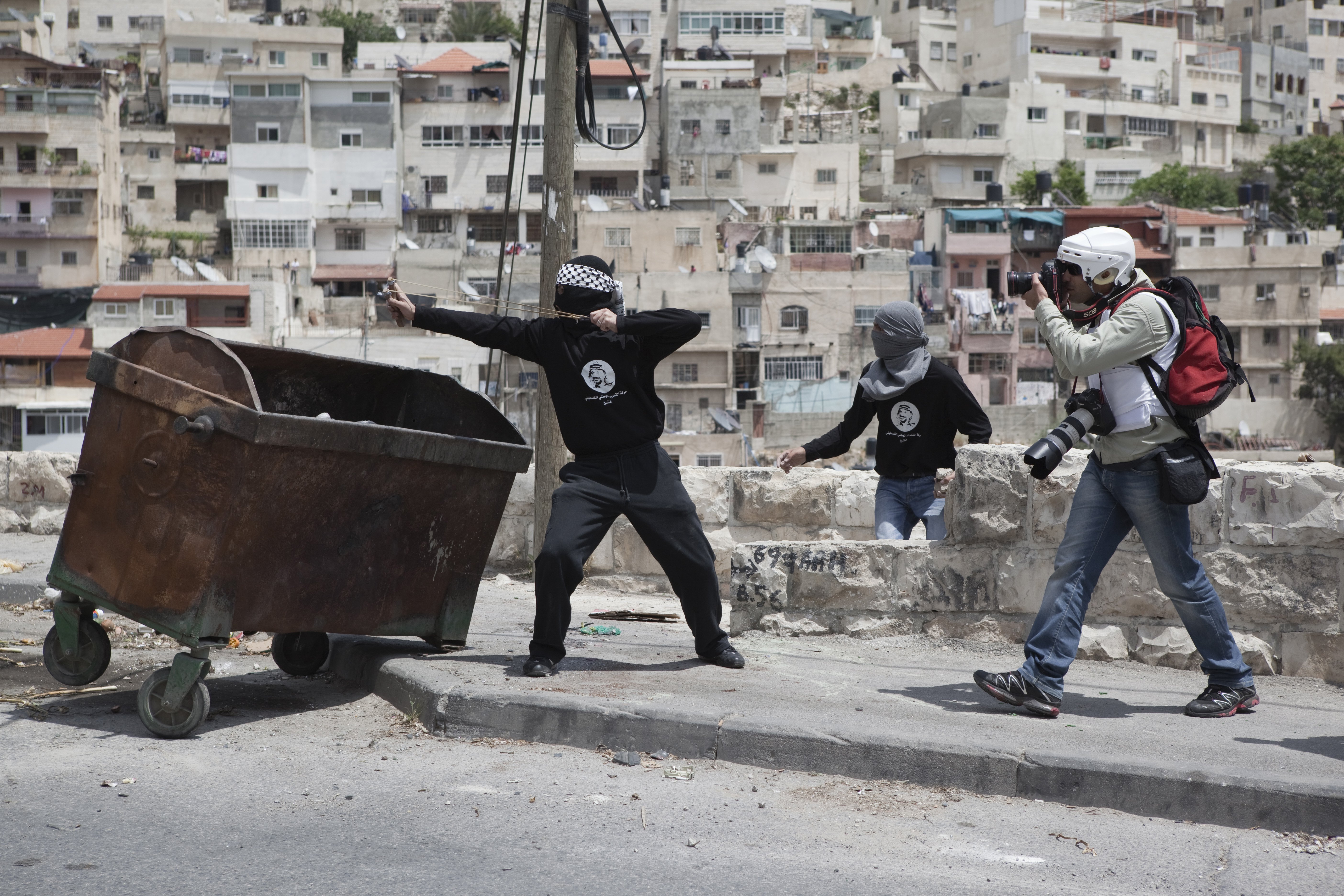
Framing the story against Israel. A photojournalist covering a Palestinian protest. Photo: Flash90

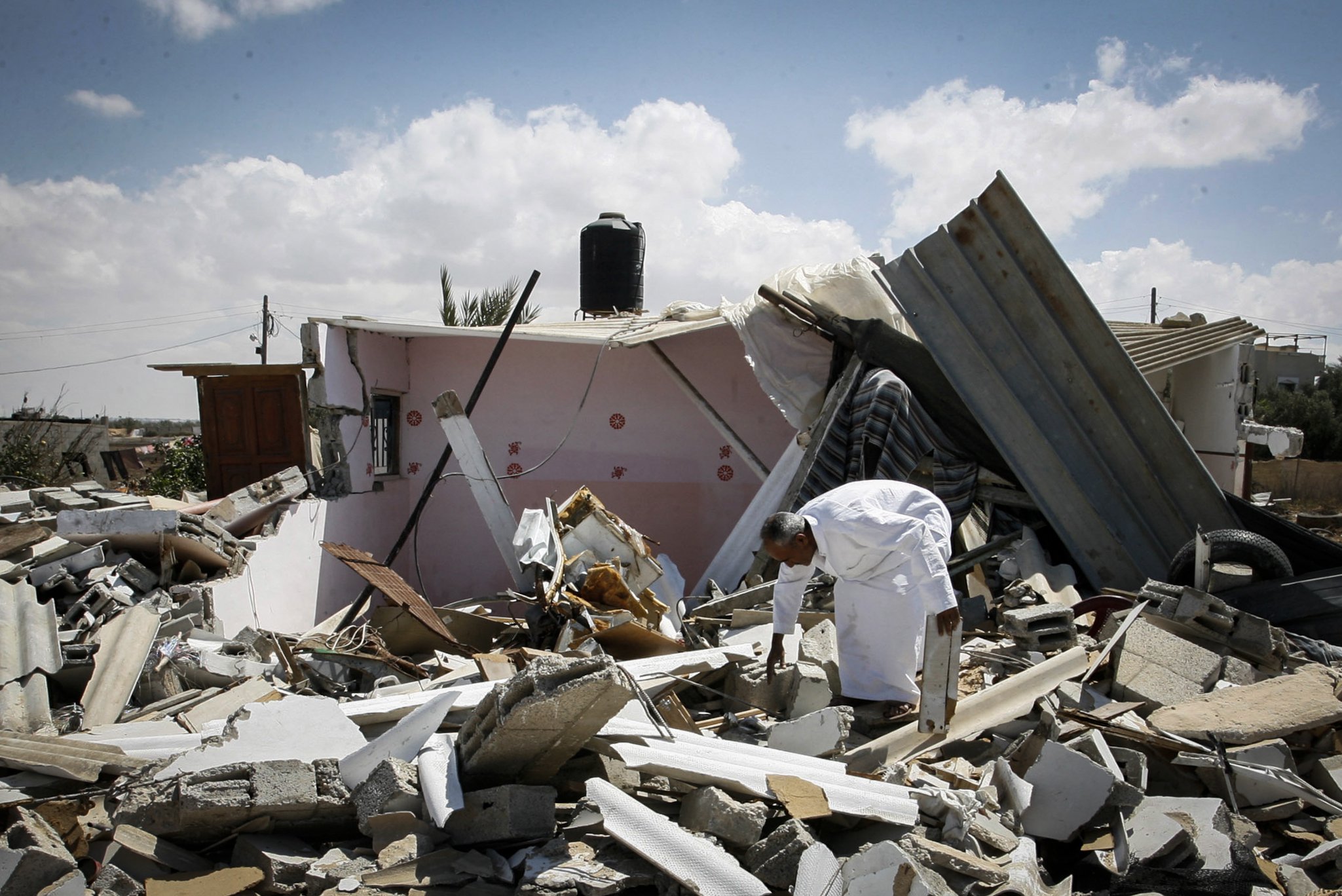
In the aftermath of the recent Gaza war many media professionals and pro-Israel advocates began to search through the rubble of the media’s portrayal of Israel to understand how, once again, Israel was portrayed in a negative light and numerous facts, such as those relating to civilian casualties, seemed to have been manipulated. Matti Friedman’s piece ‘an insider’s guide to the most important story on earth’ seemed to reveal the secret “answer” to what many felt was a biased media: The media gets Israel’s story wrong because it is basically anti-Semitic.

This mantra – that the media hates Israel and there isn’t much one can do about it – creates an easy scape-goat. Blame the New York Times for the coverage of Israel. Blame the Guardian and BBC. Blame “them.” But it misses the forest for the trees. The fact is that almost every anti-Israel story originates in Israel, not in the conspiracy minded editorial offices in New York or London, and many of those stories are the result of Israeli media and Israeli NGOs. When I raised this point to a media professional here he replied “Israel is a free country with a free press.” Israel is a free country, but some of its critical press is unrelenting in creating well-packaged stories to feed to a salivating foreign media.

Liberal Western Angst…

To understand the problem we should begin by parsing Friedman’s allegations.

“Israeli actions are analyzed and criticized, and every flaw in Israeli society is aggressively reported,” he alleges. He notes that stories about Israeli corruption get traction but no one reports about Palestinian corruption. He argues that the AP and others focus on “moral failings of Israeli society—proposed legislation meant to suppress the media, the rising influence of Orthodox Jews, unauthorized settlement outposts, gender segregation, and so forth.”

Furthermore; “Most reporters in Gaza believe their job is to document violence directed by Israel at Palestinian civilians…Our narrative was that the Palestinians were moderate and the Israelis recalcitrant and increasingly extreme.” Israel is “the pool into which the world spits” and the international press is “the tool” by which the modern anti-Semite bashes Israel.

Amazingly Steven Gutkin, the AP Bureau Chief in Jerusalem from 2004-2010, wrote a reply to Friedman on September 6th. Gutkin reveals something fascinating about his view of the Israeli “story.” For him “it’s also a story about the persecuted becoming the persecutors. All of this, of course, is happening to the people of the Bible, the descendants of the Hebrew slaves who were led out of Egypt by Moses and from whose ranks emerged Jesus Christ. It’s as if a new chapter of the Bible is being written in our times.”

Gutkin claims “I have no doubt that my Jewishness gave me a keener appreciation of the Israeli cause. I also know that my intense feelings about Jewish persecution – and the fact that much of my own family was murdered in the Holocaust – made me even more sensitive to the plight of the weak, no matter who they were.” Gutkin reveals that those who most affected him included a “devout Muslim” AP colleague in Afghanistan, “a Palestinian colleague in Gaza” and another “former colleague in Gaza.”

The Palestinians are always victims, Israelis aggressors – and the stories designed to reinforce that prejudice. Photo of a house destroyed in the Gaza War. Photo: Flash90

read more: The Israeli Origins…


twoje uwagi, linki, wlasne artykuly, lub wiadomosci przeslij do: webmaster@reunion68.com



Więcej Arabów niż ultraortodoksów w służbie cywilnej

JEWISH.PLWięcej Arabów niż ultraortodoksów w służbie cywilnej

admin


Spotkanie prezydenta Rivlina z arabskimi wolontariuszami, fot. Mark Neiman/GPOSpotkanie prezydenta Rivlina z arabskimi wolontariuszami, fot. Mark Neiman/GPO

Trzy razy więcej Arabów niż haredim przyjęto do służby cywilnej w Izraelu, poinformował w niedzielę dyrektor Krajowego Urzędu Służby Cywilnej, Sar-Shalom Jerbi.

Służba cywilna składa się z 18 tys. ochotników. 4500 spośród nich to Arabowie, 1500 to ultraortodoksi. Część pozostałych osób to ci, którzy chcieli służyć krajowi, ale zostali odrzuceni przez armię. „Przyczyniają się do poprawy bezpieczeństwa na innym poziomie” – zapewnia Jerbi.

Nieżydowscy ochotnicy biorą udział najpierw w kursie hebrajskiego. Później mogą odbyć wolontariat w policji, pomagać osobom starszym lub edukować dzieci.

„Chociaż Żydzi i Arabowie mają swoje spory, w ostateczności wszyscy mieszkamy w jednym państwie i jesteśmy za siebie nawzajem odpowiedzialni” – podkreśla prezydent Reuven Rivlin, który spotkał się z przedstawicielami wolontariuszy.

Ahmend Zatrah jest Arabem i służy w policji. Zgłosił się, ponieważ uważa, że powinien zrobić coś dla kraju, w którym mieszka. Liora Cohen przyjechała do Izraela z Francji trzy lata temu. Pracuje z seniorami. Jej zdaniem służba cywilna pomaga w szybkiej integracji nowych obywateli.

Israel Guetta jest ultraortodoksem. Przyjechał z rodzicami z Włoch, kiedy miał 12 lat. Zajmuje się edukacją dzieci w ośrodku dla maltretowanych kobiet. Wolontariat jest dla niego formą odwdzięczenia się za wszystko, co otrzymał od państwa.


twoje uwagi, linki, wlasne artykuly, lub wiadomosci przeslij do: webmaster@reunion68.com