 Yad Vashem Magazine 79

twoje uwagi, linki, wlasne artykuly, lub wiadomosci przeslij do: webmaster@reunion68.com
Yad Vashem Magazine 79
twoje uwagi, linki, wlasne artykuly, lub wiadomosci przeslij do: webmaster@reunion68.com
Jews in the Red Army, 1941–1945 About the ProjectJulian Better jest autorem ponizszego dodatku, do artykulu ktory pojawil sie 2016-06-23 na Blogu Reunion68.
Kilka uzupełnień do artykułu. 500 000 Żydów walczyło w szeregach Armii Czerwonej, zginęło 40%. To liczba niesłychana, nie mająca swojego odpowiednika w innych armiach. W 1938 roku w wyniku czystek w armii (1937) do szkół oficerskich zaczęto przyjmować Żydów ze względu na wyższy stopień wykształcenia, wynikiem tego 30% Żydów w armii miało stopień oficerski włącznie do marszałka (Malinowski), zjawisko niespotykane w historii wojen. W roku 1942 wyszedł tajny rozkaz Stalina o oszczędnym nagradzaniu Żydów orderami. Rekomendacje o nagrodzeniu Złotą gwiazda Bohatera Związku Radzieckiego podpisywali dowódcy frontów. Pomimo tego w wielu wypadkach Stalin odmawiał swojego podpisu.
Wkład Żydów nie ogranicza się do czynnej służby wojskowej. Kolosalne znaczenie miał udział Żydów w konstrukcji broni: Katiusze, T-34, niemal wszystkie typy samolotów i artylerii to dzieło żydowskich konstruktorów.
Temu kto jest zainteresowany wkładem Zydow w walce z Niemcami polecam Jewrejskij szczit SSSR (Zydowska tarcza ZSSR), Nie wiem, czy istnieje angielskie wydanie książki.
Bardzo polecam.
“Jews – Heroes of the Soviet Union” / Courtesy: Eynikayt, June 25, 1943

From 1941 to 1945 between 350,000 and 500,000 Jews served in various roles in the Red Army during the Soviet-German war of 1941-1945. During the first months of the war a large number of Jews, especially members of the intelligentsia and students, served in the Narodnoe opolchenie (National Guard or militia), the irregular military units whose task was to slow and, hopefully, halt the Wehrmacht assaults on major Soviet cities. The majority of those in the Narodnoe opolchenie, who were poorly trained and poorly armed, were killed in the first months of the war. In the Red Army itself the estimates of the number of Jews killed during the war range from 120,000 to 142,000.
Jews were represented in significant numbers in many of the types of military units that operated in modern warfare – in tank forces, in the artillery, in the air force, and in the submarine fleet. Many Jews served in the ranks of military translators, physicians, military correspondents, and political officers who were attached to the various types of forces. Their noticeable presence in these military professions reflected the high educational level of Soviet Jews. However, the largest representation of Jews was in the 16th Lithuanian and the 201st (from October 1942 – 43rd) Latvian Infantry Divisions formed mainly from former residents of those republics; at certain times the percentage of Jews in those units reached 33 and 17 percent respectively. Nevertheless, initiatives to establish separate Jewish military formations did not yield any results – creation of Jewish units did not correspond to Soviet propaganda purposes of the war period. Jews also served in Cossack units, including as officers up to the rank of commanders of regiments. This situation challenged traditional views about permanently hostile relations between Jews and Cossacks. In 1943 and 1944 many Jewish partisans, as well as young Jews who had survived the Holocaust under false identification documents or in shelters, jointed the Red Army right after the liberation of Soviet territories.
Among the Soviet troops were a relatively large number of Jewish women. The majority of them were doctors, nurses, or translators. Often Jewish women were among the medics who evacuated the wounded from the battlefield or served in other unites whose members were also often in battle zones. A special category was composed of those Jewish women who participated directly in combat – as pilots or navigators in the Soviet air force, or in artillery units.
Many Jews were awarded government recognition for their military endeavors. According to official Soviet data, as of January 1944 more than 32,000 Jews received such awards. In that respects the Jews were fourth in the country, after the Russians, Ukrainians, and Belarusians although they were seventh in the USSR in terms of total population. The number of Jews who were awarded the title of Hero of the Soviet Union, the highest level of distinction, was over 100. However, this statistic is evidently understated since, for various reasons, Jews were sometimes listed on their identity papers as Ukrainians, Lithuanians, Tatars, etc.
The very fact of the award, i.e., of official recognition of the military prowess of Jews was important for Soviet Jews, both at the front and in the rear. The poet Alexander Gitovich noted:
“When I read the lists of those honored, I always look to see if there are any Jewish names and I am very happy when there are.” Such knowledge helped Soviet Jews challenge antisemitism (that was increasing during the war among the people and members of the Soviet bureaucracy), which included the view that Jews were “bad soldiers.”
A particular role in circulating information about the participation of Jews in combat and about Jewish heroism was played by the Jewish Anti-Fascist Committee (JAC), which began operating in the spring of 1942. Approximately one third of all the publications prepared by or with the JAC dealt with Jews on the front lines. Some of them were published in the Committee’s Yiddish newspaper Eynikayt, the first issue of which appeared in June 1942. Hundreds of other materials were sent to Jewish telegraphic agencies and Jewish newspapers abroad. These articles not only recounted the military exploits of Jews but often put the accounts into their more general ethnic context. The materials stressed the ethnic origin of the heroes and their following of the ancient Jewish heroic tradition, as embodied by Samson, the Macabbees, Bar Kochba etc. Many of the articles were intended to make the point that, in addition to the war they shared with the other Soviet peoples, Soviet Jews had their own war, their own score to settle with the Nazis. In 1942 the Soviet Yiddish prose writer Dovid Bergelson wrote that the Soviet Jews were fighting “Far zayn foterland un zayn yidishn folk,” i.e., for their [Soviet] homeland and their Jewish people. As the details of the Nazi mass murder of Jewish civilians became increasing known during the war, the ethnic consciousness of a large proportion of Jewish soldiers and officers grew and increasingly motivated them in their fighting.
The 100 accounts of Jews in the Red Army that are included in the present project highlight those who received formal recognition, primarily as Heroes of the Soviet Union, of their military achievements. However, there are also many biographies of those whose services did not receive such a high level of recognition. Among those included on our website are generals, officers, and privates; tank crew members, submariners, pilots, translators and doctors; men and women; very young people who had recently left their childhoods behind and middle-aged people. These people acted on different fronts: they defended Moscow, took part in the battle for Stalingrad, liberated Ukraine and Belorussia, fought against Axis troops in Lithuania, Latvia, Estonia, Poland, Romania, and Czechoslovakia, and participated in the capture of Berlin. The stories tell about their pre-war experience as members of the intelligentsia, professional military men, or factory workers and – for those who survived the war – about events of their post-war life. Such an approach allows us to better understand the effect the war had on Jewish Red Army personnel.
Their biographies, included in the project in alphabetical order, often contain quotations from wartime articles and letters, as well as post-war memoirs. These texts cast light on the Jewish identity of these people and their reaction to the Holocaust.
twoje uwagi, linki, wlasne artykuly, lub wiadomosci przeslij do: webmaster@reunion68.com
 Who needs the Saudi Peace plan?
Gilad Sharon
Op-ed: The Saudis have come to Israel with a non-negotiable peace plan; Gilad Sharon asks type of country would concede to demands which put access to Jewish places of worship at risk, and which turns the clock back to 1947.
The Saudi Peace initiative is a trap. The initiative calls for an Israeli withdrawal to the borders of June 4, 1967 and for a solution to the problem of Palestinian refugees in accordance with UN resolution 194.
In return, there will be peace and normalization between Israel and the nations of the Arab League. This is apparently something positive.
The Arab countries are prepared for peace with Israel, something which they weren’t prepared for when Israel was founded, nor which they were willing to have for the past several decades. However, the conditions of the agreement – which they said are non-negotiable – are impossible for us.
Let me clarify: the return to the 1967 lines is impossible, not now and not in the future. Its suicide – we want to live. To whom exactly will we give the Golan Heights? We couldn’t do it before the Syrian civil war broke out, and we definitely can’t do it now that Syria has disintegrated.
Would any sane person stay in a country where the distance between the border and the beaches of Netanya is nine miles? When the suburbs of Gush Dan brush right up against ISIS controlled areas? A country where it’s illegal for Jews to go up onto the Temple Mount? A country where Jews are only allowed to go up the seventh step at the entrance of the Cave of the Patriarchs? (When the Ottomans and later the British controlled the Holy Land, Jews were only allowed to go up to the seventh step of the entrance to the Cave of the Patriarchs) A country where Jews are only able to access the Western Wall via armored UN personnel carriers? What about Ariel, Ma’ale Adumim, Gush Etzion, and the Gilo neighborhood of Jerusalem? This cannot happen and this will not happen.
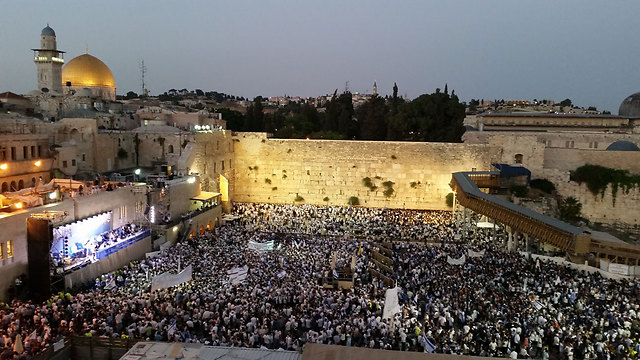 Will Jews lose access to their holiest site? (Photo: Eli Mendelbaum)
A quote from section 11 in UN General Assembly Resolution 194 states; “the refugees wishing to return to their homes and live at peace with their neighbors should be permitted to do so at the earliest practicable date.” Who are the Palestinian refugees? There shouldn’t be that many left. It’s been close to 70 years, how many are still alive?
Yet the Palestinians get special treatment. The United Nations Relief and Works Agency (UNRWA), deals with them and no one else. They are the only people in the world whose refugee status is passed down from generation to generation, until the end of time.
The Arab nations, instead of absorbing them, have purposefully perpetuated their refugee status, and have ensured that they remain neglected in their refugee camps in order to put pressure on Israel.
More than four million Palestinians have the status of “refugee” according to their specialized criteria. Where would they prefer to live, in a refugee camp in Syria or Gaza, or in Israel?
The number of Jewish refugees who were forced to leave their homes in the Arab world is larger than the number of Palestinians who left Israel. Those Jews and their descendents won’t return to those Arab countries, and the Palestinians and their descendents won’t return here.
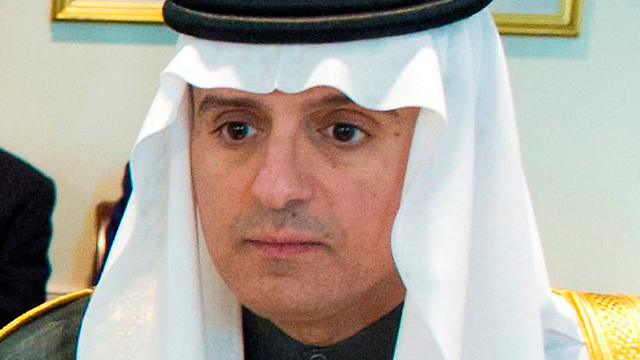 Saudi Foreign Minister Adel al-Jubeir
If the Arabs would have accepted the 1947 partition plan, there wouldn’t have been a single Palestinian refugee, and all the land which they are asking for now would have already been in their hands. But it wasn’t enough for them.
We can’t turn back the clock. And if because of that we won’t have relations with Djibouti, Somalia, Yemen, the Comoros Islands, or other god-forsaken countries, it’s not the end of the world. We already have relations with the important Arab countries – both open and secret relations– due to mutual interests, not because of a great love of each other.
Thanks Saudi Arabia, but no thanks.
twoje uwagi, linki, wlasne artykuly, lub wiadomosci przeslij do: webmaster@reunion68.com
Translated by Udi Shaham
New information emerges on the Gibli documents and the Lavon Affair.
Then-prime minister Golda Meir (R) and her defense minister, Moshe Dayan, meet with Israeli soldiers at a base on the Golan Heights after intense fighting during the 1973 Yom Kippur War Photo By: REUTERS
We learned a few new facts as a result of the IDF Archives’ decision to publish on Thursday, via the Defense Ministry, hitherto secret documents about the Lavon Affair. Maybe the most surprising is that the IDF General Staff was only briefed about the espionage fiasco three months after it happened.
On November 1, 1954, at a meeting of the General Staff, the two main heroes of the affair – the chief of the General Staff, Maj.-Gen. Moshe Dayan, and the head of Military Intelligence, Col. Binyamin Gibli – reported on what happened in Egypt.
According to the meetings’ protocol that has just been revealed and which carries the classification level of Top Secret, Dayan said that “it is certain that we had here one of the most difficult incidents ever. Not only politically, that we wanted to conduct an operation and it failed; but also that these people will spend many years in prison.”
Dayan was mistaken in his estimations. Dr. Moshe Marzouk and Shmuel Azar, two members of the sabotage network recruited by Israeli intelligence who were arrested in Egypt, were sentenced to death and executed by hanging on January 31, 1955.
The rest of the members of the network were sentenced to long prison terms.
The IDF chief said there was no need for the General Staff to investigate the failure of the unit that operated the network – Military Intelligence’s Unit 131. “I don’t believe that this is the job of this table to investigate if the operation was justified or not,” he said.
Dayan explained that the goal of the operation was to reverse the British government’s decision to evacuate its military bases on the Suez Canal, after the Egyptian president, Gamal Abdel Nasser, ordered its nationalization.
“The goal was to disrupt the evacuation of Suez,” emphasized Dayan, “by actions that will be seen as if they were ordered by the Egyptians and will create tensions between England and Egypt.”
The Lavon Affair, which is also known as “The Affair,” “The Unfortunate Affair” and “The Bad Business,” was one of the most severe political and intelligence scandals in the history of the State of Israel.
It began on July 16, 1954, when a detonator in network member Phillip Natanson’s pocket went off prematurely, and was set on fire. Natanson was meant to put it in a movie theater in Alexandria.
He was arrested.
Egyptian police and security services then arrested 100 Jews, 13 of whom were suspected of being part of the network that worked in Cairo and Alexandria. They were convicted by a military court of sabotage, transferring information and destabilizing the regime.
In response to a question from Col. Yitzhak Rabin, Gibli said that “the guys confessed, and they have been connected directly to Israeli intelligence. Most of the network is down.”
Dayan added to this that “the Israeli government will deny that, but only for external consumption.”
According to Gibli’s report at the meeting: “In Alexandria and Cairo we had, for two years, three operations and sabotage squads. Most of them are Egyptian Jews who were brought over to Israel for training from six months to one year, and then returned to Egypt. The training was intensive, with emphasis on special sabotage issues, handling radio equipment and more.
“The plans that they carried out covered targets in Egypt: post offices, movie theaters and the American Library in Alexandria.”
Regarding the operational order that was transmitted to the network members, he said that “as far as I know, it was received in distorted form.”
Gibli also claimed that he received the order to carry out the operation from the defense minister, Pinhas Lavon. The prime minister at the time was Moshe Sharett, after David Ben-Gurion temporarily retired to Kibbutz Sde Boker. Dayan, who was in the United States during the network’s operation, claimed in the discussion that he did not know about the order to operate, something which strengthened Gibli’s assertion that the order came directly from Lavon to him.
Lavon, who did not attend the General Staff meeting, denied at every opportunity that he had given Gibli the order to operate in Egypt.
The issue of “Who gave the order?” has not been resolved to this very day.
For years, the Military Censor restricted publishing the details of the affair, and in the media it was only hinted at by nicknames. Later, the head of the Mossed, Isser Harel, suspected that the network was compromised by its operator, Maj. Avri Elad (Avraham Seidenwerg) from Unit 131, whom the media could only refer to as “The Third Man,” or “X.”
Elad, who managed to leave Egypt without any trouble after the network was exposed, was sent away from Israel in order to keep him quiet, and was appointed as El Al’s representative in Germany.
Because of Harel’s stubbornness, Elad was summoned to Israel and arrested.
He insisted he had not handed over the network to the Egyptians. He was eventually convicted of being in contact with a foreign agent, and was sentenced to 10 years in prison. During the inquiry, he said that Gibli and the commander of Unit 131, Mordechai Ben-Zur, ordered the creation of forged documents and made him give false statements so that the blame would fall on Lavon.
A few years later, in 1958, Gibli aspired to be promoted to major-general and be appointed as head of the IDF Central Command. However, chief of staff Maj.-Gen.
Haim Laskov, who had succeeded Dayan, opposed the appointment, and wrote to defense minister Ben-Gurion: “Col. Gibli has a bad reputation in the IDF, and as long as his name is not cleared by evidence, it will be an obstacle to his promotion.”
Gibli’s name was not cleared, and in 1961 he retired from the IDF after attorney-general Haim Cohen advised him to do so.
Lavon died in 1976, and Gibli died in 2008.
There is no new information in these documents; no secrets that have not already appeared in articles and books. Therefore the question that should be asked is, why did the IDF Archives decide to release them now, and not, say, two decades ago?
twoje uwagi, linki, wlasne artykuly, lub wiadomosci przeslij do: webmaster@reunion68.com
 Czy Rada Praw Człowieka ONZ stała się potworem Frankensteina?
 redakja
[ Na podstawie zeznania przed amerykańskim Kongresem złożonego w tym tygodniu przez Hillela Neuera, dyrektora UN Watch w Genewie. ]
Siedemdziesiąt lat temu, w następstwie nazistowskich potworności, Eleanor Roosevelt i francuski filozof prawa René Cassin zorganizowali pierwsze spotkanie Komisji Praw Człowieka ONZ. Założyciele mieli marzenie: potwierdzenie zasad godności ludzkiej i gwarantowanie wszystkim podstawowych swobód.
 Z czasem, w odróżnieniu od zapierającego dech w piersiach piękna otoczenia siedziby Komisji nad brzegiem Jeziora Genewskiego, sprawy przybrały brzydki obrót. Dyktatury uprowadziły tę światową instytucję. W 2003 r. na przewodniczącego wybrano przedstawiciela morderczego reżimu Muammara Kaddafiego.
To była ostatni kropla, która skłoniła sekretarza generalnego ONZ do wezwania, by zlikwidować tę komisję, o której powiedział, że nęka ją “polityzacja”, “selektywność” i “brak wiarygodności” – które “rzucają cień na reputację systemu Narodów Zjednoczonych jako całości”.
Z inicjatywy Kofi Annana w czerwcu 2006 r. ONZ zastąpiła ją Radą Praw Człowieka, obiecując zreformowany organ składający się z członków rzeczywiście oddanych prawom człowieka, który będzie zajmował się najpoważniejszymi na świecie wypadkami łamania praw człowieka.
Przed obchodami dziesięciolecia Rady w przyszłym miesiącu pytamy: czy ten nowy organ spełnia obietnice reformy?
Rozważmy jego dokonania w kwestii poważnych wypadków łamania praw człowieka. Przez 50 sesji potępiono tylko 14 z 193 krajów – mniej nawet niż liczy ta zdyskredytowana Komisja.
Większość państw, które dokonują najgorszych wykroczeń, cieszy się bezkarnością. W Chinach 1,3 miliarda ludzie nie ma wolności słowa, zgromadzeń i wyznania. Tybetańczycy poddani są torturom. Reakcja Rady? Milczenie. Co więcej, z pogwałceniem kryteriów zagwarantowanych w statucie Rady z 2006 r. Chiny zostały wybrane na jej członka.
W Rosji dysydenci są nękani, aresztowani, a nawet zabijani. Reżim Władimira Putina rozpoczyna krwawe wojny, najeżdża na Ukrainę, połyka Krym. Reakcja Rady? Milczenie. Co więcej: także Rosja zostaje wybrana na członka Rady.
W Arabii Saudyjskiej kobiety są podporządkowane mężczyznom i liczba dekapitacji jest rekordowa. Reakcja Rady? Milczenie. Niedawna próba dochodzenia w sprawie nalotów dywanowych Arabii Saudyjskiej na cywilów jemeńskich zostaje ukrócona. Co więcej: także Arabia Saudyjska zostaje wybrana na członka Rady.
A wobec informacji o torturach w Algierii, przymusowej pracy dzieci w Kongo, o atakach na dysydentów na Kubie, maltretowaniu robotników cudzoziemskich w Katarze, internowaniu incommunicado w Zjednoczonych Emiratach Arabskich, uwięzieniu burmistrza Caracas, Antonio Ledezmy i innych przywódców demokratycznych w Wenezueli, i arbitralnych aresztowaniach w Wietnamie, co przez te dziesięć lat zrobiła Rada, by bronić ofiary?
Absolutnie nic. Wręcz przeciwnie: ONZ wybrała wszystkich winnych tych pogwałceń na członków Rady. Z krajami niedemokratycznymi, stanowiącymi 62%, obecny zestaw członków Rady jest jak dotąd najgorszy.
Obrońcy Rady powołują się na mechanizm Powszechnego Okresowego Przeglądu Praw Człowieka, który rzekomo bada każdy kraj. Niemniej tymi, którzy wykonują te badania, są kraje, które same notorycznie łamią prawa człowieka. Chiny chwalą Arabię Saudyjską za respektowanie wolności wyznania, a następnego dnia Arabia Saudyjska chwali Chiny za respektowanie praw mniejszości.
W przeciwieństwie do tego popatrzmy, gdzie ten organ 47 narodów jest szczególnie aktywny. Patologiczna obsesja Rady z demonizowaniem Izraelczyków i odmawianiem im praw człowieka nigdy nie była gorsza niż teraz. Rada przyjęła 67 rezolucji potępiających Izrael – o sześć więcej niż dla całej reszty świata.
Teksty dotyczące Izraela są bezgranicznie przesiąknięte praktyką pomijania jakichkolwiek faktów, które mogłyby zapewnić minimum równowagi. Jeśli bowiem coś ma być przedstawione jako zło, a na każdym posiedzeniu Rady jest to jedyny cel specjalnego punktu porządku dnia poświęconego krytyce Izraela, nie można o nim nigdy powiedzieć niczego dobrego.
Komisje dochodzeniowe Rady, takie jak ta, która wyprodukowała Raport Goldstone’a, poddają Izrael miażdżącej krytyce, uniewinniając równocześnie Hamas. Rozpoczęły tym nową erę, w której to grupa terrorystyczna zaczęła polegać na Radzie jako na skutecznym narzędziu osiągania swoich morderczych celów.
ONZ praktycznie daje zachętę Hamasowi do prowadzenia ataków rakietowych przeciwko cywilom izraelskim, narażając własnych cywilów na niebezpieczeństwo.
Teraz zaś Rada ustanowiła – bez żadnych podstaw prawnych – czarną listą ONZ firm izraelskich, które działają po obu stronach Zielonej Linii. Przez prowadzenie kampanii bojkotu Izraela ten organ światowy stara się zdusić życie gospodarcze obywateli izraelskich.
Spójrzmy na koniec na ekspertów mianowanych przez Radę. Wielu z nich wykonuje ważne zadania. Ale aż nazbyt wielu to wilki w owczej skórze, wybrani przez dyktatorów, żeby wykonywali ich polecenia w imię praw człowieka.
• W 2008 r. mianowali Richarda Falka, który głosi teorię spiskową w sprawie 9/11 i popiera Hamas.
• W 2013 r. ponownie wybrali Jeana Zieglera, współzałożyciela Nagrody Praw Człowieka Muammara Kaddafiego, którą przyznano Hugo Chavezowi, Louisowi Farrakhanowi i negacjoniście Holocaustu Rogerowi Garaudy.
• W 2015 r. Rada uczyniła Idrissa Jazairy’ego ekspertem praw człowieka – mimo że, jako były ambasador Algierii, był on tym, który prowadził agresywną kampanię krajów niedemokratycznych, by zakneblować oenzetowskich ekspertów praw.
Kto wybiera tę galerię zbirów? W zeszłym roku przewodniczącym panelu Rady, który zestawia listę kandydatów, był przedstawiciel Arabii Saudyjskiej, Faisal bin Hassan Trad.
Właściwie niebawem będziemy mieli jeszcze jedna rocznicę. W przyszłym miesiącu Genewa będzie obchodzić 200 lat, od kiedy Mary Shelley i jej mąż, wielki poeta romantyczny, dołączyli do Lorda Byrona i grupki innych w Villa Diodati, wśród pięknych wzgórz miasta, Cologny, tuż nad jeziorem.
W zimny i ciemny wieczór czerwcowy 1816 r., przy szalejącej burzy, grzmotach i błyskawicach, opowiadali sobie historie o duchach. Mary Shelley miała potem koszmarny sen, który następnie opublikowała jako historię idealistycznego studenta, który próbował stworzyć życie, tylko po to, by przerazić się rezultatem – historię Frankensteina.
Kiedy przechodzę obok Villa Diodati i patrzę przez Jezioro Genewskie na majestatyczny budynek ONZ, w którym mieści się Rada, nie mogę nie zastanawiać się: gdyby Eleanor Roosevelt i René Cassin byli dzisiaj żywi i zobaczyli organ, który groteskowo legitymizuje morderców, dyktatorów i antysemitów, czy nie wzbudziłoby w nich odrazy to, co stało się z ich dziełem?
Czy nie doszliby do wniosku, że dzisiejsza Rada Praw Człowieka stała się potworem Frankensteina, a ich marzenie zamieniło się w koszmar?
twoje uwagi, linki, wlasne artykuly, lub wiadomosci przeslij do: webmaster@reunion68.com