Archive | March 2019

How Can Ilhan Omar Support A Two-State Solution AND The BDS Movement?

Good Question: How Can Ilhan Omar Support A Two-State Solution AND The BDS Movement?

Matt Vespa


Source: AP Photo/J. Scott Applewhite

March Madness has begun, though that’s an endless cycle in today’s political world. No, Rep. Ilhan Omar (D-MN), you’re anti-Semitic antics did not just wash away, though the Virginia Democratic Party has gotten away with murder with their racist antics concerning, its governor and attorney general admitting to wearing blackface. The lieutenant governor has been accused of sexually assaulting two women as well. 

recommended by: Leon Rozenbaum

Omar has engulfed her entire party in an anti-Semitism flap that isn’t going away. For starters, she keeps peddling this bigoted trash. In 2012, she accused Israel of hypnotizing the world, then in the House, she had the ‘all about the Benjamins’ tweet concerning AIPAC and donations. And now, she accused those who support Israel of dual loyalty. It forced the House to vote on a watered-down resolution against bad things, which was originally against anti-Semitism, but some Democrats feared it would single Omar out. The Democratic Party is rapidly becoming an anti-Jewish and anti-Israel party. Speaker Nancy Pelosi seems incapable of confronting these new radicals. And now, she’s hit another iceberg on the Israeli-Palestinian front, writing an op-ed supporting a two-state solution (via Washington Post):

I support a two-state solution, with internationally recognized borders, which allows for both Israelis and Palestinians to have their own sanctuaries and self-determination. This has been official bipartisan U.S. policy across two decades and has been supported by each of the most recent Israeli and Palestinian leaders, as well as the consensus of the Israeli security establishment. As Jim Mattis, who later was President Trump’s defense secretary, said in 2011, “The current situation between those two peoples is unsustainable.”

Working toward peace in the region also means holding everyone involved accountable for actions that undermine the path to peace — because without justice, there can never be a lasting peace. When I criticize certain Israeli government actions in Gaza or settlements in the West Bank, it is because I believe these actions not only threaten the possibility of peace in the region — they also threaten the United States’ own national security interests.

My goal in speaking out at all times has been to encourage both sides to move toward a peaceful two-state solution. We need to reinsert this call back into the public debate with urgency. Both parties must come to the table for a final peace deal; violence will not bring us any closer to that day.

Yeah, sounds all good, until you get to her apparent support for the anti-Israel Boycott, Disinvestment, and Sanctions movement that has been accused of being viciously anti-Semitic. Well, the apple doesn’t fall too far from the tree, huh? Melissa Weiss, national campus director for the Simon Wiesenthal Center, asked on Twitter, how could Omar support this policy, while being a supporter of the BDS movement. The short answer is you cannot, especially when the BDS crew doesn’t hold that view. This was brought up when Omar was elected last year (via CBS Minnesota):

Congresswoman-elect Ilhan Omar’s support of the Boycott, Divestment and Sanctions (BDS) movement against Israel has some in Minnesota’s Jewish community asking questions, as before the election she reportedly called the movement “counteractive” to the goal of a two-state solution.

… the website Muslim Girl posted an article, saying that Omar’s staff told the blog Sunday that the congresswoman-elect “believes in and supports” the pro-Palestinian movement, which seeks to put international pressure on Israel.

The staffer added that Omar, who won Minnesota’s 5th District congressional seat last week in a landslide, has “reservations about the effectiveness of the movement in accomplishing a lasting solution.”

… TC Jewfolk, a website focusing on the Twin Cities Jewish community, took issue with Omar’s stance on the BDS movement, noting that it didn’t appear to gel with what she said to the Jewish community before being elected to Congress.

In August, ahead of the DFL primary contest, Omar said at a candidate forum that the BDS movement was “not helpful” to the ultimate goal of a two-state solution, TC Jewfolk reports. When asked specifically by the moderator about her position on BDS, Omar replied that it was “counteractive” to getting both sides to come to the table.

… TC Jewfolk reached out the congresswoman-elect to clarify her position. In a series of screengrabbed text messages posted to the TC Jewfolk website, Omar says that her position has always been the same: that she believes and supports the BDS movement. She defended her answers at the forum, saying that nothing she said was politically expedient.

That’s not the least of it. As mentioned prior, her history of anti-Semitism should have anyone looking for the exit when she brings up this ongoing conflict. The alleged anti-Semite is going to push for a solution to this crisis. Yeah, not going to happen. Pelosi has defended Omar over her anti-Semitism foul-up, saying, pretty much, that she’s too stupid to know what she’s saying. I used to think this was a lame defense because, but maybe she is that dense. I mean, she is a Democrat after all. Either way, you cannot be a BDS supporter and support a two-state solution. Don’t bother asking her further on the matter, however. CNN tried that; Omar ran for the hills.


Melissa Weiss@melissaeweiss

I’m still waiting for someone to explain to me how @Ilhan supports a two-state solution *and* the BDS movement. They are mutually exclusive – the founders of the BDS movement have explicitly called for the destruction of Israel.



Zawartość publikowanych artykułów i materiałów nie reprezentuje poglądów ani opinii Reunion’68,
ani też webmastera Blogu Reunion’68, chyba ze jest to wyraźnie zaznaczone.
Twoje uwagi, linki, własne artykuły lub wiadomości prześlij na adres:
webmaster@reunion68.com


At UNESCO, Austria and Poland slam Belgian carnival with anti-Semitic puppets

At UNESCO, Austria and Poland slam Belgian carnival with anti-Semitic puppets

CNAAN LIPHSHIZ


UN cultural body to consider stripping carnival of recognition; it’s the agency’s duty ‘to be vigilant and uncompromising regarding such occurrences,’ says UNESCO director

A parade float at the Aalst Carnaval in Belgium featuring caricatures of Orthodox Jews atop money bags, March 3, 2019. (Courtesy of FJO, via JTA)

JTA — Austria and Poland condemned at UNESCO a Belgian carnival that featured an anti-Semitic float that included giant puppets of Orthodox Jews and a rat atop money bags, and the cultural body said it would consider stripping the festival of recognition.

The unusual exchange about the March 3 carnival in Aalst occurred on Thursday at the UNESCO headquarters in Paris.

The Aalst carnival, one of Europe’s flashiest, was added in 2010 to the list of heritage of humanity events of UNESCO, the United Nations body on culture.

On Friday, UNESCO said it is considering possibly removing the recognition of the carnival.

UNESCO Director-General Audrey Azoulay said Friday it’s the agency’s duty “to be vigilant and uncompromising regarding such occurrences” at the Aalst carnival.

UNESCO representatives have decided to put the issue on the agenda of the next meeting of the committee that makes decisions on the cultural heritage list in December in Colombia. A removal decision would be a first since the 2003 convention that created the label.

The 2019 edition featured a float whose creators said was about rising prices, with grimacing Haredi Jew figures amid money bags. One figures had a puppet rat on his jacket. Dancers dressed like Haredi Jews with rat puppets on their lapels danced on the float.

In 2013, a different group designed for the Aalst carnival a float resembling a Nazi railway wagon used to transport Jews to death camps.

The people who designed the float, known as the FTP Group, marched near the float dressed as Nazi SS officers and ultra-Orthodox Jews. A poster on the wagon showed Flemish Belgian politicians dressed as Nazis and holding canisters labeled as containing Zyklon B, the poison used by the Nazis to exterminate Jews in gas chambers in the Holocaust. UNESCO condemned that display.

The 2019 display sparked an outcry. A petition urging UNESCO to delist the event has received more than 15,000 signatures. Aalst mayor defended the display. Jewish groups’ complaints over alleged incitement in the display are pending.

“It is unthinkable that such imagery is being paraded on European streets, 70 years after the Holocaust,” a spokesperson from the Commission, which is the executive branch of the European Union, later told reporters.

Austria and Poland condemned the display during the meeting Wednesday by a bureau, or governing body, of UNESCO. The bureau has six rotating member states. The Colombian chairmanship of the committee was instrumental in facilitating a discussion about Aalst, according to Shimon Samuels, the Simon Wiesenthal Center’s international relations director.

The Polish and Austrian delegates “oppose any attempt to sugarcoat this example of what they said was anti-Semitism pure and simple,” said Samuels, whose organization is an associate partner of UNESCO.


AP contributed to this report


Zawartość publikowanych artykułów i materiałów nie reprezentuje poglądów ani opinii Reunion’68,
ani też webmastera Blogu Reunion’68, chyba ze jest to wyraźnie zaznaczone.
Twoje uwagi, linki, własne artykuły lub wiadomości prześlij na adres:
webmaster@reunion68.com


Żydowski charakter [komentarz do parszy Pekudej]

Żydowski charakter [komentarz do parszy Pekudej]

RABIN JONATHAN SACKS
Tłumaczenie: Jolanta Różyło


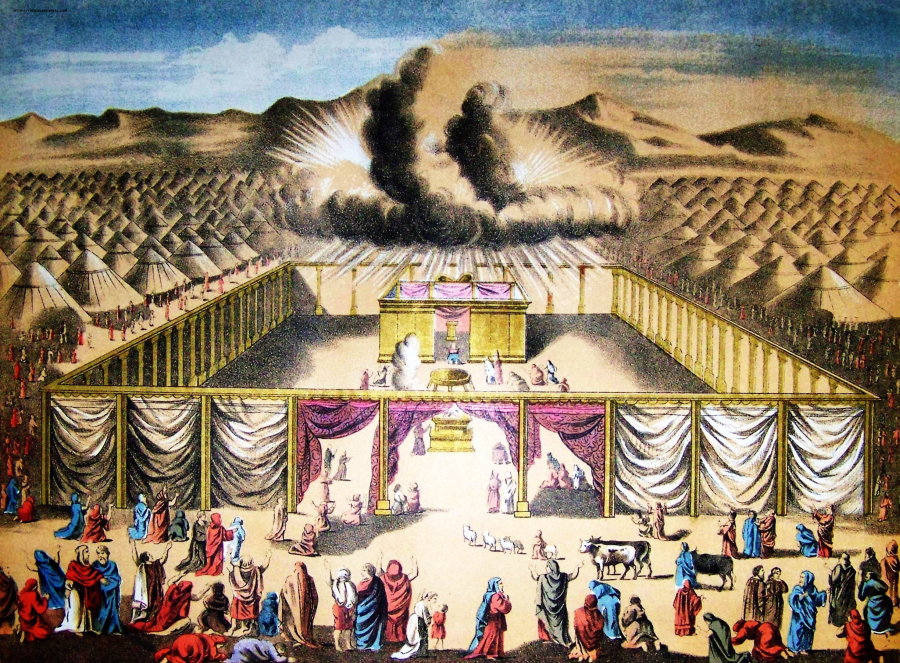
Przybytek na pustyni, ilustracja z Biblii Holmana, 1890/ Wikipedia

Pekudej nazywana jest czasami parszą księgowego, ponieważ zaczyna się od spisu materiałów i kosztowności, które Izraelici przekazali na rzecz budowy Miszkanu. W ten sposób Tora uczy nas, jak ważna jest przejrzystość finansowa.

Ale pod tą nie zawsze zajmującą powierzchnią tekstu kryją się dwie niesamowite historie. O pierwszej z nich czytamy w parszy z poprzedniego tygodnia, o drugiej – sprzed dwóch tygodni. Obie mówią o pewnym elemencie żydowskiej natury, który widoczny jest również dziś.

Pierwsza to historia samego Przybytku. Mojżesz prosi ludzi o datki na jego budowę. Niektórzy dają złoto, srebro lub miedź, inni wełnę, len i zwierzęce skóry. Izraelici przekazują też drewno akacjowe, oleje, kadzidła i wonności. Napierśnik arcykapłana wykonany jest przy użyciu podarowanych szlachetnych kamieni. To niezwykłe, jak chętnie Izraelici oddają wartościowe przedmioty:

I wzięli [budowniczy Przybytku] od Mojżesza wszystkie dary, które byli przynieśli synowie Israela do wykończenia dzieła świętego, aby je wykonać. Ci zaś przynosili mu dary dalej każdego rana. I zeszli się wszyscy umiejętni wykonawcy wszelakiej roboty świątyni, każdy od dzieła swojego, którem się zajmował, i oświadczyli Mojżeszowi, i rzekli: „Więcej lud przynosi, niż potrzeba do dzieła, które rozkazał Wiekuisty wykonać”. Rozkazał tedy Mojżesz – i ogłoszono w obozie tak: „Ani mężczyzna, ani kobieta niechaj już nie robią nic na daninę świętą!”. I przestał lud przynosić. A zapasu był dostatek dla całego dzieła, by je wykończyć, i jeszcze zbywało (Szemot 36:3-7).

Mojżesz musiał rozkazać Izraelitom, aby nie przynosili więcej datków, bo było ich zbyt wiele. Nie jest to lud, o jakim do tej pory czytaliśmy w Torze: kłótliwy, problematyczny i niewdzięczny. To społeczność, która pragnie dawać.

Poprzednia parsza opowiada zupełnie inną historię. Izraelici niepokoją się, bo Mojżesz przebywa na górze dłużej, niż się tego spodziewali. Zastanawiają się, czy ich przywódca wciąż żyje. Być może miał wypadek? Jeśli coś mu się stało, kto przekaże im słowo Boże? Skąd będą wiedzieć, co dalej robić i dokąd iść? W końcu żądają stworzenia złotego cielca – czegoś na kształt wyroczni, za pośrednictwem której Bóg będzie mógł przekazać im dalsze instrukcje.

Aaron – zgodnie z najbardziej przychylną interpretacją – zrozumiał, że nie może po prostu powstrzymać Izraelitów, odmawiając stworzenia bożka, dlatego postanowił odwlec to w czasie. Licząc, że Mojżesz wkrótce wróci, Aaron gra na zwłokę. Mówi więc do Izraelitów:

Zdejmcie zausznice złote, które w uszach żon waszych, synów i córek waszych, a przynieście do mnie (Szemot 32:2).

Według Midrasza Aaron myślał, że jego nakaz skłóci rodziny i opóźni bałwochwalczy czyn. Zamiast tego po słowach Aarona czytamy:

I zdjął wszystek lud zausznice złote, które były w uszach ich, i przynieśli do Ahrona (Szemot 32:3).

Ponownie obserwujemy niezwykłą hojność Izraelitów. Te dwie historie nie mogą bardziej się od siebie różnić. Przybytek był świętym miejscem, złoty cielec – bożkiem. Budowa Miszkanu była największą micwą, stworzenie posągu – ciężkim grzechem. A jednak w obu przypadkach Izraelici tak samo reagują na prośbę o datki. Mędrcy komentują zachowanie Izraelitów słowami:

Niełatwo zrozumieć naturę tego ludu. Jeśli prosi się ich o datki na cielca – dają; jeśli na Przybytek – również dają (Talmud Jerozolimski, tr. Szkalim 1, 45).

Obie historie łączy hojność. Żydzi być może nie zawsze dokonują najlepszych wyborów, ale pragną dawać.

Mojżesz Majmonides dwukrotnie przerywa swą zwykłą, pozbawioną emocji narrację kodeksu prawnego Miszne Tora, aby wygłosić dygresję na temat cedaki:

Nigdy nie spotkaliśmy się, ani nawet nie słyszeliśmy o społeczności żydowskiej, w której nie byłoby dobroczynności (Datki na rzecz ubogich 9:3).

Niemalże niewyobrażalna dla Majmonidesa była wizja gminy żydowskiej pozbawionej systemu pomocy potrzebującym. Dalej autor pisze:

Jesteśmy zobowiązani być bardziej skrupulatni w wypełnianiu przykazania cedaki niż w wypełnianiu jakiegokolwiek innego pozytywnego przykazania. Cedaka jest świadectwem prawego człowieka, potomka Abrahama, naszego ojca. Powiedziane było bowiem: „Albowiem umiłowałem go, aby polecił synom swoim (…) spełniać cnotę i sprawiedliwość [cedaka]”.

Jeśli kto jest okrutny i nie okazuje miłosierdzia, istnieją podstawy, aby snuć podejrzenia o jego pochodzeniu, ponieważ okrucieństwo występuje tylko wśród innych narodów (…).

Jeśli kto nie daje jałmużny zwany jest Belialem – tym samym słowem nazywa się bałwochwalców (Datki na rzecz ubogich 10:1-3).

PRENUMERATA
Majmonidesowi nie chodzi tylko o to, że Żydzi chętniej dają jałmużnę. Twierdzi, że skłonność do przekazywania datków jest zapisana w żydowskich genach. Jest to cecha świadcząca o pochodzeniu z rodu Abrahama i, jak twierdzi, ma ona na tyle duże znaczenie, że osoba, która jej nie posiada, może być podejrzewana o nieżydowskie pochodzenie. Czy jest to wynikiem natury, czy wychowania, być Żydem oznacza dawać.

Geografia Izraela ma pewną fascynującą cechę, która wynika z dostępu do dwóch mórz: Galilejskiego (Jeziora Tyberiadzkiego) i Martwego. Pierwsze jest pełne żywych istot. Z drugim – jak wskazuje nazwa – jest nieco inaczej. A jednak oba żywią się wodą z tej samej rzeki, Jordanu. Morze Galilejskie zasilane jest przez rzekę Jordan, ale samo również jest źródłem wody. Morze Martwe nie daje nic w zamian. Branie i niedawanie niczego w zamian, zarówno w żydowskiej geografii, jak i w psychologii oznacza brak życia.

Tak jak w czasach Mojżesza, tak jest i dziś. Niemal w każdym kraju, w którym mieszkają Żydzi, ich dobroczynność jest nieproporcjonalna do ich liczebności. Żyć w judaizmie oznacza dawać.


Zawartość publikowanych artykułów i materiałów nie reprezentuje poglądów ani opinii Reunion’68,
ani też webmastera Blogu Reunion’68, chyba ze jest to wyraźnie zaznaczone.
Twoje uwagi, linki, własne artykuły lub wiadomości prześlij na adres:
webmaster@reunion68.com


Journalism’s Longest War: The New York Times Versus Zionism and Israel

Journalism’s Longest War: The New York Times Versus Zionism and Israel

Professor Edward Alexande


Professor Edward Alexander is professor emeritus of English at University of Washington. His most recent book is Jews Against Themselves.

It has long been a commonplace that The New York Times, America’s “newspaper of record,” which flaunts the motto “All the News that’s Fit to Print,” failed to report the two greatest mass crimes of the twentieth century: Nazi Germany’s destruction of European Jewry and the Soviet Union’s murder of millions of Ukrainians. As Jerold Auerbach, professor emeritus of history at Wellesley College, tells the story of the Times from its late 19th century beginnings under the guidance of publisher Adolph S. Ochs of Tennessee up to the present day — a prodigious work of historical scholarship and critical analysis — the Times’ two abiding principles (almost dogmas) during this “Biblical” tenure of 120 years have been Reform Judaism and American patriotism.

Both Ochs’ religious commitment and his unswerving America First loyalty were dogmatic, and excluded sympathy with the Zionist movement. The two opposed forces came to prominence simultaneously: Theodor Herzl published The Jewish State: An Attempt at a Modern Solution of the Jewish Problem in 1897, just six months before Ochs purchased the Times, then in desperate financial straits.

He aimed to make it not only a financial success but “a model American newspaper for fairness, cleanliness, independence, and enterprise.” Ochs was also determined to keep the Times from either appearing as or being a Jewish newspaper; and to this end he took such measures, whenever possible, as hiding writers’ Jewish names behind initials. Writers named Abraham had bylines only with the initial “A.” Not until 1976 would the Times have a Jewish editorial page editor, Max Frankel, who later confessed that he was “much more deeply devoted to Israel than I dared to assert.”

Ochs’ commitment to Reform Judaism, it should be noted, went very deep, and it entailed unrelenting opposition to Zionism or even to the notion of a Jewish people that transcended national boundaries. A Jew with American citizenship was in his view an American not only “first” but entirely and exclusively. He would provocatively ask American Zionists whether they would fight for America or for (a conjectural) Jewish state should the two countries go to war. He was a devout America Firster.

Rarely did Ochs and his newspaper come to the defense even of persecuted American Jews, and when they did they came to regret it. Lawyer Louis Marshall persuaded Ochs to rally the Times in defense of Leo Frank, framed in 1913 for the rape and murder of teenager Mary Phagan. But when a Georgia paper accused the Times of “Jewish propaganda,” Ochs vowed never again to support a public cause, “certainly not one involving Jews.”

Auerbach shows how the Ochs-Sulzberger New York Times and the Reform Movement — led by anti-Zionist zealots like Judah Magnes and groups like the American Council for Judaism — formed a kind of interlocking directorate that turned a cold shoulder to Jews coming under Nazi rule. He demonstrates how the Times’ emphasis on “universalism” extended to concealment of Hitler’s destruction of European Jewry, by now the subject of Deborah Lipstadt’s Beyond Belief(1986) and Laurel Leff’s Buried By the Times (2005). Nor were the Nazis the sole beneficiaries of the Times‘ universalism. The paper’s Moscow bureau chief Walter Duranty depicted Soviet Odessa as a place “far more conducive to Russian Jewry than … Palestine itself.” (Duranty’s rank dishonesty is now better known for his apologetics on behalf of Stalin and the dictator’s decimation of the Ukrainians.)

Jews desperately needing rescue from Europe and escape to the United States or Palestine found no support from the Times. Reform Jews were largely content with an American president who would not even allow the pre-Hitler quotas for Jewish immigrants to be filled. The intensity of Reform Judaism’s Ochs-Sulzberger rejection of Jewish peoplehood makes it in Auerbach’s view the key not only to the Times’ past suppression of the truth about the destruction of European Jewry but also to its enduring anti-Zionist editorial advocacy and its unrelenting “Blame Israel First” principle of interpreting Israel’s constant burden of peril.

“Blame Israel First: 2002-2006” is a title chapter, one of a dozen built upon the scaffolding set up for the years from 1896 through 1948, when Israel was created, and used to encapsulate particular themes. Among them are: “Conquest and Occupation: 1960-79”;  “Arabs and Jews: 1979-84”; “Moral Equivalence: 1984-1988” (devoted entirely to Thomas Friedman); “Occupation Cruelty: 1988-89”; “Illusions of Peace: 1990-1996”; “Realities of Conflict: 1996-2001.”

These themes, inevitably, overlap from chapter to chapter, but all chapters serve to demonstrate that the overwhelming majority of Times editors, columnists, and reporters have displayed — how should one put it? — a striking lack of compassion toward Jews. This harshness is enough to make one wonder why so many American Jews judge Judaism by Times standards rather than the Times by the standards of Judaism.

Chapters dealing with the interminable question of the disputed “territories” also have in common a logical absurdity, obvious yet barely mentioned in the paper. From 1948-67 the Arabs had complete, unfettered control of the territories, theirs to do with whatever they liked; and what they liked was not the creation of a new Palestinian state, but a convenient site from which to launch terrorist attacks against Israel.

Auerbach demonstrates how Anthony Lewis and Thomas Friedman, perhaps more consistently than all other Times regulars obsessed with Israel, have been addicted to a double standard in judging the adversaries in the Arab-Israeli conflict. They believe that the more unfairly Israel is treated by The New York Times, the better off it (and everybody else) will be. An irreverent reader of the paper long ago nominated Lewis for the Pete Rose Journalism Award in recognition of his having written 44 consecutive columns on the Arab-Israeli conflict that laid all blame for its continuation on the intransigence and brutality of the Jews, adding that even a Joe DiMaggio award (56 consecutive “hits” against Israel) might be insufficient recognition of consistency in depicting the Jewish state as a breeding ground for fanatics.

Lewis typically deplored Israeli actions not merely because they hurt Arabs. He deplored them because they “cannot serve the spirit of Israel, or its true security.” Like Brutus brooding over the misdeeds of his beloved Caesar, Lewis persuaded himself that “in the spirit of men there is no blood.” He was therefore not tremendously perturbed by the prospect that it may be difficult to come by Israel’s spirit without dismembering the Jewish state.

“Yes,” Lewis wrote, “there is a double standard. From its birth Israel asked to be judged as a light among nations.” Of course, this preposterous assertion reveals total ignorance of the Zionist movement, which rejected Jewish chosenness and sought to normalize Jewish existence as a member of the family of nations, treated neither better nor worse than others. Lewis’ formulation was sinister in suggesting that Israel has no right to exist unless and until it is perfect.

Thomas Friedman has been on the same track. In his book From Beirut to Jerusalem, he recounts a moment of revelation in London while reading the International Herald Tribune. The day’s paper had spread over four columns on its front page a photo of “an Israeli soldier not beating, not killing, but grabbing a Palestinian.” When he sought out the story behind the photo, he found only a two-paragraph item on page two. The rude blare on page one had blotted out, among other small troubles in the Islamic world, that day’s slaughter of several thousand people in the Iran-Iraq war.

What, Friedman wondered, explained this “lack of proportion?” His answer was that “this unique double dimension” is attributable to “the historical and religious movements to which Israel is connected in Western eyes.” So that’s the explanation of the relentless obsessive lashing of Israel by him and his colleagues at the Times and elsewhere? He continues: “What the West expected from the Jews of the past, it expects from Israel today.”

Can this be the same “West” that for centuries, far from seeing Jews as carriers of prophetic morality, hounded and persecuted them because they had murdered or continued stubbornly to “deny” the Son of God; the West whose secular leaders first told the Jews that they couldn’t continue to practice Judaism in Europe, then that they couldn’t continue to live in Europe, and then that they couldn’t continue to live? Is this what Friedman learned about European and Jewish history in the suburban Minneapolis high school he attended?

recommended by: Leon Rozenbaum

Of course, as Auerbach amply demonstrates in this remarkable and magisterial book, Friedman and Lewis and their like have not been telling the truth about Western expectations of the Jews. Here is a Philip Roth character, an ignorant lout to be sure, on this subject: “The fellows who say to you, ‘I expect more of the Jews,’ don’t believe them. They expect less. What they are really saying is, ‘Okay, we know you’re a bunch of ravenous bastards and given half the chance you’d eat up half the world. … We know all these things about you, and so we’re going to get you now. And how? Every time you make a move, we’re going to say, “But we expect more of Jews, Jews are supposed to behave better.”’… I would have thought that it was the non-Jews whose behavior could stand a little improvement.”

In slightly less colorful language, Auerbach’s study of the Times conveys a similar message, along with the recognition, generally absent from the paper, that the establishment of the State of Israel just a few years after the destruction of European Jewry was one of history’s great affirmations of life over death.


Edward Alexander is professor emeritus of English at University of Washington. His most recent book is Jews Against Themselves.


Zawartość publikowanych artykułów i materiałów nie reprezentuje poglądów ani opinii Reunion’68,
ani też webmastera Blogu Reunion’68, chyba ze jest to wyraźnie zaznaczone.
Twoje uwagi, linki, własne artykuły lub wiadomości prześlij na adres:
webmaster@reunion68.com


Would Gantz Phone Hack Hurt Leadership?

Would Gantz Phone Hack Hurt Leadership?

  i24NEWS


THE RUNDOWN | It’s been alleged that Benny Gantz’s phone was hacked by Iranian hackers, seeking information that may be sensitive. How does this influence the Israeli voters’ minds? An i24NEWS-Israel Hayom poll found that half of Israelis didn’t see it as a problem. Former Israeli Deputy Prime Minister Haim Ramon analyzes.

Story:

Following the leaked story of an alleged hack by Iran into the phone of Prime Minister Benjamin Netanyahu’s top rival Benny Gantz, an i24NEWS-Israel Hayom election poll reveals that half of voters do not see it as harming his ability to serve as Israel’s leader.

The poll found that 23% of respondents said the phone hack would harm his ability to lead the country, while another 28% said they were uncertain.

The findings come following a tumultuous week of rockets sent fired at Tel Aviv from Gaza and hard-hitting accusations from candidates in the April 9 national elections, but most prominently from top two contenders who are jostling for a shot at forming a coalition and leading the government.

A Channel 12 news poll published on air Wednesday showed the Blue & White reclaiming its lead with a projected 32 Knesset seats to Likud’s 27.

Gantz has accused the prime minister of orchestrating the leaked hack in order to foil his chances in the elections.

Netanyahu has strongly denied the accusations while claiming that Iran supports Gantz for prime minister.

The full poll will be published on Sunday, March 24th, 2019.


Zawartość publikowanych artykułów i materiałów nie reprezentuje poglądów ani opinii Reunion’68,
ani też webmastera Blogu Reunion’68, chyba ze jest to wyraźnie zaznaczone.
Twoje uwagi, linki, własne artykuły lub wiadomości prześlij na adres:
webmaster@reunion68.com