Archive | November 2020

Three New York Times Pieces on Whether Trump Kept Promises All Ignore Jerusalem Embassy

Three New York Times Pieces on Whether Trump Kept Promises All Ignore Jerusalem Embassy

Ira Stoll
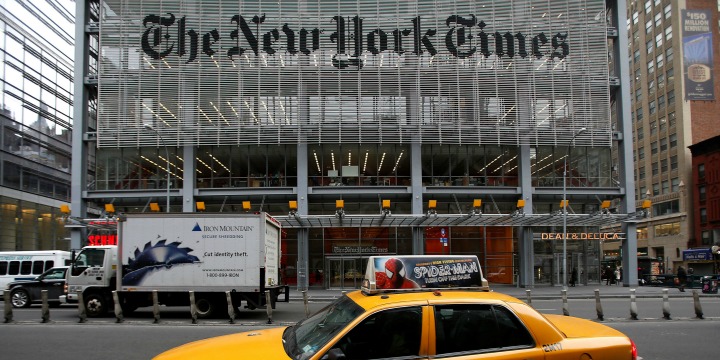

A taxi passes by in front of The New York Times head office, Feb. 7, 2013. Photo: Reuters / Carlo Allegri / File.

An election-eve assessment by The New York Times about whether President Donald Trump had kept or broken his campaign promises entirely ignored Trump’s following through on his pledges to exit the Iran nuclear deal and move the US Embassy in Israel to Jerusalem.

The article appeared in print on November 1 under the headline “Did the President Keep His First-Term Promises?” It’s a reasonable question — the sort of question that undecided voters headed to the polls in what turned out to be a close contest might have wanted to have answered.

Yet the Times article goes on for more than 1,800 words without the word “Iran” or “Jerusalem.” The article is without a single mention of two kept foreign policy promises that pro-Israel voters, including Jewish voters, might care about.

Trump himself used his Republican National Convention speech accepting the nomination to remind voters that he had kept those promises: “I withdrew from the terrible one-sided Iran nuclear deal. Unlike many presidents before me, I kept my promise, recognized Israel’s true capital and moved our Embassy to Jerusalem. But not only did we talk about it as a future site; we got it built. Rather than spending $1 billion on a new building as planned, we took an already owned, existing building in a better location. Real estate deal, right? And opened it at a cost of less than $500,000.”

Did the Times reporters miss the Trump speech?

One doesn’t need to be some kind of right-wing or Jewish media outlet to acknowledge Trump’s follow-through on these issues. When Trump withdrew from the Iran deal, NBC News reported it under the headline “Trump kept his promise on Iran. But was it the right promise?” The NBC News analysis by Andrea Mitchell began, “As he announced the end of the Iran nuclear deal on Tuesday, President Donald Trump told the nation, ‘When I make promises, I keep them.’ And he did, in fact, campaign on a promise to tear up the deal on Day One (though the action actually came on Day 474). The sense that the president was keeping a promise to his political base was made very clear in a statement quickly issued by the Trump re-election campaign, headlined: ‘A Promise Kept on the Iran Nuclear Deal.’”

Instead of Jerusalem or Iran, the Times article focuses on the border wall with Mexico, cutting taxes, appointing conservative judges, repealing and replacing the Affordable Care Act and renegotiating trade deals.

This effort was the third such attempt by the Times in recent months to check on whether Trump has kept his promises. A September opinion column by Nicholas Kristof was headlined “‘I Keep My Promises,’ Trump Said. Let’s Check.” It billed itself as “a report card on whether the president met his 2016 campaign pledges.” That column, too, ignored both the Iran nuclear deal and the Jerusalem embassy.

An October episode of the Times podcast “The Daily” also tackled the promises-kept question. “We look at whether Mr. Trump has made good on his commitments from 2016,” is how the episode was introduced. The podcast did, to its credit, acknowledge, “He pulled us out of the Iran nuclear accord, which was meant to lift sanctions on Iran in exchange for them promising not to build a nuclear weapon.” That podcast, however, entirely ignored the Jerusalem embassy move, too. “The Daily” host Michael Barbaro did acknowledge what he described as “a fairly long and meaningful list of promises kept.” That’s better than the Times news article, which only offered, “In reality, Mr. Trump has broken about half of 100 campaign promises, according to a tracker by PolitiFact.” The tracker handles the Iran deal by describing it as a broken promise to renegotiate the Iran deal, which is a strange way to handle it — and the opposite of how “The Daily” podcast handled it.

Is it too much to ask the Times to serve readers who might care about these promises? It seems like just the most recent example of the Times’ weird blind spot when it comes to Jewish issues. I can understand why the Times would prefer to forget or omit the Jerusalem embassy move, to pretend it never even happened. The newspaper looks silly, because the Times predicted the move would cause violence and prevent peace. In fact, peace agreements have ensued. In the run-up to an election, though, voters deserved straightforward and complete information to make informed decisions, not news tilted or filtered to avoid embarrassing the Times for its past mistakes.


Ira Stoll was managing editor of The Forward and North American editor of The Jerusalem Post. His media critique, a regular Algemeiner feature, can be found here.


Zawartość publikowanych artykułów i materiałów nie reprezentuje poglądów ani opinii Reunion’68,
ani też webmastera Blogu Reunion’68, chyba ze jest to wyraźnie zaznaczone.
Twoje uwagi, linki, własne artykuły lub wiadomości prześlij na adres:
webmaster@reunion68.com


The ultimate recipe for baba ganoush

The ultimate recipe for baba ganoush

21see


Our Tayim chef shows you how to make this delicious roasted eggplant dish from the comfort of your own home.


Zawartość publikowanych artykułów i materiałów nie reprezentuje poglądów ani opinii Reunion’68,
ani też webmastera Blogu Reunion’68, chyba ze jest to wyraźnie zaznaczone.
Twoje uwagi, linki, własne artykuły lub wiadomości prześlij na adres:
webmaster@reunion68.com


Muzułmanie: Meczet Al-Aksa nie należy do Palestyńczyków

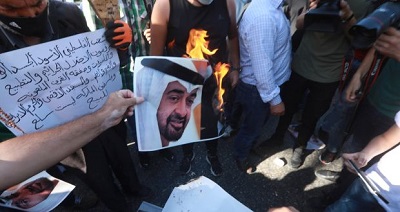
Dla Palestyńczyków muzułmanin, który wierzy w prawo Izraela do istnienia, nie jest uprawniony do wejścia na Wzgórze Świątynne ani modlenia się w meczecie Al-Aksa. Rządzący Fatah, frakcja prezydenta Autonomii Palestyńskiej, Mahmouda Abbasa, przewodzi kampanii nie dopuszczania muzułmanów ze Zjednoczonych Emiratów Arabskich i Bahrajnu do odwiedzania Wzgórza Świątynnego. Na zdjęciu: Palestyńczycy palą portret następcy tronu ZEA, Mohammeda Bin Zajeda.)


Muzułmanie: Meczet Al-Aksa nie należy do Palestyńczyków


Khaled Abu Toameh
Tłumaczenie: Małgorzata Koraszewska


W ostatnich latach Palestyńczycy regularnie potępiali Żydów za odwiedzanie Wzgórza Świątynnego/Haram Al-Szarif (Szlachetnej Świątyni) w Jerozolimie. Palestyńczycy przedstawiają te wizyty Żydów jako “wtargnięcia” i twierdzą, że odwiedzający „bezczeszczą” meczet Al-Aksa, kiedy wchodzą na Wzgórze Świątynne.

Żydzi jednak nie wchodzą do meczetu; chodzą jedynie po otwartym terenie i chroni ich izraelska policja. Warto wspomnieć, że Palestyńczycy często obrzucają Żydów na Wzgórzu Świątynnym obelgami i próbują fizycznie atakować.

Wzgórze Świątynne jest najświętszym miejscem judaizmu i miejscem, ku któremu Żydzi zwracają się podczas modlitw. Wśród sunnickich muzułmanów Wzgórze Świątynne uważane jest za trzecie najświętsze miejsce islamu.

Palestyńczycy mówią teraz, że sprzeciwiają się nie tylko Żydom odwiedzającym ich najświętsze miejsce, ale także wizytom muzułmanów, którzy wierzą w pokój z Izraelem.

Dla Palestyńczyków muzułmanin, który wierzy w prawo Izraela do istnienia, nie jest uprawniony do wejścia na Wzgórze Świątynne ani modlenia się w meczecie Al-Aksa. Dlaczego? W świecie Palestyńczyków muzułmanin lub Arab, który zawiera pokój z Izraelem, jest “zdrajcą”, który nie zasługuje na prawo wejścia na ten teren. Chociaż miejsce jest święte dla wszystkich muzułmanów, Palestyńczycy jakoś przekonali samych siebie, że meczet Al-Aksa jest ich prywatną własnością i że mają prawo nie dopuszczać innych muzułmanów do modlenia się w tym miejscu.

Rządzący Fatah, frakcja prezydenta Autonomii Palestyńskiej, Mahmouda Abbasa, przewodzi kampanii niedopuszczania muzułmanów ze Zjednoczonych Emiratów Arabskich i Bahrajnu – dwóch państw Zatoki, które niedawno podpisały porozumienia pokojowe z Izraelem – do odwiedzania Wzgórza Świątynnego.

Mufti Jerozolimy mianowany przez AP, szejk Mohammed Hussein, pierwszy zakazał odwiedzania tego miejsca muzułmanom, którzy wierzą w normalizację stosunków z Izraelem. Hussein oznajmił, że muzułmanie, którzy chcą modlić się w meczecie Al-Aksa, mogą to robić, tylko jeśli nie przybywają przez Izrael.

Dodał, że modlitwy w meczenie nie są dozwolone dla muzułmanów, którzy nawiązują stosunki z Izraelem. Ponadto powiedział, że Palestyńczycy mają zakaz przyjmowania lub kontaktowania się z każdym muzułmaninem, który wierzy w normalizację stosunków z Izraelem.

Inny wysoki rangą palestyński duchowny, szejk Ekremah Sabri, powiedział, że wizyty muzułmanów, którzy wierzą w pokój z Izraelem, w miejscu świętym „są nie mniej niebezpieczne niż szturmowanie meczetu Al-Aksa przez [żydowskich] osadników”.

Sabri powiedział, że niedawne wizyty muzułmanów z ZEA na Wzgórzu Świątynnym i w Jerozolimie “są wyraźnym rezultatem zbrodni normalizacji” stosunków z Izraelem. Dodał: „Jest haniebne dla tych delegacji przychodzenie pod izraelską ochroną”.

Monir al-Dżaghoub, wysoki rangą funkcjonariusz Fatahu, ostrzegł, że Palestyńczycy rzucą “starym butem w twarze” muzułmanów, którzy wchodzą do Jerozolimy pod izraelską ochroną.

To jest jedna z nielicznych spraw, w której Fatah wydaje się zgadzać ze swoimi rywalami w palestyńskim ruchu islamistycznym, Hamasie.

“Ta przeklęta wizyta jest brakiem uszanowania uczuć ludów naszego arabskiego i islamskiego narodu oraz zachętą dla syjonistycznej okupacji, by czynić coraz więcej wtargnięć do meczetu Al-Aksa” – Abdel-Latif Al-Qanou, rzecznik Hamasu, powiedział Agencji Anadolu. “Wejście delegacji z Zatoki do meczetu Al-Aksa pod izraelską ochroną jest ciosem w plecy naszego palestyńskiego ludu”.

Te groźby są powodem, dla którego Palestyńczycy obrażali i wyrzucili delegację ZEA, która odwiedziła meczet Al-Aksa 19 października. Gdyby nie obecność izraelskich policjantów i strażników bezpieczeństwa, wizyta skończyłaby się przemocą lub rozlewem krwi.

Groźby i obelgi Palestyńczyków spotkały się z ostrą krytyką wielu muzułmanów, szczególnie tych, którzy żyją w Zatoce. Ci muzułmanie, obrażeni i poniżeni przez retorykę i prowokacje Palestyńczyków, odpowiedzieli potępieniem palestyńskich „zbirów”, którzy nękają i obrażają muzułmańskich wiernych podczas ich wizyty w meczecie Al-Aksa.

Ci muzułmanie z Zatoki żądają także położenia kresu palestyńskiemu “monopolowi” nad islamskim miejscem świętym w Jerozolimie. Praktycznie rzecz biorąc, mówią: “Meczet Al-Aksa należy do wszystkich muzułmanów, a nie tylko do Palestyńczyków”. Inni posunęli się tak daleko, że żądają “wyzwolenia” meczetu Al-Aksa z rąk palestyńskich „zbirów”.

Saudyjski dziennikarz i pisarz, Abdel Rahman Al-Lahim:

“Jest bardzo ważne, by [mieszkańcy] Emiratów i Bahrajnu omówili z Izraelem sposoby wyzwolenia meczetu Al-Aksy od palestyńskich zbirów, żeby bronić gości przed palestyńskim bandytyzmem”.

Al-Lahim pisał wyzywająco na Twitterze:

“Będę nadal z pomocą Boga demaskował palestyńskich zbirów i przeciwstawia się im, żeby bronić meczetu Al-Aksa przed tymi łajdakami. Będę przypominał światu o ich (Palestyńczyków) terrorystycznych zbrodniach w Jordanii i Libanie”.

Komentując sprawę poniżenia delegacji ZEA podczas wizyty w Jerozolimie, saudyjski pisarz i publicysta, Abdullah Al-Bander, oskarżył Palestyńczyków o niewdzięczność wobec krajów arabskich, które popierały Palestyńczyków. Palestyńczycy, napisał, “obrażali i przeklinali muzułmanów w meczecie. ZEA jest jednym z największych krajów po Arabii Saudyjskiej, który popierał palestyński naród przez dostarczanie pomocy dla UNRWA”.

Saudyjski politolog, Sattam Al-Harthi, potępił agresywną reakcję Palestyńczyków na wizytę delegacji z ZEA. Powiedział, że spodziewał się, iż “Palestyńczycy powitają arabskich braci kwiatami i otworzą dla nich swoje domy”.

Polityczna działaczka z ZEA, Laila Al-Awadhi, zapytała: “Czy to jest palestyńska etyka gościnności? Czy jest jednym z przykazać religijnych [rzucanie] obelg w meczetach? Czy to jest moralność Arabów?” Zwracając się do Palestyńczyków dodała: “Będziemy odwiedzać meczet Al-Aksa, ponieważ nie należy do was, należy do wszystkich muzułmanów”.

Pisarz z ZEA, Jakoub Al-Rayss, oskarżył “najemników” Hamasu o to, że stoją za napadami na muzułmanów, którzy odwiedzili meczet w Jerozolimie. „Tutaj widzicie, że nie tyle chodzi o religię i etykę, ile jest to złowroga ideologia Bractwa Muzułmańskiego” – napisał. (Hamas jest odgałęzieniem Bractwa Muzułmańskiego.)

Ali Al-Aslami, użytkownik mediów społecznościowych z ZEA, odpowiedział Al-Rayssowi: “Jak bardzo myliliśmy się, kiedy myśleliśmy, że Izrael uniemożliwia muzułmanom odwiedzanie meczetu Al-Aksa”.

Ahmed Nasir, w artykule opublikowanym w tygodniku ZEA, “Al-Ain”, oskarżył Katar, Turcję i Palestyńczyków o hipokryzję i „kupczenie” sprawą palestyńską. Nasir podkreślił, że wizyta delegacji z Emiratów w meczecie Al-Aksa “przyszła jako owoc traktatu pokojowego podpisanego przez ZEA i Izrael 15 września i jako komunikat ZEA dla Palestyńczyków, że traktat popiera ich sprawę”.

Katar i Turcja, dodał Nasir, “próbowały zakłócić tę wizytę, wypaczyć jej cele i atakować ją, jako część nikczemnego planu udaremnienia i wypaczenia starań ZEA o pokój”. Wskazał, że turecki prezydent, Recep Tayyip Erdogan i katarscy ministrowie odwiedzali meczet w przeszłości, ale nie byli obrażani przez Palestyńczyków.

“Handlarze sprawą palestyńską podżegają przeciwko ZEA tylko dlatego, że zaczęły szukać praktycznego rozwiązania, które przyczyniłoby się do szerzenia bezpieczeństwa i stabilności oraz przywrócenia praw palestyńskich” – argumentował Nasir.

Wściekłe reakcje tych muzułmanów na palestyńską napaść na delegację z Emiratów są kolejną oznaką pogłębiającego się kryzysu między Palestyńczykami a światem arabskim, szczególnie państwami Zatoki. Jest oczywiste, że przybycie turystów do Jerozolimy pomaga gospodarce w czasie, kiedy miasto przeżywa trudności gospodarcze z powodu restrykcji związanych z koronawirusem. Niemniej, raz jeszcze, Palestyńczycy optowali za nienawiścią do Izraela i do każdego Araba, który dąży do pokoju z nim, zamiast za poprawą swoich podstawowych warunków życia.

Jest dodatkowy aspekt gniewnej reakcji tych Arabów i muzułmanów: niektórzy muzułmanie czują się bezpieczniej odwiedzając meczet pod izraelską ochroną niż bez niej. Izraelscy policjanci chronili muzułmanów, którzy odwiedzali meczet, przed atakami innych muzułmanów – za promowanie normalizacji stosunków z Izraelem. Nic dziwnego więc, że muzułmanie z Zatoki żądają teraz zakończenia wyłącznej kontroli, jaką Palestyńczycy sprawują nad trzecim najświętszym miejscem islamu.


Khaled Abu Toameh – urodzony w 1963 r. w Tulkarem na Zachodnim Brzegu, palestyński dziennikarz, któremu wielokrotnie grożono śmiercią. Publikował między innymi w “The Jerusalem Post”, “Wall Street Journal”, “Sunday Times”, “U.S. News”, “World Report”, “World Tribune”, “Daily Express” i palestyńskim dzienniku “Al-Fajr”. Od 1989 roku jest współpracownikiem i konsultantem NBC News.


Zawartość publikowanych artykułów i materiałów nie reprezentuje poglądów ani opinii Reunion’68,
ani też webmastera Blogu Reunion’68, chyba ze jest to wyraźnie zaznaczone.
Twoje uwagi, linki, własne artykuły lub wiadomości prześlij na adres:
webmaster@reunion68.com


My Word: The lasting legacy of Rabbi Lord Jonathan Sacks

My Word: The lasting legacy of Rabbi Lord Jonathan Sacks

LIAT COLLINS


Knighted in 2005 and made a life peer four years later, Rabbi Sacks will forever be known as Britain’s former chief rabbi.

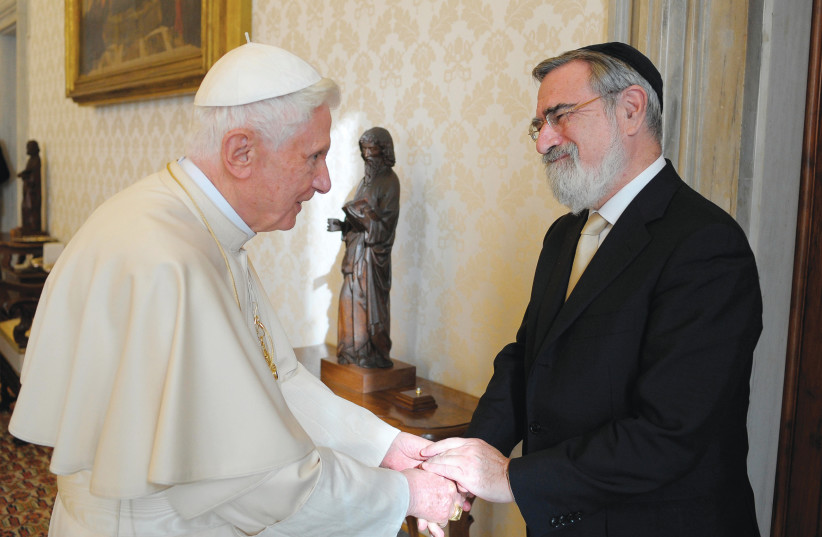
POPE BENEDICT XVI greets Rabbi Lord Jonathan Sacks during a private audience at the Vatican in 2011. /  (photo credit: OSSERVATORE ROMANO / REUTERS)

Like so many others, I had been praying for a miracle. A miracle that didn’t happen. When I checked the news last Saturday night to see what I had missed during the 25 hours when, as an Orthodox Jew, I switch off all my electronic devices and take a blessed break from current affairs, I felt as if I had been punched in the gut.

Among the polarization and vitriol surrounding the US presidential election results that was filling up my Facebook news feed was a post from a friend written through tears: Rabbi Lord Jonathan Sacks had passed away – just a month after it was announced that he was battling cancer for the third time in his 72 years.

I swiftly went through several classic stages of grieving from denial – I checked the rabbi’s official website to make sure this was not pernicious fake news – to anger that he had died when he had so much still to give, and on to acceptance, because Rabbi Sacks himself stressed that death is a natural part of life. Only God is immortal.

“What the parsha is telling us is that for each of us there is a Jordan we will not cross, a promised land we will not enter. ‘It is not for you to complete the task,’” he wrote in a commentary on the Torah portion Hukkat in 2016.

Rabbi Sacks was known to a broader audience through his regular appearances on BBC Radio 4’s “Thought for the Day,” as well as speaking engagements and interviews. The tributes that poured in from around the world confirmed that we had all lost a special person.

Knighted in 2005 and made a life peer four years later, Rabbi Sacks will forever be known as Britain’s former chief rabbi. The title is misleading. His title was “Chief Rabbi of the United Hebrew Congregations of the Commonwealth” for 22 years. He never officially represented all Anglo Jewry and yet, particularly after he left office in 2013, he became the voice of all Jews everywhere.

Furthermore, he became the sane, moral voice for all those, of any religion, looking for reason. Earlier this year he published the last of some 30 books. The title says it all: Morality: Restoring the Common Good in Divided Times.

Rabbi Sacks’s standing can be seen from those who eulogized him. Charles, Prince of Wales, issued a statement describing his “profound personal sorrow” and saying: “With his passing, the Jewish community, our nation, and the entire world have lost a leader whose wisdom, scholarship and humanity were without equal.”

Archbishop of Canterbury Justin Welby, the most senior bishop in the Church of England, said: “We are all the beneficiaries of his wisdom” while Nick Baines, the Anglican bishop of Leeds, declared: “A giant has gone.”

As reported by Vatican News, Roman Catholic Cardinal Vincent Nichols, the archbishop of Westminster, recalled his meeting with Pope Benedict in September 2010, in which Rabbi Sacks “gave eloquent expression to the shared Jewish and Christian beliefs with these poignant words: ‘In the face of a deeply individualistic culture we offer community. Against consumerism, we talk about the things that have value but not a price. Against cynicism, we dare to admire and respect. In the face of fragmenting families, we believe in consecrating relationships.”

I NEVER MET Rabbi Sacks, although interviewing him was on my professional and personal wish list. Every week, I read his “Covenant and Conversation” discussion on the Torah portion. It was as much a part of my Shabbat as prayers and kiddush.

With his doctorate in philosophy, Rabbi Sacks had the incredible ability to make Judaism accessible while drawing on broad sources. These went well beyond the great Jewish names such as Maimonides and Nachmanides and Rabbi Joseph Soloveitchik.

Discussing “The Arc of the Moral Universe,” Sacks quotes ancient Athenian historian Thucydides, Shakespeare, Martin Luther King, Moses, Job, the Talmud and more – all in an article of a few hundred words. It’s incredible that what could have been distant and pretentious instead was readable and easy to understand and identify with. His genius was in the way he pulled the different threads together to create something original.

Over and over, there is a message that a true leader must take personal responsibility, moral responsibility and collective responsibility. A central tenet was that we must each act morally. “There is one respect in which each of us has precisely the same strength as Moses. Namely, the strength to choose. There is no hand of heaven – no physiological, genetic, psychological or Providential compulsion – that forces us to act one way rather than another,” he wrote in Tradition in an Untraditional Age.

Of the current crisis he was quoted as saying: “The coronavirus is going to test our capacity to work for the benefit of others. Selfishness is not going to protect us.”

Recently, I looked up something he wrote in which he quotes New York Times columnist David Brooks’s book The Road to Character, distinguishing between what Brooks calls “resumé virtues” and “eulogy virtues.”

“The resumé virtues are the ones we write on our curriculum vitae, our achievements, our qualifications, our skills,” explained Rabbi Sacks. “But it is the eulogy virtues that are the ones for which we will be remembered. Are we kind, honest, faithful? What are the ideals for which we live, and how do we live them? These are not what we write on our resumé, but they make all the difference to our quality of life and the impact we have on those around us.”

In Rabbi Sacks’s case, both the resumé virtues and the eulogy ones are evidently impressive. His intellect, warmth, wit and humanity were mentioned in many tributes.

Rabbi Sacks had pride in his Judaism and taught other Jews to speak out. “Judaism is an ongoing moral revolution,” he declared. For Israel’s 60th anniversary he published a double CD in which he narrated the country’s history interspersed with Hebrew songs.

In his book Radical Then, Radical Now, he wrote: “The only sane response to antisemitism is to monitor it, fight it, but never let it affect our idea of who we are. Pride is always a healthier response than shame.” Although he rarely tackled political subjects per se, he did not keep silent about what he perceived to be the dangerous climate of antisemitism in the Labour Party under Jeremy Corbyn.

Fortunately, his voice lives on in his recorded talks, books and articles. His website contains a treasure trove of his thought and wisdom, including a selection of quotes arranged alphabetically by topic. I hit “C” for “Challenges” and find: “We are as great as the challenges we have the courage to undertake”

There is something for everyone, for as Rabbi Sacks told readers in Faith in the Future, “Faiths are like languages. There are many of them, and they are not reducible to one another. In order to express myself at all, I must acquire a mastery of my own language… But as I venture out into the world I discover that there are other people who have different languages which I must learn if we are to communicate across borders.”

One of my favorite quotes is: “Optimism is the belief that things are going to get better. Hope is the belief that we can make things better. Optimism is a passive virtue, hope is an active one. It takes no courage to be an optimist, but it does need courage to hope.” It comes from Rabbi Sacks’s book Celebrating Life: Finding Happiness in Unexpected Places – a title that was also the motto by which he lived.

“Choose life” is God’s message to the people of Israel as Moses hands over to Joshua (Deut. 30:19). “Celebrate life” is a fitting message on which to end a tribute to Lord Jonathan Sacks – a revered rabbi of blessed memory.


Zawartość publikowanych artykułów i materiałów nie reprezentuje poglądów ani opinii Reunion’68,
ani też webmastera Blogu Reunion’68, chyba ze jest to wyraźnie zaznaczone.
Twoje uwagi, linki, własne artykuły lub wiadomości prześlij na adres:
webmaster@reunion68.com

CNN Host Amanpour’s Comparison of ‘Kristallnacht’ to Trump Era Derided as ‘Despicable’

CNN Host Amanpour’s Comparison of ‘Kristallnacht’ to Trump Era Derided as ‘Despicable’

Algemeiner Staff


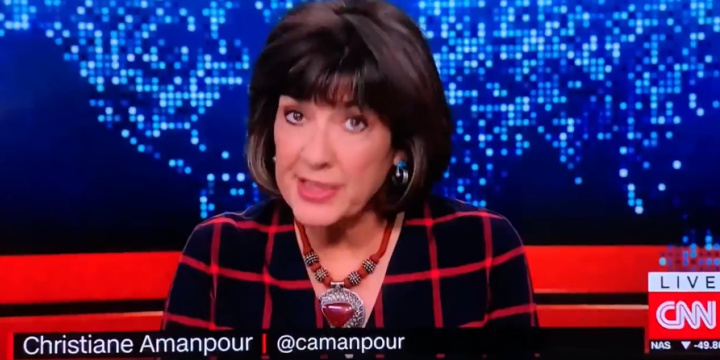
CNN anchorwoman Christiane Amanpour. Photo: Screenshot.

CNN anchorwoman Christiane Amanpour raised eyebrows on Thursday when she marked the 82nd anniversary of “Kristallnacht” — the November 1938 pogroms targeting Jews in Germany and Austria — by appearing to liken the values of the Nazis to those of US President Donald Trump.

“This week, 82 years ago, Kristallnacht happened,” Amanpour said. “It was the Nazis’ warning shot across the bow of our human civilization that led to genocide against a whole identity.”

“And, in that tower of burning books, it led to an attack on fact, knowledge, history, and truth,” she continued. “After four years of a modern-day assault on those same values by Donald Trump, the Biden/Harris team pledges a return to norms.”


Ben Habib @benhabib6
Nov 12
This is ⁦⁦@camanpour on⁩ ⁦@CNN⁩ comparing Trump’s tenure to Nazi Germany. How the hell is this sort of prejudice tolerated on mainstream media? Third rate rubbish.


CNN anchorwoman Christiane Amanpour raised eyebrows on Thursday when she marked the 82nd anniversary of “Kristallnacht” — the November 1938 pogroms targeting Jews in Germany and Austria — by appearing to liken the values of the Nazis to those of US President Donald Trump.

“This week, 82 years ago, Kristallnacht happened,” Amanpour said. “It was the Nazis’ warning shot across the bow of our human civilization that led to genocide against a whole identity.”

“And, in that tower of burning books, it led to an attack on fact, knowledge, history, and truth,” she continued. “After four years of a modern-day assault on those same values by Donald Trump, the Biden/Harris team pledges a return to norms.”

Amanpour’s remarks were met with widespread derision on social media.

The Orthodox Jewish Public Affairs Council (OJPAC) called her words “despicable.”


Zawartość publikowanych artykułów i materiałów nie reprezentuje poglądów ani opinii Reunion’68,
ani też webmastera Blogu Reunion’68, chyba ze jest to wyraźnie zaznaczone.
Twoje uwagi, linki, własne artykuły lub wiadomości prześlij na adres:
webmaster@reunion68.com