Archive | December 2020

Czy Teheran buduje “kuchnię diabła”?

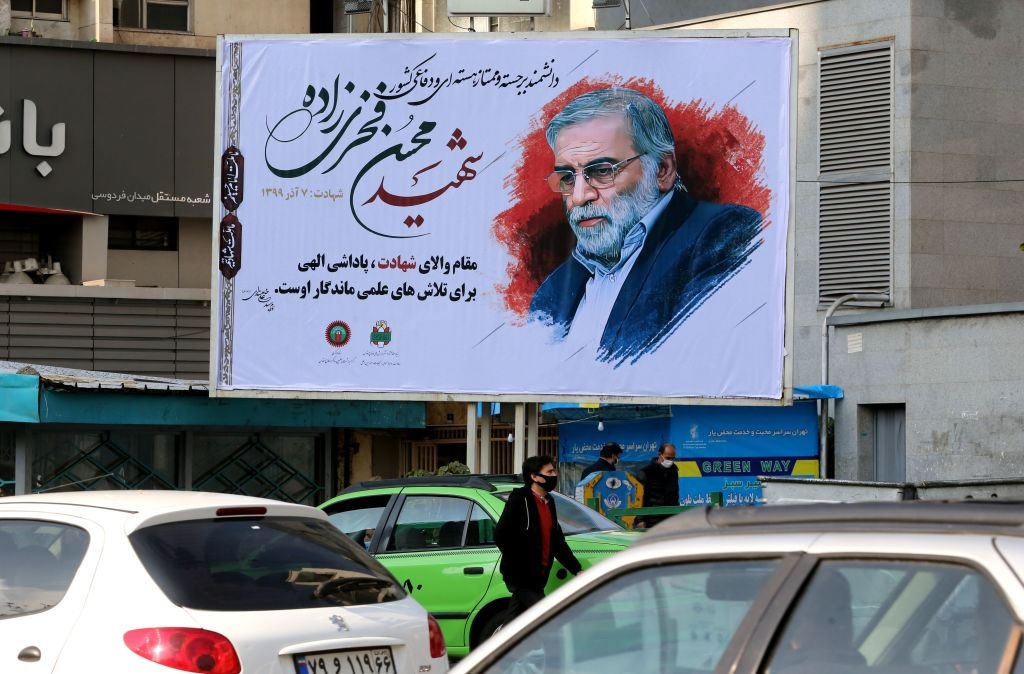
Na zdjęciu: Plakat upamiętniający zabitego irańskiego naukowca nuklearnego Mohsena Fachrizadeha, w Teheranie, 30 listopada 2020 r. (Zdjęcie: Atta Kenare/AFP via Getty Images)

Czy Teheran buduje “kuchnię diabła”?

Amir Taheri


Tłumaczenie: Małgorzata Koraszewska


Oddać to uderzenie, czy nie oddać?

To jest pytanie które od niemal tygodnia rozpala debatę w rządzących kręgach chomeinistów w Teheranie. Debatę wywołało zabicie Mohsena Fachrizadeha, zagadkowej postaci z najwyższych szeregów mrocznego establishmentu Teheranu.

Mimo powodzi nekrologów i relacji o tym wydarzeniu, nie jest całkiem jasne, kim był Fachrizadeh i co robił.

Oficjalna narracja zaczęła od przedstawiania go jako postaci wojskowej. Powiedziano nam, że był generałem brygady i nosił ten tytuł jako wiceminister obrony. Potem Minister Obrony, generał brygady Amir Hatami, przemawiał tak, jakby ledwie znał Fachrizadeha, choć wychwalał go za niewymienione “olbrzymie zasługi”. Następnie narracja skręciła na przedstawianie Fachrizadeha jako nuklearnego naukowca, a więc ofiarę wroga “który pragnie spowolnić postęp Iranu w pokojowym zastosowaniu nauki jądrowej”.

Innymi słowy, Fachrizadeh dołączył do rosnącej listy irańskich naukowców nuklearnych zabitych przez nieznanych napastników w ciągu ostatnich 10 lat. Wtedy jednak Ali Akbar Salehi, człowiek, który stoi na czele Organizacji Energii Atomowej Iran (IEAO), wyjaśnił, że Fachrizadeh pracował nad równoległym projektem, niezwiązanym z głównym programem nuklearnym. Jeszcze bardziej intryguje to, że Salehi ujawnił, iż praca Fachrizadeha była związana z “obroną nuklearną”, a więc miała militarny aspekt. Następnie przyszła kolej na generała dywizji Husseina Salamiego, szefa Korpusu Strażników Rewolucji (IRGC), który dodał swoja warstwę tajemniczości przez chwalenie “kluczowej roli”, jaką Fachrizadeh odgrywał w projekcie rakietowym Republiki Islamskiej. To jednak nie było wszystko. Islamski rzecznik Ministerstwa Spraw Zagranicznych, Chatibzadeh, dołożył własną warstwę przez twierdzenie, że Fachrizadeh był członkiem irańskiego zespołu negocjującego niesławne JCPOA (“nuklearną umowę” Obamy i ówczesnego sekretarza stanu, Johna Kerry’ego).

Wreszcie, może zdając sobie sprawę z tego że ta postać, przedstawiana jako “męczennik”, może nie wywoływać pożądanego poziomu sympatii, propagandyści reżimu zaczęli przedstawiać Fachrizadeha jako uczonego, poetę, filozofa i przewodnika moralnego. Upublicznili także taśmę wideo, na której przedstawia on wszechstronny plan pokonania COVID-19 i wyleczenia z niego chorych.

Czy Fachrizadeh był, czy nie był uczonym, naukowcem, żołnierzem, dyplomatą, filozofem i przewodnikiem moralnym, innymi słowami, człowiekiem renesansu, nie wiemy i może nigdy się nie dowiemy. Dwie sprawy są jednak jasne.

Pierwsza: Fachrizadeh był członkiem wewnętrznego kręgu “Najwyższego Przewodnika”, ajatollaha Alego Chameneiego, który stworzył paralelną strukturę rządową, rzeczywiście dzierżącą władzę, podczas gdy “wybrani” prezydenci i ich ministrowie tworzą fasadę, za którą znajduje się prawdziwa władza. W szeregu dziedzin “specjalnego zainteresowania” Chamenei polega niemal wyłącznie na starannie, osobiście wybranych i wypróbowanych współpracownikach. I tak, na przykład, jeśli chodzi o stosunki z Rosją, polega na byłym ministrze spraw zagranicznych, Ali-Akbarze Welajatim. Do stosunków z Chinami Chamenei wybrał byłego spikera islamskiego Madżlisu, Alego Ardeshir Laridżaniego. Stosunkami z arabskimi sąsiadami i Afganistanem zajmował się nieżyjący już generał Kasem Solejmani. (Nie jest jasne, czy następca Solejmaniego, generał brygady Esmail Kaani odziedziczył także tę funkcję.) Wydaje się, że stosunkami z Turcją i Pakistanem zajmuje się generał dywizji Muhammad Bakeri, szef sztabu islamskich sił zbrojnych. Wydaje się więc, że podczas gdy Salehi i inni kierowali cywilnymi aspektami programu nuklearnego, Fachrizadeh organizował część militarną.

Jeśli ta interpretacja jest poprawna, drugą sprawą, która staje się jasna, jest to, że Islamska Republika zawsze miała paralelny militarny program nuklearny, utrzymywany w tajemnicy nawet przed własnym oficjalnym rządem. Saleh mówi, że nie wiedział wiele o tym, co robił Fachrizadeh, ponieważ tego, co robił, “nie można było upublicznić, nawet w artykułach naukowych”.

To niekoniecznie musi znaczyć, że Islamska Republika buduje w tajemnicy bombę. Nie mamy sposobu na zweryfikowanie tego. Możemy jednak wskazać, że paralelny projekt mógł mieć ograniczony cel zapewnienia postępu ku progowi – punktowi, w którym kraj ma wszystkie naukowe i przemysłowe środki do zbudowania bomby, ale powstrzymuje się przed jej wyprodukowaniem.

To jest jak zbudowanie kuchni i dostarczenie wszystkich składników potrzebnych do ugotowania zupy, ale czekanie z gotowaniem do czasu, kiedy chcesz zaprosić gości na obiad.

Taki scenariusz może także rozwiać częściowo tajemnice otaczające dziwaczny program pocisków balistycznych Republiki Islamskiej. Na przykład, dlaczego ktokolwiek miałby wydawać olbrzymie sumy pieniędzy i czynić ogromne wysiłki, by budować pociski dalekiego zasięgu zdolne do przenoszenia nie więcej niż 75 kilogramów klasycznych materiałów wybuchowych, które spowodują niewielkie szkody jakiemukolwiek celowi? Jednak ten plan zaczyna mieć sens, jeśli ładunkiem jest głowica jądrowa. Dlatego Fachrizadeha przedstawiają jako człowieka, który odgrywał kluczową rolę zarówno w projekcie nuklearnym, jak projekcie pocisków balistycznych.

Wróćmy do pytania, które rozpoczynało ten artykuł. Teheran w tych dniach pełen jest głosów wzywających do “odwetu” i “ukarania” odpowiedzialnych za męczeństwo Fachrizadeha. Gazeta “Kayhan”, o której wiadomo, że odzwierciedla poglądy Chameneiego, wzywa nawet to ataku na pełną skalę na izraelski port Hajfa, nalegając na upewnienie się, że bardzo wielu mieszkańców zostanie zabitych. Inne głosy, szczególnie “chłopców Nowego Jorku” skupionych wokół prezydenta Hassana Rouhaniego, wzywa do powściągliwości, żeby nie narażać nadziei na wpuszczenie Amerykanów w maliny podczas rozmów z prezydentem-elektem Joe Bidenem. W rozmowach z prezydentem Barackiem Obamą Teheran był przygotowany na oferowanie ustępstw po stronie cywilnej nuklearnego projektu, ponieważ militarna strona projektu nie była nawet wspomniana. Obama nie zwracał również żadnej uwagi na program rakietowy Teheranu.

Mogę się mylić, ale zgaduję, że Teheran nie zrobi niczego, by choć o jeden stopień podnieść poziom napięć – co mogłoby utrudnić sprzedanie Amerykanom innego zestawu kitu.

Dwa fakty popierają ten pogląd.

Po pierwsze, USA nie są przedstawiane jako główny winowajca w zabiciu Fachrizadeha, jak to było po likwidacji Solejmaniego. Niektóre palce wskazały na Izrael, po czym nastąpiła obietnica odwetu. Mimo to krąży rywalizująca wersja oparta na twierdzeniu, że zbrodni mogły dokonać irańskie grupy opozycyjne, jak również wersja, że operacji nie przeprowadzili ludzie działający na miejscu, ale wszystko dokonało się przez zdalne kierowanie urządzenia.

Po drugie, Chamenei obiecał “ciężką zemstę” za śmierć Solejmaniego, ale tym razem nie przysiągł niczego poza “ściganiem i ukaraniem” sprawców. Kładzie nacisk na “kontynuację” pracy Fachrizadeha.

Innymi słowy, jak długo nie zatrzymał się nasz postęp ku “progowi”, możemy robić dobrą minę do złej gry i znieść męczeństwo Fachrizadeha.


Zawartość publikowanych artykułów i materiałów nie reprezentuje poglądów ani opinii Reunion’68,
ani też webmastera Blogu Reunion’68, chyba ze jest to wyraźnie zaznaczone.
Twoje uwagi, linki, własne artykuły lub wiadomości prześlij na adres:
webmaster@reunion68.com



Why is a private Facebook group for women expelling Jewish members?

Litmus Tests Online – Why is a private Facebook group for women expelling Jewish members


EMILY BENEDEK


Girls Night Out is a secret Facebook group for women in Los Angeles. “Secret” because if you search for it online, you won’t find it. “Secret” because if you want to be a member, you must be invited. Created by a USC communications grad as a virtual sorority house and networking node for the sprawling megapolis in 2011, it has grown to more than 30,000 members.

GNO is a place to share social news (recommendations about restaurants and nail salons) and also to talk—about politics or relationships or show business. “It’s a place to feel safe with no men around,” said one GNO member. It also offers valuable work opportunities for LA’s large freelance population. By commenting on threads, fitness trainers, chefs, makeup artists, and the like can prove their bona fides and, if they are lucky, get new clients. Artists can sell their wares and PR pros can announce hot new openings and popup stores.

“I was told this is the spot where everything happens,” said a 28-year-old actress. “Everyone’s in it, and they have a subgroup called GNO Casting,” on which she learns about auditions. It’s also the perfect gateway drug to the dream of going viral. “I’ve seen a girl make a random post about macrame—and suddenly she has like 30,000 posts and her business is popping.”

GNO’s commercial promise is so great that a nutritionist who, in three years of membership had not gotten a single client from the site, still holds out hope. “All you need is one person and they can then tell their friends,” she told me. “All you need is one.”

GNO’s numbers grew and the reach of its network multiplied—until 2020. After hundreds of Black Lives Matter protests erupted statewide following the death of George Floyd in police custody in Minneapolis, GNO decided to increase its commitment to the BLM movement. “Once the protests started happening, people posted about how to get involved—organizations to support, where the protests would be,” said one member.

The group also tried to add administrators and moderators who were BIPOC (Black, Indigenous, and people of color). Moderators help decide if posts comply with the rules of the group and Facebook’s community standards, and they have the power to admit and boot members; admins do the same, but have the additional power of adding or booting admins and moderators.

On Aug. 22, a young Jewish group member saw a sign hanging over the heavily trafficked 405 freeway in LA that read, “The Jews want a Race War.” It upset her, and she asked in a GNO post what others thought about it. A member suggested some Jewish representation was also needed in the group, after noticing some “fishy anti-Semitic stuff.” At first, the comments responding to this suggestion were positive.

Then, on Aug. 29, a member posted: “I feel that the Jewish admin who is appointed must also acknowledge the occupation of Palestine.”

And all hell broke loose.

Within hours, every Jewish member who had tried to explain why a litmus test for a “good Jew” was anti-Semitic was thrown out. Every Jewish member who asked why an American Jew should have an opinion on a foreign matter (however incoherently phrased) was expelled. Anyone who made a comment supporting Israel, explaining the history of Israel, or who “liked” such a comment, disappeared. Said one Jewish member who was not expelled, “It was all over so fast that if I hadn’t personally known one of the girls who was thrown out, I wouldn’t have known anything had happened. And the 29,990 other people have no idea those women have been kicked out.”

One of the members who was severed from the group, a Korean American Jewish woman named Skylar Cutler, was so incensed that she contacted Tablet with her story. “The swiftness with which the Jewish women were kicked out without any explanation,” she wrote, “was shocking and a moment of realization that anti-Semitism is now mainstream. Even though the Jewish women who spoke out were ethnic Korean (not white), Mizrahi (not white), Sephardi (not white), and Ashkenazi (not white), we were collectively dismissed and branded as ‘white racist bad Jews’ who were in support of oppressing the ‘brown and Black’ Palestinians.”

A small but loud cohort of women on the site espoused a simple but false syllogism: “Israeli=white and Palestinians=Black.”

Tablet has chosen not to publish the names of any members of GNO who have not explicitly agreed to have their names revealed, as they have indicated fear of the consequences for their work and personal lives. Although Tablet has interviewed and read posts written by a dozen members of GNO, only Skylar Cutler was willing to have her name published. Formerly employed in the entertainment world at a network, she has now left show business.

“What I saw and experienced in that group,” wrote Cutler, “was Jew-hatred cloaked in the veil of social justice. I had to speak out.”

After the GNO post that lit the fuse, the rumpus was over in a few short hours. Cutler had argued valiantly: “Do Arab admins here have to acknowledge the historical and ongoing slave trade of Africans and Arabs?” she asked. “Are American admins, regarding our war with Iraq, our treatment of our Natives, etc., also asked to acknowledge the ongoing conflicts of our country?”

An Israeli member added: “Of course I’m against the mistreatment of Palestinians. I’m vehemently against Netanyahu. I’m against annexation. I’m pro-two state solution. But asking all Jews to speak about Palestine is inherently anti-Semitic, whether intentional or not. Most Jews have absolutely nothing to do with the Israeli government.”

Another asked why only Israel was blamed for the lack of a peace agreement, and not the Palestinian leadership or the Arab League.

The member who originally proposed the “litmus test” statement about “the occupation,” responded with false claims: “Palestinians are being annexed from their lands … you cannot be for Black liberation and for the occupation of PALESTINE!”

A Russian Jewish woman then remarked, “Please educate yourself on the Israeli-Palestinian conflict.”

The litmus test proponent then made her intentions clear: “They should be removed from this group, because they’ve been hiding their racism and here it comes out.”

Cutler offered some history of the founding of Israel.

She was the first to be expelled from the site.

One Jewish member noted in despair: “Was Skyler [sic] just kicked out for acknowledging that we are allowed to be sympathetic to both sides? If she really was kicked out for that, I have no words.”

Finally, the woman in charge, the single administrator left standing after an internal administrative purge orchestrated by herself, the single person responsible for approving posts, admitting new members, and selecting the expelled, wrote:

“Skyler [sic] wasn’t kicked out for acknowledging we’re allowed to have sympathy for both sides. She was kicked out because her rhetoric was strongly skewed toward one side.”

The admin further wanted everyone to know that the request for a statement “acknowledging the occupation” was not “anti-Semitic.”

Perhaps she just didn’t understand. A recent poll conducted by the American Jewish Committee shows that nearly half of all Americans say they have either never heard the term “anti-Semitism” (21%) or are familiar with the word but are not sure what it means (25%).

The International Holocaust Remembrance Alliance working definition of anti-Semitism includes illustrative examples. One is: “Holding Jews collectively responsible for actions of the state of Israel.” Also: “Denying the Jewish people their right to self-determination, e.g., by claiming that the existence of the State of Israel is a racist endeavor.”

The admin believes she, in fact, does understand anti-Semitism. She wrote: “Does anti-Semitism exist? Absolutely. Do people commit heinous crimes against Jewish people? Absolutely. Is it wrong, inhumane and evil to desire to hurt one group of people because they are of a different race, religion, ethnic background, gender, etc.? Of course.”

But she promptly turned to another anti-Semitic trope, suggesting that Jews have been warped by their long history of persecution to become persecutors themselves. “Being a member of one oppressed group does not absolve you from accountability. The oppressed can absolutely become oppressors. There’s always a hierarchy in systems of oppression.”

Moreover, she advanced a popular but incoherent idea of the social justice movement: “It’s unethical and contradictory of anyone to align themselves with one fight against injustice and yet support, encourage, or ignore other acts of injustice.”

The admin absolved the member who asked for the pledge, because she “didn’t place blame on anyone. She simply said if there’s a Jewish admin, she hopes they will acknowledge the occupation of Palestine. In response to that one comment, all of this.”

And “all of this” meant the expulsion of several women whose income, already strained under the impact of COVID-19, was further damaged by her action, including two Black women who tried to explain to the admin that anti-Semitism was anathema to the group. She threw out both a Black Jewish woman who attempted to explain the Jewish point of view, and a Black Christian woman (and an admin) who objected to anti-Semitism on the site.

But no one who expressed anti-Semitic views was expelled.

“Definitely it was upsetting,” said one 30-something woman who was booted. “Obviously when you see anti-Semitism, it’s hard, but I’ve never had it blatantly directed against me. And when that happened and I was excised from a place just for standing up for Jews, I thought, ‘Oh my gosh’. It was eye-opening.”

With the absolute power she seized and zealously guarded (members say a group as large as GNO needs five to 10 admins and moderators to properly handle all the posts), the admin had her way. And she reveled in her accomplishment. A few weeks later, she tweeted “#PSA The only people complaining about #CancelCulture are the white people who’s [sic] bullshit is no longer being tolerated. KEEP CALLING THEM OUT.”

The rules of GNO are explained in the “About” section of the group. “Please, be kind,” directed the founder, who has since become disappointed with GNO, according to current members. “Please be respectful, open-minded, and supportive when posting. This is a safe and pro-female space.”Among other things, what is not allowed: “racial slurs or other racial remarks or actions (no matter what your race is).”

Members are also asked to keep the group’s posts private. The women who forwarded relevant posts to Tablet did so because they felt their sudden expulsion had broken the rules of the group, as well as Facebook’s own community standards: “Expression that threatens people has the potential to intimidate, exclude or silence others and isn’t allowed on Facebook.” Not to mention real exclusion from the virtual public spaces whose civic importance Mark Zuckerberg likes to praise.

Since the regime change, all views on GNO that conflict with those of the single admin have been silenced. Even those who were kicked out of GNO are afraid to speak because they “don’t want to be doxxed or have an army of FB and Twitter warriors sending petitions to their employers.” Others say they can’t afford the chance that the admin will use her power to “bad mouth” them to the 30,000 remaining members. Tablet has chosen not to publish the name of the admin responsible for the actions that led to this story, though her identity is known to every member of GNO.

Zuckerberg believes the future of Facebook lies in private groups. “Privacy gives people the freedom to be themselves and connect more naturally,” he said in a statement. But what if being themselves is hateful to others? It wasn’t until last month—October 2020—that Facebook updated its rules to ban content that “denies or distorts” the Holocaust, prompting a headline in Time magazine to read: “Critics ask what took them so long.”

The GNO story took three months to play itself out. In late August, at the beginning of the discussion about adding a Jewish admin, a young woman enthusiastically offered her services. She said she, too, had encountered anti-Semitism. “I was with friends and they said, ‘Don’t you think [anti-Semitism] is warranted and can’t you understand their feelings given what Israel does?’”

She was upset.

“Like, excuse me,” she wrote. “I turned down Birthright and have never been to Israel.”

She defined herself as a “good Jew”—one who disapproved of Israel. She made clear her views about the Jewish state in a post in the middle of the brouhaha: “Being for settlements on Palestinian land is absolute colonizer behavior and it is imperialistic.”

And so, on Sept. 9, she was chosen to be a moderator.

Another member objected to this woman’s selection, posting to the group: “95% of Jews in America support Israel’s existence and I would rather have someone who represents the Jewish majority to be an admin rather than someone on the fringe who doesn’t recognize a majority of Jewish issues. I sure don’t support the government. But I’m not comfortable with an anti-Zionist as the Jewish representative of the group.”

The objector was expelled.

By Oct. 28, the new moderator had given up her post, claiming the job was stressing her out.

On the night of Nov. 29, the GNO founder, finally responding to the many messages sent her way by members and former members warning her of trouble in the group she had founded nearly a decade earlier, reasserted her authority: She asked the single admin to step down, then cut her power by downgrading her to moderator, and began an investigation. She readmitted all the Jewish women who had been expelled, and named three Jewish, Israel-supporting women of color, including Skylar Cutler, as moderators.

recomended by: Leon Rozenbaum

The admin reacted by leaving the group with a cadre of her followers. They released a statement saying they felt their efforts “as WOC” had not been valued, even after they had invested months “trying to right GNO on our own.” They urged women who appreciated “the culture we have tried to create” to follow them to a new FB group: L.A. Femme. “If we have learned anything from 2020,” they wrote, “it’s to know your worth.” The former admin has been permanently banned from GNO.

Cutler is satisfied with the outcome. Although anti-Semitism is still present on the site, she says, “there’s now Jewish representation to help moderate healthy conversations and discussions.” And she has found new work: building coalitions between Jews and Asians for the group Democrats for Israel. “Jewish people make up just 2% of the U.S. population, and we can’t fight this fight alone,” she said. “We need allies.” Her determination to fight anti-Semitism in progressive spaces has been emboldened: “We shouldn’t have to hide ourselves. We shouldn’t be attacked and discriminated against for being Jewish.”


Emily Benedek – has written for Rolling Stone, The New York Times, Newsweek, The Washington Post, and Mosaic, among other publications. She is the author of five books.


Zawartość publikowanych artykułów i materiałów nie reprezentuje poglądów ani opinii Reunion’68,
ani też webmastera Blogu Reunion’68, chyba ze jest to wyraźnie zaznaczone.
Twoje uwagi, linki, własne artykuły lub wiadomości prześlij na adres:
webmaster@reunion68.com

News From Israel- Dec. 15, 2020

News From Israel- Dec. 15, 2020

ILTV Israel News


Israeli HMO’s get into the nitty gritty of #Pfizer & Biontech’s new #vaccine.
–
Israeli technology saving the day again.
–
New friends in the region join us for the holidays.


Zawartość publikowanych artykułów i materiałów nie reprezentuje poglądów ani opinii Reunion’68,
ani też webmastera Blogu Reunion’68, chyba ze jest to wyraźnie zaznaczone.
Twoje uwagi, linki, własne artykuły lub wiadomości prześlij na adres:
webmaster@reunion68.com


New York Times wyciąga starą historię, by zmieszać z błotem Izrael


New York Times wyciąga starą historię, by zmieszać z błotem Izrael

Emanuel Miller
Tłumaczenie: Małgorzata Koraszewska


Każdy student dziennikarstwa wie, że przy ocenie, czy sprawa warta jest nagłośnienia, trzeba rozważyć pewne wartości. Czy jest ważna? Czy jest nią zainteresowanie? Czy jest na czasie? I czy jest istotna dla danej publiczności?

To są pytania, z którymi porządni dziennikarze regularnie mają do czynienia. Wydaje się jednak, że w redakcji “New York Times” inne kryteria mają zastosowania przy relacjonowaniu rzekomych występków Izraela.

Niedawny artykuł Davida Halbfingera i Adama Rasgona pokazuje rozmiar głęboko zakorzenionego uprzedzenia wobec Izraela w tej szacownej gazecie. W artykule zatytułowanym “An Autistic Man Is Killed, Exposing Israel’s Festering Police Brutality Problem” [Zabicie mężczyzny z autyzmem obnaża jątrzący się problem brutalności policji w Izraelu] autorzy piszą, że izraelskie władze „nie potrafiły powstrzymać używanie nadmiernej siły, które ma długą historię”.

W całym artykule liczącym ponad 2000 słów autorzy nie wspominają o tym, że Jerozolima jest dręczona przez terroryzm i pozostaje w centrum terytorialnego konfliktu. Izraelscy policjanci i żołnierze, jak również cywile od lata padają ofiarami zamachów z użyciem broni palnej, ataków nożowniczych i taranowania samochodami.

Dopiero w dwunastym akapicie autorzy dają wzmiankę o tej rzeczywistości, a i to w zawoalowany sposób, opisując Stare Miasto Jerozolimy jako “najbardziej wybuchowy punkt zapalny”, gdzie mogą powstawać “śmiercionośne pomyłki”. I dopiero kilka akapitów później wspominają że wszystko to dzieje się na “frontowych liniach narodowego konfliktu”.

Przed podaniem tego kontekstu jednak Halbfinger i Rasgon twierdzą, że “śmiertelna siła, choć rzadka, jest niemal wyłącznie stosowana wobec Arabów i innych mniejszości”. Jest zatem mało prawdopodobne, by czytelnicy pojęli, że Arabowie zabici przez izraelską policję mogli być postrzegani jako wyraźne zagrożenie. Autorzy nie wspominają o dziesięcioleciach szalejącego palestyńskiego terroryzmu, który spowodował, że państwo żydowskie jest w nieustannym stanie najwyższego pogotowia.

Ponadto brutalność policji jest problemem w niemal każdym kraju, a nigdzie bardziej niż w nieliberalnych „demokracjach” i państwach autorytarnych, takich jak Rosja, Iran, Liban, Egipt lub Wenezuela. A jednak z jakiegoś powodu, mimo że ta sprawa nie jest specjalnie istotna dla amerykańskich czytelników i mimo, że działo się to wiele miesięcy temu, „New York Times” obecnie ją wskrzesił.

A są tam jeszcze jak zawsze anonimowi “krytycy”. Tutaj mówią, że „kultura bezkarności przenika siły policyjne [Izraela], szczególnie w wypadkach ofiar z mniejszości. Etiopscy Izraelczycy, ultraortodoksyjni Żydzi i lewicowi aktywiści są nieproporcjonalnie prześladowani”, wraz z Palestyńczykami.

Gdyby “New York Times” naprawdę chciał dostarczyć uczciwej prezentacji tej sytuacji, mógłby pokazać Izrael jako kraj o unikatowych wyzwaniach – kraj, który przyjmował falę za falą imigrantów, zawiera grupy religijnych Żydów, którzy zajadle sprzeciwiają się fundamentom społecznego ładu, na których zbudowane jest nowoczesne państwo Izrael, i istnieje w nim hałaśliwy i konfrontacyjny podział na lewicę i prawicę.

Dobrze udokumentowana obsesja na punkcie Izraela  

“New York Times” ma dobrze udokumentowaną chorobliwą obsesję w sprawie śledzenia domniemanych występków Izraela. Na przykład, w 2018 roku zaangażował Forensic Architecture, by pomogła przeprowadzić badanie wypadków z 1 czerwca owego roku, kiedy zginęła 20-letnia pracownica medyczna, Rouzan al-Nadżar , podczas pełnych przemocy rozruchów wzdłuż granicy ze Strefą Gazy.

To wydarzenie wywołało zażartą debatę w owym czasie, a dochodzenie “New York Timesa” ponownie ją później otwarło. Wniosek dochodzenia był jednoznaczny. Izraelski żołnierz strzelił w ziemię, kula odbiła się rykoszetem i zabiła al-Nadżar. Ten wniosek doprowadził do ponowienia oskarżeń, że Izrael popełnił zbrodnię wojenną. Tych właśnie słów użył David Halbfinger w relacji z dochodzenia (podkreślenie dodane) : “Chociaż Izrael później przyznał, że zabicie jej było nieumyślne, wydaje się, że w najlepszym wypadku strzelanie było lekkomyślne, a możliwe, że było zbrodnią wojenną“.

Na końcu liczącego ponad 4700 słów artykułu “New York Times” oświadczył:

Zebraliśmy i przeanalizowaliśmy ponad tysiąc zdjęć i wideo zrobionych 1 czerwca przez fotografów, protestujących, przechodniów i medyków. Przedyskutowaliśmy dowody wizualne z ponad 30 świadkami.

Times na podstawie wideo pola protestu zrobionego z dronu i we współpracy z agencją badawczą Forensic Architecture stworzył trójwymiarowy model tego wydarzenia”.  

Warto zatrzymać się tu na chwilę. „New York Times” zbadał ponad tysiąc zdjęć i wideo z tego wydarzenia, ustalił, że pracownica medyczna z Gazy została zabita izraelską kulą, która odbiła się rykoszetem od ziemi i że była to „możliwa zbrodnia wojenna”.

Byłoby to godne śmiechu, gdyby nie było tak skandaliczne i oszczercze.

Warto również zanotować, że ta firma badawcza, Forensic Architecture, przeprowadziła do chwili obecnej 66 badań, z których 14 skupiało się na izraelskich żołnierzach lub na stosunkach między Izraelczykami a Palestyńczykami. Innymi słowy, co piąte przeprowadzone badanie dotyczyło zachowania Izraelczyków.  

Nie powinno to stanowić niespodzianki, jako że jest to organizacja kierowana przez Eyala Weizmana, emigranta z Izraela, który prowadził także badania dla B’Tselem o “aspektach planowania izraelskiej okupacji na Zachodnim Brzegu”, który ma ścisłe związki z wieloma radykalnymi, skrajnie lewicowymi organizacjami w Izraelu.  

Na przykład, B’Tselem, była oskarżona o “poważne pominięcia i wypaczenia”, używanie danych, które nie są wiarygodne i nie przedstawienie dowodów, które uzasadniałyby oskarżenia tej organizacji, że Izrael złamał międzynarodowe prawo humanitarne podczas wojny 2014 roku z Hamasem w Gazie.

Forensic Architecture prowadziła także “badania” dla Amnesty International, Human Rights Watch, Doctors without Borders (MSF), Red Cross (ICRC) i Organizacji Narodów Zjednoczonych — a wszystkie te organizacje mają co najmniej dziwną historię  zachowania wobec Izraela.  

Brak odpowiedzialności?

W omawianym wcześniej artykule w wielu miejscach autorzy piszą o braku odpowiedzialności policji, ale ani razu nie zastanawiają się nad naturą izraelskiego społeczeństwa. Podobnie jak wiele innych krajów, Izrael ma swoje podziały i wyzwania, które z czasem prowadzą do dynamiki mogącej prowadzić do zbyt szerokich uprawnień. Jest to znacznie bardziej złożone niż uproszczone stwierdzenie, że izraelscy policjanci lub sam system jest rasistowski.

Kontekst trwającego konfliktu oznacza, że ograniczanie policji i armii nie jest priorytetem w oczach większości Izraelczyków, którzy patrzą na władzę jako na tych, którzy wykonują niezbędną robotę na liniach frontu. Razem z politycznym podziałem na lewicę i prawicę, jaki istnieje we wszystkich demokracjach, oraz podziałami etnicznymi i religijnymi, pełno jest miejsca do analizowania interakcji policji i społeczeństwa. Sami Izraelczycy mają bardzo dużo do powiedzenia na ten temat.  

W rzeczywistości izraelska policja nie jest bardziej brutalna niż jej odpowiednicy w innych demokracjach. Izrael jest tyglem różnych etnicznych, politycznych i religijnych grup, a policja ma do czynienia zarówno z cywilnymi sprawami, jak z jednym z najdłużej na świecie trwającym konfliktów. Trzeba uznać tę stresującą sytuację. To nie usprawiedliwia nieakceptowalnego zachowania władz; ale to skupianie się wyłącznie na izraelskim społeczeństwie służy zaognieniu napięć, nie zaś łagodzeniu ich.


Emanuel Miller – Izraelski dziennikarz związany wcześniej z “Jerusalem Post” oraz “Times of Israel”, stworzył dział prasowy My Truth, organizacji zajmującej się dokumentowaniem oraz doświadczeniami izraelskich żołnierzy stawiających czoła, niemoralnemu i cynicznemu wrogowi


Zawartość publikowanych artykułów i materiałów nie reprezentuje poglądów ani opinii Reunion’68,
ani też webmastera Blogu Reunion’68, chyba ze jest to wyraźnie zaznaczone.
Twoje uwagi, linki, własne artykuły lub wiadomości prześlij na adres:
webmaster@reunion68.com


Students for Justice in Palestine Rewrites and Distorts Jewish and Israeli History

Students for Justice in Palestine Rewrites and Distorts Jewish and Israeli History

Ben Stone


Perkins Library at Duke University in Durham, NC. Photo: Wikimedia Commons.

Over the summer, Duke University’s Students for Justice in Palestine (SJP) chapter published erroneous claims about the nature of Zionism in one of its Instagram posts.

According to the ADL, Zionism is “the Jewish national movement of self-determination in the land of Israel — the historical birthplace and biblical homeland of the Jewish people.” But Duke SJP falsely claims that Zionism is the establishment of a sovereign Jewish state in the “country of Palestine.” Not only is this a gross distortion of historical reality, but there was never a country of “Palestine” as SJP refers to it. A Palestinian national identity only formed in the wake of Israel’s founding — not prior to it.

SJP also claims that Zionism can’t be a legitimate movement of national liberation, because Jews are merely a group of settler-colonialists who displaced the “indigenous” Arabs. SJP puts it thusly: “National liberation movements can best be characterized as the struggle of an indigenous population attempting to remove an occupying power and regain its independence. Zionism … is a colonial-settler enterprise based on the mass expulsion of the Palestinian people and the usurpation of their properties.”

This is false. Jews are indigenous to the Levant, and have maintained a continuous presence in Israel even after their exile in 70 AD. When SJP slurs Jews as colonialists, this isn’t just factually wrong, but an antisemitic attempt to paint Jews as alien invaders in their indigenous homeland.

Furthermore, SJP’s “mass expulsion” claim does not withstand scrutiny. Between World War I and World War II, the population of Arabs in the land increased dramatically, due largely to immigration from surrounding countries. Yet, SJP does not dub these immigrants “settler-colonialists”; they reserve that term solely for the Jews who immigrated to the region — a clear double standard. Furthermore, there was no forced expulsion of a single Arab until the 1948 war, which was not started by the Zionists — but instead by the “Palestinians” and five surrounding countries that sought to exterminate all of the country’s Jewish residents.

Perhaps most ironically, certain segments of SJP’s propaganda end up affirming the Jews’ peaceful intentions. SJP charges: “The methods [of Zionism] included promoting mass Jewish immigration and acquiring tracts of land.” How is this damning? Should Jews be shamed for seeking a better life in their ancestral homeland? Is SJP anti-immigration?

The Duke SJP chapter isn’t the only one that decided to use the summer months to push lies.

In one post, the Harvard College Palestine Solidarity Committee wrote that the Nakba, or “catastrophe” — what Palestinians call the Israeli War of Independence — was an attempt to “ethnically cleanse Palestine.”

This claim is plainly false. The main causes of Palestinian flight are still highly debated among historians, and no singular reason has been pinpointed. Many saw the Palestinian elite flee and followed suit. Many were urged to do so by Arab military and political leaders, others tried to escape the fighting, and in some cases, were forced from their homes by the Jewish army — although it was clearly stated by their leaders in July 1948 that “it is forbidden … to expel Arab inhabitants from villages, neighborhoods and cities, and to uproot inhabitants from their places without special permission or explicit order from the Defense Minister in each specific case.” What expulsions did occur were few in number, and do not nearly account for the mass exodus of Arabs from the land.

SJP also conveniently forgets to mention that Israel did not launch this war, but that the Palestinians and five surrounding Arab nations did. Claiming that a country full of Jewish immigrants from North Africa, the Middle East, and Holocaust-torn Europe would try to ethnically cleanse the land of Arabs, who were led by the Mufti Amin al-Husseini, an ally and close friend of Hitler, is a claim that is antisemitic to the core.

My own family’s story highlights the Jewish people’s yearning to return to the land of Israel.

My paternal family immigrated to the United States in the early 1900s, like many other Eastern European immigrants. Hailing from Ukraine, Georgia, Poland, and the Russian empire, they arrived at Ellis Island at the same time as the Second Aliyah, a period from 1904-1914 when many Eastern European Jews moved to what is now Israel.

My mother’s family remained in Europe for longer. My maternal great-grandfathers, both of whom were Romanian, followed Theodor Herzl’s Zionist vision and purchased land in Israel, hoping to one day thrive there. My mother’s father spent World War II in a concentration camp in Transnistria, and settled in France only after he escaped. He would later visit Israel and lay eyes on the plot of land that had been purchased by his family, yet had never been inhabited. By contrast, my maternal grandmother’s family did make it to Israel after World War II. Her parents spent a year at an internment camp in Cyprus, her mother falling ill with typhus. Eventually, they settled in Israel, and my grandmother served in the IDF for a year. After a few years, they went back to Europe, where my grandmother met my grandfather in Paris.

The flame of Zionism and connection to Israel is something that will never be extinguished in the Jewish people. My family’s story is just one of many. The desire to return to Israel has been shared by European, North African, Middle Eastern, Ethiopian, and Yemenite Jews, and is still present today. Aliyah from France has ballooned in recent years, and some 2,000 members of the Ethiopian community will make aliyah in early 2021.

Although SJP’s attempt to erase Jewish connection to the land of Israel is a minute hurdle compared to what we have endured throughout the last two millennia, it should not go unnoticed on Duke’s campus.


Ben Stone has been a CAMERA on Campus Fellow for the last two years. As a Duke Undergraduate, he studied Evolutionary Anthropology and Decision Sciences, and is now completing his Masters at the Fuqua School of Business. He is also a varsity fencer and has competed nationally and internationally for over 10 years, including at the 20th Maccabiah Games in Israel, where he brought back Gold with Team USA. 


Zawartość publikowanych artykułów i materiałów nie reprezentuje poglądów ani opinii Reunion’68,
ani też webmastera Blogu Reunion’68, chyba ze jest to wyraźnie zaznaczone.
Twoje uwagi, linki, własne artykuły lub wiadomości prześlij na adres:
webmaster@reunion68.com