Archive | February 2021

Former NBA Star Amare Stoudemire Talks to Yeshiva University Students About Judaism and Playing in Israel

Former NBA Star Amare Stoudemire Talks to Yeshiva University Students About Judaism and Playing in Israel

Shiryn Ghermezian


Amare Stoudemire talking to Yeshiva University students in a virtual event on Feb. 3, 2021. Photo: Screenshot.

Veteran NBA player Amare Stoudemire talked to students of Yeshiva University in New York about his career, his life as an observant Jew, and maintaining a close connection to God.

Stoudemire, who is the assistant player development coach for the Brooklyn Nets, participated in a virtual Q&A event on Feb. 3 in which he began by discussing the start of his basketball career, and his experiences playing for both the NBA and the Israel Premier League.

The 38-year-old played for Hapoel Jerusalem (which he now co-owns) in 2016 and 2017, then returned for the 2018-19 season. He played for Maccabi Tel Aviv in 2020 and led both teams to victory in the Israeli basketball championships.

Stoudemire was “looking forward” to moving back to Israel and playing again for Maccabi Tel Aviv after one season with the team, but when Steve Nash took over as head coach for the Nets in December 2020, “I figured this might be a nice opportunity to get back involved with the NBA,” he told YU students.

The dual American-Israeli citizen recently made headlines for announcing that he will not work on Shabbat.

Talking about his path to Judaism, Stoudemire said his interest in the Jewish religion began when he was a young teen and his mother said their family should “keep the laws of Moses.” He completed his conversion to Judaism a year ago in Israel, where he studied in a yeshiva in Jerusalem and Bnei Brak, and on the advice of his “rebbe” he took on the Hebrew name “Yehoshafat.” He also said that moving permanently to Israel is a possibility in the future.

When asked what aspect of Judaism resonates with him the most, he said “being able to connect with Hashem in a way that allows you to stay engulfed in that ruach, in that spirit [and] energy…being connected to Hashem in a way where my neshama [can] continue to grow.”

Going to synagogue, his favorite prayers and keeping up his Torah studies were among the many topics he addressed in the hour-long virtual event. He also talked about enjoying cholent — “if it’s made properly with a little extra spice, then we’re good to go” — but not gefilte fish, and jokingly compared playing defense on former NBA superstar Shaquille O’Neal to the difficulty of studying the Talmud. He said that when guarding O’Neal, “you just have to do your best. When you’re learning Gemara, you gotta do more than your best.”

Stoudemire also discussed the possibility of him coaching YU’s men’s basketball team, the Maccabees, or teaching a class at the school, saying, “There is always a future with enhancing any program, so I would not rule that out at all.”

He concluded with some words of wisdom for the students about their faith.

“The idea is always to stay strong,” he said. “There [are] going to be times when the yetzer ha’ra [evil inclination] is gonna come after you; there [are] gonna be times that maybe you’ll be a little bit confused, but the ideal is to always keep your mind focused on Hashem. Never disconnect from Hashem and you’ll always find the correct derech — the correct path. So never get discouraged, stay with it, stay strong and keep pushing forward.”


Zawartość publikowanych artykułów i materiałów nie reprezentuje poglądów ani opinii Reunion’68,
ani też webmastera Blogu Reunion’68, chyba ze jest to wyraźnie zaznaczone.
Twoje uwagi, linki, własne artykuły lub wiadomości prześlij na adres:
webmaster@reunion68.com


Iran zamienia Gazę w magazyn broni

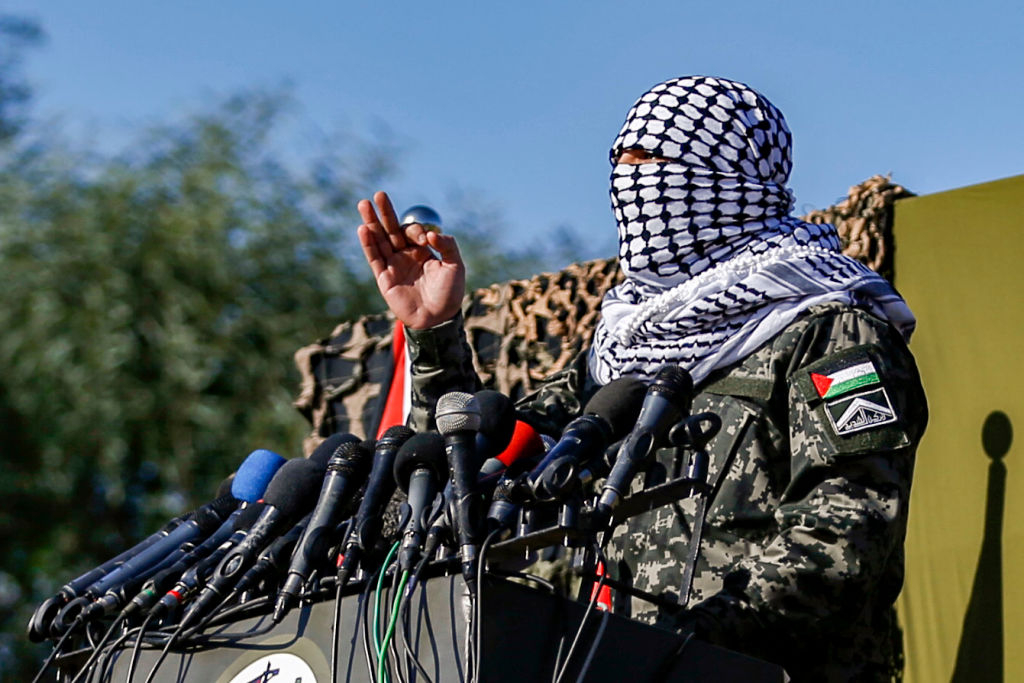
Zamiast zrobić coś dla zapewnienia szczepionki przeciwko COVID-19 dla dwóch milionów Palestyńczyków, którzy żyją pod ich rządami w Strefie Gazy, palestyńskie grupy terorystyczne, Hamas i Palestyński Islamski Dżihad, kontynuują robienie tego, w czym pokazali, że są ekspertami: przygotowania do wojny przeciwko Izraelowi i zagrażania życiu niewinnych cywilów, tak izraelskich, jak palestyńskich. Na zdjęciu: rzecznik grup terroru z Gazy przemawia na konferencji prasowej podczas wspólnych manewrów kierowanych przez Hamas w Gazie, 29 grudnia 2020 roku. (Zdjęcie: Mohammed Abed/AFP via Getty Images)


Iran zamienia Gazę w magazyn broni

Khaled Abu Toameh
Tłumaczenie: Małgorzata Koraszewska


Kiedy wielu w społeczności międzynarodowej wyraża coraz większą troskę o ekonomiczny i humanitarny kryzys w kontrolowanej przez Hamas Strefie Gazy, palestyńskie grupy terroru wydają się coraz mniej zatroskane poprawą warunków życiowych swojej ludności.

Te grupy, a konkretnie Hamas i Palestyński Islamski Dżihad (PIJ), nie robią niczego, by zabezpieczyć szczepionki przeciwko COVID-19 dla dwóch milionów Palestyńczyków żyjących pod ich rządami w Strefie Gazy.

Zamiast tego Hamas i PIJ kontynuują robienie tego, w czym pokazali, że są ekspertami: przygotowania do wojny przeciwko Izraelowi i zagrażania życiu niewinnych cywilów, tak izraelskich, jak palestyńskich.

W przygotowaniach do wojny te dwie wspierane przez Iran grupy produkują i szmuglują rozmaite rodzaje broni, włącznie z rakietami i bombami, których planują użyć w atakach na Izrael. Zamiast gromadzić lekarstwa i szczepionki, Hamas i PIJ są zajęci magazynowaniem rakiet i bomb.

Składują tę broń w domach Palestyńczyków i budynkach publicznych instytucji w Strefie Gazy, w tym w szkołach, szpitalach i meczetach. Hamas i PIJ nie składują broni w swoich biurach i instalacjach, ponieważ obawiają się, że mogą być celem Izraela. Przez składowanie broni wśród cywilów Hamas i PIJ okazują całkowite lekceważenie życia własnej ludności, która jest wykorzystywana zarówno jako mięso armatnie, jak i ludzka tarcza w dżihadzie (świętej wojnie) przeciwko Izraelowi.

Co znamienne, międzynarodowe organizacje praw człowieka i “propalestyńskie” grupy na całym świecie – przez ignorowanie niebezpiecznych działań Hamasu i PIJ nie tylko przeciwko Izraelowi, ale także przeciwko Palestyńczykom – również pokazują lekceważenie bezpieczeństwa i życia Palestyńczyków.

Przy braku międzynarodowej uwagi Hamas i PIJ zamieniły Strefę Gazy w jeden olbrzymi magazyn wszelkiego rodzaju broni. Palestyńskie grupy terroru, które jęczą o wyniszczającym kryzysie ekonomicznym w Strefie Gazy, jakoś zawsze znajdują góry pieniędzy na zakup, szmugiel i produkcję broni.

Nie słychać także głosów międzynarodowych organizacji praw człowieka ani “propalestyńskich” aktywistów, kiedy Palestyńczycy padają ofiarą niebezpiecznych praktyk palestyńskich grup terroru.

Weźmy, na przykład, eksplozję, która wstrząsnęła Bet Hanoun, palestyńskim miastem na północy Strefy Gazy, rano, dnia 23 stycznia 2021 roku.

Według kontrolowanego przez Hamas Ministerstwa Pracy i Budownictwa, eksplozja, która zdarzyła się wewnątrz domu, całkowicie zniszczyła dwa domy i uszkodziła dziesiątki dalszych budynków mieszkalnych.

Co najmniej 47 Palestyńczyków, w tym dziewięcioro dzieci i 15 kobiet, odniosło rany w eksplozji, jak podaje palestyńska organizacja, Ośrodek Praw Człowieka Al-Mezan.

Eksplozję, o której Palestyńczycy mówią “wypadek” spowodował wybuch amunicji zgromadzonej w domu należącym do członka PIJ z rodziny Alkafarna w Beit Hanoun.

Takie “wypadki” nie są rzadkością w Strefie Gazy. W 2009 roku rakieta wystrzelona przez palestyńskie grupy terroru na Izrael uderzyła w dom w mieście Bet Lahija w Strefie Gazy, zabijając dwie palestyńskie dziewczynki, pięcio- i dwunastoletnią. Ponadto, Hamas i inne palestyńskie grupy terrorystyczne często łamały prawa wojny przez strzelanie rakietami z cywilnych, zamieszkałych terenów.

2 stycznia troje dzieci i kobieta odniosły rany w innym “wypadku” w dzielnicy Szadżaijeh w mieście Gaza. Eksplozję spowodowała amunicja składowana w domu przez palestyńskie grupy terroru.

W kwietniu 2020 roku zginął Palestyńczyk, a trzech innych odniosło rany w kolejnym “wypadku” w dzielnicy Szejk Radwan w mieście Gaza. Także tutaj eksplozję spowodowała amunicja należąca do Hamasu i PIJ.

Cztery miesiące później we wschodniej części miasta Gaza zginęło czterech członków PIJ, kiedy rakieta, którą przenosili, przypadkowo wybuchła. Ci członkowie PIJ przygotowywali się do wystrzelenia rakiety na Izrael z mieszkalnej dzielnicy miasta.

Większość mieszkańców Strefy Gazy jest zbyt zastraszona, by krytykować palestyńskie grupy terrorystyczne za magazynowanie broni na terenach mieszkalnych. Jednak, po eksplozji w Bet Hanoun, wielu Palestyńczyków potępiło Hamas i PIJ za narażanie na niebezpieczeństwo życia niewinnych cywilów, jak pisze egipska gazeta “Al-Masry Al-Youm”:

“Użytkownicy mediów społecznościowych i obywatele zareagowali ostrą krytyką na Islamski Dżihad za jego niebezpieczne zachowanie i brak troski o bezpieczeństwo niewinnych cywilów spowodowane ukrywaniem i magazynowanie materiałów wybuchowych w domach obywateli, co spowodowało w przeszłości wiele ofiar”.

Gazeta przytacza słowa niezidentyfikowanego świadka, który mówił, że eksplozja Bet Hanoun zdarzyła się w domu należącym do rodziny znanej z bliskich stosunków z Hamasem i PIJ.

Maysara Alkafarna, Palestynka, która mieszka w dzielnicy, w które zdarzyła się eksplozja, podjęła niezwykły i odważny krok przez ostrą krytykę palestyńskich grup terroru z powodu ich lekceważenia bezpieczeństwa Palestyńczyków w Strefie Gazy.

W poście na Facebooku, Alkafarna napisała:

“Jak długo będzie trwało to lekceważenie życia ludzi? Dlaczego serca całej dzielnicy mają zamierać ze strachu, a ich płacz sięgać niebios? Czy nie wystarczy, że już żyjemy o głodzie i nędzy? Do naszych przywódców: starczy waszej beztroski. Zniszczyliście nas. Nie jesteśmy polem do eksperymentowania”.

Ośrodek Praw Człowieka Al-Mezan wezwał do przeprowadzenia dochodzenia w sprawie eksplozji. Ta organizacja ujawniła, że trzypiętrowy budynek uległ całkowitemu zniszczeniu, podczas gdy sześć przyległych budynków zostało częściowo zniszczonych, w tym szkoła, klub młodzieży i posterunek policji.

“Ośrodek Praw Człowieka Al-Mezan z niepokojem traktuje tę eksplozję” – czytamy w ich oświadczeniu. Dodano w nim, że podobne incydenty miały miejsce w przeszłości w dzielnicach mieszkalnych Strefy Gazy.

“Te incydenty są pogwałceniem praw człowieka i międzynarodowego prawa humanitarnego. Al-Mezan powtarza wezwanie do wszechstronnego i poważnego dochodzenia w sprawie tego incydentu o do opublikowania wyników dochodzenia oraz podjęcia koniecznych kroków, by zapobiec ich powtórzeniu się”.

Eksplozja w Strefie Gazy zdarzyła się, kiedy przywódcy Hamasu, PIJ i innych palestyńskich frakcji mają w kolejnych tygodniach spotkać się w Egipcie, by omówić przygotowania do nowych wyborów. Palestyńskie frakcje nie mają w planach omówienia konsekwencji eksplozji, głównie dlatego, że jest uważane za żenujące, że grupy terrorystyczne używają domów cywilów na składy swojej broni.

Hamas już wyraził gotowość do uczestniczenia w nadchodzących wyborach. Ma nadzieję na powtórzenie zwycięstwa z wyborów parlamentarnych z 2006 roku.

Ważne jest podkreślenie, że Hamas planuje uczestniczyć w wyborach, podczas gdy nadal składuje broń na obszarach mieszkalnych Strefy Gazy.

Hamas może być spokojny, bo wie, że społeczność międzynarodową nie obchodzi to, że Palestyńczycy nadal płacą cenę życia za “wypadki” spowodowane przez bomby i rakiety składowane w domach Palestyńczyków. Gdyby eksplozje w Bet Hanoun spowodował Izrael, międzynarodowe media przekrzykiwałyby się wzajemnie o kolejnej izraelskiej “zbrodni wojennej”. Może nadszedł czas wzięcia pod uwagę słów takich jak słowa Maysary Alkafarna – słów, które nazywają po imieniu prawdziwego wroga: Hamas, PIJ i inne palestyńskie grupy terrorystyczne.


Zawartość publikowanych artykułów i materiałów nie reprezentuje poglądów ani opinii Reunion’68,
ani też webmastera Blogu Reunion’68, chyba ze jest to wyraźnie zaznaczone.
Twoje uwagi, linki, własne artykuły lub wiadomości prześlij na adres:
webmaster@reunion68.com


‘Financial Times’ Article Suggests Hamas Rocket Attacks Are Understandable

‘Financial Times’ Article Suggests Hamas Rocket Attacks Are Understandable

Adam Levick


An injured woman is evacuated to hospital after a rocket was fired from the Gaza Strip into the southern Israeli city of Ashkelon, Nov. 13, 2019. Photo: Reuters / Amir Cohen.

A February 6th Financial Times article by their Jerusalem correspondent  reported on the recent decision by the International Criminal Court (ICC), that the Court has jurisdiction to open an investigation into alleged war crimes by Israel and Hamas.

While there are quite a few problematic claims in the article (“International court sets stage for trial over 2014 Gaza war crime claims”), the following background on Hamas stood out as one of the most grossly misleading characterizations of Hamas that we’ve ever come across:

Hamas has controlled the Gaza Strip since a violent coup against the Palestinian Authority in 2006, and Israel and Egypt have since placed the territory under an unrelenting blockade that has destroyed its economy and largely trapped a population of 2m people within a strip of land about 25 miles long.

The militant group, which has widespread support both in Gaza and the West Bank, regularly fires short-range missiles and highly unreliable projectiles into Israel to add pressure in contentious negotiations over how much electricity it shall receive, the distance Gazan fishermen can venture out to sea and other ways to relieve the blockade. [emphasis added]

Let’s break this down.

First, contrary to the reporter’s claim (which didn’t include a source), Hamas most certainly does not have “widespread support in both Gaza and the West Bank.”

The most recent polling (December 2020) in the West Bank and Gaza by the widely-respected Palestinian polling organization ‘Palestinian Center for Policy and Survey Research’ revealed that, if presidential and legislative elections were held today, 38% would vote for Fatah, whilst 34% would vote for Hamas. Even in Gaza, only 43% said they would vote for Hamas. In the West Bank, 26% would vote for Hamas. (The rest would vote for other parties.)

Pollsters noted that these results are similar to polling they’ve conducted over the past six months.

So, it’s unclear what evidence the FT reporter based his assertion on.

Further, it would be hard for reporters on the ground (like Srivastava) to assess Hamas’ popularity based on speaking to Gaza residents, because the group’s rule over Gaza is authoritarian, and protests against the regime — or dissent of any kind — aren’t tolerated.  A rare example of spontaneous uprisings against the Islamist group’s rule occurred in 2019, only to be met with a violent Hamas crackdown on the hundreds of non-violent protesters.

Hamas ‘fires short-range missiles and highly unreliable projectiles’

Despite the article’s claim, the fact is that Hamas, which has fired more than 15,000 rockets and mortars towards Israeli civilian communities since Israel withdrew from Gaza in 2005, has an increasingly sophisticated arsenal that includes rockets able to reach most of Israel’s major population centers, including Tel Aviv and Jerusalem.

The rocket attacks have terrorized Israeli communities along the Gaza envelope, killed dozens of civilians, wounded hundreds, and sent millions into bomb shelters.

Here’s a partial list of Hamas’ rocket arsenal:

M-75: A long-range rocket produced by Hamas in Gaza that can reach Jerusalem and Tel Aviv. The rocket is based on technology from Iran, and has a maximum range of 70 to 75 kilometers (43 to 47 miles) and carries a 10-kilogram warhead.

J-80: A long-range rocket manufactured by Hamas that can reach the Tel Aviv area, the southern Sharon region, and Jerusalem. It has a maximum range of 100 kilometers and a 20-kilogram warhead.

WS-1E: An upgraded version of the Grad rocket that is made in China and is capable of reaching Ashdod and Be’er Sheva. Its maximum range is said to be 40 kilometers. Its warhead weighs between 18 and 22 kilograms.

Fajr: An Iranian-made rocket that has two models: Fajr 3, with a maximum range of 40 kilometers and a 45-kilogram warhead; and Fajr 5, with a maximum range of 75 kilometers and a 90-kilogram warhead.

M-302 (Khaibar) A Syrian-made, Iranian-supplied rocket with several versions — with a maximum range of 90-200 kilometers and warheads ranging from 125-170 kilograms.

R-160 A long-range rocket produced by Hamas with a range of 160 kilometers.

Sejjil-55 A rocket with a maximum range of 55-kilometers and a 10-kilogram warhead.

Their inventory of projectiles does include a lot of short-range, inaccurate rockets, but terror groups in Gaza are constantly trying to improve their arsenal to include more of the longer-range, sophisticated rockets mentioned above. Israel’s blockade is, of course, designed to limit the terror group’s acquisition of more accurate and deadly weapons — which brings us to the next FT claim:

Hamas fires rockets at Israel merely to “add pressure” to Israel to “relieve the blockade”

This assertion almost reads like a statement by the Hamas ministry of propaganda.

Hamas is an internationally recognized terrorist group, which is committed to Israel’s destruction and the mass murder of Jews. Regardless of whatever short-term tactical goals they may also have, they fire rockets at Israel for one primary reason: to kill as many Israelis as possible. The fact that they’re usually not successful certainly isn’t due to a lack of desire.

The framing by the FT turns reality on its head, just as the failure of journalists like Srivastava to impute agency to Palestinians means that these journalists are unable to reach the most intuitive and logical conclusions about cause and effect.

Israel’s blockade (which restricts military items and ‘dual use’ items from entering the Strip) is of course a response to Hamas’ decision to launch rocket attacks at Israeli cities, build attack tunnels, and engage in other methods of terror. If Hamas were to change their behavior, and cease threatening Israel’s population, the result would be Jerusalem’s loosening of the blockade.

The Financial Times’ attempt to paint Gaza’s fanatical, violent, Jew-hating cult as reasonable and rational political actors who are victimized by Israeli aggression, represents a moral inversion of staggering proportions.


Adam Levick serves co-editor of CAMERA UK — an affiliate of the Committee for Accuracy in Middle East Reporting in America (CAMERA), where this article first appeared.


Editor’s Note: We complained to FT editors about their claim about Hamas’ alleged “widespread popularity.” The complaint was dismissed, so we appealed to the news outlet’s complaints commissioner. 


Zawartość publikowanych artykułów i materiałów nie reprezentuje poglądów ani opinii Reunion’68,
ani też webmastera Blogu Reunion’68, chyba ze jest to wyraźnie zaznaczone.
Twoje uwagi, linki, własne artykuły lub wiadomości prześlij na adres:
webmaster@reunion68.com


Klapki na oczach antyizraelskich historyków: “Porozumienia Abrahamowe nie są historyczne”

Klapki na oczach antyizraelskich historyków: “Porozumienia Abrahamowe nie są historyczne”

Elder of Ziyon
Tłumaczenie: Małgorzata Koraszewska


History Today zapytała trzech antyizraelskich historyków i dziennikarskiego „eksperta”, czy traktaty o pokoju/normalizacji stosunków między Izraelem a Bahrajnem, ZEA, Sudanem i Marokiem są uważane za „historyczne”.

Jednogłośnie powiedzieli, że te porozumienia są mniej lub bardziej bez znaczenia. Powód? Ponieważ nie zajmują się rzeczywistym problemem na Bliskim Wschodzie, czyli pokojem między Izraelczykami a Palestyńczykami.

Popatrzcie na to stadne myślenie:

Fawaz Gerges mówi: “Jak najdalsze od punktu zwrotnego, to partnerstwo izraelsko-arabskie pomija fundamentalną kwestię palestyńskich praw i miejsca Izraela w regionie”.

Ilan Pappe mówi: “To ma bardzo niewiele wspólnego z rzeczywistą kwestią Izraela i Palestyny”.

James Rodgers, były korespondent BBC, mówi: “To nie są historyczne punkty zwrotne w stosunkach arabsko-izraelskich, ponieważ nie zajmują się bezpośrednio izraelsko-palestyńskim konfliktem”.

Avi Shlaim mówi: “Moim zdaniem Porozumienia Abrahamowe nie zasługują na nazwanie ich  ‘historycznymi’, ponieważ nie dotykają podstawowej przyczyny arabsko-izraelskiego konfliktu. Palestyński problem jest sednem tego konfliktu i był centralną sprawą w arabskiej polityce od 1945 roku”.

Ilość zaprzeczania tutaj jest komiczna. Nienawiść tych ludzi do Izraela jest tak wielka, że patrzą na cały świat przez swoje antyizraelskie okulary i dlatego dochodzą do antyizraelskich wniosków.

Przede wszystkim, palestyński konflikt nigdy nie był sednem konfliktu, ani nie był “centralną sprawą w arabskiej polityce od 1945 roku”. To był pretekst do konfliktu, który oparty był na antysemityzmie i, po odrodzeniu się Izraela i zwycięskich wojnach, jego źródłem było poczucie hańby, z powodu tego, że potężni muzułmanie przegrali ze słabymi Żydami-dhimmi. Dowód takiego wniosku jest oczywisty: Arabowie nigdy w rzeczywistości nie pomagali Palestyńczykom. Nie dali im niepodległości w 1949 roku, nie dali im równych praw i (poza Jordanią) nie dali obywatelstwa żadnemu z nich. Używali ich jako mięsa armatniego i trzymali w nieszczęściu dla własnych celów propagandowych. Do 1967 roku nawet nie rozważano żadnego niepodległego państwa palestyńskiego.

Porozumienia Abrahamowe ujawniły prawdę, która była oczywista dla obserwatorów od ponad dziesięciu lat: narody arabskie miały dość sprawy palestyńskiej. Były oburzone, że Palestyńczycy nie zaakceptowali żadnej oferty pokojowej i były przerażone, że Palestyńczycy nawet nie potrafią zjednoczyć Hamasu i Fatahu.

To nie jest tajemnica. Każdy historyk, wart tego tytułu, znałby te podstawowe fakty. Są opisane w mediach arabskich i są oczywiste, gdy patrzy się na działania arabskich przywódców, którzy obiecują miliardy dolarów, a wypłacają maleńki tego ułamek.

Po drugie, Porozumienia Abrahamowe są doniosłe nie tylko z powodu pokoju, ale z powodu normalizacji stosunków. Porozumienie ZEA-Izrael i Bahrajn-Izrael explicite zmieniają  Izrael z państwa-pariasa w państwo, które ma historyczne i trwałe więzy z regionem:

„Uznając, że narody arabski i żydowski są potomkami wspólnego przodka, Abrahama, i inspirowani w tym duchu, by promować na Bliskim Wschodzie rzeczywistość, w której muzułmanie, Żydzi, chrześcijanie i ludy wszystkich wyznań, przekonań i narodowości żyli i byli oddani duchowi współistnienia, wzajemnego zrozumienia i wzajemnego szacunku;…” – czytamy w tekście tych Porozumień.

Każdy, kto mówi, że to nie jest historyczne, nie zna historii tak dobrze, jak udaje, że ją zna.

Po trzecie, otwarte stosunki handlowe między Izraelem a państwami Zatoki nie tylko umocnią Izrael jako trwałego ekonomicznego partnera Bahrajnu i ZEA, ale także wszystkich innych państw Zatoki, które mogą nie być zainteresowane publicznym handlem z Izraelem, ale które z zadowoleniem będą handlowały za pośrednictwem tych dwóch krajów. Izrael już ma ciche kontakty handlowe z innymi arabskimi państwami – można oczekiwać, że to będzie rosło w zawrotnym tempie.

Po czwarte, te porozumienia zniszczyły antyizraelską jednomyślność Ligi Arabskiej.

Po piąte, te porozumienia doprowadziły do większej współpracy między Izraelem a innymi państwami arabskimi, które jeszcze nie podpisały własnych porozumień. Arabia Saudyjska pozwala teraz izraelskim samolotom na przeloty nad jej terytorium i saudyjscy przywódcy spotkali się z izraelskimi przywódcami. Izrael polepszył związki z Omanem, który z zadowoleniem przyjął porozumienia. Wiele krajów arabskich może nadal oficjalnie nie uznawać Izraela, ale bardzo niewiele jest oficjalnie nadal wrogami.

To jest całkowita zmiana tego, jak świat arabski patrzy na Izrael. Minimalizowanie tego jest, szczerze mówiąc, urojeniem.

Porozumienia dowiodły dokładnej odwrotności  głównego założenia ich krytyków z “History Today” – że konflikt izraelsko-palestyński jest podstawową sprawą. Nigdy nie był. Państwa arabskie miały znacznie poważniejsze sprawy, którymi musiały się zajmować, głównie zagrożenie irańskie, a Izrael jest znacznie lepszym partnerem niż mogą kiedykolwiek być Palestyńczycy. Także zimny pokój między Izraelem a Egiptem/Jordanią jest silniejszy niż kiedykolwiek, bo kupują obecnie od Izraela bardzo potrzebny im gaz i nie stać ich na zamknięcie jego dopływu.

Tym historykom może się to nie podobać, ale rok 2020 był rokiem, kiedy Izrael w znacznej mierze zintegrował się z Bliskim Wschodem, czyli stało się coś, przeciwko czemu oni walczą od ponad siedemdziesięciu lat.

Artykuł w “History Today” nie jest trzeźwą analizą. Ostatecznie, większość ludzi, która się do niego wypowiadała, zdobyła sławę dzięki książkom o izraelsko/palestyńskim konflikcie i ich sława zależy od uznawania tego konfliktu za ważny. Ten artykuł to kwaśne winogrona z powodu pokazania im, że od tak dawna i tak spektakularnie mylą się.

(h/t Charlie in NY)


Elder of Ziyon

Amerykański badacz i bloger, który prowadzi jeden z najlepszych blogów śledzących antysemityzm w mediach.


Zawartość publikowanych artykułów i materiałów nie reprezentuje poglądów ani opinii Reunion’68,
ani też webmastera Blogu Reunion’68, chyba ze jest to wyraźnie zaznaczone.
Twoje uwagi, linki, własne artykuły lub wiadomości prześlij na adres:
webmaster@reunion68.com


An 80-year search for ‘the student K,’ murderer of Jewish babies

An 80-year search for ‘the student K,’ murderer of Jewish babies

DR. EFRAIM ZUROFF


If you brutally murder Jewish babies, there will be Jews, even 80 years later, who will strive to make sure you are held accountable.

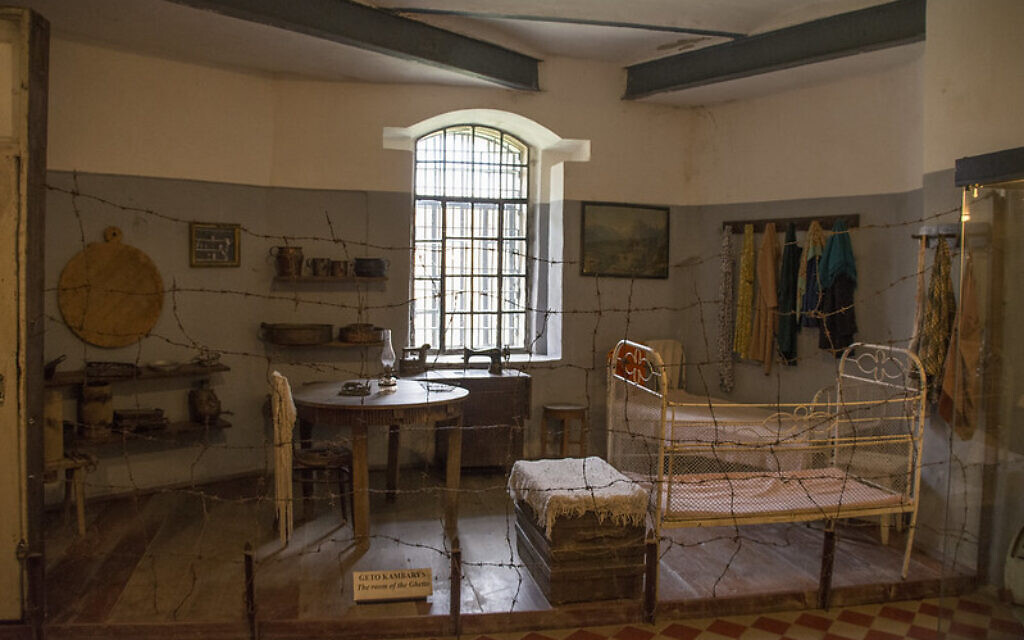
his is a replica of a room in the Kovno ghetto at the museum in the Ninth Fort at Kaunas, Lithuania. Photo by A.Davey courtesy of Flickr.com

This is a story about a Nazi war crimes investigation that began in 1945 and continued intermittently until 2021. It concerns the brutal murder of Jewish infants in Raseiniai (Rasein in Yiddish and Hebrew), Lithuania, and is a good example of why, even today, it is still important to try and achieve justice. This week we observe the International Holocaust Remembrance Day mandated by the United Nations in 2005, and therefore it is an especially appropriate time to share this episode in the ongoing efforts to hold the perpetrators of Holocaust crimes accountable.

In 1945, Leib Kunichowsky, a Lithuanian Jewish survivor of the Kovno (Kaunas) Ghetto, began to record the testimonies of the few Holocaust survivors from the local provincial communities. This was a particularly important mission in view of the extremely high murder rate in those towns and villages. Of the 220,000 Jews who lived in Lithuania under the Nazi occupation, 96.4% (212,000) had been murdered, but most of the survivors were from the large ghettos of Vilna (Vilnius), Kovno (Kaunas), and Shavli (Siauliai). Approximately 100,000 Jews lived in the provincial communities, which had been so terribly decimated at an even higher rate. For the next four years, initially in Lithuania and later in the Displaced Persons camps in Allied-occupied Germany, Kunichowsky sought out the few survivors and recorded their testimonies in Yiddish in longhand, making sure that both he and the survivors personally signed each and every page. The result of this mission was a collection of 1,684 pages of testimony in Yiddish that contained much priceless information about the fate of the provincial Jews.

Kunichowsky’s collection also had another unique aspect, which made it even more valuable. Unlike many other testimony projects conducted at that time, he focused inordinate attention on the identity of the perpetrators, which in Lithuania was of particular significance due to the critical role played by local Nazi collaborators in the murders, especially in the provinces. And since, in almost all those locales, those who participated in the murders were often known to the local Jews, the survivors were able in many cases to identify their tormentors. The result was that Kunichowsky’s collection contained the names of 1,284 Lithuanian perpetrators, a veritable treasure of information of great potential value for prosecutors and investigators.

I first learned of the existence of the testimonies in 1980, while working as a researcher in Israel for the U.S. Justice Department’s Office of Special Investigations, which prosecuted the Nazi war criminals who had immigrated to the United States after World War II. They were very interested in obtaining access to the testimonies. The problem was that Kunichowsky had insisted his collection be published in its entirety, and until that took place, he was not willing to share any of its contents with anybody, for any reason. Thus for 40 years, it remained completely inaccessible. This obstacle was only overcome almost a decade later in late 1989, when Prof. Dov Levin, the leading expert on the Holocaust in the Baltics and, like Kunichowsky, a survivor of the Kovno Ghetto, persuaded him to donate his collection to the Yad Vashem Archives.

Once the collection had been deposited in the archives, I immediately set out, with the help of my father, to extract all the names of perpetrators in the testimonies, a total of 1,284 names, of which only 121 were already known from other sources. My next step was to try and discover whether any of these criminals had emigrated to Western democracies. (By this point, it was common knowledge that thousands of Eastern European Nazi collaborators had immigrated postwar to the U.S., Canada, U.K., Australia, and New Zealand posing as innocent “refugees:”) This was possible by cross-referencing immigration data available in the International Tracing Service (ITS) records (also at Yad Vashem) with the testimonies, and in that manner I was able to find many dozens of suspects who had fled to the West and might still be alive.

The testimonies in the Kunichowsky collection provide vivid details of the implementation of the Final Solution in Lithuania, the exceptionally critical role played by the local collaborators who were by far the majority of the killers, and the incredible cruelty of some of the perpetrators.

recomended by: Leon Rozenbaum
One of the testimonies which particularly upset me and clearly reflected the latter phenomenon was that of a woman named Dina Zisa Flum from the town of Rasein (Raseiniai), who survived by hiding in a pile of hay close to the pit where the murders took place in August 1941. In her testimony of April 4, 1945, she related that “While lying on the hay, I clearly saw two women standing near the pit [which the victims fell into after being shot-E.Z.] smashing the skulls of small children with a large rock or hitting the children by smashing their heads together. One of the women was the student K——.”

That image of “the student K.” has not left me ever since. Her family name (which shall remain under wraps for obvious reasons) indicated that she was single, but the witness did not indicate her first name. Even though I did not have her full name, I searched for her in the ITS records and found two possible candidates born two years apart who could fit the description and had fled Lithuania shortly after the war. The names were submitted about 30 years ago to the Nazi war crimes unit established in her emigration destination, but we never received any information on whether the local authorities had been able to ascertain whether either of the two female immigrants might be the infamous “student K.”

Fast forward another 30 years to the present. Our researcher on a different project, Dr. Abbee Corb, comes across my list of potential suspects, which included the two young women who might have been “the student K.,” and finds one of them alive and healthy at 97, residing not that far from her own home. The question then became whether we could verify her first name. In theory, the best solution would have been to send a trustworthy Lithuanian to speak to elderly residents of Raseiniai who may have known “the student K” or her family. But that town is now the COVID-19 capital of Lithuania, so no one is willing to take on the mission. Appeals on social media to find someone with links to Raseiniai residents also failed to produce a solution, but archival research appears to indicate that the elderly woman Abbee found might well be the criminal we have been looking for. Can we confirm it before the pandemic ends or she dies?

I cannot be sure, but I think our efforts, which hopefully will be successful, send an incredibly powerful message: If you brutally murder Jewish babies, there will be Jews, even 80 years later, who will strive to make sure you are held accountable. And that remains an important message in 2021 as well.

pjc


Dr. Efraim Zuroff is the chief Nazi-hunter of the Simon Wiesenthal Center and the director of the Center’s Israel Office and Eastern European Affairs. This piece was originally published by JNS.


Zawartość publikowanych artykułów i materiałów nie reprezentuje poglądów ani opinii Reunion’68,
ani też webmastera Blogu Reunion’68, chyba ze jest to wyraźnie zaznaczone.
Twoje uwagi, linki, własne artykuły lub wiadomości prześlij na adres:
webmaster@reunion68.com