
Archive | February 2022

It’s Coups All the Way Down

It’s Coups All the Way Down

ZAID JILANI


House Majority Leader Steny Hoyer, Senate Majority Leader Chuck Schumer, and U.S. House Speaker Nancy Pelosi listen during a prayer vigil on the first anniversary of the Jan. 6 Capitol riotSTEFANI REYNOLDS/BLOOMBERG VIA GETTY IMAGES

Nonstop dramatics about the GOP threat to democracy is part of an attempt to cement Democratic Party hegemony, not ensure election integrity

.

The Democratic Party’s message ahead of the 2022 midterms appears to be simple: Vote for us or democracy gets it.

“I’m worried that if Republicans win in the midterm elections, that voting as we know it in this country will be gone,” warned Washington Democratic Rep. Eric Swalwell during a recent MSNBC appearance. “This is not only the most important election. If we don’t get it right, it could be the last election.”

Across the progressive Democratic messaging infrastructure, the party and movement have rebranded themselves as the protectors of the democratic ideal, which, in their telling, is on the verge of extinction.

President Biden has warned that GOP election laws that would, among other things, require voters to write down their state ID number on absentee ballots, are the equivalent of “Jim Crow on steroids,” while more or less comparing Virginia’s Republican Governor-elect Glenn Youngkin to a Capitol rioter.

Heads of influential progressive political action committees worry aloud that we will see a swing of “power to Republican politicians, which ends American democracy.” Liberal opinion columnists lament that the GOP is plotting to “take control of more and more of the apparatus of voting to ensure that Republicans can never lose.”

But if you sincerely value liberal democracy—not just majority rule but open debate and the protection of individual and minority rights—it can be hard not to notice the irony: A political movement that has worked so hard to censor and marginalize its opponents in virtually all institutions is claiming that it now represents the vanguard of democracy.

I’m not pointing this out to prove to progressives that they are just a bunch of hypocrites who don’t really value liberal democracy.

I’m writing this because I am worried about democracy in the United States. I won’t validate Biden or Swalwell’s outlandish claims about democracy ending in the next election or Jim Crow reasserting itself in GOP-run states, but I do think it’s deeply unhealthy that so many people in our country distrust the news media, public institutions, and their elected representatives.

Take Swalwell, who ominously predicted that a GOP victory in the midterm elections—leaving the Democrats in control of the executive branch, of course—would mark the extinction of American democracy.

When Twitter decided to ban Georgia Republican Congresswoman Marjorie Taylor Greene because she espoused skepticism toward COVID vaccines, genuine advocates for free speech and open debate were outraged. How can a private company that runs the modern public square, the equivalent of a public utility, unilaterally decide to silence an official elected by the people?

Even House Minority Leader Kevin McCarthy, who has been skeptical of bipartisan congressional oversight of Silicon Valley, criticized Twitter for shutting down what he called “constitutionally protected speech.” But Swalwell was unsympathetic to Greene losing her right to speak on the platform. “Kevin McCarthy hates free markets. He wants government to have absolute control over private businesses,” he thundered. “Is there a word for this?”

Suddenly, the defender of democracy transformed into an advocate for corporate control of public debate, using an argument that wouldn’t be out of place in a Milton Friedman tract. As hypocritical as it was, it was hardly surprising.

Last year we saw Twitter work with Facebook to suppress the spread of a New York Post story about Joe Biden’s son Hunter. The announcement that the story would be throttled on Facebook came from Andy Stone, a Facebook communications staffer who previously worked for the Democratic Congressional Campaign Committee.

No prominent Democratic elected official protested the suppression of the story, which quickly became a bigger story than the content of the Post article itself. And why would they? It was clear that, in this case, the Democrats weren’t after democratic legitimacy but political hegemony. They stood to benefit more from having the world’s most powerful digital communications companies actively suppress speech that could assist their political opponents than from standing by the principle of freedom of expression.

“It was clear that, in this case, the Democrats weren’t after democratic legitimacy but political hegemony.”

It was hardly the only anti-democratic move that benefited the Democrats in 2020. Just ask the Green Party. The minor left-wing group fielded its own presidential candidate that year, a trade unionist and environmental activist named Howie Hawkins.

In state after state, Hawkins and the Green Party faced legal challenges from Democratic Party-linked operatives and attorneys trying keep him from even appearing on the ballot. With a 5-2 Democratic majority, the Pennsylvania Supreme Court overturned a Republican judge’s ruling that Hawkins could stay on the state’s ballot, due to Hawkins’ “failure to closely follow nomination procedures,” according to CBS. When I asked Chris Robinson, a spokesperson for the Pennsylvania Green Party whether they thought the Democrats were sincere in their embrace of democracy, I got a brief response: “The answer is, ‘No!’”

One piece of evidence the Democrats use to claim that democracy is on its death bed and the Republicans are to blame is the widespread conservative denial of the legitimacy of Biden’s election victory. It’s certainly true that former President Donald Trump unleashed and perpetuated a storm of falsehoods about the integrity of Biden’s victory. There were not mountains of fraudulent ballots cast in the 2020 election.

But denying the legitimacy of the elected president is a more common partisan feature of America’s messy democracy than Democrats would like to admit. A University of Massachusetts Amherst/YouGov poll from December 2021 found that just 21% of Republicans believed that Biden’s victory in last year’s election was “definitely” or “probably” legitimate. Overall, 68% of Americans shared that view (and 91% of Democrats).

But a July 2001 Gallup poll found that just 48% of Americans believed Bush won the 2000 race “fair and square”; among Democrats, that number dropped to 15%, and among African Americans, it fell to 8%. Democratic rejection of the legitimacy of the incoming Republican president skyrocketed again after the election of Trump. Georgia Democratic Rep. John Lewis said in January of 2017 that he didn’t consider Trump a “legitimate President.” The same month, millions of Democratic-leaning Americans launched a “resistance” movement designed to urge their elected officials to obstruct Trump. By November 2018, YouGov found that two-thirds of Democrats believed that it was “definitely true” or “probably true” that “Russia tampered with vote tallies in order to get Donald Trump elected President.”

Much has been made of the riots of Jan. 6. While these riots did in fact represent a deadly rejection of the results of the 2020 election, the way some Democrats responded exemplified the anti-democratic, pro-hegemonic tendencies of the party. Dozens of Democratic members of Congress backed a resolution to expel House Republicans who voted against certifying the election results—an anti-democratic move aimed at taking away the right to choose one’s federal representative from the citizens of those districts.

What was long understood as a symbolic protest vote suddenly became tantamount to treason, provided that it was Republicans doing it this time rather than Democrats—some of whom voted against certification of the Republican president-elect in 2000, 2004, and 2016.

Even the Democrats’ much-touted voting reform bills—which they say are essential to keep Republicans from suppressing votes and ending democracy—would do little to enhance participatory democracy in the United States. A bigger problem in the U.S. system than access to voting polls is that the major parties are both deeply unpopular; the 2016 election featured two of the most unpopular candidates in modern history.

One solution to this would be to move to a multiparty system. Some type of proportional representation system would allocate seats to parties based on the percentage of the vote they get in elections. Germany’s notably consensus-driven system, which is based on mixed-member proportional representation, allows voters to cast two votes: one for a political party and one for the legislator of their single-seat constituency. You could easily imagine a Congress made up of five or six parties under such a system. The Democrats could choose to support a shift to proportional representation, yet doing so would reduce the party’s own power. There is a bill in Congress that would at least make it a little easier to start new parties: the Fair Representation Act. As of this writing, it has just eight sponsors (all House Democrats).

Again, if the goal is hegemony rather than democracy, all this makes sense. The Democrats are more than happy to push for things like giving Washington, D.C. statehood in the name of democracy because it will give their party more seats in Congress. They are less likely to support democratic reforms that could benefit parties other than their own.

Following Virginia’s gubernatorial election, the Democrats and their allies in the media had an opportunity to celebrate the democratic process. Anger about schools policy had helped drive large voter turnout during an off-year election; the opposition party was able to win a clear majority and mandate for governing.

The Republicans broadened their electoral base and built a multi-ethnic ticket; Virginia’s new lieutenant governor will be a Jamaican American immigrant named Winsome Sears and its attorney general a Cuban American named Jason Miyares.

Yet the immediate response from progressives was to try to delegitimize the electorate that brought Youngkin, Sears, and Miyares to power. Progressive pundit Michael Eric Dyson appeared on MSNBC to lament that Sears just gives Republicans what they really want, which is “white supremacy by ventriloquist effect.” Sears, viewers were told, is an example of a “Black mouth moving” to communicate a “white idea.”

Nikole Hannah-Jones, the New York Times journalist who spearheaded the 1619 Project, was embittered by the parent-led movement that objected to critical race theory-infused curricula in Virginia schools.

“I don’t really understand this idea that parents should decide what’s being taught. I’m not a professional educator. I don’t have a degree in social studies or science. We send our children to school because we want them to be taught by people who have expertise in the subject area,” she said during an NBC appearance.

The idea that schools are accountable to their communities is one of the oldest democratic concepts. Public education has always been governed by a social contract between parents and the government. Hannah-Jones, one of the leading progressive minds in the country, doesn’t see the value of participatory democracy in this arena. Education should be the purview of experts—and only as long as they agree with Hannah-Jones and other progressives.

This elitist and anti-populist ethos increasingly permeates virtually all institutions that progressives control in the United States.

From The New York Times—which doesn’t employ a single opinion columnist who openly supported Trump, who received 75 million votes in 2020—to America’s universities, where liberal faculty outnumber conservative faculty by as much as 12 to 1, progressive organizations often don’t practice what they preach when it comes to pluralism, liberalism, and democracy. They are set up as lopsided organizations that represent just a small sliver of American public opinion.

This ideological rigidity is enforced by a progressive turn against freedom of speech, the cornerstone of liberal democracy. In 2018, 40% of Democrats and 37% of Republicans believed the government should work to restrict false information online; by 2021, 65% of Democrats agreed that the government should do so, while just 28% of Republicans did. An even higher percentage of Democrats (76%) now agree that tech companies should restrict false information, whereas 37% of Republicans agree.

But the way to bridge our deficits of trust isn’t to censor and repress. That will just push people to seek out other avenues of expression and organization. Do we really think that conservatives who admire public figures like Greene or Trump will just change their worldview after they’re booted off social media? Won’t they just follow them into even more niche channels where they get even less exposure to other points of view?

The way to enhance our democracy is to make it more inclusive and more representative. That means that the leading newspapers in the country shouldn’t be virtually devoid of nonelite views. It means our social media platforms should embrace free expression and open debate. It means Congress should pursue electoral reforms that open the system to more voices and more choices rather than simply promoting whatever bill will help the party in control get the most seats. It means we must stop trying to delegitimize the victories of politicians with whom we disagree, whether it’s Biden, Trump, or Youngkin. It means listening to parents who are interested in what their children are taught in school.

Liberal democracy is a fragile system because it rests on the principle that we will respect the right of democratic representation even for those with whom we strongly disagree, and even for those who say things that are demonstrably false. In today’s America, progressives are failing that test as much as conservatives are.


Zaid Jilani is a freelance journalist who has previously worked for UC Berkeley’s Greater Good Science Center, The Intercept, and the Center for American Progress. He also writes a newsletter at inquire.substack.com. He is a graduate of the University of Georgia and received his master’s from Syracuse University. He is originally from the Atlanta area.


Zawartość publikowanych artykułów i materiałów nie reprezentuje poglądów ani opinii Reunion’68,
ani też webmastera Blogu Reunion’68, chyba ze jest to wyraźnie zaznaczone.
Twoje uwagi, linki, własne artykuły lub wiadomości prześlij na adres:
webmaster@reunion68.com

Erdogan Says Turkey, Israel Can Jointly Bring Gas to Europe

Erdogan Says Turkey, Israel Can Jointly Bring Gas to Europe

Reuters and Algemeiner Staff


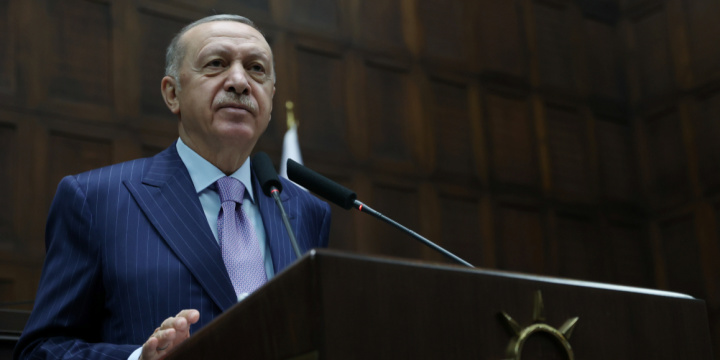
Turkish President Tayyip Erdogan addresses members of parliament from his ruling AK Party (AKP) during a meeting at the Turkish parliament in Ankara, Turkey, October 27, 2021. Murat Cetinmuhurdar/PPO/Handout via REUTERS

Turkey and Israel can work together to carry Israeli natural gas to Europe and the two countries will discuss energy cooperation during talks next month, Turkish President Tayyip Erdogan was quoted as saying on Friday.

The two countries expelled their ambassadors in 2018 after a bitter falling-out. Ties have remained tense since with Ankara condemning Israel’s policy toward Palestinians, while Israel has called on Turkey to drop support for the militant Palestinian group Hamas which rules Gaza.

However, Turkey has been working to repair its strained ties with regional powers as part of a charm offensive launched in 2020. In an apparent easing after years of animosity, Erdogan said on Thursday that Israeli President Isaac Herzog would visit Turkey in mid-March.

“We can use Israeli natural gas in our country, and beyond using it, we can also engage in a joint effort on its passage to Europe,” Erdogan told reporters on a return flight from Ukraine.

“Now, God willing, these issues will be on our agenda with Mr Herzog during their visit to Turkey,” he was quoted by Turkish TV media as saying. Erdogan had visited Ukraine to discuss the crisis there.

While Erdogan has spoken to Herzog amid tensions before, the Israeli presidency is a largely ceremonial role. In November, he spoke to Israeli Prime Minister Naftali Bennett, the first such call in years.

Erdogan on Wednesday met Nachirvan Barzani, the president of Iraq’s semi-autonomous Kurdish region. Asked what was discussed, Erdogan said Ankara wants to sign a natural gas supply deal with Iraq and is holding talks on this.

“We have now taken the Iraq issue on our agenda. We are now thinking about it. There may be a supply on the natural gas side from Iraq to Turkey,” Erdogan said, adding Barzani had promised to facilitate talks.


Zawartość publikowanych artykułów i materiałów nie reprezentuje poglądów ani opinii Reunion’68,
ani też webmastera Blogu Reunion’68, chyba ze jest to wyraźnie zaznaczone.
Twoje uwagi, linki, własne artykuły lub wiadomości prześlij na adres:
webmaster@reunion68.com


Oksana Zabużko, ukraińska pisarka: Polski nikt się nie boi, ale wasza trauma narodowa nie chce tego uznać

Oksana Zabużko, ukraińska pisarka: Polski nikt się nie boi, ale wasza trauma narodowa nie chce tego uznać

Paweł Smoleński


Oksana Zabużko: Coraz mniej Ukraińców mówi: ‘Ta władza to nie cała Polska’. Dominująca jest raczej inna opinia: ‘Czego, do cholery, od nas chcecie? Na co sobie pozwalacie?’. Tak się kończy zawiedziona miłość (Fot. Włodzimierz Wasyluk/Reporter)

Odzywa się polska duma imperialna, która – chcecie czy nie – jest karykaturą imperialnej dumy rosyjskiej: możemy być sami, na peryferiach świata, byleby się nas bali.

.

Oksana Zabużko – ur. w 1960 r. ukraińska poetka, publicystka i pisarka. Wykładała filozofię w USA. Jej książka „Badania terenowe nad ukraińskim seksem” przetłumaczona na wiele języków została uznana nie tylko za manifest ukraińskiego feminizmu, ale też za wnikliwe studium destrukcji społeczeństwa będącej skutkiem sowieckiego totalitaryzmu. BBC wpisała „Badania…” na krótką listę książek roku. Powieść „Muzeum porzuconych sekretów” zdobyła w 2013 r. nagrodę Angelus dla najlepszej książki w Europie Środkowej. Pisarka mieszka w Kijowie.

Paweł Smoleński: Niebawem mogą pani nie wpuścić do Polski.

Oksana Zabużko: Myśli pan?

Minister Waszczykowski nie chce tu widzieć takich, którzy głoszą „antypolskie poglądy”, a pani powiedziała, że film „Wołyń” to nóż w ukraińskie plecy, i napisała pani powieść, w której dowódcy UPA mówią, iż latem 1943 r. nie spodziewali się wybuchu antypolskiej rzezi i sytuacja wymknęła się spod kontroli.

– Książkę nazwał kłamliwą ks. Isakowicz-Zaleski, ukrainożerca i człowiek siejący nienawiść. Mam nadzieję, że to nie jest polski mainstream.

Ja nie mam takiej nadziei.

– O mój Boże. Gdy byłam 30-letnią dziewczyną, poznałam na jakimś przyjęciu Czesława Miłosza, Adama Zagajewskiego, Stanisława Barańczaka i Adama Michnika. Pomyślałam wtedy, że Polakom zawsze jest lepiej: nie mieli niepodległej ojczyzny, siedzieli pod moskiewskim butem, ale przynajmniej uchowali garść ludzi myślących. Nadarzyła się dziejowa okazja i ta elita postawi Polskę na nogi.

A my? Najpierw Polska i Rosja dzieliły Ukrainę jak swoją własność. W latach 30. komuniści wyrżnęli wątłą ukraińską elitę i zagłodzili połowę narodu. Jakoś odżyliśmy w latach 60. i za chwileczkę znów dostaliśmy po głowie.

Na polskim przykładzie okazuje się, że ocalenie elity nie jest polisą na życie, nie gwarantuje dobrej emerytury.

Dla mnie to osobisty cios. Uwielbiam polską kulturę i Polaków. Bywam u was, jak często się da. Kilka dni temu wróciłam z Katowic, z festiwalu Ars Cameralis. Fantastyczna atmosfera, świetni ludzie.

Rozmawialiśmy o kulturze, że jest niczym angielski trawnik: 200 lat podlewania i strzyżenia – to potem wygląda, jak wygląda.

Kultura to inwestycja w przyszłość kraju, nie przynosi natychmiastowych zysków. Polityków ona nie obchodzi, myślą wyłącznie cyklem wyborczym i słupkami poparcia, dzień jutrzejszy jest kresem ich wyobraźni. Dzięki kulturze nie wygrywa się wyborów. Ale kontrolowanie jej, odbieranie niezależności może w tym pomóc.

Jak się ma doraźny polityczny biznes do stosunków między Polakami a Ukraińcami?

– Biznes polityczny polega na tym, żeby okpić, wykorzystać, skłócić. Są różne metody okłamywania ludzi i załatwiania swoich spraw. Najdalej poszła w tym Rosja Putina, ale z rozmów z Polakami wiem, że i u was technologie polityczne mają się nieźle. Jedną z ulubionych jest ożywianie zarazków nacjonalistycznej buty i agresji. Niekoniecznie fizycznej, choć na nią przychodzi pora. Buta i agresja istnieją wszędzie, ale cywilizacja polega właśnie na tym, że udaje się te zarazki trzymać w probówce. Gdy władza odwołująca się do nacjonalizmu ma powolne sobie media – znów dotykamy kultury i jej niezależności – łatwo tę probówkę stłuc. I wówczas serwować wygodne dla polityków treści, bo grunt jest gotowy.

Nie protestowałam przeciwko „Wołyniowi”, bo jest kiepski i zawiera kłamliwe sceny, jak choćby święcenie noży i siekier w cerkwiach.

Protestowałam, bo ten film ożywia zarazki agresji w najgorszym czasie: Ukraina wojuje z Rosją, w Polsce umacnia się nacjonalizm, a ton rozmowy między naszymi krajami lansowany przez oficjalną Warszawę dotyczy tylko tego, jak bardzo Ukraińcy krzywdzili Polaków mimo szlachetnej polskiej misji cywilizacyjnej na Wschodzie. Nie zarzucam nikomu złych intencji, ale zawsze liczy się polityczny i społeczny kontekst filmu dotyczącego tak drażniących spraw. Tu kontekst był jednoznaczny. „Wołyń” nie przyczynił się do objawienia prawdy, bo ta jest znana w Polsce i na Ukrainie. Ale do budzenia upiorów nienawiści – chyba tak.

Dla mnie – fanki Polski – było to bardzo mocne uderzenie. Dla wielu Ukraińców też, bo przez lata wierzyliśmy, że za zachodnią granicą mamy wzór do naśladowania i przyjaciół. Lecz nie idzie o mnie – przyjaciółkę Polski drugiego sortu – tylko o to, jak sobie z tym poradzicie. A szerzej – o Europę. My i wy żyjemy na styku cywilizacji – imperializmu i demokracji, które się z natury rzeczy wykluczają, a w najlepszym razie mogą współistnieć w stanie zimnej wojny. Na dodatek żyjemy w czasach, kiedy imperializm spina muskuły.

Od razu wojna?

– Nie histeryzuję. Tak jak można omamiać ludzi na tysiąc sposobów, tak samo można prowadzić wojnę. Ta hybrydowa, niewypowiedziana ma tylko jedną dobrą stronę: pozwala sprawdzić, na ile zaatakowane społeczeństwa są immunizowane na poniżanie ich przy pomocy nienawiści do obcych i innych, do heroizowania własnej historii, do uznawania swoich krzywd za wyjątkowe i w zasadzie nienaprawialne, bo żadne zadośćuczynienie i przeprosiny nigdy nie wystarczą. W tym znaczeniu zdajecie dzisiaj egzamin, do którego Ukraina przystąpiła kilkanaście lat temu. Wreszcie Polacy mogą się czegoś od nas uczyć.

Czego?

– Stalin nie miał telewizji, Hitler nie miał internetu, więc musieli wywoływać prawdziwe wojny. Dziś nie trzeba zrzucać bomb.

Wystarczy bombardowanie umysłów, żeby napadnięci sami oddali klucze do miasta, uklękli przed agresorem i poprosili o protekcję.

Na Ukrainie taka wojna zaczęła się na początku tego stulecia. Wciskano ludziom, że wszystko jest jasne: nacjonalistyczna Galicja – mówiący po ukraińsku grekokatolicy, którzy chcą na Zachód, nienawidzą Rosji i Polski przy okazji. Umowny Donbas mówi po rosyjsku, jest prawosławny i chce być pod władzą Kremla. Słyszałam to w kraju i za granicą. Gdy próbowałam tłumaczyć, że to nie jest aż tak proste, wzruszano ramionami, bo komu się chce szperać w niuansach?

W pokoleniu moich rodziców KGB wyszukiwało słabsze jednostki, szantażowało je, wyciągało jakieś grzeszki i miało na smyczy, a nawet po swojej stronie. Dziś takiemu szantażowi, przez telewizję, internet, media społecznościowe, podlegają całe kraje i narody.

W 2013 r. Putin i jego namiestnicy w Kijowie wierzyli, że jest już pozamiatane. Ale zacięła się maszyneria wojny hybrydowej, nie udało się zwasalizować ludzi, zaczął się Majdan. To być może najlepsza informacja dla ludzkości od wielu dziesięcioleci, daje nadzieję, że nie do końca można nas ogłupić i zastraszyć.

Ukraińcy się nie dali i to jest ta lekcja dla Polski.

Polityczna technologia zła szuka słabych punktów społeczeństwa. Najczęściej w historii, bo drażnienie narodowej traumy jest skuteczne. Posłuchajmy, jak cudownym krajem były wielkie Węgry, jak dobrze było we Francji bez Arabów i w Niemczech bez Turków, a nawet w Ameryce bez Meksykanów. Jeśli wiemy, kto pożycza pieniądze francuskiemu Frontowi Narodowemu albo Budapesztowi na inwestycje energetyczne, kto trollował amerykańskie wybory, sprawa jest jasna.

Dlaczego dzisiaj Polska grozi Ukrainie?

– Bo to na pierwszy rzut oka nic nie kosztuje, za to w polityce wewnętrznej daje pozorne korzyści. Gdy istniał ZSRR, polscy komuniści mieli punkt odniesienia. Dzisiaj odniesieniem jest również Kreml, mimo antyrosyjskiej retoryki. Polski minister spraw zagranicznych mówi, że nie będzie wpuszczać Ukraińców, którzy mu się nie podobają, bo odzywa się w nim polska duma imperialna, która – chcecie czy nie – jest karykaturą imperialnej dumy rosyjskiej: możemy być sami, możemy się stać peryferiami świata, byleby się nas bali. Polski nikt się nie boi, ale polska trauma narodowa nie chce tego uznać, za to lubi podkreślać, czego to Polska światu nie dała.

Powtórzę, że kocham polską kulturę, ale taki sposób myślenia opisano w książkach o postawie postkolonialnej. Idzie tu o całkowitą podległość, niech będzie w sensie symbolicznym: polski dwór i ukraińska czerń – wiadomo, kto przed kim zdejmuje czapkę. Nie macie pojęcia, jak to drażni.

Przecież nikt z ukraińskiego rządu nie mówi Polakom, jakich patronów powinny mieć wasze ulice. A Polacy mówią nam, kto z historycznych postaci Ukrainy jest cacy, a kto nie.

Polski prezydent i minister żądają, by ludzie – ich zdaniem „antypolscy” – nie uczestniczyli w ukraińskiej polityce. O co chodzi? Żaden ukraiński polityk, włączając prezydenta, nie recenzuje poglądów polskich polityków na temat historii i nie komentuje użytecznych władzy historyków.

Żaden Ukrainiec nie każe wam posypać głów popiołem i uczyć dzieci, że byliście kolonizatorami Wschodu, że przed wojną na polskiej Ukrainie był największy analfabetyzm w całej Europie, średniowieczna bieda, wykluczenie społeczne, ucisk narodowy. A Polacy mówią nam, jak mamy traktować własną historię.

Na ukraińskich paszportach nikt nie chciał drukować pejzaży z Przemyśla. A na polskich miał być cmentarz Łyczakowski, bo to polski symbol narodowy.

Kiedyś na Ukrainie dominowało przekonanie, że przy zachodnich granicach mamy przyjaciół. Gdy w Czechach zainstalował się prezydent ulubieniec Moskwy, wciąż myślano: „Miloš Zeman to nie całe Czechy”. O Czechach da się tak myśleć, ale o Polsce już nie. Coraz mniej Ukraińców mówi: „Ta władza to nie cała Polska”. Dominująca jest raczej inna opinia: „Czego, do cholery, od nas chcecie? Na co sobie pozwalacie?”. Tak się kończy zawiedziona miłość. Boląca pamięć przetwarza się w teraźniejszość, stara rana zaczyna krwawić.

Zmiłujcie się nad sobą, to już nie te czasy. Księcia Jeremiego Wiśniowieckiego – zresztą spolszczonego Rusina w pierwszym pokoleniu, który decydował, jaki poseł od hetmana Chmielnickiego mógł z nim rozmawiać, a którego wbije się na pal – już dawno nie ma.

Tak przy okazji: wojna hybrydowa, a więc wojna informacyjna także w twórczości kulturalnej, potrzebuje reżysera. Nie darmo Władysław Surkow, twórca kremlowskiej definicji demokracji suwerennej, która z demokracją nie ma nic wspólnego, jest z wykształcenia artystą sceny. Trzeba wymyślić wątki, intrygi, bohaterów, zawiązać akcję, znaleźć aktorów i statystów, ale przede wszystkim zdobyć publiczność. To synteza masowego show-biznesu i bezwzględnej polityki, sowieckiej Łubianki i amerykańskiego Hollywoodu – masy gonią, by zobaczyć widowisko. Dajecie się wrobić? Na Ukrainie mówi się: „kremlowska metodyczka”. Ćwiczycie kopię, a my znamy jej oryginał. Zapytajcie, a powiemy, jak się z tym mierzyć.

Chciałbym, żeby nie.

– We Wszystkich Świętych mąż był we Lwowie. Na cmentarzu Orląt dwójka Polaków poprosiła Ukraińca, żeby zrobił im zdjęcie. Zapalili świeczki i poszli pod ukraiński obelisk walczących z Polakami o Lwów. Pokłonili się, odmówili pacierz.

Jest życie obok tego, co dzisiaj się dzieje.


Zawartość publikowanych artykułów i materiałów nie reprezentuje poglądów ani opinii Reunion’68,
ani też webmastera Blogu Reunion’68, chyba ze jest to wyraźnie zaznaczone.
Twoje uwagi, linki, własne artykuły lub wiadomości prześlij na adres:
webmaster@reunion68.com


Amnesty, Whoopi: Responding to false claims about Israel, Jews wrongly

Amnesty, Whoopi: Responding to false claims about Israel, Jews wrongly

HERB KEINON


NATIONAL AFFAIRS: There are different ways to refute claims about Israel and Jews. Why do we keep choosing the wrong ones?

SECRETARY-GENERAL OF Amnesty International Agnes Callamard issues its report on Israel during a press conference in east Jerusalem, on Tuesday. / (photo credit: FLASH90)

In the same week that the left-wing human rights organization Amnesty International declared with great fanfare that Israel is an apartheid state that treats “Palestinians [including Israeli-Arabs] as an inferior racial group who are defined by their non-Jewish, Arab status,” US actress Whoopi Goldberg said that the Holocaust – which was all about the Nazis wanting to exterminate the Jews because they viewed them as an inferior race – was not about race but, rather, about man’s inhumanity to man between “two white groups of people.”

In other words, while Amnesty accused Israelis of seeing Palestinians and Israeli-Arabs as an inferior race, Goldberg said that the Nazis’ liquidation of the Jews had nothing to do with the Nazis seeing the Jews as an inferior race.

While Goldberg apologized for what she admitted were regrettable comments and was suspended for two weeks, Amnesty International held a press conference in Jerusalem to trumpet its “findings” and garnered headlines around the globe.

And both cases triggered an atomic response from Jews. But was that truly the best response?

WHOOPI GOLDBERG (credit: Dimitrios Kambouris/Getty Images for The Met Museum/Vogue/TNS)

FIRST TO Amnesty.

Following a B’Tselem report in January 2021 accusing Israel of apartheid, and a Human Rights Watch report doing the same thing a few months later, it was only a matter of time before Amnesty International would chime in with an echo-chamber study of its own.

This report, however, is more egregious than the other two because it accuses Israel of ethnic cleansing from its very inception and charges that Israel has essentially been an apartheid state from day one. In Amnesty’s telling, there is nothing really that Israel can do to help itself. Its sin is in the way it came into being and what it is. Amnesty International has demonized Israel’s very essence, has made it evil by definition.

This is very bad stuff. But how much does it matter, and how should Israel and its supporters react?

As far as whether these types of reports matter, it would be nice to say that they don’t, and that they can be ignored because no one pays attention to them anyway. That, however, would be burying one’s head in the sand.

Amnesty International is not yet seen as a radical organization, though this report may lead some to look at it in a different light. It has a degree of stature with some Western governments, but that should not be overstated. For instance, US Ambassador Tom Nides dismissed the report in a Twitter post, saying, “Come on, this is absurd.”

These reports matter, however, because the accumulative effect of one after the other is to take opinions on the fringes and channel them into the mainstream. Once upon a time, if you said that Israel – set up by a United Nations decision – was founded on racism and apartheid, you would have been firmly outside the pale of polite conversation. No more.

These reports lend an imprimatur of authority and respectability to these claims. It’s one thing when US congresswomen Rashida Tlaib and Ilhan Omar make these statements; they are recognized as having an agenda. But when journalists now confront Israeli officials with questions about apartheid, and say that it has been documented by Amnesty International, then people listening who are not well versed in the ins and outs of the Mideast conflict, or who are not aware of the agenda of the various NGOs working in the region, may think there is something to all this.

Not only does the report, unfortunately, reflect growing opinion among some progressives, it gives those opinions legitimacy.

Amnesty International is an organization with a degree of respect, so from now on whenever anyone wants to accuse Israel of ethnic cleansing and apartheid, they will point for authority to the Amnesty International report.

THIS MEANS Israel cannot just sit back and let that false, pernicious narrative remain unchallenged.

This week, the government – via the Foreign Ministry – presented a challenge. In some ways it was effective, and in other ways less so. It was effective in that the ministry, which obtained a copy of the document before its release, did not sit on it but, rather, responded to it before Amnesty was able to publicly produce it.

There is a distinct method to how these reports, which come out all the time, are rolled out. The organization releases the full report, or parts of it in a press statement, with an “embargo” stamp on it, meaning that the material is not to be publicized until a certain time – generally not until the organization holds a press conference where the findings are released.

The “embargo” and the press conference create an atmosphere of great drama, as if something of earth-shattering import is about to be revealed, when all that is being released is a report from an organization with an agenda. But never mind, the technique has shown to be effective.

This time the ministry preempted, with Foreign Minister Yair Lapid posting a video in English on Facebook blasting the organization and the report. Preempting is good because it puts the organization on its hind legs. Rather than having a press conference where the organization is completely in control, once Israel has responded sharply, the condemning organization’s representatives will be asked how they respond to Israeli claims that the report is a biased hatchet job.

That’s the good news. The bad news is that in most instances when a media consumer hears an NGO blasting a government, and the government responds by denying the claims and charging bad bias, the listener will believe the NGO. The government, they conclude, is obviously going to issue denials

Lapid hit the right key when he said in his video that he hates “to use the argument that if Israel was not a Jewish state, no one at Amnesty would dare make such a claim against it, but in this case, there is simply no other explanation.” Lapid implied antisemitism, without saying the a-word.

His ministry, however, followed a different approach, accusing the group of antisemitism and saying that this report gives a green light to attacks not only against Israel, but against Jews around the world.

As former Foreign Ministry spokesman Yigal Palmor was always wont to say, “If it is worth stating, it is worth overstating. We don’t do nuance.”

Nor understatement.

To preempt is good, to shout “antisemitism” in the manner the ministry did is less so. Why? Because shouts of antisemitism have been used so often that, even when true, when people hear the claim, they often turn a deaf ear. In this case it would have been enough “just” to say that Amnesty International is demonizing and delegitimizing Israel through the false retelling of history and a contortion of facts. That would be damning enough.

In dealing with this report, Israel is caught in a catch-22. On the one hand, it doesn’t want to give the report any more publicity or importance than it deserves. On the other hand, it also doesn’t want to leave its claims unchallenged.

But there are different ways of challenging it. Israel won’t refute the claim of being an apartheid state by saying, “I am not an apartheid state.” It will refute it through actions – show, don’t tell.

Show the diversity of the country. Show the Arab involvement in the society; show the Arab doctors in the hospital wards; show the Arab judges in black robes.

The irony of the report now is that it comes at a time when Israel has its most diverse government ever, with Arab ministers and coalition kingmakers.

In the same vein, don’t shout that the report is antisemitic; rather, underline that Amnesty is denying the right of self-determination to only one people in the world: the Jews. Reasonable people will then be able to draw their own conclusions.

WHICH BRINGS us to Whoopi Goldberg. What Goldberg said was just plain stupid. Obviously, the Holocaust was about race, and saying that it was about “two groups of whites” reveals deep ignorance.

But is Goldberg an antisemite, is she full of malice toward the Jews? She has not shown that in the past – she’s hardly a Mel Gibson or a Roger Waters. What she is, apparently, is dreadfully clueless about the Holocaust and Nazism (something rather concerning considering her influence as a television talk show host dealing with contemporary issues).

Amnesty International presented a false story to demonize the Jewish state; Goldberg made a false statement because she didn’t know any better.

Should she have been suspended for two weeks, as she was? That is more a reflection of what is going on in America – where cancel culture has run amok and peoples’ careers are destroyed because of a bad tweet or unfortunate comment – than anything else.

If careers and reputations can be ruined by an unthinking comment offending the sensibilities of Asians, blacks, gays, transgenders, Hispanics or Native Americans, then the same should be true of people who offend the sensibilities of Jews. Hey, Jews have feelings, too.

Or, maybe everybody just needs to grow some thicker skin – not every stupid comment needs to unleash the cavalry.


Zawartość publikowanych artykułów i materiałów nie reprezentuje poglądów ani opinii Reunion’68,
ani też webmastera Blogu Reunion’68, chyba ze jest to wyraźnie zaznaczone.
Twoje uwagi, linki, własne artykuły lub wiadomości prześlij na adres:
webmaster@reunion68.com


Israel’s National Library Obtains 90 Pages From One of Oldest Hebrew Texts Ever Printed

Israel’s National Library Obtains 90 Pages From One of Oldest Hebrew Texts Ever Printed

Shiryn Ghermezian


The National Library of Israel. Photo: © Herzog & de Meuron; Mann-Shinar Architects, Executive Architect.

The National Library of Israel in Jerusalem announced on Tuesday the acquisition of 90 singular pages from one of the very first religious Jewish texts ever printed.

The pages come from the only known copy of a late 15th century edition of Rabbi Yaakov ben Asher’s “Arba’ah Turim,” a leading code of Jewish law. The edition was published in Italy around 1492 by Yehoshua Soncino, who set up one of the world’s first Hebrew printing presses in 1484.

No complete copies of the edition remain, and the pages procured by the national library, which already had 59 pages from the book, are not in any other public or private collection.

“Arba’ah Turim” — or “Four Columns” in Hebrew — is divided into four sections, each covering a different area of Jewish law. The pages newly acquired by the national library come from the first two sections: “Orach Chayim,” which covers laws pertaining to prayers, Sabbath, and Jewish holidays; and “Yoreh De’ah,” which discusses ritualistic laws, such as ritual animal slaughter and the rules of keeping kosher.

Rabbi Yaakov ben Asher was a leading rabbinical authority who lived from about 1269 to 1343. His work in “Arba’ah Turim” served as a basis for Rabbi Joseph Caro’s 16th century “Shulchan Aruch,” widely considered to be the most influential legal code of Judaism.

“Even though the complete edition has not survived, it is exciting that these pages — part of an exceedingly important Jewish text — have come down to us and will now be preserved and made accessible to scholars and the general public by the National Library of Israel in Jerusalem,” said Dr. Yoel Finkelman, curator of the library’s Haim and Hanna Salomon Judaica Collection.

There were less than 200 Hebrew titles printed before the year 1500, during a period called the “incunabula.” Israel’s national library has copies of more than 80 of these works, out of approximately 150 that have survived to present day.


Zawartość publikowanych artykułów i materiałów nie reprezentuje poglądów ani opinii Reunion’68,
ani też webmastera Blogu Reunion’68, chyba ze jest to wyraźnie zaznaczone.
Twoje uwagi, linki, własne artykuły lub wiadomości prześlij na adres:
webmaster@reunion68.com