Archive | February 2022

A Tour and Census of Palestine Year 1695: No sign of Arabian names or “Palestinians”

A Tour and Census of Palestine Year 1695: No sign of Arabian names or “Palestinians”

Avi Goldreich


Translated from the Hebrew by Nurit Greenger.
Original Hebrew version can be read here.

The time machine is a sensation that nests in me when I am visiting Mr. Hobber old books store in Budapest, Hungary. Hobber learned to know my quirks and after the initial greeting and the glass of mineral water (Mr. Hobber is a vegan) he leads me down the stairs to the huge basement, to the Jewish “section.”

The Jewish section is a room full of antiquity books on subjects that Mr. Hobber sees to be Jewish. Among the books there are some that are not even worthy their leather binding. However, sometime, one can find there real culture treasure. Many of the books are Holy Books that may have been stolen from synagogues’ archives: Talmud, Bible, Mishnah, old Ashkenazi style Siddur, and others. Customarily, I open them to see who the proprietor is; who was the Bar Mitzvah boy who received the book two hundred years ago and to whom did he pass the book at the end of his days. It is simply curiosity.

Many of the books are written in the German language. They are books of Jewish rumination written by Christians or assimilating Jews. Sometime one can find a hand written Talmud volume that is very expensive; thousands of Euros, set in the specially aired cabinet. Hobber knows their value. Sometime one can find a bargain such as the book Palestina by Hadriani Relandi — its original professional name Palaestina, ex monumentis veteribus illustrata, published by Trajecti Batavorum: Ex Libraria G. Brodelet, 1714. One can find such original books in only few places in the world, also in Haifa University.

[Origina link for places where the book could be found and details about the author, etc.. Now down]:
http://libri-antichi.posizionamento-web.it/ palaestina-ex-monumentis-veteribus-illustrata.html

The author Relandi[1], a real scholar, geographer, cartographer and well known philologist, spoke perfect Hebrew, Arabic and ancient Greek, as well as the European languages. The book was written in Latin. In 1695 he was sent on a sightseeing tour to Israel, at that time known as Palestina. In his travels he surveyed approximately 2500 places where people lived that were mentioned in the bible or Mishnah. His research method was interesting.

He first mapped the Land of Israel.

Secondly, Relandi identifies each of the places mentioned in the Mishnah or Talmud along with their original source. If the source was Jewish, he listed it together with the appropriate sentence in the Holy Scriptures. If the source was Roman or Greek he presented the connection in Greek or Latin.

Thirdly, he also arranged a population survey and census of each community.

His most prominent conclusions

1. Not one settlement in the Land of Israel has a name that is of Arabic origin.
Most of the settlement names originate in the Hebrew, Greek, Latin or Roman languages. In fact, till today, except to Ramlah, not one Arabic settlement has an original Arabic name. Till today, most of the settlements names are of Hebrew or Greek origin, the names distorted to senseless Arabic names. There is no meaning in Arabic to names such as Acco (Acre), Haifa, Jaffa, Nablus, Gaza, or Jenin and towns named Ramallah, El Halil and El-Kuds (Jerusalem) lack historical roots or Arabic philology. In 1696, the year Relandi toured the land, Ramallah, for instance, was called Bet’allah (From the Hebrew name Beit El) and Hebron was called Hebron (Hevron) and the Arabs called Mearat HaMachpelah El Chalil, their name for the Forefather Abraham.

2. Most of the land was empty, desolate.
Most of the land was empty, desolate, and the inhabitants few in number and mostly concentrate in the towns Jerusalem, Acco, Tzfat, Jaffa, Tiberius and Gaza. Most of the inhabitants were Jews and the rest Christians. There were few Muslims, mostly nomad Bedouins. Nablus, known as Shchem, was exceptional, where approximately 120 people, members of the Muslim Natsha family and approximately 70 Shomronites, lived.

In the Galilee capital, Nazareth, lived approximately 700 Christians and in Jerusalem approximately 5000 people, mostly Jews and some Christians.

The interesting part was that Relandi mentioned the Muslims as nomad Bedouins who arrived in the area as construction and agriculture labor reinforcement, seasonal workers.

In Gaza for example, lived approximately 550 people, fifty percent Jews and the rest mostly Christians. The Jews grew and worked in their flourishing vineyards, olive tree orchards and wheat fields (remember Gush Katif?) and the Christians worked in commerce and transportation of produce and goods. Tiberius and Tzfat were mostly Jewish and except of mentioning fishermen fishing in Lake Kinneret — the Lake of Galilee — a traditional Tiberius occupation, there is no mention of their occupations. A town like Um el-Phahem was a village where ten families, approximately fifty people in total, all Christian, lived and there was also a small Maronite church in the village (The Shehadah family).

3. No Palestinian heritage or Palestinian nation.
The book totally contradicts any post-modern theory claiming a “Palestinian heritage,” or Palestinian nation. The book strengthens the connection, relevance, pertinence, kinship of the Land of Israel to the Jews and the absolute lack of belonging to the Arabs, who robbed the Latin name Palestina and took it as their own.

In Granada, Spain, for example, one can see Arabic heritage and architecture. In large cities such as Granada and the land of Andalucía, mountains and rivers like Guadalajara, one can see genuine Arabic cultural heritage: literature, monumental creations, engineering, medicine, etc. Seven hundred years of Arabic reign left in Spain an Arabic heritage that one cannot ignore, hide or camouflage. But here, in Israel there is nothing like that! Nada, as the Spanish say! No names of towns, no culture, no art, no history, and no evidence of Arabic rule; only huge robbery, pillaging and looting; stealing the Jews’ holiest place, robbing the Jews of their Promised Land. Lately, under the auspices of all kind of post modern Israelis — also hijacking and robbing us of our Jewish history.


Footnote

[1] From http://www.answers.com: “Adrian Reland (1676-1718), Dutch Orientalist, was born at Ryp, studied at Utrecht and Leiden, and was professor of Oriental languages successively at Harderwijk (1699) and Utrecht (1701). His most important works were Palaestina ex monumentis veteribus illustrata (Utrecht, 1714), and Antiquitates sacrae veterum Hebraeorum.”


Zawartość publikowanych artykułów i materiałów nie reprezentuje poglądów ani opinii Reunion’68,
ani też webmastera Blogu Reunion’68, chyba ze jest to wyraźnie zaznaczone.
Twoje uwagi, linki, własne artykuły lub wiadomości prześlij na adres:
webmaster@reunion68.com



Actress Learns of Family Ties to Holocaust for the First Time in New Episode of Genealogy Series

Actress Learns of Family Ties to Holocaust for the First Time in New Episode of Genealogy Series

Shiryn Ghermezian


Pamela Adlon on an episode of “Finding Your Roots.” Photo: Screenshot.

Actress, producer and writer Pamela Adlon first discovered she had family members who were murdered in the Holocaust in Tuesday’s episode of the PBS genealogy show “Finding Your Roots.”

The writer, director and star of the FX television series “Better Things” was born in New York to a Jewish father from Boston, writer-producer Don Segall, and a British mother who converted to Judaism. She knew little of the paternal side of her family, but during this week’s episode of the show, Adlon found out that her great-grandparents were born in areas of the former Soviet Union that are now Ukraine, and that their native language was Yiddish.

In 1941, when Nazi Germany invaded Ukraine, then part of the USSR, and began efforts to exterminate its Jewish population, one of Adlon’s great-grand aunts, Clara Berman, was living there with her Ukrainian husband and two children.

After the Nazi invasion, Berman’s husband was called on for military duty, but before he left, he took his wife and two children to stay with his mother in a village outside of Kiev. No one but Berman’s mother-in-law knew she and her two young children were Jewish. Yet when German troops came to the town, Berman mother-in-law turned over her and her two kids to Nazi forces.

Adlon, who voiced characters on the animated series’ “King of the Hill” and “Big Mouth,” was shocked by the revelation and said, “Oh she told on them! She narced on their Jewishness. Wow! Why?”

According to a family friend, Berman, at the age of 27, and her two children — a 3-year-old daughter and a 1-year-old — were among the roughly 33,000 people who were massacred by Nazis in large ravine in the outskirts of Kiev, Ukraine.

Asked by “Finding Your Roots” host, Harvard professor and historian Henry Louis Gates Jr., if she had any knowledge about her family’s ties to the Holocaust, Adlon said, “No, not at all. And I was hoping that they could still be alive, [Clara’s] babies.”

Adlon’s great-grandfather, Frank Segall, died in Ukraine around the time of the German invasion.

However, Berman’s mother, Meniha Segall, survived the war, returned to Ukraine and lived there until she died in Kiev at the age of 85 in1969, when Adlon was 3 years old. She passed away the same year that Adlon’s grandfather died in Boston.

During Tuesday’s episode, Aldon also discovered that her great-grandfather was a rabbi, and was presented with a photo of his tombstone inscribed in Hebrew, “Here is buried a pure and honest man. He was famous Rabbi Itsak, son of Tzvi Ha’Levi.”

“The amount of time I spent in temple — if somebody had just said to me, ‘your great-great-grandfather was a rabbi,’ I would’ve been like ‘Oh wait, let me catch up to this sermon right now,’” Aldon said. “It’s mind-blowing.”

Reflecting on all the new revelations about her family, Adlon said, “What’s so incredible to me is how little families know about their stories, how we just accept the crumbs, how we don’t preserve our histories, and how I think people need to know this. Seeing all of these people, that’s what makes you realize that everybody is important and how precious life is. All of us are against all odds.”

Aldon also made discoveries about her maternal side of the family, learning that the man who she thought was her grandfather was not in fact related to her. She learned details about her real biological grandfather, was told that her mother was the product of an affair and that the latter has a half-sister who currently lives in upstate New York.

The segment ended with Gates Jr. revealing that Adlon is distantly related to actress Meryl Streep.


Zawartość publikowanych artykułów i materiałów nie reprezentuje poglądów ani opinii Reunion’68,
ani też webmastera Blogu Reunion’68, chyba ze jest to wyraźnie zaznaczone.
Twoje uwagi, linki, własne artykuły lub wiadomości prześlij na adres:
webmaster@reunion68.com


Neonazistowska fascynacja salafickim dżihadem

Neonazistowska fascynacja salafickim dżihadem

Jan Wójcik


Mem reklamujący Atomwaffen Division i zdjęcie z ataku Brentona Tarranta na meczet w Christchurch

Raport opublikowany przez International Center for Study of Radicalization wskazuje na zbieżność ideologii i taktyki jaka łączy salaficki dżihadyzm i neonazizm skłaniający się ku przemocy.

Neonazizm i salafizm wydają się stać po przeciwnych stronach. A jednak więcej łączy przemoc tych ruchów niż dzieli. Salaficki dżihadyzm stał się inspiracją dla ruchów przemocowych skrajnej prawicy.

W tym drugim przypadku raport mówi o skrajnie prawicowych akceleracjonistach, co wymaga wyjaśnienia. Akceleracjonizm był ideologią tworzoną przez środowiska lewicowe, w ramach której przyspieszenie rozwoju kapitalizmu miało doprowadzić do narastania sprzeczności w nim, a w konsekwencji do jego szybszego upadku. Współcześnie wyróżnia się jednak także akceleracjonizm skrajnie prawicowy, który w sabotażu, zabójstwach, czy masowych atakach upatruje nadziei na przyspieszenie upadku wielokulturowego Nowego Porządku Światowego, czy też systemu świata zarządzanego przez Żydów. Na jego gruzach miałoby powstać nowe społeczeństwo oparte na nacjonalizmie etnicznym.

Autorzy raportu, Marc André Argentino, Amarnath Amarasingam i Emmi Conley, odrzucają tezę, że zbieżności pomiędzy taktyką, technikami i procedurami używanymi przez ruchy salafickie i skrajnie prawicowe wynikają z tego, że dzisiaj aktywiści sięgający po przemoc wybierają sobie narrację jak w menu baru sałatkowego. Ich zdaniem to raczej ekstremizm przemocowy motywowany rasowo i etnicznie (REMVE) naśladuje ruchy dżihadystyczne, odchodząc od centralnie sterowanej organizacji do luźnych, ideologicznie powiązanych radykalnych ekosystemów. W literaturze zyskało to nazwę post-organizacyjnego ekstremizmu przemocowego i terroryzmu (POVET).

Wspomnieć tu warto, że tendencje te opisywane były już w książce Phillipa Bobbita „Terror and Consent”, gdzie opisywano jak działania terrorystyczne i podobne im w przeszłości ewoluowały wraz ze zmieniającym się środowiskiem. Obecne są skutkiem rozwoju technologii internetowych, rozproszonych sieci, mediów społecznościowych, możliwości prowadzenia działań medialnych przez jednostki.

Początki zbieżności pomiędzy radykalizacją obydwu ruchów wzięły się z podziwu REMVE dla skuteczności propagandy salafickiego dżihadu. Zdjęcia Jihadi Johna, kata Państwa Islamskiego, były używane przez neofaszystów do wzmacniania brutalności ich zwolenników. Memy podkreślały zbieżność celów, walkę ze skrajną lewicą, równością płci, Żydami czy szczepionkami. Ekstremiści REMVE gloryfikują zwycięstwa dżihadystów w walce z siłami Zachodu jako narzędzie, które ma przyspieszyć upadek obecnego porządku. Konflikt i wojna przyspieszają (akceleracja) nieuchronny koniec systemu.

Sukcesy talibów, taktyka z Mein Kampf

Wśród tych dżihadystycznych sukcesów raport wymienia szeroko dyskutowaną na neofaszystowskich forach ucieczkę Amerykanów z Afganistanu i szybki postęp talibów. Ma to być także argumentem przeciwko tym, którzy chcą się angażować politycznie i pracować wewnątrz systemu nad jego zmianą. Działania talibów mają więc udowadniać, że droga otwartego konfliktu z systemem przynosi rezultaty. Amerykanin James Mason z neonazistowskiej Atomwaffen Division podkreśla, że pomimo różnic dotyczących religii „taliban popiera wiele tych samych rzeczy, co ja i wielu z was. Naturalną hierarchię, dumę z dziedzictwa, tradycyjną rodzinę; są przeciwko ZOG (Rządy Okupowane przez Syjonistów), przeciwko gejostwu i systemowi”.

Przykłady działalności talibów czy Al-Kaidy używane są, żeby zawstydzać nieaktywnych członków ruchów nazistowskich. Porównuje się także praktykę talibów do taktyki wyłożonej w „Mein Kampf”. Według neonazistów talibowie, stanowiąc tylko niecałe pół procenta społeczeństwa afgańskiego walczyli aktywnie i teraz sprawują kontrolę. W swojej książce Hitler także wykładał, że pasywne masy będą posłuszne tej z dwóch fanatycznych walczących ze sobą stron, która okaże się dominująca.

Innym elementem, który fascynuje neonazistów w kwestii taktyki i procedur działania dżihadystów. jest to, w jaki sposób tworzą społeczną bazę poparcia dla swojej aktywności. W raporcie pada przykład ISIS na Filipinach, ale można to odnieść także do innych ugrupowań terroryzmu islamskiego. Poparcie dla organizacji terrorystycznych ma budować działalność charytatywna i organizacyjna. Neonaziści piszą o „białych aryjskich społecznościach”, które powinny być tworzone dla przyszłej działalności powstańczej w miastach.

Aryjski szahid

Męczeństwo i kultura wojownika są kolejną taktyką, którą chce przejąć od dżihadystów propaganda neonazistowska. Powoli już też dorabia się swoich świętych męczenników. Manifesty Andersa Breivika oraz Brentona Tarranta urosły do rangi świętych tekstów. Dni, w których przeprowadzali zamachy, weszły do kalendarzy ugrupowań neonazistowskich. Przypomina się wtedy o ich „osiągnięciach”, statystykach mordów, w Internecie wypuszcza się materiały propagandowe zachęcające do naśladownictwa.

Męczeństwo w ruchu neofaszystowskich akceleracjonistów ma wyrażać się w męskiej kulturze wojowniczej, bohaterskiej walce do samego końca, niezłomności w sądzie i wobec społecznej stygmatyzacji. „Temu kto nie pasuje do modelu wojownika, męczennika, krzyżowca czy białego rycerza, pozostaje rola aryjskiego mężczyzny jako ojca i płodzenia jak największej liczby dzieci”, piszą autorzy raportu.

Jak pokazał przykład transmitowanego na żywo ataku Tarranta na meczet w Christchurch (Nowa Zelandia), skrajna prawica przejęła też metody dżihadystów dotyczące szokowania przemocą. Obydwa ruchy wykorzystują przemoc symboliczną do umacniania przekazu o nieuchronności końca obecnych czasów i panującego systemu. W obydwu przekazach przemoc i wojna są nieuniknione, a do tego są zarówno metodą walki ze złem, jak i zarazem drogą osiągnięcia osobistej chwały. Zarówno neofaszyści jak i dżihadyści „wierzą, że oczyszczenie społeczeństwa z tych, którzy je osłabiają, nie tylko jest właściwe, ale także wzmacnia hart ducha tych, którzy to czynią”.

Wspólni wrogowie dżihadystów i neonazistów

Cechą, która łączy salaficki dżihadyzm i neonazizm, jest – poza taktyką – określenie wroga. To zdegenerowany Zachód, liberalna demokracja, feminizm, konsumpcjonizm, LGBTQ, postrzegane jako przeciwnicy niszczący zdrową tkankę społeczeństwa. Podobnie obydwa nurty widzą rolę kobiety – nie jako osoby autonomicznej, posiadającej własne prawa, lecz przede wszystkim zredukowanej do roli żony i matki. Oczywiście jest też miejsce dla kobiet w obydwu ruchach jako wojowniczek za sprawę.

Ruchy walczące na rzecz równych praw kobiet czy mniejszości seksualnych to w tych ideologiach symbol upadku i ciemnych wieków, w jakich znajduje się obecne społeczeństwo. Said Kutb nazywał to dżahillijją, stanem pogańskim, w jakim żyły społeczeństwa arabskie przed Mahometem. Tradycjonaliści wśród neofaszystowskich akceleracjonistów odwołują się do hinduskiego pojęcia Kalijugi („wieku kłótni i hipokryzji”).

Najbardziej jednoczącym salafitów-dżihadystów i neofaszystowski akceleracjonizm elementem jest nienawiść do Żydów. Ideologia dżihadyzmu, za którą stał Said Kutb, odrzuca Żydów jako „ludzi księgi”, a wręcz uważa ich za niebezpieczniejszych od politeistów. Wśród zwolenników neofaszyzmu na przykład Hamas uważany jest za organizację walczącą z żydowskim rządem w Izraelu w taki sam sposób, w jaki chcieliby akceleracjoniści walczyć z okupowanymi w ich pojęciu przez Żydów rządami w Europie i Stanach Zjednoczonych.

Współpraca skrajnej prawicy i agresywnego islamizmu w tej kwestii ma jednak dłuższe korzenie i można ją prześledzić aż do Trzeciej Rzeszy i wzajemnych relacji pomiędzy Adolfem Hitlerem a wielkim muftim Jerozolimy Haj Aminem Al-Husseinim. Husseini, mający na koncie podżeganie do masakr Żydów jeszcze przed drugą wojną światową, w roku 1937, otwarcie popierał Hitlera i pomagał w czasie wojny organizować Dywizję Waffen-SS Handżar złożoną z bośniackich ochotników. Nic dziwnego, że sam Husseini pojawia się teraz w memach neonazistów mówiących o wspólnej walce z Żydami.

Czy są cechy wspólne z organizacjami skrajnej lewicy?

W raporcie nie pojawia się, zgodnie zresztą z jego obszarem badawczym, problem wspólnoty poglądów pomiędzy dżihadyzmem a lewicowymi ruchami skrajnymi. Co prawda nie znajdziemy tu związków w kwestii feminizmu czy LGBTQ+, ale w aspekcie najmocniej łączącym ruchy skrajne, czyli nienawiści do Żydów, już tak. Na lewicy wyraża się to wprawdzie jako antysyjonizm, ale i tutaj też znajdziemy poparcie dla Hamasu, czy nieprzemocowe ruchy bojkotowania Izraela (BDS).

We Francji mówi się o islamo-goszyzmie, a raporty dotyczące przemocy wobec Żydów w Europie mówią o częstszym udziale sprawców o poglądach skrajnie lewicowych lub islamskich, niż o skrajnej prawicy. Wielu aktywistów lewicowych było też zaangażowanych w siłową próbę przełamania blokady morskiej nałożonej przez Izrael na Strefę Gazy.

Ataki antysemickie w Europie, jak ofiary postrzegały motywację sprawcy (źródło: hisenterent.no)

Badania na ten temat mogłyby wiele powiedzieć o wspólnych cechach łączących wszystkie te trzy skrajne ideologie i ruchy przemocowe.


Tekst ukazał się po raz pierwszy na łamach Security For Freedom.org
Jan Wójcik – Specjalista od ekstremizmu i stosunków międzynarodowych, twórca portalu Euroislam.

Związany ze Stowarzyszeniem Europa Przyszłości od chwili jego założenia w 2004 roku. Od 2009 pełni funkcję prezesa zarządu Stowarzyszenia “Europa Przyszłości”. W 2017 współzałożył Fundację “Instytut Spraw Europejskich”.


Zawartość publikowanych artykułów i materiałów nie reprezentuje poglądów ani opinii Reunion’68,
ani też webmastera Blogu Reunion’68, chyba ze jest to wyraźnie zaznaczone.
Twoje uwagi, linki, własne artykuły lub wiadomości prześlij na adres:
webmaster@reunion68.com


Hamas doesn’t need Sheikh Jarrah or Jerusalem to start a war – opinion

Hamas doesn’t need Sheikh Jarrah or Jerusalem to start a war – opinion

YAAKOV KATZ


This week, Ben Gvir was at the center of renewed conflicts in Sheikh Jarrah, Bennet was the first PM to visit Bahrain and Pelosi visited the Kenesset.

.
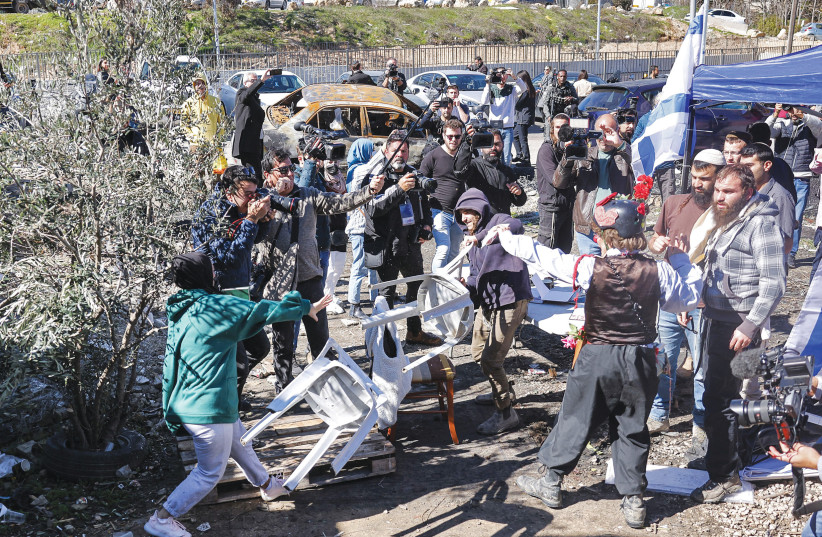
JEWS AND Arabs clash this week in Sheikh Jarrah. / (photo credit: (AHMAD GHARABLI/AFP VIA GETTY IMAGES))

Three pictures this week told the Israeli story. The first came on Sunday, when the rabble-rouser member of Knesset and former Kach activist Itamar Ben-Gvir decided to open a temporary office in the east Jerusalem neighborhood of Sheikh Jarrah.

Ben-Gvir knew what he was doing and the attention it would gain him. Yes, a Jewish family in the neighborhood had been attacked, and the police were proving to be – yet again – ineffective; but setting up an office there was not done purely to safeguard the family. He wanted action, and that is what he got. The concern that Sheikh Jarrah could lead to another conflict with Hamas – like how the terrorist group used the neighborhood in May – means nothing to Ben-Gvir.

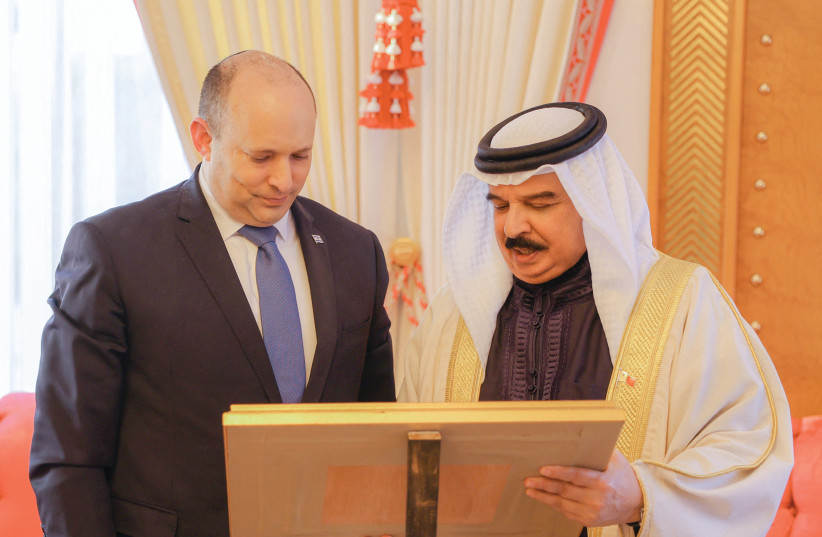
The second image happened on Monday, when Prime Minister Naftali Bennett flew to Bahrain and became the first Israeli leader to officially visit the tiny Persian Gulf country. Bennett was received by honor guards and with honor wherever he went, including the playing of “Hatikvah” at the palace of the Bahraini crown prince. It was Israeli diplomatic might at its best.

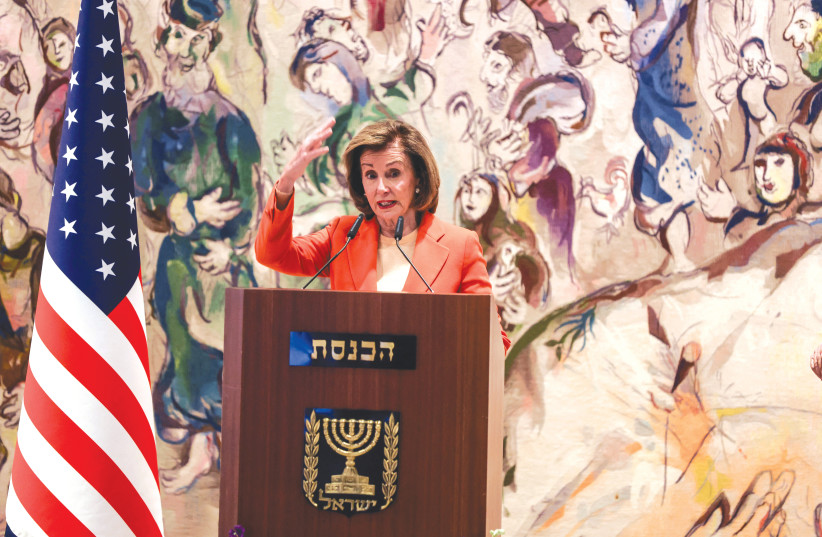
The third image was shown on Wednesday, when Speaker of the House Nancy Pelosi visited the Knesset. One of the most powerful politicians in the United States, Pelosi stood before the Israeli parliament and explained how the formation of the State of Israel was the greatest accomplishment of the 20th century. “The greatest”! Not insignificant words.

The three images were a piece of Israel.

Bahrain’s King Hamad bin Isa al-Khalifa presents Prime Minister Naftali Bennett with a gift. (credit: BAHRAIN NEWS AGENCY)

In Sheikh Jarrah we saw what happens when there is a lack of police enforcement, and when the government allows pockets of lawlessness to fester. Instigators like Ben-Gvir decide to move in and violence erupts. It is the same story in the Negev, in Israeli Arab towns, and in some of the more isolated hilltops in Judea and Samaria.

The other two images portray Israel’s diplomatic prowess. There was the prime minister openly visiting a country that 18 months ago did not have formal ties with Israel, and a day later we see the speaker of the House visiting the Knesset.

It was Israeli at its best and at its worst. Israel the strong and powerful, alongside Israel the hesitant and indecisive. And that is what the Sheikh Jarrah story is about.

Nancy Pelosi visits the Knesset. (credit: AMMAR AWAD/REUTER

If all of Jerusalem belongs to Israel, then police enforcement and government control need to extend throughout all of the city, whether the violence is against Jews or against Arabs. It makes no difference.

It also is a reminder that while Bennett can go to Bahrain and Pelosi can come to the Knesset, the challenges for Israel are still momentous. One senior government official admitted this week that mistakes were previously made regarding Sheikh Jarrah, and that if the violence there continues, Israel might find itself in another round of war with Hamas in Gaza.

With that said, let us be clear about something now: if Hamas decides to attack Israel, it will have nothing to do with Sheikh Jarrah, just like it had nothing to do with Sheikh Jarrah in May. It is just an excuse. When you are a terrorist organization bent on Israel’s destruction, excuses are just that: convenient excuses. If Sheikh Jarrah did not exist, Hamas would invent it.

* * *

On Tuesday, for the first time, Israel sent a diplomatic delegation to Vienna to ensure that its concerns about the ongoing nuclear talks are heard before it is too late.

One story from 2007 – never told before – is important to keep in mind as Israel considers its options and what it might have to do, with or without a deal.

In August that year, according to foreign reports, the IDF sent a handful of elite Israeli soldiers into Syria to a region known as Deir ez-Zor.

The soldiers were specially trained to blend in with their local environment. Fluent in Arabic, they could move undetected between the various Syrian towns and cities. Their mission was simple: see if they could get close to a secret nuclear reactor that Bashar Assad was building with North Korean assistance along the Euphrates River.

Israel had been tracking the reactor with satellite imagery, but this was the first time that it had feet on the ground.

The soldiers – expert navigators – spent a good portion of their training learning how to get to places with nothing more than a compass, and sometimes even without. A lot of the preparation for this mission was spent learning the terrain in Syria so they would be able to find their target.

When presenting the mission, Military Intelligence analysts explained that while the photos obtained in an earlier Mossad raid in Europe were impressive, many of them were a few years old. To know exactly what was happening on the ground, it needed to get as close as possible to the reactor.

Before departing, the commandos had been briefed by geologists and scientists, and generals came to meet with the soldiers, who knew the risks: if something went wrong, they would be on their own. The senior officers went over the plans with the soldiers. They studied maps and ran mock simulations and models of what was ahead.

Since they were on their own, the soldiers could not carry too much with them, but this was part of the test. If Israel were to decide to send troops to blow up the reactor, the generals needed to see what each soldier could practically carry, and if enough explosives, for example, could make it there just on the backs of the operators.

The soldiers spent a week on the ground, and made it close enough to the innocent-looking structure that disguised the plutonium reactor inside.

The mission was a double success: Israel gained high-quality images of the reactor, and the IDF proved that if needed, soldiers could get inside Syria and close to the reactor.

That was of extreme importance. IDF chief of staff at the time, Gabi Ashkenazi, needed to prepare for the government a number of options for how to destroy the nuclear reactor.

The first option was the most obvious: attacking by air. The second was more complicated: sending a small elite force on the ground into Syria to plant explosives inside the reactor and destroy it from within.

Until Israel launched an airstrike on September 6, 2007, that destroyed the nuclear reactor, it had prepared two options: one from the air and the other from the ground. After the final security cabinet meeting on September 5 during which ministers voted to approve a strike, they did not yet know what course of action the IDF would choose.

That was left up to Ashkenazi.

The mission that summer proved to the IDF’s top generals that the second option was possible. With that understood, Ashkenazi now gave Sayeret Matkal permission to begin training for a large-scale covert ground operation. He knew that he could get troops near the reactor. Now he needed to decide if that was the option he was going to use.

The problem was that even within the IDF, there was a difference of opinion on the right option.

An airstrike meant that the reactor would definitely be destroyed, but it would not be something that could be hidden. People would see planes, and radar screens would detect the aerial infiltration.

A covert ground operation could be made to look like an accident, and something that could not be traced back to Israel. A small group of troops entering Syria undetected like the summer mission could potentially get in and out without anyone knowing. Sayeret Matkal trained for months for the mission up until the day of the airstrike: a small team was to infiltrate Syria, make its way to the reactor, and plant explosives inside.

Because there was very little military presence around the reactor, it was also a pretty safe gamble that the troops could get in and out without clashes.

In the end, Ashkenazi preferred an airstrike, for three reasons. First, an airstrike was almost risk-free and ensured complete destruction. While Syria did have sophisticated air defense systems, the IAF had experience flying over the country.

Second, a ground mission would be more complicated, and there would be no assurance that the commandos would be able to plant enough explosives needed to destroy the facility.

In addition, if soldiers were captured, Israel would be looking at another debacle like the one it was already facing, with Gilad Schalit being held by Hamas in Gaza and two reservists being held by Hezbollah in Lebanon. The last thing Israel needed were more soldiers captured, this time in Syria.

The story of this debate is important today as Israel considers its options ahead of a possible deal in Vienna.

The IDF has openly said that it is preparing a military option, one that would be ready in about a year.

While people tend to associate a “military option” with the Air Force, that is not Israel’s only option against Iran.

Putting commandos on the ground is something Israel did in Syria in 2007, albeit on a small scale. It is a capability that could potentially be replicated in the future to attack Iran. If that were to happen, it would mean that such a strike would be not just from the air, but also from the ground. In short – something the likes of which Israel has never seen before.


Zawartość publikowanych artykułów i materiałów nie reprezentuje poglądów ani opinii Reunion’68,
ani też webmastera Blogu Reunion’68, chyba ze jest to wyraźnie zaznaczone.
Twoje uwagi, linki, własne artykuły lub wiadomości prześlij na adres:
webmaster@reunion68.com


The Red Sea and the amazing city of Eilat. Beautiful Israel

The Red Sea and the amazing city of Eilat. Beautiful Israel

Avkopplande Fotgängare


Zawartość publikowanych artykułów i materiałów nie reprezentuje poglądów ani opinii Reunion’68,
ani też webmastera Blogu Reunion’68, chyba ze jest to wyraźnie zaznaczone.
Twoje uwagi, linki, własne artykuły lub wiadomości prześlij na adres:
webmaster@reunion68.com