Archive | November 2022

‘Abhorrent’: State Department Slams Ben-Gvir Appearance at Kahane Memorial Event

‘Abhorrent’: State Department Slams Ben-Gvir Appearance at Kahane Memorial Event

Andrew Bernard


Itamar Ben-Gvir. Photo: Wikimedia Commons.

In another sign of tension between the US Administration and the newly-elected Israeli government, the State Department condemned far-right Knesset member Itamar Ben-Gvir, who is slated for a cabinet post, for his appearance at a memorial ceremony for Meir Kahane, the far right parliamentarian assassinated in 1990.

“Celebrating the legacy of a terrorist organization is abhorrent; there is no other word for it,” State Department spokesman Ned Price said Thursday. “We remain concerned, as we said before, by the legacy of Kahane Chai and the continued use of rhetoric among violent, right-wing extremists. We’ve condemned incitements, we’ve condemned violence and racism in all of if its forms,” Price said.

Kahane, who was assassinated in New York in 1990, founded the Jewish Defense League and the Israeli political party Kach and was convicted in the US of a conspiracy to manufacture explosives and in Israel of plotting to blow up the Libyan embassy in Belgium. Kach and its splinter organization Kahane Chai were banned in Israel after they expressed support for Baruch Goldstein, an American-born Israeli supporter of Kahane who murdered 29 Palestinians in a West Bank mosque in 1994. Kach and Kahane Chai were jointly designated as a Foreign Terrorist Organization by the State Department from 1997 until earlier this year. They remain on the US list of Specially Designated Global Terrorist organizations.

Writing on twitter before the event, Ben-Gvir said that he was participating despite his differences of opinion with Kahane because he appreciated “the love of Israel that [Kahane] had and his fight for the Jews of the Soviet Union and against antisemitism.” 

Ben-Gvir’s attempt to create ideological distance between himself and Kahane at the event on the question of expelling Arabs was met with boos from the crowd. Ben-Gvir said that unlike Kahane he does not believe that all Arabs need to be deported from Israel. He has previously said that only “disloyal” Arabs, including Arab members of the Knesset, need be deported

Yehuda Kurtzer, President of the Shalom Hartman Institute of North America, an NGO which seeks to promote democratic values and equal rights in Israel, told The Algemeiner that the reaction from the crowd points to the potential instability Ben-Gvir’s newly-found electoral popularity.

“Extremism is much more fickle than it appears,” Kurtzer said. “My sense is that especially the young vote that was attracted to [Ben-Gvir’s party], that kind of anger, protest vote, at least publicly tended to talk a lot about crime in Israel, and the ways in which the police system was simply not responding to a sense of fear on the streets. […] It’s a very populist move to focus on crime and law and order. It may also just reflect particular trends of this election. You have no idea whether [Ben-Gvir] and Smotrich are able to stay together, able to stay in government. Next election they may be back down to the five or six seats where they were.”

The inclusion of Ben-Gvir and MK Bezalel Smotrich, both members of the Religious Zionism party, in a future Benjamin Netanyahu-led government has been a point of concern for the US. Ben-Gvir has said he will seek the Ministry of Public Safety responsible for the police, while Smotrich is seeking to be Minister of Defense.

Speaking to The Algemeiner last week, former US Ambassador to Israel Daniel Shapiro said that he thinks it’s unlikely that the Biden Administration will directly engage with either of them. “I highly doubt that the administration will work with Ben-Gvir, certainly, and likely Smotrich as well. They are advocates of racist and bigoted policies, they engage in anti-Arab incitement,” Shapiro said.


Zawartość publikowanych artykułów i materiałów nie reprezentuje poglądów ani opinii Reunion’68,
ani też webmastera Blogu Reunion’68, chyba ze jest to wyraźnie zaznaczone.
Twoje uwagi, linki, własne artykuły lub wiadomości prześlij na adres:
webmaster@reunion68.com



Jlem says 90% of Iran’s influence in Syria is destroyed

Jlem says 90% of Iran’s influence in Syria is destroyed


ILTV Israel News


Zawartość publikowanych artykułów i materiałów nie reprezentuje poglądów ani opinii Reunion’68,
ani też webmastera Blogu Reunion’68, chyba ze jest to wyraźnie zaznaczone.
Twoje uwagi, linki, własne artykuły lub wiadomości prześlij na adres:
webmaster@reunion68.com


Dlaczego na pomniku w obozie koncentracyjnym brakowało trzech trójkątów?

Brama w obozie koncentracyjnym w Dachau z napisem ‘Arbeit macht frei’ (praca czyni wolnym) (fot. Diego Delso, CC BY-SA 4.0 , via Wikimedia Commons)


Dlaczego na pomniku w obozie koncentracyjnym brakowało trzech trójkątów?

Anna Machcewicz


Dlaczego na pomniku w obozie koncentracyjnym brakowało trzech trójkątów?

.

Zwiedzenie kolejnego muzeum – utworzonego na miejscu byłego obozu koncentracyjnego – mimo powtarzalności elementów wystawy, stałości w funkcjonowaniu obozowej machiny nie zmniejsza ciężaru w sercu. Każdy zwiedzający musi się mierzyć po raz kolejny z pytaniem, jak to było możliwe? Z drugiej strony ta powtarzana i pozornie znana historia za każdym razem dostarcza coraz bardziej szczegółowej wiedzy, bo przecież każdy obóz miał swoją specyfikę. Taka była moja wyprawa do Dachau.

Obóz koncentracyjny Dachau

Ten obóz dla politycznych przeciwników nazistów powstał na terenie nieczynnej fabryki prochu i amunicji 22 marca 1933 r., wkrótce po nominacji Hitlera na kanclerza Rzeszy. Istniał 12 lat i stale się powiększał. Na jego obszarze i w licznych filiach więziono ponad 200 tys. ludzi z całej Europy. Około jednej piątej straciło życie, zanim został wyzwolony 29 kwietnia 1945 r. przez żołnierzy amerykańskich.

Był obozem wzorcowym, „szkołą przemocy” najpierw dla własnej załogi składającej się z esesmanów. Pierwszy komendant Theodor Eicke ogłosił w październiku 1933 r. regulamin zawierający brutalne sankcje karne dla więźniów oraz przepisy służbowe dla wartowników SS (Schutzstaffel). Regulamin instytucjonalizował władzę SS nad więźniami, sankcjonował samowolę i terror. 

Zdjęcie propagandowe: strażnicy SS i więźniowie w obozie koncentracyjnym Dachau, czerwiec 1938 r.Zdjęcie propagandowe: strażnicy SS i więźniowie w obozie koncentracyjnym Dachau, czerwiec 1938 r.  Bundesarchiv, Bild 152-23-07A / CC-BY-SA 3.0, CC BY-SA 3.0 DE , via Wikimedia Commons

Wypracowano tu schematy poniżania więźniów, odzierania ich z godności, bezdusznego korzystania z ich sił witalnych, aż do ostatecznych możliwości. Eicke objął funkcję szefa Inspektoratu Obozów Koncentracyjnych i wprowadził obowiązujący w Dachau model w pozostałych obozach.

Pomnik w Muzeum KL-Dachau

Liczące 43 tys. Dachau niedaleko Monachium jest znane światu jako miejsce zbrodni narodowego socjalizmu. Wcale nie chciało podtrzymywać tej pamięci, skoro aż do lat 60. teren byłego obozu zamieszkiwali Niemcy wygnani z terenów Polski i Czech. Dopiero w 1965 r. na żądanie byłych więźniów powstało tu Muzeum KL-Dachau.

We wrześniu 1968 r. na terenie obozu uroczyście odsłonięto pomnik Narodów autorstwa jugosłowiańskiego rzeźbiarza Nandora Glida. Naprzeciwko rzeźby z brązu, która symbolizuje postać człowieka w ogrodzeniu z drutu kolczastego, znajduje się relief w kształcie łańcucha, oznaczający w przenośni solidarność więźniów w obozie. Na reliefie umieszczono trójkąty w rozmaitych kolorach, którymi SS stygmatyzowało poszczególne kategorie więźniów. 

We wrześniu 1968 r. na terenie obozu Dachau uroczyście odsłonięto pomnik Narodów autorstwa jugosłowiańskiego rzeźbiarza Nandora GlidaWe wrześniu 1968 r. na terenie obozu Dachau uroczyście odsłonięto pomnik Narodów autorstwa jugosłowiańskiego rzeźbiarza Nandora Glida  fot. Iuliia mr, CC BY-SA 4.0 , via Wikimedia Commons

Pierwotne założenie rzeźbiarza, to, które wygrało konkurs w 1959 r., zostało w pomniku okaleczone. Wśród trójkątów brak różowego, zielonego i czarnego, którymi oznaczani byli homoseksualiści, kryminaliści i tzw. więźniowie aspołeczni. W pamięci byłych więźniów politycznych, w dominującej narracji nie mieli statusu ofiar.

Trójkąty, które wróciły

Narracja, dominująca jeszcze do lat 80., ulegała stopniowej zmianie. Na oglądanej dziś wystawie wszystkie kategorie więźniów odzyskały równorzędny głos. Stąd wiem np., że robotnik Anton H. był niedużego wzrostu i upośledzony fizycznie. Już przed 1933 r. często był karany za żebractwo. We wrześniu 1933 r. podczas wielkiej operacji policyjnej przeciwko żebrakom został aresztowany i skazany na dwa lata pobytu w domu pracy poprawczej. Stąd, z racji przepełnienia, został w maju 1934 r. wraz z innymi zatrzymanymi wysłany do Dachau, gdzie otrzymał kategorię więźnia „aspołecznego” i został oznaczony czarnym trójkątem. 

Materiały szkoleniowe dla strażników SS - identyfikacja więźniówMateriały szkoleniowe dla strażników SS – identyfikacja więźniów  Public domain, via Wikimedia Commons

W 1936 r. nadal był w obozie, choć czas kary już się skończył. Zresztą w tym roku znów była obława i mógł paść jej ofiarą. Dalszy los Antona H. nie jest znany. Pozostało zdjęcie z policyjnej kartoteki i spisana na jej podstawie krótka notka o jego życiu.

Podczas rządów nazistów tacy jak on zostali bezterminowo wykluczeni ze społeczeństwa, skazani na straszny los w obozie, a po wojnie przez lata usuwani ze zbiorowej pamięci.

Trudno się z nimi było utożsamiać. Nie byli więźniami politycznymi, bojownikami ruchu oporu, duchownymi (których szczególnie wielu, zwłaszcza z Polski, trafiło do Dachau) ani Żydami. A więc nie mogli być traktowani ani jako bohaterowie, ani jako ofiary prześladowań, które zostały uznane za najstraszniejsze i najważniejsze w pejzażu zbrodni III Rzeszy. A przecież życie Antona H. było nie mniej warte niż którejkolwiek innej ofiary Dachau czy innego obozu.


Anna Machcewicz

Historyczka dziejów najnowszych. Pracuje w Instytucie Studiów Politycznych PAN.


Zawartość publikowanych artykułów i materiałów nie reprezentuje poglądów ani opinii Reunion’68,
ani też webmastera Blogu Reunion’68, chyba ze jest to wyraźnie zaznaczone.
Twoje uwagi, linki, własne artykuły lub wiadomości prześlij na adres:
webmaster@reunion68.com


‘Whitewashing a Pogrom’: Jews Assail New York Times for New Failure in Crown Heights Riot Recap

‘Whitewashing a Pogrom’: Jews Assail New York Times for New Failure in Crown Heights Riot Recap

Ira Stoll


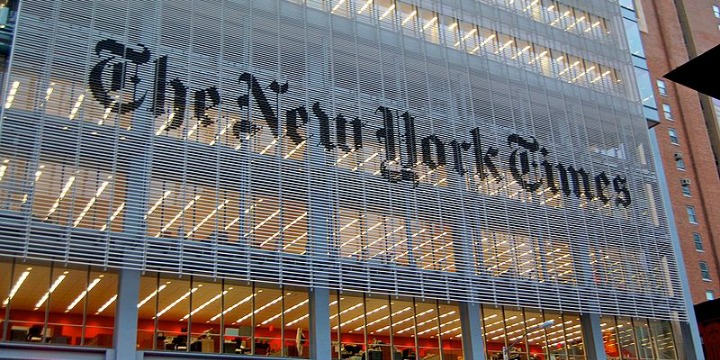
The headquarters of The New York Times. Photo: Wikimedia Commons.

Jewish leaders are condemning as inaccurate a New York Times article describing the 1991 Crown Heights riot as turning streets into “combat zones, pitting groups of Hasidic Jews against mostly Black men.”

The passage came in a long article in Monday’s New York Times, a week before an election, that explored “How the Hasidic Jewish Community Became a Political Force in New York.” As usual for the Times, the article is by a non-Hasidic reporter, although the newspaper frequently strives to assign women, Black, Hispanic, and gay reporters to articles about the politics of those communities.

Why this is a story for the Times to explore at such length is a question in itself. Perhaps the Times is preparing its left-wing readers so that they have someone to blame (Hasidim!) if Republican Lee Zeldin beats Democratic Governor Kathy Hochul in the election. Or perhaps it is an outgrowth of the Times campaign against Jewish education, a campaign the newspaper has been waging at least since 2016.

Whatever the motive, what really irked Jewish readers was the recap of the Crown Heights riots, which the Times itself, by its own journalists’ later public admission, failed miserably to cover accurately back when it actually happened.

The October 31, 2022 Times article describes it this way:

The violence and chaos was almost unimaginable. Overnight, Brooklyn streets had turned into combat zones, pitting groups of Hasidic Jews against mostly Black men — some holding longstanding grudges over what they saw as the Hasidic community receiving preferential treatment from the police and the city. Racial and antisemitic epithets filled the air alongside hurled rocks and bottles.

A police-led motorcade of the Lubavitcher grand rebbe had fatally struck a Black child, and in the melees that followed, a visiting Australian Hasidic scholar was stabbed to death. Hasidic leaders in Brooklyn pleaded with city officials for more police intervention and protection, but the help did not come until days later.

Rabbi Mordechai Lightstone of the Crown Heights-based Chabad Lubavitch Hasidic group tweeted that the Times language was “absolutely bizarre” and “deeply problematic.”

An editor at the Wall Street Journal, Elliot Kaufman, wrote that the New York Times “is continuing its 30-year campaign of lies about the Crown Heights Riot.” Kaufman wrote that Yankel Rosenbaum “was killed by an anti-Semitic mob that set on him because he was an identifiable Jew. Does this sound like a ‘melee’ or clash ‘pitting groups of Hasidic Jews against mostly Black men’?”

An online news and opinion website sponsored by the conservative Heritage Foundation, The Daily Signal, ran an article about the situation headlined, “Jewish Leaders Condemn ‘Antisemitic’ New York Times Article for ‘Whitewashing’ a ‘Pogrom.’”

The author of the Times article, Emma G. Fitzsimmons, did not immediately respond to an email from The Algemeiner asking if she had a response to the criticism.

Times coverage of the riot has been a long-running sore point with Jewish readers. In 2011, Jeffrey Goldberg wrote in the Atlantic, “It is astonishing, the lengths the Times went to prove that a riot that was antisemitic on its face wasn’t, in fact, antisemitic.” Ari Goldman, who was working for the Times, later wrote in the Jewish Week, “I read an opening paragraph, what journalists call a ‘lead,’ that was simply untrue: ‘Hasidim and blacks clashed in the Crown Heights section of Brooklyn through the day and into the night yesterday.’ In all my reporting during the riots I never saw — or heard of — any violence by Jews against blacks. But the Times was dedicated to this version of events: blacks and Jews clashing amid racial tensions.”

A 2017 Times article essentially denied that Jews in Crown Heights even exist, describing the neighborhood as “a largely West Indian and African-American community.”

Thirty years after the riot, the Times still can’t get the story right.


Ira Stoll was managing editor of The Forward and North American editor of The Jerusalem Post. His media critique, a regular Algemeiner feature, can be found here.


Zawartość publikowanych artykułów i materiałów nie reprezentuje poglądów ani opinii Reunion’68,
ani też webmastera Blogu Reunion’68, chyba ze jest to wyraźnie zaznaczone.
Twoje uwagi, linki, własne artykuły lub wiadomości prześlij na adres:
webmaster@reunion68.com


Dutch Museum Returns Looted Kandinsky Painting From WWII to Heirs of Former Jewish Owner

Dutch Museum Returns Looted Kandinsky Painting From WWII to Heirs of Former Jewish Owner

Shiryn Ghermezian


“Blick auf Murnau mit Kirche” by Wassily Kandinsky. Photo: Van Abbemuseum.

A museum in the Netherlands is returning a painting by Russian artist Wassily Kandinsky to the heirs of a Jewish art collector who owned the work before it was stolen during World War II.

The 1910 painting “Blick auf Murnau mit Kirche” (“View of Murnau with Church”), which has been stored at the Van Abbemuseum in Eindhoven since 1951, will be handed over to the relatives of the late Berlin-based collector Johanna Margarethe Stern-Lippmann, the museum announced on Sept. 15.

Stern-Lippman’s descendants first contacted the Dutch museum in 2015 in an attempt to reclaim the painting. The family and the Eindhoven municipality then turned to the Dutch government’s Restitution Committee to make a ruling in the matter. In January 2018, the Committee ruled to not return the artwork to the family because it could not establish sufficient information about the time period when Stern-Lippman lost possession of the painting.

Stern-Lippman’s family filed a second request with the Restitution Committee for possession of the artwork in 2019. The Restitution Committee said in a statement that following an additional investigation, which was delayed due to the COVID-19 pandemic, a decision to return the painting to the family was recently reached, as new facts have surfaced about Stern-Lippman’s ownership of the painting.

The Committee “has concluded it is highly likely that the work originated from the family’s collection and there is sufficient evidence that the family lost possession of it against their will through circumstances directly related to the Nazi regime,” the museum said.

The committee also explained in its ruling that because Stern-Lippmann was persecuted during World War II for being Jewish, the loss of her artwork during that time is considered “involuntary” based on the Dutch government’s restitution policy.

“It is fitting that this lengthy process has now come to an end,” said Anastasia van Gennip, business director of the Van Abbemuseum. “The Restitutions Committee’s opinion is clear and binding. We will arrange the transfer in consultation with the family as soon as possible. Both the municipality and the museum have always taken the view that justice must be done in cases like these. We have participated in all investigations with an open mind and cooperated in them along with the family.”

Another painting by Kandinsky was returned to its Jewish heirs from Amsterdam’s Stedelijk Museum in August 2021.

Kandinsky was known for making antisemitic remarks, specifically in a 1923 letter to Jewish composer Arnold Schoenberg in which he blatantly wrote, “I reject you as a Jew,” when Schoenberg asked the artist to explain reports that Kandinsky “sees only evil in the action of Jews and in their evil actions only the Jewishness.” In 1923, Kandinsky sent Schoenberg another letter inviting him to join the faculty at the Bauhaus school of design, architecture, and applied arts in Germany. Kandinsky wrote in his letter that Jews were not welcome at Bauhaus, but an exception would be made for Schoenberg.


Zawartość publikowanych artykułów i materiałów nie reprezentuje poglądów ani opinii Reunion’68,
ani też webmastera Blogu Reunion’68, chyba ze jest to wyraźnie zaznaczone.
Twoje uwagi, linki, własne artykuły lub wiadomości prześlij na adres:
webmaster@reunion68.com