Archive | December 2022

Rare coin from Hanukkah story villain era found in theft suspect’s home

Rare coin from Hanukkah story villain era found in theft suspect’s home

JERUSALEM POST STAFF


The Antiochus IV coin discovered in the Antiquities Authority said of the illegal artifacts digger. / (photo credit: NIR DISTELFELD/ ISRAEL ANTIQUITIES AUTHORITY)

An ancient coin of Antiochus IV – the Greek ruler known as “Antiochus the Evil” and king during the rebellion of the Jewish Maccabees – was discovered Tuesday after the Israel Antiquities Authority raided the home of a man who was accused of pillaging artifacts in a protected area of Kiryat Shmona.

The coin, dating back to 169-164 BCE, was discovered in the house of a suspect after he was caught walking around Ramot Menashe – a protected archaeological site – with a metal detector. After searching the suspect’s home, authorities discovered the rare coin among a trove of ancient coins, artifacts, digging tools and metal detectors.

Antiochus IV is remembered as a major villain and persecutor in Jewish history. Known as “Antiochus the Evil” in Jewish texts associated with Hanukkah, his policies signaled a departure from the previous rulers’ tolerance of Jews to policies that persecuted the Jewish population, which eventually led to the Maccabean revolt in 167 BC.

“Antiochus, king of the Seleucid kingdom, was officially named ‘Epiphanes’ – the face of God, but behind his back his subjects called him Epimanes – the crazy Antiochus.”

Dr. Danny Shion

“Antiochus, king of the Seleucid kingdom, was officially named ‘Epiphanes’ – the face of God, but behind his back his subjects called him Epimanes – the crazy Antiochus,” said retired Israel Antiquities Authority coin researcher Dr. Danny Shion.

Shion also explained that the coin is a special mint by King Antiochus IV from when he granted special rights to 19 cities in the Seleucid Kingdom and that the coin was minted in the city of Tzur.

The findings seized at the suspect’s home, including ancient coins and artifacts. (credit: NIR DISTELFELD/ ISRAEL ANTIQUITIES AUTHORITY)

Antiquities Authority warns against illegal digging

While the suspect claims they were simply looking for geological finds, the Israel Antiquities Authority search turned up many finds that he found in illegal land excavations throughout the North, including arrowheads, rings, make-up tools, buckles, lead objects, buttons, and more. 

“Although the find is beautiful and the timing of its discovery (just) before Hanukkah is exciting, we must not forget that the suspect broke the law. Many looted items were found in his house. The suspect claimed to be a geology enthusiast that was looking for quartz crystals and metals, but ‘on the way’ also collected coins and ancient artifacts,” declared Nir Distelfeld, the inspector of the robbery prevention unit at the Israel Antiquities Authority in the northern region.

“The removal of ancient finds from the antiquities sites harms the possibility of researching the site and extracting knowledge from it.”

Eli Eskosido

“The removal of ancient finds from the antiquities sites harms the possibility of researching the site and extracting knowledge from it,” added Israel Antiquities Authority Director-General Eli Eskosido. “Disconnecting the finds from their context harms the history of all of us, and permanently removes priceless information from the eyes of researchers and the public.”

The Antiquities Authority also reiterated that searching for artifacts using metal detectors at antiquities sites in Israel is prohibited by law. The fixed penalty for committing these offenses is three years in prison.


Zawartość publikowanych artykułów i materiałów nie reprezentuje poglądów ani opinii Reunion’68,
ani też webmastera Blogu Reunion’68, chyba ze jest to wyraźnie zaznaczone.
Twoje uwagi, linki, własne artykuły lub wiadomości prześlij na adres:
webmaster@reunion68.com
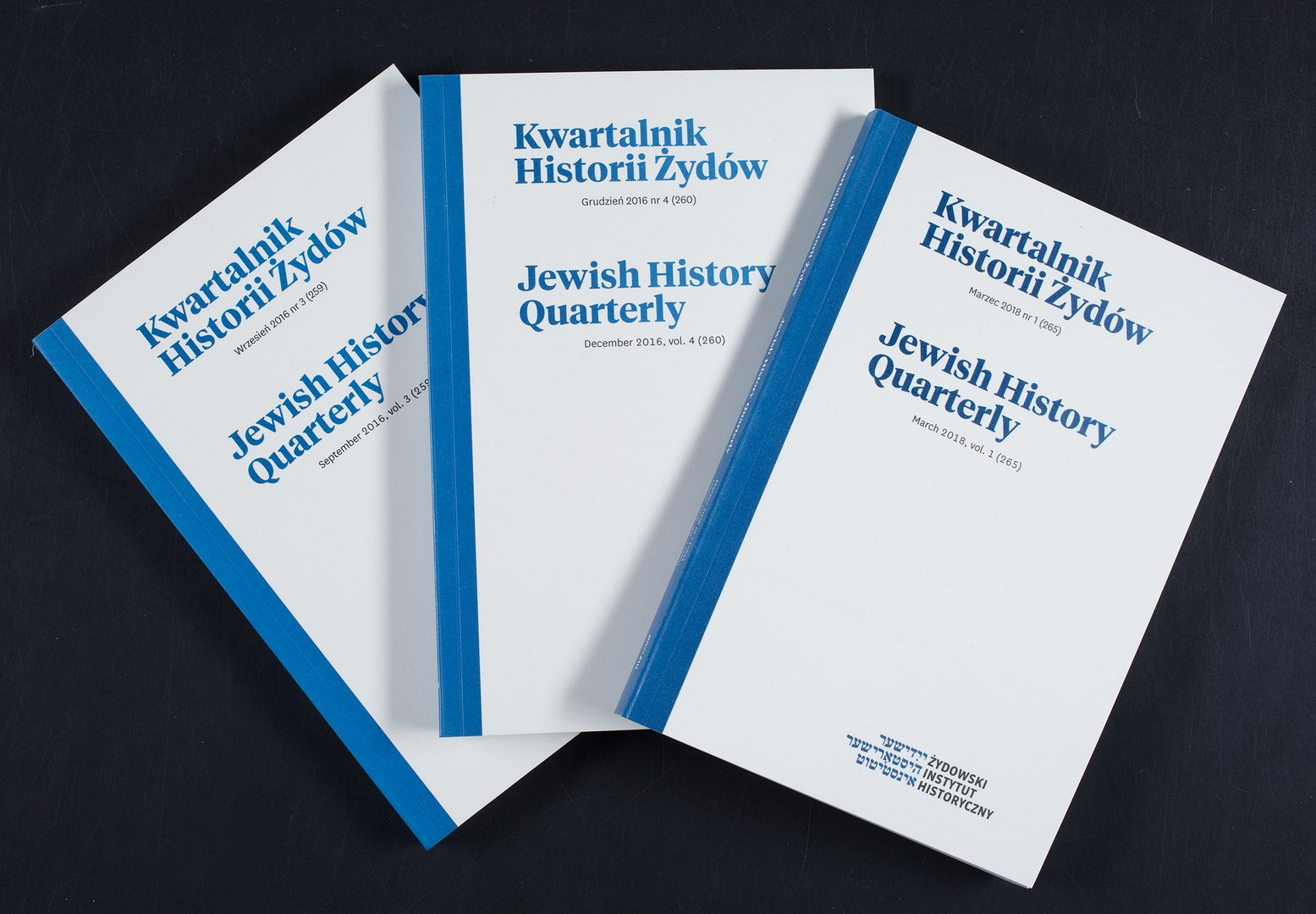
Kwartalnik Historii Żydów

Kwartalnik Historii Żydów

© Żydowski Instytut Historyczny im. Emanuela Ringelbluma


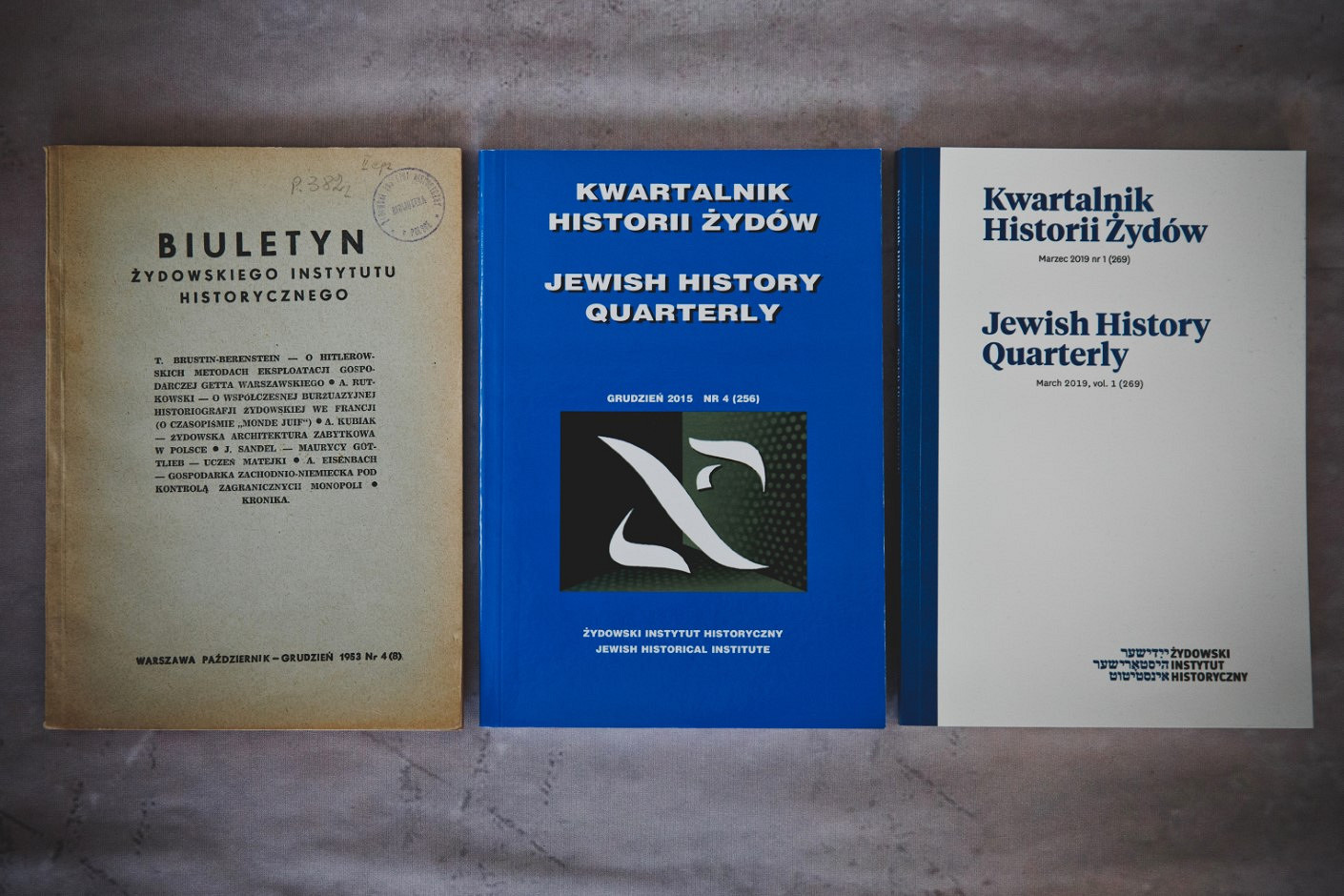
„Kwartalnik Historii Żydów” stanowi kontynuację „Biuletynu Żydowskiego Instytutu Historycznego”. Czasopismo noszące tytuł „Biuletyn Żydowskiego Instytutu Historycznego przy Centralnym Komitecie Żydów Polskich” ukazało się po raz pierwszy w listopadzie 1949 roku. Do 1950 r. „Biuletyn” był publikowany w języku polskim i jidysz, miał charakter biuletynu informacyjnego, przeważały w nim krótkie teksty o działalności Żydowskiego Instytutu Historycznego.
.

.
Kwartalnik Historii Żydów” ukazuje się w niewielkim nakładzie, ale cieszy się zainteresowaniem nie tylko w Polsce. Publikuje artykuły autorów polskich i zagranicznych, także w języku angielskim i niemieckim. Elektroniczna wersja „Kwartalnika” dostępna jest w CEEOL (Central and Eastern European Online Library). W 2011 r. „Kwartalnik” został wpisany na listę wyróżniających się czasopism naukowych (Master Journal List), sporządzaną rzez Thompson Institute for Scientific Information w Filadelfii (tzw. lista filadelfijska).

Od 1951 r. „Biuletyn” nie zmieniając tytułu zmienił format i charakter. Był to odtąd pełnowartościowy periodyk naukowy w języku polskim (półrocznik, od 1953 kwartalnik). Zakres tematyczny pisma obejmował dzieje Żydów od starożytności poprzez średniowiecze po lata najnowsze. W praktyce koncentrowano się na historii nowożytnej i najnowszej, a najszerzej były reprezentowane lata II wojny światowej.
.

.
Redaktorem naczelnym pisma był przez pierwsze 16 lat dyrektor Żydowskiego Instytutu Historycznego, Bernard Mark. Następnie pismem kierowali kolejno: Artur Eisenbach, Szymon Datner, Marian Fuks, Maurycy Horn (redaktor naczelny przez 17 lat, w latach 1973–1990), Jerzy Tomaszewski, Szymon Rudnicki, Daniel Grinberg, Alina Cała, wreszcie od 1999 r. redaktorem naczelnym „Biuletynu” jest prof. dr hab. Jan Doktór. Od 2001 r. czasopismo ukazuje się jako „Kwartalnik Historii Żydów”.

Przez znaczną część okresu Polski Ludowej tematyka żydowska była niechętnie dopuszczana na łamy czasopism, w niektórych latach była objęta niemal całkowitym zapisem cenzury. „Biuletyn ŻIH” był jedynym czasopismem, w którym przez wszystkie te lata mogły być publikowane artykuły i dokumenty na tematy żydowskie, w tym, co istotne, także materiały dotyczące zagłady Żydów podczas II wojny światowej.

Bibliografia zawartości „Biuletynu ŻIH” za lata 1949-2000 została opublikowana w numerze 3 (199) we wrześniu 2001 roku. Jej kontynuację stanowi bibliografia zawartości „Kwartalnika” za lata 2001–2010, która znajduje się w numerze 3 (239) z września 2011 roku.

„Kwartalnik Historii Żydów” publikuje artykuły dotyczące historii Żydów w Polsce i innych krajach, kultury i literatury żydowskiej. Przyjmujemy do publikacji wyłącznie teksty oryginalne, nie opublikowane wcześniej w innych miejscach. W załączniku znajdą Państwo wytyczne odnośnie nadsyłanych artykułów. Artykuły prosimy przesyłać na adres: mczajka@jhi.pl.


Rada redakcyjna:

Wolfgang Benz (University of Technology – Berlin)

Jonathan Brent (YIVO)

Dan Diner (Hebrew University – Jerusalem / Leibniz Institute – Leipzig)

Jan Doktór (ŻIH)

David Gershon Hundert (McGill University – Montreal)

Monika Krawczyk (ŻIH)

Gertrud Pickhan (Free University – Berlin)

Antony Polonsky (Brandeis University – Waltham, Mass.)

Daniel Reiser (Herzog College – Jerozolima)

Szymon Rudnicki (Uniwersytet Warszawski)

Kolegium redakcyjne:

Eleonora Bergman, Michał Czajka (sekretarz redakcji), Helena Datner, Jan Doktór (redaktor naczelny), Małgorzata Domagalska, Monika Krawczyk, Artur Markowski, Anna Michałowska-Mycielska, Alina Molisak, Joanna Nalewajko-Kulikov, Szymon Rudnicki

Zobacz archiwalne numery Kwartalnika Historii Żydów w Centralnej Bibliotece Judaistycznej

Zobacz wydanie rocznicowe Kwartalnika Historii Żydów. Wybór artykułów z lat 1950–2017


Zawartość publikowanych artykułów i materiałów nie reprezentuje poglądów ani opinii Reunion’68,
ani też webmastera Blogu Reunion’68, chyba ze jest to wyraźnie zaznaczone.
Twoje uwagi, linki, własne artykuły lub wiadomości prześlij na adres:
webmaster@reunion68.com


To Hedy Lamarr, the hidden Jew, beauty was only skin deep

To Hedy Lamarr, the hidden Jew, beauty was only skin deep

MICHAEL FOX


ZIEGFELD GIRL, Hedy Lamarr, 1941

In 1933, the Viennese actress Hedy Keisler sparked an international furor by swimming nude in a provocative melodrama called “Ecstasy.” Alas, it was the tragic fate of Hedy Lamarr, as she was renamed when she arrived in Hollywood, to be perpetually judged by her face and figure rather than her intellect.

A splendid study of an extraordinarily complicated and conflicted person, Alexandra Dean’s film, “Bombshell: The Hedy Lamarr Story,” recounts the actress and inventor’s litany of innovations and achievements alongside her frustrations and failures. The documentary, which opened last week at the Kendall Square Cinema in Cambridge, is most fascinating when it shifts from Lamarr’s ambivalence toward Hollywood glamour to her wartime invention of a secure communication system.

The beloved daughter of a Jewish banker, Lamarr had a comfortable childhood before gravitating to the theater and movies. Fleeing a youthful marriage to a Jewish fascist who made arms for the Nazis, as well as the gathering storm in Europe, she purchased passage on an ocean liner in 1937. Aboard ship, she parlayed her bravado and striking good looks into an introduction to MGM executives and, eventually, studio mogul Louis B. Mayer in Los Angeles.

“My grandfather fled the Nazis in a very similar fashion, on a boat where he met someone from Samuel Goldwyn’s shop and ended up in Hollywood and it saved his life,” Dean said. “He became a very powerful individual, and he did not like having been victimized by the Nazis and he kind of whitewashed that entire episode in his life. He didn’t think of himself as a victim and he didn’t want to think of his family or his tribe as victims, so being Jewish was a complicated thing for him.”

Dean saw in Lamarr a similar refusal to be defined by her background or circumstances.

“She also had the same kind of complicated relationship with being a woman,” Dean said. “She wanted to be Louis B. Mayer, she wanted to be Cecil B. DeMille. She didn’t want to identify as a woman and she didn’t want to identify as a Jew. 

“And what does that do to you? I think if you don’t understand her relationship with being Jewish you don’t understand why she was such a broken person.”

Lamarr’s Jewishness was directly related to her development of a system for ships to communicate that the Nazis couldn’t break, Dean said. Though the technology wasn’t used in World War II, an updated version helped Navy ships during the Cuban missile crisis in 1962. Lamarr’s invention later led to the development of GPS, Bluetooth, and Wi-Fi.

In Hollywood, the actress wasn’t allowed to be open about her identity because Mayer believed that audiences wouldn’t fantasize about a Jew. At the same time, the Nazis were blowing up ships in the Atlantic with European Jewish children.

Her mother converted to Catholicism in 1938 in Vienna, and Dean theorized that her motivation was to make it easier to escape the Nazis. Then Dean discovered a letter that Hedy had written saying, “Please do this for me, because I don’t want to be identified as a Jew in Hollywood.”

The psychological effect of Lamarr’s subterfuge mingled with her sorrow over the destruction of European Jewry is difficult to calculate, but it subsequently manifested itself in the insistence to her children that she wasn’t Jewish. In fact, Dean was compelled to confront Lamarr’s offspring with their grandfather’s death certificate — evidence of his burial in a Jewish cemetery — and their grandmother’s conversion papers.

Dean’s greatest challenge in “Bombshell” is conveying Lamarr’s many contradictions: strength and shallowness, altruism and cruelty, desire and despair. The film manages to be surprising and unexpected, yet utterly relevant in its portrayal of a woman stymied in her efforts to win respect on her terms.

“People are very quick to dislike Hedy Lamarr,” Dean said. “It appalled me, and made me extremely sad that people wouldn’t give her any leeway to express herself.” 


Actress Hedy Lamarr patents the basis for WiFi

Ruth Barton


Hedy Lamarr in Her Highness and the Bellboy, 1945. 

On this date in 1942, Hollywood actress Hedy Lamarr (called “the most beautiful woman in Hollywood”) received a patent with composer George Antheil for a “frequency hopping, spread-spectrum communication system” designed to make radio-guided torpedoes harder to detect or jam. Lamarr and Antheil made an interesting pair of collaborators. She was an Austrian-born beauty and American film star who practiced electrical engineering when off the movie lot; he was an avant-garde composer, notably of Ballet Mécanique, a score that included synchronized player pianos. The two devised a method whereby a controlling radio and its receiver would jump from one frequency to another, like simultaneous player pianos, so that the radio waves could not be blocked.

The two submitted their patent to the US Navy, which officially opined that Lamarr could do more for the war effort by selling kisses to support war bonds. On one occasion, she raised $7 million. She and Antheil donated their patent to the US Navy and never realized any money from their invention, which would eventually become the basis for wireless phones, Global Positioning Systems, and WiFi, among other cutting-edge technologies.

Her son Anthony Loder recalls, “She was such a creative person, I mean, nonstop solution-finding. If you talked about a problem, she had a solution.”

Lamarr was born Hedwig Eva Maria Kiesler in Vienna on November 9, 1914. A student of German theatre director Max Reinhardt, she began her film career in Germany and Czechoslovakia in 1930. A brief nude appearance by the actress in the film Ecstasy brought her notoriety and fame before she fled Germany in 1937 as the Nazis rose to power. She travelled to America on the same boat that carried Hollywood studio head Louis B. Mayer; by the end of the voyage, Lamarr had a movie contract with MGM paying $600 a week, contingent on her learning English. Her film career included Algiers, White Cargo, and the lead in Samson and Delilah.

In 1997, the Electronic Frontier Foundation gave her its prestigious Pioneer Award, three years before her death in Orlando, Florida on January 19, 2000 at age 86.


More about HedyLamaee:

Contents

Sources: “August 11: Hedy Lamarr, Inventor,” Jewish Currents; “Hedy Lamarr: Movie star, inventor of WiFi,” CBS Sunday Morning.


Zawartość publikowanych artykułów i materiałów nie reprezentuje poglądów ani opinii Reunion’68,
ani też webmastera Blogu Reunion’68, chyba ze jest to wyraźnie zaznaczone.
Twoje uwagi, linki, własne artykuły lub wiadomości prześlij na adres:
webmaster@reunion68.com


IDF Counts 6,900 Lone Soldiers; Half Come From 73 Different Countries

IDF Counts 6,900 Lone Soldiers; Half Come From 73 Different Countries

Algemeiner Staff


IDF soldiers finish their beret march following eight months of training. Photo: Alexi Rosenfeld / IDF Spokesperson Unit

The Israel Defense Forces currently include some 6,900 lone soldiers, nearly half of whom immigrated from 73 different countries.

The lone soldier label applies to recruits who serve with no parental support in Israel. This includes Israeli natives who are orphans or have no ties to their parents, constituting some 48 percent of all lone soldiers. The rest include recruits who made aliyah while their parents live abroad.

A breakdown of countries published by the military last week showed some contributed hundreds of lone soldiers to the IDF, with 610 lone soldiers coming from the United States, as well as 488 from Russia, 332 from Ukraine, and 264 from France.

Multiple countries contributed dozens of recruits, with 98 soldiers immigrating from Argentina, while 80 soldiers came from each Britain and South Africa. Brazil contributed 63 recruits, ahead of countries including Canada (51), Kazakhstan (38), Colombia (23), Ethiopia (19), and India (13).

Some other countries, in the meantime, could claim less than 10 recruits. For instance, seven recruits came from Switzerland, five from Japan, and one each from Serbia, Slovakia, and Botswana.

This year saw the enlistment of 87 new lone soldiers, the military said.


Zawartość publikowanych artykułów i materiałów nie reprezentuje poglądów ani opinii Reunion’68,
ani też webmastera Blogu Reunion’68, chyba ze jest to wyraźnie zaznaczone.
Twoje uwagi, linki, własne artykuły lub wiadomości prześlij na adres:
webmaster@reunion68.com


UN says Israel must give up nuclear weapons in lopsided vote

UN says Israel must give up nuclear weapons in lopsided vote

TOVAH LAZAROFF


Ukraine was absent from the vote after supporting the initial text.
.

View of the Israeli nuclear facility in the Negev Desert outside Dimona / (photo credit: JIM HOLLANDER / POOL / REUTERS)

The United Nations General Assembly affirmed that Israel must give up its nuclear weapons in a 149-6 vote taken on Wednesday.

An earlier version of the text was approved in the UNGA’s Fifth Committee in October with a 152-5 vote.

Ukraine had voted against Israel in the Fifth Committee, but this time around was absent from the proceedings after it had been criticized for standing against Israel.

Those who opposed the resolution were: Canada, Israel, Micronesia, Palau and the United States. Liberia, which had been absent from the vote in October, changed its position and opposed the text.

Another 26 countries, including India and many European states, abstained from the resolution which is part of an annual package of over 15 anti-Israel and pro-Palestinian texts the UNGA approves. 

UN HIGH COMMISSIONER for Human Rights Michelle Bachelet makes a speech at the United Nations in Geneva, Switzerland, in February. (credit: DENIS BALIBOUSE/REUTERS)

Does Israel actually have nuclear weapons?

The Jewish state is believed to be the only one of nine countries to possess nuclear weapons and the only one in the region, even though it has never admitted to having such an arsenal.

The resolution presumes that Israel has such weapons. It calls on Israel to “not to develop, produce, test or others acquire nuclear weapons” and to “renounce possession of nuclear weapons.”

The resolution also called on Israel to accede to the Non-Proliferation of Nuclear Weapons treaty and to place “all its nuclear facilities under comprehensive International Atomic Energy safeguards.

Israel, along with India, Pakistan and South Sudan has not signed the treaty.

The resolution was put forward by the Palestinian Authority and 20 countries, including Israel’s allies in the Middle East such as Egypt, Jordan, Bahrain, Morocco, Sudan and the United Arab Emirates. 

It was voted on just as Israel’s Ambassador to the UN Gilad Erdan and his Emirati counterpart are leading a joint mission of ambassadors to the UN on a visit to the Jewish state. 

The resolution itself was part of a slew of dozens of texts that deal with the issue of nuclear weapons and nuclear proliferation, in which Israel at times opposed or abstained.

It was the only country to vote against a resolution calling for the establishment of a nuclear-free zone in the Middle East, a text that had the support of 175 out of the UN 193 nations.

Two countries obtained from that vote, the United States and Singapore.


Zawartość publikowanych artykułów i materiałów nie reprezentuje poglądów ani opinii Reunion’68,
ani też webmastera Blogu Reunion’68, chyba ze jest to wyraźnie zaznaczone.
Twoje uwagi, linki, własne artykuły lub wiadomości prześlij na adres:
webmaster@reunion68.com