Archive | September 2023

8 Historical Figures You Didn’t Know Were Antisemitic

8 Historical Figures You Didn’t Know Were Antisemitic

Mark Miller


These diverse historical figures are all dead. Sadly, antisemitism did not die with them.

Some of history’s most accomplished men and women revealed their repugnant antisemitic nature.

Will that knowledge about their character change how you think of them? Should we excuse them because antisemitic sentiment was so prevalent in their time? Will you still be able to admire and appreciate their creations when you’re aware of this poisonous part of their souls?

Gabrielle “Coco” Chanel

Coco Chanel has long been admired as a fashion and feminist icon. For her reputation as an antisemite—less so. Despite having used Jewish investors to fund her fashion empire before World War II, she had a notorious affair with a Nazi officer. At one point, she fled to Switzerland to avoid criminal charges for her collaboration as a Nazi spy.
Chanel was “often given to antisemitic outbursts” about the “greedy” and “aggressive” nature of Jewish people. The French editor-in-chief of Marie Claire observed after a conversation with Chanel, “Chanel’s antisemitism was not only verbal; but passionate and often embarrassing.” But she did popularize the Chanel tweed suit and the little black dress, so there’s that.

Martin Luther

No, not the Black leader Martin Luther King who shares part of his name but thankfully not his prejudices. This is the Martin Luther, the Father of the Protestant Reformation. In terms of his antisemitism, let’s just say that subtlety and humanity weren’t Luther’s strong points. In his 1543 treatise, “On the Jews and Their Lies,” Luther called for synagogues to be burned, Jewish homes to be destroyed, and Jewish people to be expelled from their communities.

There is something uncannily adaptive about antisemitism: the way it can hide, unsuspected, in the most progressive minds. Author James Lasdun

So, while he gets points for establishing the Lutheran Church, we’ll have to deduct points for his referring to Jews as “venomous beasts” and “rejected and condemned by God.” Apparently, as Luther saw it, spreading love and peace is not all-encompassing.

Ezra Pound

Ezra Pound was a distinguished poet and writer, but pound for pound, he was also a malignant antisemite. He believed Jews to be responsible for a multitude of the world’s problems and embraced stereotypical conspiracy theories about Jewish control of the media and banking industries.

Pound was an ardent supporter of Hitler and Mussolini, going so far as to give radio broadcasts for the Italian Fascist government during World War II. He described the U.S. president as “Franklin D. Frankfurter Jewsfeld,” and the Chinese leader as “Chiang Kike Chek.”

He had an impressive “ear” for words, a faultless sense of cadence, and appealed through the sheer beauty of language “to people who would rather talk about poets than read them.” And yet this was the same man who said things like, “The Jew alone can retain his detestable qualities, despite climatic conditions.”

T.S. Eliot

T.S. Eliot was a poet, essayist, publisher, playwright, literary critic, editor – and antisemite. One of the most acclaimed poets of the 20th century, T.S. Eliot, actually incorporated his antisemitism into his poetry. In his poem “Burbank with a Baedeker: Bleistein with a Cigar,” Eliot wrote, “The rats are underneath the piles, the Jew is underneath the lot. Money and furs.”

In his private letters, Elliot referred to Jews as “unpleasant people” and “a race that has no sense of proportion.” As Joseph Black observes, “Few published works displayed the consistency of association that one finds in Eliot’s early poetry between what is Jewish and what is squalid and distasteful.” And during a 1934 lecture in Virginia, Eliot stressed the importance of social “unity of religious background…. Reasons of race and religion combine to make any large number of free-thinking Jews undesirable.” Apparently, we can rule out “Torah study” for what the T.S. in his name stood for.

Charles Lindbergh

Charles Lindbergh was one of the greatest American heroes. He was an aviator who made the first solo flight across the Atlantic Ocean. He was also a Nazi sympathizer and unapologetic antisemite. In a speech in 1941, Lindbergh claimed that Jewish people were trying to drag the United States into World War II for their own benefit. He even gave speeches in which he warned of a Jewish “stranglehold” on America and praised Nazi Germany’s treatment of Jews.

As late as April 1939‍—‌after Germany overtook Czechoslovakia‍—‌Lindbergh was willing to make excuses for Adolf Hitler. In a 1941 speech, Lindbergh said of the Jews, “Their greatest danger to this country lies in their large ownership and influence in our motion pictures, our press, our radio, and our government.” Perhaps the thin air and lack of oxygen while doing all that flying, affected his brain and reason. But you didn’t hear it from me.

Richard Wagner

Wilhelm Richard Wagner was a German composer, theatre director, polemicist, and conductor who is chiefly known for his operas. Unlike most opera composers, Wagner wrote both the libretto and the music for each of his stage works. He also openly articulated his antisemitic views in a number of publications. Wagner wrote that the German people were repelled by Jews due to their ‘alien’ appearance and behavior. The favorite composer of Adolf Hitler, Wagner often found a scapegoat—such as the Jewish population—to account for his personal and musical misfortunes.

Victims of Hitler have associated Wagner and his music with Nazism to such an extent that in Israel a ban on public performance of that music is upheld to this day. Perhaps karma kicked in, however, as payback for his views: Until his final years, Wagner’s life was characterized by political exile, turbulent love affairs, poverty, and repeated flight from his creditors. What a life he might have had if there were no Jews!

Charles Dickens

Charles Dickens was an English writer and social critic who created some of the world’s best-known fictional characters and is regarded by many as the greatest novelist of the Victorian era. His works enjoyed unprecedented popularity during his lifetime and, by the 20th century, critics and scholars had recognized him as a literary genius. His novels and short stories are widely read today. His works, however clearly have their antisemitic aspects.

For example, along with Shakespeare’s Shylock, Dickens’s Fagin is probably the best-known Jewish character in English literature — and perhaps also the most repellent. He is described in Oliver Twist as “a very old shriveled Jew whose villainous-looking and repulsive face was obscured by a quantity of matted old hair.” In the book, in case you didn’t get the message of the character, Dickens refers to the odious, criminal Fagin as “the Jew” more than 250 times in its first 38 chapters.

In other works, Dickens describes the dirty ways, thieving tendencies, and lisping accents of Jews, along with Jewish “mammas” who are obese and averse to using soap and water. Dickens even refers to a situation in which he wanted to borrow money and was offered a loan at an outrageous interest rate of 120 percent by a Jew of “decidedly Israelite caste of countenance.” To paraphrase Dickens’ opening of A Tale of Two Cities, “It was the best of times, it was the worst of times, it was the most prejudiced of times.”

Roald Dahl

Much beloved author Roald Dahl is celebrated for his whimsical children’s books, including Charlie and the Chocolate Factory and Matilda. He is understandably less known for his darker side, illustrated by a number of antisemitic comments he’s on record for making throughout his life. He referred, for example, to Jews as, “a filthy, dirty, noxious, and repellent race” and “the hardest people to teach a lesson to.”

Dahl said, “There’s a trait in the Jewish character that does provoke animosity, maybe it’s a kind of lack of generosity towards non-Jews.” Sounds like a guy who might go so far as defending Hitler? You betcha. Said Dahl, “I mean, there’s always a reason why anti-anything crops up anywhere; even a stinker like Hitler didn’t just pick on them for no reason.” Well, firstly, I believe that what Hitler did went lightyears beyond “picking on them.” And secondly, apparently, the Holocaust was our own fault.

These diverse historical figures are all dead. Sadly, antisemitism did not die with them.


More About The Author – Mark Miller

Mark Miller has held positions as a nationally syndicated humor columnist for the Los Angeles Times, an interviewer and humor blogger for The Huffington Post (along with a wealth of other publications), a TV sitcom staff writer/producer, a stand-up comic in nightclubs and on TV, and a writer for comedians such as Jay Leno, Dana Carvey, Roseanne Barr, Rodney Dangerfield, and Jim Carrey. His first book, a collection of his humor essays on dating and romance, is 500 Dates: Dispatches From the Front Lines of the Online Dating Wars. But he says he’d trade all his success away in a minute for immortality, inner peace and limitless wealth. Follow his website/blog at: http://www.markmillerhumorist.com/. Reach him at: mark.writer@gmail.com


Zawartość publikowanych artykułów i materiałów nie reprezentuje poglądów ani opinii Reunion’68,
ani też webmastera Blogu Reunion’68, chyba ze jest to wyraźnie zaznaczone.
Twoje uwagi, linki, własne artykuły lub wiadomości prześlij na adres:
webmaster@reunion68.com


Palestinian Leader Abbas Says Hitler Only Killed Jews for ‘Social Role’ as Usurers, Slammed for Antisemitic ‘Rant’

Palestinian Leader Abbas Says Hitler Only Killed Jews for ‘Social Role’ as Usurers, Slammed for Antisemitic ‘Rant’

Andrew Bernard


Palestiniernas president Mahmud Abbas. Arkivbild. Foto: Yevgeny Biyatov/Kreml pool via AP/TT

Jewish groups, Israeli officials, and foreign diplomats on Wednesday condemned a recent antisemitic speech by Palestinian Authority President Mahmoud Abbas in which he claimed that Nazi leader Adolf Hitler did not hate Jews as a people but rather because of their “dealing with usury and money.”

In an address late last month to the Revolutionary Council of Fatah, the political party headed by Abbas, the Palestinian leader ran through a litany of antisemitic conspiracy theories.

“They say that Hitler killed the Jews for being Jews, and that Europe hated the Jews because they were Jews,” Abbas said. “Not true. It was clearly explained that [the Europeans] fought [the Jews] because of their social role, and not their religion. Several authors wrote about this. Even Karl Marx said this was not true. He said that the enmity was not directed at Judaism as a religion, but to Judaism for its social role.”

The speech was flagged by the Middle East Media Research Institute, which posted video of the speech over the weekend.

Abbas opened his remarks by repeating the discredited “Khazar theory,” which holds that Ashkenazi Jews are the descendants of central Asian converts to Judaism, and thus are not a Semitic people and have no connection to the land of Israel.

Abbas used the theory to suggest that Hitler was not an antisemite.

“Everybody knows that during World War I, Hitler was a sergeant,” Abbas said, apparently promoting Hitler from his actual rank of corporal. “He said he fought the Jews because they were dealing with usury and money. In his view, they were engaged in sabotage, and this is why he hated them. We just want to make this point clear. This was not about Semitism and antisemitism.”

Abbas conceded that Mizrahi Jews were Semites “because they originated in the Arabian Peninsula, and then they traveled to Andalusia, and then they came back.” He then repeated the conspiracy theory that Jews living in the Arab Middle East only came to Israel because Israelis carried out false flag attacks against Jewish communities in Iraq and elsewhere.

Germany’s ambassador to Israel, Steffen Seibert, on Wednesday condemned Abbas’ remarks in a post on X, formerly known as Twitter.

“The recent statement of President Abbas on Jews and the Holocaust is an insult to the memory of millions of murdered men, women and children,” Seibert said. “The Palestinians deserve to hear the historical truth from their leader, not such distortions.”

Jewish groups also condemned the remarks, with left-leaning J Street saying that “Abbas should be universally condemned and he should make an immediate apology.””

In a statement, the American Jewish Committee (AJC) cited Abbas’ record of Holocaust denial and antisemitism dating back to his 1984 doctoral thesis, which was subtitled “The Secret Relationship Between Nazism and Zionism” and argued that Zionists and Nazis were equal partners in the Holocaust.

“Palestinian President Abbas’ doctoral dissertation blaming Jews for the Holocaust was dredged up again in his latest unhinged antisemitic rant,” AJC said in a statement. “He defended Hitler’s motivation in murdering six million Jews. Now he says Jews are responsible for all the turmoil in the Middle East. This type of ‘leadership’ only breeds violence, not progress. World leaders committed to peace in that region must stop giving Abbas a free pass, and condemn his hateful rhetoric.”

Israel’s Ambassador to the United Nations Gilad Erdan said in a post on X that Abbas had revealed “the true face of Palestinian ‘leadership.’”

“It is no wonder that mere hours ago a Palestinian teenage terrorist hacked innocent Israelis with a meat cleaver in Jerusalem,” Erdan said. “Just as Abbas blames the Jews for the Holocaust, he also blames the Jews for all the Middle East’s issues. While he spreads this pure antisemitism he also pays Palestinian terrorists for murdering Israelis and publicly commends Palestinian terrorism. The world must wake up and hold Abbas and his Palestinian Authority accountable for the hatred they spew and the ensuing bloodshed it causes.”


Zawartość publikowanych artykułów i materiałów nie reprezentuje poglądów ani opinii Reunion’68,
ani też webmastera Blogu Reunion’68, chyba ze jest to wyraźnie zaznaczone.
Twoje uwagi, linki, własne artykuły lub wiadomości prześlij na adres:
webmaster@reunion68.com


Czy izraelska demokracja przetrwa sąd?

Niewybrana w wyborach, grupa kwestionowanych etycznie, przez siebie wybranych mężczyzn i kobiet może orzec, że Netanjahu należy usunąć ze stanowiska.

Israeli Supreme Court president Esther Hayut and fellow justices arrive for a court hearing on petitions demanding the annulment of the appointment of Shas leader Aryeh Deri as a government minister, at the Supreme Court in Jerusalem, Jan. 5, 2023. Photo: Yonatan Sindel/Flash90


Czy izraelska demokracja przetrwa sąd?

CAROLINE GLICK
tłumaczenie: Google.com


Oczekuje się, że 28 września Sąd Najwyższy Izraela wyda orzeczenie na korzyść petycji skrajnie lewicowego Ruchu na rzecz Jakości Rządu o unieważnienie wyborów z 1 listopada 2022 r. W styczniu MQG zwróciło się do Sądu Najwyższego, prosząc sędziów o zakazanie nowo zaprzysiężony premier Izraela Benjamin Netanjahu zakończył sprawowanie urzędu. MQG argumentowało, że – z całym szacunkiem dla 2,4 miliona Izraelczyków, którzy głosowali na Netanjahu, jako oskarżonego w sprawach karnych, Netanjahu jest prawnie „niezdolny” do pełnienia swoich obowiązków służbowych i w związku z tym Sąd Najwyższy powinien nakazać prokuratorowi generalnemu Gali Baharavowi Miarze ogłosić Netanjahu „ubezwłasnowolnionym” i odsunąć go od władzy.

Baharav Miara również nie odrzuciła poglądu, że ma władzę obalenia premiera. Zamiast tego prokurator generalny powołany przez poprzedni rząd i nadal działający w jego imieniu, paraliżujący rząd Netanjahu, twierdził, że Netanjahu nie można uznać za ubezwłasnowolnionego, o ile będzie przestrzegał porozumienia o konflikcie interesów, które podpisał w momencie objęcia urzędu. Baharav Miara upierał się, że porozumienie zabrania Netanjahu zajmowania się reformą sądownictwa. W sposób dorozumiany Baharav Miara dał do zrozumienia, że prawdą jest również odwrotność.

Natychmiast po wyrażeniu tego stanowiska przez Baharava Miarę przywódca koalicji MK Ofir Katz (Likud) złożył projekt ustawy o zmianie Ustawy Zasadniczej: Rząd mający na celu wyraźne uniemożliwienie Baharavowi Miarze odsunięcia Netanjahu od władzy i tym samym unieważnienia wyborów. W projekcie ustawy Katza, który został przyjęty w marcu, wyraźnie określono to, co do tej pory było jedynie rozumiane: premiera można uznać za ubezwłasnowolnionego jedynie wtedy, gdy jest on fizycznie lub psychicznie niezdolny do dalszego pełnienia swoich obowiązków. Uprawnienie do podjęcia takiej decyzji nie należy do niewybranego Prokuratora Generalnego, ale do wybranych przywódców Izraela – rządu i Knesetu. Znowelizowana ustawa stanowi, że trzy czwarte rządu i dwie trzecie Knesetu musi poprzeć taką determinację, aby odsunąć od władzy wybranego przywódcę kraju.

Podczas gdy ustawa Katza przeszła przez Kneset, Netanjahu starannie unikał wszelkiego zaangażowania w główne wysiłki swojego rządu dotyczące reformy sądownictwa. Jego nieobecność pozostawiła próżnię w kierownictwie, która prawdopodobnie skazała na porażkę pierwszą próbę rządu mającą na celu przyjęcie programu reformy sądownictwa. Bez Netanjahu na czele garstka posłów Likudu na czele z ministrem obrony Yoavem Gallantem straciła nerwy w obliczu zamieszek na lewicy i dała do zrozumienia, że będzie głosować przeciwko reformie sądownictwa.

Natychmiast po przyjęciu przez Kneset poprawki do Ustawy Zasadniczej Netanjahu ponownie potwierdził swoje przywództwo. Jego posunięcie odegrało znaczącą rolę w pomyślnym przyjęciu przez koalicję w czerwcu pierwszej ustawy o reformie sądownictwa.

Ze swojej strony MQG szybko złożyła nową petycję do Sądu Najwyższego, prosząc sędziów o uchylenie poprawki do Ustawy Zasadniczej: Rząd i upoważnienie Baharava Miary do obalenia Netanjahu.

Jeśli istniały jakiekolwiek wątpliwości co do intencji Baharava Miary, jej reakcja na uchwalenie ustawy rozwiała je. Baharav Miara napisał list do Trybunału popierający uchylenie nowelizacji Ustawy Zasadniczej. Jej zachowanie pokazało, że jeśli Trybunał uchyli poprawkę, Baharav Miara albo usunie Netanjahu, uznając go za ubezwłasnowolnionego, albo użyje swojej władzy, aby w dowolnym momencie pozbawić go mandatu, aby zmusić Netanjahu do porzucenia planów reformy sądownictwa swojego rządu. Tak czy inaczej, Baharav Miara najwyraźniej planuje unieważnić wyniki wyborów z 1 listopada.

W tym miejscu należy zauważyć, że petycja MQG nie ma podstawy prawnej. Sąd Najwyższy nie ma władzy prawnej do uchylania lub zmiany Ustaw Zasadniczych. W istocie nie istnieje żadne prawo, które pozwalałoby Sądowi Najwyższemu na uchylanie zwykłych przepisów.

W 1995 r. ówczesny prezes Sądu Najwyższego Aharon Barak przejął władzę umożliwiającą uchylenie należycie ogłoszonych ustaw Knesetu. Barak argumentował, że źródłem władzy Trybunału była Ustawa Zasadnicza: Godność i Wolność Człowieka z 1992 r. Barak ogłosił w tym wyroku, że Kneset to nie tylko parlament, to „Władza Konstytucyjna” Izraela.

Barak zapewnił, że Ustawy Zasadnicze Knesetu są w rzeczywistości konstytucją Izraela. Każda ustawa zasadnicza jest częścią tej konstytucji. Po wymyśleniu konstytucji od zera Barak oświadczył, że Ustawy Zasadnicze są źródłem władzy Sądu Najwyższego do uchylania ustaw, które nie są Ustawami Zasadniczymi.

Aby upoważnić Baharava Miarę do unieważnienia wyborów poprzez usunięcie Netanjahu ze stanowiska, sędziowie muszą teraz wymyślić, w jaki sposób zapewnić sobie władzę do uchylenia tego, co od dawna uważali za źródło ich władzy – Ustaw Zasadniczych.

Podobnie jak w przypadku wyroku z 1995 r., w tym tygodniu Barak opublikował w internetowym czasopiśmie prawniczym artykuł, w którym przedstawił to, co jego zdaniem stanowi podstawę nowych uprawnień Trybunału do uchylania Ustaw Zasadniczych – to znaczy uchylania tego, co sam uważał za źródło władzy Trybunału.

Barak oparł swoje nowe konstytucyjne wybryki na wprowadzeniu Deklaracji Niepodległości Izraela jako nowego „nadkonstytucyjnego” pierwotnego źródła wszelkiej władzy.

Jak zauważył Akiva Bigman w analizie artykułu Baraka opublikowanego w środę w internetowym magazynie Mida, David Ben-Gurion i jego współpracownicy, którzy podpisali Deklarację Niepodległości 15 maja 1948 r., jasno stwierdzili, że dokument ten miał charakter polityczny i deklaratywny. Jej celem było sformalizowanie przejścia Izraela ze statusu kolonialnego pod rządami brytyjskiego Mandatu do nowo suwerennego i niepodległego państwa. Była to proklamacja dla świata i narodu żydowskiego rozproszonego po całym świecie, że po raz pierwszy od 1900 lat naród żydowski powrócił jako suwerenny aktor na scenę światową do swojego prawowitego domu.

Deklaracja nie miała absolutnie nic do powiedzenia na temat natury reżimu konstytucyjnego, pod jakim będzie rządzone nowe Państwo Izrael. Warto zauważyć, że chociaż w Deklaracji uznano Izrael za państwo żydowskie, w tekście nigdy nie pojawiło się słowo „demokratyczny”.

Barak musiał znać ten dobrze znany, od dawna uznawany fakt. Celowo to zignorował, aby osiągnąć swój cel, jakim jest przekształcenie Sądu Najwyższego w źródło wszelkiej władzy w Izraelu. Barak bezpodstawnie napisał, że Deklaracja Niepodległości określiła „zasady, według których należy interpretować rozszerzenie uprawnień Knesetu jako zgromadzenia konstytucyjnego”.

Barak napisał: „Nasze podejście” – to znaczy podejście sędziów – polega na postrzeganiu „Deklaracji Niepodległości jako zewnętrznego źródła Ustaw Zasadniczych i na jej podstawie można nałożyć ograniczenia na zakres uprawnień Knesetu jako pierwotne zgromadzenie konstytucyjne.”

Według Baraka aspiracyjna proklamacja Deklaracji: „Państwo Izrael zapewni równe prawa społeczne i polityczne wszystkim swoim obywatelom bez względu na religię, rasę czy płeć” jest nadkonstytucyjną podstawą konstytutywnej władzy Knesetu. Sędziowie Sądu Najwyższego mają prawo obalić lub ograniczyć uprawnienia konstytucyjne Knesetu, jeśli uznają, że jego Ustawy Zasadnicze podważają tę deklarację.

Barak ominął fakt, że Deklaracja nie wspomina o demokracji, stwierdzając, że interpretacja Deklaracji dokonana przez Sąd Najwyższy „wciąż podkreślała tożsamość Izraela jako państwa żydowskiego i demokratycznego”.

Jak pokazał Bigman, Barak następnie przeszedł do Ustawy Zasadniczej: Godność i Wolność Człowieka. Sam Barak napisał tę ustawę, którą Kneset uchwalił w 1992 r. przy zaledwie kworum obecnym. Ustawa, zawierająca kwiecisty język na temat praw i godności, wydała się większości prawodawców niczym innym jak tylko słownictwem bez merytorycznych implikacji. Dlatego prawie nikt nie przyszedł głosować w tej sprawie.

Barak miał inne plany. Począwszy od 1992 r., wykorzystywał tę Ustawę Zasadniczą jako podstawę swojej rewolucji sądowniczej, w wyniku której Sąd Najwyższy przejął władzę w zakresie stanowienia prawa i dyktowania polityki ze swojego składu, nie akceptując jednocześnie żadnych ograniczeń – poza Ustawami Zasadniczymi – w zakresie swoich uprawnień.

W swoim artykule Barak upierał się, że jego Ustawa Zasadnicza nie jest zwykłą Ustawą Zasadniczą.

„Jeśli Deklaracja Niepodległości jest „aktem urodzenia” Państwa Izrael… to jego wartości jako państwa żydowskiego i demokratycznego [wyrażone w Ustawie Zasadniczej: Godność i Wolność Człowieka] są jego dyplomem szkoły średniej. Te dwa certyfikaty określają zasady, od których Kneset jako podstawowa władza konstytucyjna nie może odstąpić.”

Następnie Barak ogłosił, że poprzez swoją interpretację Deklaracji Niepodległości i Ustawy Zasadniczej: Godność i Wolność Człowieka, Trybunał jest uprawniony do uchylenia Ustaw Zasadniczych. Rzeczywiście: „To nie tylko prawo Trybunału, to jego obowiązek. Sąd nie może zwolnić się z tego obowiązku. Trybunał nie może pozwolić, aby Wola Ludu zamieniła się w martwą literę” – napominał swoich uczniów przed obecnym Trybunałem Barak.

Rewizjonizm historyczny leżący u podstaw argumentacji Baraka jest nie tylko szokujący, ale irytujący. Barak całkowicie wypaczył treść Deklaracji Niepodległości, aby podważyć jej cel. Jego celem było wsparcie niezależności narodu żydowskiego w celu określenia własnego losu po dwóch tysiącleciach bezsilności i bezdomności. Barak użył go, aby przejąć tę niezależność i podporządkować naród żydowski intuicjom supremacji, samozwańczych sędziów, którzy uważają się za lepiej przygotowanych niż naród Izraela do decydowania o losie kraju i narodu.

Barak od dawna podkreślał, że on i jego uczniowie są strażnikami „oświeconych” wartości Izraela. Nie są zwykłymi sędziami, są platońskimi Strażnikami. Ale jak oświeceni są w rzeczywistości?

Prezes Sądu Najwyższego Esther Hayut ma przejść na emeryturę 15 października. Zgodnie z „zasadą stażu pracy” obowiązującą przy wyborze prezesów Sądu Najwyższego, następcą Hayuta ma zostać sędzia Icchak Amit. W ubiegły piątek reporter śledczy z Maariv, Kalman Liebskind, poinformował, że naruszając umowę o konflikcie interesów zawartą przez Amita, Amit wielokrotnie orzekał w sprawach sądowych z udziałem Izraelskiego Banku Międzynarodowego, którego dyrektorem jest jego brat Dov Goldfreund. Orzekł także w ważnej sprawie dotyczącej bezpośrednio spółki Dor Alon Energy, której przewodniczącym jest jego szwagier Israel Yaniv.

Zachowanie Amita świadczy o pogardzie dla zasad etycznych obowiązujących wszystkich urzędników państwowych. Amit nie jest sam. Stwierdzono również, że Hayut wielokrotnie orzekała w sprawach dotyczących firm ubezpieczeniowych reprezentowanych przez jej męża. Sam Barak został wiarygodnie oskarżony o wykorzystywanie swojej pozycji podczas pełnienia funkcji prezesa Sądu Najwyższego do wspierania interesów finansowych swojej rodziny.

Innymi słowy, sędziowie, według Baraka, są strażnikami „woli ludu” i uważają, że standardy etyczne, które wyznają politycy, ich nie dotyczą.

Niemniej jednak, jeśli wszystko pójdzie zgodnie z oczekiwaniami, w nadchodzących tygodniach, działając zgodnie z nowymi rozkazami Baraka, ci kwestionowani etycznie, sami wybrani mężczyźni i kobiety przejmą to, co pozostało z suwerennej władzy Knesetu i wzmocnią pozycję niewybranego prokuratora generalnego wrogiego Netanjahu i jego rząd do skutecznego unieważnienia głosów 2,4 miliona Izraelczyków poprzez odsunięcie Netanjahu od władzy.

Nie wiadomo, jak potoczą się wydarzenia. W środę Levin napisała list do Baharava Miary, w którym obnażył jej niekompetencję i niewypełnienie któregokolwiek ze swoich ustawowych obowiązków. Wielu komentatorów spekulowało, że jego list może stanowić podstawę decyzji rządu o zwolnieniu jej.

Również w środę zastępca sędziego Yosef Elron zadziwił swoich kolegów, kwestionując zasadę stażu pracy, przedstawiając się jako kandydat na następcę Hayuta zamiast Amita. Te lub inne wydarzenia, które jeszcze nie miały miejsca, mogą zachwiać wiarą Hayut we własną niezwyciężoność i zmusić ją i jej współpracowników do cofnięcia się od krawędzi. Albo sprawy mogą potoczyć się zgodnie z oczekiwaniami, a ona i jej podwładni mogą formalnie zniszczyć ostatnie ślady izraelskiej demokracji.


CAROLINE GLICK – Caroline B. Glick is the senior contributing editor of Jewish News Syndicate and host of the “Caroline Glick Show” on JNS. She is also the diplomatic commentator for Israel’s Channel 14, as well as a columnist for Newsweek. Glick is the senior fellow for Middle Eastern Affairs at the Center for Security Policy in Washington and a lecturer at Israel’s College of Statesmanship.


Zawartość publikowanych artykułów i materiałów nie reprezentuje poglądów ani opinii Reunion’68,
ani też webmastera Blogu Reunion’68, chyba ze jest to wyraźnie zaznaczone.
Twoje uwagi, linki, własne artykuły lub wiadomości prześlij na adres:
webmaster@reunion68.com


Israel to ink major energy deal with Cyprus and Greece

Israel to ink major energy deal with Cyprus and Greece

ETGAR LEFKOVITS


The plan involves linking the three countries’ power grids via the world’s longest and deepest underwater electricity cable.
.

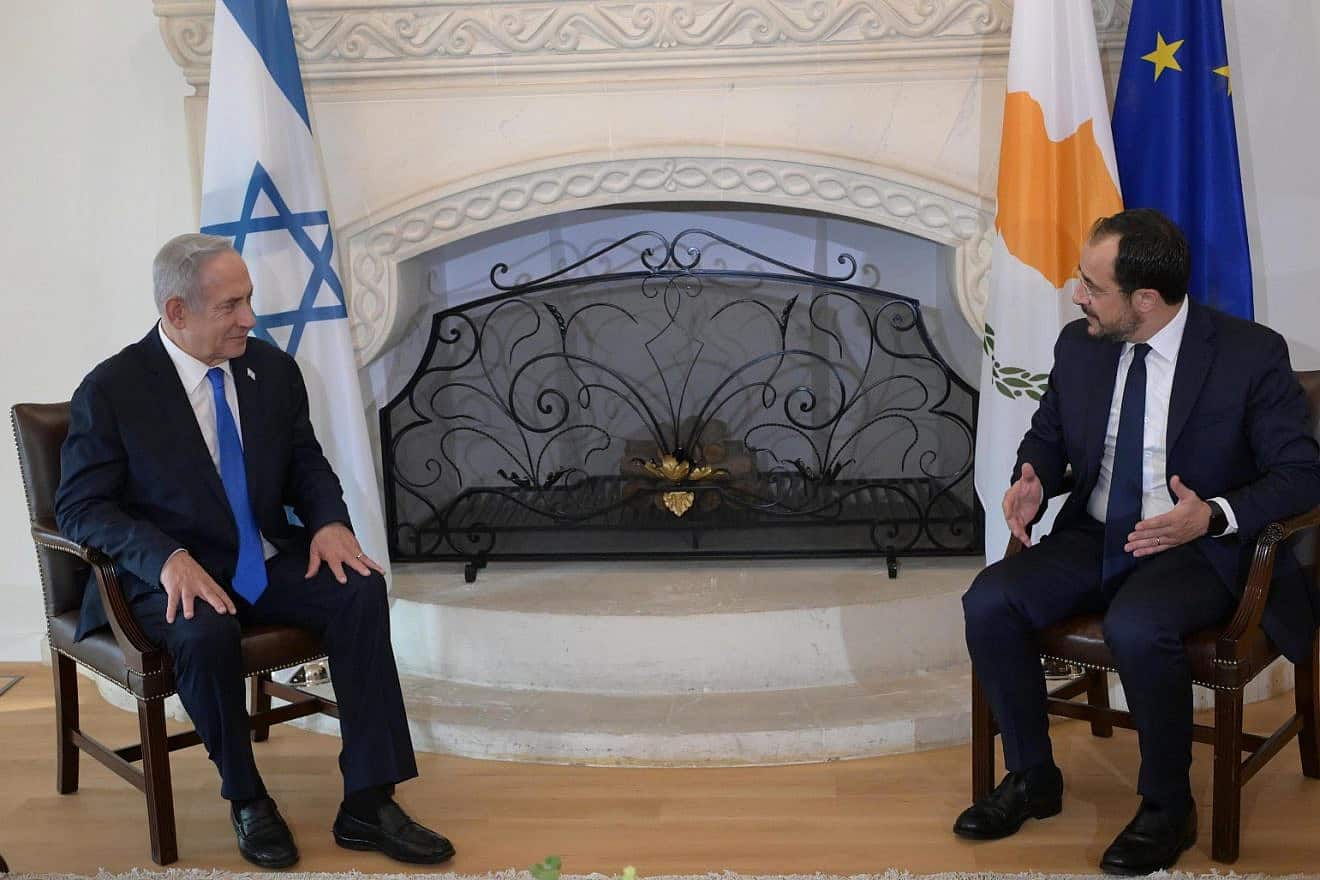
Israeli Prime Minister Benjamin Netanyahu meets with President of Cyprus Nikos Christodoulides in Nicosia, on Sept. 3, 2023. Credit: Courtesy.

NICOSIA, Cyprus — Israel is poised to finalize an energy deal with Greece and Cyprus which will include a mammoth electricity project connecting the power grids of the three countries, and a potential future regional natural gas pipeline between the eastern Mediterranean allies.

The expected accord comes amid burgeoning relations between Israel and both Cyprus and Greece in a variety of fields including energy, defense, tourism, high-tech and cybersecurity.

The international energy venture puts the eastern Mediterranean on the map as a key energy provider to Europe, as the war in Ukraine and sanctions on Russia fuel a global energy crisis that has hit the European Union hard, spotlighting the continent’s dependence on foreign energy.

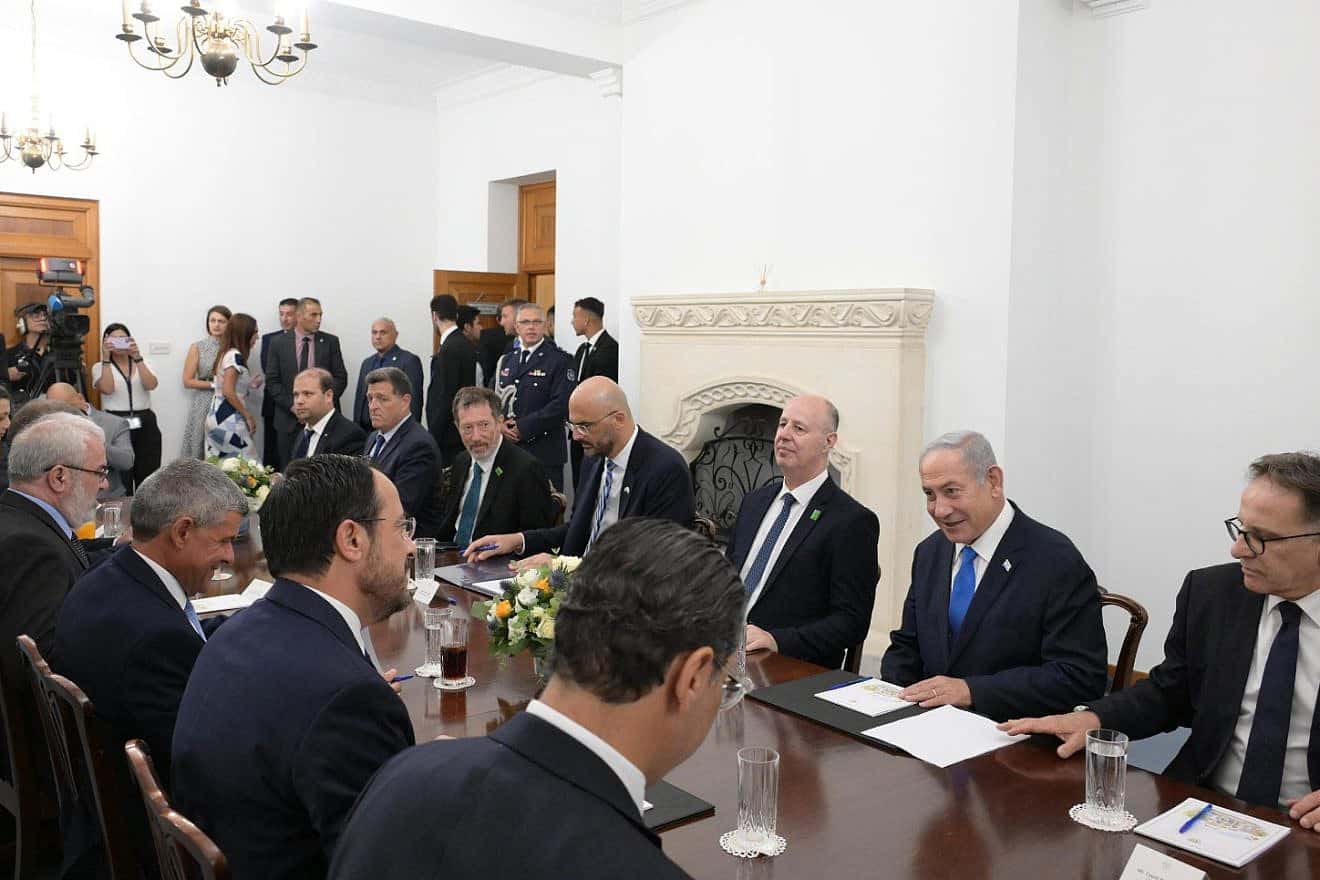
“The partnership between our three countries becomes stronger with each passing year,” Prime Minister Benjamin Netanyahu said on Sunday evening in Nicosia at the start of a 24-hour visit which will include a trilateral summit meeting of the three countries’ leaders on Monday.

Israeli Prime Minister Benjamin Netanyahu and Cypriot President Nikos Christodoulides arrive at the Presidential Residence in Nicosia, Cyprus on Sunday, Sept. 3, 2023. Credit: Courtesy.

“Our strategic partnership and friendship is strong, and will solidify further,” said Cypriot President Nikos Christodoulides.

The top-level government meeting in Cyprus on Monday is expected to be the final round of consultations between the leaders before a deal is formally announced.

The Israeli and Cypriot senior government teams meet in Nicosia, Cyprus, Sunday, Sept. 3, 2023. Credit: Courtesy.

Electricity and gas projects

The deal to link the three countries’ electrical grids, referred to as an “energy highway,” is expected to be inked first, Israeli National Security Adviser Tzachi Hanegbi told JNS.

The 2,000-megawatt undersea cable will be the world’s longest and deepest underwater electricity cable, crossing the Mediterranean seabed bridging Asia and Europe.

Netanyahu said that in the coming months a decision will also be made on how best to cooperate in the field of natural gas as part of a deepening partnership founded on the discovery of substantial offshore natural gas deposits which, he said, can serve as an energy corridor to Europe and beyond, including Arab countries in the region.

Among the options being considered are a natural gas pipeline between the three countries, known as the Eastern Mediterranean pipeline or simply EastMed; a liquefaction plant in Cyprus; a floating liquefaction plant in Israeli waters, or, pending the geostrategic situation with Ankara, a natural gas pipeline to Turkey which could pass through Cyprus as well and which will be connected to Azerbaijani gas.

Turkey has long been a regional rival to Greece, while Israel’s relations with Ankara, which have improved of late, have been unsteady in the face of the volatile and intermittently hostile leadership of Turkish President Recep Tayyip Erdogan.

Feasibility studies on the proposed 1,900 kilometer (1,300 mile), $6 billion EastMed pipeline are still ongoing, amid doubts regarding its financial feasibility.

“There is politics and there is economics,” University of Nicosia professor Andreas Theophanous told JNS. “The EastMed is not viable for economic reasons but we must start from somewhere, and [also] see if Turkey will change its policies towards Cyprus and Israel.”

Summit delayed

The trilateral summit in Cyprus, which was originally scheduled to be held last month, was postponed until this week due to Netanyahu’s hospitalization for the implantation of a cardiac pacemaker. Cyprus and Israel will also hold a full government to government (G2G) minister’s meeting in Israel in the first quarter of next year, the leaders announced Sunday.

Turkey too?

In a sign of warming ties between Jerusalem and Ankara, the Israeli leader is also set to visit Turkey shortly, the first such visit in over a decade and a half. 

In a further sign of a regional push to include Turkey in a future gas deal, Israeli Energy Minister Israel Katz said on Sunday that he held separate talks with his Turkish and Egyptian counterparts, as well as with the U.S. envoy for regional normalizations efforts, following talks with the Greek and Cypriot energy ministers.

Regional firefighting force promoted

Netanyahu said that Israel was also supportive of a European decision to build a regional firefighting force and emergency center based in Cyprus, and suggested that the three countries also jointly consider purchasing a supertanker fire plane.

The Israeli firefighting team being sent to Cyprus, Aug. 7, 2023. Credit: Prime Minister’s Office.

Israel assisted both Cyprus and Greece combat major wildfires this summer, and received warm words of praise and thanks from the Cypriot president for its sign of friendship.

“The climate isn’t going to get cooler, it’s only going to get hotter,” said Netanyahu.

Joint history

The Israeli premier went on to state that the countries’ newfound friendship over the past decade after years of cold relations, which he called an anomaly, was based on common values and a shared history. “Western civilization is a result of basically Greek culture and Judaism fused together,” he said.


Zawartość publikowanych artykułów i materiałów nie reprezentuje poglądów ani opinii Reunion’68,
ani też webmastera Blogu Reunion’68, chyba ze jest to wyraźnie zaznaczone.
Twoje uwagi, linki, własne artykuły lub wiadomości prześlij na adres:
webmaster@reunion68.com

Jewish Groups, Democrats Welcome Biden Pick for US Ambassador to Israel While Republicans Criticize Record

Jewish Groups, Democrats Welcome Biden Pick for US Ambassador to Israel While Republicans Criticize Record

Andrew Bernard


US President Joe Biden has nominated former US Treasury Secretary Jack Lew, pictured here, to serve as the American ambassador to Israel. Photo: Alchetron.

US President Joe Biden announced on Tuesday that he will nominate former US Treasury Secretary Jack Lew as his ambassador to Israel in a move welcomed by Democrats and Jewish groups but challenged by some House Republicans.

Rep. Ritchie Torres (D-NY), an outspoken pro-Israel voice in the US Congress, told The Algemeiner that he looks forward to the confirmation of a new ambassador to “America’s greatest friend — the state of Israel.”

“The US-Israel relationship, as critical as ever, would be best served by a swift Senate confirmation of a new US ambassador,” Torres said.

Before heading the US Treasury Department under former President Barack Obama, Lew served as Obama’s chief of staff and as director of the Office of Management and Budget in the administrations of both Obama and Bill Clinton.

Jonathan Schanzer, senior vice president for research at the Foundation for Defense of Democracies, told The Algemeiner that as a political insider, Lew is a “Washington choice” who would also be in good standing with the Israelis.

“We’re talking about a guy who’s got years of experience. He understands the inside of the US government. He understands the bureaucracy. He understands the players,” Schanzer said. “The Israelis have worked closely in the past with the Treasury Department on designations of Iranian entities, Hezbollah entities, Hamas entities, etc. So he’s no stranger to the Israel file. And of course, he’s also a devout Jew. So he will be understood by many Israelis. He will speak to those that wear kippot. They will have an understanding of who he is even before he arrives.”

Meanwhile, the Orthodox Union said in a statement that Lew, himself an Orthodox Jew, is a “seasoned negotiator and dedicated public servant” who would help foster deeper US-Israel ties. American Jewish Committee CEO Ted Deutch said separately that Lew was an “exceptional choice” and that this was an “outstanding nomination” by Biden.

However, some Republicans in the US House of Representatives have criticized Lew for his involvement in Obama-era policies they consider dangerous for Israel — such as finalizing the Joint Comprehensive Plan of Action, the official name for the 2015 Iran nuclear deal, and not vetoing a United Nations Security Council resolution that criticized Israeli settlement construction.

Last week, Reps. Claudia Tenney (R-NY) and Max Miller (R-OH) led a letter with six other members of Congress urging Biden to reconsider Lew’s then-prospective nomination, saying that he was one of the “chief architects” of the Iran nuclear deal.

“This deal, which failed to constrain Iran’s nuclear production, was one of the greatest US foreign policy disasters of the 21st century,” the letter said. “However, the country that suffered the most as a result of the Iran nuclear deal was Israel, as Iran has stated repeatedly it intends to use a nuclear weapon to destroy Israel. Despite the harm he has caused to American and Israeli national security, Lew is apparently being rewarded with an important ambassadorship.”

Tenney repeated her criticism of the nomination on Tuesday.

“Jack Lew has proven he is the wrong man for the job and this nomination is reckless,” she posted on X, the social media platform formerly known as Twitter. “At a time when the relationship between the US & Israel is of utmost importance, we need an ambassador that works to reaffirm our nation’s unfailing support for Israel.”

Lew’s nomination comes at a challenging moment in US-Israel relations, as Biden has been vocally critical of Israeli Prime Minister Benjamin Netanyahu’s proposed judicial reforms and his policies in the West Bank.

While Israeli Foreign Minister Eli Cohen welcomed Lew’s nomination on Tuesday, Lew’s predecessor Tom Nides faced extensive criticism from Israeli politicians who accused him of intervening in Israel’s domestic politics.

“I say to the American ambassador, slam the breaks on yourself and mind your own business,” Israeli Diaspora Affairs Minister Amichai Chikli said in February regarding Nides’ call for the Israeli government to modify its judicial reform initiative. “You’re not the sovereign here. We’d be happy to debate with you international or security affairs, but respect our democracy.”

Lew will also likely be involved in the ongoing negotiations to strike a deal to normalize relations between Israel and Saudi Arabia, but Schanzer said that the biggest hurdles to such a deal are Saudi Arabia’s demands for a US-Saudi defense pact, the Saudi request to enrich its own uranium, and getting the Israeli government to agree to concessions to the Palestinians.

“The things that the Saudis are asking for from the American side are already very challenging,” Schanzer said. “And then after that comes the question of what the Israelis are willing to give up. The coalition partners in this government are likely not going to be willing to make any significant concessions, but Netanyahu will. And that is ultimately the thing to watch — [Netanyahu] himself.”


Zawartość publikowanych artykułów i materiałów nie reprezentuje poglądów ani opinii Reunion’68,
ani też webmastera Blogu Reunion’68, chyba ze jest to wyraźnie zaznaczone.
Twoje uwagi, linki, własne artykuły lub wiadomości prześlij na adres:
webmaster@reunion68.com