Archives

It’s Important That We Know the Truth About the Aid Situation in Gaza

It’s Important That We Know the Truth About the Aid Situation in Gaza

Pini Dunner


Palestinians carry aid supplies which they received from the U.S.-backed Gaza Humanitarian Foundation, in the central Gaza Strip, May 29, 2025. REUTERS/Ramadan Abed

Heads you win, tails I lose. That’s how it feels watching the world’s reaction to Israel and America’s new food aid model in Gaza.

For months, Israel was condemned for not letting enough aid in and for blockading aid until the hostages were released. Now that Israel is letting in food directly — but cutting the corrupt United Nations and the Hamas terrorists out of the picture — those same voices are howling even louder.

First, the accusation was: “You’re starving Gaza!” Now, it’s: “You’re weaponizing aid!” and “You’re manipulating Gaza’s hunger!” Heads you win, tails I lose. Damned if you do, damned if you don’t. It’s utterly grotesque.

The images from Gaza tell the real story. Thousands of hungry people, many of them openly and unabashedly critical of Hamas, lining up at distribution points — eager to accept boxes of food from the Gaza Humanitarian Foundation, which is quietly, without fanfare, working with Israeli and American support.

Suddenly, we are witnessing a population that’s been exploited and abandoned by Hamas and used as political pawns by the UN finally ready — and finally able — to challenge their oppressors.

Yet instead of celebrating this breakthrough, the usual chorus of international do-gooders — all of them card-carrying haters of Israel and America — are up in arms.

The UN leadership is outraged at being usurped from its traditional role as the world’s perpetual busybody. Apparently, if the UN is to be taken at its word, delivering aid outside of Hamas’s control somehow violates humanitarian norms.

Even European diplomats are muttering darkly that this new scheme is some kind of Israeli conspiracy.

And it goes without saying that academics in distant universities are warning about “the instrumentalization of aid for war purposes.” Has anyone in all of history ever uttered something quite so ridiculous? In any event, try telling that to the Gazan father, who eagerly thanked “everyone who helped us” to a reporter on the scene.

The hypocrisy is breathtaking. Since the October 7th Hamas-perpetrated atrocity and the war against Hamas that followed, all these same voices have been deafeningly silent as Hamas turned food and medicine into tools of terror. Surely, that was “the instrumentalization of aid.”

But they said nothing while Hamas stole international donations in plain sight, extorted desperate families at military checkpoints, and funneled the profits into weapons and ever more violence. Now, as soon as Israel steps in to break that deadly cycle—taking real risks to ensure that Gazan civilians aren’t starved or blackmailed—these critics suddenly find their voices. But instead of using them to support real humanitarian work, they stridently protect the “principles” of an aid system that Hamas has been openly using as a cash cow.

It’s easy to stand in Geneva or New York and patronizingly tut-tut about “neutrality.” It’s much harder to look a starving child in the face and say: “Sorry, we can’t give you food unless your terrorist overlords sign off on it,” or “There’s food for you, but you can’t have it because it’s the Israelis giving it out.”

This is the greatest moral inversion of our times: Israel’s “sin” is that it’s doing what every serious humanitarian ought to do: stop the abuse of aid by criminals and ensure that food actually reaches the hungry.

Hamas is so eager to keep control, and its international enablers are so equally keen to keep Hamas from being ousted, that a shooting last week at a food collection point quickly became an international incident. The so-called mass casualty event occurred as hundreds of Gazans made their way to the only open distribution center in Rafah.

The Hamas-controlled “health ministry” claimed that 31 people were killed and nearly 200 wounded in the pre-dawn shooting near the site — and of course, inevitably, Israel was guilty of a deliberate massacre.

But even as news outlet after news outlet blindly reported the atrocity, the IDF denied responsibility and later published an audio recording featuring a local Gazan who insisted that it had been Hamas, not Israel, that opened fire. “They don’t want the people to receive aid,” he told an Israeli officer. “They want to foil the plan so that the aid will go to them, allowing them to steal it. They’ve gone completely bankrupt.”

The Torah in Parshat Nasso teaches us about the Nazir, someone who vows to separate themselves from wine and other mundane aspects of ordinary life for a period of spiritual self-discipline. The Torah says, “for the crown of his God is upon his head” (Num. 6:7).

It’s a powerful image: by abstaining from doing what others do, the Nazir isn’t running away from the world. Instead, they’re being true to themselves — choosing to do the right thing, even if it means breaking from routine in order to achieve something positive. And for that, they are depicted as having the crown of God on their heads.

The commentators add that the Nazir’s vow of abstention is really about reclaiming control. Instead of being pulled in every direction by outside influences — whether it’s peer pressure, popular opinion, or the desire to fit in — the Nazir says: “Enough is enough. I will not be ruled by these forces. I will decide my own path.”

That’s precisely what Israel’s new aid model is doing. Israel has finally, and wisely, entered into the status of Nazir. For too long, everything about the “aid system” in Gaza has been governed by what everyone else thinks is right and what Israel should or should not be doing or allowing on their borders.

But Israel the Nazir has taken a vow of abstention. Instead of working with the UN, they’ve taken a stand. They’re saying: “Enough. We will not let terrorists decide who eats and who starves. We will take control of the situation and do what is right for us and for those who are most in need.”

And yes, it’s messy. The Torah itself acknowledges that the Nazir’s vow isn’t the norm — it’s a response to a world that the Nazir feels is no longer working for them. But when everything around you is distorted, you’ve no choice but to do something radical to restore balance.

So here we are: Israel, with America alongside it, is stepping in to provide real aid — no strings attached, no financial siphon for Hamas’ tunnels, no middlemen selling precious food that was meant to be free so they can fund terror. And just as every Nazir in history has been seen as odd or extreme, Israel is being seen as venturing outside accepted norms.

But the Torah says that when you stand apart from the mob and refuse to play by their twisted rules, you wear a crown of holiness: “The crown of his God is upon his head.”

No Nazir was ever perfect. That’s a given. Neither is Israel perfect, nor is this new system. But to those who can’t see past their own dogmas, who only find their voices when Israel acts to fix the mess they ignored –maybe it’s time to take a lesson from the Nazir. Be independent. Worry about your spiritual and moral responsibilities. And whether the rest of the world turns their noses up is unimportant.

Because when you do that, it’s heads I win, and tails you don’t lose.


The author is a writer in Beverly Hills, California. 


Zawartość publikowanych artykułów i materiałów nie reprezentuje poglądów ani opinii Reunion’68,
ani też webmastera Blogu Reunion’68, chyba ze jest to wyraźnie zaznaczone.
Twoje uwagi, linki, własne artykuły lub wiadomości prześlij na adres:
webmaster@reunion68.com


IDF intercepts Houthi missile; sirens sound in central Israel

IDF intercepts Houthi missile; sirens sound in central Israel

Joshua Marks


One civilian was lightly injured while seeking shelter in Bat Yam.

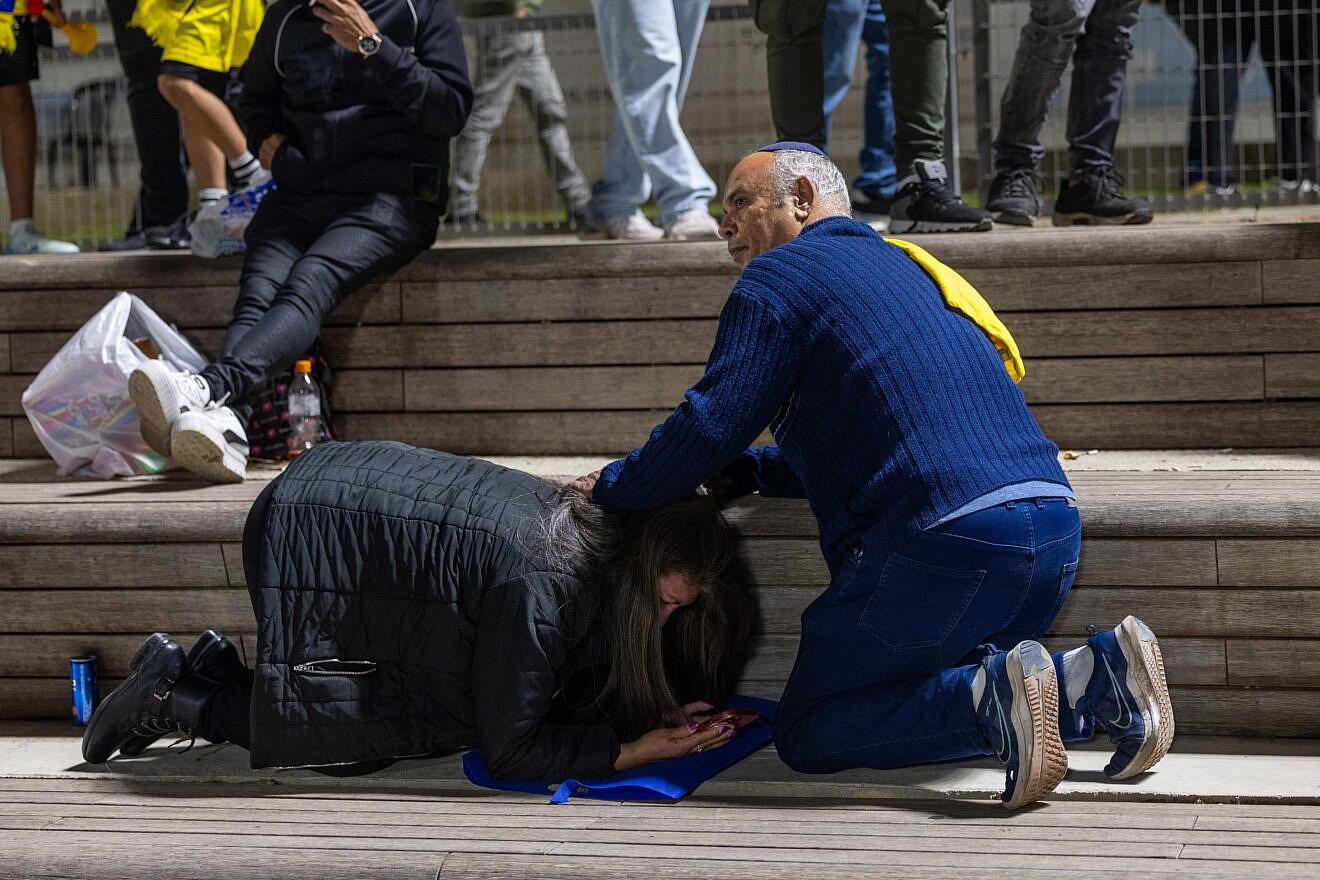
People take cover in Jerusalem as sirens warn of an incoming missile fired from Yemen, May 15, 2025. Photo by Oren Ben Hakoon/Flash90.

The Israel Defense Forces intercepted a Yemeni ballistic missile early Sunday, triggering air-raid sirens across central Israel, including in Tel Aviv and surrounding areas.

The missile was fired by the Iranian-backed Houthi terrorist group, which has escalated its attacks on Israel in recent weeks.

According to the IDF, the missile was detected and neutralized by aerial defense systems shortly after launch, which was initially reported at 1:57 a.m. Sirens were activated in accordance with protocol, and no impact sites or casualties were reported. However, the Magen David Adom emergency service noted that one individual in Bat Yam, just south of Tel Aviv, sustained minor injuries while en route to a bomb shelter.

This attack follows a series of Houthi missile and drone attacks in recent weeks, including a ballistic missile strike near Ben-Gurion International Airport on May 4 that wounded eight civilians and disrupted air traffic.

In response to the aggression, the Israeli Air Force conducted a major aerial operation on Friday night, targeting Houthi terrorist infrastructure at the Hudaydah and Salif ports in Yemen. Fifteen IAF fighter jets dropped more than 30 munitions on sites used for weapons transfers, marking the eighth IDF attack on Houthi targets since the group joined the war in support of Hamas following the Oct. 7, 2023, massacre.

Defense Minister Israel Katz warned, “If the Houthis continue to fire missiles at the State of Israel, they will suffer painful blows—and the heads of the terrorist group will also be hit. We will defend ourselves with strength against any enemy.” 

The IDF emphasized that the targeted ports serve as hubs for weapons transfers and exemplify “the Houthi terrorist regime’s systematic and cynical exploitation of civilian infrastructure to advance terrorist activities.”

Before the strikes, warnings were issued to civilians in the area to evacuate, aiming to minimize harm to noncombatants.

Following the Ben-Gurion Airport attack, the IDF on May 6 carried out a series of strikes on Sanaa International Airport in Yemen. Dozens of Air Force fighter jets made the more-than-1,000-mile journey and dropped 50 bombs over the course of about 15 minutes, disabling for 11 days the main airport controlled by Houthi terrorists.

Israeli Air Force fighter jets also attacked major power stations in the Houthi capital, as well as a cement factory located north of Sanaa, which was used for building tunnels and terrorist infrastructure.

The Houthi regime has been operating under Iranian direction and funding to harm Israel and its allies, undermining regional stability and disrupting global freedom of navigation, the IDF noted.


Zawartość publikowanych artykułów i materiałów nie reprezentuje poglądów ani opinii Reunion’68,
ani też webmastera Blogu Reunion’68, chyba ze jest to wyraźnie zaznaczone.
Twoje uwagi, linki, własne artykuły lub wiadomości prześlij na adres:
webmaster@reunion68.com


Hamas Praises Murder of Pregnant Israeli Mother After Terrorist Attack in West Bank

Hamas Praises Murder of Pregnant Israeli Mother After Terrorist Attack in West Bank

Ailin Vilches Arguello


Relatives and friends of Tzeela Gez, who was shot dead while in a car with her husband in the West Bank, as they were driving to hospital to give birth, mourn during her funeral in Jerusalem, May 15, 2025. Photo: REUTERS/Ronen Zvulun

Hamas sparked global outrage after lauding the murder of a pregnant Israeli mother of three — shot in the West Bank on her way to the hospital to give birth — as “historic,” amid a surge in violence and ongoing efforts by mediators to reach a ceasefire in Gaza.

Shortly after the shooting terrorist attack near the West Bank town of Bruqin, Abu Obaida, spokesperson for the Qassam Brigades — the military wing of the Palestinian terrorist group — issued a statement praising the assault.

“We commend the heroic shooting operation near Bruqin, west of Salfit, carried out by the brave members of our people in the West Bank,” Obaida said.

“We call on our people to rise up against the occupation in defense of Al-Aqsa, to confront the aggression in the West Bank and its refugee camps, and to support their steadfast brothers and sisters in Gaza,” he continued.

On Wednesday, a Palestinian terrorist opened fire on Israeli vehicles in the northern West Bank, fatally wounding a pregnant woman and injuring her husband as they made their way to the hospital to deliver their baby.

After the attack, the 30-year-old woman, identified as Tzeela Gez, was quickly transported to Petah Tikva’s Rabin Medical Center in critical condition. Despite doctors’ efforts to save her, she was pronounced dead early Thursday morning.

With an emergency C-section, doctors managed to deliver her baby, who is now in stable condition but continues to fight for his life.

According to the hospital, her husband Hananel, who was driving the car, sustained minor injuries after his condition was initially reported as serious.

Gez’s funeral took place at Jerusalem’s Givat Shaul Cemetery at 5.30 pm on Thursday.

Israel’s Foreign Ministry condemned the attack and described Hamas’s celebration of the murder of Gez — who was in her ninth month of pregnancy — as “sickening” in a statement posted on the social media platform X.

United States Ambassador to Israel Mike Huckabee also condemned the assault, saying it “shows Hamas is proud to stand behind cold-blooded murder.”

“The savage & uncivilized contempt for a pregnant woman & her baby reveals what Israel is fighting [for],” the American diplomat said.

The Israel Defense Forces (IDF) announced an intensive search for the terrorist who fired on multiple vehicles, with Chief of Staff Lt. Gen. Eyal Zamir vowing to bring the perpetrators to justice.

“This is a difficult and painful attack in which an Israeli civilian was killed on her way to a delivery room,” Zamir said in a statement. “I share in the deep sorrow of the family.”

“We are engaged in broad fighting against terror in Judea and Samaria [the West Bank] and we will continue,” the statement read. “We will activate all our tools, and we will reach the murderers to bring them to justice.”

Israeli Prime Minister Benjamin Netanyahu also condemned the shooting, saying he was “deeply shocked by the horrific terrorist attack.”

“This abhorrent incident precisely reflects the difference between us, who desire and bring life, and the reprehensible terrorists, whose goal is to kill us and destroy life,” the Israeli leader said in the statement released by his office.

Israeli Defense Minister Israel Katz extended his condolences to the Gez family and offered prayers for the newborn baby’s recovery.

“We will continue to fight terror with great force” in all areas of the West Bank and “will not allow it to raise its head,” he said in a statement.


Zawartość publikowanych artykułów i materiałów nie reprezentuje poglądów ani opinii Reunion’68,
ani też webmastera Blogu Reunion’68, chyba ze jest to wyraźnie zaznaczone.
Twoje uwagi, linki, własne artykuły lub wiadomości prześlij na adres:
webmaster@reunion68.com


Nielegalne przejmowanie ziemi przez Europę

[Wielu w Izraelu] domaga się polityki zerowej tolerancji wobec nielegalnej budowy, niezależnie od funduszy UE i pozwów sądowych, i wezwali rząd Izraela do podjęcia długo oczekiwanych działań dyplomatycznych, które jasno pokażą UE, że ustanowiono czerwone linie, które będą egzekwowane. Na zdjęciu: izraelscy żołnierze stoją obok nielegalnie zbudowanej konstrukcji w Strefie C, grudzień 2021 (Zdjęcie: Wisam Hashlamoun/Flash90.)


Nielegalne przejmowanie ziemi przez Europę

Karys Rhea Tłumaczenie: Małgorzata Koraszewska


Izrael stoczył monumentalną sześciodniową wojnę w 1967 roku z sąsiadującymi Egiptem, Syrią i Jordanią, które zaatakowały ten mały kraj z deklarowanym celem wymazania państwa żydowskiego z mapy. Ku zdumieniu społeczności międzynarodowej Izrael niespodziewanie wyszedł zwycięsko, zyskując kontrolę nad wieloma terytoriami, w tym Zachodnim Brzegiem. Zachodni Brzeg czyli Judea i Samaria, gdzie przed 1948 rokiem żyła kwitnąca populacja żydowska, był od 1948 do 1967 roku nielegalnie okupowany przez Haszymidzkie Królestwo Jordanii bez międzynarodowego uznania. W tym czasie Jordania dokonała czystek etnicznych żydowskich mieszkańców i zniszczyła dziesiątki synagog. Zmieniła nazwę regionu na „Zachodni Brzeg”, co oznacza „na zachód od rzeki Jordan”, aby zerwać wszelkie żydowskie powiązania z tym krajem w celu zalegalizowania okupacji terytorium, które nigdy nie było częścią jego międzynarodowo uznanych granic.

Kiedy Izrael wyrwał kontrolę nad Zachodnim Brzegiem Jordanii w 1967 r., powstrzymał się od aneksji terytorium, natychmiast oferując wymianę ziemi za pokój. Ta bezprecedensowa propozycja spotkała się z głośnymi „Trzema Nie” na niesławnym Szczycie Ligi Arabskiej w Chartumie w 1967 r.: „Żadnego pokoju z Izraelem. Żadnych negocjacji z Izraelem. Żadnego uznania Izraela”. W rezultacie Zachodni Brzeg znalazł się pod izraelską władzą wojskową.

„Z powodów, których nie potrafię wyjaśnić, Izrael myślał, że może uszczęśliwić wszystkich. Tak właśnie powstało to monstrum” — mówi Naomi Kahn, dyrektorka ds. międzynarodowych Regavim, organizacji pozarządowej „poświęconej ochronie narodowych ziem i zasobów Izraela”. Monstrum, o którym mówi Kahn, to Koordynator Działań Rządowych na Terytoriach (COGAT) i jego Administracja Cywilna Judei i Samarii. COGAT jest jednostką Ministerstwa Obrony, a Administracja Cywilna odpowiada za zarządzanie „Obszarem C” Zachodniego Brzegu (częściami, które nie są zarządzane przez Autonomię Palestyńską) i zarządzanie wszystkimi sprawami dotyczącymi cywilów, zarówno Żydów, jak i Arabów.

Zamiast rozciągnąć prawo izraelskie na terytorium wyzwolone w 1967 r., przywódcy Izraela postanowili „tymczasowo” utrzymać istniejące ramy prawne do czasu osiągnięcia rozwiązania w negocjacjach z Arabami. Do dziś dowódca regionu centralnego Sił Obronnych Izraela, (a nie wybrani przedstawiciele), zachowuje możliwość stanowienia prawa i administrowania obszarem C. Według Kahn:

„Osobiście żyję pod rządami wojskowymi. To nie tylko nieefektywne, ale i śmieszne. To ogromna biurokracja, która wydaje się robić bardzo mało. Armia – jakakolwiek armia – po prostu nie jest w stanie zastąpić rządu. To nie jest to, co mają robić armie”.

Chociaż technicznie rzecz biorąc COGAT otrzymuje rozkazy od ministra obrony, na co dzień działa autonomicznie. Izraelskie prawo nakazuje, aby próby wtargnięcia na teren i przejęcia ziemi były przechwytywane, ale dowódcy COGAT są ostrożni w działaniu i obawiają się globalnego potępienia. Personel nauczył się oczekiwać nagłówków w międzynarodowych mediach, a także formalnych skarg, gróźb i pozwów ze strony Unii Europejskiej, gdy tylko usuną dach z nielegalnej konstrukcji — którą UE prawdopodobnie i tak odbuduje.

Na miejsce każdej zburzonej budowli powstaje pięć nowych. Fakt, że Palestyńczycy mają prawo wnosić skargi przeciwko COGAT i Administracji Cywilnej do Sądu Najwyższego Izraela, jeszcze bardziej podważa egzekwowanie prawa. Zarówno zagraniczne, jak i izraelskie organizacje pozarządowe otrzymują miliony euro rocznie na „ochronę” Palestyńczyków w systemie sądowniczym, co jest wspierane apelacjami. W międzyczasie Palestyńczycy budują i budują, stosując strategię walki z Izraelem przy pomocy jego własnego systemu sądowego.

Podczas gdy oficerowie COGAT mają różne osobiste poglądy na temat konfliktu arabsko-izraelskiego, IDF ma tendencję do konformizmu i orientacji na sprawy techniczne, troszcząc się o szkolenie taktyczne, gotowość i przeciwdziałanie terroryzmowi, a także skupiając się na bezpośrednich, krytycznych zagrożeniach ze strony Libanu, Syrii, Gazy i Iranu. Establishment obronny postrzega Zachodni Brzeg jako spór polityczny, a nie kwestię bezpieczeństwa narodowego.

Ale COGAT jest w pełni świadomy skali wrogiego przejęcia w Strefie C i decyduje się nie egzekwować swojego prawnego mandatu. Ze względu na silną presję ze strony UE funkcjonariusze COGAT rutynowo rozmawiają z urzędnikami Autonomii Palestyńskiej i wypracowują porozumienia o powstrzymaniu się od wyburzania konkretnej infrastruktury zbudowanej zgodnie z planem głównym byłego premiera Autonomii Palestyńskiej Salmana Fajjada. Podczas gdy COGAT czasami burzy nieautoryzowane konstrukcje uważane za niebezpieczne z punktu widzenia bezpieczeństwa, takie jak te zbudowane w pobliżu stref szkoleniowych lub poligonów IDF, przylegające do głównych arterii komunikacyjnych lub te, które były używane jako lokalizacja wyrzutni służących do ataków terrorystycznych, te wyburzenia są niezwykle rzadkie i prawie zawsze spotykają się z ogromnym zainteresowaniem międzynarodowych mediów i z potępieniem.

Przez wniesienie sprawy do Sądu Najwyższego Regavim zdołał zmusić COGAT do ujawnienia listy ustalonych priorytetów egzekwowania prawa. Na szczycie listy znalazło się zapobieganie żydowskiej budowie na gruntach prywatnych lub państwowych, a na samym dole listy znalazły się przejęcia zorganizowane przez AP-UE. Innymi słowy, Ministerstwo Obrony Izraela zostało na mocy nakazu sądowego zmuszone do przyznania, że jego wytyczne dotyczące egzekwowania prawa w zakresie polityki użytkowania gruntów były nastawione przeciwko Żydom i na korzyść Arabów. „Pozwalają Palestyńczykom robić rzeczy, na które nigdy nie pozwoliliby Żydom” — twierdzi dr Jiszai Spivak, badacz śledczy z Ad Kan, izraelskiej organizacji non-profit.

Ponadto PA nigdy nie zgłasza zgonów ani emigracji z obszaru C i uzupełnia swoje statystyki populacji o osoby, które nigdy nie postawiły stopy na Bliskim Wschodzie — na przykład dzieci, które urodziły się i wychowały za granicą, ale których rodzice kiedyś mieszkali w tym regionie. Daje im to możliwość przedstawienia obszaru jako zaludnionego przez Arabów. Znacznie poważniejszym problemem może być jednak to, że AP aktywnie i publicznie zachęca mieszkańców obszarów A i B do przeprowadzki do obszaru C, co może być naruszeniem Konwencji Genewskiej.

Tymczasem Administracja Cywilna nie robi nic, aby chronić interesy narodowe Izraela w tym zakresie. Nie przechowuje danych o populacji, co umożliwia jej wygodne twierdzenie, że obsługuje ogromną liczbę mieszkańców i rzekomo uzasadnia jej budżet. Jeśli ma się rozpocząć rozmowa o marnotrawionych zasobach izraelskich i międzynarodowych oraz potrzebach obecnej i przyszłej populacji, pierwszym krokiem jest spis ludności.

Regavim i inni wezwali do całkowitego rozwiązania COGAT. Żądają polityki zerowej tolerancji wobec nielegalnej budowy, niezależnie od funduszy UE i pozwów sądowych, i wezwali rząd Izraela do podjęcia długo oczekiwanych działań dyplomatycznych, które jasno pokażą UE, że ustanowiono czerwone linie, które będą egzekwowane. „Izraelskie kierownictwo jako całość nie zachowuje się jak suwerenny rząd z kręgosłupem, który egzekwuje prawo i chroni bezpieczeństwo i interesy narodowe ludzi” – argumentuje Kahn.

Podczas sześciomiesięcznej kadencji Naftalego Bennetta jako ministra obrony w latach 2019-2020 zaczął on nazywać Strefę C polem bitwy, a masowe nielegalne użytkowanie gruntów przez AP określał jako strategiczne zagrożenie militarne. Wraz ze wzrostem egzekwowania prawa poczyniono niewielki postęp. Nadal jednak była to kwestia skali. Burzono szopę, ale pozostawiano nielegalne przyłącza elektryczne i wodne, bo UE mówiła, że to jest kwestia humanitarna. Avigdor Lieberman, który pełnił funkcję ministra obrony w latach 2016-2018, zabrał głos w podobny sposób, ale napotkał niezainteresowanych biurokratów i opór wielu Europejczyków, którzy mają bezpośredni kontakt ze swoimi politycznymi odpowiednikami w rządzie Izraela. Chociaż Ministerstwo Wywiadu opublikowało pełny raport w czerwcu 2021 r., w którym przedstawiono kompleksową analizę palestyńskich nielegalnych przejęć ziemi i nasycenia demograficznego Strefy C, niewiele się zmieniło od czasu publikacji tego raportu.

Ostatecznie w Izraelu jak dotąd nie było woli politycznej, by przeciwdziałać palestyńskiej nielegalnej budowie w Strefie C. Również z powodu braku woli politycznej władze Izraela pozwalają na rozprzestrzenianie się nielegalnej broni w społecznościach arabsko-izraelskich, a klanom beduińskim na zakładanie nielegalnych wiosek na pustyni Negew.

Rząd nie wydaje ostatecznych, wykonalnych rozkazów COGAT — chce uniknąć negatywnej prasy lub bardziej brutalnej konfrontacji z Palestyńczykami w przyszłości. Dlatego izraelscy politycy i urzędnicy podchodzą do problemu za pomocą lokalnych, doraźnych rozwiązań, a nie pełnego ataku frontalnego. Według generała brygady Amira Aviviego (w stanie spoczynku), założyciela Israel Defense and Security Forum:

„Oni nie traktują tego jako wojny, a to jest wojna. W rzeczywistości jest to bardziej niebezpieczne niż inne wojny. W tej chwili Palestyńczycy wygrywają tę wojnę. Za 20 lub 30 lat będzie to zagrożenie egzystencjalne. Musimy się obudzić”.

Spivak zgadza się, dodając, że Izrael prowadzi dwa rodzaje wojen z Palestyńczykami. Jednym z nich jest wojna terrorystyczna, w której Palestyńczycy stosują przemoc fizyczną wobec obywateli państwa Izrael. Drugim jest wojna bez przemocy lub wojna cywilna, w której Palestyńczycy próbują delegitymizować Izrael za pośrednictwem różnych kanałów, takich jak ONZ, media społecznościowe lub globalny ruch BDS.

Innym powodem, dla którego izraelskie kierownictwo nie traktuje tej kwestii z powagą, na jaką zasługuje, jest to, że jego ministrowie są zazwyczaj u władzy przez krótki czas i mogą zostać odwołani w krótkim czasie. Przez rok do dwóch lat, jak zazwyczaj trwa ich kadencja, są przede wszystkim zainteresowani budowaniem swojej reputacji, desperacko pragnąc międzynarodowej akceptacji. Mówiąc prościej, system polityczny wspiera biurokratów. Wiedzą, że aby rozwiązać problem tej natury i skali, musieliby podjąć drastyczne działania przeciwko UE, Autonomii Palestyńskiej i COGAT. Biorąc pod uwagę bolesny, niepewny status Izraela w krajobrazie geopolitycznym, jest mało prawdopodobne, aby jakakolwiek przewidywalna koalicja ustanowiła precedens i zmieniła ten schemat.

Nawet przywódcy społeczności żydowskich w Judei i Samarii nie reagują na tę ingerencję jako na zagrożenie egzystencjalne. Na przykład w mieście Efrat, gdy Izraelczycy skarżą się burmistrzowi na nielegalne arabskie struktury pojawiające się w ich dzielnicach, najwięcej, co burmistrz zrobi, jeśli w ogóle cokolwiek, to zadzwoni do Administracji Cywilnej, a następnie szybko zapomni o sprawie.

Wielu przywódców żydowskich na Zachodnim Brzegu skupia się na zaspokajaniu potrzeb swoich małych społeczności na co dzień. Ich skuteczność jest poważnie ograniczona, ponieważ zależą od przysług wielu ministerstw rządowych, w tym ministerstwa transportu, obrony, finansów i spraw wewnętrznych, które nie sprawują bezpośredniej jurysdykcji za „zieloną linią”. Ci burmistrzowie mają ograniczoną liczbę próśb i na ogół żądanie usunięcia nielegalnych budów nie odnosi skutku, zwłaszcza że prawdopodobnie zostaną odbudowane w ciągu kilku tygodni. Dla wielu przywódców w żydowskich miastach i wioskach, dopóki nie ma procesu pokojowego, status quo jest wszystkim, z czym mogą pracować.

Niemniej minister finansów Bezalel Smotrich podjął szereg działań karnych przeciwko AP i wypowiedział się ostro pod adresem UE, zobowiązując się do zablokowania ich agresywnej działalności, którą nazwał „sprzeczną z prawem międzynarodowym i niezgodną z podstawowymi zasadami dyplomacji w stosunkach między państwami”. We wspólnym liście dziesiątki członków Knesetu potępiło poufny dokument UE z czerwca 2022 r. jako poważne naruszenie relacji UE-Izrael, którego wagi nie można przecenić, pisząc:

„Pod cienką warstwą uprzejmości i manier UE oraz troski o prawa człowieka można znaleźć te same stare oszczerstwa o mordach rytualnych, wraz z tymi samymi płomieniami pierwotnej nienawiści, które tym razem dążą do prześladowania – nie pojedynczego Żyda, ale maleńkiego państwa żydowskiego”.

Może być nawet tak, że prawicowcy, tacy jak Smotrich i inni, doszli do władzy właśnie ze względu na rosnącą frustrację Izraela spowodowaną tym, że fundamentalne zagrożenia, takie jak to, są od tak dawna ignorowane.


Karys Rhea jest dziennikarką Epoch Times, pracuje również w Middle East Forum. Jej konto na X @rheakarys.


Zawartość publikowanych artykułów i materiałów nie reprezentuje poglądów ani opinii Reunion’68,
ani też webmastera Blogu Reunion’68, chyba ze jest to wyraźnie zaznaczone.
Twoje uwagi, linki, własne artykuły lub wiadomości prześlij na adres:
webmaster@reunion68.com


Israeli Security Cabinet approves expanding war against Hamas in Gaza

Israeli Security Cabinet approves expanding war against Hamas in Gaza

JNS Staff


“We are increasing the pressure with the goal of bringing our [captive] people back and defeating Hamas,” said IDF Chief of Staff Lt. Gen. Eyal Zamir.

Israeli troops participate in a counter-terror operation in the area of the Indonesian Hospital in Beit Lahia, northern Gaza, December 2024. Credit: IDF.

Israel’s Security Cabinet voted unanimously on Sunday night to expand the IDF offensive against the Hamas terrorist organization in the Gaza Strip.

The approved plans include “occupying Gaza and holding on to the territory,” as well as “powerful strikes” on Hamas, a source in the Prime Minister’s Office told reporters.

The ministers also approved plans to possibly resume aid to the coastal enclave through an international fund that would seek to prevent the supplies from being looted by Hamas. Israeli National Security Minister Itamar Ben-Gvir was the sole minister to oppose the move.

The distribution of aid is expected to be carried out by the American security companies that inspected vehicles returning to Gaza’s north during the January-March ceasefire.

An Israeli official quoted by the Walla outlet said that the expanded ground operation will likely only be carried out after U.S. President Donald Trump’s expected visit to the Middle East ends next week.

Earlier on Sunday, IDF Chief of Staff Lt. Gen. Eyal Zamir said that the military was calling up tens of thousands of additional reservists.

“This week, we are issuing tens of thousands of call-up orders to our reservists in order to intensify and expand our operation in Gaza,” Zamir told members of the Flotilla 13 naval commando unit. “We are increasing the pressure with the goal of bringing our people back and defeating Hamas. We will operate in additional areas and destroy all infrastructure above and below ground.”

Defense sources noted that the mobilization is one of the largest since the war began 19 months ago, with newly called-up reservists being integrated into training and operational deployments.

Zamir spoke as the Security Cabinet convened in Jerusalem to discuss the next phase of the military campaign.

“I am assembling the Cabinet today to discuss the next stage of the IDF chief of staff’s proposal,” said Prime Minister Benjamin Netanyahu. “I cannot detail it here, but we are focusing on two things: returning our hostages and defeating Hamas. Military pressure works—and this is what will work now as well,” he added, noting that 147 hostages have been rescued alive so far.

In a separate statement, the IDF confirmed that Israeli forces continue to operate across the Gaza Strip to dismantle terrorist infrastructure and protect Israeli civilians. The 205th “Iron Fist” Reserve Armored Brigade is active in Rafah, in Gaza’s southernmost region, where it has destroyed Hamas positions above and below ground and killed dozens of terrorists.

The IDF also reported the discovery of a weapons depot located 260 feet from a former school and approximately 330 feet from a former hospital in Rafah.

Over the weekend, IDF troops, operating in coordination with the Israel Security Agency (Shin Bet), carried out extensive operations across the Gaza Strip. In Gaza City, reservists from the Jerusalem Brigade, operating under the 252nd “Sinai” Division, continued to engage Hamas operatives in the Shejaiya neighborhood, dismantling underground infrastructure and seizing weapons caches.

The Israeli Air Force attacked more than 100 terrorist targets throughout Gaza, including tunnel shafts, command centers and structures used by armed cells, the military said. Ground forces located and destroyed additional weapons and killed several terrorists.

In one such strike, the IDF destroyed armed and launch-ready Hamas rocket platforms in the Khan Yunis area that were aimed at Israeli territory. Explosions observed after the strike indicated the presence of multiple rockets prepared for launch. The military said it would continue acting forcefully and decisively against all terrorist groups in Gaza.

Despite ongoing strikes, the IDF assesses that Hamas maintains at least two organized brigades and continues to pose a threat. However, Israeli officials have noted that recent military and humanitarian pressure is hurting the group’s ability to operate. Some Hamas fighters have surrendered, and the terrorist organization’s command and control systems have sustained significant damage.

Israeli Strategic Affairs Minister Ron Dermer, who has led negotiations for a hostage deal, reiterated at the JNS International Policy Summit last week that Israel remains committed both to defeating Hamas and securing the release of all hostages.

“There are people in Israel who say, forget about the hostages—just finish the war. Others say, forget about the war—just bring them home. We’re not going to do that,” said Dermer. “That’s not where Prime Minister Netanyahu is. It’s not where I am.”

He predicted that 12 months from now, the multi-front conflict facing Israel across the Middle East will be over—and that “Israel will have won.”

Israel’s stated objectives in the war remain the dismantling of Hamas as a political and military force, the return of all hostages, and the prevention of Gaza from posing a future security threat.


Zawartość publikowanych artykułów i materiałów nie reprezentuje poglądów ani opinii Reunion’68,
ani też webmastera Blogu Reunion’68, chyba ze jest to wyraźnie zaznaczone.
Twoje uwagi, linki, własne artykuły lub wiadomości prześlij na adres:
webmaster@reunion68.com