Archives

Where will YOU eat your apples and honey this Rosh Hashana?

Where will YOU eat your apples and honey this Rosh Hashana?

21see


To celebrate Rosh Hashana, the Jewish New Year, this year, we decided to ask some of our friends… where do you eat your apples and honey? Their answers were very surprising.

Video Editor: Asi Aivas
Executive Producer: Viva Sarah Press
Manager: Nicky Blackburn

Special thanks to: Josh Phaff (www.joshphaff.com), Israel Surf Club (israelsurfclub.co.il), Paradive (www.paradive.co.il), City of David Segway Tours (www.cityofdavid.org.il), Delicious Israel (www.deliciousisrael.com), Olympus Climbing Wall (www.kir.co.il), Vered Shahor Theater Puppets (taos.co.il/vered-shahor), The Israel Museum (www.english.imjnet.org.il), Manara Cliff (www.cliff.co.il)… and thanks to all the sweet people in Tel Aviv and Jerusalem who participated in this film!

תפוח בדבש אקסטרים.
איפה תאכל את התפוח ודבש השנה
קליפ אופטימי לרגל ראש השנה שחוגג את החיים, הרוח הנהדרת והמגוון המיוחד של אנשים בארץ.
שנה טובה.
חג שמח!

זכויות של הקליפ שייכות לישראל21
עורך\צלם: אסי אייבס
מפיקה: ויוה שרה פרס
יועצת: ניקי בלקבורן


Zawartość publikowanych artykułów i materiałów nie reprezentuje poglądów ani opinii Reunion’68,
ani też webmastera Blogu Reunion’68, chyba ze jest to wyraźnie zaznaczone.
Twoje uwagi, linki, własne artykuły lub wiadomości prześlij na adres:
webmaster@reunion68.com


FREE ZION! OUR NEW DEFIANT SLOGAN

FREE ZION! OUR NEW DEFIANT SLOGAN

BARRY SHAW


Living under threat, the Yemenite community in Silwan were evacuated for safety concerns by the Jewish National Committee, and by 1945, no Jews remained in Silwan.
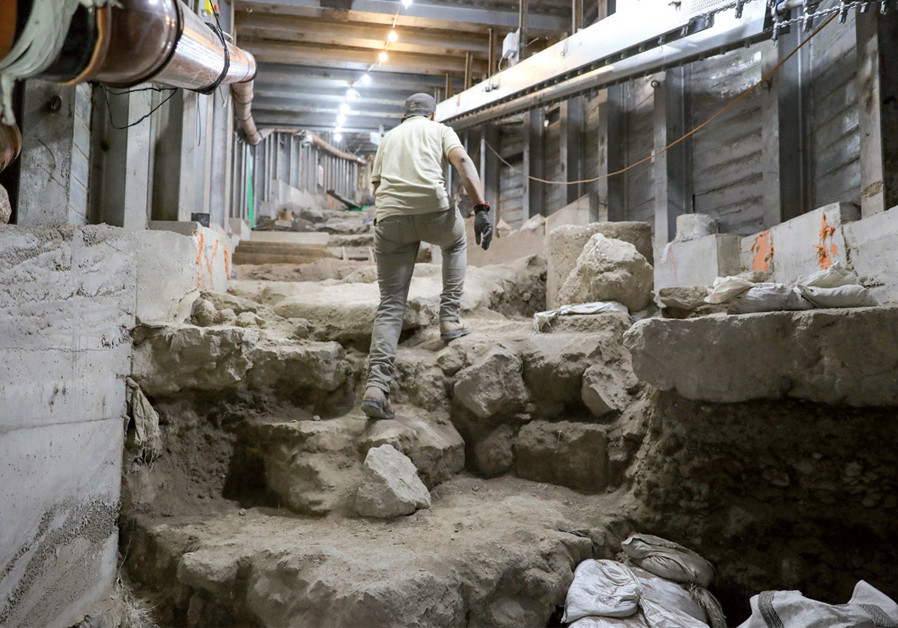
Jerusalem’s Pilgrimage Road. (photo credit: MARC ISRAEL SELLEM)

I was reading an article in The Jerusalem Post about the newly discovered Pilgrimage Road, a pathway that Jewish pilgrims took to the ancient Jewish Temple on the Temple Mount in Jerusalem.

The site was stumbled upon by accident. A rusty water pipe burst in Silwan, a place where after 1948, Arabs moved into the homes of Yemenite Jews forced to flee by marauding Arab rioters and the invading Jordanian army, while the nascent state of Israel perilously held onto territory by its fingertips from aggressive Arab armies launching a war of annihilation against the new Jewish state.

In the 1880s, Jews from Yemen began to make their way to Jerusalem on foot, a journey drawn by the magnet of the Jewish Temple. The pilgrimage trek took half a year. They arrived destitute, but elated, to make their new homes in Silwan within touching distance of all that was sacred by the Old City walls.

By 1910, these Jews had sufficient money to purchase a scratch of ground on the Mount of Olives to bury their dead. They lived in relative peace alongside their Muslim and Christian neighbors until the deadly Arab pogrom, initiated by the infamous Jew-hating Mufti, Haj Amin al-Husseini. Over a three-year period between 1936-1939, hundreds of Jews were killed and many more injured throughout pre-state Palestine.

Living under threat, the Yemenite community in Silwan were evacuated for safety concerns by the Jewish National Committee, and by 1945, no Jews remained in Silwan.

When the Jordanian Army conquered Jerusalem, they forced Jews out of the Old City, including the Silwan Jews, and destroyed synagogues and yeshivas. The Jordanians dug up the Jewish gravestones on the Mount of Olives and used them as paving stones in Jerusalem.

Arab families began to occupy evacuated Jewish homes, including those in Silwan. Properties and farming land were stolen from absentee Jews by Arabs without registering ownership. The area remained under Jordanian occupation until 1967, when Israel succeeded in liberating the territory during yet another war of Arab aggression forced on the Jewish state.

Today, it remains a contentious area as Jewish organizations fight to reestablish Jewish ownership and a Jewish presence in Silwan. Part of that effort includes extensive archaeological projects that constantly uncover startling evidence of a three-millennial Jewish sovereignty. These projects include the City of David, the residence of King David, the water channels that provided water to the Old City and the Jewish Temple in Jerusalem, and the pools that were the cleansing stations for Jewish pilgrims before their ascent to the holy shrine.

The most recent discovery is the Pilgrimage Road, the walkway that led masses from the mikveh in Silwan – known as the Pool of Siloam – up to the Jewish Temple. It was along this road that ancient Jewish scholars strode to fulfill their religious obligations at the Temple. Jesus must have walked along this road.

The site was opened to great fanfare on June 30, 2019. It further reinforces Israel’s justified sovereignty over Jerusalem. The archaeological site adds to the abundant evidence of Jewish presence over 2,000 years ago, well before the beginning of Islam in 633 BCE.

Documentary narration of Jewish history has been verified by artifacts found at the site, including catapult projectiles used against Jewish rebels by Romans destroying Judaism’s most holy site and killing Jews in the process.

A significant discovery was made at the site in November 2016. Coins, minted during this period by Jews about to battle mighty Roman invaders, were uncovered. The coins feature a menorah and bear the inscription, “Two years to the Great Revolt,” a message that the struggle for Zion was not over. This was the clarion call of the Jewish rebels to defy and oppose the foreign rule of Rome. More such coins have been found recently in the archaeological excavations at this site with the slogan “For the Redemption of Zion” emblazoned on them. The coins have come to be called the “Free Zion” coins.

This is the spirit in which the Pilgrimage Road, and everything connected to the contemporary Jewish struggle of re-constituting Jewish sovereignty on this land and capital city, is based. It is the cry for the battle against contemporary delegitimizers of Jewish history and the state of Israel.

This is evidence of Jews dating back three millennia to today and evidence that we were the ones that created, not conquered or destroyed, ancient artifacts as the Jordanians and the Palestinian Arabs have done in Jerusalem. We cherished and preserved them, no matter what dynasty they are.

The Palestinians, despite their bluster, have no history of sovereignty and no ancient deeds of ownership. Their “history” is a myth; a fiction dredged up by dark malevolent minds to block the light of inspection onto genuine Jewish legitimacy and heritage.

Today, there is a call to “Free Palestine.” They advance the argument that this Palestine must be “from the river to the sea.” Yet they cannot find one ancient coin, one artefact, one proven fact to show that a sovereign Palestine ever existed, anywhere.

Against their history bluster there is only one crystal clear answer. Prior to the establishment of the State of Israel, going back in history as far as you can go, there was only one other legitimate sovereignty in the land of Israel, and that was Judea. Judea, where the word Jews derives. So today, we must raise the cry that is found on that tiny coin that speaks to us from two thousand years ago.

Free Zion!

I propose that a banner is raised. A banner carrying the image of that defiant Jewish coin and the words “Free Zion!”

This banner, badge, flag, emblem, icon, should we displayed by every Zionist, and every pro-Israel activist be they Jewish, Christian, Muslim, or secular supporters of truth. The truth of the legitimacy of Jewish self-determination and the right of Israel to exist in peace in our historic and legitimate land.


The writer is the International Public Diplomacy Director at the Israel Institute for Strategic Studies. He is a writer, speaker and author of ‘Fighting Hamas, BDS and Anti-Semitism,’ ‘BDS for IDIOTS,’ and ‘1917, From Palestine to the Land of Israel.’


Zawartość publikowanych artykułów i materiałów nie reprezentuje poglądów ani opinii Reunion’68,
ani też webmastera Blogu Reunion’68, chyba ze jest to wyraźnie zaznaczone.
Twoje uwagi, linki, własne artykuły lub wiadomości prześlij na adres:
webmaster@reunion68.com


See Hidden Israel in 1 Minute

See Hidden Israel in 1 Minute

21see


Forget what you might have heard about Israel, we’re going to take you on a whole different journey to discover Israel in a whole new way – what you won’t see on the news.

We’ll take you drinking, running, eating, clubbing, surfing, fire dancing, modeling and more. Hey – we might even get a tattoo together! It’s going to get hot and humid. – Tasty and surprising. – Sexy and …well… you catch our drift! Join Kathy and get ready for the real Israel! 21see style.

Check out full eps and more great stories on: www.israel21c.org


Zawartość publikowanych artykułów i materiałów nie reprezentuje poglądów ani opinii Reunion’68,
ani też webmastera Blogu Reunion’68, chyba ze jest to wyraźnie zaznaczone.
Twoje uwagi, linki, własne artykuły lub wiadomości prześlij na adres:
webmaster@reunion68.com


UNESCO WORLD HERITAGE COMMITTEE – AZERBAIJAN RESTRAINS PALESTINIAN MAYHEM

UNESCO WORLD HERITAGE COMMITTEE – AZERBAIJAN RESTRAINS PALESTINIAN MAYHEM

SHIMON SAMUELS


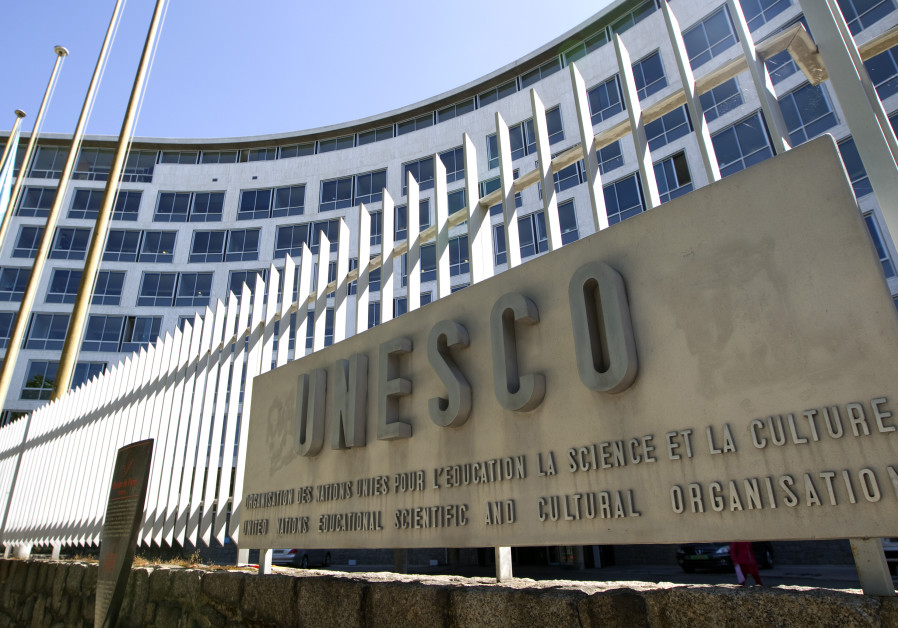
A general view of the UNESCO headquarters in Paris. (photo credit: REUTERS)

As the 11-day World Heritage Committee (WHC) in Baku winds down, it behooves us to review Jewish-related issues in the context of a UNESCO without the United States and Israel as members.

Of course, the perennial resolutions of Jordan and the Palestinians in Item 7 on “The Old City of Jerusalem and its Walls” and “Hebron/Al-Khalil with the Cave of the Patriarchs,” have become banners in the battlefield of heritage.

Their cause had, however, become tempered among the Arab group and the larger number of Muslim member states:

1) A Jordanian apparent fear of a Saudi takeover of the custodianship for Jerusalem’s holy sites and a Palestinian suspicion of US support for Riyadh, in the atmosphere of President Donald Trump’s US Embassy move to Jerusalem.

2) The Sunni/Shia split and the role of moderate states, such as Tunisia, conscious of a Palestine fatigue in their heritage demands.

3) The discipline of the host, Azerbaijan – a moderate Muslim friend of Israel, with a successful Jewish community absent of antisemitic threats.

In 2017, at the WHC in Krakow, I found myself in the company of a former mayor of Hebron. When I stood to speak, as an NGO delegate, I was handed a slip of paper advising that my neighbor had reportedly shot six yeshiva boys praying in the Machpela Cave. Such an invitation travesty could not happen in Baku.

I first participated in the year 2000 World Heritage Committee, held in Cairns, Australia, to speak of the discotheque opened by the mayor of Oswiecim, in Auschwitz-Birkenau.

After stating to the assembly: “I arrive from the hell of Auschwitz to the paradise of the Barrier Reef, to tell you of the ‘Auschwitz discotheque,’” I was stopped by the chair, who turned to the Polish delegate: “Mr. Ambassador, those two words in conjunction are unthinkable – close it!” Upon landing back in Europe, Warsaw had closed it. I felt pride in the WHC’s preservation priority.

Since 2011, that focus was overshadowed by constant Palestinian demands on Jewish heritage. Their official tentative list includes the Western Wall and the Qumran Dead Sea Scrolls.

The Palestinian people, indeed, have a right to celebrate their own heritage, but their narrative cannot be validated by the identification theft of Jewish heritage, with a roadmap for de-Judaization.

UNESCO had promised a policy of de-politicization by adopting a whitewash mechanism based on two procedures, so far applicable only to Israel (designated as “the Occupying Power”) and Jordan and the Palestinians (denoted as “the States Parties”).

1) “Consensus” – i.e., no debate and no vote, simply passing the Resolutions as presented.

2) “Annex” – i.e., all the nasty charges against Israel remain under the title of “Annex,” ignoring the principle that any sale or rental contract would consider “annexes” as an “integral part of the document.”

As the only voice present for the Jewish people, though non-binding, the Simon Wiesenthal Center views the very passage of such cosmetically-treated resolutions as offensive to world Jewry and to Judaism itself.

In any case, variants will be regurgitated not only at the WHC, but at the spring and autumn UNESCO executive boards and, this year, for endorsement by the General Assembly plenary in November.

A few days before the WHC opening in Baku, I attended a meeting of the “Committee on the Exercise of the Inalienable Rights of the Palestinian People” (CEIRPP) at the United Nations in Geneva.

A Palestinian official announced a series of measures in international organizations and principally UN agencies:

1) In the International Court of Justice (ICJ), against the United States’ transfer of its embassy to Jerusalem.

2) At the UN Security Council, to protest the opening of a tunnel under the City of David.

3) The Jerusalem municipal plans for a cable car to cross the Ben Hinnom valley for tourism. One should note the continuity of the status quo, as this would replace a rusty funicular used to feed Jews under Arab siege in the Old City in 1948. The cable-car became defunct during the succeeding 19 years of Jordanian occupation. The Palestinians were expected to protest the cable car at this WHC, but this was reportedly not acceptable under an Azeri chairman.

The last heritage site inscribed by this WHC went to Iraq for the conservation of Babylon – once a Jewish chapter, but no longer a Jewish problem.

Next year, when the WHC will be held in Fujian, China, perhaps the host’s first question will be: “What’s a Qumran?”

The writer is the Simon Wiesenthal Center’s director for international relations and its chief observer to UNESCO.


Zawartość publikowanych artykułów i materiałów nie reprezentuje poglądów ani opinii Reunion’68,
ani też webmastera Blogu Reunion’68, chyba ze jest to wyraźnie zaznaczone.
Twoje uwagi, linki, własne artykuły lub wiadomości prześlij na adres:
webmaster@reunion68.com


FUN FOR KIDS ON THE NEW MITZPE RAMON PUMP TRACK

FUN FOR KIDS ON THE NEW MITZPE RAMON PUMP TRACK

KKL-JNF


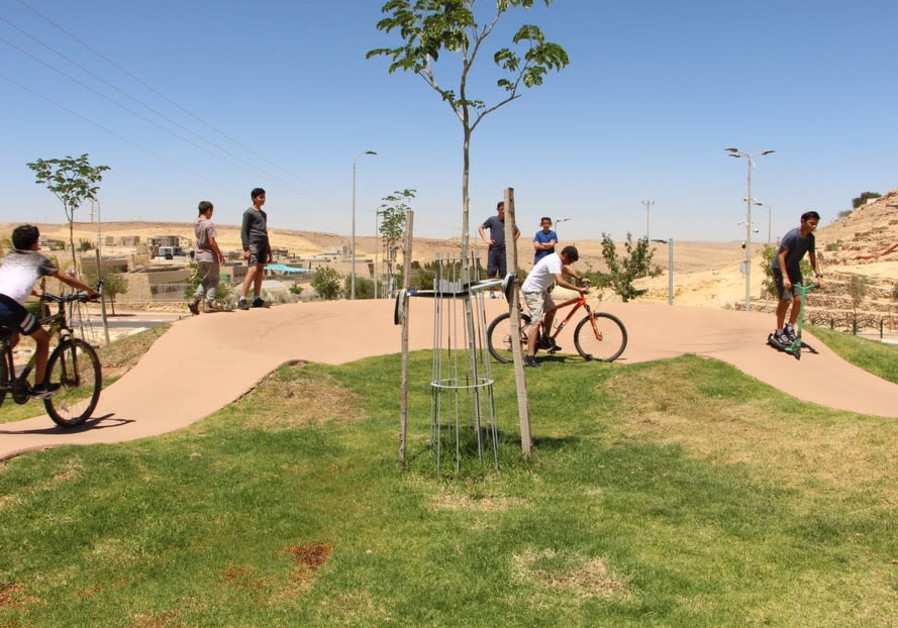
The new pump track in the desert town of Mitzpe Ramon was built with the support of KKL-JNF’s friends in Sweden, in memory of Mietek Grocher, Z”L.

Mitzpe Ramon Pump Track. (photo credit: YOAV DEVIR KKL-JNF)

The new bike park recently inaugurated in Mitzpe Ramon draws dozens of local children every day.  The park’s central feature is the pump track – a circular route of rollers (small banks) and bermed corners that cyclists can navigate using strategically timed body movements (‘pumping’) instead of pedaling.

“This park is an outstanding example of how local residents’ pride and sense of belonging can be strengthened,” said Mitzpe Ramon Mayor Roni Marom. “The park is located centrally in an area of town surrounded by magnificent views. People from all sectors of the population can meet up here and join in sporting and social activities that bring them together as members of a united community.”

This remarkable route was constructed with the support of KKL-JNF’s Friends in Sweden in memory of Mietek Grocher, a KKL-JNF Friend and a great lover of Israel. “When I come here to visit I can see my father standing before me, with a broad smile on his face,” said his daughter Miriam Grocher-Schildt, who had arrived for a tour of the park. “He was always full of the joys of life, and he loved children. After all, children are the future of the State of Israel and of the entire Jewish People.”

Mietek Grocher was a Holocaust survivor who devoted the rest of his life to telling young people in Sweden the story of his survival. As an enthusiastic Zionist, he supported a great many projects all over Israel before he died a year and a half ago, at the age of ninety-one. The Mitzpe Ramon Pump Track, his final venture, was completed with the help of Friends of KKL Sweden.


Zawartość publikowanych artykułów i materiałów nie reprezentuje poglądów ani opinii Reunion’68,
ani też webmastera Blogu Reunion’68, chyba ze jest to wyraźnie zaznaczone.
Twoje uwagi, linki, własne artykuły lub wiadomości prześlij na adres:
webmaster@reunion68.com