Archives

Holocaust Martyrs’ and Heroes’ Remembrance Day 2015

Holocaust Martyrs’ and Heroes’ Remembrance Day 2015

The Anguish of Liberation and the Return to Life: Seventy Years Since the End of WWII

http://www.yadvashem.org/yv/en/remembrance/2015/images/rem_day.jpg
Holocaust Martyrs’ and Heroes’ Remembrance Day

Holocaust Martyrs’ and Heroes’ Remembrance Day (Yom Hashoah in Hebrew) is a national day of commemoration in Israel, on which the six million Jews murdered in the Holocaust are memorialized. It is a solemn day, beginning at sunset on the 27th of the month of Nisan and ending the following evening, according to the traditional Jewish custom of marking a day. Places of entertainment are closed and memorial ceremonies are held throughout the country. The central ceremonies, in the evening and the following morning, are held at Yad Vashem and are broadcast on the television. Marking the start of the day-in the presence of the President of the State of Israel and the Prime Minister, dignitaries, survivors, children of survivors and their families, gather together with the general public to take part in the memorial ceremony at Yad Vashem in which six torches, representing the six million murdered Jews, are lit. The following morning, the ceremony at Yad Vashem begins with the sounding of a siren for two minutes throughout the entire country. For the duration of the sounding, work is halted, people walking in the streets stop, cars pull off to the side of the road and everybody stands at silent attention in reverence to the victims of the Holocaust. Afterward, the focus of the ceremony at Yad Vashem is the laying of wreaths at the foot of the six torches, by dignitaries and the representatives of survivor groups and institutions. Other sites of remembrance in Israel, such as the Ghetto Fighters’ Kibbutz and Kibbutz Yad Mordechai, also host memorial ceremonies, as do schools, military bases, municipalities and places of work. Throughout the day, both the television and radio broadcast programs about the Holocaust. In recent years, other countries and Jewish communities have adopted Yom Hashoah, the 27th of Nisan, to mark their own day of memorial for the victims of the Holocaust.

Holocaust Martyrs’ and Heroes’ Remembrance Day 2015 will be on Thursday, 16 April. The State opening ceremony will be held at Yad Vashem on Wednesday 15 April at 20:00.


twoje uwagi, linki, wlasne artykuly, lub wiadomosci przeslij do: webmaster@reunion68.com


My First Yizkor Service: A Lesson for the Living

My First Yizkor Service: A Lesson for the Living

By: Dr. Joel Verstaendig


“What the eyes miss, the heart sees” – H. Kagedan

It was the eighth day of Passover 2005. I was seated next to my father in the synagogue. This would be my first time in a Yizkor service. Heretofore I had been one of the lucky ones ; I had been blessed with two living parents, and as such, I was among those who privileged to leave the sanctuary prior to this solemn prayer.

Sadly that was no longer the case, as my dear mother had died. In retrospect I now realize I had been deluding myself into believing I would never have to say Yizkor. Unfortunately, that delusion was shattered, and a new chapter of my life was about to begin.

As a product of a yeshiva education I knew that Yizkor is one of Judaism’s most emotional and heart-wrenching prayers. We recall our loved ones who have died and recite the prayer that is meant to elevate the soul of the departed.

Intellectual knowledge and emotional understanding, however, are two vastly different experiences. As I tried to say the prayer, a series of emotions, thoughts, and memories flashed through my mind. I thought of my mother’s sparkling blue eyes, her unbridled devotion to her family, her charity work, and her culinary skills. There was something surreal about reciting Yizkor for my mother who was still very much alive in my mind.

There was another disturbing incongruity I found extremely puzzling. Yizkor is recited only four times a year: on Yom Kippur and on the Shalosh Regalim – Shemini Atzeret, Passover, and Shavuot. The Shalosh Regalim are meant to be joyous celebrations, as the Torah says, “And you shall rejoice in your Festival…and you will be only happy” (Deuteronomy 16:14, 15). So why do we recite Yizkor on these days? Furthermore, why is it always said on the last day of the holiday?

As the cantor solemnly intoned the start of Yizkor I found myself thinking, “What is going on here? Today is Yom Tov….I have a couple of days off from work…I am with my family and friends…I have delicious food to enjoy…I had been feeling happy and content. Why is Hashem requiring me to think about the death of my mother now? Why not recite Yizkor on a fast day like Tisha B’Av when I am already feeling miserable?”

I recalled that when I was a child, the 21st century seemed like the distant future that existed only in science fiction stories. Now, I found myself marveling at the speed with which life had passed. My mind flashed back to an incident that occurred in my adolescence. During the warm months of the year my family often spent Sundays and vacations at Bradley Beach, a small seaside town in New Jersey. The shore attracted many teenagers who were just beginning to experience the pleasures of coming of age. As a 16 year old, my future seemed endless.

Bradley Beach was also a favorite vacation spot for senior citizens who came to enjoy the ocean air and cool breezes. One evening a group of us teens were walking on the boardwalk, savoring our nascent sense of omnipotence and conducting ourselves with typical teenage swagger. Sitting in a gazebo nearby were a group of elderly people singing the songs of their youth. This struck us as silly. We were cool; our heroes were the Beatles, the Rolling Stones, and Bob Dylan. These “old” people were singing what we thought were ancient songs. We laughed and mocked them. One woman leered at us and said in a strong voice, “Just wait…someday, you’ll be old too!”

I still remember the emotions evoked by her stinging reprimand. I felt like I had been cursed – and even worse, I was so sorry to have hurt someone’s feelings.

Read more: My First Yizkor Service…

About the Author: Dr. Joel Verstaendig is a psychologist with over 30 years of clinical experience. He is an engaging public speaker whose presentations are informative, educational, and entertaining. He can be reached at drjoelv@aol.com or 516-933-6196. Visit his website: http://www.drjoelvpsychology.com


twoje uwagi, linki, wlasne artykuly, lub wiadomosci przeslij do: webmaster@reunion68.com


The ICC Has Decided Not to Prosecute ISIS for War Crimes

The ICC Has Decided Not to Prosecute ISIS for War Crimes

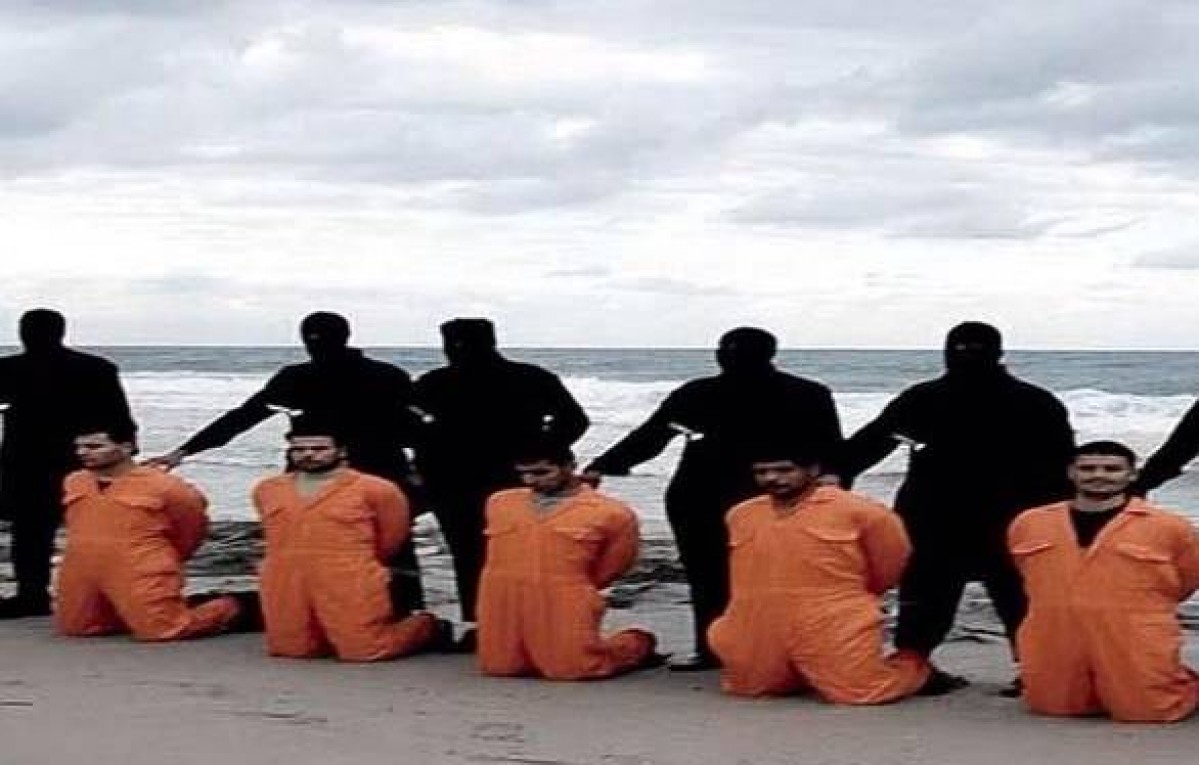
isis beheads 21 egyptian coptic christians

ISIS beheads 21 egyptian coptic christians

The International Criminal Court said on Wednesday that it would not yet open a probe into alleged crimes committed by the Islamic State group in Iraq and Syria, including genocide, as it lacks jurisdiction, AFP reports.

Iraq and Syria have not signed the ICC’s founding Rome Statute that would give the court jurisdiction, but the ICC could prosecute some of the thousands of foreign ISIS fighters who are nationals of countries that have signed up.

Crimes of “unspeakable cruelty” including mass executions, sexual slavery, rape, torture and mutilation have been reported and genocide alleged, chief prosecutor Fatou Bensouda said in a statement.
As a result, her office has been assessing the prospect of exercising “personal jurisdiction” over foreign ISIS fighters, including from Tunisia,

Jordan, Britain, France, Germany, Belgium, the Netherlands and Australia, she said.

However, the ISIS group is “primarily led by nationals of Iraq and Syria… thus, at this stage, the prospects of my office investigating and prosecuting those most responsible… appear limited.”

“I have come to the conclusion that the jurisdictional basis for opening a preliminary examination into this situation is too narrow at this stage,” Bensouda said.

The United Nations Security Council could refer the situation in Iraq and Syria to the ICC, as happened with Libya in 2011, Bensouda said, and countries with nationals who are ISIS terrorists could also launch their own prosecutions.

The prosecutor said in an interview in November that she was weighing bringing war crimes charges against Islamic State jihadist fighters, saying she had received files from several countries.

Islamic State terrorists have carried out a wave of abuses in areas they control in Iraq and Syria, including public beheadings, mass executions, enslavement and rape.

ISIS not under jurisdiction…but non-state PA is?

The ICC’s decision not to prosecute ISIS contrasts sharply with its decision to prosecute Israel for alleged “war crimes” in the Palestinian Authority (PA) – even though the latter is not technically a state.
But the move has also paved the way for the PA to bear the legal brunt of its terrorism against Israel – and the evidence and condemnations have accumulated.

Since the declaration, Shurat HaDin – Israel Law Center has already launched lawsuits against Abbas and Hamas leaders at the ICC.

Many have noted that by joining the ICC the PA has opened itself up to lawsuits – every missile fired on Israel by the PA’s unity partner Hamas, and indeed by PA chairman Mahmoud Abbas’s Fatah, constitutes a war crime.

Specifically, a Palestinian Arab source admitted to the possibility of the ICC bid backfiring while speaking to Maariv last week, noting “Palestinians can make a claim against the settlements, but it’s doubtful that a claim regarding the recent war in Gaza won’t bring about a counter-suit from Israel, which is preparing for this.”

“The Israelis have prepared stacks of paperwork on conduct during Operation Protective Edge, including claims of Hamas rocket fire and Palestinian groups shooting from schools and other civilian buildings. This could lead to a suit against Hamas leaders who control the Gaza Strip,” the source added.


twoje uwagi, linki, wlasne artykuly, lub wiadomosci przeslij do: webmaster@reunion68.com


High time for Poland to confront its past

High time for Poland to confront its past

By DANIEL SCHATZ


Print Edition

Photo by: REUTERS

No viable solution has yet been found to resolve the critical issue of restitution for the Polish victims of the Holocaust nor the 1968 pogrom.

My childhood was full of magical, well-known tales about characters like Tevye the Milkman, as well as tales of love and joy and everyday life in the shtetls of Poland, told with warmth and wit by my grandparents. Some of these characters became my childhood heroes.

As a little boy yet unaware of Auschwitz, I wondered about my grandmother’s sadness: Even when telling funny stories, she seemed to laugh with one eye and cry with the other. I don’t remember when I found out that all the characters, so alive in these vivid stories, were murdered in Auschwitz.

In recent years I have had several opportunities to visit former Polish shtetls, including the town of Zamosc, where my grandmother’s family lived before the Holocaust. These villages are places where Jewish memory has been turned into history. On a one-lane street leading to a small house on Ulica Gesia in Zamosc, I found the house where the Zalcman family once lived. It was from this house that my relatives were deported to the death camp of Belzec, just a few dozen kilometers away, in July 1942.

On another street in Katowice, I found the house where my grandparents found refuge after surviving the war in Stalin’s gulags. From here, they were expelled in 1968 following the Polish communist government’s anti-Semitic campaign. These events resulted in the forced exodus of the country’s last remaining 20,000 Jews, a mere 25 years after Nazi Germany had carried out the Holocaust on Polish soil.

There are no Jews in Zamosc and no sizable community in Katowice today. No sign of a once-thriving Jewish life is present. The only memories left of Tevye the Milkman and my own family’s legacy – as well as thousands of other Jews – are their seized and nationalized properties.

It is estimated that there are more than 170,000 private properties held in Poland that were wrongfully seized from Jewish victims of the Holocaust and communist terror. The properties have an estimated value of billions of dollars, according to a comprehensive report drawn up by experts from the business sector, nonprofit and nongovernmental organizations at the request of the Israeli government.

Despite the 70th anniversary of the liberation of Auschwitz, no viable solution has been found to resolve the critical issue of restitution for the Polish victims of the Holocaust nor the 1968 pogroms.

Poland was among the main victims of Nazi Germany: Six million of its citizens – half of them Jews – were murdered by the Germans. Since regaining its independence in 1989, joining NATO and entering the European Union, Poland has established itself as a model for free and democratic states in Eastern Europe and throughout the world. The free Polish Republic has established exceptionally close and constructive diplomatic relations with Israel and the United States.

Poland’s reputation as a force for moral good would be made greater by reaching a just settlement, acceptable to all parties, on the issue of restitution of private property seized from Polish Jews.

The president of the Polish Republic, Bronislaw Komorowski, stated during the opening of the Museum of the History of Polish Jews in Warsaw that one of the central themes in Poland’s drive to freedom was to put right the account of history that had been corrupted during the communist era. As stressed by the country’s former Foreign Minister Wladyslaw Bartoszewski, every post-1989 government of independent Poland has discussed the issue of property restitution, but lacked the determination or political will to finalize and pass these legislative efforts.

Whereas most Central and Eastern European countries have adopted legislation to provide for the restitution of or compensation for confiscated property, Poland still stands out for its failure and lack of political will to fulfill and recognize its responsibility to the victims. Poland must revise this approach by passing comprehensive legislation providing for the complete restitution of assets stolen by the Nazis and the Communist governments. The advanced age of remaining Holocaust survivors makes the matter all the more urgent and the need to act all the more pressing.

The international standards are clear. The overriding principle that emerged in the immediate postwar period in Western Europe and was enacted in Allied decrees and legislation that has continued to this day (see the German Property Law 1990) is that property that was taken from Jewish owners and their heirs must be returned, with interest, to their former Jewish owners. A wrong was committed; the wrong must be remedied.

The European Convention of Human Rights (1953), which the Republic of Poland has ratified, states in Article 1 that “Every natural or legal person is entitled to the peaceful enjoyment of his possessions.” The convention makes it absolutely clear that “no one shall be deprived of his possessions except in the public interest and subject to the conditions provided for by law and by the general principles of international law.”

These principles were reinforced in the Terezin Declaration of June 2009, ratified by 46 countries including Poland, which established clear guidelines for the restitution of private and communal assets forcibly seized during the Holocaust. The declaration stresses the utmost importance of resolving “private property claims of Holocaust victims concerning immovable property of former owners, heirs or successors, by either in rem restitution or compensation, as may be appropriate, in a fair, comprehensive and nondiscriminatory manner consistent with relevant national law and regulations, as well as international agreements.”

The remaining ghosts of the past must be fought and old offenses must be compensated. It is high time that Poland honors the memory of those who were murdered during the Nazi tyranny, and brings justice to the survivors and their heirs by rectifying the wrongful expropriations of property by the Nazi and Communist regimes.

By intensifying efforts to return the confiscated properties to their rightful owners and by honoring the memory of the past, we safeguard the fundamental principles of tolerance, freedom and democracy – and help ensure that no child in the future will have to learn his childhood heroes were annihilated.

* The author is a political scientist, writer and expert on European politics. He has served as a Visiting Fellow at Harvard University, Stanford University and the Hebrew University of Jerusalem. [Daniel Schatz – is the son of Frida Schatz]


twoje uwagi, linki, wlasne artykuly, lub wiadomosci przeslij do: webmaster@reunion68.com