
Archive | 2026/10/11

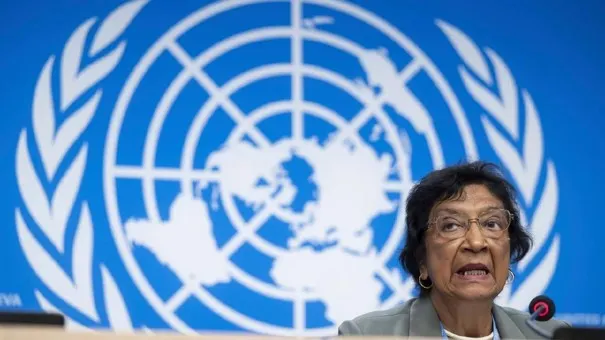
Navi Pillay – groteskowy wybór do Pokojowej Nagrody Nobla


Navi Pillay – groteskowy wybór do Pokojowej Nagrody Nobla

Phyllis Chesler


Pismo nie jest już na ścianie ani nawet na niebie. Teraz jego przesłanie rozbrzmiewa i oślepia blaskiem neonów. Przemawia do wszystkich, którzy mają uszy, by słyszeć. Cały świat jest zdeterminowany, by wymordować Żydów. Jak już wielokrotnie zauważałam, i to od dawna, mamy do czynienia z czymś większym niż nazistowskie ludobójstwo, które ograniczało się do jednego wielkiego kontynentu. Kupiona i sowicie opłacana propaganda ostatnich pięćdziesięciu–sześćdziesięciu lat wydała swoje trujące owoce na całym świecie – zarówno w internecie, jak i na ulicach, w mediach i na uczelniach, w polityce i w tym, co uchodzi za kulturę. Żydzi zostali szczelnie otoczeni ludobójczą nienawiścią, opartą na fałszywych oskarżeniach o mord rytualny.

Izrael nie dopuścił się ludobójstwa w Strefie Gazy, nie zagłodził mieszkańców Gazy na śmierć – liczba ludności Strefy Gazy wzrosła. Izrael nie jest państwem apartheidu – natomiast islam jest największym praktykującym apartheid ze względu na płeć i religię, największym kolonizatorem na świecie. Właśnie o tym piszę od dwudziestu pięciu lat – a może nawet znacznie dłużej. Niewiele to zmieniło. Podobnie jak wszyscy inni, po prostu nie dysponowałam wystarczająco potężną platformą, co wymagałoby poważnego finansowania.

No dobrze – i oto znaleźliśmy się w tym miejscu. Jeśli jeszcze nie otrzeźwiły mnie dostatecznie skrajnie zajadłe propalestyńskie demonstracje, które odbyły się na całym świecie w trzecią rocznicę 7 października 2023 – tak niedługo po długiej owacji, jaką zgotowano filmowi „NAZA” na Festiwalu Filmowym w Wenecji, i tuż po wypaczonym, pełnym nienawiści oświadczeniu burmistrza Nowego Jorku Mamdaniego z 7 października – to proszę, oto czym uraczono nas dzisiaj.

Pokojową Nagrodę Nobla przyznano nie komu innemu, jak Navanethem „Navi” Pillay, nienawidzącej Izraela i Żydów, za jej „wysiłki na rzecz promowania pokoju i prawa międzynarodowego”. Kiedy ogłoszono tę decyzję, Pillay powołała się na swój raport dotyczący Strefy Gazy, w którym to, co się tam dzieje, określono mianem „ludobójstwa”.

Zebrani wiwatowali.

W sprawie Rwandy Pillay przyczyniła się do ustanowienia zasady, zgodnie z którą gwałt, przemoc seksualna i propaganda mogą być ścigane jako ludobójstwo i zbrodnie przeciwko ludzkości.

Ale, jak to wyraźnie daje do zrozumienia: nie wtedy, gdy ofiarami są Żydzi lub Izraelczycy.

A jakie było oficjalne stanowisko Pillay w ONZ? Przewodniczyła Komisji Śledczej ONZ ds. Okupowanego Terytorium Palestyńskiego. Pillay już wcześniej porównywała Izrael do Republiki Południowej Afryki. Wysuwała wobec Izraela fałszywe oskarżenia o zbrodnie wojenne, a nigdy nie potępiła Chin ani Syrii. (Proszę przeczytać znakomity, choć przerażający artykuł w „Tablet” o handlu organami pobieranymi od więźniów politycznych w Chinach – w tym od członków Falun Gong).

Pisałam o niej w 2022 roku dla „Algemeinera” w artykule zatytułowanym „Wieczne życie oszczerstw o mord rytualny wymierzonych w Żydów” (The Eternal Life of Blood Libels Against the Jews). Pisałam o niej ponownie w 2023 roku dla ISGAP w artykule zatytułowanym „Reakcja na okrucieństwa Hamasu pokazuje, że ruch feministyczny stracił kompas moralny” (Response to Hamas Horror Shows the Feminist Movement Has Lost Its Compass). Cytowałam Anne Bayefsky, która nazwała dochodzenie ONZ prowadzone przez Pillay „pogromem Pillay” (Pillay’s Pogrom). Pisałam o niej również dla Investigative Project on Terrorism.

Media żydowskie i izraelskie potępiły przyznanie tej nagrody. Natomiast światowe media głównego nurtu – a raczej lewicowego nurtu – takie jak CNN, ABC, France 24 czy „The New York Times”, głośno i z dumą ją poparły.

No cóż, spójrzmy prawdzie w oczy: tę nagrodę przyznano prezydentowi Obamie, zanim jeszcze objął urząd. Co ważniejsze, przypomnę wszystkim, że w 1998 roku portugalski pisarz José Saramago otrzymał Literacką Nagrodę Nobla. Oto, co napisał w „El País”:

„Mentalnie odurzeni mesjanistycznymi marzeniami o Wielkim Izraelu, który wreszcie urzeczywistni ekspansjonistyczne sny najbardziej radykalnego syjonizmu, skażeni potworną i głęboko zakorzenioną «pewnością», że w tym katastrofalnym i absurdalnym świecie istnieje naród wybrany przez Boga, a zatem wszelkie działania obsesyjnego, psychologicznego i patologicznie wykluczającego rasizmu są usprawiedliwione; wychowani i ukształtowani w przekonaniu, że każde cierpienie, jakie zadano, zadaje się lub zada się komukolwiek innemu, zwłaszcza Palestyńczykom, zawsze będzie mniejsze od tego, którego sami doświadczyli podczas Holokaustu, Żydzi bez końca rozdrapują własną ranę, aby nadal krwawiła, aby nigdy się nie zagoiła, i pokazują ją światu niczym sztandar”.

Saramago potępiał judaizm jako religię, ale potępiał go również jako kulturę, rasę i byt polityczny. Zaprzeczał historycznej rzeczywistości antysemityzmu. Saramago postrzega siłę żydowskiej pamięci jako diabelską sztuczkę, teatralny tik, który doprowadza go do wściekłości i budzi w nim odrazę.

Polityczne nastawienie Komitetu Noblowskiego jest zdumiewająco oczywiste.

A jeśli chodzi o Pillay: Emma Reilly, sygnalistka ONZ, która pracowała pod kierownictwem Pillay, twierdziła, że biuro Pillay przekazało władzom w Pekinie nazwiska co najmniej pięćdziesięciu chińskich dysydentów. Reilly uważa Pillay za „współwinną ludobójstwa Ujgurów”.

I oto nasza najnowsza laureatka Nagrody Nobla.


Link do oryginału:

Phyllis’s Newsletter
Navi Pillay–A Grotesque Choice For the Nobel Peace Prize
The handwriting is no longer on the wall, nor even on the sky. It is now blaring its message in neon lights. It is talking to all those who have ears to hear. The entire world is determined to kill the Jews. As I’ve noted before, long ago, and many times, this is bigger than the Nazi genocide which was confined to one large continent. The bought and pai…
Read more

Phyllis’s Newsletter, 9 października 2026

Phyllis Chesler

Emerytowana profesor psychologii, znana amerykańska feministka, autorka wielu książek, w tym An American Bride in Kabul i A Politically Incorrect Feminist.


Zawartość publikowanych artykułów i materiałów nie reprezentuje poglądów ani opinii Reunion’68,
ani też webmastera Blogu Reunion’68, chyba ze jest to wyraźnie zaznaczone.
Twoje uwagi, linki, własne artykuły lub wiadomości prześlij na adres:
webmaster@reunion68.com



The Kids Are Not All Right in France


The Kids Are Not All Right in France

Marc Weitzmann


The student riots expose a republic with discredited institutions, where no one appears to be in control

Students carry out a blocking protest at the Cesar Baggio secondary school in Lille, on September 29, 2026 /  Photo by Sameer AL-DOUMY / AFP via Getty Images

The new star of French media is a student at Jacques-Decour High School in Paris’s ninth arrondissement by the single name of Elwan.

Elwan rose to prominence this month thanks to a two-minute interview with a far-right-wing journalist/influencer that went viral, surpassing 8 million views on X that day (the edited versions totaled more than 11 million views on TikTok). In it, people did not just see a student articulating the rioters’ demands and addressing classical left-wing political and social issues while mocking a political opponent. They saw a kid with perfectly coiffed blond hair, his keffiyeh tucked so neatly into his collar as to appear like a discreet, almost invisible scarf—above all, a kid whose French was impeccable, even slightly archaic. On X, he was soon nicknamed Antoine Doinel, after the adolescent hero of François Truffaut’s movie Les 400 Coups, released in 1959. Others compared him to the well-read students of the Sorbonne of May 1968—an era when enrollment in literary and philosophy departments across the country more than doubled. In other words, the main reason for Elwan’s sudden fame is not that he embodies the zeitgeist of the current riots; it’s that he doesn’t.

This is a country where no one retains respect for the outgoing president or for the rusted institutions of the Fifth Republic and where, whoever he is, the next president-elect eight months from now will have won by default. But it’s a country where La Bataille de Gaulle—the patriotic, nostalgic, anti-American two-part biopic on the exploits of the general of the same name during World War II—has attracted an audience of nearly 6 million despite being neglected by the media. (The movie is coming out in the United States in November.)

The French high-school youths wake up every morning in a country that, at this point, does not appear to be governed at all.

After WWII, it was De Gaulle, with the help of his minister of culture, the writer André Malraux, who managed to build the fiction according to which France stood among the winners of the conflict, on equal footing with the United States, the United Kingdom, and the USSR, despite having been led for four years by a collaborationist, pro-Nazi government. And it was De Gaulle who founded the Fifth Republic one year before Les 400 Coups was released. The year 1958 was also the beginning of the Algerian war, the outcome of which would confirm five years later the inevitable end of the French empire; the ensuing beginning of France’s “Arab policy” to replace it and secure oil and gas supplies from the now former colonies; and the domestic counterpart of that new diplomacy that would come to be known as “the immigration policy.”

And here we are, 60 years later.

France today counts more than 3 million college students—compared to 500,000 in 1968—but according to the latest data released by the Organisation for Economic Co-operation and Development last September, these students have achieved the lowest scores ever recorded since the survey began 26 years ago. (Since 2022, math scores have dropped 16% and reading comprehension 18%.) According to the OECD, this decline is not attributable to immigration per se. It affects all social backgrounds, good students as well as bad, while the gap between students from immigrant backgrounds and others has remained stable since 2015.

The high-school graduation rate (the baccalauréat instituted by Napoleon in 1808) is nearly 90%, an absurd percentage that calls its value into question, to say the least. In any case, it no longer serves as a screening mechanism to selective higher-education programs for the working and lower-middle classes. In recent years, that process has shifted to Parcoursup, a web portal set up by the government, the opacity of which is a target of the current protesters. Other targets involve too-large class sizes and the crumbling infrastructures of many high schools. Some lack proper heating in winter or air-conditioning during heat waves; some are infested by rats and cockroaches. In some, classes go for months without teachers. None of those claims can be disputed. They are also nothing new. The situation has been dire for years, but when the national debt exceeds $4 trillion (119% of GDP), and when annual interest payments exceed $80 billion—making them the most expensive item in the national budget, before defense and before education—it can only get worse.

Hanging over everything is the prospect of the coming presidential elections, a time of promises that everybody knows won’t be kept. “There is a direct connection between the French ritual of the presidential election in the Fifth Republic and the debt,” says political scientist Dominique Reynié, head of the think tank Foundation for Political Innovation (Fondapol):

The Fifth Republic imposes a presidential regime in which every candidate to the presidency has to fit into a lyric narrative according which once elected, he and he alone will be able to restore a strong welfare state that will accomplish miracles. This worked as long as the country was prosperous, and at the cost of a debt that was swept under the rug year after year. But in times of crisis or change, like today, this presidential election ritual becomes a poison, a poison that can only increase both ineffectual spending, in the short term, and a general distrust toward the political system in the long run.

The less this presidential regime worked, the more it demanded a growing, almost magical narcissism on the part of successive candidates and presidents—a toxic dynamic that, since the early ’80s, has undermined both the right and the left. The end stage of that narcissism today is, of course, President Emmanuel Macron. He came to power in 2017, convinced that his political genius as an outsider had destroyed the system—when, in fact, his victory was simply the signal that the system was dead. During his term, he has had time to realize his mistake, since his hubristic decision to call snap parliamentary elections in the summer of 2024 condemned the rest of his presidency to complete impotence and brought parliamentary life to a standstill. (Unsurprisingly in this context, neither of the two French political parties that remain alive as of this writing has ever been in power: Marine Le Pen’s far-right Rassemblement National and Jean-Luc Mélenchon’s far-left La France Insoumise.)

As a result of this political and economic wreckage, the French high-school youths wake up every morning in a country that, at this point, does not appear to be governed at all, only to go to decaying schools to pass exams whose value is at best questionable. They live with the memories of the shutdown, face the prospect of worthless diplomas in an artificial-intelligence-managed world, and are under the threat of being labeled illiterate. (According to the essayist and French teacher Mathieu Roger-Lacan, one-third of the population qualifies as such; like everywhere else, illiteracy is especially strong among the youth, where the fall of reading comprehension diagnosed by the Programme for International Student Assessment test has been aggravated since the rise of social networks and cell phones by a growing difficulty to focus on lengthy texts.) On top of all this, cell phones were banned in high schools in early September of this year. According to an anonymous teacher in a paper published by the revue Le Grand Continent, current riots may contain “a reflex” typical of an addict who craves his fix and becomes restless because he hasn’t gotten his dose; it’s also possible that, by looking away from the feed, the French high-school student has opened his eyes to a situation that suddenly seemed unbearable to him.

Perhaps. But does any of this fully explain the 6,600 persons in custody or the 85 professors and 761 cops wounded by students (against 261 students wounded by the police)? Or the burning down of several schools, including the Nelson Mandela high school of Nantes, a brand-new establishment rebuilt, at a cost of several million euros, to meet environmental standards? The wrecking of a fire truck? The pursuit and beating of a policewoman by five or six youths to cries of “Kill that bitch! By Allah kill her!” Does it explain in any way the 15-year-old Muslim kid—who is attending a high school in the seventh arrondissement of Marseille as a sophomore and pursuing a vocational baccalaureate in “Support, Care, and Personal Services”—who, during a riot in Marseille on Oct. 1, walked calmly toward a woman trying to stop protesters from destroying a bus station and, using an aerosol can as a flamethrower, tried to burn her face? (Identified by the police, then arrested and charged with a “barbaric act,” the kid—by all accounts a collected, calm adolescent with no previous police record—has not tried to hide or deny the fact. To the victim asking “Why? Why?” he answers that he does not know.)

And what about the “Al Aqsa flood” slogan tagged on the wall of the Sorbonne? What about the obsession with the “Free Palestine” slogan, the “We’re all the children of Gaza,” heard in each and every demonstration? Can it illuminate the constant Palestinian, Lebanese, and Algerian flags deployed during most of the riots between Oct. 1 and Oct. 7, which then receded after Oct. 8?

What about, above all, the rap song in praise of several terrorists that can be heard in three locations, on three different days, sung by three different groups of young demonstrators? Originally written and sung by a masked guy called Boto700, whose clip on X and TikTok totaled more than 100,000 views, the words go like this: “Like Mohammed Merah, dodge the cameras. Bataclan—I shot it for free, manhunt, Salah Abdeslam. Dude, in hell, there’s a bounty on my head; I’m on a rampage like a hellhound. Tell your rapper to let me do my thing—woe to him if he doesn’t cooperate, dude, I’ll turn him into an Adolf Hitler.”

Mohammed Merah is the man who killed Jewish children at the Ozar Hatorah school in Toulouse in 2012; Salah Abdeslam is the only surviving attacker from the Bataclan massacre. The kids who are seen yelling this song in three different videos in a state of exaltation were barely born when these killings happened. All of them appear to be white.

Since Oct. 1, Al Jazeera+, the TikTok account of the Qatari channel, has brought video support to the demonstrations. So has La France Insoumise (LFI), directly and through several student groups with connections to the Muslim Brotherhood embedded in high schools and junior highs. These include La Jeune Garde, of which several members were accused of the murder of a far-right activist in Lyon last winter, and Espoir Dignité Résistance (Hope Dignity Resistance), a group that “under the guise of fighting Islamophobia, has deliberately chosen to engage in violent activism to promote its ideology,” according to the Ministry of the Interior.

While 48% of French opinion supports the movement, 68% condemn the violence. Eight months away from the presidential elections, LFI’s leader Mélenchon let La Jeune Garde and EDR act as they please yet issued several public statements calling for “responsibility,” “discipline,” and “non-violence.” Whether an agreement has been made between LFI and crypto-Islamist groups to let them freely celebrate Oct. 7 inside of the demonstrations can only be a matter of speculation. But it’s certainly hard to miss the prevalence of Palestinian flags during the first week of October.

That said, is LFI or anyone else really in control of what’s going on? If so, how do we explain the aerosol incident in Marseille, or even the rap song? When the OECD states that, despite a general decline in literacy, the gap between students from immigrant backgrounds and others has remained stable since 2015, doesn’t this imply a certain amount of what we might call cultural permeability?

One could argue that France has been in a chronic state of riot since the Clichy-sous-Bois riots of 2005—when two teenagers were electrocuted inside an electrical substation while trying to escape the police. What is new here is the weirdness, the bizarre gap between the demands of the students and what can be so often seen on the ground. From that viewpoint, one of the most remarkable videos is also one of the least violent: It shows three LFI representatives, wearing their republican scarves, throwing bottles of water and sandwiches over a police cordon that blocks the street on which Sciences Po students hold a sit-in. Judging by these dramatic images, the student demonstrators are trapped by the cops, barred from drinking or eating. Yet no one seems to realize that the other side of the street is open; the students are perfectly free to walk to the next café. It’s as if the French have become unable to see what’s going on around them, blinded even to the streets they know best.

This is why young Elwan plays so well. LFI’s creed since 2023 is what Mélenchon calls “La Nouvelle France,” the New France: a post-white country, so to speak. Although he last week met with Mélenchon for the first time and professes to admire him, Elwan appears to be his antithesis—the Antoine Doinel of the new revolution. At last, someone we can recognize! At last, someone we can truly identify with! Well, according to a source at his high school, during the fall of 2024, Elwan was involved in a hate incident and sanctioned for it. As best as I could reconstruct it, the incident went like this: A student showed a picture of Israeli Prime Minister Benjamin Netanyahu and his wife, Sara; another student commented that Sara Netanyahu “really looked like an old Jew,” to which a third student claimed the remark was antisemitic. During the ensuing argument, Elwan intervened to say “we have a right to hate 5% of this country’s population.” The number is wrong (Jews barely account for 0.5% of the French population), but still. Perhaps the 21st-century version of Antoine Doinel may not be a figure we can identify with after all.


Marc Weitzmann is the author of 12 books, including, most recently, Hate: The Rising Tide of Anti-Semitism in France (and What It Means for Us). He is a regular contributor to Le Monde and Le Point and hosts Signes des Temps, a weekly public radio show on France Culture.


Zawartość publikowanych artykułów i materiałów nie reprezentuje poglądów ani opinii Reunion’68,
ani też webmastera Blogu Reunion’68, chyba ze jest to wyraźnie zaznaczone.
Twoje uwagi, linki, własne artykuły lub wiadomości prześlij na adres:
webmaster@reunion68.com


Expert Discusses ‘Moral Obligation’ of Documenting Oct. 7 Sexual Crimes for the Record


Expert Discusses ‘Moral Obligation’ of Documenting Oct. 7 Sexual Crimes for the Record

Ailin Vilches Arguello


A woman visits the site of the Nova music festival, where partygoers were killed and kidnapped during the deadly Hamas-led Oct. 7, 2023, attack, on the third anniversary of the attack, near Reim, southern Israel, Oct. 7, 2026. Photo: REUTERS/Ronen Zvulun

As the world this week marked the third anniversary of the Hamas-led invasion of and massacre across southern Israel on Oct. 7, 2023, the fight to preserve the humanity, dignity, and historical truth of the victims remained as urgent as ever, according to an expert who documented the gruesome sexual violence perpetrated during the onslaught.

Dr. Cochav Elkayam-Levy — an expert in international law, a recipient of the 2024 Israel Prize, and the founder and chair of the Civil Commission on October 7th Crimes Against Women and Children — reflected on the lasting impact of the atrocities and the ongoing fight for truth, justice, and recognition for the victims in an exclusive interview with The Algemeiner.

“Oct. 7 has not left me for a single day,” Elkayam-Levy said. “For me, Oct. 7 is a day of mourning, but also a day of moral clarity. It reminds us that remembrance cannot be passive. To remember is to act.”

She emphasized that before they became statistics, reports, or legal evidence, the women and children murdered or taken hostage were individuals with lives, voices, families, and futures. For three years, the commission has aimed to carry on the voices of the survivors and those silenced forever. Yet, as Elkayam-Levy noted, the world still struggles to grasp the inner dynamics of this specific form of terror.

“This was not only an attack on individuals,” she explained. “Women and children were targeted in ways meant to destroy families, communities, and the most basic sense of human safety. The violence was physical, psychological, sexual, and symbolic. It was meant to humiliate and to leave wounds that continue long after the immediate attack or captivity ends.”

“And I think the world still does not know how to respond to this,” Elkayam-Levy continued. “We do not yet have effective enough legal, humanitarian, or institutional tools for dealing with these kinds of crimes.”

The publication of the groundbreaking report “Silenced No More” — which documented the systemic weaponization of sexual violence — created a crucial turning point, shifting the conversation from denial toward evidence and responsibility. Followed by the report Kinocide: Uncovering the Weaponization of Families on October 7, 2023, the Commission established an unprecedented legal and historical framework.

According to the commission’s report, 92 women and girls were taken hostage during the Oct. 7 atrocities, including from southern Israeli communities, the Nova Music Festival, and nearby military bases. Of them, 80 were later released, seven were murdered during their abduction, and five were killed in captivity. At least 41 mothers were among those abducted, many enduring the unimaginable trauma of being separated from their children.

Children were among the victims, including 21 girls and 13 boys aged 18 or younger who were later released. Two infant boys, Ariel Bibas, four, and nine-month-old sibling Kfir, were murdered in captivity after being abducted alongside their mother, Shiri. Their deaths remain a heartbreaking reminder of the brutality inflicted on families on that day.

Among these tragic accounts, the report highlighted the harrowing story of a young woman fleeing the Nova music festival grounds who sought shelter in a roadside area, where survivors’ and forensic testimonies detailed how she was subjected to horrific sexual assault and execution alongside her peers.

Another account detailed a mother in a southern border community killed in front of her children after enduring brutal abuse, with the attackers utilizing the family’s digital devices to transmit the atrocity in real time to terrify loved ones.

A third testimony focused on female captives who endured prolonged physical and psychological degradation during weeks underground in Gaza, whose post-release evaluations reveal the lingering, systematic imprint of terror designed to break human dignity.

Three years later, institutions have still failed to respond adequately to such crimes, with widespread hesitation and a persistent reluctance to fully acknowledge the reality and severity of the atrocities.

“The silence in the early weeks after Oct. 7 was devastating,” Elkayam-Levy told The Algemeiner. “Institutions that should have stood immediately with victims of sexual violence often spoke around them. The atrocities were contextualized, relativized, or doubted.”

“That is a moral failure,” she continued. “Sexual violence must never depend on the identity of the victim.”

This pattern of institutional shortcomings has been particularly evident in tensions with the United Nations. Relations sharply deteriorated after Israel severed ties with the UN Secretary-General’s office following the inclusion of Israeli entities on a UN blacklist regarding conflict-related sexual violence. 

Israeli authorities condemned the decision as biased, saying they had submitted extensive documentation and counter-evidence and invited UN officials to visit the sites before the organization proceeded with the listing.

The controversy has fueled criticism of what Israeli officials and advocates see as a double standard in the UN’s treatment of Israel and Hamas. While the UN has listed Hamas among parties credibly suspected of committing rape and other forms of sexual violence, critics argue that the international organization’s initial hesitation and subsequent handling of the allegations have hindered accountability for the Oct. 7 atrocities.

Despite these institutional roadblocks, the commission’s archive stands as a lasting record of the atrocities and a vital resource for the Jewish people, preserving evidence for future criminal proceedings and ensuring the events are not erased from history. According to Elkayam-Levy, it offers a secure place for survivors, families, and witnesses to share their testimonies and preserve their memories, helping lay the groundwork for justice and safeguarding the truth for future generations.

“Our responsibility now is to protect it, bring it to broader audiences, and create the foundations through which Oct. 7 will be remembered by future generations,” she said.

“We are building the memory of tomorrow: ensuring that the evidence, testimonies, and stories preserved today become a foundation for justice, education, reparations, prevention, and a lasting moral legacy,” she continued.

The passage of time has not diminished the need for recognition, accountability, and compassion for those whose lives were forever changed by the attacks.

“Nothing can repair what was taken from them,” Elkayam-Levy said. “But I hope they feel that the world has not forgotten them, that their loved ones are not reduced to numbers, and that their stories are being carried with dignity.”

Looking ahead, she emphasized that even amid such atrocities, acts of compassion and solidarity offer hope, underscoring the power of truth and the importance of choosing to stand up for what is right.

“We cannot prevent future atrocities if we deny or look away,” Elkayam-Levy said. “We must carry this responsibility with courage. It can become a legacy that helps build a different future.”


Zawartość publikowanych artykułów i materiałów nie reprezentuje poglądów ani opinii Reunion’68,
ani też webmastera Blogu Reunion’68, chyba ze jest to wyraźnie zaznaczone.
Twoje uwagi, linki, własne artykuły lub wiadomości prześlij na adres:
webmaster@reunion68.com