Archives

Jews Blamed for Mosque Fire, Report Reveals Electrical Cause

Jews Blamed for Mosque Fire, Report Reveals Electrical Cause

Lori Lowenthal Marcus


Damage from an electrical fire in a mosque in the town of Mughayer, near Ramallah, on Nov. 12, 2014.

Damage from an electrical fire in a mosque in the town of Mughayer, near Ramallah, on Nov. 12, 2014./Photo Credit: YouTube

Media malfunction: Report determines November mosque fire was caused by electrical malfunction, not “Jewish settlers.”

A mosque in the disputed territories town of Mughayer near Ramallah suffered severe fire damage back in November. The word out immediately was that Jews were responsible. Not just any Jews, of course, but those evil extremist “settlers.”

The mayor of Mughayer, Faraj al-Nassan, told the Associated Press that the Jews were to blame for the fire.

“Only Jewish settlers would do this,” he said.

He neglected to mention any other possibility, including the actual one, the electrical malfunction of a space heater.

Nassan made the statement to the AP, which dutifully reported it, and then the unverified rumor ossified firmly into fact, showing up in dozens of media sources throughout the world.

Yahoo! News posted an AP photograph of an Arab man holding a heavily burned Quran, describing the fire as having resulted from “an attack” against the mosque which “ignited a fire that destroyed its first floor.” The Yahoo! caption included the village’s mayor “blaming Jewish settlers for the attack.”

It wasn’t only an understandably distraught town mayor who blamed the Jews. Reports from villagers blaming Jews were not mere suppositions, they were stated as fact.

The fire in Mughayer took place during a spate of terrorist attacks against Israelis. Many media outlets happily invoked a standard trope known as the “cycle of violence,” where harm to anyone or anything on both sides are presented as similarly motivated acts of hatred.

But as the Committee for Accuracy in Middle East Reporting in America (CAMERA) revealed on Tuesday, Dec. 16, an investigation of the Mughayer mosque fire conducted by Israeli firefighters determined that “the cause was actually an electrical malfunction.”

The day of the fire, the far-left and popular Israeli paper Haaretz reported that local Arabs “claimed that the mosque had been set ablaze by arsonists from a nearby Jewish settlement.”

Haaretz has since put out a story acknowledging the new evidence, “Mosque blaze was electrical fire, not arson, firefighters say.”

CAMERA’s report provides examples of news outlets which attributed the blame for the fire on “Jewish settlers.” It also describes its efforts to provide to those outlets the results of the investigation, and the determination that there were “no traces of flammable materials or liquids, nor was any racist graffiti found at the scene. The electric fire is believed to have been caused by a space heater. The second floor of the mosque suffered extensive damage.”

Some of those outlets have since issued corrections, such as Haaretz and the AP. Others have remained silent in the face of proof that they provided their readers with a false indictment of Jews based on no hard evidence. Those include Agence-France Presse, the Los Angeles Times and Reuters.


twoje uwagi, linki, wlasne artykuly, lub wiadomosci przeslij do: webmaster@reunion68.com


The forgotten Jews who fought the Nazis

The forgotten Jews who fought the Nazis

Itzchak Tessler


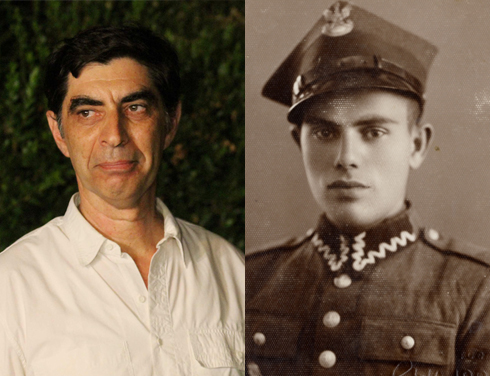
Dr. Simha Goldin and his father, a Polish soldier who was taken captive by the Soviet Army (Photos: Ido Erez, the Goldstein-Goren Diaspora Research Center at Tel Aviv University)

Dr. Simha Goldin and his father, a Polish soldier who was taken captive by the Soviet Army (Photos: Ido Erez, the Goldstein-Goren Diaspora Research Center at Tel Aviv University)

About 250,000 Jewish soldiers were killed while fighting for Allies’ armies, 36,000 received awards of excellence from US Army and 160,000 were awarded citations from Red Army. So how did 1.5 million Jews who fought in World War II sink into oblivion?

There is not a single student in the Israeli educational system who doesn’t learn about the Jewish Brigade and about Hannah Szenes and her friends. The bravery of the 5,000 Brigade soldiers should be praised and admired, but the truth is that it’s just a drop in the ocean of Jewish blood which was shed on the front, vis-à-vis the Nazis.

About a million and a half Jews fought as part of the Allies’ armies. They stood out both because their number was much higher than their relative percentage in the countries they came from, and because of the huge number of losses they suffered.

According to different estimates, about 250,000 Jews were killed while fighting for the Allies’ armies. In addition, a relatively high number of Jews received medals of honor.

Dr. Shimha Goldin, the son of a Polish soldier who was taken captive by the Soviet Army, and the father of Lieutenant Hadar Goldin who died as a hero in Operation Protective Edge, decided to initiate a conference which would give the Jewish fighters in World War II all the respect they deserve.

“My father was a Polish soldier who was captured by the Russian army during the war, and that’s what saved his life,” he says.

Read more: The forgotten Jews…


twoje uwagi, linki, wlasne artykuly, lub wiadomosci przeslij do: webmaster@reunion68.com


The ‘humanitarian’ weapon of war

As I See It: The ‘humanitarian’ weapon of war

By MELANIE PHILLIPS


Print Edition

Photo by: REUTERS

UNRWA’s stewardship of the stateless Palestinians, as well as its role in creating their unique designation as “refugees” in the first place, has long been a cause for concern.

In Britain’s House of Commons a week ago, a meeting I attended heard a shocking bill of indictment against UNRWA, the UN Relief and Works Agency.

UNRWA was set up in 1950, two years after Israel was created, specifically to administer humanitarian relief to one group of refugees, the Palestinians.

UNRWA’s stewardship of the stateless Palestinians, as well as its role in creating their unique designation as “refugees” in the first place, has long been a cause for concern.

During last summer’s Gaza war, its relationship with Hamas came under a spotlight when rocket launchers and other paraphernalia of war were shown to be housed in, under or next to UNRWA schools and clinics. UNRWA fiercely denied any Hamas association.

Yet at the Commons meeting, presentations by the Jerusalem-based Center for Near East Policy persuasively suggested that UNRWA was helping to incite the stateless Arabs under its care to hatred, violence and jihad against Israel.

The Palestinian human rights activist Bassam Eid denounced it for keeping Palestinians as permanent refugees. The Middle East schoolbook expert Dr. Arnon Groiss produced example after example of incitement to hatred and violence and demonization of Israel taught in UNRWA schools.

Most shocking was the film screened at this meeting in which UNRWA teachers boasted of encouraging their pupils to jihad against Israel, teenagers stated that their UNRWA teachers told them they must reclaim Israeli cities, and small girls were drilled by UNRWA teachers in chanting “Jerusalem is ours!” with their left arms pumping the air.

Before this meeting I interviewed UNRWA’s spokesman Chris Gunness for my show on Voice of Israel, the new English-language radio station. Wasn’t UNRWA’s definition of a refugee indefensible? Uniquely, it is extended to all descendants through the male line of those who were displaced by the Arab war against Israel between 1946 and 1948. More than 60 years on, many of these “refugees” are not only still in refugee camps but their number has accordingly multiplied by more than 600 percent.

Not unique at all, replied Gunness. The UN refugee agency, the UNHCR, applied precisely the same definition which conferred refugee status on descendants while political conflict remained unresolved.

Really? I rang the UNHCR. Were there circumstances, I asked, in which it automatically transferred refugee status to the descendants of actual refugees? No, said the UNHCR spokesman. Refugee status was only granted when either governments or the UNHCR itself assessed a specific individual as a refugee. Refugee status might cover the applicant’s dependents, but not any descendants. “It’s not an inherited status as such,” she said. So much for what Gunness told me.

Since I am a descendant of Eastern European refugees, I suggested to him, perhaps I too would qualify as a refugee under UNRWA’s definition? Not so, he replied, because anyone who took citizenship in another country no longer qualified as a refugee.

But UNRWA includes in its total of 5 million Palestinian refugees 2 million who have Jordanian citizenship. Cornered by that, Gunness claimed this was in accordance with the operational definition of a refugee provided by the UN General Assembly.

But the General Assembly resolutions which provided and subsequently expanded UNRWA’s mandate to provide relief did not define a refugee. That definition was laid down by UNRWA itself. As it said in 1951: “For working purposes, the Agency has decided that a refugee is a needy person, who, as a result of the war in Palestine, has lost his home and his means of livelihood.”

(Its current definition, incidentally, has changed “needy person” to “any person.”) The one issue where Gunness acknowledged there might be a problem was over the teaching of hatred and jihad through UNRWA’s educational materials. After sending up a lot of chaff about having to use the Palestinians’ own textbooks, and how UNRWA had “frameworks” for raising concerns over the content, he conceded that this was an area of difficulty.

But when I raised the fact that most UNRWA staff supported Islamic radicals, Gunness reverted to denial and evasion.

There was no evidence of this, he insisted; no party affiliation had ever appeared on staff union ballot papers.

For heaven’s sake – as if such ballot papers would actually say “Hamas’! The fact remains that, in 2012, candidates affiliated with Hamas were elected to 25 out of 27 seats on a union board that represents ten thousand UNRWA workers.

Before that election, the pro-Hamas Al-Resala newspaper wrote: “It is noteworthy that Hamas has controlled the UNRWA staff union in the elections since its inception, particularly the teachers sector in [the union], but the electoral system cannot list it to prevent [official] partisan affiliations of UNRWA employees.”

The reality is that UNRWA simply could not operate in Gaza without mutual cooperation with the Hamas administration. And Gaza’s children are being indoctrinated into hatred and war by Hamas supporters teaching in UNRWA schools.

Mamoun Abunaser is a deputy principal at an UNRWA school in Syria. His profile picture on Facebook says: “When injustice becomes law, resistance becomes duty.” Luay Shehab is a UNRWA school principal in Nablus.

He shows photographs of Israelis in burial shrouds and coffins on his Facebook page, with a caption reading: “Oh Allah, make the number of their dead as [every time a Muslim says] “Amen”! And several UNRWA teachers are known to be highly connected Hamas supporters.

Gunness says UNRWA guards its neutrality.

Yet enraged by an article in this paper by Bassam Eid, Gunness last week tweeted a call to boycott The Jerusalem Post. Clearly, he employs as creative an approach to the word “neutrality” as he does toward the word “refugee.”

At the end of last month, Israel marked the first annual Day of Commemoration for Jewish Refugees. This was a long overdue public recognition of the 850,000 Jews ethnically cleansed from Arab and Muslim lands, a process which started in the 1920s but greatly accelerated after the State of Israel was created.

It is shameful that it has taken so long for Israel to acknowledge this forgotten exodus.

But the reason it could be overlooked is these genuine refugees did what most refugees do: resettle and move on.

The UN says it is running out of money for humanitarian relief for desperate people like the Syrian refugees.

Yet UNRWA’s basic budget for the coming year is $1.4 billion – for people who are not refugees at all. We should stop calling them Palestinian refugees. We should call them instead what they actually are: displaced Arabs.

These exploited people are deliberately kept in misery and incited to hatred and violence against Israel by Arab states as a weapon of existential war – aided and abetted by UNRWA and the Western governments that fund it.

Melanie Phillips is a columnist for The Times (UK).


twoje uwagi, linki, wlasne artykuly, lub wiadomosci przeslij do: webmaster@reunion68.com


Caroline Glick tells off Danish ambassador

Caroline Glick tells off Danish ambassador

Diplomatic drama during the Europe-Israel panel at The Jerusalem Post Diplomatic Conference in Jerusalem on Thursday, moderated by Herb Keinon with The Jerusalem Post | JPost.com’s Senior Contributing Editor Caroline B. Glick and Danish Ambassador Jesper Vahr. Thanks to Eli Mandelbaum. taken from Steve Lindh FB


twoje uwagi, linki, wlasne artykuly, lub wiadomosci przeslij do: webmaster@reunion68.com


Fields In Israel Become Mecca For Cancer Patients

Fields In Israel Become Mecca For Cancer Patients

Allison Kaplan Sommer


A drink with as little as one gram of lemon grass contains enough citral to prompt cancer cells to commit suicide in the test tube according to new Israeli research. At first, Benny Zabidov, an Israeli agriculturalist who grows greenhouses

A drink with as little as one gram of lemon grass contains enough citral to prompt cancer cells to commit suicide in the test tube according to new Israeli research. At first, Benny Zabidov, an Israeli agriculturalist who grows greenhouses full of lush spices on a pastoral farm in Kfar Yedidya in the Sharon region, couldn’t understand why so many cancer patients from around the country were showing up on his doorstep asking for fresh lemon grass.

It turned out that their doctors had sent them.

“They had been told to drink eight glasses of hot water with fresh lemon grass steeped in it on the days that they went for their radiation and chemotherapy treatments,” Zabidov told ISRAEL21c. “And this is the place you go to in Israel for fresh lemon grass.”

It all began when researchers at Ben Gurion University of the Negev discovered last year that the lemon aroma in herbs like lemon grass kills cancer cells in vitro, while leaving healthy cells unharmed.

The research team was led by Dr. Rivka Ofir and Prof. Yakov Weinstein, incumbent of the Albert Katz Chair in Cell-Differentiation and Malignant Diseases, from the Department of Microbiology and Immunology at BGU.

Citral is the key component that gives the lemony aroma and taste in several herbal plants such as lemon grass (Cymbopogon citratus), melissa (Melissa officinalis) and verbena (Verbena officinalis.)

According to Ofir, the study found that citral causes cancer cells to “commit suicide: using apoptosis, a mechanism called programmed cell death.” A drink with as little as one gram of lemon grass contains enough citral to prompt the cancer cells to commit suicide in the test tube.

The BGU investigators checked the influence of the citral on cancerous cells by adding them to both cancerous cells and normal cells that were grown in a petri dish. The quantity added in the concentrate was equivalent to the amount contained in a cup of regular tea using one gram of lemon herbs in hot water. While the citral killed the cancerous cells, the normal cells remained unharmed.

The findings were published in the scientific journal Planta Medica, which highlights research on alternative and herbal remedies. Shortly afterwards, the discovery was featured in the popular Israeli press.

Why does it work? Nobody knows for certain, but the BGU scientists have a theory.

“In each cell in our body, there is a genetic program which causes programmed cell death. When something goes wrong, the cells divide with no control and become cancer cells. In normal cells, when the cell discovers that the control system is not operating correctly – for example, when it recognizes that a cell contains faulty genetic material following cell division – it triggers cell death,” explains Weinstein. “This research may explain the medical benefit of these herbs.”

The success of their research led them to the conclusion that herbs containing citral may be consumed as a preventative measure against certain cancerous cells.

As they learned of the BGU findings in the press, many physicians in Israel began to believe that while the research certainly needed to be explored further, in the meantime it would be advisable for their patients, who were looking for any possible tool to fight their condition, to try to harness the cancer-destroying properties of citral.

That’s why Zabidov’s farm – the only major grower of fresh lemon grass in Israel – has become a pilgrimage destination for these patients. Luckily, they found themselves in sympathetic hands. Zabidov greets visitors with a large kettle of aromatic lemon grass tea, a plate of cookies, and a supportive attitude.

“My father died of cancer, and my wife’s sister died young because of cancer,” said Zabidov. “So I understand what they are dealing with. And I may not know anything about medicine, but I’m a good listener. And so they tell me about their expensive painful treatments and what they’ve been through. I would never tell them to stop being treated, but it’s great that they are exploring alternatives and drinking the lemon grass tea as well.”

Zabidov knew from a young age that agriculture was his calling. At age 14, he enrolled in the Kfar Hayarok Agricultural high school. After his army service, he joined an idealistic group which headed south, in the Arava desert region, to found a new moshav (agricultural settlement) called Tsofar.

“We were very successful; we raised fruits and vegetables, and,” he notes with a smile, “We raised some very nice children.”

On a trip to Europe in the mid-80s, he began to become interested in herbs. Israel, at the time, was nothing like the trend-conscious cuisine-oriented country it is today, and the only spices being grown commercially were basics like parsley, dill, and coriander.

Wandering in the Paris market, looking at the variety of herbs and spices, Zabidov realized that there was a great export potential in this niche. He brought samples back home with him, “which was technically illegal,” he says with a guilty smile, to see how they would grow in his desert greenhouses. Soon, he was growing basil, oregano, tarragon, chives, sage, marjoram and melissa, and mint just to name a few.

His business began to outgrow his desert facilities, and so he decided to move north, settling in the moshav of Kfar Yedidya, an hour and a half north of Tel Aviv. He is now selling “several hundred kilos” of lemon grass per week, and has signed with a distributor to package and put it in health food stores.

Read more: Fields In Israel…


twoje uwagi, linki, wlasne artykuly, lub wiadomosci przeslij do: webmaster@reunion68.com