Archives

Israel arrested 93 Hamas men in West Bank over terror network targeting PA, Israel

Israel arrested 93 Hamas men in West Bank over terror network targeting PA, Israel

                                         By  | Aug. 18, 2014

Palestinian Hamas supporters hold Hamas flags as they take part in a rally to show
solidarity with Palestinian prisoners held in Israeli jails, in the West Bank
city of Nablus  May 15, 2014.
Photo by Reuters

Palestinian Hamas supporters hold Hamas flags. Nablus, May 15, 2014.Of the near 100 operatives arrested since May, 46 have been transferred to Shin Bet for questioning; defense sources estimate cost of arms and ammunition at several million shekels.

The Shin Bet security service has interrogated 46 Hamas operatives in the West Bank over the past three months on suspicion of setting up a network of cells to commit attacks against Israel and to carry out a coup of the Palestinian Authority.

Altogether, 93 Hamas members have been arrested since May for alleged involvement in this network, but only 46 have been transferred to the Shin Bet for questioning.

As a result of the arrests and interrogations, the Shin Bet, police and Israel Defense Forces have seized some 600,000 shekels ($171,000); 24 rifles, mostly M-16s; six pistols; seven rocket launchers; and a large quantity of ammunition. Defense sources estimated the cost of the arms and ammunition at several million shekels.

The head of the network was Riad Nasser, 38, of Deir Kadis near Ramallah. Nasser did jail time in Israel in the past for his Hamas activities, then was rearrested in late 2013 and put under administrative detention. The Shin Bet began questioning him in May, and says that Nasser told his interrogators he was recruited to reestablish Hamas’ military infrastructure in the West Bank back in 2010.

Nasser was recruited by Saleh Arori, who did 16 years in an IDF prison and was subsequently deported, the Shin Bet says. Aruri now lives in Turkey.

According to the Shin Bet, Nasser’s assignment was to undermine the West Bank’s stability and “even spark a third intifada.” To this end, he set up Hamas cells in towns throughout the West Bank, and also in Jerusalem.

Many of the cell members were recruited by local Hamas leaders in these towns; these recruiters included several former Israeli prisoners. An emphasis was put on recruiting people who had studied chemistry or engineering.

The Shin Bet says the cells were also planning to topple the PA. Nevertheless, they don’t seem to have progressed far toward that goal. Up to the time of their arrest, their efforts were focused mainly on acquiring arms and recruiting additional members, and the numbers of both they managed to obtain are minuscule compared to the thousands of men and thousands of rifles in the PA security services.

The network also had a branch in Jordan, headed by another former Israeli prisoner, Oudeh Zaharan, 54. The Shin Bet says Zaharan served as a liaison between the West Bank cells and Hamas officials overseas. The latter transferred hundreds of thousands of dollars to the West Bank cells for use in purchasing arms and safe houses; some of these houses were also meant to serve as rocket manufactories.

A senior Shin Bet official said the network was arrested before it could commit any attacks. He added that Khaled Meshal, the Qatar-based head of Hamas’ political bureau, was aware of the effort to establish the cells, and said Israel had briefed both the PA and Jordan on the findings of the investigation.

Other key members of the network included Salah Barakat, a 35-year-old Israeli citizen and Jerusalem resident, and Dr. Majdi Mafarja, 32, who was recruited in Malaysia. Mafarja has a doctorate in computer science, specializing in encryption and cyber warfare.


twoje uwagi, linki, wlasne artykuly, lub wiadomosci przeslij do: webmaster@reunion68.com

Izraelska koszulka EKG monitoruje serca, ratuje życie


Izraelska koszulka EKG monitoruje serca, ratuje życie

Orginalny art. David Shamah
Israeli ECG T-shirt monitors hearts, saves lives

Tłumaczenie: Małgorzata Koraszewska

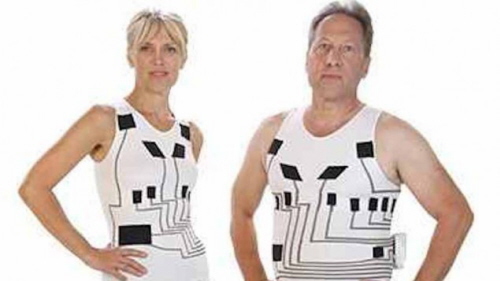
Koszulki Hwear (Zdjecie: HealthWatch)

Koszulki Hwear (Zdjecie: HealthWatch)

Izraelska firma jako jedna z pierwszych na świecie wypuszcza na rynek koszulkę, która potrafi odczytać tempo bicia serca, ciśnienie krwi, nieregularność pracy serca i inne żywotne sygnały, które mogą być kluczem do zapobieżenia zawałom serca. Zasadnicza jest szybkość – dane tworzą się na bieżąco i w razie potrzeby, natychmiast docierają do lekarza, zamiast czekać na następną wyznaczoną wizytę. Można też wrzucić tę specjalną koszulkę do prania razem z resztą ubrań.

HealthWatch pokazał swoją linię hWear – odzieży z 15-odprowadzeniowymi czujnikami EKG – na niedawnym dorocznym spotkaniu American Telemedicine Association. Taka odzież pozwala lekarzom i personelowi opieki zdrowotnej śledzić stan serca na odległość, bez potrzeby podczepiania pacjenta do mierzących pracę serca urządzeń w gabinecie lekarskim.

Koszulka zrobiona jest ze standardowej bawełny lub włókna syntetycznego i ma wplecione specjalne elektrody, włącznie z niezmiernie cienkimi czujnikami elektrokardiogramu, które odczytują żywotne sygnały i przekazują je do urządzenia monitorującego przez połączenia Bluetooth lub Wifi do bazy danych, gdzie są przetwarzane. Jeśli dzieje się coś nienormalnego, lekarz danego pacjenta natychmiast może otrzymać sygnał i błyskawicznie interweniować.

“Nasze koszulki hWear dają najwyższej jakości odczyt żywotnych sygnałów bez kleju, żeli ani żadnych innych przygotowań”. Jak zapewnia Uri Amir, dyrektor naczelny HealthWatch, koszulki można prać w pralce i są kompatybilne z większością systemów kontroli pracy serca.

Obecnie koszulki zarejestrowane są w FDA [Agencja Żywności i Leków (ang. Food and Drug Administration) jako urządzenia klasy I, ale firma stara się o „podniesienie” ich do klasy II, by mogły być dopuszczone do użytku w powszechnej służbie zdrowia. Tylko kilka innych firm wyprodukowało podobne koszulki, więc Health Watch jest w czołówce, powiedział Amir. EHealth, TeleHealth, mHealth i przemysł tele-kardiologiczny mogą teraz udzielać telemonitoringu o jakości, jaką mają oddziały opieki intensywnej i to bez zakłócania normalnego stylu życia użytkowników. Można je stosować w szpitalach, do monitoringu chorych w domach, pacjentów po przebytym zawale serca, osób starszych, które niepokoją się o swoje zdrowie lub kogokolwiek, kto z takich czy innych powodów chciałby, żeby gdziekolwiek są, jego lekarz otrzymał w razie potrzeby sygnał, że coś jest nie tak”.

Koszulki są zaprojektowane do pracy z czytnikiem czujników HealthWatch’s MasterCaution, który na bieżąco alarmuje lekarzy i pacjentów o zakłóceniach takich jak arytmia, niedokrwienie, nienormalny oddech oraz nagłe upadki lub długotrwały bezruch. „Tworzymy odzież do przenośnej technologii – powiedział Amir. – W odróżnieniu od innych produktów, które informują tylko o tempie bicia serca, nasza nowa odzież healthwear jest rzeczywiście urządzeniem medycznym monitorującym pełny 15-odprowadzeniowy EKG wraz z innymi żywotnymi sygnałami fizjologicznymi. Zmieni to przyszłość osobistego monitorowania, oferując użytkownikom poczucie bezpieczeństwa – gdziekolwiek są”.

Czytaj wiecej tu: koszulka EKG


twoje uwagi, linki, wlasne artykuly, lub wiadomosci przeslij do: webmaster@reunion68.com
Israel’s security advisor – Jung & Naiv in Israel: Episode 184

From Tel Aviv with Daniel Schueftan (Deutsche Untertitel verfügbar!)

Jung & Naiv’s trip to the Middle East: The search for an end to a never-ending story. Episode 184 with Israel’s security advisor, Dan Schueftan, director of the National Security Studies Center at the
University of Haifa.

(Episode 2 from Israel with Benny Ziffer http://youtu.be/5xi-mc3TS88)

In this 90-minute episode we talk about: What’s going on in Israel? Why is there war? Is it about religion? What is zionism? Did Jesus come back in 1948? When und why was Israel founded? What happened afterwards? Is there dumb and smart optimism? What was the British mandate? Why is Israel such a happy nation? Why are there so many wars after its foundation? Who fights against whom? Are Arabs capable of pluralism? Why does Dan think Arabs are barbaric? Why does Dan hate Disneyland? Do Europeans live in Lala Land?

Subtitles:
Übersetzung – Elka Sloan
Untertitelerstellung – Pascal Baumann

Thanks to Brent Sluder for our new Middle Eastern theme song. Thanks to the Ben Kollektiv for new graphics.

Subscribe to this Youtube channel. Don’t miss any episode from the Middle East.
Kategori
Nyheter och politik
Licens
Standardlicens för YouTube


twoje uwagi, linki, wlasne artykuly, lub wiadomosci przeslij do: webmaster@reunion68.com

Izrael w Warszawie?

Izrael w Warszawie?

Zapraszamy na cykl wydarzeń, podczas których przyjrzymy się współczesnemu Izraelowi, związkom Izraela z Polską, wzajemnym inspiracjom, które przejawiają się w realizowanych projektach kulturalnych i artystycznych.

Podczas dyskusji będziemy się zastanawiać nad płynącymi z Izraela inspiracjami dotyczącymi muzyki, kuchni czy sztuki widocznymi w lokalnych warszawskich inicjatywach. Będziemy analizować wybrane projekty, miejsca oraz wydarzenia, zastanawiając się, jak wpisują się w kulturalną mapę Warszawy i jak funkcjonują w świadomości mieszkańców Warszawy.

Spotkanie poprowadzi dr Maciej Kozłowski – współpracownik paryskiej „Kultury”, były ambasador Rzeczpospolitej w Izraelu, wicedyrektor Departamentu Afryki i Bliskiego Wschodu oraz pełnomocnik ministra spraw zagranicznych ds. stosunków polsko-żydowskich.

Wśród zaproszonych gości będą: Malka Kafka – promotorka dobrego jedzenia zarówno pod względem smakowym, jak i etycznym, prowadzi w Warszawie Tel-Aviv Café i Marrakesh Café, Hagay Hacohen – dziennikarz izraelski mieszkający w Polsce, Tomasz Pisarzewski – przedstawiciel Stowarzyszenia Żydowskie Motywy oraz Miron Zajfert – prezes Fundacji NADAYE. Spotkanie będzie tłumaczone na język angielski.


twoje uwagi, linki, wlasne artykuly, lub wiadomosci przeslij do: webmaster@reunion68.com

From Iron Dome to Iron Beam

From Iron Dome to Iron Beam

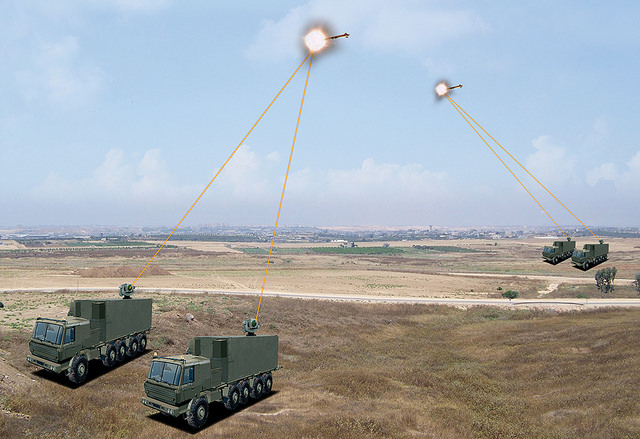
This is how an Iron Beam anti-missile battery might look. Photo illustration courtesy of AIN Online.

This is how an Iron Beam anti-missile battery might look. Photo illustration courtesy of AIN Online.


The next anti-missile strategy from Rafael reportedly will take out missiles, mortars and even drones using high-energy laser.

In 2005, Brig. Gen. Daniel Gold proposed a missile-defense system to a skeptical Israeli defense establishment. Gold headed R&D at the Ministry of Defense at the time, and was ready to go it alone with private funding if the powers-that-be didn’t buy into his vision. They eventually did, assigning the project to Rafael Advanced Defense Systems.

The resulting Iron Dome changed the face of two wars –2012’s Operation Pillar of Defense and Protective Edge in 2014 – and Gold won the Israel Defense Prize for spearheading the project, whose breathtaking effectiveness at interception saved countless lives as nearly 3,500 missiles were fired at Israel over a month’s time this summer.

Israelis have shown their love for Iron Dome in creative ways, from Iron Dome tattoos and videos to an (unsuccessful, so far) Indiegogo campaign to create Iron Dome condoms with 25 percent of the proceeds going to the IDF. Iron Dome t-shirts and sweatshirts are selling well at Tel Aviv’s Carmel Market.

But in future wars – whether with Hamas in the Gaza Strip or elsewhere – Israel’s defense planners will have to come up with improved solutions to counter the undoubtedly upgraded weapons coming from its adversaries. So what’s next?

How about lasers instead of rockets?

Rafael is now hard at work on the “Iron Beam” high-energy laser (HEL) system, which can take out missiles, mortars and even drones. The land-based system was unveiled at the Singapore Air Show earlier this year. It uses a pair of multi-kilowatt solid-state lasers to knock out incoming projectiles up to a range of about two kilometers. The prototype is mounted on a truck, but it could be fitted to an armored vehicle as well.

When Iron Beam’s radar detects an incoming missile, a thermal camera takes over the tracking until the missile is engaged by two HELs at once. The lasers focus their beams on an area about the size of a coin and currently have a power of tens of kilowatts. That’s expected to increase to hundreds of kilowatts in the future.

Iron Beam is far from completion and only 100 test firings have taken place so far with a very good success rate, according to an interview with Rafael’s deputy general manager of marketing and business development in Jane’s Defense Weekly.

Read more From Iron Dome to Iron Beam


twoje uwagi, linki, wlasne artykuly, lub wiadomosci przeslij do: webmaster@reunion68.com