
Archives

Hamas hands over the bodies of two more Israeli hostages

Hamas hands over the bodies of two more Israeli hostages

Joshua Marks


The terror group returned the bodies of Inbar Hayman and Sgt. Maj. Muhammad Al‑Atresh, leaving 19 bodies still to be returned.

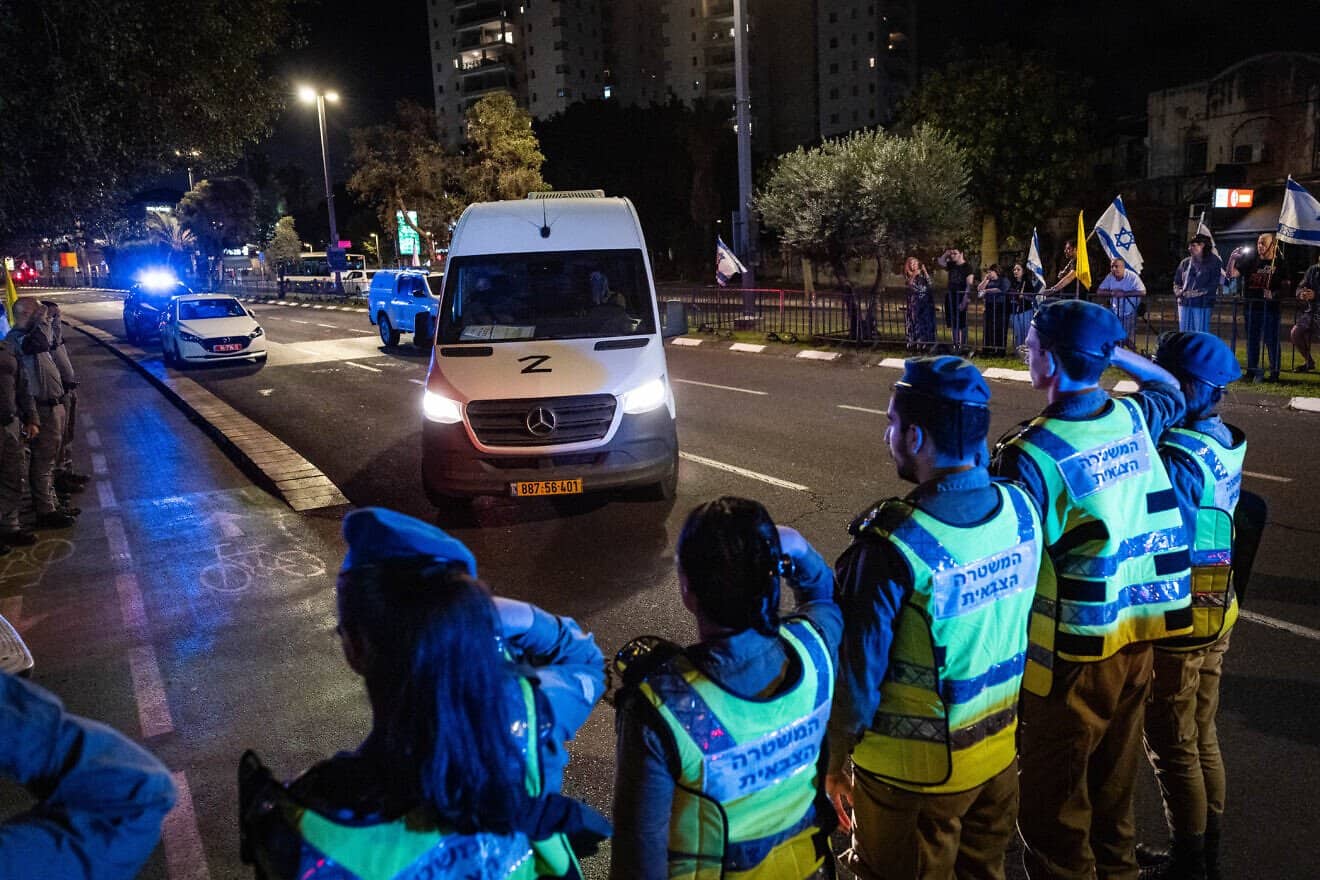
People and Israeli security forces pay their respects as the convoy carrying the bodies of hostages arrive at the Abu Kabir Forensic Institute in Tel Aviv, on Oct. 16, 2025. Photo by Yonatan Sindel/Flash90.

Hamas transferred to Israel the bodies of two more hostages on Wednesday night, leaving 19 still in Gaza.

Inbar Hayman and Sgt. Maj. Muhammad Al-Atresh were identified through forensic analysis of remains, the Israel Defense Forces announced Thursday morning.

Hayman, 27, was the last female hostage still in Gaza. She was murdered at the Nova music festival on Oct. 7, 2023, and her body was taken to Gaza, according to IDF intelligence. Her death was pronounced on Dec. 15, 2023. She leaves behind parents and a brother. 

Al-Atresh, from the Bedouin Negev village of Sa’wa, was a tracker in the IDF’s Northern Gaza Brigade. He was killed in combat on the morning of the massacre and his body taken to the Strip. He was 39 at the time of his death, which was pronounced on June 24, 2024. He leaves behind parents, siblings, two wives and 13 children.

The Hostages and Missing Families Forum paid tribute to the two slain hostages, writing on X that Hayman was a writer and artist who “brought her trademark energy and generosity to the Nova Festival, where she came to help others as a volunteer.” Al-Atresh was a “serious man who always took care of his entire family. Muhammad loved raising horses and dreamed of establishing a horse farm and a livestock area with sheep and goats.”

Israeli Defense Minister Israel Katz expressed sympathies to the families of Hayman and Al-Atresh in a Thursday morning X post, calling them heroes. He recalled hearing about Hayman’s talent in graffiti art from her family and her military service as a commander in the IDF’s Caracal Battalion.

“Ibrahim and Salem, Muhammad’s father and brother, accompanied me on numerous occasions, both in Israel and abroad, in meetings with world leaders to share Muhammad’s story,” Katz wrote. “In one of those meetings with the Belgian Foreign Minister at Kibbutz Nir Oz, Salem asked her to act to help free the hostages, and in a noble manner, he requested that she prioritize the release of the female hostages—at a time when he did not yet know that his brother had fallen.” 

Hamas is required to return all of the remaining hostages it and other Palestinian terrorist factions hold in Gaza as part of a U.S.-brokered ceasefire agreement.

The Israeli Prime Minister’s Office emphasized in a statement released on Thursday morning that Jerusalem “will not compromise” on Hamas’s obligation under the agreement to return all of the remains and “will spare no effort until we return all of the fallen hostages, every last one of them.”

Wednesday’s release followed an Arab media report earlier in the day that five bodies were expected to be redeemed, despite estimates in Israel that only two would be handed over. Hamas returned three bodies on Wednesday night, along with the remains of a Gazan man.

Four bodies were released on Tuesday. The bodies began to be released after all 20 live hostages were freed after the ceasefire went into effect on Oct. 10.

U.S. President Donald Trump said on Wednesday at the White House that “they are looking for them, absolutely” in response to a reporter’s question about the pace of the returns, calling it a “gruesome process.”

“They are digging … there are areas where they are digging and they are finding a lot of bodies, then they have to separate the bodies. You wouldn’t believe this, and some of those bodies have been there a long time and some of them are under rubble. They remove rubble. But there are graves and some are in tunnels, that died in tunnels that are way down under the earth, and the tunnels are like 3 feet high … they lived like this for a long period of time,” he said, adding, “It’s a horrible atrocity.”


Zawartość publikowanych artykułów i materiałów nie reprezentuje poglądów ani opinii Reunion’68,
ani też webmastera Blogu Reunion’68, chyba ze jest to wyraźnie zaznaczone.
Twoje uwagi, linki, własne artykuły lub wiadomości prześlij na adres:
webmaster@reunion68.com

‘An Evening of Tears’: Israeli Hostages, Bereaved Relatives Voice Mixed Emotions Ahead of Release Deal


‘An Evening of Tears’: Israeli Hostages, Bereaved Relatives Voice Mixed Emotions Ahead of Release Deal

Debbie Weiss


Israeli President Isaac Herzog speaks as he visits a site next to “Hostages Square” amid a ceasefire between Israel and Hamas in Gaza and ahead of the expected return of hostages held in Gaza, in Tel Aviv, Israel, Oct. 12, 2025. Photo: REUTERS/Stoyan Nenov

The families of Israeli hostages, fallen soldiers, and terror victims voiced their feelings Sunday night about the pending hostage release from Gaza, on what Prime Minister Benjamin Netanyahu described as “an evening of tears and happiness.”

Ilan Dalal, the father of hostage Guy Gilboa-Dalal, said he hoped to hug his son and “tell him that the nightmare is over.” But he also said he didn’t know “what kind of son I’m going to get back.” In the last video released of Guy by the Palestinian terrorist group Hamas, Dalal said he saw “despair in his eyes,” adding his hope that he would be able to “rebuild his life.”

Dalal spoke alongside former hostage Tal Shoham on a Zoom call with members of the press. Dalal’s son was held in the tunnels in Gaza along with Shoham, Omer Wenkert — who has since been released — and Evyatar David, who is set for release on Monday.

Shoham thanked US President Donald Trump for “making the impossible possible” and said he wished he could shake the president’s hand “not only for this deal but for the deal that released me.”

Trump departed for Israel and Egypt on Sunday to celebrate the US-brokered ceasefire and hostage-release deal between Israel and Hamas to halt fighting in Gaza. The war began with Hamas’s Oct. 7, 2023, invasion of and massacre across southern Israel, during which Palestinian terrorists from Gaza murdered 1,200 people and kidnapped 251 hostages.

In his remarks Sunday evening, Netanyahu called the impending releases “a historic event, which some did not believe would ever happen,” and urged Israelis to set aside their differences.

“With joint strength, we achieved spectacular victories,” he said, while warning that the military campaign was not over. “There are still major security challenges ahead of us. Some of our enemies are trying to recover in order to attack us again but we are on this.”

Not everyone supported the deal, which would see around 2,000 Palestinian prisoners released in exchange for the remaining 48 hostages, 20 of whom are believed to be alive.

Brenda Lemkus, whose daughter Dalia was murdered in a 2014 stabbing attack in the West Bank, joined other bereaved relatives from the Choosing Life group — which opposes prisoner releases — in condemning the decision to release her daughter’s killer.

“Releasing him invites the next murder immediately,” Lemkus said. “The blood of those murdered is on the ministers who voted for this.” She called on Israel to institute the death penalty for terrorists.

Michael Nurzhitz, brother of reservist Vadim Nurzhitz, said that while he was happy for the hostages and their families, releasing Raed Sheikh — the terrorist and Palestinian police officer responsible for his brother’s murder — was “unfathomable,” especially ahead of the 25th anniversary of the incident.

Vadim Nurzhitz and fellow Israel Defense Forces (IDF) reservist Yossi Avrahami were lynched in Ramallah on Oct. 12, 2000, after accidentally entering the city and being taken into custody at a Palestinian police station.

“If they release the murderer, the terrorist will return to terror, just like those released in the Shalit deal — they will return to murder us,” Nurzhitz said, referring to the 2011 exchange that freed Gilad Shalit in return for more than 1,000 Palestinian prisoners, including Yahya Sinwar, who later masterminded Hamas’s Oct. 7, 2023, invasion of and massacre across southern Israel.

Choosing Life petitioned the High Court against the move, saying “the blood of our children has turned into a tradable commodity.”

Eliya Atias, whose son Eden was stabbed to death while he was sleeping in 2013, said the release of his son’s murderer was a sacrifice she “felt good” about making if it meant freeing the hostages. 

“I am a believing Jew who believes that the Creator will pay him back,” she said. “I feel that thanks to my act, I am saving the lives of my brothers in Gaza.”

Emotions were also mixed at a Sukkot event attended by 2,000 bereaved Israelis, organized by OneFamily, which supports victims of terror and their families.

Hagit Rosenzweig, whose son, Staff Sgt. Eitan Rosenzweig, was killed in Jabalia in north Gaza early in the war, called it a “very complex day.”

“We are very happy that the hostages are returning, and that families are being reunited. But our son isn’t ever coming home,” she said.

Meir Hershkowitz, whose son Netanel was also killed in Jabalia in October 2024, said he was “thrilled for the families” but urged Israelis not to forget those who were killed.

Both Rosenzweig and Hershkowitz said they found solace in being with others who shared their loss. “Especially during the holidays when the absence is most deeply felt. Being here with other families who understand the same pain is powerful,” Hershkowitz said.

On the Zoom call, Dalal described the rollercoaster of the past two years, noting many moments of “great despair,” but said he reminded himself that his son was “counting on him to be his voice” from inside the tunnels of Gaza.

“We didn’t have the option to break down,” he said.

Shoham said he endured “torture, cruelty, and starvation” during his captivity. Hamas withheld food as “sadistic psychological warfare,” keeping them on “200 or 300 calories a day” — first “to make us suffer,” and second “to pressure Israeli society,” he said. He described seeing “boxes and boxes and boxes” of aid diverted by captors who bragged of having supplies “for months ahead,” while refusing to share it with hostages in the tunnels.

Shoham distinguished between Hamas and the people around them, while conceding, bleakly, how porous that boundary had become. “I know that there are people who support Hamas — I don’t know if it’s all of them but a lot of them are part of Hamas and are disguised as civilians.”

His guards, he noted, had ordinary jobs. “One was a first-grade teacher, another was a lecturer at a university, and another was a doctor. These are normal people becoming terrorists.”

Shoham also described the mindset that helped him survive.

“I consider myself a spiritual person on a spiritual journey. I believe human life has a purpose,” he said. “During captivity, I tried to do everything in my power to honor my life, no matter what they would do to me. We’re not responsible for the terrible things our enemies will do — or even for any deals that are made. Our only mission is to become better each day and to cleanse ourselves from the cruelty and hell we went through.”


Zawartość publikowanych artykułów i materiałów nie reprezentuje poglądów ani opinii Reunion’68,
ani też webmastera Blogu Reunion’68, chyba ze jest to wyraźnie zaznaczone.
Twoje uwagi, linki, własne artykuły lub wiadomości prześlij na adres:
webmaster@reunion68.com


Israel Implements Gaza Ceasefire Plan, Triggers 72-Hour Countdown for Hamas to Release Hostages


Israel Implements Gaza Ceasefire Plan, Triggers 72-Hour Countdown for Hamas to Release Hostages

Ailin Vilches Arguello


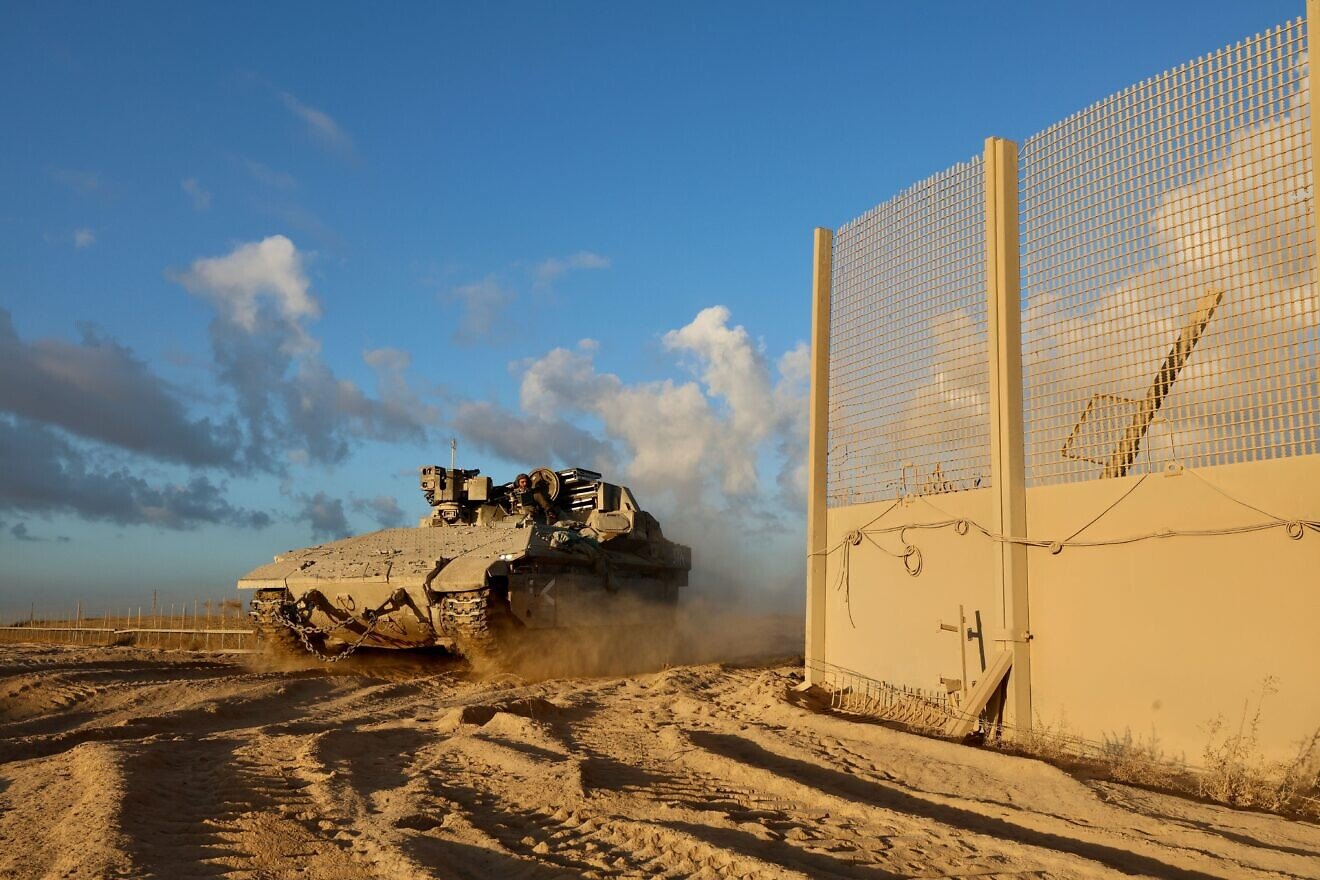
Israeli soldiers stand next to military vehicles, after Israel’s government ratified a ceasefire with Hamas in Gaza, on Israeli side of the Israel-Gaza border, in Israel, Oct. 10, 2025. Photo: REUTERS/Shir Torem

The ceasefire in Gaza officially went into effect at 12:00 pm local time on Friday, with Israel pulling back its forces to agreed-upon deployment lines in the enclave and triggering a 72-hour window for the Palestinian terrorist group Hamas to release the 48 hostages it is still holding captive.

Marking the third pause in fighting since the war began in October 2023, the US-backed ceasefire plan stands as the strongest effort yet to end the two-year conflict that has upended the Middle East.

Shortly after the Israeli cabinet approved the plan, Prime Minister Benjamin Netanyahu praised US President Donald Trump and the mediators for their efforts in securing an agreement aimed at bringing peace to the region.

“I have faced intense national and international pressure and have firmly stood my ground,” Netanyahu said during his speech. “Anyone who says this agreement was on the table from the beginning is not being truthful.”

Under the first phase of the agreement, Hamas must release all 20 living Israeli hostages and as many of the dead hostages that it can secure by Monday at noon local time. Hamas has said it will not be able to locate all the dead hostages in that time, claiming such efforts would depend on “field conditions.”

“We will work to locate all the deceased hostages as soon as possible,” Netanyahu said in his statement.

Once all hostages are released from captivity, Israel will free around 2,000 Palestinian prisoners, including 250 terrorists serving life sentences.

According to Israeli officials, none of the terrorists being released participated in the Hamas-led invasion of and massacre across southern Israel on Oct. 7, 2023.

The Israeli government has also approved a last-minute exchange of several Fatah prisoners for Hamas-affiliated detainees as part of the ceasefire agreement.

Following Israel’s partial military withdrawal, its forces remain in control of 53 percent of Gaza, mostly outside of urban areas. The Israel Defense Forces (IDF) said it will remain ready to confront any threats.

“The IDF Southern Command forces are deployed in the area and will continue to act to eliminate any immediate threats,” the Israeli military said in a statement.

US envoy Steve Witkoff posted on social media that the US military had confirmed that the IDF had completed its obligations.

Following phase one of the deal, Hamas is supposed to disarm and have no future leadership role in Gaza, according to Trump’s 20-point peace plan. However, disarmament and other unresolved issues will be subject to negotiations once the hostages are released.

“Hamas will be disarmed and Gaza demilitarized. If it can be done the right way, all the better — if not, it will be done by force,” Netanyahu said.

As Israel and Hamas prepare for the hostage and prisoner exchange under the ceasefire deal, Trump is expected to visit the Middle East this weekend, with plans to speak before the Israeli parliament on Monday.

Trump reportedly gave Hamas personal assurances that he would not allow Israel to abandon the agreement and resume fighting unilaterally — a key factor in convincing the terrorist group to accept the deal.

Among Trump’s guarantees was the establishment of a US-led military task force to oversee the ceasefire and respond to any potential violations.


Zawartość publikowanych artykułów i materiałów nie reprezentuje poglądów ani opinii Reunion’68,
ani też webmastera Blogu Reunion’68, chyba ze jest to wyraźnie zaznaczone.
Twoje uwagi, linki, własne artykuły lub wiadomości prześlij na adres:
webmaster@reunion68.com


ILTV Weekly Review – October 10, 2025


ILTV Weekly Review – October 10, 2025

  ILTV Israel News


Zawartość publikowanych artykułów i materiałów nie reprezentuje poglądów ani opinii Reunion’68,
ani też webmastera Blogu Reunion’68, chyba ze jest to wyraźnie zaznaczone.
Twoje uwagi, linki, własne artykuły lub wiadomości prześlij na adres:
webmaster@reunion68.com


A Sukkot Guide for the Perplexed

A Sukkot Guide for the Perplexed

Yoram Ettinger


A Jewish worshipper holds the Four Species, used in rituals on the holiday of Sukkot, as he takes part in the priestly blessing at the Western Wall, Judaism’s holiest prayer site, amid Israel’s second-wave coronavirus disease (COVID-19) lockdown, in Jerusalem’s Old City, 

Here are some facts you may not know about the upcoming holiday of Sukkot.

1. The holiday is named for the first stop during the 40-year-Exodus from Egypt — the town of Sukkot — as documented in Exodus 13:20-22 and Numbers 33:3-5. This holiday underscores the gradual transition from the spiritual state-of-mind during Rosh Hashanah and Yom Kippur, to the mundane of the rest of the year. The construction of the Holy Tabernacle, during the Exodus, was launched on the first day of Sukkot.

2. Sukkot is a national Jewish liberation holiday. It is the third Jewish pilgrimage holiday (following Passover and Shavuot).

3. The roots of the Hebrew word Sukkot (סוכות) are wholeness and totality (סכ), shelter (סכך), and attentiveness (סכת)

4The seven days of Sukkot are dedicated to seven monumental principle-driven leaders, who were compassionate and brave shepherds: Abraham, Isaac, Jacob, Joseph, Moses, Aaron and David. They were endowed with faith, reality-based-optimism, humility, compassion, tenacity in the face of daunting odds, courage, and peace-through-strength.  Sukkot also expresses gratitude for the seven species of the Land of Israel: wheat, barley, grapes, figs, pomegranates, olives, and dates.

5. Sukkot features (Leviticus 23:40) one citron (representing King David, the author of “Psalms”), one palm branch (representing Joseph), three myrtle branches (representing the three Patriarchs), and two willow branches (representing Moses and Aharon), which are bonded together, representing the unity-through-diversity of the Jewish people.

These four species represent the agricultural regions of the Land of Israel: the southern Negev and Arava (palm), the slopes of the northern Golan Heights, Upper Galilee, and Mt. Carmel (myrtle), the streams of the central mountains of Judea and Samaria (willow), and the western coastal plain (citron).

The palm branch, an ancient symbol of victory, was featured in coins from the Maccabees’ era (from the second century BC through the first century AD), and the Bar Kochba rebellion (132-135 AD). According to the First Book of Maccabees, chapter 13, Simon the Maccabee celebrated the retaking of David’s Citadel in Jerusalem with drums, harps, and palm branches.

6. Sukkot emphasizes humility, as demonstrated by the seven-day-relocation from one’s permanent residence to the temporary, humble, wooden booth (Sukkah), which sheltered the people of Israel during the Exodus.

7. Sukkot expresses the yearning for universal peace, highlighting the Sukkah of Peace (Sukkat Shalom).


Yoram Ettinger is a former ambassador and head of “Second Thought: a U.S.-Israel initiative.”


Zawartość publikowanych artykułów i materiałów nie reprezentuje poglądów ani opinii Reunion’68,
ani też webmastera Blogu Reunion’68, chyba ze jest to wyraźnie zaznaczone.
Twoje uwagi, linki, własne artykuły lub wiadomości prześlij na adres:
webmaster@reunion68.com