Archives

ILTV Weekly Review – October 10, 2025


ILTV Weekly Review – October 10, 2025

  ILTV Israel News


Zawartość publikowanych artykułów i materiałów nie reprezentuje poglądów ani opinii Reunion’68,
ani też webmastera Blogu Reunion’68, chyba ze jest to wyraźnie zaznaczone.
Twoje uwagi, linki, własne artykuły lub wiadomości prześlij na adres:
webmaster@reunion68.com


A Sukkot Guide for the Perplexed

A Sukkot Guide for the Perplexed

Yoram Ettinger


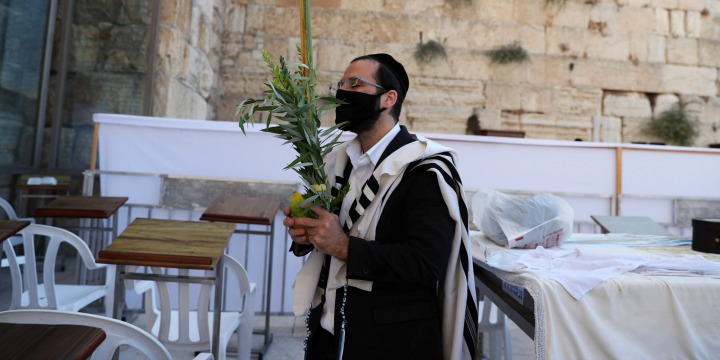
A Jewish worshipper holds the Four Species, used in rituals on the holiday of Sukkot, as he takes part in the priestly blessing at the Western Wall, Judaism’s holiest prayer site, amid Israel’s second-wave coronavirus disease (COVID-19) lockdown, in Jerusalem’s Old City, 

Here are some facts you may not know about the upcoming holiday of Sukkot.

1. The holiday is named for the first stop during the 40-year-Exodus from Egypt — the town of Sukkot — as documented in Exodus 13:20-22 and Numbers 33:3-5. This holiday underscores the gradual transition from the spiritual state-of-mind during Rosh Hashanah and Yom Kippur, to the mundane of the rest of the year. The construction of the Holy Tabernacle, during the Exodus, was launched on the first day of Sukkot.

2. Sukkot is a national Jewish liberation holiday. It is the third Jewish pilgrimage holiday (following Passover and Shavuot).

3. The roots of the Hebrew word Sukkot (סוכות) are wholeness and totality (סכ), shelter (סכך), and attentiveness (סכת)

4The seven days of Sukkot are dedicated to seven monumental principle-driven leaders, who were compassionate and brave shepherds: Abraham, Isaac, Jacob, Joseph, Moses, Aaron and David. They were endowed with faith, reality-based-optimism, humility, compassion, tenacity in the face of daunting odds, courage, and peace-through-strength.  Sukkot also expresses gratitude for the seven species of the Land of Israel: wheat, barley, grapes, figs, pomegranates, olives, and dates.

5. Sukkot features (Leviticus 23:40) one citron (representing King David, the author of “Psalms”), one palm branch (representing Joseph), three myrtle branches (representing the three Patriarchs), and two willow branches (representing Moses and Aharon), which are bonded together, representing the unity-through-diversity of the Jewish people.

These four species represent the agricultural regions of the Land of Israel: the southern Negev and Arava (palm), the slopes of the northern Golan Heights, Upper Galilee, and Mt. Carmel (myrtle), the streams of the central mountains of Judea and Samaria (willow), and the western coastal plain (citron).

The palm branch, an ancient symbol of victory, was featured in coins from the Maccabees’ era (from the second century BC through the first century AD), and the Bar Kochba rebellion (132-135 AD). According to the First Book of Maccabees, chapter 13, Simon the Maccabee celebrated the retaking of David’s Citadel in Jerusalem with drums, harps, and palm branches.

6. Sukkot emphasizes humility, as demonstrated by the seven-day-relocation from one’s permanent residence to the temporary, humble, wooden booth (Sukkah), which sheltered the people of Israel during the Exodus.

7. Sukkot expresses the yearning for universal peace, highlighting the Sukkah of Peace (Sukkat Shalom).


Yoram Ettinger is a former ambassador and head of “Second Thought: a U.S.-Israel initiative.”


Zawartość publikowanych artykułów i materiałów nie reprezentuje poglądów ani opinii Reunion’68,
ani też webmastera Blogu Reunion’68, chyba ze jest to wyraźnie zaznaczone.
Twoje uwagi, linki, własne artykuły lub wiadomości prześlij na adres:
webmaster@reunion68.com


Over 800,000 Palestinians flee Gaza City as Hamas grip weakens


Over 800,000 Palestinians flee Gaza City as Hamas grip weakens

AMIR BOHBOT


Palestinians move from the Shujaiya neighborhood after the Israeli army ordered its evacuation due to Hamas rocket fire, in Gaza. April 3, 2025. / (photo credit: Ali Hassan/Flash90)

More than 800,000 Palestinians have left Gaza City, as the IDF prepares to expand operations in the area, a security source said on Sunday.

>According to Southern Command estimates, between 30,000 and 50,000 people have departed the city daily over the past eek, and this number is expected to increase.

Defense officials said between 250,000 and 350,000 Palestinians are still inside Gaza City.

Officials praised the Southern Command’s evacuation plan, which anticipates the number of evacuees could soon reach one million. Unless there is a last-minute change, the next phases of the maneuver into the city center have already been approved.

Hamas’s attempts to keep civilians in northern Gaza and Gaza City have failed, despite the group using both persuasion and physical deterrence, including roadblocks and violence.

“The public is moving to the south of the Strip,” a security source said.

Palestinians evacuating amid the ongoing conflict between Israel and Hamas travel on a vehicle in Khan Younis in the Southern Gaza Strip May 6, 2024. (credit: Ramadan Abed/Reuters)

Hamas, the source added, is spreading what it calls “false narratives” about the humanitarian situation in the south.

“Hamas is trying to generate all kinds of false narratives about the collapse of the health system, starvation, and sanitation. Just today, a humanitarian assessment was completed. An average of 350 trucks enter daily. There is enough food, enough tents – more than 20,000 tents have been brought in by international organizations so far. The health system in the south of the Strip is functioning; it is not collapsing as they are trying to portray,” the source said.

While few Palestinians have openly opposed Hamas, the source noted that some civilians continue to support the group, while others blame Israel, which they see as primarily responsible for the situation.

“Hamas continues to use fear tactics, executions, beatings in the streets, and maintains an atmosphere of terror and fear among the public,” the source said.

The group has reportedly upgraded its network of informants across the Gaza Strip, making it more difficult for civilians to report criticism or suspicious activity to internal security forces.

The Abu-Amra clan remains aligned with Hamas

In recent weeks, Hamas has clashed with several powerful clans in southern Gaza. According to the source, the group killed two of three clan leaders involved in aid distribution. Only the Abu-Amra clan is still aligned with Hamas in the area.

Despite mounting pressure, Hamas continues to operate a limited civil framework. It pays salaries to thousands of officials and maintains basic services in areas it controls, including sewage repair, road clearing, and rescue operations.

However, the source said that when the IDF operates at full strength in Gaza City, Hamas forces tend to withdraw and shift to guerrilla tactics.


Zawartość publikowanych artykułów i materiałów nie reprezentuje poglądów ani opinii Reunion’68,
ani też webmastera Blogu Reunion’68, chyba ze jest to wyraźnie zaznaczone.
Twoje uwagi, linki, własne artykuły lub wiadomości prześlij na adres:
webmaster@reunion68.com


Hamas Claims Responsibility for Monday’s Deadly Jerusalem Terror Attack


Hamas Claims Responsibility for Monday’s Deadly Jerusalem Terror Attack

Algemeiner Staff


People inspect a bus with bullet holes at the scene where a shooting terrorist attack took place at the outskirts of Jerusalem, Sept. 8, 2025. Photo: REUTERS/Ammar Awad

The Palestinian terrorist group Hamas‘s military wing, the al-Qassam Brigades, on Tuesday claimed responsibility for the shooting that killed six people in Jerusalem on Monday.

In a statement, the internationally designated terrorist group, which has ruled Gaza for nearly two decades and also maintained operations in the West Bank, said the two assailants who carried out the attack, Muhammad Taha and Muthanna Amro, were members.

The two Palestinian gunmen boarded a bus at Ramot Junction in northern Jerusalem and opened fire, killing six people before the attackers were shot dead by a soldier and an armed civilian. They were believed to have set out from two villages in the West Bank, according to Israeli officials. A third suspect was later arrested.

Those who were killed include Jacob Pinto, 25; Sarah Mendelson, 60; Rabbi Israel Matzner, 28; Rabbi Yosef David, 43; Rabbi Mordechai Steintzag, 79; and Rabbi Levi Yitzhak Pash. About 15 others were reportedly injured in the attack, including a pregnant woman and six who were in critical condition with gunshot wounds. Pinto, who recently immigrated to Israel from Spain, was a newlywed and the cousin of Instagram influencer Ariella Charnas.

Israeli Prime Minister Benjamin Netanyahu told security agencies on Monday night to prepare for a strike on Hamas leaders abroad following the terrorist attack in Jerusalem and a separate attack on an Israeli tank in northern Gaza that killed four soldiers, according to a joint statement from Netanyahu and Defense Minister Israel Katz.

Israel’s military and Shin Bet security agency on Tuesday targeted senior Hamas leadership in Qatar with airstrikes. For years, Qatar has not only hosted and sheltered top Hamas leaders but also supported the Islamist group diplomatically and financially.

“The prime minister and defense minister believed the operation was fully justified, given that this Hamas leadership was the one that initiated and organized the Oct. 7 massacre,” Netanyahu and Katz said, referring to Hamas’s 2023 invasion of southern Israel that started the war in Gaza. The two leaders added in their statement that Hamas “has since continued to carry out murderous attacks against Israel and its citizens, including taking responsibility for the murder of our civilians in yesterday’s attack in Jerusalem.”

Katz and Netanyahu added that they identified an “operational opportunity” to give Shin Bet and the Israel Defense Forces (IDF) the green light to carry out the strikes in Qatar.

A taxi driver helped rescue an elderly woman from Monday’s terrorist attack, according to video circulating on social media. The footage, taken from a vehicle’s dashboard camera, showed the driver, reportedly named Yigal, rushing from his seat to the passenger seat, which was occupied by an elderly woman he had driven in the city.

Israeli President Isaac Herzog spoke with the driver and praised the man for his courage.

“I am moved to speak with you, dear Yigal; you are truly an example of civilian heroism. I saw the video and said, ‘Get me Yigal!’” Herzog said, according to Israeli media reports. “Well done. You are an exemplary citizen. I want to thank you. You bring immense pride to the State of Israel.”

Several guns, ammunition, and a knife used by the attackers were found at the scene of the shooting.


Zawartość publikowanych artykułów i materiałów nie reprezentuje poglądów ani opinii Reunion’68,
ani też webmastera Blogu Reunion’68, chyba ze jest to wyraźnie zaznaczone.
Twoje uwagi, linki, własne artykuły lub wiadomości prześlij na adres:
webmaster@reunion68.com


Jewish strangers on a train


Jewish strangers on a train

Ruthie Blum


A snapshot of the Israel I love.

.

Passengers at the Israel Railways station in Tel Aviv, Aug. 25, 2025. Photo by Avshalom Sassoni/Flash90.

The train from Jerusalem to Herzliya hums steadily along the tracks. It’s full, as usual, for this time of day in the middle of the week.

Voices mingle with the whir of the wheels. A mixture of languages—Hebrew, English, Russian—meld with universal sighs of weary commuters wishing to reach their destination before sundown.

Suddenly, a minyan (public prayer quorum) of 10 men rises, almost simultaneously. One stands, calling out the afternoon prayer, his Yemenite accent ringing clear above the din. The others follow his lead.

There’s a tall, blond tourist with a thick beard who boarded at Ben-Gurion International Airport, luggage in tow. His faded jeans hang as loosely as his tzitzit.

Beside him is a clean-shaven local with olive skin in a crisp white shirt and black pants, wearing a dark velvet kippah. He’s holding a siddur. The rest read the text on their electronic devices.

The words of Mincha, the afternoon prayer, followed by Selichot—the penitential prayers recited ahead of the High Holidays—fill the car, soft yet commanding. Strangers mumbling in chaotic unison.  

When they finish, they nod, smile and shake hands. The leader sits down again and phones his office. Holy duty behind him, he tends to his real-estate business without skipping a beat … or minding that his conversation’s being heard by eavesdroppers.

Across the aisle, a young female Israel Defense Forces officer with a rifle nestled between her shoulder and lap barely notices. She takes Jews for granted.

Anyway, she’s busy texting her boyfriend to find out if he’s been called up yet again to fight in Gaza. Her long pink nails—the hue of her furry cellphone cover—click furiously on the screen.

A mother nearby leans close to her son. The 9-year-old (she mentioned his age) was fidgeting about his audition for a TV show that evening. She glances nervously at her watch; they’re running late. She calls his agent to announce the delay, then asks a passenger for directions to a certain address in Tel Aviv.

He looks it up for her on the Moovit app, adding a few tips of his own. She responds by declaring that she can’t stand Tel Aviv.

“It’s too noisy and dirty,” she says, revealing that she lives in Haifa.

“At least Tel Aviv doesn’t have all those oppressive hills,” he retorts. They laugh and shrug, agreeing that traffic is terrible everywhere today, in any case. Anti-government protesters are blocking the highways again.

By the doors, a young couple stands guard over their electric bikes. They’re arguing about Egypt. And Washington. And whether the demonstrations are helping or harming the hostages. Their tones rise and fall, frustration infused with flirty familiarity.

Three boomers with gray braids pass the pair, their Israeli flags sticking awkwardly out of backpacks and under arms. They’re heading to Hostages Square outside of the Tel Aviv Museum of Art.

The train halts between stations. The conductor apologizes over the loudspeaker for the mishap.

“Is this because of the protests?” an elderly man inquires of nobody in particular.

A woman with a small dog on a leash shakes her head. “No, no,” she answers. “It’s probably due to the electrical failure last week.”

“You mean because of the heat wave or the Houthi missile attack?” he wonders aloud.

The train resumes moving. Relief, like camaraderie, is palpable.

Nothing remarkable. And everything. A snapshot of the Israel I love.


Ruthie Blum, a former adviser at the office of Israeli Prime Minister Benjamin Netanyahu, is an award-winning columnist and a senior contributing editor at JNS. Co-host with Ambassador Mark Regev of the JNS-TV podcast “Israel Undiplomatic,” she writes on Israeli politics and U.S.-Israel relations. Originally from New York, she moved to Israel in 1977. She is a regular guest on national and international media outlets, including Fox, Sky News, i24News, Scripps, ILTV, WION and Newsmax.



Zawartość publikowanych artykułów i materiałów nie reprezentuje poglądów ani opinii Reunion’68,
ani też webmastera Blogu Reunion’68, chyba ze jest to wyraźnie zaznaczone.
Twoje uwagi, linki, własne artykuły lub wiadomości prześlij na adres:
webmaster@reunion68.com