
Archives

Eurovision Bans Countries at War From Hosting Song Contest After Israel Finishes Second Place Twice


Eurovision Bans Countries at War From Hosting Song Contest After Israel Finishes Second Place Twice

Shiryn Ghermezian
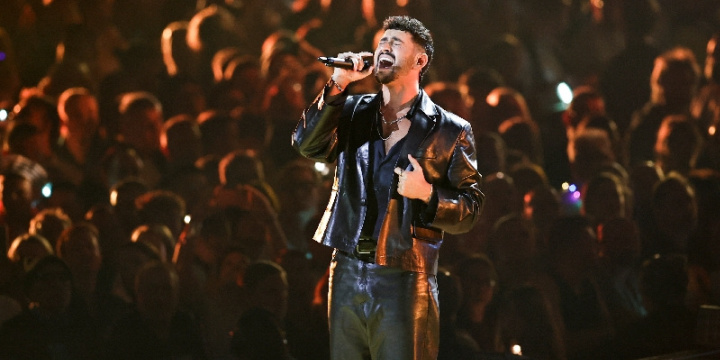

Noam Bettan, representing Israel, performs “Michelle” during the dress rehearsal 2 of the Grand Final of the 2026 Eurovision Song Contest, in Vienna, Austria, May 15, 2026. Photo: REUTERS/Lisa Leutner

Organizers of the Eurovision Song Contest (ESC) announced new rules on Wednesday that state if a country involved in an armed conflict wins the competition, it will not be allowed to host the contest the next year.

In the past, the country that wins the ESC is automatically the host of the competition the following year. The updated rules of the competition now state that the winning country “will automatically be ineligible to host the Contest if an armed conflict, a sensitive geopolitical situation, or any other situation materially affects the security, safety or stability of their state or immediate region.”

The rules also state that “where deemed necessary,” the European Broadcasting Union (EBU), which organizes the Eurovision, may commission “an independent security assessment of the winner’s region.” After the assessment, the EBU will consult with the competition’s governing body, the Reference Group, “to determine whether the winning Member is able to safely host the Contest.” If Eurovision organizers decide that the winning country is unable to host, the EBU will select an alternative host country. The alternate host “will not be required to stage the event on behalf of” another country.

“The Eurovision Song Contest is constantly evolving, and our annual review of the Rules is an important part of making sure the Contest remains fair, transparent and consistent for all those who participate, including the millions who engage with the event globally,” said Eurovision Song Contest Director Martin Green. “Guided, as always, by feedback from our Members, we have clarified and strengthened several areas for 2027. These changes are about giving everyone involved greater clarity, protecting artists and ensuring the Contest continues to provide a safe and welcoming environment, while preserving the spirit and integrity that make the Eurovision Song Contest so special.”

The rule change will directly affect not only Israel but also Ukraine, which has been in a war since Russia invaded the country in 2022. The Ukrainian rap group Kalush Orchestra won Eurovision that same year, which automatically qualified Ukraine to host the next year’s competition, but because of security risks in the country, the 2023 contest instead took place in the United Kingdom.

The new Eurovision rules were approved following feedback from participating broadcasters after the 2026 Eurovision in Vienna, Austria, in which Israel finished in second place. Israel’s continued participation in the competition has been highly criticized in recent years because of the country’s military actions in the Gaza Strip during the war with Hamas, which started after the terrorist group’s deadly attack across the Jewish state on Oct. 7, 2023. Five countries boycotted the 2026 Eurovision because of Israel’s involvement, and observers may view the updated competition rules as a response to scrutiny over Israel’s continued success in the competition. Israel finished in second place in the 2026 and 2025 Eurovisions, fifth place in 2024, and third in Eurovision 2023.

Eurovision organizers also announced on Tuesday that they have raised the minimum age for those participating in the Eurovision from 16 to 18, and clarified rules on the use of backing tracks and pre-recorded song elements.

The 2027 Eurovision Song Contest will take place in Burgas, Bulgaria, after the country’s entry, Dara, won the 2026 competition with song “Bangaranga.” Canada will also compete in the Eurovision next year, for the first time ever.


Zawartość publikowanych artykułów i materiałów nie reprezentuje poglądów ani opinii Reunion’68,
ani też webmastera Blogu Reunion’68, chyba ze jest to wyraźnie zaznaczone.
Twoje uwagi, linki, własne artykuły lub wiadomości prześlij na adres:
webmaster@reunion68.com


Suspect Arrested in Florida Antisemitic Attack Previously Accused of Slashing Giant FIFA Ball Display


Suspect Arrested in Florida Antisemitic Attack Previously Accused of Slashing Giant FIFA Ball Display

Shiryn Ghermezian


A street in Surfside, Florida. Photo: Wikimedia Commons.

A man from Miami Beach, Florida, who was arrested on Wednesday and accused of assaulting and threatening to kill a Jewish person during an antisemitic attack in Surfside had also been arrested earlier this summer for an unrelated violent incident, according to his arrest report cited by media outlets.

Jorden Stephen Perozo, 35, was taken into custody by the Surfside Police Department and is facing one count each of battery with prejudice and harassing or intimidating a person based on religious or ethnic heritage. He was arrested at his job at the Flanigan’s Bar and Grill on Harding Avenue and taken into custody without incident, according to police.

The antisemitic attack took place on Aug. 16 when a Jewish man and his wife, who were visiting Florida from New York, were walking along Harding Avenue. Perozo approached them on an electric scooter and cursed at them along with others in the Jewish community, according to the arrest report cited by NBC Miami. Perozo then punched the husband on the side of the head and told him, “Now you’re going to die. Walk away before I kill you.” He continued telling the victim that he hated him, called the couple “evil demons,” and made statements targeting Israel and “Palestine,” the affidavit stated. The victim’s wife recorded the incident on her cellphone.

Perozo appeared in court on Thursday. He was issued a $6,000 bond and ordered to stay away from the couple, according to NBC Miami.

Perozo was arrested in June on a criminal mischief charge after police accused him of slashing a giant inflatable FIFA ball that was on display in Miami Beach, as the city hosted 2026 FIFA World Cup matches.


Zawartość publikowanych artykułów i materiałów nie reprezentuje poglądów ani opinii Reunion’68,
ani też webmastera Blogu Reunion’68, chyba ze jest to wyraźnie zaznaczone.
Twoje uwagi, linki, własne artykuły lub wiadomości prześlij na adres:
webmaster@reunion68.com


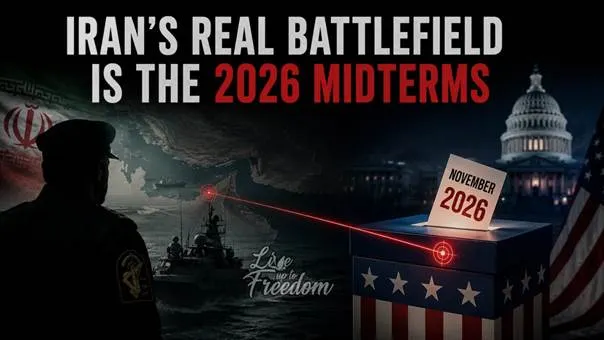
Prawdziwym polem bitwy Iranu są wybory środka kadencji w 2026 roku


Prawdziwym polem bitwy Iranu są wybory środka kadencji w 2026 roku

Aynaz Anni Cyrus


Amerykanie zadają rozsądne pytanie: negocjujemy z Iranem, walczymy z Iranem, czy też utknęliśmy gdzieś pomiędzy jednym a drugim?

Odpowiedź brzmi: wszystkie trzy rzeczy naraz.

Operacje wojskowe trwają. Kanały dyplomatyczne pozostają otwarte. Iran jednocześnie nadal atakuje, grozi, gra na zwłokę i negocjuje. Wielu Amerykanom wydaje się to sprzeczne. Dlaczego reżim, który dąży do pokoju, miałby nadal eskalować konflikt? Dlaczego miałby sabotować negocjacje, które mogłyby zakończyć wojnę?

Ponieważ wciąż popełniamy błąd, analizując Republikę Islamską tak, jakby była konwencjonalnym państwem narodowym realizującym konwencjonalne interesy narodowe.

Nie jest nim. To rewolucyjny system islamski, którego doktryna założycielska nie kończy się na granicach Iranu. Aby zrozumieć jego działania, musimy zrozumieć instytucję stworzoną po to, by chronić i rozwijać tę doktrynę.

Korpus Strażników Rewolucji Islamskiej (IRGC), który obecnie sprawuje faktyczną kontrolę nad krajem i jego strategią wojenną, nie jest jedynie irańską armią. Jest instytucjonalnym strażnikiem i eksporterem Rewolucji Islamskiej. Jego cel nie ogranicza się do ochrony terytorium czy ludności Iranu. Jego zadaniem jest chronić Rewolucję, rozszerzać jej wpływy i rozciągać islamskie panowanie poza granice Iranu.

Wyraźnie mówi o tym sama konstytucja Iranu. Jej preambuła stwierdza, że siły zbrojne i IRGC odpowiadają nie tylko za obronę granic Iranu, lecz także za wypełnianie „ideologicznej misji dżihadu na drodze Boga”. Misję tę definiuje jako rozszerzanie zwierzchnictwa prawa Allaha na cały świat.

Misja ta opiera się na wersecie 8:60 Koranu, który nakazuje muzułmanom przygotować wszelką siłę, jaką są w stanie zgromadzić, aby wzbudzać strach we wrogach Allaha.

Artykuł 150 stanowi, że IRGC ma nadal istnieć, aby kontynuować „strzeżenie Rewolucji i jej zdobyczy”.

Artykuł 154 zobowiązuje Republikę Islamską do wspierania tego, co określa ona mianem walki uciskanych przeciwko ciemiężycielom na całym świecie.

Nawet preambuła konstytucji przedstawia Rewolucję jako nieustający projekt, realizowany zarówno w kraju, jak i za granicą, którego celem jest wspieranie międzynarodowych ruchów islamskich i torowanie drogi ku jednej globalnej ummie.

Nie są to zapomniane hasła z 1979 roku. Stanowią konstytucyjny fundament Republiki Islamskiej i wyjaśniają, dlaczego IRGC w ogóle istnieje.

Ochrona i rozszerzanie Rewolucji nie są doraźną polityką realizowaną przez IRGC. To właśnie dlatego IRGC został utworzony.

Kiedy zrozumiemy tę misję, obecna strategia Iranu staje się znacznie mniej tajemnicza.

Republika Islamska nie oddziela wojny militarnej, gospodarczej, politycznej, informacyjnej i ideologicznej w taki sposób, jak często robią to zachodnie rządy. Rakiety, drony, terrorystyczne siły zastępcze, propaganda, wpływy polityczne, presja na rynki energii i negocjacje są różnymi narzędziami służącymi temu samemu rewolucyjnemu celowi.

Iran nie negocjuje zamiast walczyć. Iran walczy po to, by wzmocnić swoją pozycję negocjacyjną.

Dokładnie to obserwujemy obecnie. Teheran realizuje strategię, którą analitycy określają mianem kontrolowanej eskalacji. Wywiera wystarczającą presję militarną i gospodarczą, aby podnieść koszt oporu, jednocześnie starając się uniknąć eskalacji do poziomu, który doprowadziłby do jego całkowitego zniszczenia.

Cieśnina Ormuz odgrywa w tej strategii kluczową rolę. Grożąc żegludze i światowym dostawom energii, reżim może podnosić ceny ropy, destabilizować rynki, wzbudzać strach wśród amerykańskich wyborców i wywierać presję na Waszyngton, by ten poszedł na ustępstwa.

Impas w negocjacjach nie musi więc świadczyć o tym, że Iranowi nie udało się osiągnąć porozumienia. Sama gra na zwłokę może przynosić coś, co reżim uważa za znacznie cenniejsze.

Kupuje czas. A czas ma znaczenie, ponieważ Ameryka zbliża się do wyborów środka kadencji w 2026 roku.

IRGC rozumie amerykańską politykę. Rozumie, że przedłużające się wojny wyczerpują amerykańskie społeczeństwo. Rozumie, że rosnące ceny benzyny wpływają na wyniki wyborów. Rozumie, że straty wśród żołnierzy dzielą koalicje rządzące oraz że to, kto kontroluje Kongres, może przesądzić o tym, czy prezydent będzie w stanie kontynuować swoją politykę zagraniczną.

Przeciwnicy prezydenta Trumpa już przygotowują się do przedstawienia tego konfliktu jako kolejnej niekończącej się wojny na Bliskim Wschodzie. Każdy kolejny miesiąc walk dostarcza im więcej amunicji.

Jeśli Iran zdoła przeciągnąć konflikt do listopada, może zwiększyć niepokój gospodarczy, pogłębić zmęczenie wojną, podzielić Republikanów na zwolenników powściągliwości i eskalacji oraz zamienić wybory środka kadencji w referendum nad sposobem prowadzenia wojny przez prezydenta Trumpa.

Utrata przez Republikanów większości w Izbie Reprezentantów, Senacie lub obu izbach osłabiłaby pozycję negocjacyjną prezydenta. Mogłaby utrudnić finansowanie działań wojskowych, doprowadzić do dochodzeń kongresowych, ograniczyć możliwości działania administracji i wzmocnić pozycję ustawodawców bardziej przychylnych czerwono-zielonemu sojuszowi politycznemu działającemu w Stanach Zjednoczonych.

Niektórzy z tych kandydatów otwarcie prowadzą kampanie przeciwko amerykańskiej potędze, jednocześnie opowiadając się po stronie organizacji i ruchów ideologicznych, które konsekwentnie usprawiedliwiają islamistyczną agresję, umniejszają jej znaczenie lub odwracają od niej uwagę.

Mamy jednoznaczne dowody konstytucyjne na to, że IRGC ma ogólnoświatową misję rewolucyjną. Konkretna decyzja o przeciągnięciu tego konfliktu do amerykańskich wyborów środka kadencji może nie być jeszcze udokumentowana w publicznie dostępnym rozkazie operacyjnym, ale udawanie, że polityczne konsekwencje są przypadkowe, wymagałoby od nas zignorowania doktryny, historii i utrwalonych metod działania tego reżimu.

Republika Islamska przez niemal pięć dekad wykorzystywała terroryzm, branie zakładników, wojny prowadzone za pośrednictwem sił zastępczych, sieci religijne, propagandę i naciski polityczne, aby osiągać cele, których nigdy nie byłaby w stanie zrealizować wyłącznie za pomocą konwencjonalnej siły militarnej.

Dlaczego miałaby nagle zignorować najważniejsze amerykańskie wybory odbywające się w trakcie wojny?

IRGC nie próbuje wygrać tej wojny w Cieśninie Ormuz. Próbuje wygrać ją w wyborach do Kongresu w 2026 roku. A wszystko, czego potrzebuje, to czas, podziały, polityczny paraliż i zbyt wyczerpana Ameryka, by dalej się mu przeciwstawiać.

Dlatego listopad jest częścią pola bitwy. Pytanie brzmi, czy amerykańscy wyborcy dostrzegą to, zanim oddadzą swoje głosy. 


Link do oryginału:

Aynaz Anni Cyrus
Iran’s Real Battlefield Is the 2026 Midterms
If you value independent investigative work that refuses to bend, take action, upgrade to a paid subscription, or make a one-time contribution…
Read more

Zawartość publikowanych artykułów i materiałów nie reprezentuje poglądów ani opinii Reunion’68,
ani też webmastera Blogu Reunion’68, chyba ze jest to wyraźnie zaznaczone.
Twoje uwagi, linki, własne artykuły lub wiadomości prześlij na adres:
webmaster@reunion68.com


DSA Chicago Chapter Sparks Outrage Over Anti-Israel Questionnaire for Political Endorsements


DSA Chicago Chapter Sparks Outrage Over Anti-Israel Questionnaire for Political Endorsements

Corey Walker


Chicago, United States, on Aug. 22, 2024. Photo: J.W. Hendricks/NurPhoto via Reuters Connect

The Democratic Socialists of America (DSA) chapter in Chicago is facing backlash over a newly surfaced questionnaire which asks local political candidates for their opinion of Zionism and Israel, sparking renewed discourse over the relevance of a foreign country to local governance. 

As part of the questionnaire circulated to local candidates, the DSA asks political hopefuls to elaborate on whether they align with what they describe as “DSA values.” The first two longform questions instruct candidates to explain: “Would you consider yourself an anti-Zionist?” and “Do you support Boycott, Divestment, Sanctions, and its potential application on the municipal level?”

Anti-Zionism is an expressed belief in the destruction of Israel as the world’s sole Jewish state. This ideology, which is often embedded in broader anti-colonial, anti-Western, and anti-capitalist sentiments, has been described by many experts as inherently antisemitic. 

The boycott, divestment, and sanctions (BDS) movement seeks to isolate Israel from the international community as a step toward its eventual elimination, an effort viewed by critics as discriminatory and potentially unconstitutional. Leaders of the movement have repeatedly stated their goal is to destroy the country.

In response, Anti-Defamation League Midwest (ADL), the midwestern branch of the ADL, an organization committed to combating antisemitism, released a statement condemning the questionnaire as part of a broader obsession with demonizing Israel and creating unnecessary litmus tests irrelevant to local governance.

“This fixation on Israel is not only far removed from the responsibilities and priorities of an alderman, but also risks fueling anti-Jewish sentiment, harassment, and, ultimately, violence against Chicago’s Jewish community,” said Rebecca Weininger, senior regional director for ADL Midwest.

“That real estate, those questions are used to ensure that that person meets the litmus test of being against the right of Jews to self-determination in the land of Israel. That doesn’t help anybody’s lives in the Chicago area get better and in fact contributes to rising antisemitism,” Weininger added. 


.
Chicago DSA, a local chapter of the larger anti-capitalist, far-left DSA political organization, outlines its commitment to anti-Israel ideology as one of its main priorities on its official website. As part of its official platform, the Chicago DSA proclaims that support for “Palestine” is integral in its goals to “connect our local struggles to global justice.”

“Chicago DSA stands in solidarity with the Palestinian struggle against apartheid, colonialism, and military occupation, and for equality, human rights, and self-determination, including the Boycott, Divestment and Sanctions (BDS) movement,” it adds.

Last year, the national DSA organization passed a resolution at its major convention stating that various actions in support of Israel, such as “making statements that ‘Israel has a right to defend itself’” and “endorsing statements equating anti-Zionism with antisemitism,” will now be considered an “expellable offense,” subject to a vote by the DSA’s National Political Committee.

In Chicago, a local alderman could help advance the BDS agenda by introducing and advocating for a city-level severing of ties with Israel. The alderman could present legislation to City Hall to stop purchasing certain Israeli goods or services, prohibit city contracts with companies connected to Israel, and divest city-controlled investment funds from Israel.

However, these policies would likely face significant headwinds from Springfield. Illinois law prohibits certain public investment systems from investing in companies that boycott Israel. Further, Illinois also has the International Anti-Boycott Certification Act, which requires covered state contracts to contain certification concerning participation in international boycotts that violate federal anti-boycott law.

The DSA, the largest socialist organization in the country which counts members of the US Congress among its ranks, has previously American military aid to Israel and expressed support for Iran and its terrorist proxies, including Hamas and Hezbollah.

The DSA has recently fielded a series of successful insurgent Democratic primary campaigns, including those of New York City Mayor Zohran Mamdani and the victors of recent New York congressional primaries: Darializa Chevalier and Claire Valdez. In Colorado, the DSA-backed Melat Kiros prevailed over a long-term incumbent. 

However, the recent narrow defeat of democratic socialist Francesca Hong in the Wisconsin gubernatorial contest has raised renewed doubts over whether the movement can succeed in purple states. 

Jay Tcath, executive vice president of the Jewish United Fund in Chicago, questioned why the local DSA chapter exhibits an outsized focus on Israel. He argued that the status of the Jewish state is utterly irrelevant to the duties of local politicians. 

“Why is Zionism the number-one topic on DSA minds? Why is only the Jewish desire for national sovereignty and independence being demonized by DSA?” Tcath told The Center Square.

“DSA’s decision to continue to prop up the centrality of Jewish independence in a negative way has nothing to do with the challenges and opportunities confronting our city,” he continued. 

This is not the first time a local DSA chapter has been embroiled in this type of controversy. Earlier this year, the DSA chapter in Washington, DC drew outrage for asking potential endorsees for their position on BDS and whether they would “support taking steps to re-evaluate contracts and investments with companies and entities” connected to Israel.


Zawartość publikowanych artykułów i materiałów nie reprezentuje poglądów ani opinii Reunion’68,
ani też webmastera Blogu Reunion’68, chyba ze jest to wyraźnie zaznaczone.
Twoje uwagi, linki, własne artykuły lub wiadomości prześlij na adres:
webmaster@reunion68.com


SCOOP: Dominican Republic adopting IHRA working definition of Jew-hatred


SCOOP: Dominican Republic adopting IHRA working definition of Jew-hatred

Mike Wagenheim


The announcement on Monday night places the country seventh on the list of Latin American states adopting the widely used working definition.

Dominican Flag. Credit: Tony Savino/Corbis via Getty Images

The Dominican Republic said on Monday night that it is adopting the International Holocaust Remembrance Alliance’s working definition of Jew-hatred, JNS has learned.

Víctor Bisonó, the country’s foreign minister, made the announcement, which makes it the seventh Latin American state to do so.

Argentina holds the sole IHRA full member status in Latin America. Six other Latin American countries have previously adopted the IHRA definition: Colombia, Costa Rica, Guatemala, Panama and Uruguay.

The Latin American and Caribbean Parliament, a consultative assembly made up of national parliamentarians that represents 23 countries, has also adopted the definition.

The IHRA definition provides guidance for recognizing when criticism crosses the line into Jew-hatred by applying double standards, denying the Jewish people’s right to self-determination or using classic antisemitic tropes.

Estimates vary of the number of Jews living in the Dominican Republic from 100 to 3,000. The country holds a unique place in Jewish history as the first sovereign country that offered to accept mass Jewish immigration prior to and during the Holocaust.

It was the only country in the 1940s that offered asylum to a significant number of Jewish refugees, stating it would accept up to 100,000. The great majority never made it.

The country’s agriculture industry has deep Jewish ties, with kibbutzniks in then British Mandatory Palestine brought on to help the Dominican town of Sosúa. The country’s biggest producer of milk and cheese was founded by Holocaust refugees.

There are only two synagogues in the country—neither with a permanent rabbi. A Jewish cemetery, charity and mikveh still operate there, along with several Jewish organizations.

The Dominican Republic has previously engaged with the Combat Antisemitism Movement and the Israel Allies Foundation to review its potential adoption of the IHRA definition.

JNS sought comment from the Dominican Republic foreign ministry and from both Jewish groups.

A source told JNS that the United States is working closely with the government of Argentina to bring more Latin American countries into the IHRA fold, and that progress is expected to be made public soon.

Globally, 46 national governments have adopted the definition, along with dozens of U.S. states and more than 1,000 global entities. Just last year, 67 entities worldwide adopted the IHRA definition, a 97.1% increase from the 34 adoptions recorded the previous year, according to the Combat Antisemitism Movement.

The source said the Dominican Republic adoption of IHRA is due to the efforts of the Combat Antisemitism Movement, along with U.S. Secretary of State Marco Rubio and Yehuda Kaploun, a rabbi and the State Department’s special envoy to monitor and combat antisemitism.


Zawartość publikowanych artykułów i materiałów nie reprezentuje poglądów ani opinii Reunion’68,
ani też webmastera Blogu Reunion’68, chyba ze jest to wyraźnie zaznaczone.
Twoje uwagi, linki, własne artykuły lub wiadomości prześlij na adres:
webmaster@reunion68.com