 Take a tour of Israel’s huge new solar-energy valley in the desert
Abigail Klein Leichman
One of the largest renewable energy projects in the world, the sprawling Negev complex will produce 300 megawatts of clean electricity every day.
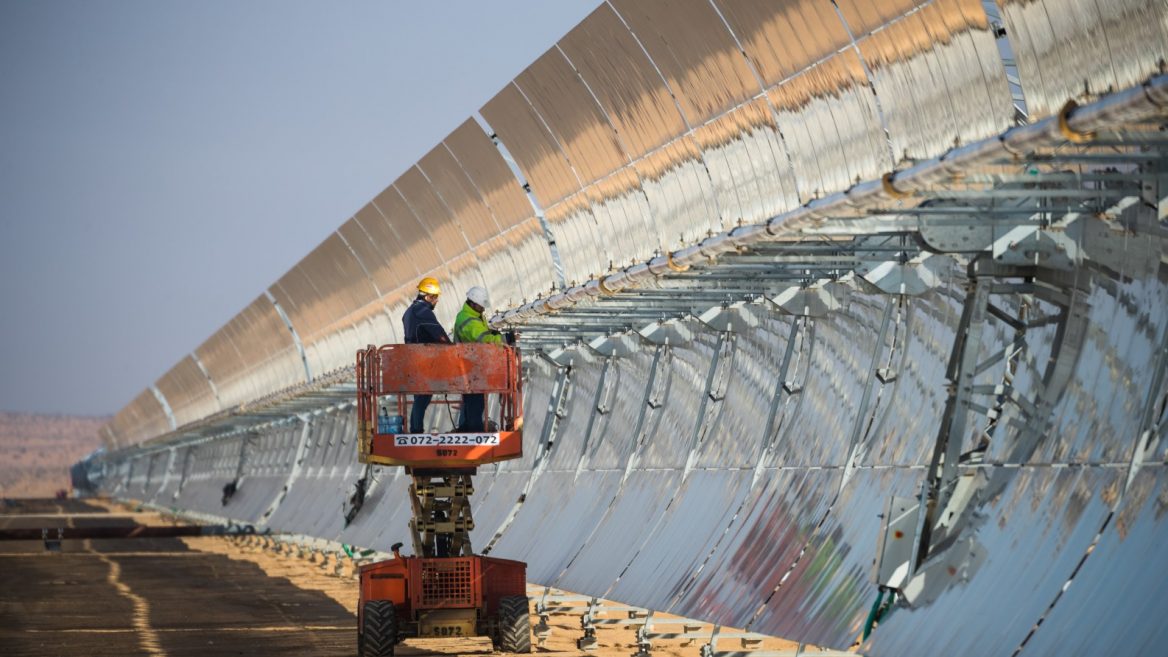 Photo of Ashalim thermo-solar power station mirror arrays by Gilad Kavalerchik/Negev Energy
Four Eiffel Towers could be built with the 28,000 tons of steel being used by Negev Energy to construct the Ashalim Thermo-Solar Power Station in Israel’s Negev Desert. Spread flat over 988 acres of sand, the array is nevertheless an impressive sight that tourists will be able to view from a platform after the plant opens next summer.
The Negev Energy project – which ISRAEL21c toured recently — is one of two gigantic thermo-solar plants going up side by side in Ashalim, about 40 kilometers south of Beersheva. The other one actually does incorporate a tall tower.
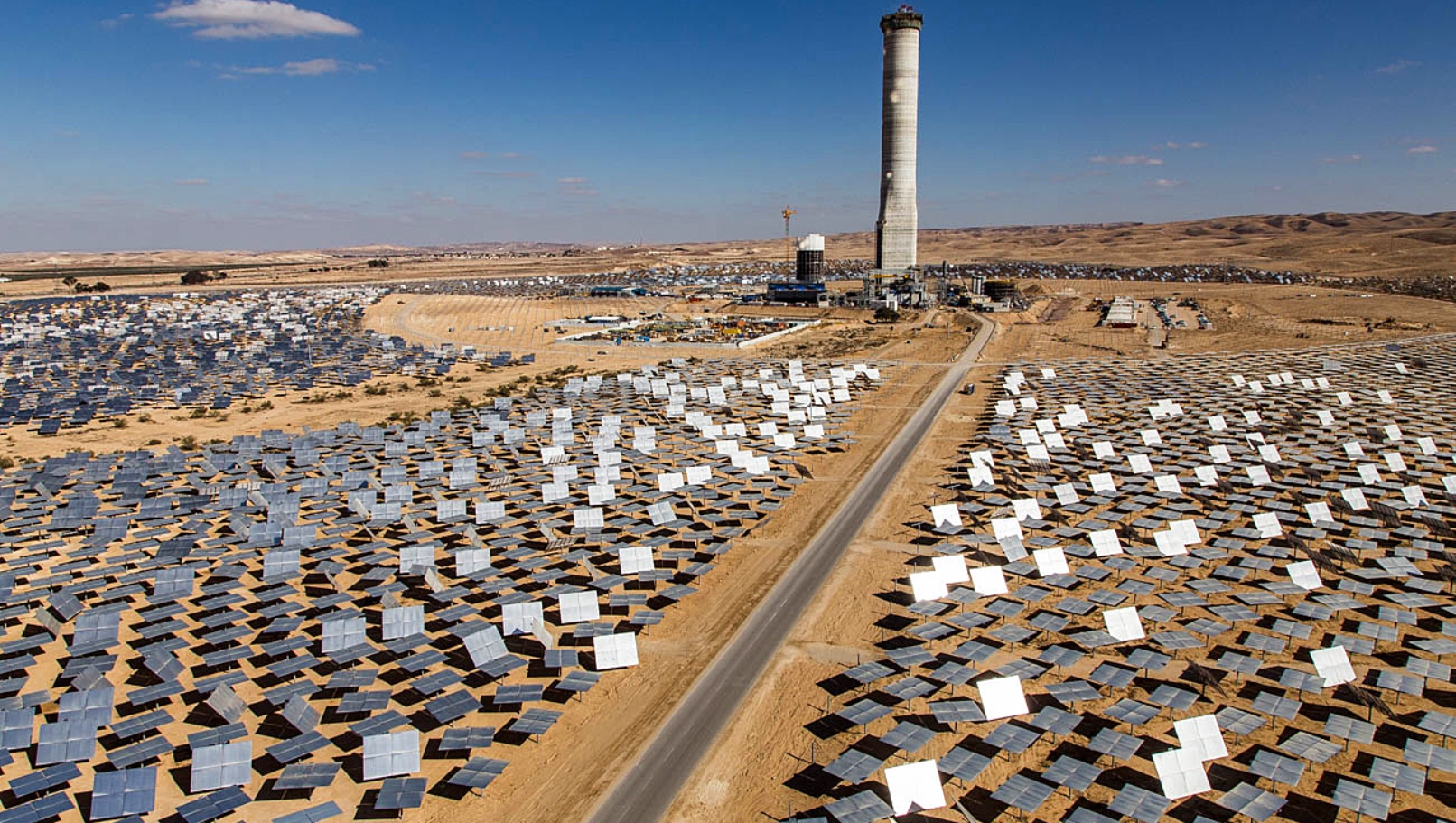 The Tower of Power energy project in Ashalim. Photo courtesy of BrightSource Energy
In addition to these two plants generating electricity from the sun’s heat using different technologies, two other plants will produce a total of 70 megawatts of electricity from sunlight using photovoltaic panels. The combination of technologies in one spot is unprecedented in the world.
Altogether, the Ashalim complex will provide approximately 300 megawatts of electricity daily to the Israel Electric Company’s national grid, contributing 2.5 percent toward the government’s goal of 10% renewable energy by 2020. Currently, only 2.6% of Israel’s electricity is generated from renewable sources.
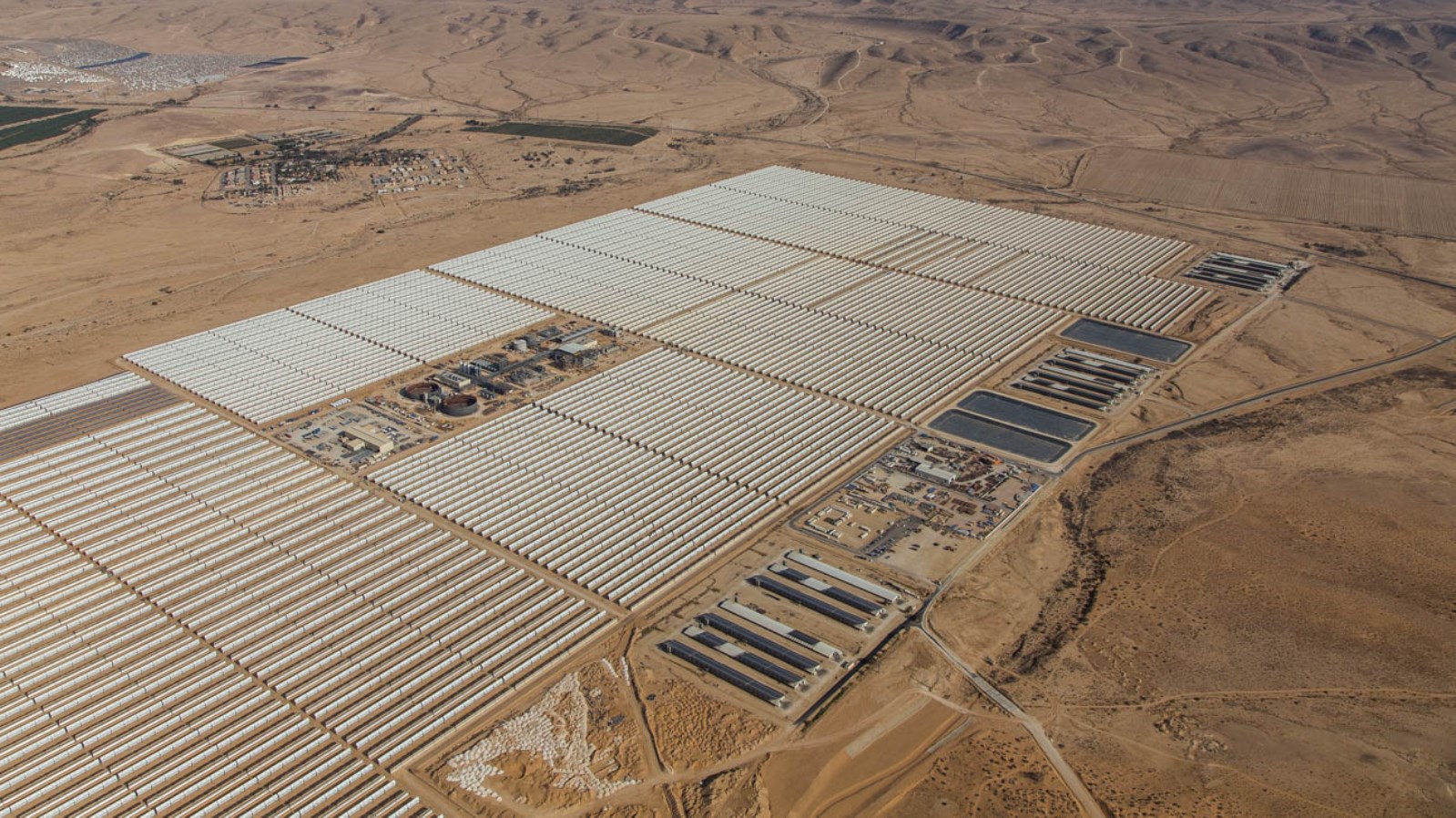 Overhead view of Ashalim thermo-solar power station under construction. Photo by Albatross/Negev Energy
“I think that Ben-Gurion is turning over in his grave, but from joy,” comments Eran Doron, head of the Ramat Hanegev Regional Council in whose jurisdiction Ashalim lies.
Doron is referring to a 1955 speech by first Israeli Prime Minister David Ben-Gurion, spelling out his vision for scientific innovation arising from the Israeli desert. Large-scale water desalination and solar-energy generation were central to his dream and both are happening.
Half a million mirrors
Each of the four Ashalim projects is funded by international consortiums based on the build-operate-transfer (BOT) model. Following construction and 25 years of operation, they’ll be transferred to the state.
Our tour focused on Negev Energy’s $1.1 billion project, said to be the largest energy project in Israel and one of the largest renewable energy projects in the world.
Negev Energy is a 50% subsidiary of Israel’s global Shikun & Binui Group; the other owners include the Noy Fund and Spanish company TSK.
The 121-megawatt plant’s 16,224 parabolic troughs, fitted with half a million mirrors (cleaned twice weekly), will collect the sun’s heat from any angle and transfer it through 203 kilometers of glass-insulated steel pipes that absorb the radiation.
The radiation will heat thermal oil flowing through the pipes to 390 degrees Celsius. The hot oil will then turn water into steam to drive a turbine generating enough power for 60,000 homes.
The net effect will be equivalent to taking 50,000 vehicles off the road, preventing emissions of some 245,000 tons of carbon dioxide.
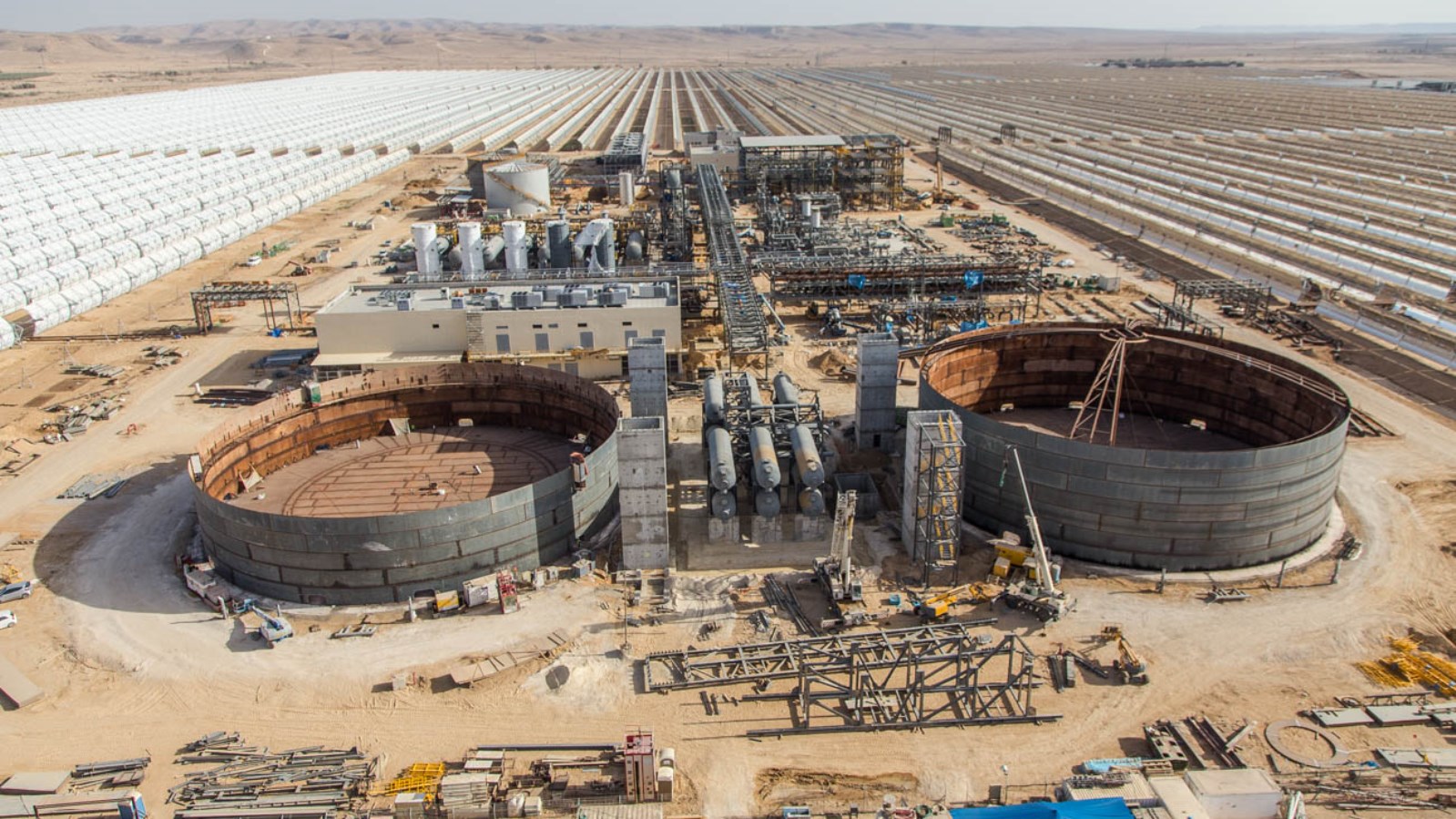 The round storage units hold molten salt that will transfer heat to and from thermal oil via heat exchangers in the middle. Photo by Albatross/Negev Energy
The plant will operate up to 18 hours per day, even in cloudy weather and after dark, using a molten salt heat-exchange and storage system to keep the oil hot. Some natural gas will be used as well.
“This is a game-changer,” said Negev Energy CEO Didi Paz. “It’s the first time this proven technology is being used in Israel.”
The plant uses a combination of field-tested Israeli and foreign innovations. For example, the mirrors are imported from Spain, the oil from the United States and the insulated pipes are made by a company in Beit Shemesh.
“Israel was one of the pioneers in developing the science behind thermo-solar technology, especially at the Weizmann Institute 30 or 40 years ago. But Israel lagged behind in applying the technology,” Paz told ISRAEL21c.
Tower of Power
The companion to the Negev Energy installation is a 110-watt thermo-solar station consisting of 50,000 computer-controlled heliostat mirrors that concentrate the sun’s heat onto a boiler atop a 250-meter tower.
This BOT project is being built by Megalim Solar Power for a consortium consisting of BrightSource Energy, GE Renewable Energy and the Noy Fund.
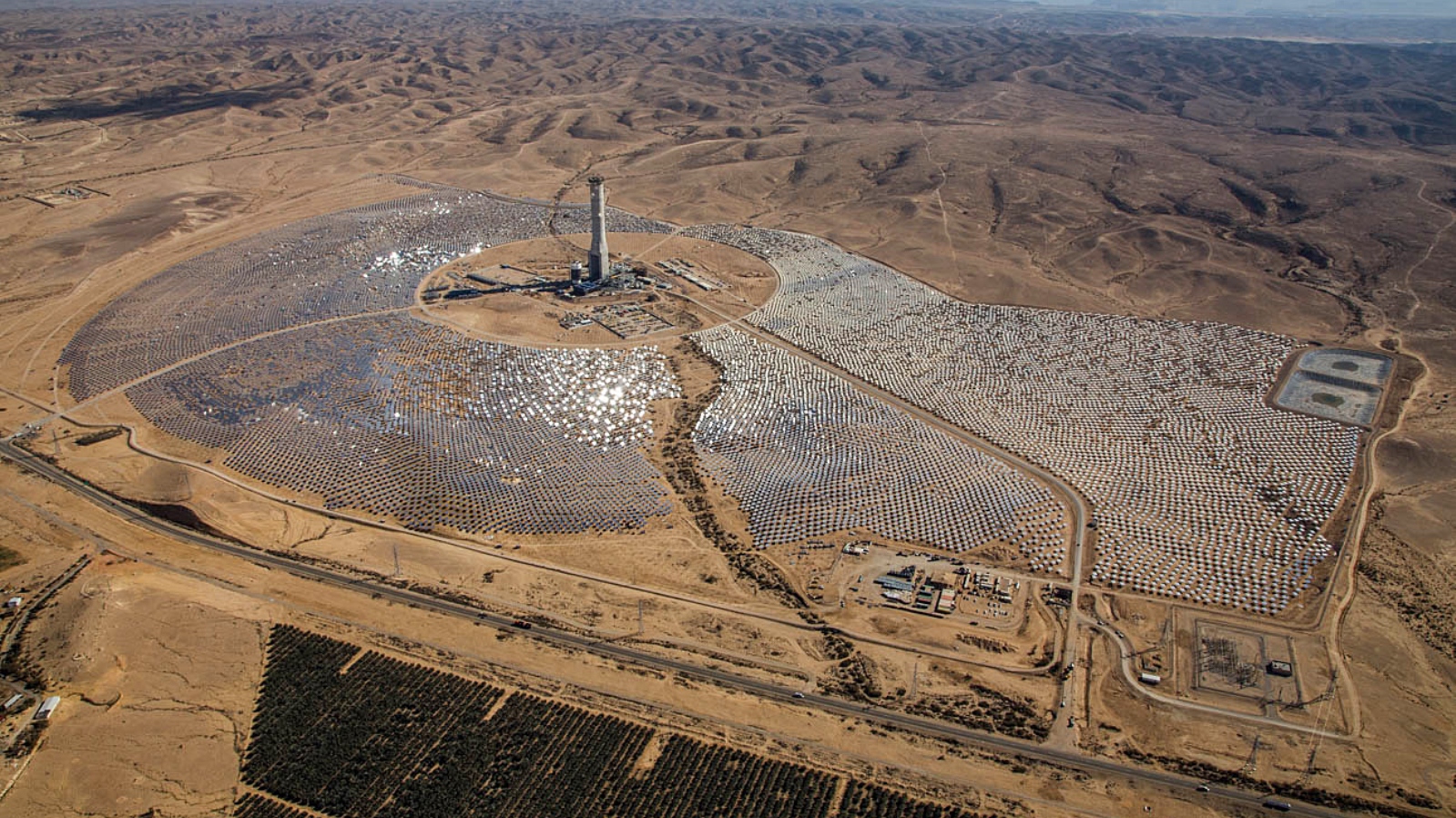 The Tower of Power thermo-solar power station at Ashalim. Photo courtesy of BrightSource
The two massive thermo-solar installations overshadow the 100 houses of Ashalim village, founded about 15 years ago by the Ayalim Association, a grassroots student movement to populate the Negev and Galilee.
“These families woke up one day and realized four monsters are going to be surrounding them,” said Paz, explaining that the government chose this particular site for a variety of reasons.
“We want to make life easier for them so we’ve engaged them on a constant basis, keeping them updated on the project and trying to avoid harming their peace. Now they sell services to the project and we’ve been able to provide them with better infrastructure that helps their agriculture and homes. We started three or four years ago as enemies and we’ve become friends.”
What about wildlife?
Yuval Saragusty, Negev Energy’s manager of energy, health, safety and security, oversees sustainability on site. His crew made 26 small-animal crossings, relocated rare desert plants and will restore truckloads of topsoil removed in construction. So as not to disturb animals active after dark, the plant won’t have perimeter lights.
Although there’s no avoiding the intensive natural-resource consumption of any power plant – even one producing clean, green energy — the Ashalim project meets advanced international environmental standards, said Paz.
The thermal oil will be fully recycled, while the water (1.6 million cubic meters annually, mainly from desalination plants) will be recycled as much as possible. Water that has gotten too salty from repeated recycling and evaporation will be released into two evaporation ponds rather than into the two streams bordering the plant.
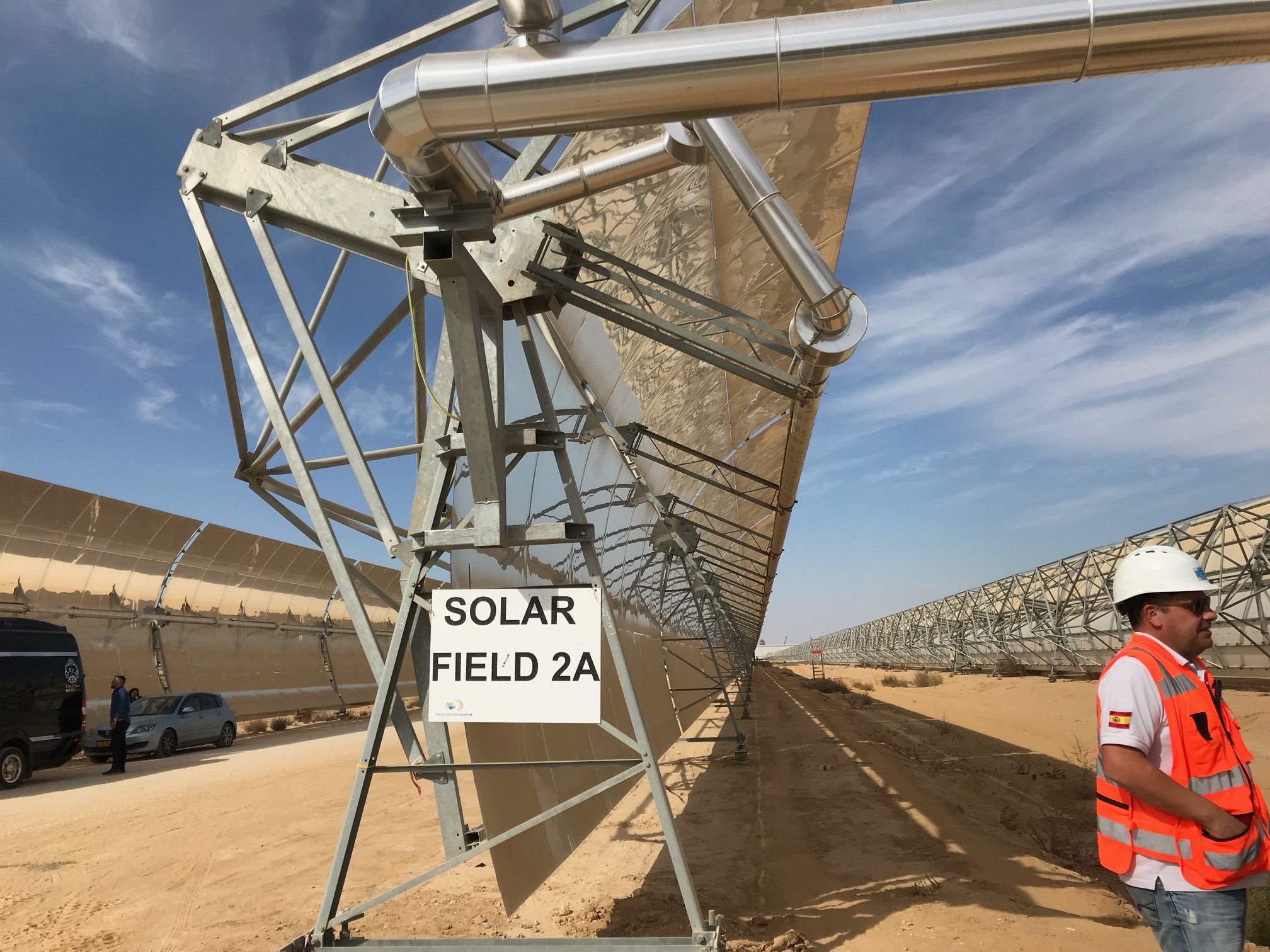 Juan Morales De Casticca, safety officer for Negev Energy’s thermo-solar project in Ashalim. Photo by Abigail Klein Leichman
The project also strives for social responsibility, Paz noted.
About 300 of the more than 1,000 employees in the construction phase come from the neighboring Bedouin village of Bir Hadaj. All the schoolchildren of Bir Hadaj have toured the site and learned how the technology works.
“We are giving preference to residents of the South. More than half of our employees now are residents of the Negev,” Paz said. “We are doing everything possible to make them benefit from the project by training and employing them.”
About 60 workers will operate and maintain the plant during its 25 years of private operation.
twoje uwagi, linki, wlasne artykuly, lub wiadomosci przeslij do: webmaster@reunion68.com







 AishVideo