Archive | February 2018

Oświadczenie Polskiego PEN Clubu

Oby niepodległa Polska przetrwała ten samobójczy paroksyzm. Oświadczenie Polskiego PEN Clubu

Polski PEN Club


5.02.2018, Warszawa, kontrmanifestacja wobec manifestacji ONR i Młodzieży Wszechpolskiej ‘Odwagi Polsko – prezydencie podpisz’ przed Pałacem Prezydenckim. (Fot. Dawid Żuchowicz / Agencja Gazeta)

Rzekoma “polityka wstydu” ustępuje miejsca polityce bezwstydu. Nadaje to rozłamowi w kraju charakter nieodwracalny.

Przez dwa lata poróżniono nas z najbliższymi sąsiadami, ze wspólnotą krajów sprzymierzonych i ze strategicznymi partnerami państwa polskiego. Każdy kolejny konflikt wszczyna się w imię fikcyjnej obrony Polski przed fikcyjnym atakiem na jej interesy i dobre imię, obsesyjnie powracając do realiów wojny sprzed czterech pokoleń. Z awersji do własnego państwa obraca się wniwecz dorobek ostatniego ćwierćwiecza, w którym odrodzona Rzeczpospolita, współtworząc system europejskich przymierzy, konsekwentnie i skutecznie urzeczywistniała historyczne pojednanie z Niemcami, z narodem żydowskim i ukraińskim. Przyjazne relacje z niepodległą Ukrainą osiągnęły wówczas poziom niebywały w dziejach wzajemnych stosunków. Niszcząc je dzisiaj, dąży się do bałkanizacji Europy Środkowej. Wizerunek Polski odstręczająco nieracjonalnej pogłębia jej złowróżbne osamotnienie w świecie.

Rzekoma „polityka wstydu” ustępuje miejsca polityce bezwstydu, nieraz zakrawającej na świadomą prowokację. Prowokacyjny charakter ma koncesjonowanie rozzuchwalonych bezkarnością kapturowych patriotów, coraz tłumniej manifestujących pod skrajnie rasistowskimi hasłami i aż za dobrze znanymi symbolami neofaszystowskimi.

Prowokacją jest zaproszenie przez posła na Sejm RP na polskie Święto Narodowe proputinowskiego włoskiego neonazisty, we własnym kraju skazanego za działalność terrorystyczną. Od lat związany też z brytyjskimi narodowcami negującymi Holocaust w przemówieniu inaugurującym warszawski Marsz Niepodległości nawoływał on do „przejęcia ulic”.

Prowokujący był wybór daty Międzynarodowego Dnia Pamięci Ofiar Zagłady (tuż przed 50-leciem rocznicy niechlubnego Marca 1968) na przyjęcie przez Sejm, a następnie Senat nowelizacji ustawy o IPN, a także wzniecona przy tej okazji antysemicka wrzawa.

Wśród aktorów tego haniebnego spektaklu wyróżnił się dyrektor Programu 2 telewizji publicznej, który na jej antenie pozwolił sobie na kpiny z ludobójstwa. Negujące realność Zagłady szyderstwo z komór gazowych, znane z praktyki neonazistów, nosi po angielsku miano Holohoax.

Wspomniana nowelizacja wbrew propagandzie nie ma na celu zwalczania kłamstwa oświęcimskiego i neofaszyzmu. Mieści się w złej tradycji ścigania zbrodni obrazy majestatu – w tym wypadku państwa i narodu polskiego. Pozbawienie wolności za arbitralnie orzeczone fałszowanie historii Polski to pomysł rodem z ustawodawstwa putinowskiej Rosji. Istotą aktu przyjętego przez obie Izby jest wprowadzenie cenzury podmiotowej, i to pod groźbą kary wieloletniego więzienia. Grozić ma ono m.in. za przypisywanie Polakom jakichkolwiek zbrodni wojennych lub zbrodni przeciw ludzkości podczas wojny lub nawet w latach 1925–1950 (jak w stosunku do Ukraińców). Ten cenzuralny zakaz musi z góry zakładać wywołanie konfliktu z narodami, które w pamięci zachowały przykłady takich zbrodni.

Cenzuralna „maszyna bezpieczeństwa narracyjnego”, jak to zawczasu określił doradca Prezydenta RP, tworzy zmitologizowany obraz wojny sprowadzonej do wymiaru batalistycznego i martyrologii własnego narodu. Antygermanizm, antyukrainizm i antysemityzm służą antyeuropejskości. Wszelki sprzeciw propagandowa „narracja”, rozogniając konflikty zewnętrzne, marcowym wzorem przedstawia jako akt zdrady.

Nadaje to rozłamowi w kraju charakter nieodwracalny. W tej przewrotnej logice pogłębić go mają wezwania do wspólnej obrony Polski przed krytyką z zewnątrz.

Oby niepodległa Polska przetrwała ten samobójczy paroksyzm.

Warszawa, 8 lutego 2018


Zawartość publikowanych artykułów i materiałów nie reprezentuje poglądów ani opinii Reunion’68,
ani też webmastera Blogu Reunion’68, chyba ze jest to wyraźnie zaznaczone.
Twoje uwagi, linki, własne artykuły lub wiadomości prześlij na adres:
webmaster@reunion68.com




3 Israeli startups vying to be the Waze of indoor spaces

Israel21c3 Israeli startups vying to be the Waze of indoor spaces

Abigail Klein Leichman


Oriient, Navin and Indoorgo want to help you navigate malls, museums, hospitals and airports without any need for installed hardware in the venue.

Image via Shutterstock.com

The Israeli navigation app Waze will steer you to your destination along the fastest route. But it can’t help you find your way inside a mall, museum, school, hospital, airport or other large building because GPS doesn’t work indoors.

This problem has caught the attention of tech companies large and small, including Google and Apple, yet today’s indoor maps haven’t mastered live navigation functionality.

Three Israeli companies are meeting this challenge with sophisticated indoor orientation apps independent of beacons or any other hardware installations in the venue. Each approach is slightly different, as we explain below.

Oriient

Oriient, founded in February 2016 in Tel Aviv, is building a plug-in for app developers on a monthly licensing model. The technology pinpoints indoor position within three feet using information from the Earth’s magnetic field and from sensors inside every smartphone.

Many malls, for example, already offer visitors free dedicated apps that enable them to do a store or product search. Adding Oriient to that app will provide an accurate indoor positioning service to guide the shopper directly to the store and even the shelf. The same could be done in any large building.

“Retailers and facility managers expect the service to just work without installing or maintaining anything. It’s low-cost and no hassle, and that’s what drives us,” CEO Mickey Balter tells ISRAEL21c.

Oriient was incubated in the 8200 EISP accelerator in Tel Aviv from January to June last year, and then from June to September in Techstars/Metro Accelerator for Retail in Berlin, a new cooperation between a German retail chain and an American accelerator.

“Through that platform we gained significant customers in the European retail space and are working with them on deployment,” says Balter.

“Next would be extension to the US and to non-retail verticals like smart buildings and robotics. We are seeing a lot of opportunities in the ‘future of the workspace’ as a lot of office buildings are introducing indoor positioning. We don’t necessarily have to track smartphones; we can also track robots.”

Oriient has five employees and is hiring more, having received more than $2 million in seed funding.

Navin

Navin took off nearly five years ago, guided by cofounders including Shai Ronen, a former F-16 combat navigator and Technion computer science graduate who worked in mapping and navigation technology at Elbit, Visionmap and Compugen.

Like Waze, the Navin app is powered by crowdsourcing. Its patented P2P Crowd Mapping technology turns smartphones into anonymous indoor mapping devices that passively capture millions of data movement points using aviation-grade stabilization, noise-canceling and drift-correction algorithms. The app generates maps from these data points.

Shai Ronen of Navin. Photo: courtesy

“We have the novel ability to create detailed maps of any building anywhere in the world remotely on our servers, without us ever being in that building,” Ronen tells ISRAEL21c.

Because a critical mass of data is needed to create each map — about 20 to 40 users using virtually any device at any time — Navin will recruit regional “ambassadors” to do the mapping prior to a beta launch early this year in one city at a time. Currently, Navin is being tested in large Israeli hospitals.

Navin was incubated in 8200 EISP and then in the Microsoft Ventures accelerator. Three years ago, serial entrepreneur Gidi Barak came aboard as founder and active chairman.

The Tel Aviv startup has 12 employees and has raised nearly $2 million from investors and the Israel Innovation Authority. Recently, Navin opened an office in Hong Kong because “Asia is a great place to start and there is a lot of interest in Hong Kong and Singapore, which are gateways to other countries,” says Ronen.

The revenue model probably will be based on in-app advertising from businesses in the buildings mapped, targeted to individual users’ movement patterns.

Indoorgo

Indoorgo Navigation Systems is developing an app that makes use of smartphone sensors and existing infrastructure in a building, such as Wi-Fi and Bluetooth, as well as the fixed position of the building’s overhead lights.

“This also allows us uniquely to give navigation in places such as parking garages,” says Larry Loev, CEO of Ariel Scientific Innovations, the technology commercialization arm of Ariel University.

The core technology was developed nearly five years ago in the university’s Kinematics and Computational Geometry Laboratory by professors Boaz Ben-Moshe and Nir Shvalb. Ben-Moshe and Ariel Scientific Innovations are the primary shareholders of Indoorgo, which has been exclusively funded till now by Ariel University.

To add any building to the app’s central database, it must be mapped once by one person – it could be an employee of the building, with no special training – in the course of about two hours. Data from subsequent Indoorgo users improves the positioning accuracy, explains Ben-Moshe. “Accuracy of up to 3 meters is achieved for the first visitor, gradually improving to less than 1 meter.”

Loev says this resolution is significant. “Google Maps can throw you off by 10 to 15 meters, while ours will be a product you can reliably use.”

Indoorgo is in the demo stage and has been tested in Israeli shopping malls. “The company is now ready for investment or sale,” says Loev.

Targeted in-app advertising is the most likely revenue model.


Zawartość publikowanych artykułów i materiałów nie reprezentuje poglądów ani opinii Reunion’68,
ani też webmastera Blogu Reunion’68, chyba ze jest to wyraźnie zaznaczone.
Twoje uwagi, linki, własne artykuły lub wiadomości prześlij na adres:
webmaster@reunion68.com


NO LEGISLATION CAN REWRITE HISTORY

NO LEGISLATION CAN REWRITE HISTORY

DANIEL SCHATZ


“One cannot fake history, one cannot rewrite it, one cannot hide the truth.”

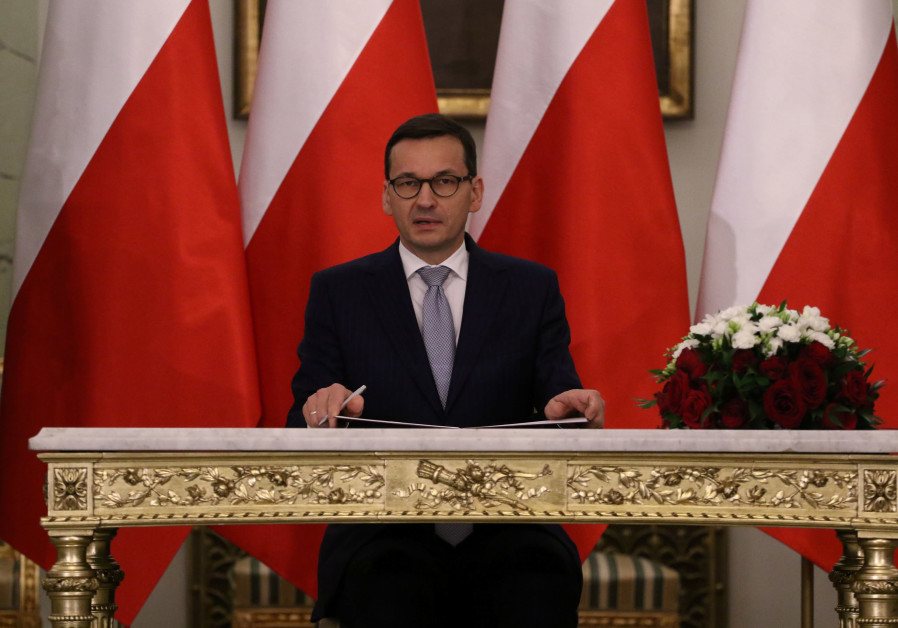
Newly appointed Polish Prime Minister Mateusz Morawiecki reacts after receiving his nomination from President Andrzej Duda during a government swearing-in ceremony in Warsaw, Poland, December 11, 2017. (photo credit: AGENCJA GAZETA/SLAWOMIR KAMINSKI VIA REUTERS)

My childhood was full of magical, well-known tales of love and joy and everyday life in the shtetls of Poland, told with warmth and wit by my grandparents. Some of these characters became my childhood heroes.

As a little boy yet unaware of Auschwitz, I wondered about my grandmother’s sadness: even when telling funny stories, she seemed to laugh with one eye and cry with the other. I don’t remember when I found out that all the characters, so alive in these vivid stories, were murdered in the Holocaust.

In recent years I have had several opportunities to visit former Polish shtetls, including the town of Zamosc, where my grandmother’s family lived before the Second World War. These villages are places where memory has been turned into history.

On a one-lane street leading to a small house on Ulica Gesia in Zamosc, I found the house where the Zalcman family once lived. It was from here that my relatives were sent to the death camp of Belzec in July 1942.

My grandmother saved herself by fleeing to the Soviet Union with her parents. While taking refuge in the towns and villages of the Polish countryside throughout the daring escape, they lived in constant fear of being denounced by their Polish neighbors.

On another street in Katowice, I found the house where my grandparents found refuge after miraculously surviving the war. From here, they were expelled in 1968 following the Polish communist government’s antisemitic campaign resulting in the forced exodus of nearly all of the country’s remaining 20,000 Jews, a mere 25 years after Nazi Germany had carried out the Holocaust on Polish soil.

Although World War II ended in 1945, the past is never dead. It’s not even past, as the author William Faulkner put it. Last week Poland’s President Andrzej Duda signed into law a bill approved by the country’s senate, imposing prison terms of up to three years for anyone who acknowledges Polish complicity in the Holocaust.

In addition to the risk of infringing upon freedom of speech and academic scholarship, the legislation – spearheaded by Warsaw’s ruling right-wing populist Law and Justice Party (PiS) – may distort historical records about the complicity of segments of the country’s population in the persecution of their compatriots.

The narrative of Poles as the main victims of Nazi Germany is deeply rooted in Polish national memory. Six million of its citizens were murdered by the Germans. Of the six million Jewish Holocaust victims, half were Polish Jews, accounting for 90% of the Jewish population in the country. Poles constitute the largest national group within the Righteous Among the Nations recognized by Yad Vashem, the World Holocaust Remembrance Center in Jerusalem.

The idea of Polish national innocence is nonetheless – as pointed out by the American historian Timothy Snyder – far from innocent itself. A growing number of scholars – as the Polish-Canadian historian Jan Grabowski – have argued that Poles took simultaneous roles as victims, perpetrators and bystanders. He documents their involvement in betraying and murdering their compatriots in The Hunt for the Jews: Betrayal and Murder in German-Occupied Poland (2013), while highlighting the heroism of individual Poles who risked their lives in efforts to save Jews.

The publication of Neighbors (2001) by the Polish-American historian Jan Tomasz Gross had already spurred Polish society into collective soul-searching and official state apologies. Gross details how, on July 10, 1941, under the eyes of the German occupiers, Polish Catholics murdered hundreds of their Jewish neighbors by burning them alive in the town of Jedwabne. Poland’s Institute of National Remembrance revealed, following a two-year investigation, that mass murders initiated by locals had taken place in several other villages.

Illustrative of the prevailing political sentiments in Warsaw, Poland’s Education Minister Anna Zalewska insinuated during an interview on the public broadcaster TVN in 2016 that the Jedwabne massacre was a matter of opinion. The same year, Gross was summoned to appear before Polish police for stating that Poles killed more Jews than they did Germans during the Holocaust. Gross was suspected of insulting the honor of the Polish nation.

Rather than seeking to use history to serve the imperatives of the present, those who see themselves as defenders of Poland’s good name should draw inspiration from its former president Aleksander Kwasniewski, who stressed to the Knesset in 2000 that “one cannot fake history, one cannot rewrite it, one cannot hide the truth.”

No government can rewrite historical facts and no law can erase history. Each society ought to examine historical developments and offenses, irrespective of the nationality of the perpetrators, to eradicate the ghosts of the past and safeguard a future founded upon respect for human rights, democracy and the rule of law. This remains our obligation to the dead and the living.


Daniel Schatz  – The author is a political scientist and Visiting Scholar at Columbia University’s European Institute. He has served as a Visiting Fellow at Harvard, Stanford and Georgetown University.


Zawartość publikowanych artykułów i materiałów nie reprezentuje poglądów ani opinii Reunion’68,
ani też webmastera Blogu Reunion’68, chyba ze jest to wyraźnie zaznaczone.
Twoje uwagi, linki, własne artykuły lub wiadomości prześlij na adres:
webmaster@reunion68.com



Oświadczenie Związku Gmin Żydowskich po słowach premiera Morawieckiego w Monachium

Oświadczenie Związku Gmin Żydowskich po słowach premiera Morawieckiego w Monachium

REDAKCJA


OŚWIADCZENIE ZWIĄZKU GMIN WYZNANIOWYCH ŻYDOWSKICH W RP

Wypowiedziane 17 lutego w Monachium słowa premiera Mateusza Morawieckiego o Zagładzie: „byli polscy zbrodniarze, tak samo jak byli żydowscy zbrodniarze, rosyjscy, ukraińscy, nie tylko niemieccy” oznaczają przekroczenie granicy, za którą jest już tylko obłęd. Polscy sprawcy nie byli „tak samo” jak niemieccy zbrodniarze : Zagłada byłą zbrodnią niemieckiego państwa, w której uczestniczyli niestety także i Polacy, wystarczająco liczni, by nie można było zbyć ich udziału mianem „indywidualnych przypadków”. Nie daje to jednak prawa nikomu, w tym zwłaszcza premierowi polskiego rządu, by wymieniać ich jednym tchem razem ze zbrodniarzami niemieckimi. Byli też sprawcy ukraińscy, także liczni, i działający, inaczej niż Polacy, w zorganizowanych formacjach, cieszących się poparciem części ukraińskiego społeczeństwa, co nakłada na ich zbrodnie dodatkowe brzemię.

Byli też sprawcy żydowscy, funkcjonariusze policji gettowych czy niektórych Judenratów, jak i indywidualni zdrajcy. Inaczej niż zbrodniarze niemieccy, sprawcy ukraińscy i polscy, działali oni pod presją bezpośredniego terroru, w sytuacji podobnej to tej, w jakiej znajdowali się więźniowie obozów koncentracyjnych. Żadnemu granatowemu policjantowi polskiemu, inaczej niż policjantom gettowym, nie groziła śmierć rodziny za odmowę dostarczania Żydów w ręce Niemców. Wymienianie ich, działających pod najstraszliwszym przymusem, jednym tchem ze sprawcamii polskimi, ukraińskimi, czy zbrodniarzami niemieckimi, którzy od popełnienia zbrodni mogli się uchylić, jest dowodem moralnej ślepoty.

Historycy wreszcie nie znają znaczących przykładów udziału, zgodnie ze słowami premiera, Rosjan w Zagładzie. Jeżeli zaś premier miał na myśli inne zbrodnie, istotnie popełnione przez Rosjan, to by oznaczało, że uważa Zagładę za zbrodnię jak każda inna. W obu przypadkach mielibyśmy do czynienia ze zdumiewającą historyczną niewiedzą.

Wzywamy premiera, i innych polityków, do powstrzymania się od dalszych nieprzemyślanych wypowiedzi, które stanowiąc zaprzeczenie prawdy historycznej, kompromitują ich osobiście oraz instytucjonalnie.

Warszawa, dnia 18 lutego 2018 r.

Statement of the Union of Jewish Communities in Poland in regards to the words of the Polish Prime Minister, Mateusz Morawiecki, spoken in Munich, on the 17th of February

The words of the Polish Prime Minister, Mateusz Morawiecki, spoken in Munich, on the 17th of February: “there were Polish criminals, there were Jewish criminals, Russian, Ukrainian, not only German”, cross the line of common sense. The Polish perpetrators were not “the same” as German perpetrators – Holocaust was a crime of a German State in which, unfortunately, Poles took part in such numbers that their participation cannot be considered as “individual cases”. However, this does not give anyone, especially the Polish Prime Minister, the right to name them in one sentence along with Germans. There were also Ukrainians, also numerous and unlike Poles operating in organized formations supported by part of the Ukrainian society, which makes their crimes even greater.

There were also Jewish criminals, Jewish Police in the Ghettos, or even some of the Judenrats, as well as individual perpetrators. Unlike Germans, Ukrainians or Poles, Jews acted under a threat of direct terror, in a situation similar to that of the prisoners of concentration camps. Unlike the Ghetto Police, Polish policemen were not threatened with death of their family for refusing to deliver Jews to the Germans. It is the sign of a moral blindness and historical ignorance to put those, who acted under the greatest duress in one sentence with Polish perpetrators or Ukrainian and German criminals.

According to Polish Prime Minister, historians do not know significant examples of Russian participation in the Holocaust. If the Prime Minister meant other crimes indeed committed by the Russians, it can suggest that he considers Holocaust to be a crime like any other. In both cases this would mean a surprising historical ignorance.

We are calling for the Prime Minister and other Polish politicians to refrain from further ill-considered statements, which deny the historical truth, and not only embarrass them, but also institutions they represent.

Warsaw, February 18, 2018


Zawartość publikowanych artykułów i materiałów nie reprezentuje poglądów ani opinii Reunion’68,
ani też webmastera Blogu Reunion’68, chyba ze jest to wyraźnie zaznaczone.
Twoje uwagi, linki, własne artykuły lub wiadomości prześlij na adres:
webmaster@reunion68.com


Anny Frajlich – uaktualniony kalendarz spotkań marzec 2018

nadeslala: Anna Frajlich

Anny Frajlich – uaktualniony kalendarz spotkań marzec 2018

Marzec 2018 – Anna Frajlich – Grafik

6.03.2018

Spotkanie autorskie. Godz 18.00, poprowadzi Leszek Szaruga
Warszawa STOWARZYSZENIE PISARZY POLSKICH,
DOM LITERATURY ul. Krakowskie Przedmieście 87/89


7.03.2018

Warszawa KLUB BABEL. ul. Próżna 5, godz. 17.30
Spotkanie z poetką Anną Frajlich „Co straciłam, co zyskałam wyjeżdżając z Polski po Marcu 1968”
Wiersze poetki przeczyta Małgorzata Pieczyńska.


8.03.2018

Warszawa STOWARZYSZENIE PISARZY POLSKICH,
DOM LITERATURY ul. Krakowskie Przedmieście 87/89
Godz. 12.30 – PANEL DYSKUSYJNY. Leszek Szaruga, Prof. Andrzej Friszke, Anna Frajlich, Piotr Matywiecki, Iwona Smolka, Leszek Kantor.
Godz.14.00 – Anna Frajlich, „Trauma emigracji”


9.03.2018

Radom godz. 18:00
Spotkanie z poetką Anną Frajlich, poprowadzi Ewa Kołodziejczyk.
Miejski Ośrodek Kultury Amfiteatr, ul. Parkowa 1, 26-600 Radom


12.03. 2018

godz. 18 Warszawa Muzeum Polin ul. Anielewicza 6
Spotkanie z Anną Frajlich, poprowadzi Katarzyna Kuczyńska-Koschany .
W ramach sympozjum sponsorowanego przez Wydział Polonistyki Uniwersytetu Warszawskiego (dr.hab. Alina Molisak), Wydział Filologii Klasycznej Uniwersytetu Poznańskiego (Prof. Przemysław Czapliński) oraz Muzeum Historii Żydów Polskich odbędzie się wieczór autorski Anny Frajlich.

14.03. 2018 (środa)

godz. 11:00 Szczecin Książnica Pomorska, sala im.Herberta

  1. Marzec ’68 – referaty wygłoszone przez emigrantów Marca ’68
    – „O Marcu – pół wieku po Marcu” – Anna Frajlich
    – „Co to jest emigracja marcowa i jakie ma relacje z Polską” – Leopold Sobel
  2. Debata na temat Marca’68 – moderator dr Eryk Krasucki.
  3. „Listy po Marcu’68” – czytanie sceniczne na podstawie książki pt. „Po marcu – Wiedeń, Rzym, Nowy Jork” autorstwa F.Bromberg, A.Frajlich, W.Zająca w wykonaniu Anny Gielarowskiej i Małgorzaty Iwańskiej.

15.03.2018

(czwartek) Szczecin, Dom Kultury 13 Muz godz. 18.00
Plac Żołnierza Polskiego 2
Spotkanie z Anną Frajlich, promocja reedycji tomów poetyckich Indian Summer/Który las oraz zbioru opowiadań Laboratorium. Wydawnictwo Forma.
Prowadzenie Jarosław Błahy.


20.03.2018

ul Meiselsa 18, Kraków, Fundacja Judaica – Centrum Kultury Żydowskiej
Spotkanie autorskie godz.18.00 – promocja nowych książek


23.03.2018

Biblioteka Kraków, godz.17.00
Plac Jana Nowaka Jeziorańskiego 3, 31-154 Kraków.
Organizatorzy: Uniwersytet Jagielloński i Rzeszowski:
promocja monografii „Tu jestem …” wyd. Księgarnia Akademicka, poświęconej dorobkowi Anny Frajlich powiązana z promocją tomu przekładów Marcina Wyrembelskiego na język włoski „Anna Frajlich, “Un oceano tra di noi” („Ocean między nami”], la Parlesia 2018”, oraz wznowień dwóch książek wydanych przez Wydawnictwo Forma.


Zawartość publikowanych artykułów i materiałów nie reprezentuje poglądów ani opinii Reunion’68,
ani też webmastera Blogu Reunion’68, chyba ze jest to wyraźnie zaznaczone.
Twoje uwagi, linki, własne artykuły lub wiadomości prześlij na adres:
webmaster@reunion68.com