Archive | June 2018

How Russiagate Became Israelgate

How Russiagate Became Israelgate

Lee Smith


Special counsel Robert Mueller leaves after a closed meeting with members of the Senate Judiciary Committee June 21, 2017.(Alex Wong/Getty Images)

Earlier in the week, the Daily Caller reported that George Papadopoulos’s wife, an Italian lawyer named Simona Mangiante, said her husband had pleaded guilty in July to lying to the FBI to avoid charges by special counsel Robert Mueller’s team that he was an agent of the Israeli government. Her husband’s lawyers tried to throw cold water on her intervention with a statement explaining: “The most accurate account of Mr. Papadopoulos’ plea agreement and plea of guilty is contained in the publicly filed court records and the transcript of Mr. Papadopoulos’ guilty plea.”

However, an article in the Washington Post on Mangiante’s claim suggests that the 29-year-old former Trump adviser’s ostensible ties to Israel have become a subject of general interest, albeit thinly sourced. The Post reports that Papadapoulos wrote for Israeli publications, including Haaretz, and struck up an acquaintance with a Netanyahu aide, Eli Groner.

Needless to say, the mention of Israel was catnip for Russiagate conspiracy theorists—even though Israel is not Russia, and Vladimir Putin and Benjamin Netanyahu would appear to have some strong differences in, among other places, Syria. “Israeli espionage against the United States is a perennially touchy subject in Washington,” former National Security Agency analyst John Schindler writes this week in the Observer, once owned by Trump’s son-in-law Jared Kushner.

Schindler quotes a colleague from the US intelligence community who wonders, “What if the real secret of the Trump campaign isn’t that it’s a Kremlin operation, rather an Israeli operation masquerading as a Russian one?” While President Trump’s policies haven’t exactly favored Vladimir Putin, Schindler admits, Israel is another story. “Trump has gone whole-hog for the Israeli right-wing,” writes the former American spy. “The recent move of our embassy to Jerusalem, long desired by the Israeli Right, is merely the most prominent of Trump’s gifts to his pal Bibi and his ruling Likud party.”

Amassing further evidence of the Trump administration’s support for a key US ally, Schindler concludes: “It’s no wonder that Mueller and his investigators are trying to get to the bottom of what certain Israelis were doing in 2016 in secret to boost the Trump campaign. That answer may eventually prove just as important as Mueller’s inquiry into the Kremlin and its clandestine attack on our democracy two years ago.” Reached for comment, Schindler admitted that concrete facts in this case were in short supply. “There is as yet no sign that these individuals were tied to the Israeli government,” he said, “though the past connection of some of those individuals to Israeli intelligence raises obvious questions.”

In other words, if the Russiagate conspiracy theory doesn’t pan out, maybe Israelgate will explain why.

But that doesn’t mean it isn’t worth asking the question: Is George Papadopoulos actually not a Russian agent of influence, but an Israeli spy?

According to the December 30, 2017 New York Times story that first laid out the genesis of the investigation, the FBI started its probe with a tip from Alexander Downer, Australia’s High Commissioner to the United Kingdom, who met with Trump campaign adviser George Papadopoulos in London in May 2016. Papadopoulos informed Downer that he had been told by a “Kremlin-linked” professor that Russia had potentially damaging information on Hillary Clinton.

In an April, 2018 article in The Australian, Downer explained that he had reached out to Papadopoulos through an “Israeli contact.” According to a story from the Daily Caller, the Israeli contact is Christian Cantor, an official at the Israeli embassy in London, who introduced Papadopoulos to “Erika Thompson, a counselor to Downer who serves in Australia’s London embassy.” Downer had wanted to speak to Papadopoulos after he made disparaging comments about UK Prime Minister David Cameron in the British press, and told Thompson to reach out to the Trump adviser.

Now, according to senior US officials reached by Tablet, the Australians are saying it was the other way around. “The Australians are telling reporters that the Israelis put Papadopoulos in front of them,” one told me this week.

The Australian embassy in Washington did not respond to a request for comment. The Israeli embassy in Washington did not respond to similar requests, nor did spokespersons in Prime Minister Benjamin Netanyahu’s office.

It’s not hard to see why the Canberra government would be eager to get out of the spotlight. An article in the Wall Street Journal last week shows that Downer went through unusual channels to report his tip. Rather than reporting his conversation to the Australian government, according to whom Downer broke protocol and instead contacted a diplomat at the US embassy in London, Elizabeth Dibble. Somehow the information made its way up the chain at the State Department, which relayed the tip to federal law enforcement. Congressional investigators on the Republican side believe that Downer—who was instrumental in securing $25 million from his government to help the Clinton Global Initiative fight AIDS—may have been participating in a sting operation against a US presidential campaign.

It’s unlikely Australia intended any lasting harm in seeking to swap responsibility for the Papadopoulos meeting with Israel. The problem is that this is all emerging in the midst of other Israel-related matters in the Russiagate scandal.

Some conservative journalists have argued that Mueller appears to have a problem with Israel. In particular, they note the 2004 sting operation designed to root out Israeli spies that the FBI conducted when Mueller was director—an operation which has some notable similarities with the FBI’s July 2016 Trump campaign investigation, in which the bureau reportedly ran an informant, Stefan Halper, a former US official, who met with at least three members of the Trump campaign.

For the Israeli spy ring probe, Mueller’s FBI employed similar tactics, using Pentagon analyst Larry Franklin as a informant and convincing him to wear a wire when he met with Israeli officials and AIPAC analyst Keith Weissman, after convincing him that Weissman and AIPAC colleague Steven Rosen were, as Franklin’s words, “bad people.” According to a 2009 Washington Post article by Gary Wasserman, the two AIPAC officials “were targets of a bizarre sting in which they were fed false information suggesting that the lives of U.S. and Israeli operatives in Iraq were at risk and that American officials were refusing to take steps to protect them.”  When Rosen and Weissman passed that information on to Israeli officials and to the Washington Post, and tried to reach George W. Bush’s National Security Council staff, they were arrested. In 2009, charges against the two men were dropped.

According to the 2009 Post article, “Franklin was apparently sent out by his FBI handlers to tempt Jews. He tried Adam Ciralsky at CBS News, who had once sued the CIA for anti-Semitism, and Richard Perle, who was on his way to vacation in France, as well as Pentagon employees who had done nothing more than work with Franklin. All turned down the offer of information.”

Hints of a Jewish conspiracy that was part of or behind the Trump-Russia collusion theory have long circulated among the conspiracy-mongers and in the press. In his November 14, 2017 testimony before the House Intelligence Committee, Fusion GPS founder Glenn Simpson said that the Jewish diaspora “appears to be a very interesting route for the Russians.” The Steele dossier, which was marketed by Simpson’s company, elaborates on that claim. The FSB, claims one of Steele’s ostensible sources, was approaching “U.S. citizens of Russian (Jewish) origin on business trips to Russia” as potential foreign agents.

In April 2017, Politico picked up on the theme with a story about the alleged ties between Trump, Putin, Jared Kushner, and a “happy-go-lucky Jewish group” called Chabad, “the most sprawling Jewish institution in the world.” Tablet reported that Fusion GPS was believed to be the source for the Politico story. The ostensible Trump-Putin-Chabad link appeared in the press again, including on the BBC, with the arrest of Michael Cohen, and was also quickly disproved.

That the collusion spotlight has now focused more intensely on Israel and the Jews in a story that’s ostensibly about Russia and Donald Trump makes a weird kind of sense. As a conspiracy theory becomes larger, incorporates more actors and institutions, points to more events, more connections, it shows more gaps in its logic. As the conspiracy theorists struggle to explain or reconcile contradictions in their accounts, the pull towards the deus ex machine of all conspiracy theories—the powerful, wealthy, rootless, cosmopolitan wanderers of the earth—only gets stronger.

Seen this way, shifting the spotlight in Russiagate to Israel and the Jews would seem to portend a weakening of the collusion narrative. It’s difficult to imagine that many of the prominent figures on the left and the Never Trump right who have seen the Russiagate conspiracy as a useful instrument to weaken or corral Trump will be eager to push a narrative about clandestine Jewish control of American politics. Perhaps Russiagate believers will break into two separate camps, Trump-Russia and Trump-Israel. In the meantime, there’s not much for the rest of us to do but watch.


Zawartość publikowanych artykułów i materiałów nie reprezentuje poglądów ani opinii Reunion’68,
ani też webmastera Blogu Reunion’68, chyba ze jest to wyraźnie zaznaczone.
Twoje uwagi, linki, własne artykuły lub wiadomości prześlij na adres:
webmaster@reunion68.com



Yiddish Song – Belz, Mayn Shtetele Belz

Yiddish Song – Belz, Mayn Shtetele Belz

   iurisant


1.
When I recall my childhood,
I feel like I am having a dream.
how does the little house look,
which used to sparkle with lights?
Does the little tree grow which I planted long ago?

Refrain:
Beltz, my little town! The little house where I spent my
childhood!
The poor little room where I used to laugh with other
children!
Every Shabes I would run to the river bank to play with
other children under a little green tree.
Belz, my little town!
My little town where I had so many fine dreams!

2.
The little house is old and overgrown wit moss.
The old roof collapsed and the windows are without glass.
The attic is crooked, the walls bent.
I would never recognize it…

Refrain.

Az ikh tu mir dermonen
Mayne kindershe yorn,
Punkt vi a kholem
Zet dos mir oys.
Vi zet oys dos hayzele,
Vos hot amol geglantzt,
Tzi vakst nokh dos beymele,
Vos ikh hob farflantzt?

Oy, oy, oy Belts, mayn shtetele Belts,
Mayn heymele, vu ikh hob
Mayne kindershe yorn farbrakht.
Belts, mayn shtetele Belts,
In ormen shtibele,
Mit ale kinderlekh dort gelakht.
Oy, eden Shabes fleg ikh loyfn
Mit ale inglekh tzuglaykh
Tzu zitzn unter dem grinem beymele,
Leynen bay dem taikh
Oy oy oy Belts,
Mayn shtetele Belts,
Mayn heymele, vu kh’hob gehat
Di sheyne khaloymes a sakh.

Dos shtibl is alt,
Bavaksn mit mokh
Dos shtibl is alt,
In fentzter keyn gloz
Dos shtibl is alt,
Tzeboygn di vent,
Ikh volt shoyn zikher
Dos vider nit derkent

Song: Belz
Artist: Talila, Ensemble de Kol Aviv
Album: Chants Yddish
Licensierad av:  Believe Music (på uppdrag av Arion); UMPI och 7 musikupphovsrättsorganisationer


Zawartość publikowanych artykułów i materiałów nie reprezentuje poglądów ani opinii Reunion’68,
ani też webmastera Blogu Reunion’68, chyba ze jest to wyraźnie zaznaczone.
Twoje uwagi, linki, własne artykuły lub wiadomości prześlij na adres:
webmaster@reunion68.com


Palestyńska “zdrada”

Palestyńska “zdrada”

Bassam Tawil
tłumaczenie: Małgorzata Koraszewska


Przywódcy palestyńscy w ostatnich miesiącach intensywnie wzywali do bojkotu Izraela i USA. Najnowsze wezwanie przyszło zaledwie kilka tygodni temu, kiedy wezwali wszystkie kraje do zbojkotowania ceremonii inauguracyjnej ambasady USA w Jerozolimie.

Jednym z dygnitarzy, który wzywał do zbojkotowania tej ceremonii był Ahmed Madżdalani, członek komitetu wykonawczego OWP i wysoki doradca prezydenta Mahmouda Abbasa. Madżdalani jest także słynny ze swych wielokrotnych wezwań w ostatnich latach do bojkotowania Izraela we wszystkich dziedzinach życia.

Teraz wygląda na to, że Madżdalani musi zakosztować tego samego lekarstwa, które przepisywał Izraelowi i USA. Jego starania o bojkotowanie Izraela i USA przyniosły skutek odwrotny do zamierzonego. Jak na ironię, Madżdalani jest obecnie bojkotowany przez ludzi, których wcześniej podżegał. To zdarza się, kiedy kazaniem, jakie wygłaszasz dzień i noc jest nienawiść, podżeganie i bojkot. W końcu ciebie samego dotyka ta sama nienawiść.

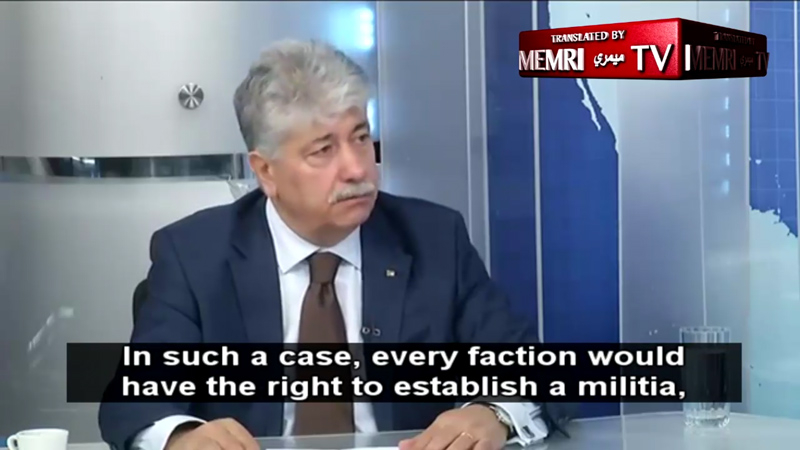
Ahmed Madżdalani, członek komitetu wykonawczego OWP, którego jego ludzie oskarżają o promowanie “normalizacji” z Izraelem. (Zrzut z ekranu z wideo MEMRI)

Madżdalani jest obecnie oskarżony przez własnych ludzi o promowanie “normalizacji” między Palestyńczykami a Izraelem.

Jakie więc przestępstwo popełnił Madżdalani i dlaczego stał się przedmiotem zaciekłej krytyki i wezwań do bojkotowania go?

Okazuje się, że ten dygnitarz OWP i promotor bojkotów popełnił dwa “przestępstwa”. Pierwsze, zaakceptował zaproszenie na doroczną Konferencję Herclijja, organizowaną przez izraelski think-tank, Instytut Polityki i Strategii. Drugie, kiedy poproszono Madżdalaniego o komentarz na temat krytyki jego uczestnictwa w izraelskiej konferencji, odpowiedział: “Moje uczestnictwo w Konferencji Herclijja nie różni się od uczestnictwa w wydarzeniu zorganizowanym przez, na przykład, uniwersytet Bir Zeit”.

Doroczna konferencja odbywa się w Międzydyscyplinarnym Ośrodku w Herclijji – uczelni badawczej w pobliżu Tel Awiwu, założonej w 1994 r. w oparciu o model amerykańskich uniwersytetów Ivy League.

To nie był pierwszy raz, kiedy Madżdalani uczestniczył w tej Konferencji. W przeszłości także spotykał się z ostrą krytyką za udział w konferencji organizowanej przez izraelski think-tank.

Tym razem jednak jego krytycy uznali, że potępienie nie wystarcza. Madżdalani otrzymał teraz surową karę; ma zakaz wchodzenia lub przemawiania na wszystkich palestyńskich uniwersytetach.

Dr Amdżad Barham, przewodniczący Ogólnego Związku Pracowników na Palestyńskich Uniwersytetach, ogłosił 22 maja, że jego związek zdecydował o bojkotowaniu Madżdalaniego i nie przyjmowaniu go na żadnym kampusie uniwersyteckim. Powiedział, że ta decyzja zostanie anulowana, tylko jeśli Madżdalani przeprosi za zrównanie palestyńskiego uniwersytetu i izraelskiej instytucji edukacyjnej.

Dr Barham wyjaśnił, że decyzja bojkotowania Madżdalanigo wynika ze sprzeciwu związku wobec wszelkiego rodzaju “akademickiej normalizacji” z Izraelem. “Nasz związek będzie ciężko pracował, by pociągać do odpowiedzialności każdego polityka lub akademika, który bierze udział w promowaniu normalizacji z Izraelem, i poprosimy wszystkie uniwersytety palestyńskie, by taką osobę bojkotowały – powiedział. – Każdy palestyński akademik, który popełni przestępstwo promowania akademickiej normalizacji z Izraelem, zostanie ukarany i otrzyma zakaz postawienia stopy na wszystkich palestyńskich uniwersytetach”.

Związek Pracowników uniwersytetu Bir Zeit również wydał podobne wezwanie do bojkotowania Madżdalaniego. Związek oznajmił, że jest wściekły na tego dygnitarza OWP nie tylko dlatego, że uczestniczył w izraelskiej konferencji, ale także dlatego, że ośmielił się przeciągnąć paralelę między uniwersytetem Bir Zeit a izraelską instytucją edukacyjną. Przewodniczący związku, Sameh Abu Awwad, powiedział, że każdy Palestyńczyk przyłapany na promowaniu jakiegokolwiek rodzaju “normalizacji” z Izraelem, będzie poddany karze i bojkotowi. “Wydaliśmy rozkaz zakazujący Majdalaniemu wejścia na nasz uniwersytet – powiedział. – Nie ma miejsca dla normalizatorów [z Izraelem] na naszym kampusie”.

Teraz więc ten dygnitarz OWP może wejść na każdy izraelski uniwersytet, ale jest persona non grata na palestyńskich uniwersytetach i innych instytucjach akademickich. Jak ośmiela się porównywać palestyński i izraelski uniwersytet? Jak ośmiela się brać udział w konferencji obok izraelskich akademików, polityków i ekspertów? Zbrodnia nie do wybaczenia z palestyńskiego punktu widzenia.

Warto zauważyć, że ci, którzy zdecydowali zakazać dygnitarzowi OWP wejścia na palestyńskie uniwersytety, żyją pod rządami “umiarkowanej” Autonomii Palestyńskiej na Zachodnim Brzegu i odpowiadają przed ministerstwem edukacji Autonomii Palestyńskiej, nie zaś Hamasu.

To jest ta sama Autonomia Palestyńska, która otrzymuje fundusze z USA i UE. Innymi słowy, Amerykanie i Europejczycy finansują Palestyńczyków, którzy sprzeciwiają się jakiejkolwiek “normalizacji” z Izraelem. Dla tych Palestyńczyków byłoby lepiej, gdyby Izrael po prostu zniknął, niż gdyby byli zmuszeni do jakiejkolwiek współpracy z nim. Każdy, kto sprzeciwia się “normalizacji” z Izraelem w rzeczywistości działa przeciwko pokojowi z Izraelem. Jak może kiedykolwiek zapanować pokój między Palestyńczykami a Izraelem, skoro Palestyńczycy zdecydowanie sprzeciwiają się “normalizacji” z Izraelem? To prowadzi nas tylko do jednego wniosku: że Amerykanie i Europejczycy finansują Palestyńczyków, którzy dążą do anihilacji Izraela.

Postawmy sprawę jasno. Antynormalizacyjna kampania Palestyńczyków wobec Izraela oznacza, że Palestyńczycy nie są zainteresowani pokojem z Izraelem. Nie dążą do pokoju z Izraelem, ale do pokoju bez Izraela. Chcą zobaczyć zniknięcie Izraela z Bliskiego Wschodu. Chcą, by Żydzi zniknęli z regionu.

Problem Palestyńczyków nie polega na osiedlach, punktach kontrolnych, ani płocie granicznym. Mają problem z istnieniem Izraela w jakichkolwiek granicach. Palestyńczycy nadal nie pogodzili się z prawem Izraela do istnienia – kropka. To jest istota izraelsko-arabskiego konfliktu. Widzą Izrael jako wielkie osiedle, które trzeba zburzyć.

Wróćmy do Madżdalaniego. Nie ulega wątpliwości, że od teraz ten dygnitarz OWP znajdzie otwarte drzwi na kampusach w Izraelu. W rzeczywistości, już przemawiał na różnych kampusach i innych platformach w Izraelu. Ale Madżdalani wie, że od teraz będzie ryzykował życiem, jeśli postawi stopę na palestyńskim kampusie.

Tak, Madżdalani może obwiniać wyłącznie samego siebie. Od dawna propagował bojkot nie tylko Izraela, ale także USA. Jeśli w dzień i w nocy mówisz swoim ludziom, że Palestyńczycy muszą bojkotować Izrael, to czego oczekujesz, że zrobią, kiedy widzą cię uczestniczącego w konferencji zorganizowanej przez izraelską instytucję?

Kontrowersja otaczająca uczestnictwo Madżdalaniego w Konferencji Herclijji może służyć jako pożyteczna pobudka dla Zachodu. Jeśli wizyta dygnitarza OWP na konferencji w Izraelu otrzymuje etykietę zdrady, co stanie się z Palestyńczykiem, który podpisze porozumienie pokojowe z Izraelem? Brak edukacji do pokoju z Izraelem po palestyńskiej stronie – a raczej, dziesięciolecia edukacji do wojny z Izraelem – przekłada się na niekończący się konflikt arabsko-izraelski. I tego nie zmienią żadne pobożne życzenia.


Bassam Tawil: Muzułmański badacz i publicysta mieszkający na bliskim Wschodzie.


Zawartość publikowanych artykułów i materiałów nie reprezentuje poglądów ani opinii Reunion’68,
ani też webmastera Blogu Reunion’68, chyba ze jest to wyraźnie zaznaczone.
Twoje uwagi, linki, własne artykuły lub wiadomości prześlij na adres:
webmaster@reunion68.com


CUT THE POLITICS

CUT THE POLITICS

YAAKOV KATZ


Gaza is a problem that is not going to simply go away by, and thinking about it in tactical terms – how to stop kites, how to stop border riots, how to stop tunnels – will work for only so long.

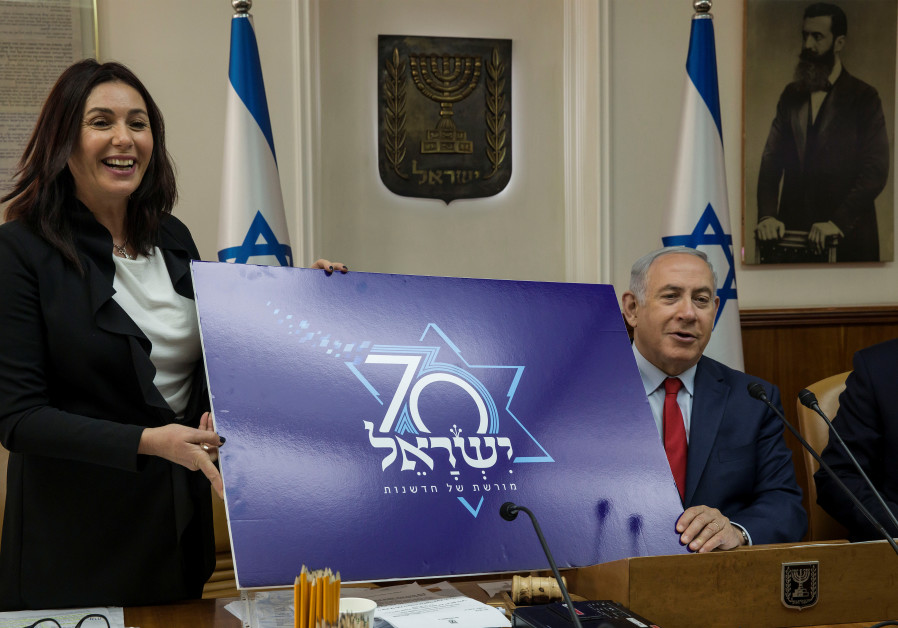
Israeli Prime Minister Benjamin Netanyahu (R) and Israeli Culture Minister Miri Regev (L) present the logo chosen for Israel’s 70th anniversary celebrations during the weekly cabinet meeting at the Prime Minister’s office in Jerusalem January 28, 2018. . (photo credit: REUTERS/TSAFRIR ABAYOV/POOL)

It’s hard to imagine how Miri Regev, Israel’s culture and sport minister, was once upon a time the person in charge of Israel’s secrets. But she was. Between 2004 and 2005, Regev was the IDF’s chief censor, a job in which silence is golden. She then served as the IDF spokesperson during the disengagement from the Gaza Strip and the Second Lebanon War with Hezbollah.

So how did someone who once worked in two of the military’s most sensitive positions morph into a politician known for little else but grandstanding and some of the most inappropriate political public comments in recent history? That’s politics, I guess. What is interesting in Regev’s case is that she went from being the person who sold the IDF’s unilateral withdrawal from Gaza to the world, to one of the most right-wing members of the Likud today. After she left the IDF, she reportedly tried joining the Labor Party but was snubbed, and as a result ran with the Likud. It wasn’t ideology but convenience.

I mention all of this because we again witnessed Regev and her politics at play this week, with the cancellation of the Israel-Argentina soccer match that was supposed to bring superstar Lionel Messi to the Jewish state.

Regev tried hijacking what was supposed to be a friendly game between Israel and Argentina and a simple repeat of the match the two countries played in 1986, also on the eve of the World Cup.

Earlier this week, for example, Regev said in a radio interview that Messi was going to shake hands with her and with Prime Minister Benjamin Netanyahu, despite reports that he did not plan on meeting them. “Let’s see who’s not going to shake my hand,” she said provocatively.

A few weeks earlier she demanded that the game be moved to Jerusalem – even though the organizers had originally booked it in Haifa – and she allocated NIS 3 million from the government to facilitate the change, announcing that the game would now become part of Israel’s 70th anniversary celebrations.

“At a time that we are fighting to move embassies to Jerusalem, there is no question that when one of the most popular players in the world with a billion fans arrives, he should play in Jerusalem,” she said. “Jerusalem is on the map, and at a time when there is BDS, there is nothing more important.”

In other words, an apolitical game that was supposed to be a friendly match between two countries was turning into a government and political celebration.

The only thing missing was asking Messi to become a card-carrying member of the Likud Party.

It was almost a replay of Regev’s fight with Knesset Speaker Yuli Edelstein earlier this year over her attempt to politicize the annual Independence Day ceremony.

The difference is, in the case of Argentina and Messi, Regev single- handedly scored Israel its own goal and handed the Palestinians and the BDS movement a victory on a silver platter. Makes one wonder why we even need BDS when we have someone like Miri Regev.

What is ironic about Regev’s use of BDS when explaining the importance of Messi’s visit is that on Wednesday, after the game was canceled, she claimed it wasn’t a result of BDS but, rather, the product of a new type of terrorism that included threats against the lives of Messi and his family. She showed pictures of pro-Palestinian protesters holding Messi jerseys soaked in blood, and said that “this old/new terrorism scares and deters athletes.” She then went a step further and claimed that this was the same terrorism that killed 11 members of Israel’s Olympic team in Munich in 1972.

For Regev, apparently, a protest against Argentina’s national team coming to Israel is like the Munich massacre by Black September.

With all due respect to Messi, that is not the case. He might be a soccer superstar, but his decision not to come to Israel is not like the murder of 11 Israelis. This is an offensive exaggeration meant to once again politicize something that didn’t have to be politicized in the first place.

Don’t get me wrong. What Messi did won’t be easy to forgive. He caved to pressure and to a few threats by pro-Palestinian activists.

He might not have meant to help the BDS movement, but he gave it a boost and a very public one. Israel is already concerned over the ripple effect this will have on future international events planned for Jerusalem, such as the 2019 Eurovision Song Contest.

Regev didn’t help. She should have kept out of the Messi-Argentina visit to begin with. She could have let them come play in Haifa and just let sports be sports.

The irony is, had that happened, she would have hailed the visit as a blow to BDS. Instead, she had to try to turn the game into a political victory for herself, and as a result, handed the BDS campaign a victory and dealt Israel a major diplomatic blow.

Last March, Regev gave a speech against some of her liberal critics.

“I was always told to start a speech with a quote. It makes for a cultured impression,” she said at the time. “As the famed Chinese philosopher Sun Tzu once put it,” she continued, switching to broken English: “Cut the bullshit! Cut the bullshit!” Well, Minister Regev, I couldn’t have said it any better.

*** It’s difficult to imagine what has been happening in recent weeks in the lives of Israelis who live along the border with the Gaza Strip. Every day, dozens of kites and balloons, carrying incendiary devices aimed at starting fires in nearby fields, are flown across the border. Hundreds of hectares have been burned and millions of shekels in agriculture have been lost. Residents can’t open their windows. This is terrorism.

But there is also something uncomfortable in the way Israeli politicians have been talking about what is happening down south. Some ministers are calling for targeted killings of the kite flyers, others are talking about the importance of developing new technology to intercept the kites and balloons.

Israel is not a helpless country.

It is a state with an annual defense budget amounting to NIS 75 billion. Burned fields and millions of shekels in damages is not just unpleasant, it is terrible. But it is not something that should lead Israel into a state of hysteria.

There is no question that in the war between Israel and Hamas, Israel is the more powerful side.

Hamas’s capabilities are incomparable to what the powerful IDF has and can do.

But this war is not about military capabilities. It is about public perception and narratives. It is about who looks good in the world and who doesn’t. Israel shouldn’t let kites fly across the border and burn its fields, but it also shouldn’t respond to them without first calculating what it is going to do.

The problem is that no one seems to be doing that. Netanyahu, for example, announced Sunday night that Israel will deduct the cost of the agricultural damage from “kite terror” from the funds Israel regularly transfers to the Palestinian Authority.

This is pure populism. Punishing the PA in the West Bank will have no effect on Hamas in the Gaza Strip. But this is not meant to be a solution. This is meant to create a facade for the public that something is being done. This is politics.

The real problem with the Gaza Strip is that no Israeli politician is willing to publicly say what, in his or her opinion, really needs to happen. Due to the political price one might end up paying, no one is willing to put a sincere and viable plan on the table that could work.

To call for conquering Gaza is much more lucrative politically than to call for an increase in humanitarian aid. If a politician calls to topple Hamas, he or she will receive more votes than if they recommend allowing 30,000 Gazans into Israel for work.

Gaza is a problem that is not going to simply go away by itself, and thinking about it in tactical terms – how to stop kites, how to stop border riots, how to stop tunnels – will work for only so long. A grander strategy is needed.


Zawartość publikowanych artykułów i materiałów nie reprezentuje poglądów ani opinii Reunion’68,
ani też webmastera Blogu Reunion’68, chyba ze jest to wyraźnie zaznaczone.
Twoje uwagi, linki, własne artykuły lub wiadomości prześlij na adres:
webmaster@reunion68.com


Kinderjohren yiddish song from Cracow

Kinderjohren yiddish song from Cracow

    Alif Luna


Performed by the norwegian-jewish singer and actress Bente Kahan. She was brought up in Yiddish tradition.
The song is written by the late poet Mordechaj Gebirtig, who was killed by the nazis in Cracow ghetto, 1942.

Kinder-johren (childhood)
About he poets childhood and youth in his little town Kazimierz (the jewish district of Krakow).
More information about the song and the poet is in the video.
Please rate and hounor the great yiddish poet Mordechaj Gebirtig.

Pictures are of children victims and survivors of the holocaust and also pictures of the town!


Zawartość publikowanych artykułów i materiałów nie reprezentuje poglądów ani opinii Reunion’68,
ani też webmastera Blogu Reunion’68, chyba ze jest to wyraźnie zaznaczone.
Twoje uwagi, linki, własne artykuły lub wiadomości prześlij na adres:
webmaster@reunion68.com