Archive | June 2018

New Colombian president open to moving embassy to Jerusalem

New Colombian president open to moving embassy to Jerusalem

JOSHUA DAVIDOVICH, RAPHAEL AHREN and AGENCIES


Ivan Duque, who said he wanted to have the best possible ties with Israel, defeats leftist challenger, though some see seeds of political shift for conservative country
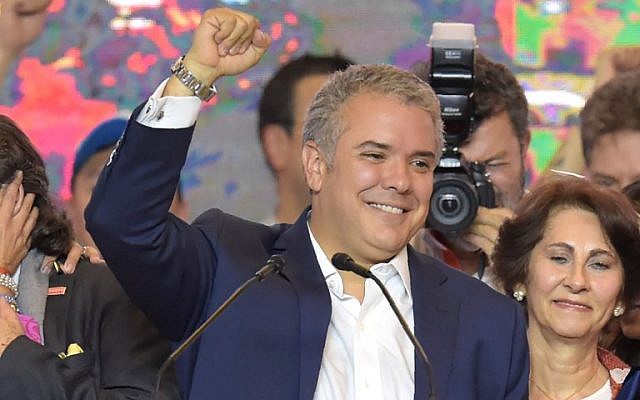
Newly elected Colombian president Ivan Duque celebrates with supporters in Bogota, after winning the presidential runoff election on June 17, 2018. (AFP/ Raul Arboleda)

The newly elected Colombian president said recently he would be open to moving the country’s embassy to Jerusalem, potentially becoming the fourth country, and third from Latin America, to do so.

Conservative Ivan Duque won just over 54 percent of the vote, beating out leftist rival Gustavo Petro’s, who took 41.7% with nearly all the votes counted, electoral authority figures showed Sunday.

On May 16, Duque said at a campaign event that if elected he would not rule out “the possibility of placing the diplomatic seat in Jerusalem.”

The comment, made at an event with local churches, garnered cheers and applause at the time.


Duque also said he wanted to “maintain the best possible relations with the state of Israel.”

The statement came on the same day Guatemala became the second country to move its embassy to Jerusalem, two days after the US. A week later, Paraguay became the third country to do so.

The comments from Duque garnered a harsh backlash from his opponents on the campaign trail, with most other candidates rejecting the position, according to Colombian news site El Nuevo Siglo.

Questioned about his statement days later, Duque clarified to local radio station Caracol that he supported a two-state solution and wanted his eventual government to contribute to peace efforts.

“Colombia cannot stir up hatred in the Middle East,” he said.

Duque’s opponent Gustavo Petro had been a vocal opponent of the US decision to recognize Jerusalem as Israel’s capital, and accused the IDF of carrying out a “massacre” against Gazans during border protests against the embassy transfer on May 14.

Presidential candidate Gustavo Petro speaks after his defeat by conservative rival Ivan Duque in Colombia’s presidential runoff election, in Bogota, Colombia on June 17, 2018. (AFP / LUIS ROBAYO)

Duque, 41, a former economist and first-term senator, is seen as a security hawk in the mold of his mentor, former president Alvaro Uribe.

In 2010 and 2011, Duque’s served as an assistant to Uribe in a UN probe of the 2010 Mavi Marmara flotilla incident, in which Israeli solders scuffled with Turkish protesters trying to break the Gaza blockade.

The panel ultimately found that Israel’s blockade on Gaza was legal, but the raid, in which 10 Turkish activists were killed, was excessive.

Throughout his campaign, Duque was dogged with accusations that he would be little more than a puppet for Uribe, who is constitutionally barred from seeking a third term

Duque is the son of a former governor and energy minister who friends say has harbored presidential aspirations since he was a child. The father of three ago entered public service almost two decades ago as an adviser to then Finance Minister Juan Manuel Santos, whom he will succeed as president.

Duque later moved to Washington, where he spent more than a decade at the Inter-American Development Bank, first as an adviser for three Andean countries and later as chief of the cultural division.

When Duque takes office, he will inherit a country with existing favorable ties toward Israel.

Under outgoing President Juan Manuel Santos Colombia has become one of Israel’s best friends in Latin America. Prime Minister Benjamin Netanyahu visited the country during a swing through Latin America in 2017.

In October 2012, Santos said that the world should recognize Israel as the state of the Jewish people.

“There have been strong relations between the two countries. Colombia is among the few Latin American countries that did not vote in favor of upgrading ‘Palestine’ as a non-member state at the UN a few years ago,” Hebrew University’s Arie M. Kacowicz, an expert on Latin America, said last year.

Colombia, which fought an insurgency by FARC rebels for decades until a peace treaty signed in 2016, regularly purchases Israeli arms.

Leah Soibel, the founder and of Fuente Latina, an organization promoting stronger ties between Israel and Latin America, said last year that relations between the country were ripe for expanding.

“Colombia has traditionally been Israel’s strongest partner in the region regarding military and security ties,” she said.

During Netanyahu’s visit, Foreign Ministry director Yuval Rotem expressed hopes that Israel could transition its trade relationship with Bogota into infrastructure projects following the peace deal.

“There are many projects that the ministry of post-conflict is trying to promote and we believe that, in a modest way, we can be also a part in this journey,” he said at the time.

However, with Duque’s election, the historic peace with FARC and efforts to integrate the former rebels into society has now been thrown into doubt.

Colombia’s peace process to end a conflict that left more than 250,000 people dead is considered largely irreversible. Most of the more than 7,000 rebels who have surrendered their weapons have started new lives as farmers, community leaders and journalists. Last year the rebels launched a new political party and will soon occupy 10 seats in congress.

But the accord remains contentious and Duque pledged throughout his campaign to make changes that would deliver “peace with justice.” Through constitutional reform or by decree, he could proceed with proposals such as not allowing ex-combatants behind grave human rights abuses to take political office until they have confessed their war crimes and compensated victims.

“The peace we all dream of demands corrections,” Duque told hundreds of jubilant supporters late Sunday. “So that victims are the true center of the process and so that there is justice, reparations and no repetition.”

The current agreement allows most rebels to avoid jail, a sore point for many.

“The rebels are going to get 10 seats in congress without having made reparations to victims or turned over information on drug trafficking routes,” said Felipe Ramirez, 29, a veterinarian who voted for Duque. “That’s a bad precedent because other criminal groups will want the same.”
Duque’s detractors warn that his victory could throw an already delicate peace process into disarray.

“I think it will set up a big constitutional battle,” said Cynthia Arnson, director of the Latin America program at the Woodrow Wilson International Center for Scholars.

Analysts also saw the possible seeds of a shift left for the conservative country with the success of Petro, the first left-wing candidate to make a run-off in decades.

Petro energized young voters and drew millions to public plazas with his fiery speeches vowing to improve the lives of poor, disenfranchised Colombians.

And though he failed to catch Duque, his more than 8 million votes marked the biggest ballot box success for a leftist presidential contender yet in a country where leftist politicos have long been stigmatized over fears of potential ties to guerrilla causes.

“Perhaps as time passes people will be less scared about voting for left-wing politicians,” said Jorge Gallego, a professor at Colombia’s Rosario University. “Although with this result, it’s proven that Colombia is still a right-wing country.”


Zawartość publikowanych artykułów i materiałów nie reprezentuje poglądów ani opinii Reunion’68,
ani też webmastera Blogu Reunion’68, chyba ze jest to wyraźnie zaznaczone.
Twoje uwagi, linki, własne artykuły lub wiadomości prześlij na adres:
webmaster@reunion68.com




TU MIESZKALI KIEDYS ZYDZI. video,foto zvi slepon

TU MIESZKALI KIEDYS ZYDZI. video,foto zvi slepon

Zvi Slepon


ZYDOWSKA LODZ 1988. kilinskiego49 zydowska szkola.
Musik: ”The ephraim katz frilachs” av Bernie Marinbach, The Israel Klezmer Ensemble (Google Play • eMusic • iTunes)


Zawartość publikowanych artykułów i materiałów nie reprezentuje poglądów ani opinii Reunion’68,
ani też webmastera Blogu Reunion’68, chyba ze jest to wyraźnie zaznaczone.
Twoje uwagi, linki, własne artykuły lub wiadomości prześlij na adres:
webmaster@reunion68.com


Newsletter 21 – 28 czerwca 2018

Newsletter 21 – 28 czerwca 2018


Zapraszamy wszystkich miłośników i entuzjastów żydowskiej Warszawy na cykl wakacyjnych spacerów organizowany latem przez Żydowski Instytut Historyczny.

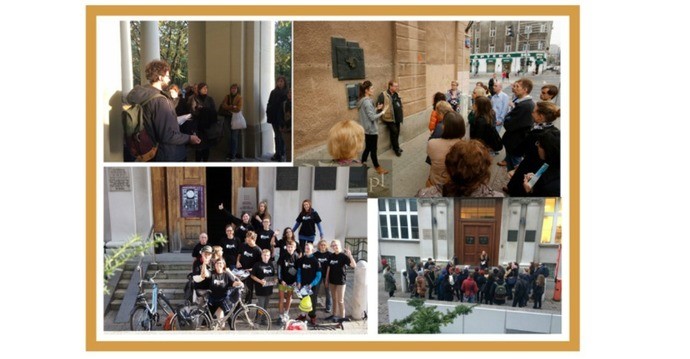
Spacery odbywać się będą w każdą niedzielę, zawsze o godz. 11.00 (prosimy o zwrócenie uwagi na miejsce zbiórki). Na wszystkie spacery obowiązują zapisy, liczba miejsc jest ograniczona.

Osoby zainteresowane prosimy o przesłanie maila na adres: rezerwacja@jhi.pl, w tytule wiadomości prosimy wpisać tytuł spaceru, na który chcą się Państwo wybrać.

Udział w spacerze jest bezpłatny.
 
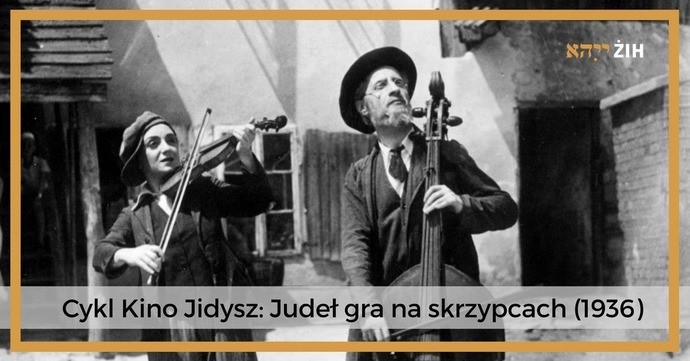
CYKL KINO JIDYSZ: JUDEŁ GRA NA SKRZYPCACH (1936)
21 czerwca 2018, godz. 19.00, kino Iluzjon
Pokaz filmu „Judeł gra na skrzypcach” (Jidł mit’n fidł, 1937 r.) zostanie poprzedzony prelekcją.

Wydarzenie organizowane przez Filmotekę Narodową – Instytut Audiowizualny i Żydowski Instytut Historyczny im. Emanuela Ringelbluma.Seans z lektorem.

Wszystkich zainteresowanych prosimy o kontakt z Kinem Iluzjon: tel. +48 22 848 33 33, e-mail: iluzjon.rezerwacje@fn.org.pl.
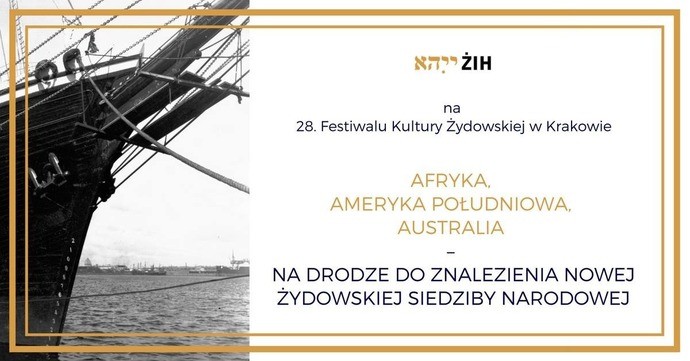
AFRYKA, AMERYKA POŁUDNIOWA, AUSTRALIA – NA DRODZE DO ZNALEZIENIA NOWEJ ŻYDOWSKIEJ SIEDZIBY NARODOWEJ
23 czerwca 2018, godz. 14.00, Żydowskie Muzeum Galicja w Krakowie
Projekty przymusowej emigracji Żydów z Europy stanowiły składnik nowoczesnego antysemityzmu, Polska nie była w tej kwestii wyjątkiem. Pod wpływem przykładu państw wprowadzających ustawodawstwo antyżydowskie, radykalizował się również polski antysemityzm. W emigracji żydowskiej zaczęto widzieć sposób na zmniejszenie bezrobocia i „spolszczenie”
polskich miast przez rzesze biednych chłopów, którzy wówczas mogliby zająć ich miejsce w handlui rzemiośle.

Jest to wydarzenie w ramach 28. Festiwalu Kultury Żydowskiej w Krakowie. 
Żydowski Instytut Historyczny jest jego partnerem.
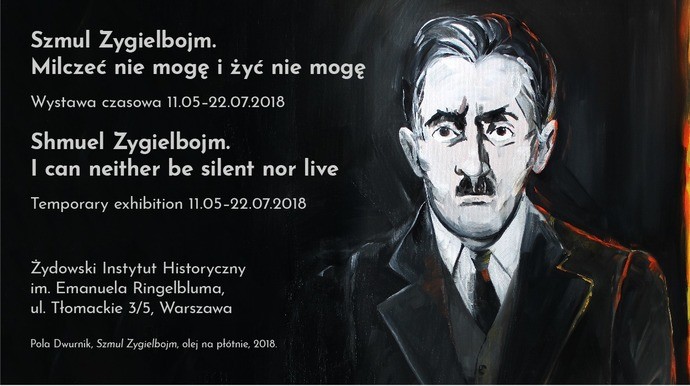
OPROWADZANIE KURATORSKIE PO WYSTAWIE CZASOWEJ “MILCZEĆ NIE MOGĘ I ŻYĆ NIE MOGĘ”
24 czerwca 2018, godz. 12.00

Punktem wyjścia dla ekspozycji są pozostawione przez Zygielbojma trzy listy pożegnalneadresowane do brata Fajwla mieszkającego w Johannesburgu, towarzyszy partyjnych w Stanach Zjednoczonych oraz prezydenta i premiera Polski na uchodźstwie.

Szmul Zygielbojm jako członek działającej w Londynie Rady Narodowej Rzeczypospolitej Polskiej alarmował świat o tragicznym losie polskich Żydów pod niemiecką okupacją. Jako jedna z nielicznych osób przebywających poza okupowaną Polską zrozumiał, że Szoa jest wydarzeniem bez precedensu w historii. W poczuciu osamotnienia w prowadzonej walce popełnił samobójstwo.
 
Po wystawie oprowadzać będzie kuratorka Zuzanna Benesz-Goldfinger.
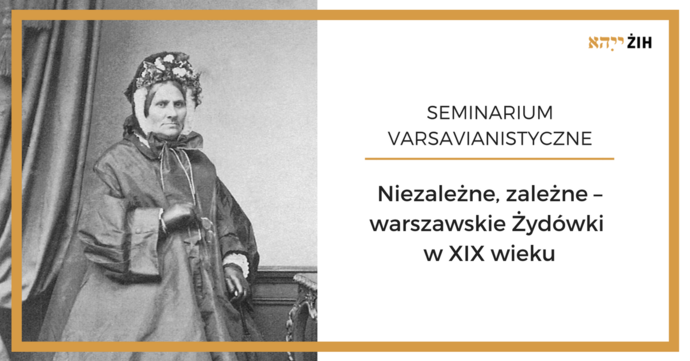
NIEZALEŻNE, ZALEŻNE – WARSZAWSKIE ŻYDÓWKI W XIX WIEKU
26 czerwca 2018, godz. 11.00

Na przełomie XVIII i XIX stulecia, pod zaborem pruskim, do Warszawy coraz liczniej napływała ludność żydowska. Społeczność ta w sposób znaczący wpisała się zarówno w rozwój tego miasta, jak i kraju. Najczęściej postrzegana była jednak przez pryzmat działalności i osiągnięć mężczyzn. Warto się zastanowić, czy kobiety nie odgrywały żadnych innych ról, prócz bycia żoną i matką? Jak rozumiano samodzielność kobiet? Czy zdarzały się Żydówki przedsiębiorcze, samodzielnie podejmujące działalność gospodarczą?

Seminarium naukowe poprowadzi dr Zofia Borzymińska, kierownik Pracowni Varsavianistycznej w ŻIH. Wystąpi dr Anna Wiernicka.
SPACER POŚWIĘCONY IRENIE SENDLEROWEJ
28 czerwca 2018, godz. 18.00

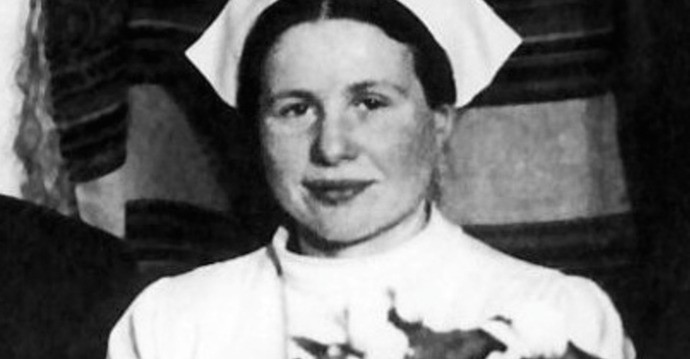
Życiorys Ireny Sendlerowej, najbardziej rozpoznawanej polskiej Sprawiedliwej, wymyka się schematycznym opisom, a osobowość i życiowe decyzje wzbudzają skrajne emocje. Spacer edukacyjny będzie szansą zbliżenia się do jej biografii, zrozumienia źródeł postawy moralnej i motywacji podczas ratowania dzieci z warszawskiego getta.

Na spacer zaprasza Olga Szymańska, edukatorka ŻIH.
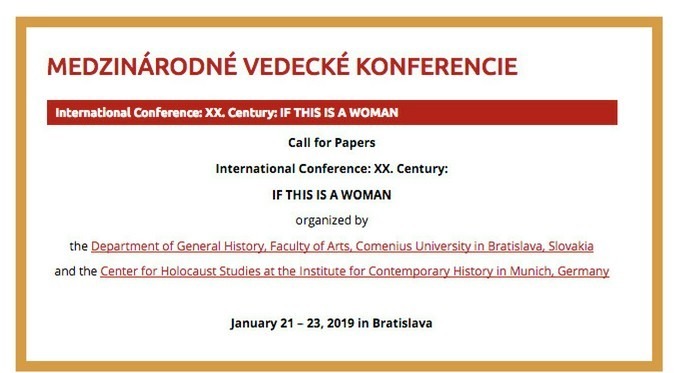
MIĘDZYNARODOWA KONFERENCJA NAUKOWA “XX. CENTURY: IF THIS IS A WOMAN” W BRATYSŁAWIE
21-23 stycznia 2019

Analiza płci zastosowana w dziedzinie studiów nad II wojną światową i Holokaustem doprowadziła do ważnych odkryć, otworzyła nowe obszary badań i postawiła krytyczne pytania dotyczące ustalonych narracji. Dzięki analizie gender badania zaczęły się koncentrować na tematach takich jak doświadczenie kobiet i dzieci podczas Holokaustu i II wojny światowej, strategie przetrwania rodzin czy życie homoseksualistów w nazistowskich Niemczech. Konferencja stara się zwrócić szczególną uwagę na specyficzne cechy doświadczenia kobiet w czasie II wojny światowej i Holokaustu.

Propozycje referatów w języku angielskim (max. 500 słów) należy wysyłać do 30 czerwca br. na adres: xx.centuryconference@gmail.com.Żydowski Instytut Historyczny jest partnerem wydarzenia.
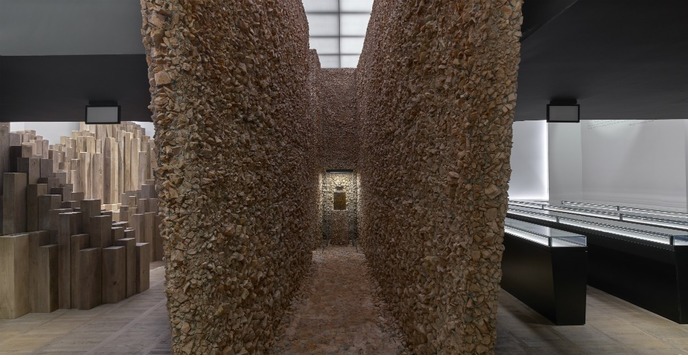
WYSTAWA STAŁA „CZEGO NIE MOGLIŚMY WYKRZYCZEĆ ŚWIATU”

Na wystawie po raz pierwszy udostępniamy dokumenty Podziemnego Archiwum Getta Warszawy. Wystawa jest jednym z kluczowych elementów programu Oneg Szabat.

Kurator wystawy | Paweł Śpiewak
Współkurator | Anna Duńczyk-Szulc

Tłomackie 3/5, siedziba Żydowskiego Instytutu im. Emanuela Ringelbluma i Stowarzyszenia Żydowski Instytut Historyczny w Polsce. Zapraszamy!

Wszystkie osoby pragnące nas odwiedzić proszone są o zakup biletu przez stronę www.tickets.jhi.pl

Oprowadzanie po wystawie odbywa się dwa razy dziennie od poniedziałku do piątku: o godz. 11:00 po angielsku i o godz. 14:00 po polsku.

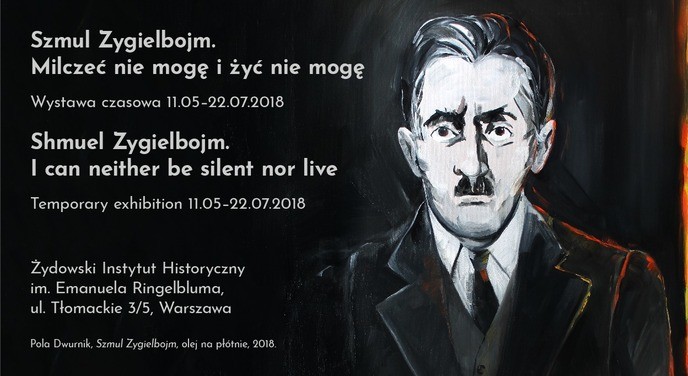
“SZMUL ZYGIELBOJM. MILCZEĆ NIE MOGĘ I ŻYĆ NIE MOGĘ”
Wystawa czasowa –  od 11 maja do 22 lipca 2018

Szmul Zygielbojm (1895 – 1943) był działaczem politycznym związanym z socjalistyczną partią Bund; od lutego 1942 r. pełnił funkcję członka Rady Narodowej przy rządzie Rzeczypospolitej Polskiej na uchodźstwie w Londynie. Jako członek Rady informował świat o tragicznym losie polskich Żydów pod niemiecką okupacją.

Wobec klęski powstania w getcie warszawskim, a przede wszystkim na znak protestu przeciwko obojętności świata wobec zagłady Żydów, 12 maja 1943 r. popełnił samobójstwo.

Kuratorka wystawy Zuzanna Benesz-Goldfinger

Wystawa organizowana jest z okazji 75. rocznicy samobójczej śmierci Szmula Zygielbojma i wybuchu powstania w getcie warszawskim.

Zwiedzanie wystawy jest bezpłatne.
BEJT TFILA – DOM MODLITWY

Ekspozycja przybliża temat synagogi, jej najważniejszych obiektów i funkcji osób, m.in rabina, kantora i szamesa. Skierowana jest do wszystkich – zwłaszcza tych, którzy nie byli wcześniej w synagodze lub chcieliby uzupełnić wiedzę na temat tego miejsca.

Kurator wystawy Michał Krasicki

Ekspozycja jest czynna w godzinach otwarcia wystawy stałej:
Poniedziałek – Piątek: 09:00 – 18:00
Niedziela: 10:00 – 18:00

BADANIE OPINII NA TEMAT WYSTAWY STAŁEJ W ŻIH

Zapraszamy do wypełnienia naszej ankiety internetowej!
 
Celem badania jest poznanie Państwa opinii na temat wystawy stałej „Czego mogliśmy wykrzyczeć światu” oraz wystawy czasowej w Żydowskim Instytucie Historycznym im. Emanuela Ringelbluma. 
Odpowiedź na nasze pytania zajmie Państwu ok. 5 minut. Ankieta jest anonimowa.
POLITYKA PRYWATNOŚCI ŻYDOWSKIEGO INSTYTUTU HISTORYCZNEGO
Prosimy o zapoznanie się z polityką prywatności ŻIH dotyczącą ochrony danych osobowych.

GODZINY OTWARCIA I CENY BILETÓW

WYSTAWA STAŁA I CZASOWA
Poniedziałek – Piątek: 09:00 – 18:00
Niedziela: 10:00 – 18:00

Ostatnie wejście o godzinie 17:00.

W dniu 20-21.06 wszystkie wystawy będą zamknięte dla zwiedzających.

 
CZYTELNIA
Poniedziałek – Czwartek: 09.00 – 19.00

Piątek: 09.00 – 15.00

W czerwcu Księgarnia na Tłomackiem będzie czynna od poniedziałku do piątku w godzinach 10.00 – 18.00.

CENY BILETÓW
Bilet normalny – 12zł (indywidualny), 10 zł (grupowy)

Bilet ulgowy – 7zł (indywidualny), 6 zł (grupowy)

 Bilet z przewodnikiem PL – 20zł
Bilet z przewodnikiem ANG – 30zł
Zwiedzanie wystawy czasowej jest bezpłatne.
W niedzielę zwiedzanie wystawy stałej jest bezpłatne.
Jako że limit osób odwiedzających wystawę na daną godzinę to tylko 35 osób, prosimy o rezerwowanie także darmowych biletów na stronie www.tickets.jhi.pl
Bilet otrzymają Państwo drogą elektroniczną!

Zawartość publikowanych artykułów i materiałów nie reprezentuje poglądów ani opinii Reunion’68,
ani też webmastera Blogu Reunion’68, chyba ze jest to wyraźnie zaznaczone.
Twoje uwagi, linki, własne artykuły lub wiadomości prześlij na adres:
webmaster@reunion68.com


JEWS ARE NOT SWEDES, POPULIST RIGHT-WING LAWMAKER SAYS

JEWS ARE NOT SWEDES, POPULIST RIGHT-WING LAWMAKER SAYS

JTA


Bjorn Soder, who represents the Sweden Democrats party at the Riksdag, the Swedish parliament, claims he only meant that people have a right to have their own identity.

Björn Söder. (photo credit: TWITTER)

Alawmaker for a populist right-wing party in Sweden has been accused of racism after writing on Facebook that Jews and members of the Sami minority are not Swedes.

Bjorn Soder, who represents the Sweden Democrats party at the Riksdag, the Swedish parliament, maintains that in his post Sunday he never questioned minorities’ rights as Swedish citizens but merely stood up for their rights to preserve their distinct ethnic identities.

Soder on Facebook criticized Annie Loof, a Cabinet minister for the liberal Centre Party, who wrote on Twitter that her “Jewish friends are simply my Swedish friends: As a citizen of Sweden, you are Swedish, even whether you belong to one of our national minorities or not.”

Soder responded that Loof was “undermining” the status of those five minorities by downplaying their distinctive identities, as he described it.

“These groups have minority positions in Sweden precisely because they are not Swedes. Shame on you, Annie Loof, for your racist attitude,” he wrote.

Soder made similar statements in a 2014 interview with Dagens Nyheter. Lena Posner Korosi, who was then the president of the Jewish Council in Sweden, said that Soder’s reasoning was “reminiscent of 1930s Germany.”

Paulus Kuoljok, the president of the Sami Parliament Plenary Assembly — a publicly elected parliament and a state agency addressing the rights of that indigenous minority – called Soder’s Facebook post “provocative” and designed to win votes.

“They have shown their hostile stance for quite some time, so I’m not surprised,” he told Sveriges Television.

Sweden Democrats has several Jews in its ranks, including lawmakers. It has nonetheless been accused of espousing anti-Semitic views, which the party denies.

In October, a party lawmaker called for action against what she labeled the “control of media by any family or ethnic group,” citing a prominent publisher with Jewish roots.

Senior lawmaker Carina Herrstedt was widely criticized in the media for writing a racist joke in an email that was deemed offensive to gays, blacks, nuns, Roma and Jews. Finance spokesman Oscar Sjostedt was heard in a recording jokingly comparing Jews to sheep being killed in German abattoirs.


Zawartość publikowanych artykułów i materiałów nie reprezentuje poglądów ani opinii Reunion’68,
ani też webmastera Blogu Reunion’68, chyba ze jest to wyraźnie zaznaczone.
Twoje uwagi, linki, własne artykuły lub wiadomości prześlij na adres:
webmaster@reunion68.com


Three Wounded in Suspected Car-Ramming Attack Near Jerusalem

Three Wounded in Suspected Car-Ramming Attack Near Jerusalem

Benjamin Kerstein


The scene of a car-ramming attack near Jerusalem, July 23, 2018. Photo: United Hazalah.

Three Israeli soldiers were wounded on Saturday in a suspected car-ramming terror attack near Jerusalem.

According to Israel Hayom, the incident took place in the area of Gush Etzion, a group of West Bank settlements in close proximity to Jerusalem. The site of the attack is near the Arab village of Kfar Husan, to which the attacking car apparently escaped. The attacker has not been apprehended.

The three victims are reported to be conscious and in good to moderate condition, suffering from injuries to their lower bodies.

Israel Hayom quotes the Israeli ambulance service Magen David Adom saying, “At 8:56pm a report was received at MADA Center 101 in the Jerusalem area about three young pedestrians injured by a vehicle near Kfar Husan. An IDF medical team is giving medical aid to three people who were lightly wounded.”

Car-ramming has been a common tactic used by Palestinian terrorists for well over a decade.


Zawartość publikowanych artykułów i materiałów nie reprezentuje poglądów ani opinii Reunion’68,
ani też webmastera Blogu Reunion’68, chyba ze jest to wyraźnie zaznaczone.
Twoje uwagi, linki, własne artykuły lub wiadomości prześlij na adres:
webmaster@reunion68.com