Archive | July 2018

Electronic eye to track fire kites and balloons from Gaza

Israel deploys electronic eye to track fire kites and balloons from Gaza

STUART WINER


Sky Spotter can identify incoming airborne incendiaries, enabling drones to try intercept them, and giving firefighters advance warning; laser system also being developed

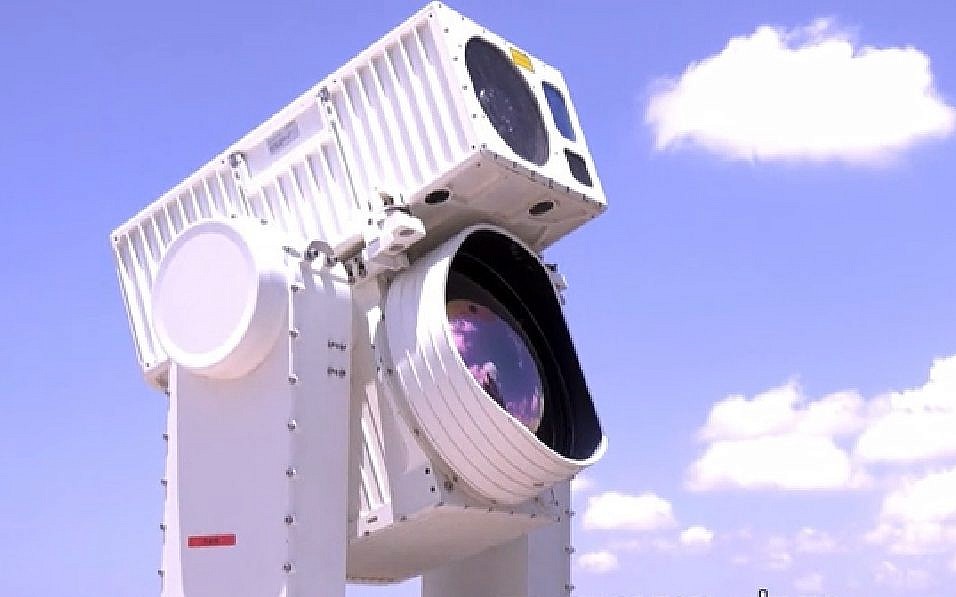
Screen capture from video of the Sky Spotter system, which is being used to track fire kites and balloons launched into Israel from Gaza, June 2018. (Hadashot news screenshot)

Facing a wave of airborne incendiary attacks from the Gaza Strip, Israel has deployed a system that can spot fire-starting balloons and kites in the sky, track their progress, and then direct firefighters to their landing spots, enabling them to more rapidly extinguish the flames and reduce damage.

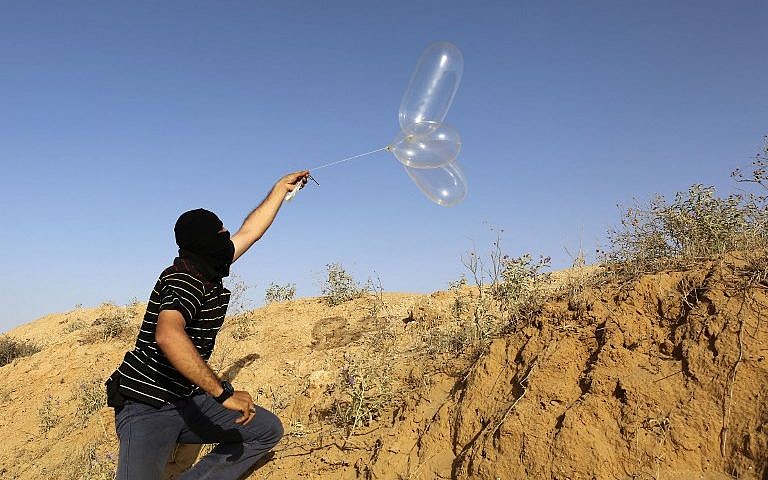
Since March 30, Palestinians in the Gaza Strip have launched hundreds of kites and helium balloons bearing flammable materials, and occasionally explosives, sparking near-daily fires that have burned thousands of acres of land in southern Israel.

Israeli officials are concerned that if the fire attacks don’t stop — or aren’t foiled — they could push an escalation in violence that would lead to a major military confrontation with terror groups in the Gaza Strip.

The Sky Spotter system, built by Rafael Advanced Defense Systems, has been in operation along the Gaza border for several days, Hadashot TV news reported Thursday.

Originally developed to counter small drones, Sky Spotter can track the balloons or kites and pinpoint their location, where they are heading, and where they are likely to land. The operators then notify firefighters, who can then try to reach the landing points to put out the flames before they spread.

A cluster of balloons with a small explosive device attached to them, which landed and got stuck on a trampoline in a backyard in the Eshkol region of southern Israel on June 20, 2018. (Eshkol Security)

Sky Spotter can also be used to direct defensive drones that collide in midair with the kites or balloons, bringing them down.

Until now such drones have been flown by army reservists, experts in drone operation, but the system will soon be able to control the drones automatically, directing them to the threats.

The Israeli military has also carried out multiple warning strikes in recent weeks at groups of Gazans preparing to launch incendiary devices toward Israel, as well as retaliatory airstrikes against Hamas targets. The army has said repeatedly that it will act to prevent the launch of the airborne incendiary devices and explosives.

The arson assaults, in which Palestinians launch kites or helium filled balloons carrying flaming material to be blown by the wind into Israeli territory, have devastated large areas. In total, approximately 17,500 dunams (4,300 acres, or nearly 7 square miles) of land have been burned in more than 250 fires over the past two months, more than half of it in nature reserves, according to initial assessments.

A masked Palestinian man launches a balloon loaded with flammable materials toward Israel from the southern Gaza town of Rafah on June 17, 2018. (AFP Photo/Said Khatib)

Israeli leaders have been split on how to respond to those responsible for the airborne arson attacks, with some calling for the IDF to shoot the kite flyers and balloon launchers on sight, while others argued that it would be a step too far.

As well as Sky Spotter, testing has continued on a laser system that could be used to shoot down the balloons or kites in flight. Development is advancing, Thursday’s report said, and this system is expected to soon be deployed around Gaza.

Another concept under development aims at dealing with the potential danger of mini-drones carrying explosives. The system employs a drone that locks on to the bomb-carrying device and then fires aluminum strips at it, entangling the rotor blades and bringing it down.

Shoshanna Solomon contributed to this report.


Zawartość publikowanych artykułów i materiałów nie reprezentuje poglądów ani opinii Reunion’68,
ani też webmastera Blogu Reunion’68, chyba ze jest to wyraźnie zaznaczone.
Twoje uwagi, linki, własne artykuły lub wiadomości prześlij na adres:
webmaster@reunion68.com


TURKEY’S JERUSALEM INCURSION

KNOW COMMENT: THWART TURKEY’S JERUSALEM INCURSION

DAVID M. WEINBERG


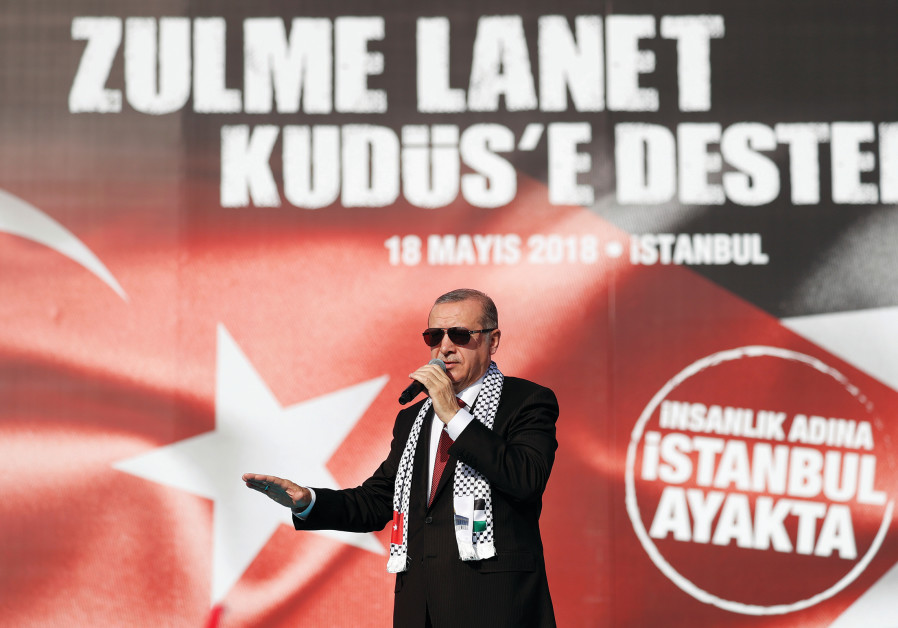
TURKISH PRESIDENT Tayyip Erdogan delivers a speech during a protest against the recent killings of Palestinian protesters on the Gaza-Israel border and the US embassy move to Jerusalem, in Istanbul, Turkey on May 18.. (photo credit: REUTERS)

Over one year ago, the advisers on eastern Jerusalem for the Jerusalem Municipality, Dr. David Koren and Ben Avrahami, sounded the alarm about a Turkish invasion of Jerusalem.

First in the Hebrew intellectual journal Hashiloach (Vol. 4) and then on the website of the Jerusalem Institute for Strategic Studies (JISS), Koren described the nefarious intensifying involvement of Recep Tayyip Erdogan’s Turkey and other radical Islamist actors in Jerusalem political and social affairs. This includes troublemaking on the Temple Mount and other subversive activities.

I highlighted the developing danger from Turkey in this column immediately afterwards (June 2017).

This month, the Israeli media finally caught on, with a number of exposes just published on Turkish muckraking in Jerusalem. The question is: Are Israeli authorities ready to act precipitously and aggressively to quash the Turkish infiltration?

According to Koren there has been very significant erosion of the status of veteran mukhtars (Arab-village leaders) and secular Palestinian leaders in eastern Jerusalem. Into the vacuum have stepped elements identified with Hamas; the northern faction of the Islamic Movement in Israel; the Muslim Brotherhood in its wider context; and especially Turkey.

They are investing tens of millions of dollars per year in Islamic missionary (dawa) activities, renovation of Moslem institutions, holiday handouts and social networking which glorifies terrorists and explicitly calls for violent resistance to Israel.

The Turkish consulate in Jerusalem and two Turkish quasi-governmental agencies (Mirasimiz and TIKA) are directly implicated in this seditious activity – by their own admission, to the tune of over $40 million. Erdogan’s former chief of staff personally oversees much of this activity, which includes trips for youth to radical Islamic conferences in Turkey, and the busing to Jerusalem of posses of men and women (known as the Murabitun and Murabitat) who heatedly harass Jewish visitors to the Temple Mount.

As a result, Turkish flags today fly everywhere in eastern Jerusalem and prominently on the Mount, too. Photos of the fiercely anti-Israel and openly antisemitic Erdogan adorn shops throughout the Old City.

The Turkish purpose is not at all innocuous. It is, rather, to weaken Israel’s hold in the holy city, and to bolster Erdogan’s claim to leadership of the Moslem world on a path to a global Islamic sultanate.

While it is important not to exaggerate the Turkish threat, Erdogan’s interference in Jerusalem clearly needs to be checked. His incendiary activities in Israel’s capital touch the deepest chords of Israeli sovereignty in the eastern part of the city.

At a minimum, the flow of Turkish money into Jerusalem must be blocked. The National Security Council and other security agencies are reportedly looking into this. I hope they are doing so with sufficient alacrity.

MEANWHILE, Erdogan continues to lead anti-Israel campaigns at every opportunity, including the global assault on Israel regarding recent Gaza border riots – following which Erdogan expelled the Israeli ambassador and consul general.

His favorite accusation is Israeli “genocide” against the Palestinians, and his favorite Palestinians are Hamas leaders. At a recent summit that he called in Istanbul of the Organization for Islamic Cooperation, Erdogan libeled Israel, claiming it tortured Palestinian children “like the concentration camps during World War II, with methods that would put Nazis to shame.”

All the while, Turkey continues to considerably weaken the Western strategic alliance by problematic collaboration with Syria, Iran, China and Russia – despite Turkey’s NATO membership. (Unfortunately, there is no mechanism for turfing Turkey out of the alliance).

Erdogan has sided throughout with Iran on the nuclear issue, declaring Turkish support for Tehran’s “peaceful nuclear program” and voting repeatedly against American-initiated sanctions against Iran. Turkish banks openly cooperate with Iranian banks to circumvent Western sanctions. In 2012, Turkey blew the cover of an Israeli spy network in Iran. More recently the unhinged Erdogan threatened Israel with war over gas fields in the Mediterranean.

At home, Erdogan’s regime has jailed more journalists, judges, generals and academics than that of any other country in the world, including China. He is building 40,000 new jail cells to handle the overload. He is creating an authoritarian system to suit his imperial ambitions, especially after the suspiciously overwhelming AKP victory in last month’s Turkish presidential and parliamentary election.

Israel should go on the diplomatic offensive against Erdogan by pressuring Washington to halt the provision of F-35 jet fighters to Turkey. As Prof. Efraim Inbar of JISS has written, with Turkey pursuing policies that are inimical to the American interest, it makes no sense to strengthen Turkish military capabilities.

Erdogan could use his upgraded air force to establish himself as arbiter of developments in the eastern Mediterranean, or to interfere with Israel’s regional air supremacy. There is also the real danger of sensitive technical information about this front-line American weapons system leaking from Ankara to Tehran, Moscow and Beijing.

In sum, Erdogan needs to be cut down to size. Israel should be defending itself against Erdogan by blocking his Jerusalem incursion and taking the offensive against Erdogan by impeding his military build-up.


The author is vice president of the Jerusalem Institute for Strategic Studies, jiss.org.il. His personal site is davidmweinberg.com.


Zawartość publikowanych artykułów i materiałów nie reprezentuje poglądów ani opinii Reunion’68,
ani też webmastera Blogu Reunion’68, chyba ze jest to wyraźnie zaznaczone.
Twoje uwagi, linki, własne artykuły lub wiadomości prześlij na adres:
webmaster@reunion68.com


ŻIH – Newsletter 12 lipca – 19 lipca 2018

Żydowski Instytut Historyczny – Newsletter 12 lipca – 19 lipca 2018

ŻIH


RELACJA Z AKADEMII LETNIEJ ŻIH

Nauczyciele, edukatorzy i lokalni aktywiści pojawili się w ubiegłym
tygodniu w Żydowskim Instytucje Historycznym na kolejnym seminarium
z cyklu „Akademia Letnia”. W czasie trzech dni zajęć zostało poruszonych wiele
zagadnień z zakresu nauczania o Zagładzie, a uczestnicy mieli wyjątkową
okazję do uczestnictwa w interesujących warsztatach, spacerach
edukacyjnych, zwiedzaniu wystaw Żydowskiego Instytutu Historycznego,
a także wizyty studyjnej w Muzeum Walki i Męczeństwa w Treblince.
Szkolenie było zorganizowane i poprowadzone przez
Zespół Edukacji ŻIH: Agnieszkę Kajczyk, Olgę Szymańską i
dra Bartosza Borysa.

SPACER ZAPOWIADAJĄCY MARSZ PAMIĘCI 22 LIPCA

12 lipca zapraszamy na spacer zapowiadający Marsz Pamięci dedykowany
Szmulowi Zygielbojmowi – „Trakt Pamięci Męczeństwa i Walki Żydów
w Warszawie”.

Spacer rozpoczniemy przy Pomniku Bohaterów Getta – pomniku znanym na całym świecie, powstałym w hołdzie wszystkim mieszkańcom getta. Stamtąd przejdziemy traktem upamiętniającym ostatnią drogę mieszkańców getta na Umschlagplatz, skąd niemal 300 tys. z nich wywieziono latem 1942 r. do obozu zagłady w Treblince.

Miejsce zbiórki: przed pomnikiem Bohaterów Getta, ul. Zamenhofa/ al. Sendlerowej.
Oprowadza: dr Bartosz Borys

Na wydarzenie obowiązują zapisy, liczba miejsc jest ograniczona. Osoby zainteresowane prosimy o przesłanie maila na adres: rezerwacja@jhi.pl, w tytule wiadomości prosimy wpisać:
Spacer 12 lipca.

Udział w spacerze jest bezpłatny.

RABBI KALONYMUS KALMAN SHAPIRA’S „Sermons from the Years of Rage, 1939–1942”AND THEOLOGY OF SUFFERING

13 lipca o godzinie 11:00 zapraszamy na gościnny wykład dr. Daniela Reisera – dyrektora Departamentu Myśli Żydowskiej w Herzog Academic College oraz starszym wykładowcą na Wydziale Studiów Religijnych i Duchowych w Zefat Academic College, specjalistą w odszyfrowywaniu hebrajskich i jidyszowych manuskryptów.
Wykład odbędzie się w języku angielskim w sali w Błękitnym Wieżowcu (wejście od ul. Tłomackie). 

CYKL LETNICH SPACERÓW “ODKRYJ ŻYDOWSKĄ WARSZAWĘ” 

15 LIPCA Zapraszamy na pierwszy z cyklu letnich spacerów ŻIH – „Niezatarte ślady getta Warszawy”

Spacer przybliży uczestnikom historię warszawskiego getta, codzienne problemy jego mieszkańców i tragiczny finał społeczności warszawskich Żydów. Zobaczymy pozostałe jeszcze ulice, kamienice i place, a wyobrazimy sobie i obejrzymy na zdjęciach to, czego zobaczyć już nie można. Uczestnicy spaceru dowiedzą się, jak w getcie szmuglowano żywność, jaką sztukę można było obejrzeć w Teatrze Femina i dlaczego w dzielnicy żydowskiej znalazły się trzy kościoły rzymsko-katolickie.

Miejsce zbiórki: przed budynkiem Żydowskiego Instytutu Historycznego, ul. Tłomackie 3/5.
Oprowadza: Agnieszka Kajczyk

Na spacer obowiązują zapisy, liczba miejsc jest ograniczona. Osoby zainteresowane prosimy o przesłanie maila na adres: rezerwacja@jhi.pl, w tytule wiadomości prosimy wpisać tytuł spaceru: Niezatarte ślady getta Warszawy.

Udział w spacerze jest bezpłatny.

MARSZ PAMIĘCI 22 LIPCA DEDYKOWANY SZMULOWI ZYGIELBOJMOWI

W tegorocznym Marszu Pamięci 22 lipca uczcimy pamięć Szmula Zygielbojma,
który po wielu miesiącach alarmowania zachodniej opinii publicznej
o masowym mordowaniu Żydów na terenie okupowanej Polski, w sprzeciwie
wobec milczenia świata popełnił samobójstwo.

Marsz wyruszy 22 lipca br. o godz. 17:00 spod pomnika Umschlagplatz i przemierzy symboliczną trasę ulicami Stawki, Dubois, Zamenhofa, Anielewicza, Andersa, aż do al. Solidarności
i budynku Żydowskiego Instytutu Historycznego.
Jak w latach poprzednich, będziemy nieśli Wstążki Pamięci z imionami zamordowanych Żydów.

WYSTAWA STAŁA „CZEGO NIE MOGLIŚMY WYKRZYCZEĆ ŚWIATU”

Na wystawie po raz pierwszy udostępniamy dokumenty Podziemnego Archiwum Getta Warszawy. Wystawa jest jednym z kluczowych elementów programu Oneg Szabat.
Kurator wystawy | Paweł Śpiewak
Współkurator | Anna Duńczyk-Szulc
Tłomackie 3/5, siedziba Żydowskiego Instytutu im. Emanuela Ringelbluma i Stowarzyszenia Żydowski Instytut Historyczny w Polsce. Zapraszamy!
 
Wszystkie osoby pragnące nas odwiedzić proszone są o zakup biletu przez stronę www.tickets.jhi.pl

Oprowadzanie po wystawie odbywa się dwa razy dziennie od poniedziałku do piątku: o godz. 11:00 po angielsku i o godz. 14:00 po polsku. 

SZMUL ZYGIELBOJM. MILCZEĆ NIE MOGĘ I ŻYĆ NIE MOGĘ”
Wystawa czasowa –  od 11 maja do 22 lipca 2018

Szmul Zygielbojm (1895 – 1943) był działaczem politycznym związanym z socjalistyczną partią Bund; od lutego 1942 r. pełnił funkcję członka Rady Narodowej przy rządzie Rzeczypospolitej Polskiej na uchodźstwie w Londynie. Jako członek Rady informował świat o tragicznym losie polskich Żydów pod niemiecką okupacją.

Wobec klęski powstania w getcie warszawskim, a przede wszystkim na znak protestu przeciwko obojętności świata wobec zagłady Żydów, 12 maja 1943 r. popełnił samobójstwo.

Kuratorka wystawy Zuzanna Benesz-Goldfinger

Wystawa organizowana jest z okazji 75. rocznicy samobójczej śmierci Szmula Zygielbojma i wybuchu powstania w getcie warszawskim.

Zwiedzanie wystawy jest bezpłatne.
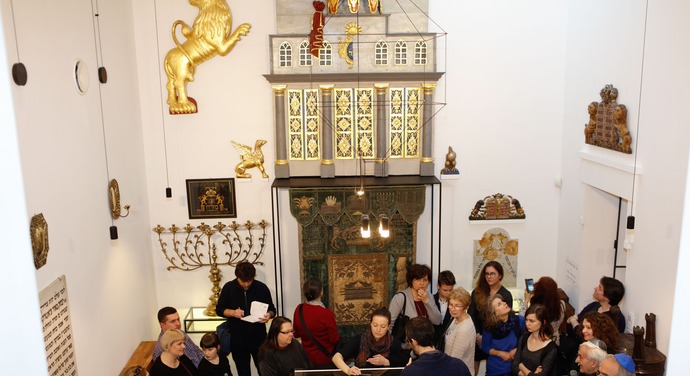
BEJT TFILA – DOM MODLITWY

Ekspozycja przybliża temat synagogi, jej najważniejszych obiektów i funkcji osób, m.in rabina, kantora i szamesa. Skierowana jest do wszystkich – zwłaszcza tych, którzy nie byli wcześniej w synagodze lub chcieliby uzupełnić wiedzę na temat tego miejsca.
Kurator wystawy Michał Krasicki

Ekspozycja jest czynna w godzinach otwarcia wystawy stałej:
Poniedziałek – Piątek: 09:00 – 18:00
Niedziela: 10:00 – 18:00

BADANIE OPINII NA TEMAT WYSTAWY STAŁEJ W ŻIH

Zapraszamy do wypełnienia naszej ankiety internetowej!
 
Celem badania jest poznanie Państwa opinii na temat wystawy stałej „Czego mogliśmy wykrzyczeć światu” oraz wystawy czasowej w Żydowskim Instytucie Historycznym im. Emanuela Ringelbluma. 
Odpowiedź na nasze pytania zajmie Państwu ok. 5 minut. Ankieta jest anonimowa.
POLITYKA PRYWATNOŚCI ŻYDOWSKIEGO INSTYTUTU HISTORYCZNEGO
Prosimy o zapoznanie się z polityką prywatności ŻIH dotyczącą ochrony danych osobowych.

GODZINY OTWARCIA I CENY BILETÓW

WYSTAWA STAŁA I CZASOWA
Poniedziałek – Piątek: 09:00 – 18:00
Niedziela: 10:00 – 18:00
Ostatnie wejście o godzinie 17:00.
 
CZYTELNIA w okresie letnim
Poniedziałek – Czwartek: 09.00 – 17.00

Piątek: 09.00 – 15.00

W lipcu Księgarnia na Tłomackiem będzie czynna od poniedziałku do piątku w godzinach 10.00 – 18.00.

CENY BILETÓW
Bilet normalny – 12zł (indywidualny), 10 zł (grupowy)

Bilet ulgowy – 7zł (indywidualny), 6 zł (grupowy)

 Bilet z przewodnikiem PL – 20zł
Bilet z przewodnikiem ANG – 30zł
Zwiedzanie wystawy czasowej jest bezpłatne.
W niedzielę zwiedzanie wystawy stałej jest bezpłatne
.
Jako że limit osób odwiedzających wystawę na daną godzinę to tylko 35 osób, prosimy o rezerwowanie także darmowych biletów na stronie www.tickets.jhi.pl

Bilet otrzymają Państwo drogą elektroniczną!

Zawartość publikowanych artykułów i materiałów nie reprezentuje poglądów ani opinii Reunion’68,
ani też webmastera Blogu Reunion’68, chyba ze jest to wyraźnie zaznaczone.
Twoje uwagi, linki, własne artykuły lub wiadomości prześlij na adres:
webmaster@reunion68.com


COLUMN ONE: A GLIMPSE OF EUROPE’S TRUE FACE

COLUMN ONE: A GLIMPSE OF EUROPE’S TRUE FACE

CAROLINE B.GLICK


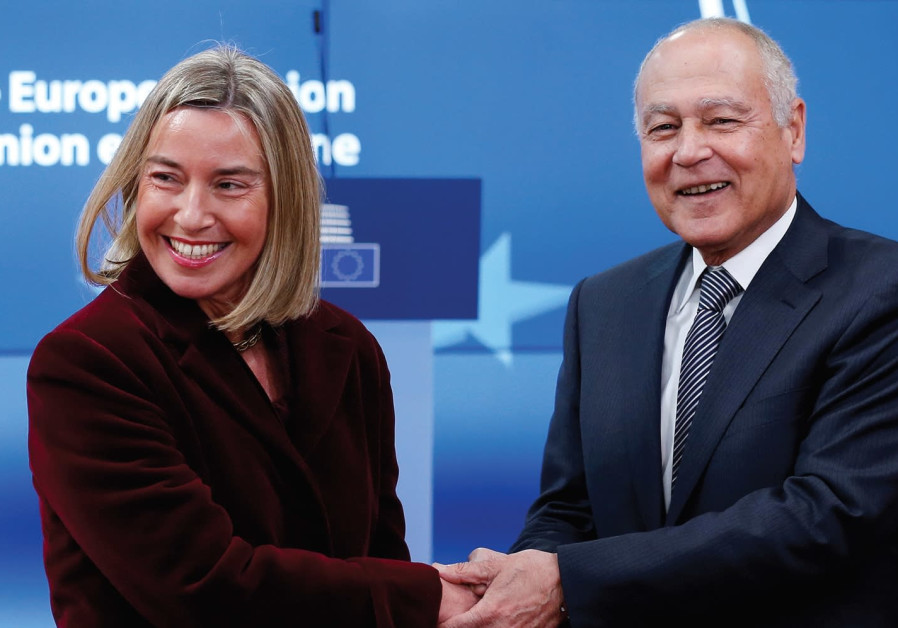
EUROPEAN UNION foreign-policy chief Federica Mogherini welcomes Arab League Secretary-General Ahmed Aboul Gheit ahead of a meeting to discuss the Middle East peace process on February 26th in Brussels.. (photo credit: REUTERS/FRANCOIS LENOIR)

Due to an unusual conflation of events, over the past two weeks we’ve caught a rare glimpse of the face of European foreign policy. We shouldn’t let it pass unremarked.

Last Friday, the European Union’s foreign policy chief Federica Mogherini presided over a curious summit in Vienna. In the same hall where she and her colleagues concluded the nuclear deal with Iran three years ago, Mogherini and her comrades tried to concoct ways to save the deal by undermining American power and defying its decision to abandon the deal.

Mogherini was joined in her efforts by the German, French and British foreign ministers. Sitting opposite them were Iranian President Hassan Rouhani, Iranian Foreign Minister Javad Zarif, and the Russian and Chinese foreign ministers. Together they brainstormed ways to undermine the economic sanctions the US will begin implementing next month against Iran and anyone from anywhere that trades with Iran.

The Europeans made some suggestions. For instance, the European Investment Bank, they said, is authorized to invest in projects in Iran. European governments are willing to make direct deposits in Iranian banks to get around US restrictions on bank transfers to Iran. 

The Germans apparently are the keenest to continue the money flow to Tehran. Bild, a Berlin-based tabloid, reported on Tuesday that Iran has asked the European-Iranian Trade Bank, which is majority owned by Iranian state-owned banks but registered in Hamburg with the Bundesbank, Germany’s central bank, to permit it to withdraw €350 million in cash. The Iranians intend to fly the cash to Tehran to avoid the prospect of the accounts being frozen once US sanctions are reimposed. According to the Bild report, the German government supports the cash transfer. The Merkel government believes the Iranian claim that the money will be distributed to Iranian businessmen who will be barred from using credit cards in international commerce due to the US sanctions.

The Germans apparently are happy to ignore the fact that Iran routinely uses cash to pay for its wars in Syria and Yemen. Iran regularly transfers millions of dollars in cash to Hamas in Gaza. Cash is its routine method of financing Hezbollah and its terror empire in Lebanon and throughout the world – including in Germany.

The Germans don’t care about that. Their goal is not to prevent terror. Their goal is to flood Iran with money.

Mogherini’s summit in Vienna was a statement of deep contempt for the US. Days before US President Donald Trump was scheduled to arrive on the continent, the leaders of Europe publicly colluded with Iran, China and Russia to undermine and weaken America. While shocking in and of itself, Europe’s behavior didn’t tell us anything we didn’t already know.

Mogherini has been publicly attacking the US for walking away from the nuclear deal and declaring her allegiance to the pact three times a day, every day since May 8 when Trump announced he was pulling the US out of it and reimposing sanctions on Iran.

What we didn’t know until recently is why Mogherini and her colleagues have chosen to stand with Iran against America.
We got the answer on June 30.

Six days before the Vienna summit, Belgian security forces arrested members of an Iranian terror cell as they made their way to Paris to blow up a rally held that day by the Iranian opposition movement Mujahedin e-Khalq. The cell was led by Asduallah Asadi, the head of Iran’s intelligence network in Europe. Asadi is registered as the Iranian intelligence attaché at the Iranian embassy in Vienna. He is an officer of the Revolutionary Guards’ al-Quds Brigade, which is responsible for Iran’s foreign terror operations.

Thousands attended the rally in Paris. Among the many VIPS present were former prime minister Ehud Barak, former Canadian prime minister Stephen Harper and former New York mayor Rudy Giuliani.

The arrests in Belgium drove home the fact that Iran has developed a massive terror infrastructure in Europe. The terror operatives who were arrested lived and operated in at least four countries: Germany, Austria, Belgium and France.
On the face of it, it is amazing than right after terrorists under the direct command of the Iranian regime were caught en route to carrying out an attack in Paris, Europe’s top diplomats sat down with the leaders of the regime and brainstormed how to shower them with cash in open defiance of the United States.

And that isn’t all. It is true that Mogherini and her colleagues insist the nuclear deal they love so much prevents Iran from acquiring nuclear weapons. But it is also true that they know they are lying.

The Europeans don’t need Trump or Prime Minister Benjamin Netanyahu to tell them the deal gives Iran a clear path to a full-blown nuclear arsenal within a decade. They have known that all along. And it’s never bothered them.

So in under a week, an Iranian terror cell tried to blow up a rally in Paris and Europe’s leaders reacted by hosting their bosses in a fancy hall and promising them billions of dollars and a nuclear arsenal within a decade in defiance of the US.
WHY WOULD the Europeans do this? What does this tell us about the nature of their policy?

The first thing all of this tells us is that Europe has a very clear Iran policy. It tells us that there is no connection whatsoever between Europe’s rhetoric – which insists that Iran must not acquire nuclear weapons and that Iran must end its sponsorship of terrorism – and Europe’s policy.

As to the policy itself, Europe’s Iran policy is a policy of pure appeasement, based on profound weakness. Mogherini and her comrades are fully aware that Iran can cause them harm and intends to cause them harm. Through payoffs and betrayal of the US they hope to convince the Iranians to attack someone else instead of them. They don’t care if it’s Israel or Saudi Arabia or America. As far as the Europeans are concerned, Iran can kill whoever it wants, so long as it doesn’t attack Europe.
This is Europe’s Iran policy. It has no other policy.

There is nothing unique about Europe’s Iran policy. Appeasement predicated on weakness and an absence of any will to defend itself stands at the heart of Europe’s policies towards all of its enemies. As for its allies, Europe expects them to serve its needs, and appease it in exchange for nodding, condescending approval.

At the NATO summit on Wednesday, Trump exposed this basic fact in relation to Europe’s Russia policy. When Russia annexed Crimea in 2014, no one condemned the move more passionately than the Europeans. And German Chancellor Angela Merkel stood at the front of the column of denouncers proclaiming Russia’s aggression would not stand.

And yet, as Trump revealed in his blunt repartee with NATO Secretary-General Jens Stoltenberg, while Germany passionately declaimed about Russian aggression and the threat Russia poses to Europe, Merkel was signing massive gas deals with Russia to build and expand the Nord Stream gas pipeline between Russia and Germany. The strategic implication of Germany’s dependence on Russian gas is that the country screaming loudest about Russia has voluntarily rendered its economy dependent on Russian gas.

Merkel did this, Trump noted, while refusing to spend the requisite 2% of German GDP on its national defense and while expecting the US to defend Europe from Russia it on its own dime.

As with Iran, so with Russia, when you see the full spectrum of European actions, you realize there is no connection whatsoever between European rhetoric and European policy. As with Iran, so with Russia, Europe’s actual policy is to appease Russia by paying it off. As with Iran so with Russia, Europe expects the US to pull its fat from the fire when the going gets tough – and pay for the privilege of doing so.

Trump scares the Europeans. He doesn’t scare them because he expects them to pay for their own defense. All of his predecessors had the same expectation. He frightens the Europeans because he ignores their rhetoric while mercilessly exposing their true policy and refuses to accept it. They are scared that Trump intends to exact a price from them for their weak-kneed treachery.

Europe’s policies towards Israel follow a similar script as its other policies. As is the case with Iran and Russia, there is no connection whatsoever between Europe’s rhetoric and its actual policies. With Iran, Europe claims that it is committed to preventing the proliferation of nuclear weapons to Iran while its actual policy is to enable Iran to build a nuclear arsenal. In Israel’s case, Europeans say they strive to advance international law, human rights and peace when their actual policy negates international law, harms human rights and diminishes any possibility of peace.

Whereas Europeans fear the Iranians and the Russians, they hate Israel. And the goal of Europe’s Israel policy is to weaken the Jewish state through delegitimization, political and legal subversion and the constant threat of commercial sanctions.
Israel’s great error in contending with Europe is that we fail to recognize, as Trump recognizes, that European rhetoric doesn’t represent its actual policy. It camouflages it. We send our best lawyers to Europe to explain that our policies conform with international law. We deploy our most talented diplomats to Europe to prove that our actions advance human rights. And our greatest statesmen have spent decades trying to prove our commitment to peace.

And all these efforts are completely irrelevant. The Europeans couldn’t care less about the truth. They aren’t here to promote truth. They prefer lies. Lies help them to hide their policy predicated on hatred of Israel.

The summit in Vienna was a dud. Like Trump, the Iranians understand that European rhetoric gets them nowhere. European banks aren’t willing to lose the American market for Iran. Likewise, European conglomerates are pulling out of deals with Iran one after another to avoid US sanctions. 

We don’t know where Trump wants to lead US relations with Europe. But it is clear that he intends to exact a price from Europe for its hostile policies, its weakness towards US adversaries and its double dealing with America.
Israel should draw the appropriate lessons from Trump’s actions and from the truth revealed about the nature of European policy by the events of the past two weeks.

The time has come for Israel to finally stop taking European rhetoric seriously. The time has come for Israel to begin exacting a painful price from Europe for its hostile and damaging policies towards us.

www.CarolineGlick.com


Zawartość publikowanych artykułów i materiałów nie reprezentuje poglądów ani opinii Reunion’68,
ani też webmastera Blogu Reunion’68, chyba ze jest to wyraźnie zaznaczone.
Twoje uwagi, linki, własne artykuły lub wiadomości prześlij na adres:
webmaster@reunion68.com


Parallel Lives: The Remarkable Story of a Young Jewish Family Separated by World War

Parallel Lives: The Remarkable Story of a Young Jewish Family Separated by World War


Lena Rotmensz (Author)
Find all the books, read about the author, and more.
See search results for this author
Are you an author? Learn about Author Central


Based on a true story
. Liliana is a beautiful and educated young Jewish woman. She marries Henry and becomes a mother to Rebecca. She has a full life ahead of her in Poland, or so it seems.

The time period is the beginning of World War II, when the Germans invade Poland. To protect her, Liliana and Henry entrust Rebecca to their Christian friends. Shortly thereafter, Henry is among those taken to the concentration camp.

Time passes, and Liliana knows little about the fate of her husband or daughter. To survive, Liliana (now known as Helena) assumes the identity of a Polish aristocrat and ends up working for a German officer named Robert. In a twist of fate, Robert and Helena fall in love with each other and get married.

Price
New from Used from
Kindle
$3.74

Unknown to Liliana, Henry survives and reunites with their daughter Rebecca. He finds a way to communicate with Liliana, only to find out that she started a new life. Liliana has yet to reveal her true identity to her German husband. Filled with guilt and longing for Rebecca, she thinks of putting an end to all of the lies.

Will Liliana finally overcome her fears and reunite with her daughter?

Parallel Lives is based on a true story. It brings the reader on a captivating journey of the “parallel lives” of a family who was separated by war. The journey takes the reader though a myriad of human emotions, including: love, jealousy, fear, despair, and freedom.


Zawartość publikowanych artykułów i materiałów nie reprezentuje poglądów ani opinii Reunion’68,
ani też webmastera Blogu Reunion’68, chyba ze jest to wyraźnie zaznaczone.
Twoje uwagi, linki, własne artykuły lub wiadomości prześlij na adres:
webmaster@reunion68.com