Archive | October 2018

The Japanese Man Who Saved 6,000 Jews With His Handwriting

The Japanese Man Who Saved 6,000 Jews With His Handwriting

David Wolpe


What the astonishing Chiune Sugihara teaches us about moral heroism.

Foreign Minister Fumio Kishida of Japan at a tree planted in memory of Chiune Sugihara in the garden of the Yad Vashem Holocaust Museum in Jerusalem.CreditCreditGali Tibbon/Agence France-Presse — Getty Images

NAGOYA, Japan — “Even a hunter cannot kill a bird that flies to him for refuge.” This Samurai maxim inspired one gifted and courageous man to save thousands of people in defiance of his government and at the cost of his career. On Friday I came to Nagoya at the invitation of the Japanese government to speak in honor of his memory.

The astonishing Chiune Sugihara raises again the questions: What shapes a moral hero? And how does someone choose to save people that others turn away?

Research on those who rescued Jews during the Holocaust shows that many exhibited a streak of independence from an early age. Sugihara was unconventional in a society known for prizing conformity. His father insisted that his son, a top student, become a doctor. But Sugihara wanted to study languages and travel and immerse himself in literature. Forced to sit for the medical exam, he left the entire answer sheet blank. The same willfulness was on display when he entered the diplomatic corps and, as vice minister of the Foreign Affairs Department for Japan in Manchuria in 1934, resigned in protest of the Japanese treatment of the Chinese.

A second characteristic of such heroes and heroines, as the psychologist Philip Zimbardo writes, is “that the very same situations that inflame the hostile imagination in some people, making them villains, can also instill the heroic imagination in other people, prompting them to perform heroic deeds.” While the world around him disregarded the plight of the Jews, Sugihara was unable to ignore their desperation.

In 1939 Sugihara was sent to Lithuania, where he ran the consulate. There he was soon confronted with Jews fleeing from German-occupied Poland.

Three times Sugihara cabled his embassy asking for permission to issue visas to the refugees. The cable from K. Tanaka at the foreign ministry read: “Concerning transit visas requested previously stop advise absolutely not to be issued any traveler not holding firm end visa with guaranteed departure ex japan stop no exceptions stop no further inquires expected stop.”

Sugihara talked about the refusal with his wife, Yukiko, and his children and decided that despite the inevitable damage to his career, he would defy his government.

Mr. Zimbardo calls the capacity to act differently the “heroic imagination,” a focus on one’s duty to help and protect others. This ability is exceptional, but the people who have it are often understated. Years after the war, Sugihara spoke about his actions as natural: “We had thousands of people hanging around the windows of our residence,” he said in a 1977 interview. “There was no other way.”

On Friday I spoke at Sugihara’s old high school in Nagoya, during a ceremony unveiling a bronze statue of him handing visas to a refugee family. After the ceremony, in front of some 1,200 students, I spoke with his one remaining child, his son Nobuki, who arrived from Belgium to honor his father’s memory. He told me his father was “a very simple man. He was kind, loved reading, gardening and most of all children. He never thought what he did was notable or unusual.”

Most of the world saw throngs of desperate foreigners. Sugihara saw human beings and he knew he could save them through prosaic but essential action: “A lot of it was handwriting work,” he said.

Chiune Sugihara, in an undated photograph./ CreditThe Asahi Shimbun, via Getty Images

Day and night he wrote visas. He issued as many visas in a day as would normally be issued in a month. His wife, Yukiko, massaged his hands at night, aching from the constant effort. When Japan finally closed down the embassy in September 1940, he took the stationery with him and continued to write visas that had no legal standing but worked because of the seal of the government and his name. At least 6,000 visas were issued for people to travel through Japan to other destinations, and in many cases entire families traveled on a single visa. It has been estimated that over 40,000 people are alive today because of this one man.

With the consulate closed, Sugihara had to leave. He gave the consulate stamp to a refugee to forge more visas, and he literally threw visas out of the train window to refugees on the platform.

After the war, Sugihara was dismissed from the foreign office. He and his wife lost a 7-year-old child and he worked at menial jobs. It was not until 1968 when a survivor, Yehoshua Nishri, found him that his contribution was recognized. Nishri had been a teenager in Poland saved by a Sugihara visa and was now at the Israeli embassy in Tokyo.

In the intervening years Sugihara never spoke about his wartime activities. Even many close to him had no idea that he was a hero.

Sugihara died in 1986. Nine years earlier he gave an interview and was asked why he did it: “I told the Ministry of Foreign Affairs it was a matter of humanity. I did not care if I lost my job. Anyone else would have done the same thing if they were in my place.”

Of course many were in his place — and very few acted like Sugihara. Moral courage is rare and moral greatness even rarer. It requires a mysterious and potent combination of empathy, will and deep conviction that social norms cannot shake.

How would Sugihara have responded to the refugee crisis we face today, and the response of so many leaders to bolt the gates of entry? There is no simple response adequate to the enormity of the situation. But we have to keep before us the image of a single man, overtaxed, isolated and inundated, who refused to close his eyes to the chaos outside his window. He understood the obligations common to us all and heard in the pleadings of an alien tongue the universal message of pain.

On Friday, I told the students that one day in each of their lives there would be a moment when they would have to decide whether to close the door or open their hearts. When that moment arrives, I implored them, remember that they came from the same school as a great man who when the birds flew to him for refuge, did not turn them away.


David Wolpe (@RabbiWolpe) is the rabbi of Sinai Temple in Los Angeles and the author of “David: The Divided Heart.”


Zawartość publikowanych artykułów i materiałów nie reprezentuje poglądów ani opinii Reunion’68,
ani też webmastera Blogu Reunion’68, chyba ze jest to wyraźnie zaznaczone.
Twoje uwagi, linki, własne artykuły lub wiadomości prześlij na adres:
webmaster@reunion68.com



New Off-Broadway Play Examines a Fascinating Jewish Story

New Off-Broadway Play Examines a Fascinating Jewish Story

Alice Burdick Schweiger


A scene from ‘My Parsifal Conductor.’ Photo: provided.

For years, playwright and screenwriter Allan Leicht had wanted to tell the story of composer Richard Wagner — a known antisemite — and his Jewish friend who conducted his opera, Parsifal. (Parsifal is a three-act Christian opera based on the 13th-century poem “Parzival” by Wolfram von Eschenbach, about Arthurian knight Percival and his quest for the Holy Grail.) But Leicht was busy with his acting and writing career, and had to put creating his dream play on hold.

But five years ago, the time seemed right, and Leicht penned the play My Parsifal Conductor. After teaming up with a production company, and putting together a stellar cast and director, the play is now running Off-Broadway in New York City at the Marjorie S. Deane Theater through November 3.

Leicht, a native New Yorker who has written for numerous television shows including Kate and Allie, MariahThe Thorns, and Ryan’s Hope, and who wrote the acclaimed TV film Adam, about the kidnapped Adam Walsh, had been curious about Wagner growing up. “Years ago, I read about Hermann Levi, who was the son of a rabbi and one of Wagner’s most important conductors,” he says. “I was fascinated about their longtime friendship. Some thought Levi was disloyal becoming one of Wagner’s conductors, but the relationship between Wagner and Levi was complicated.”

When King Ludwig ll of Bavaria insisted that Levi conduct Wagner’s final masterpiece, Parsifal, Wagner’s wife, Cosima, was very much opposed. Levi was a huge star in the 19th century, a very fine pianist and composer himself, comparable to Leonard Bernstein, but Cosima felt strongly he should not be the one to conduct it. “Cosima didn’t mind that Levi conducted her husband’s other operas, but Parsifal was different,” says Leicht. “Cosima was a deeply religious woman and was tormented by the idea of having a Jew conduct an opera that she considered to be an expression of the mysteries of Christianity. It was no mere music-drama, but ‘a festival play for the consecration of the stage.’”

In the end, in 1882, Levi did wind up conducting the opera. When writing the play, Leicht, who is Orthodox, thought the best way to portray the story was through humor. “I thought because of its incongruity — antisemitism, Judaism, and German opera — that’s the stuff of comedy: a comedy about antisemitism, about the irrationality of antisemitism,” says Leicht, who has won Emmy and Writer’s Guild awards.

In Leicht’s play, Wagner and Cosima find themselves in a moral, political, and musical dilemma, and Cosima spends her last night on earth reliving her past and contemplating her after-life. Levi causes Cosima and Wagner to try and control their antisemitic views.

When asked what he hopes the audience will walk away with after seeing his play, Leicht says that he hopes they ask questions. “I hope audiences leave with questions. What is prejudice? Bigotry? How do we tolerate it? In this case it’s antisemitism, but it could be any kind of prejudice. It’s very difficult to admit that we admire people like Wagner or Dostoevsky, or poets Ezra Pound and T.S. Eliot, who were gifted artists and at the same time genuine antisemites. We like bad guys to wear black hats. But in this case, we have Mr. and Mrs. Wagner, who were both very intelligent, sensitive people. He was arguably the most important artist in the Western world, but had this bad side. Where did it come from?”

When Leicht, who lives in New York City and is also an Israeli citizen, isn’t working, he is busy with his family. He has three children and two grandchildren. His wife, Renee Lippin Leicht is an actress who appeared in the Woody Allen films Stardust MemoriesCelebrity,and Radio Days, starred in the 1972 film Portnoy’s Complaint, and was on the Bob Newhart Show.

After the Off-Broadway run, Leicht hopes his play will get moved to a production in a larger theater. “I think it’s a fascinating story that people can relate to today,” he says. “For one thing, Richard Wagner was not exactly monogamous and left many an affair in his wake. He would be a candidate for the ‘Me, Too’ movement, except that most of his conquests seem to have been quite willing. It may not be for me to say, but My Parsifal Conductor is a very funny play. Look, two unapologetic antisemites in close friendship with the descendant of a long line of rabbis. As Cosima says, ‘Twelve rabbis conducting Parsifal.’”

My Parsifal Conductor runs through November 3 at the Marjorie S. Deane Theater at the West Side YMCA (5 W. 63rd St). Tickets for My Parsifal Conductor are available here.


Zawartość publikowanych artykułów i materiałów nie reprezentuje poglądów ani opinii Reunion’68,
ani też webmastera Blogu Reunion’68, chyba ze jest to wyraźnie zaznaczone.
Twoje uwagi, linki, własne artykuły lub wiadomości prześlij na adres:
webmaster@reunion68.com



Powstanie w Sobiborze – relacja Estery Raab (z domu Terner)

Powstanie w Sobiborze – relacja Estery Raab (z domu Terner)

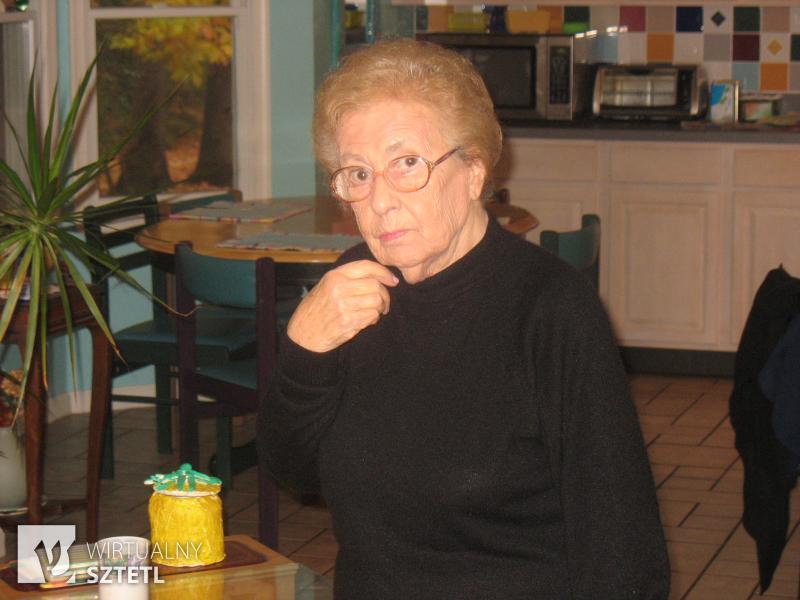
Estery Raab


Estera Raab, z domu Terner, urodziła się 11 czerwca 1922 r. w Chełmie. Jesienią 1939 r. jej ojciec został zamordowany przez nazi­stów; matkę i brata zamknięto w chełmskim getcie; matka tam zmarła. Ona sama uciekła z getta i przedostała się do miejscowości Siedliszcze, gdzie wkrót­ce również utworzono getto i obóz pracy. W październiku 1942 r. została deporto­wana do obozu pracy w Stawie, skąd po dwóch miesiącach wysłano ją do Sobiboru. Po ucieczce z obozu ukrywała się w gospodarstwie Polaków – przyjaciół rodziny. Tam spotka­ła się z bratem. Wróciła do Chełma, a stamtąd wraz z Irvingiem Ra­abem, swoim przyszłym mężem, ruszyła z armią sowiecką do Berlina. W 1949 r. w Berlinie przyczyniła się do schwytania i skazania Ericha Bauera, sobiborskiego „gazownika”. W 1950 r. emigrowała do USA. Zmarła 13 kwietnia 2015 r. w Vineland (USA).

„[…] Nie miałam wyboru. Żadnego. Robiłam to, co musiałam i za to dawali mi coś do zjedzenia. Jedyne względy, jakie mieliśmy w Sobiborze w porównaniu z innymi obozami, choć nie wiem nic o Bełżcu czy Treblince to to, że nie obcinali nam włosów, mogliśmy brać czyste ubrania z transportów i mogliśmy się myć. To, że byliśmy czyści, nie odczłowieczało nas tak jak to było w innych obozach. Niemcy robili to z jednego powodu. Z powodu propagandy. Kiedy przychodziły transporty, chcieli, abyśmy wyglądali jak ludzkie istoty, to po pierwsze, po drugie Niemcy mieszkali blisko naszych baraków i bali się ewentualnych chorób. W obozie było wystarczająco dużo odzieży, dlatego też mogliśmy ją brać dla siebie i dzięki temu utrzymywać czystość. Byliśmy głodni. Czasami kradliśmy coś z transportu, ludzie przynosili czasami kawałek chleba lub czegoś tam, ale było to bardzo ryzykowne, ponieważ bardzo często, jak wracaliśmy do baraków Niemcy sprawdzali nas. Zazwyczaj sprawdzali nas, czy czegoś nie zabraliśmy, ale próbowaliśmy i często się nam to udawało, ale i tak najważniejszą rzeczą było to, że udawało się nam utrzymać czystość, dlatego mogliśmy zachować odwagę i chęć zrobienia czegoś. Sądziliśmy, że jeśli ktoś to zrobi i ucieknie, i będzie wyglądał normalnie, nie będzie o nic podejrzewany. Bez pasiaków, bez obciętych włosów, to był nasz plus, a oni nie przypuszczali, że myślimy o ucieczce i wzięciu odwetu. Jakiś oddział partyzancki zbliżył się do obozu i chciał nas wyzwolić lub coś innego, nie wiem o co chodziło, wiedzieliśmy, że są to partyzanci, w nocy usłyszeliśmy gwizdki i musieliśmy szybko wybiec na zewnątrz i stać przez dwie, trzy godziny w śniegu otoczeni przez karabiny maszynowe. Zamierzali, jeśliby partyzanci weszli, zastrzelić nas. Partyzanci odeszli, a my wróciliśmy do baraków. Po tym Niemcy otoczyli obóz minami. Wcześniej tego nie było. Byliśmy tak głęboko w lesie, że nikt nie mógł wiedzieć, co się tutaj dzieje.

Zaczęliśmy myśleć o powstaniu i zemście, to nas podtrzymywało na duchu, być może było to głupie, ale mimo wszystko dodawało nam odwagi, aby przeżyć, po prostu mogliśmy planować. Może i plany te nie były na początku nic warte, ale planowaliśmy to i widzieliśmy siebie na zewnątrz, widzieliśmy pozabijanych wszystkich nazistów i to dodawało nam codziennie sił. Chyba w lutym 1943 r. Leon [Lejb] Felhendler został wybrany z któregoś transportu. Byliśmy spokrewnieni. Opowiedzieliśmy mu, co tu się dzieje. Powiedział, że musimy stąd uciec. Zapytaliśmy jak, a on odpowiedział, że musi być jakiś sposób i uciekniemy stąd. Zaczęliśmy planować i spotykać się. Tylko w kilka osób, musieliśmy być bardzo ostrożni. Jeśli się powiedzie, to będzie wspaniale, jeśli nie, to dostaniesz kulkę w plecy, ale i to jest lepsze niż komory gazowe. Obiecałam sobie, że nigdy nie dam się zabrać do komory gazowej. Zacznę uciekać i zrobię to, a oni będą musieli stracić jedną kulkę.

Zaczęliśmy organizować powstanie, rozmawiać o tym i trzymało nas przy życiu to, że może byliśmy w stanie pomścić tych, którzy już tego zrobić nie mogli i zostali tutaj spaleni. Postanowiliśmy sobie, że bez względu na wszystko, przeżyjemy czy nie, to musimy coś zrobić, aby świat nie mógł mówić, że Żydzi zachowywali jak owieczki idące na rzeź. To nie jest prawda, to nie jest prawda. Widziałam wiele razy jak w obozie kobiety rzucały się na esesmanów i biły ich.

Powstanie w Sobiborze powiodło się. Inni próbowali, ale im się nie udało. To było jedyne udane powstanie. Ludzie zaczęli znowu walczyć. Walczyli wszędzie. To wszystko ciągle boli. Mimo ciągłego upływu czasu tych, co przeżyli to wszystko, wciąż boli. Planowaliśmy to przez cały czas, rozmawialiśmy o tym i mieliśmy gotowy plan. Był to właściwy czas, ponieważ myśleliśmy o czasie, kiedy Wagner miał wyjechać na wakacje. Dlatego czekaliśmy. W międzyczasie mieliśmy poznać plan ich urlopów. Wiedzieliśmy o wszystkim. Na 28 dni przed wyjazdem Wagnera na urlop Niemcy przyprowadzili do obozu radziecki oddział wojskowy. Na początku nie mogliśmy zrozumieć, dlaczego? Ale później dowiedzieliśmy się, że są to Żydzi. Byli oddziałem partyzanckim i pozostawaliśmy w kontakcie z jednym z ich liderów, rozmawialiśmy z nim o naszych planach, o wiele rzeczy pytaliśmy jego, co dzieje się na zewnątrz, jak daleko jest front, co dzieje się w ogóle, opowiadał nam, co dzieje się dookoła, potrzebowaliśmy zachęty i on nam ją dał. Powiedziałam wtedy: „twój plan jest dobry i może zadziałać, musi zadziałać, musimy spróbować, nie mamy nic do stracenia”. Podjęliśmy decyzję o terminie, miało to być wtedy, kiedy Wagner wyjedzie, miało to być 13 października i na ten dzień musieliśmy być wszyscy gotowi. Zabrałam dwa swetry, ubrałam znowu swoje buty, płaszcz i chustkę, nie braliśmy ze sobą bagażu, nie wiedziałeś, co się będzie działo, oczywiście o ile to wszystko w ogóle się uda. Umówionego dnia do obozu przybyły jakieś oddziały wojskowe, nigdy coś takiego nie miało miejsca wcześniej. Myśleliśmy, że ktoś nas zdradził, ale wojsko to zaraz pojechało dalej. Powstanie przenieśliśmy na następny dzień na godzinę czwartą po południu. Każdy musiał zabić swojego esesmana, swojego strażnika w miejscu gdzie pracował. Zaczęło się, byłam posłańcem, zabijali ich, pięciu. Nie mogliśmy znaleźć Frenzla, druty pod napięciem zostały przerwane, linia telefoniczna była przerwana, myśleliśmy, że uciekł i poszedł po pomoc. Wszystko szło inaczej niż zaplanowaliśmy, każdy działał na własną rękę. Każdy biegł i skakał, gdzie tylko mógł. Może chociaż jednemu uda się przeżyć i będzie mógł opowiedzieć światu. Wielu ludzi wpadło w panikę. Wielu ludzi nie chciało uciekać. Ci, którzy uciekali, rozbiegli się we wszystkich kierunkach. Wskoczyłam na drabinę i kiedy byłam na górze, zauważyłam ciała ludzi na polu minowym. Zostałam postrzelona i upadłam na dół. Kiedy upadłam, uświadomiłam sobie, że mogę żyć i zaczęłam biec w kierunku drzew. Byłam między drzewami, zrobiłam to, udało się. Kiedy to wspominam, widzę ogień i ludzi, którzy tam zostali, Wzięliśmy rewanż. To, co działo się od tamtej pory, to już inna historia. Wciąż była wojna. Musiałam przeżyć jeszcze następne dziewięć miesięcy […]”[1.1].


Zawartość publikowanych artykułów i materiałów nie reprezentuje poglądów ani opinii Reunion’68,
ani też webmastera Blogu Reunion’68, chyba ze jest to wyraźnie zaznaczone.
Twoje uwagi, linki, własne artykuły lub wiadomości prześlij na adres:
webmaster@reunion68.com


Lieberman Cuts Fuel Supplies to Gaza ‘as Long as the Violence Does Not Stop’

Following Infiltration, Lieberman Cuts Fuel Supplies to Gaza ‘as Long as the Violence Does Not Stop’

Benjamin Kerstein


Tear gas canisters are fired by Israeli troops at Palestinian demonstrators during a riot on the Israel-Gaza border, June 8, 2018. Photo: Reuters / Mohammed Salem

Following an infiltration attempt in which 20 Palestinians succeeded in breaching the border fence between Israel and the Gaza Strip, Defense Minister Avigdor Lieberman announced that all fuel supplies Israel provides the coastal enclave will cease immediately.

“As long as the violence in the Gaza Strip does not stop completely, including the sending of incendiary balloons and burning tires toward the Israeli towns, the fuel and gas supplies to the Gaza Strip will not be replenished,” Liberman wrote on Twitter Saturday evening, Israel’s Channel Two reported.

The infiltration occurred on Friday as 14,000 Palestinians rioted in several places along the border fence as part of the ongoing “march of return.” Terrorists succeeded in placing an explosive device that blew a hole in the fence, allowing around 20 Palestinians to reach Israeli territory.

The IDF opened fire and most of the infiltrators fled back to Gaza. However, four of them headed for an IDF sniper position. Three were killed by IDF fire and the last succeeded in crossing back over the border.

Several other infiltration attempts was apparently foiled on Saturday, with the IDF Spokesperson’s Office saying that a number of suspects were tracked and arrested trying to cross the fence at several points along the border.

Hamas leader Ismail Haniyeh pledged that the border violence would continue, saying, “Woe to you if you stop the march of return before the siege is lifted. Our march is not for diesel and dollars, but it is our people’s natural right.”

Yahya Sinwar, Haniyeh’s superior in the organization, explicitly stated several months ago that the goal of the march was to murder Israelis and conquer the entirety of the Jewish state, saying that rioters “will uproot the borders, we will pluck out their hearts, and we will pray in Jerusalem.”


Zawartość publikowanych artykułów i materiałów nie reprezentuje poglądów ani opinii Reunion’68,
ani też webmastera Blogu Reunion’68, chyba ze jest to wyraźnie zaznaczone.
Twoje uwagi, linki, własne artykuły lub wiadomości prześlij na adres:
webmaster@reunion68.com


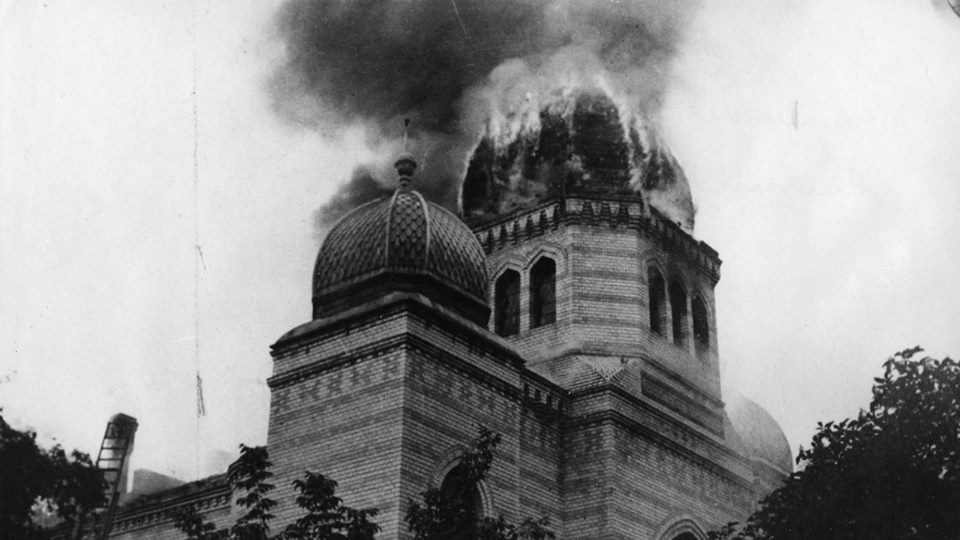
Koncert upamiętniający 80. rocznicę Nocy Kryształowej

Koncert upamiętniający 80. rocznicę Nocy Kryształowej

TSKŻ


Zapraszamy na koncert upamiętniający 80. rocznicę Nocy Kryształowej, który odbędzie się 30 października o godz. 19.00 w Domu Polonii, ul. Krakowskie Przedmieście 64

Darmowe bilety wstępu dostępne o w Klubokawiarni Babel, ul. Próżna 5 w godz. 12.00 – 22.00.
Szczegóły koncertu poniżej.

Trudne karty historii XX wieku odcisnęły piętno również na muzyce, która jest nośnikiem emocji, doświadczanych przez kompozytora w momencie tworzenia. Muzyka stała się językiem, który umie wypowiedzieć to, co nie możliwe do wypowiedzenia słowami.

  • Magdalena Szczepanowska – skrzypce
  • Paul Schweinester – tenor
  • Lech Napierała – fortepian

W programie: Franz Schubert, Mieczysław Wajnberg, Viktor Ullmann, Erich Wolfgang Korngold, Joseph Achron, George Perlman, Jacob Koppel Sandler

Organizatorzy: Towarzystwo Społeczno-kulturalne Żydów w Polsce Oddział Warszawski, Austriackie Forum Kultury, Best Art Concept, Stowarzyszenie Wspólnota Polska

30.10.2018 (wt.)
19.00
POLONIA OPEN ART STAGE, Dom Polonii, Krakowskie Przedmieście 64, Warszawa

Darmowe bilety wstępu dostępne od 07.10.2018 w Klubokawiarni Babel, ul. Próżna 5 w godz. 12.00 – 22.00


Zawartość publikowanych artykułów i materiałów nie reprezentuje poglądów ani opinii Reunion’68,
ani też webmastera Blogu Reunion’68, chyba ze jest to wyraźnie zaznaczone.
Twoje uwagi, linki, własne artykuły lub wiadomości prześlij na adres:
webmaster@reunion68.com