Archive | November 2018

CELEBRATING ISRAELS REVIVAL ON YOM HAALIYAH

CELEBRATING ISRAELS REVIVAL ON YOM HAALIYAH

YAAKOV HAGOEL


Throughout history, no other people has held so strongly to the memory of their homeland no matter what country they lived in.

59 lone soldiers make Aliyah on the August 17 Nefesh B’Nefesh Aliyah flight from New York. (photo credit: SHAHAR AZRAN)

I was born in Israel to parents who were also born in Israel. However my grandparents had the merit to make Aliyah to Israel.

Like many who are now reading this article, my grandparents left behind a house, a culture, and a language. Unfortunately, I will never experience the amazing challenge of liberating myself from exile and returning home to the promised land.

I will never deal with the difficulties of learning a new/old language and adapting to a new culture – an integral part of immigration.

The phenomenon of aliyah, which means to “arise to Israel,” began nearly 4,000 years ago.

Under divine command, the patriarch of the Jewish nation was called to “leave thy country, and thy people, and thy father’s house, unto a land that I will show you” as it states in the book of Genesis. He embarked on a long journey, a journey that has not yet come to an end.

It is not at all simple to leave a land of plenty and come to a land that seems lacking. However Abraham’s complete faith in making this huge step has deepened within our people the importance of taking this step ourselves. The essence of our life is here and this is where we can fulfill the aspiration to establish a “model society” as described by the Zionist visionary Theodor Herzl.

Throughout history, no other people has held so strongly to the memory of their homeland no matter what country they lived in. With prayer books in front of their eyes, Jews have been praying for thousands of years facing the direction of Jerusalem. Despite not living in the land, Jews have always studied the laws that pertain to the land such as shmittah and the Jubilee year. Every year the Passover seder ends with the words “next year in rebuilt Jerusalem.”

The renewed Zionist idea contains two basic concepts which cannot be separated: immigration and resettlement.

As Theodor Herzl, founder of the World Zionist Organization wrote, “throughout the long night of their exile, Jews have never ceased dreaming of their kingdom. We read ‘next year in Jerusalem’ throughout all generations. Now the time has come to make that dream a reality.”

Yom HaAliyah was formalized as a national holiday in Israel to be marked on the 7th of Cheshvan. However according to tradition, Joshua led the children of Israel into the holy land on a different date, the 27th of Nissan. But it was no accident that the 7th of Cheshvan was chosen to mark the Aliyah Day. It is on this week every year, that we read Parshat Lech Lecha in synagogue on Shabbat. It is in this Torah portion that Abraham hears the divine call to leave the land of his birth and forge a new path to the land of Israel.

Yom HaAliyah, or Aliyah Day, reinforces the right of the Jewish people to the land of Israel. This date reminds us that despite the expulsion of the majority of the Jewish people from their homeland nearly 2,000 years ago, they remained faithful to the land throughout their Dispersion.

Throughout the generations, our ancestors aspired to immigrate to Israel. Many of us grew up seeing old photographs of immigrants ships, of Jews kissing the ground as they arrived in Israel, and of the Ma’abarot or transit camps with their rows of tents for homeless immigrant families.

Immigration to Israel in the days of our parents and grandparents was accompanied by a difficult transition. They came with little material possessions or money and lived in tent cities or development towns. They became a symbol both of the difficulty of making aliyah yet the importance of doing it in spite of everything.

With the development of the State of Israel and its prosperity, the procedure of aliyah and absorption has improved beyond recognition. The transit camps were replaced by apartments, poverty was replaced by an Absorption Basket, and language difficulties were replaced by the Hebrew Ulpan system.

From refugees of the Spanish Inquisition to those escaping the hardships in Africa and survivors from war-torn Europe steeped in blood, Israel has become the home of the Jewish people from all different walks of life.

In this new/old land, we have seen a new generation of scientists, artists, entrepreneurs, military experts, lawmakers, intellectuals, and religious leaders from countless different countries. They are now all part of this innovation nation called the State of Israel where immigrants from around the world share their talents in development, economics, high-tech and medical breakthroughs.

There are numerous challenges when it comes to being an immigrant. We must all recognize the importance of both absorption and integration into Israeli society, the removal of obstacles to success as well as maintaining ties with our brothers and sisters in the Diaspora.

The State of Israel is looking forward to the continued ingathering of the exiles from around the world, from South America from Australia from Europe from North America from Ethiopia and from all over the world.

Today, organizations and movements around Israel are marking Aliyah Day in their own way. World Likud has chosen to mark this day with an event that unites all immigrants who were touched by the Betar youth movement. Members of Betar young and old, and anyone raised with the teachings of Ze’ev Jabotinsky, learned the value of aliyah. They left behind the culture of their host country, learned Hebrew and arrived in Israel to set down their roots and establish a new generation of Zionist families.

As the vice-chairman of the World Zionist Organization, I consider it crucial to continue encouraging aliyah. We must remove any existing barriers for new immigrants and continue to raise awareness among Diaspora Jews with the truth that Israel is my home, your home, and a home for all of us.

Happy Aliyah Day!


Yaakov Hagoel is the Vice-Chairman of the World Zionist Organization and Chairman of World Likud.


Zawartość publikowanych artykułów i materiałów nie reprezentuje poglądów ani opinii Reunion’68,
ani też webmastera Blogu Reunion’68, chyba ze jest to wyraźnie zaznaczone.
Twoje uwagi, linki, własne artykuły lub wiadomości prześlij na adres:
webmaster@reunion68.com




Jewish Democrats increasingly anti-Israel

Jewish Democrats increasingly anti-Israel

Caroline Glick


Jewish Democrats have long taken pride in the high number of American Jews serving as Democratic lawmakers in the House of Representatives and Senate.

Given that the Jewish community in the United States constitutes less than two percent of the general population, the fact that nearly two dozen American Jews serve in the House and Senate is a legitimate source of pride, regardless of party.

For the past fifity years, Democratic Jewish lawmakers like Representatives Tom Lantos, Howard Berman, Steven Solarz, Shelley Berkley, Jane Harman, Nita Lowy and Elliot Engel; and Senators like Joe Lieberman and Frank Lautenberg; played key roles in forging and maintaining their party’s strong support for Israel and the U.S.-Israel alliance.

In recent years, however, things have changed. As Democratic voters and leaders have become more hostile to Israel, and as Republican voters and leaders have become more supportive of Israel, Jewish Democratic lawmakers have increasingly adopted policies and accepted support from organizations that are harmful to Israel’s national security.

The current election cycle makes this point very clearly. As JTA reported this week, there are 36 Jewish candidates running as Democrats in House races. Half are incumbents, and half are challengers.

Over two-thirds of the Jewish Democratic incumbents (13 of 18) supported President Barack Obama’s nuclear deal with Iran. Israel’s Prime Minister Benjamin Netanyahu was the most outspoken critic of the deal, arguing that it posed an existential danger to Israel by giving Iran an open path to a nuclear arsenal. Three-quarters of Israeli Jews agreed with him.

Nearly half of the Jewish Democratic incumbents (7 of 18) have received contributions from J Street, the anti-Israel Jewish political group founded with help from George Soros. Throughout Obama’s years in office, J Street served as the administration’s Jewish fig leaf.

J Street was a central actor in the campaign to block a Senate veto of the Iran deal. It has placed the blame for the failure of the Israel-Palestinian peace process squarely on Israel’s shoulders, and campus chapters of J Street have reportedly aided anti-Israel activists in attempts to support the antisemitic “boycott, divestment and sanctions” (BDS) campaign against Israel. The organization is considered so hostile to Israel that Israel’s ambassador to the U.S., Ron Dermer, refuses to meet with its representatives.

Among the Democratic challengers, five of 18 have received funding from J Street, according to JTA’s report. Ten have received money from other far-left PACs or were endorsed by Obama.

One of the Democratic candidates, Dan Kohl, who is running in Wisconsin’s 6th District against two-term Republican incumbent Glenn Grothman, is one of J Street’s founders, and its first political director. His uncle, Herb Kohl, served as a Senator from Wisconsin for four terms and was staunchly supportive of Israel.

Dan Kohl is the scion of his family’s retail empire. His only recorded private sector experience was a stint as assistant general manager of the Milwaukee Bucks basketball team, which his family owned.

According to campaign financing site opensecrets.org, Kohl had a 30 percent funding advantage over Grothman at the end of July. Kohl’s single largest donor was J Street, which contributed $175,320 to his campaign.

Kohl oversaw J Street PAC and turned it into a national fundraising organization that came under scrutiny almost as soon as it was established. Although J Street PAC touts itself as a Jewish organization, it received money from Arab and Iranian lobbies and individuals. Some J Street officials have been registered foreign agents for Arab countries.
Grothman, in contrast, is an enthusiastic and consistent supporter of Israel. He celebrated President Donald Trump’s decision to move the U.S. Embassy in Israel to Jerusalem. J Street opposed the move.

Despite Kohl’s anti-Israel extremism, and lack of experience in other endeavors, he is running as a moderate, and claims that, if elected, he will seek bipartisanship. Kohl seeks to distinguish himself from Grothman by accusing Grothman of eschewing bipartisanship. According to Grothman’s campaign, he is running four times as many television ads as Grothman, as the gap in funding between the two candidates continues to grow in Kohl’s favor.

Also running for the House of Representatives in the current cycle are 15 Jewish Republicans. Two are incumbents, the rest are challengers.

One of the interesting races on the Republican side is Lena Epstein’s bid to win an open seat vacated by pro-Israel Republican Rep. David Trott in Michaigan’s 11th district. Unlike most of the other seats with Jewish Republican challengers, which are viewed as long shots for Republicans, Michigan’s 11th district is considered a toss-up.

Trump won the district in 2016 by 4 points. Epstein’s Democratic opponent, Haley Stevens, is running at a 7-point advantage with 17 percent of voters undecided. Both women are in their late 30s.

Epstein, who is staunchly pro-Israel, ran her family automotive and industrial lubricants business, Vesco Oil, with mother and sister before entering politics as a co-chairman of Trump’s Michigan campaign in 2016.

Stevens served in the Obama administration as the chief of staff of the auto rescue task force.

According to Epstein’s supporters, her campaign has been subjected to stiff opposition by Jewish liberals from inside and outside her district. For instance, in June, the Franklin Hills Country Club, with a heavily Jewish membership, cancelled a fundraiser for Epstein. The cancellation was reportedly caused by a Facebook posting by Michael Simon, the son of one of the club’s former presidents.

In his post, Simon compared Trump’s immigration policies to Nazi policies. He called Epstein “a neo fascist” and said the values of the Jewish candidate, whose family members have been members of the club for four generations, are “incongruous with the moral center of the Jewish community.”

Epstein’s event was cancelled within hours of Simon’s posting (which he subsequently deleted).

This week, a Democratic polling firm, the Mellman Group, published a survey of American Jewish opinion regarding President Trump’s policies towards Israel. In a signal of the profound shift of liberal Jewish opinion on Israel, a bare majority of 51 percent of American Jews supported Trump’s policies towards Israel, despite the fact that he moved the U.S. embassy to Jerusalem and has staunchly backed Israel against its enemies while defunding the Palestinian Authority and shutting the Palestine Liberation Organization (PLO) office in Washington, DC.

Only 6 percent said that they would vote for him due to his Israel policies despite disagreements with him on other issues. That is, only 6 percent of liberal American Jews believe that support for Israel is a primary voting issue. 20 percent said they agree with Trump on Israel and still will not vote for him.

75 percent of the poll’s respondents said they plan to vote Democrat in next month’s Congressional elections. 68 percent identified as Democrats.

The numbers indicate that liberal American Jews place a far higher priority on their partisan identity than on their Jewish identity. Moreover, as Simon’s attack on Epstein shows, for many liberal Jews, partisan identities are increasingly viewed as part and parcel of their Jewish identities. As a consequence, liberal American Jews can be expected to be the most outspoken critics of the slowly growing minority of Republican Jews.

So, too, if current trends continue, pro-Israel American Jews, as well as Israeli leaders, should not expect Democratic lawmakers to stand with Israel when doing so puts them in conflict with the party’s activists.

Indeed, as time goes by, the dozens of Jewish Democratic lawmakers in Congress may serve not as Israel’s defenders in their party, but as fig leaves that hide and whitewash the growing hostility of their party and its voters towards the Jewish state and its supporters in the United States.


Zawartość publikowanych artykułów i materiałów nie reprezentuje poglądów ani opinii Reunion’68,
ani też webmastera Blogu Reunion’68, chyba ze jest to wyraźnie zaznaczone.
Twoje uwagi, linki, własne artykuły lub wiadomości prześlij na adres:
webmaster@reunion68.com



Klezmoret i Muzyka Żydowska w Giżyckim Centrum Kultury

Klezmoret i Muzyka Żydowska w Giżyckim Centrum Kultury

GTV


Zawartość publikowanych artykułów i materiałów nie reprezentuje poglądów ani opinii Reunion’68,
ani też webmastera Blogu Reunion’68, chyba ze jest to wyraźnie zaznaczone.
Twoje uwagi, linki, własne artykuły lub wiadomości prześlij na adres:
webmaster@reunion68.com



SEFARAD MODERNA – pieśni sefardyjskie z jazz piano


SEFARAD MODERNA – pieśni sefardyjskie z jazz piano

TSKZ


25 listopada o godz. 15:00, zapraszamy do Klubokawiarni Babel (Warszawa, ul. Próżna 5) na koncert SEFARAD MODERNA – pieśni sefardyjskie z jazz piano w wykonaniu Anny Riveiro i Miłosza Olenieckiego. Koncert odbędzie się w ramach cyklu: Scena Muzyczna Klubokawiarni Babel. Wstęp wolny.

SEFARAD MODERNA – pieśni sefardyjskie z jazz piano

Sefardyjska tradycja w etno-jazz. W nowym projekcie artyści w zaskakujący sposób połączyli tradycyjne pieśni sefardyjskie z jazzowym brzmieniem oraz współczesną harmonią i kolorystyką fortepianu.

Anna Riveiro przekazuje słuchaczom bogactwo ukrytych w pieśniach uczuć, stosując techniki wokalne nawiązujące do wykonań muzyki sefardyjskiej w krajach basenu Morza Śródziemnego. Jednocześnie Miłosz Oleniecki stale utrzymuje napięcie w warstwie akompaniamentu wykorzystując różne kontrasty kolorystyczne, harmonię tonalną i modalną, zmienne i nietypowe rytmy.

Program ma charakter etno-jazzowy. Artyści nawiązują też do muzyki transowej i improwizowanej, wciągając słuchaczy w emocjonującą muzyczną opowieść. Zmysłowy głos Anny Riveiro i ekspresyjne brzmienie fortepianu Miłosza Olenieckiego są przewodnikami po ścieżkach Sefarad Moderna (Współczesne Sefarad).

Wykonawcy:

Anna Riveiro: śpiew, wybór utworów i scenariusz koncertu
Miłosz Oleniecki: fortepian, aranżacje utworów

ANNA J. RIVEIRO – charyzmatyczna wokalistka, gitarzystka, trenerka głosu, producentka muzyczna.

Śpiewa w wielu stylach, posługując się różnorodnymi technikami wokalnymi, ale centrum jej twórczości stanowi muzyka z szeroko pojętego kręgu kultury żydowskiej. Szczególne miejsce w jej twórczości ma muzyka sefardyjska. Artystka wykonuje też pieśni hebrajskie oraz  pieśni jidysz. Jej poszukiwania twórcze kierują się też od lat ku muzyce dawnej i tradycyjnej, związanej z kulturą Hiszpanii, Portugalii i Ameryki Łacińskiej.

 Koncertuje w Polsce i zagranicą – występowała m.in. w Izraelu, Meksyku, Hiszpanii, Francji, Anglii, Niemczech i we Włoszech współpracując z wybitnymi muzykami i zespołami. Jako uznana w świecie wykonawczyni jest stale zapraszana na międzynarodowe festiwale – wystąpiła m.in. na jubileuszowej edycji 10′ MIĘDZYNARODOWEGO FESTIWALU MUZYKI SEFARDYJSKIEJ w Kordobie (Hiszpania). Wystąpiła też jako gwiazda muzyki sefardyjskiej na 54′ FESTIWALU JAZZ JAMBOREE w Warszawie. Jej interpretacje pieśni sefardyjskich uznane zostały za wzorcowe w programie UNESCO dotyczącym języków zagrożonych wymarciem.

Dokonała wielu nagrań fonograficznych, w tym 7 płyt solowych m. in. dla wytwórni Universal. Jej płyty z pieśniami sefardyjskimi: LUNAS OLVIDADAS i DOS AMANTES nagrane zostały ‚live” pod patronatem Polskiego Radia i Instytutu Cervantesa w Warszawie. Właśnie ukazała się nowa płyta artystki: AHAVAT OLAM – Miłość wieczna – Najpiękniejsze modlitwy hebrajskie na Wielkie Święta i Szabat.

Obok działalności koncertowej Anna Riveiro prowadzi kursy i warsztaty wokalne w Polsce i na świecie. Udziela też lekcji śpiewu, stosując autorską metodę nauczania, w ramach swojej Szkoły Wokalnej: RIVEIRO Vocal Studio.

Więcej o artystce na stronie: www.annariveiro.com

MIŁOSZ OLENIECKI – pianista, kompozytor, aranżer, producent muzyczny. Absolwent szkoły muzycznej im. K. Szymanowskiego w Warszawie, Wydziału Jazzu Państwowej Szkoły Muzycznej im. F. Chopina w Warszawie oraz Wydziału Elektroniki i Technik Informacyjnych Politechniki Warszawskiej. Współpracował z artystami uprawiającymi najróżniejsze style muzyczne – od popu, jazzu, country, poprzez hip hop, aż po muzykę elektroniczną oraz eksperymentalną czy improwizowaną – takimi jak Michał Urbaniak, Wojtek Mazolewski Quintet, Natalia Nykiel, Ortega Cartel, Michał Sołtan i in. Współtworzy autorskie projekty: P.Unity, Miłosz Oleniecki Trio, Opowieści Improwizowane.


Zawartość publikowanych artykułów i materiałów nie reprezentuje poglądów ani opinii Reunion’68,
ani też webmastera Blogu Reunion’68, chyba ze jest to wyraźnie zaznaczone.
Twoje uwagi, linki, własne artykuły lub wiadomości prześlij na adres:
webmaster@reunion68.com



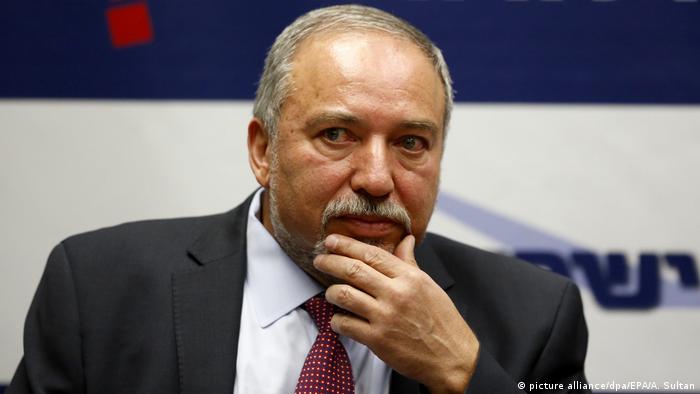
Israeli Defense Minister Avigdor Lieberman resigns over Gaza ceasefire

Israeli Defense Minister Avigdor Lieberman resigns over Gaza ceasefire

Deutsche Welle


Israeli Defense Minister Avigdor Lieberman has resigned due to differences with Prime Minister Benjamin Netanyahu over a Gaza ceasefire. The move may trigger early elections.

Israel’s hard-line defense minister Avigdor Lieberman announced his resignation on Wednesday and called for snap elections after a row over a ceasefire with Gaza’s rulers Hamas to end a two-day flare up in violence

“What happened yesterday — the truce combined with the process with Hamas — is capitulating to terror. It has no other meaning,” Lieberman told journalists. “What we’re doing now as a state is buying short-term quiet, with the price being severe long-term damage to national security.”

A security cabinet meeting on Tuesday ended with a statement from Prime Minister Benjamin Netanyahu’s office saying that ministers had unanimously agreed to the Egyptian-brokered ceasefire.

Lieberman’s office then made a statement saying that his “alleged support for stopping the attacks in Gaza is fake news.”

Four other ministers, including Education Minister Naftali Bennett of the far-right Jewish Home Party, also announced they had opposed the ceasefire.

Netanyahu has defended the truce.

“I see the big picture of Israeli security that I cannot share with the public,” he said at a memorial ceremony. “Our enemies begged for a cease-fire and they know well why. I cannot detail our plans for the future. We will dictate the time and circumstances that are right for Israel and are right for the security of our people.”

Hamas described Lieberman’s resignation as a “political victory for Gaza.”

Pulls out of coalition

Lieberman also said his Yisrael Beiteinu will leave the ruling coalition, an action that could prompt Netanyahu to call early elections. The departure of Yisrael Beiteinu’s five seats in parliament leaves Netanyahu with a majority of just one seat in the 120-seat Knesset.

There has been recent speculation Netanyahu is planning to hold early elections, now slated for November 2019.

However, an official from his Likud party dismissed there would be early elections.

Netanyahu, who is also foreign minister, will take over the defense portfolio, but he may come under pressure from other coalition partners for that prized ministry.

Qatar payment controversy

Lieberman also opposes Netanyahu’s policy of allowing a Qatari cash infusion in the impoverished Gaza enclave.

Netanyahu has come under criticism from members of his right-wing government for his decision to allow Qatar to provide money to the Hamas-run Gaza Strip to pay for salaries and fuel to ease an electricity crisis.

Last week, Qatar delivered $15 million (€13.2 million) of cash in suitcases to the Gaza Strip. The payment was part of $90 million that Qatar has pledged to deliver to the Gaza Strip in the next six months.

Every evening at 1830 UTC, DW’s editors send out a selection of the day’s hard news and quality feature journalism. You can sign up to receive it directly here.


Zawartość publikowanych artykułów i materiałów nie reprezentuje poglądów ani opinii Reunion’68,
ani też webmastera Blogu Reunion’68, chyba ze jest to wyraźnie zaznaczone.
Twoje uwagi, linki, własne artykuły lub wiadomości prześlij na adres:
webmaster@reunion68.com