Archive | January 2019

Germany to support creation of Sobibor memorial in Poland

Germany to support creation of Sobibor memorial in Poland

DW


Polen, Sobibor: Gedenktafel (picture-alliance/dpa/P. Wierzchowski)

Fountain pens, books, playing cards, earrings, combs, hairpins, watches and thousands of other items were taken from prisoners shortly before they entered the gas chambers at Sobibor. Today, there are only small memorials to mark the murders at the site of the extermination camp. Objects dug up over the years of archaeological excavation will be stored at another memorial site: Majdanek, near Lublin.

Germany will offer €1 million ($1.14 million) toward a permanent exhibition at Sobibor so that visitors never forget the country’s Nazi-era crimes. The finances will initially go to the Auschwitz-Birkenau Foundation, which will then transfer it to Sobibor. The exhibition is scheduled to open within two years.

“Sobibor can now be redeveloped as a memorial site,” said Piotr Mateusz Andrzej Cywinski, the head of the foundation and the director of the Auschwitz-Birkenau State Museum for the past 12 years. “A building is currently being constructed there to house the future permanent exhibition. Remembering Sobibor is important. There was an uprising here by the inmates against the camp guards. That only happened in two other places: in Treblinka and in Auschwitz-Birkenau.”

After signing the agreement with Cywinski, Rolf Nikel, Germany’s ambassador to Poland, said the financial contribution would help ensure that “the memorial to the crimes that were committed by Germans, in the name of Germany, can be maintained.”

Cywinski (left) and Nikel signed the agreement on December 19 in Warsaw

Along with Belzec and Treblinka, Sobibor is one of the three extermination camps set up under Operation Reinhardt. From July 1942 through October 1943, more than 2 million Jews and an estimated 50,000 Roma were murdered across Europe. In Sobibor alone, more than 34,000 children were killed using exhaust fumes from diesel engines. Though most of the victims at Sobibor were Polish, Jews and Roma from the Netherlands, Slovakia and France were also gassed here. At least 20,000 German Jews were among the victims.

Though there is no agreed-upon death toll for Sobibor, estimates range from 170,000 to more than 300,000 people killed. On October 14, 1943, the prisoners staged their uprising, and about 300 succeeded in fleeing the camp; fewer than 60 of them survived.

In 2007, Polish and Israeli archaeologists began to excavate the site of the former camp. In 2014, they uncovered the remnants of the gas chambers. Thousands of personal items that had been stolen from victims were discovered.
Archaeological excavation led to the recovery of the belongings of murdered prisoners

Poland is trying to raise awareness

For years Poland’s government has been trying to bring international attention to Sobibor, and to collect money for the memorial. Israel and EU countries such as Slovakia and the Netherlands — from where the Nazis deported Jews to their deaths at Sobibor — have also shown an interest.

Germany’s Left party has called on tthe government to budget €4 million to the Sobibor project since 2015. The lawmaker Brigitte Freihold said it was necessary “for Germany to fulfill its obligations, which were laid out in the Terezin Declaration.” The Terezin Declaration on Holocaust Era Assets and Related Issues was signed by 46 states. Countries pledged to ensure the upkeep of Holocaust memorials.

Freihold also spoke of young Germans’ “appalling” lack of knowledge about their country’s history. According to a recent poll by CNN, 40 percent of Germans aged 18 to 34 know nothing, or very little, about their country’s systematic extermination of Jews and other minority groups during the Holocaust.



Zawartość publikowanych artykułów i materiałów nie reprezentuje poglądów ani opinii Reunion’68,
ani też webmastera Blogu Reunion’68, chyba ze jest to wyraźnie zaznaczone.
Twoje uwagi, linki, własne artykuły lub wiadomości prześlij na adres:
webmaster@reunion68.com


Two terror orphans engaged

Two terror orphans engaged

Arutz Sheva Staf


Ayelet and Avigdor both lost their parents in terror attacks. Last night, they got engaged after meeting at a support group for orphans.
Avigdor Gvish and Ayelet Dikstein / Courtesy of Yediot Aharonot

Ayelet Dikstein and Avigdor Gvish who had both lost their parents in terror attacks almost 20 years ago are engaged. The two met at a support group for orphans.

Sunday morning, Amihai Itali for Yediot Aharonot reported on the engagement ceremony that took place on Saturday. The happy occasion was marred by the fact that their parents could not be there, having been murdered.

For Avigdor’s family, terror struck in 2002, during the Second Intifada, when he was just a 19-year-old soldier. It was at the end of the Pesach Seder, a day after the horrific massacre at the Park Hotel in Netanya. A Palestinian terrorist infiltrated the family home in the Samarian community of Elon Moreh. The terrorist opened fire on the family, critically wounding his father, David, who later died of his wounds. Also murdered were Avigdor’s mother, Rachel, and her father Yitzchak Kanar who joined the family for the seder. His brother Avraham, who was serving as a Major in the elite Sayeret Matkal unit was shot as well.

The injured Avraham asked Avigdor to bring him his weapon that was upstairs. Having just drafted, Avigdor did not yet know how to shoot, but did as he was asked. Avraham’s condition worsened and he found it difficult operate the weapon. He later died of his wounds. The terrorist was killed by IDF forces.

Four months later, terror struck Ayelet’s family.

At the end of July 2002, the Dikstein family were driving from their family home in Psagot to visit family in Yeshiv Ma’on, in the Hevron Hills. Their car was fired on by terrorists. Ayelet’s little brother, Shoval, was hit, as well as their mother, Chana.

Her father, Yosef, stopped the car to try and help his wife and young son, but was shot to death. The mother and young son later died of their wounds.

Ayelet, a young girl at the time, resourcefully helped her other brothers in the car as they were under attack.

Over the years, Ayelet and Avigdor would meet at support groups for orphans run by One Family. There they found that they had a lot in common. As time went by the bond between them grew, and they started dating two years ago.

On Friday, before they announced their engagement, the couple went to Elon Moreh cemetery to visit Avigdor’s parents David and Rachel, his grandfather, Yitzchak Kanar, and his older brother Avraham that were murdered in the attack.

From their they went to the Psagot cemetery to visit Ayelet’s parents, Yosef and Chana and her young brother Shoval that were murdered.

Only afterwards, did the couple announce their decision to marry to the rest of the families and friends.

The couple celebrated their engagement in Elkana, at the home of Avigdor’s brother.

There was a lot of excitement and happiness, but also sadness and pain that the murdered family members will not be at their wedding.


Zawartość publikowanych artykułów i materiałów nie reprezentuje poglądów ani opinii Reunion’68,
ani też webmastera Blogu Reunion’68, chyba ze jest to wyraźnie zaznaczone.
Twoje uwagi, linki, własne artykuły lub wiadomości prześlij na adres:
webmaster@reunion68.com


Amos Oz: Prorocy są od tego, by rzucać w nich kamieniami

Amos Oz: Prorocy są od tego, by rzucać w nich kamieniami

Paweł Smoleński


To, że Amos Oz nie dostał Literackiej Nagrody Nobla, dowodzi fantastycznej niekompetencji Akademii Szwedzkiej.

Amos Oz, 4 maja 1939 – 28 grudnia 2018

Był pisarzem monumentalnym. Jego „Opowieść o miłości i mroku” to książka niezwykła, wspaniała i wielka, również dosłownie, bo po prostu gruba i ciężka. Ale już „Do fanatyków” – trzy wykłady zadedykowane wnukom, które autor nazwał skromnie „refleksjami” – liczą raptem kilkadziesiąt stron, lecz myśli w nich zawarte starczyłyby za dorobek życia tuzinowi profesorów i doktorów habilitowanych.

Nie mówiąc o niezwykłym, magicznym języku. O Ozie krążyły legendy, że jego hebrajski jest zbyt piękny i bogaty, a więc pisze za dobrze. Wymyślał nowe słowa, jak np. „znosorożczyć” (wziął to z dramatu Ionesco „Nosorożec”). Wyraz zadomowił się w języku, a znaczy tylko tyle, że jeśli jakiś polityk bałwanieje ze szczętem, zaś jego bałwaństwo jest po prostu groźne, „znosorożczył się” i kwita.

To, że nie dostał Literackiej Nagrody Nobla, dowodzi fantastycznej niekompetencji Akademii Szwedzkiej. Jego książki przełożono na pół setki języków. W tym, rzecz jasna, arabski. Na okładce jednej z nich, wydanej akurat w Egipcie, edytor zamieścił zdanie: „Dowiedzmy się, jak myśli wróg”. Oz opowiadał, że to dlatego, by nie czepiała się cenzura.

Amos pochodził z Jerozolimy; jego rodzina przybyła do Palestyny z ziem dawnej Rzeczypospolitej. Był kibucnikiem i żołnierzem czołgistą. Mieszkał w miasteczku Arad na pustyni Negew, ponad ścianą majestatycznego żółtego krateru. Znano go powszechnie; gdy inny izraelski pisarz Etgar Keret napisał pierwsze opowiadanie, włożył je w kopertę, którą zatytułował „Amos Oz, Arad”. List, ma się rozumieć, doszedł.

Nie znosiła go nacjonalistyczna i religijna prawica. Choćby za to, że już po wojnie sześciodniowej w 1967 r. głosił, że zajęty przez Izrael Zachodni Brzeg to skarbonka, którą zapłaci za pokój z Palestyńczykami: – Dla wielu Izraelczyków Zachodni Brzeg to biblijna ziemia ojców, żydowska Judea i Samaria, najważniejsza część naszej tradycji. Tam przecież, a nie w Tel Awiwie, znajdują się nasze święte miejsca, tamtymi drogami chodzili prorocy i królowie Izraela, to kraina opisywana przez święte księgi. Nie jest łatwo wyrzec się czegoś, co jest aż tak bardzo związane z żydowskim dziedzictwem i kulturą. Mimo to musimy porzucić tę ziemię, bo nie jesteśmy tam samotni, Palestyńczycy również mają do niej prawa. Pokój w przyszłości jest więcej wart od historii.

Ale też wielu traktowało Oza jak autorytet moralny i niemalże proroka. Tak opowiadał o nim choćby nieżyjący już rabin Menachem Froman z osiedla Tekoa na Zachodnim Brzegu, choć Amos chyba nie wierzył w Stwórcę.

Pytałem Oza, dlaczego – skoro dla wielu ma status proroka – bywa lżony i opluwany. Odpowiadał ze śmiechem, że na ziemi Izraela było i jest tak wielu proroków, iż łatwo trafić w nich kamieniem, a poza tym prorocy od tego są.

Miał się za syjonistę, ale powtarzał, że syjonizm spełnił swoje zadanie: – Celem syjonizmu było stworzenie żydowskiego państwa, bezpiecznego domu dla wszystkich Żydów, którzy w tym domu zechcą zamieszkać. Z bezpieczeństwem różnie bywa, lecz państwo istnieje. A że syjonizm nie stworzył raju na ziemi, o czym marzyli matki i ojcowie – założyciele Izraela, to całkowicie inna sprawa. Miał zbudować sprawiedliwy kraj dla Żydów, ale też dla wszystkich nieżydowskich jego mieszkańców i, jak to bywa z idealistycznymi ideami, się nie udało. Lecz taka jest natura wszystkich marzeń – nie można ich spełnić. Tyle że bez marzeń nikt nie umie żyć.

Kochał Izrael, czego dowodził nie tylko słowami, ale też na wojnach, i był z niego dumny, zresztą absolutnie słusznie. Ale też podkreślał, że sytuacja Izraelczyków i Palestyńczyków jest taka sama jak rozbitków, którzy po morskiej katastrofie uchwycili się jednej dryfującej deski. Oba narody mają prawo żądać i dostać miejsce dla siebie. Tak samo jak nie mają prawa spychać sąsiada do wody.

Nie żywił złudzeń co do natury reżimów Bliskiego Wschodu. Nie wierzył – jak prawdziwy prorok – w arabską wiosnę, choć życzył sąsiadom jak najlepiej. Opowiadał: – Nie przytrafiła nam się arabska wiosna, tylko islamska zima. Zaczęła się od rebelii młodych idealistów, ludzi światłych, głodnych wolności i demokracji, zorientowanych na przyszłość i wszystko to, co niesie ze sobą XXI wiek, ale szybko została porwana, zmanipulowana i koniec końców zawłaszczona przez islamistów. To jedna z najgorszych wiadomości dla wszystkich krajów i narodów arabskich, dla Bliskiego Wschodu i zapewne dla całego świata. A chcesz wiedzieć, co jest największą tragedią islamskiego świata?

Oczywiście, że chciałem. – Mężczyźni. Trzymają żony zamknięte w domach, zabraniają im edukacji. Kiedy kobieta, żona i matka, jest niepiśmienna, oznacza to, że dzieci tracą kilka pierwszych lat swojego życia, nie nauczą się wielu rzeczy, nie rozwiną. Tak tworzy się dystans, który później jest nie do nadrobienia. Przyczyną kłopotów, zacofania, agresywności świata islamskiego jest analfabetyzm kobiet, a za to można winić tylko mężczyzn. To zły kierunek, bo cofa islam, nie tylko w krajach arabskich, do wieków średnich, wpycha w rozbicie plemienne.

Przed laty współzakładał organizację Pokój Teraz. Bo też uparcie wierzył w pokój, co czyniło z niego marzyciela. Ale był realistą: – Nie mylmy pokoju z miłością. W latach 60. i 70. idealiści, a były ich miliony, maszerowali na całym świecie pod hasłem „Make love, not war” – „Czyńmy miłość, nie wojnę”. A ja sobie szeptałem: „Make peace, not love” – „Czyńmy pokój, nie miłość”.

O Izraelczykach, którzy są zaangażowani w działania pokojowe, mówił: – To wspaniali ludzie, właśnie oni świadczą o wartości Izraela, to strażnicy naszej przyzwoitości publicznej, uczciwości, otwartego umysłu. Wielu Izraelczyków przykleja im łatkę zdrajców. Mnie też taką łatkę się przykleja i noszę ją z dumą jak najcenniejszy order. Im więcej takich zdrajców, tym dla Izraela lepiej. Dają krajowi więcej niż zawodowi ślepi patrioci.

Nie uważał, że cierpienie uszlachetnia; nazywał to chrześcijańską mitologią. Dlatego – pisał o tym jak nikt inny – wśród Żydów mających zakodowane w genetycznej pamięci tysiąclecia prześladowań i Zagładę są ludzie dobrzy i źli, szlachetni i paskudni; ludzie po prostu. Jego książki są najlepszymi przewodnikami po Izraelu, ale też – po zakamarkach człowieczej duszy.

Powtarzał mi wielekroć, że doczeka czasów, gdy we wspólnej izraelsko-palestyńskiej Jerozolimie staną dwie ambasady: izraelska i palestyńska.


Zawartość publikowanych artykułów i materiałów nie reprezentuje poglądów ani opinii Reunion’68,
ani też webmastera Blogu Reunion’68, chyba ze jest to wyraźnie zaznaczone.
Twoje uwagi, linki, własne artykuły lub wiadomości prześlij na adres:
webmaster@reunion68.com


OCASIO-CORTEZ, TLAIB AND OTHER STAR FRESHMEN CRASH INTO CONGRESS

OCASIO-CORTEZ, TLAIB AND OTHER STAR FRESHMEN CRASH INTO CONGRESS

MICHAEL WILNER


She’s the daughter of immigrants

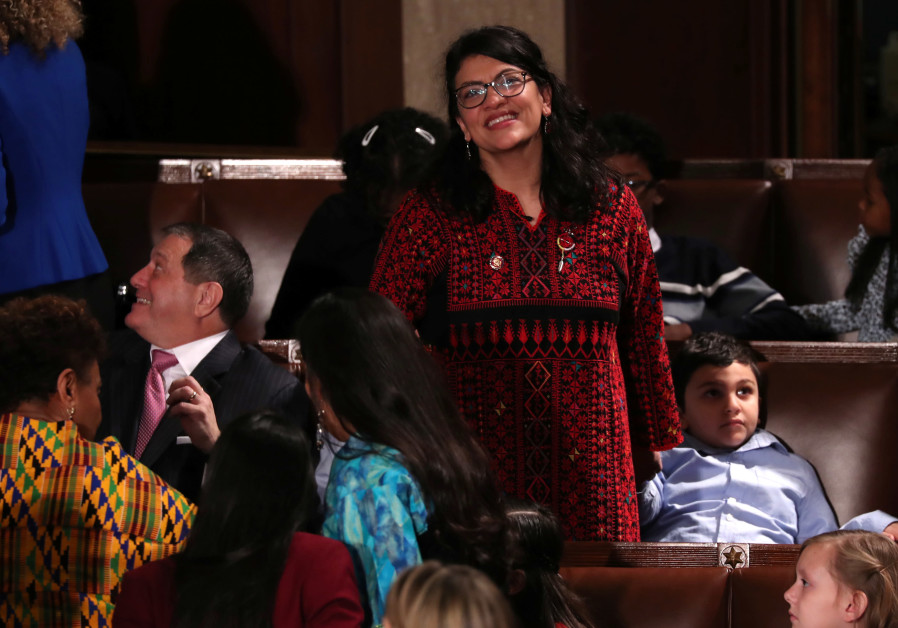
Tlaib is the oldest of 14 children born to Palestinian immigrant parents. Her father, who was born near Jerusalem, worked on the assembly line at the Ford Motor Co. plant.

…first Muslim woman in Congress


Together with other prominent new Democratic members, Ocasio-Cortez and Tlaib have become the public face of the most diverse, youthful and female Congress in American history.

(photo credit: JONATHAN ERNST / REUTERS)

WASHINGTON – A diverse, youthful cadre of freshman female lawmakers entered Congress last week much as they had campaigned for their seats: under the spotlight of intense national interest, proudly proclaiming themselves as agents of radical change.

Alexandria Ocasio-Cortez of New York, the youngest-ever member of the House of Representatives at 29, sat for an interview with 60 Minutes and called for a 70% tax rate on the income of the wealthiest Americans. She was the only Democrat booed by her Republican colleagues – who view her as a poster child for the far-left and a rallying cry for their base – as she stood in favor of Nancy Pelosi of California for Speaker of the House.

And when opposition researchers tried to smear her with a video from her college years of her dancing on a rooftop to some sweet tunes – footage conservative sites apparently thought would embarrass her – she brushed her shoulders off, posting a video of herself entering her new congressional office dancing to “War, What Is It Good For?”

In stark contrast, Ocasio-Cortez’s friend and colleague, Rashida Tlaib of Michigan, faced a rougher entry. At a private celebration after her swearing-in ceremony, she told supporters that she would stand up to bullies like US President Donald Trump and “impeach that mother******,” drawing condemnation from the president, Pelosi, and other Democratic leaders. She defended her comment on Twitter but refused to address a hoard of journalists trailing her on Capitol Hill.

Together with other prominent new Democratic members, including Ilhan Omar of Minnesota, Ayanna Pressley of Massachusetts, and Sharice Davids from Kansas, Ocasio-Cortez and Tlaib have become the public face of the most diverse, youthful and female Congress in American history.

They are more organically plugged in to social media than their more veteran colleagues, and have adeptly used those platforms to increase their profiles.

But several of those same members have also gained the attention, and concern, of the Israeli public, for their views on Israel.

While Ocasio-Cortez says she is not an expert on the Israeli-Palestinian conflict, she has offered repeated criticism of the Israeli government’s treatment of Palestinians and says she intends on promoting Palestinian rights during her time in office.

Tlaib – the first Palestinian-American to sit in the House – says she opposes a two-state solution, and does not believe in Israel’s right to exist as a Jewish state.

Linda Sarsour, a controversial Palestinian activist staunchly in favor of the BDS movement, was on Capitol Hill on Thursday to attend Tlaib’s swearing in. A world map in her new office was marked with a Post-it marking Israel as Palestine just hours before Tlaib took her oath, on a Quran once owned by Thomas Jefferson.

She and Omar plan on leading a trip to the West Bank as an alternative to a traditional trip for freshmen congressmen to Israel led by AIPAC, the largest Israel advocacy organization in Washington. Both women openly support the BDS movement, which a bipartisan majority in Congress may soon criminalize on a federal level.


Zawartość publikowanych artykułów i materiałów nie reprezentuje poglądów ani opinii Reunion’68,
ani też webmastera Blogu Reunion’68, chyba ze jest to wyraźnie zaznaczone.
Twoje uwagi, linki, własne artykuły lub wiadomości prześlij na adres:
webmaster@reunion68.com


Amnesty International Singling Out Jews in 2019

Amnesty International Singling Out Jews in 2019

NGO Monitor


Amnesty International Singling Out Jews in 2019

Leaked documents seen by NGO Monitor and an analysis of public statements from NGO officials indicate that Amnesty International will conduct a series of intense campaigns singling out Israel in early 2019.

In this process, Amnesty will delegitimize Jewish historical connections to Jerusalem and elsewhere, as well as promote discriminatory boycotts (BDS) against Israel.

The Campaigns

Amnesty’s 2019 attacks will include at least two components:

  1. Amnesty’s Blacklist: A “new campaign targeting some of the businesses that are profiting from human rights abuses by operating in the illegal Israeli settlements.” This language mirrors that used by UN bureaucrats preparing the UNHRC blacklist. The list is aimed at economically damaging companies that are owned by Jews or do business with Israel, and is ultimately meant to harm the Jewish state. Amnesty’s campaign is timed to bolster this UN blacklist, for which Amnesty has been lobbying intensively, and to serve as an alternative should the UN not publish its list.

Amnesty documents, seen by NGO Monitor, also show the NGO specifically seeks to censure companies that educate the public about Jewish history and historical ties to Jerusalem.

  1. “Ban Israeli settlement goods”: continuation of a campaign to press governments, in particular the UK, to “to ban Israeli settlement goods from entering your markets, and to stop companies based in your country operating in settlements or trading in their goods.”  Amnesty has built dedicated website sections for this purpose. In addition, it has supported legislation in Ireland that, if enacted, will criminalize visiting Jewish historical and holy sites, including Jerusalem’s Old City, and purchasing goods and services from Jews located for whatever reason or duration in Jerusalem and over the 1949 Armistice Lines.

Amnesty’s Antisemitism Problem

Amnesty’s 2019 attacks on the Jewish state come at a time when NGO is facing increased criticism over its own deeply-rooted antisemitism.

In 2018, Amnesty antagonized the British Jewish community by cancelling a debate sponsored by the UK’s Jewish Leadership Council, scheduled to be held at Amnesty’s Human Rights Centre in London. And when Amnesty conducted “an unprecedented large scale analysis of abuse against women on Twitter,” it included sexism and racism against female journalists and politicians, but not antisemitism.

Similarly, Amnesty has done little to no campaigning on the rising number of violent antisemitic incidents in the United States and Europe. In April 2015, Amnesty-UK rejected an initiative to “Campaign against anti-Semitism in the UK,” as well as “Lobby the UK Government to tackle the rise in anti-Semitic attacks in Britain” and “monitor anti-semitism closely”- the only proposed resolution at the Annual General Meeting that was not adopted.

Notably, Amnesty-UK continues to employ Kristyan Benedict, who has made multiple antisemitic comments (including against female Members of Parliament).

In other words, instead of recognizing the fight against antisemitism as a human rights issue worthy of attention, Amnesty has decided instead to ratchet up its targeting of the Jewish state.


Zawartość publikowanych artykułów i materiałów nie reprezentuje poglądów ani opinii Reunion’68,
ani też webmastera Blogu Reunion’68, chyba ze jest to wyraźnie zaznaczone.
Twoje uwagi, linki, własne artykuły lub wiadomości prześlij na adres:
webmaster@reunion68.com