Archive | January 2019

THE BEST BOOKS OF 2018

THE BEST BOOKS OF 2018

David M. Weinberg


Visitors read books at the Big Bad Wolf Book Sale, which calls itself the world’s biggest, hosted for the first time by Dubai, UAE October 17, 2018. (photo credit: REUTERS/SATISH KUMAR)

It’s become a December-January tradition for newspapers to publish lists of the best or most popular books of the past year. Very few of these lists have included the types of books I am reading on Israeli and Jewish matters (including Torah commentary). 

So here is my admittedly narrow list of best books of the last year, published in either English or Hebrew, some by small publishers that are often overlooked.

• In Defense of Israel: A Memoir of a Political Life, by Moshe Arens
With the passing of former ambassador and defense minister Arens last week, it’s appropriate to highlight this trim memoir. Arens recounts his early role in the birth of Israel’s aerospace industry, and his relentless drive to keep Israel secure. He recaps the Lavi jet fight, First Gulf War, struggles with the Bush-Baker team, and his opposition to the Gaza disengagement and to West Bank withdrawals.

• Milchemet Zechut haShiva (The Palestinian War of Return), by Dr. Einat Wilf and Adi Schwartz 
This important and timely book exposes the Palestinian campaign for everlasting refugee-dom and rips into UNRWA for perpetuating the Palestinian dream of destroying Israel. The authors finger the international community, the Israeli government and the IDF for prolonging the destructive refugee ethos, which is the biggest obstacle to peace. The book must be published in English soon! 

• The Zionist Ideas: Visions for the Jewish Homeland – Then, Now, Tomorrow, by Prof. Gil Troy
Building on Arthur Hertzberg’s classic reader of over 50 years ago, this volume anthologizes 170 Zionist voices to shed light on diverse and shared commitments to Israel as a democratic Jewish state. Perhaps most interesting is Troy’s selection of modern Zionist thinkers, including Aharon Barak, David Grossman, Ayelet Shaked, Benny Lau, A.B. Yehoshua and Jonathan Sacks. The stated purpose: to reinvigorate Zionist conversation. 

• Letters to My Palestinian Neighbor, by Yossi Klein Halevi
Ostensibly, this incisive book seeks to explain to Palestinians why Jews have returned to Zion and how Israelis see the Arab-Israeli conflict. I sense that the book really is aimed at progressive Jewish youths in the Diaspora who have no clue why Zionists are so committed to the nationalist-religious project of building and defending Israel. 

• The Point of It All: A Lifetime of Great Loves and Endeavors, by Charles Krauthammer, edited by Daniel Krauthammer
This is a second collection of the recently-deceased columnist’s most important works, spanning the personal, the political and the philosophical (the first was Things that Matter, published in 2015). It includes a fierce essay about the effect of today’s populist movements on the future of global democracy. A good reminder of what made Krauthammer a celebrated and influential American commentator. 

• Churchill: Walking with Destiny, by Andrew Roberts
I’m rolling with the crowd in praising this book. It has been declared one of the 2018 best by The New York Times, The Wall Street Journal and The Economist. The author delves into extensive newly-available material such as cabinet transcripts to show how Churchill’s fundamental values of courage, tenacity and moral conviction drove his wartime leadership. 

• Kissinger. 1923-1968: The Idealist, by Prof. Niall Ferguson 
Harvard’s Ferguson is the closest thing we have to an official biographer of Henry Kissinger. This 1,000-page volume covers the lesser-known years of Kissinger’s upbringing and academic career, from his flight as a child from Hitler’s Germany to his appointment as president Richard Nixon’s national security adviser. It’s an epic biography with compelling takeaways about American politics and foreign policy. 

• The Virtue of Nationalism, by Dr. Yoram Hazony
This Jerusalem-based philosopher offers a counterweight to the prevailing political correctness that considers the resurgence of nationalism in the West as cause for alarm. He presents Israel and the US as examples of healthy societies in which both national identity and individual liberty flourish, and he roots this in biblical values.

• Armies of Sand: The Past, Present, and Future of Arab Military Effectiveness, by Kenneth Pollack
An examination of the poor combat performance of Arab armies and air forces in virtually every Middle Eastern war, from the Jordanians and Syrians in 1948 to Hezbollah in 2006 and the Iraqis and ISIS over the past decade. Behavior patterns emphasized by Arab culture, along with politicization of the military and societal underdevelopment explain Arab defeats.

• VeNahar Yotze meEden, al Rosh Hashana, Yom Kippur ve-Succot (And the River Flows from Eden, on the High Holidays), by Rabbi Uriel Eitam
This is the third volume in a brilliant young scholar’s exposition on Jewish holidays from a theological perspective. Eitam, who is deputy dean at the Yeshivat HaHesder Yerucham, views almost every Jewish tradition and all the holidays as an effort to return to the Garden of Eden; to repair the ruptures and overcome the spiritual contamination that courses through life and human history since the primordial sin. His exposition is revolutionary and original, written in very clear modern Hebrew. 

• Ari Bein HaOlamot (A Lion Between the Worlds: The Life and Thought of Rabbi Arye Bina), by Prof. Aviad Hacohen
Rabbi Bina’s life took him from the elite yeshivas in Lithuania, to Zionist agricultural farms in the 1930s, to Egypt, Libya and Greece in service of the Hagana, to the deanship of Netiv Meir Yeshiva High School in Jerusalem – a flagship institution of religious Zionism. Among that school’s alumni are hundreds of professors, scientists, journalists, politicians, military men and religious leaders who span a wide spectrum (including me). Rabbi Bina’s magic? His emphasis on moral scruples, religious modesty, intellectual rigor and the obligation to contribute to Jewish renaissance in Zion. 

• Ruth: MeNikur leMelucha (The Book of Ruth: From Alienation to Monarchy), by Dr. Yael Ziegler 
The Hebrew edition of this masterful study combines Midrash with contemporary scholarship (using modern techniques of literary analysis) to reveal deep strata of textual and religious meaning relating to leadership, redemption, identity and social morality. It traces society’s downward trajectory during the era of the Judges and its ascent during the era of Davidic monarchy. 

• Haftorah Unrolled: Weekly Insights from the Prophets, by Kira Sirote
Many shul-goers pay little attention to the haftarah, which is sort-of an add-on from the prophets to the core Torah reading. This beautifully-written volume offers a modern line-by-line translation of the haftarot with deep and often uplifting analysis. The author almost always finds relevant insights for today’s personal and national challenges. 

• Mitzva BaParasha (The Weekly Mitzva), by Rabbi Binyamin Tabory
The Hebrew edition of this halachic masterpiece has long been awaited by devotees of Rabbi Tabory’s “Brisker-style” analysis, drawn from the weekly Torah reading. He quickly arrives at the fundamental hakira, the logical point upon which the discussion hinges, and applies that insight to various practical legal questions. (I was privileged to be Rabbi Tabory’s student, and wish him strength). 

• Taaroch LeFanai Shulchan (Set the Table Before Me: The Life and Times of Rabbi Yechiel Mechel Epstein, the Aruch haShulchan), by Rabbi Eitam Shimon Henkin
Rabbi Dr. Eitam Henkin was a prolific young historian and halachic (Jewish law) scholar until he and his wife, Naama, were gunned down by Palestinian terrorists three years ago. A manuscript he left behind has become this new book, which details the halachic repertoire of Rabbi Epstein on the background of late 19th century European intellectual and societal ferment. 

• Alayich Zarach (Dawn Break Upon You: The Life and Times of Dr. Zerach Warhaftig), by Itamar Warhaftig
Until he passed away in 2002, Zerach Warhaftig was the last man standing – the oldest signatory to Israel’s Declaration of Independence. He worked with the Japanese consul Chiune Sugihara in Lithuania to issue visas that saved thousands of Jewish lives during the Holocaust. He was elected to the first Knesset; was minister of religion for 15 years representing the National Religious Party; and was board chairman of Bar-Ilan University. He is famous for quipping that he viewed the State of Israel’s achievements as “more than I expected but less than I hoped for.” 


David M. Weinberg is vice president and a senior research fellow at the Jerusalem Institute for Strategic Studies (JISS), and Israel office director of Canada’s Centre for Israel and Jewish Affairs (CIJA). He has held a series of public positions, including senior advisor to deputy prime minister Natan Sharansky and coordinator of the Global Forum Against Anti-Semitism in the Prime Minister’s Office; spokesman of Bar-Ilan University, the Begin-Sadat Center for Strategic Studies, and the Herzliya Conference on National Security; and senior advisor of The Tikvah Fund in Israel.
Email David at david@davidmweinberg.com

Follow David on Twitter at @dmweinberg
Read David’s blog at www.davidmweinberg.com
Friend David at https://www.facebook.com/david.m.weinberg.9


Zawartość publikowanych artykułów i materiałów nie reprezentuje poglądów ani opinii Reunion’68,
ani też webmastera Blogu Reunion’68, chyba ze jest to wyraźnie zaznaczone.
Twoje uwagi, linki, własne artykuły lub wiadomości prześlij na adres:
webmaster@reunion68.com


Israeli – Pioneers song

Morning Song – Authentic Israeli Israeli folk Music – Pioneers song + Lyric

  Music From Israel


Authentic documentation of the establishment of Kibbutz “Negba” with an original recording of a famous pioneers song “Morning Song” also known as “In the hills golden dawn has poured her splendour” written by the Poet Natan Alterman
Sung by the Effi Natzer Singers

Beharim Kvar Hashemesh Melahetet
Artist
Effi Netzer Singers
Album
Po Beeretz Chemdat Avot
Licens to: YouTube av
HataklitMusic


Zawartość publikowanych artykułów i materiałów nie reprezentuje poglądów ani opinii Reunion’68,
ani też webmastera Blogu Reunion’68, chyba ze jest to wyraźnie zaznaczone.
Twoje uwagi, linki, własne artykuły lub wiadomości prześlij na adres:
webmaster@reunion68.com


Palestyńskie dzieci: ofiary arabskiego apartheidu

Palestyńskie dzieci: ofiary arabskiego apartheidu

Khaled Abu Toameh

Tłumaczenie: Małgorzata Koraszewska


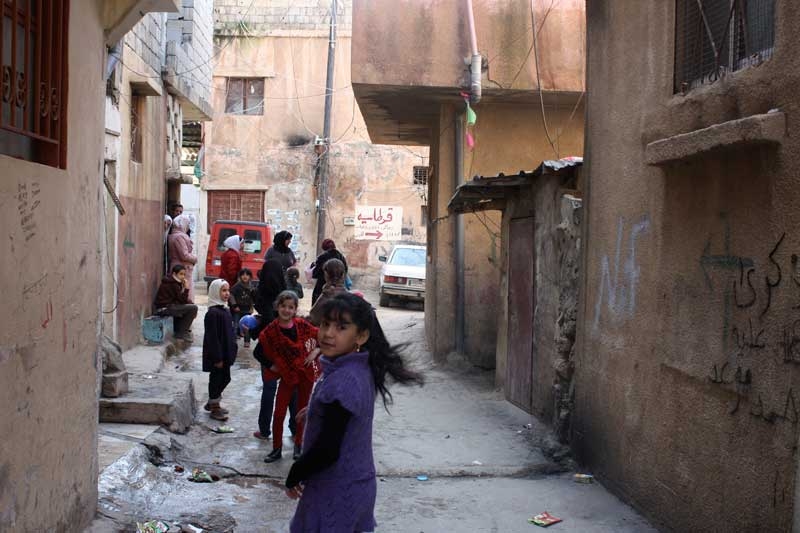
UNRWA zaprzecza odpowiedzialności za śmierć trzyletniego palestyńskiego chłopca z obozu uchodźców Nahr al-Bared po tym, jak libańskie szpitale odmówiły przyjęcia go, ponieważ rodzice nie mogli pokryć kosztów leczenia. Na zdjęciu: Obóz palestyńskich uchodźców Wavel w Libanie administrowany przez UNRWA. (Zdjęcie: European Civil Protection and Humanitarian Aid Operations/Flickr)

Mohammed Madżdi Wahbeh, trzyletni palestyński chłopiec z obozu uchodźców Nahr al-Bared w północnym Libanie jest najnowszą ofiarą apartheidu i dyskryminujących praw wobec Palestyńczyków w kraju arabskim.

Wahbeh zmarł w zeszłym miesiącu po tym, jak libańskie szpitale odmówiły przyjęcia go, ponieważ rodzice nie mieli pieniędzy na pokrycie kosztów leczenia. Według informacji w libańskich mediach jeden ze szpitali zażądał od rodziny chłopca 2000 dolarów za przyjęcie. Chłopiec był w śpiączce przez trzy dni przed śmiercią, ale żaden szpital nie zgodził się na jego przyjęcie, bo rodzina nie mogła zapłacić za leczenie.

Śmierć palestyńskiego chłopca u wejścia do szpitala wywołała falę gniewu wśród wielu Libańczyków i Palestyńczyków. Zwracając się do libańskiego ministra zdrowia, Ghassana Husbaniego, libańska dziennikarka Dima Sadek napisała na Twitterze:

“Panie Ministrze, jako obywatele pytamy pana: dlaczego trzyletni chłopiec umarł przy drzwiach szpitala i kto wydał rozkaz, by go nie przyjmować? Czy pana ministerstwo ponosi odpowiedzialność? Od kiedy choroba rozróżnia między palestyńskim chłopcem a libańskim chłopcem? Jaka jest pana odpowiedzialność za tę zbrodnię?”

Znany libański dziennikarz i prezenter telewizyjny, Neszan Der Haroutiounian, zamieścił wideo w mediach społecznościowych o zmarłym chłopcu i jego płaczącej babci. Babcia skarży się: “Nikt nie dba o nas, Palestyńczyków”. W tweecietowarzyszącym wideo dziennikarz napisał: “Ten palestyński chłopiec zmarł w Libanie. Miał trzy lata”.

Rabia Zayyat, inna znana dziennikarka libańska, wyraziła swoje oburzenie na Twitterze.

“O mój Boże! Jak może chłopiec umrzeć u wejścia do szpitala z powodu garści dolarów? Jeśli szpital nie ma cienia miłosierdzia, to czy jego administracja nie mogła zadzwonić do jakiegoś dygnitarza, by pokrył koszty zamiast wydawać je na przyjęcie lub bankiet? Jak możemy żyć w kraju, który nie uznaje praw człowieka?”

Hussein Bandżak, Libańczyk, także wyraził oburzenie z powodu śmierci chłopca tylko dlatego, że rodzina nie mogła zapłacić za leczenie:

“Chłopiec został zabity w moim kraju, bez wojny, przez tych, którzy nie mają sumienia. Umarł z powodu 2000 dolarów – kosztu krawatów przywódcy, kosztu butów żony przywódcy, kosztu butelki wody kolońskiej dla syna przywódcy, kosztu teczki przywódcy, kosztu lekarstwa dla psa przywódcy”.

Libańskie Ministerstwo Zdrowia wydało oświadczenie, że ten palestyński chłopiec był uprzednio przyjęty w trzech szpitalach, gdzie przeszedł operację głowy. Według ministerstwa Wahbeh został przyjęty do Rządowego Szpitala w Trypolisie 17 grudnia. W oświadczeniu jest następnie informacja, że poprzednie rachunki za leczenie pokryła UNRWA. “Zmarł w szpitalu”, twierdzi ministerstwo, zaprzeczając twierdzeniom, że zmarł u wejścia.

Ministerstwo wini za sprawę UNRWA, ponieważ odmówiła pokrycia kosztów jego przyjęcia do ostatniego szpitala.

UNRWA, ze swej strony, zaprzecza odpowiedzialności i twierdzi, że dostarczyła finansowej i medycznej opieki dla chłopca. Według UNRWA lekarze próbowali przenieść Wahbeha na pediatryczny oddział intensywnej opieki w innym szpitalu, ale powiedziano im, że nie ma miejsca w żadnym z szpitali libańskich.

reakcji na śmierć chłopca Palestyńczycy w obozie Nahr al-Bared wyszli na ulice, gdzie palili opony i blokowali jezdnie, skandując hasła z potępieniem zarówno UNRWA, jak władz libańskich.

To nie jest pierwsza tragedia tego rodzaju w Libanie. W 2011 roku inny palestyński chłopiec, Mohammed Nabil Taha, 11-latek, także zmarł u wejścia do libańskiego szpitala, kiedy lekarze odmówili przyjęcia go, ponieważ rodzina nie miała pieniędzy na leczenie.

Jest to kolejne przypomnienie o apartheidzie i dyskryminacji Palestyńczyków w Libanie. Według różnych organizacji praw człowieka Palestyńczycy są tam systematycznie dyskryminowani we wszystkich niemal dziedzinach codziennego życia. Mają zakaz pracy w wielu zawodach, włącznie z medycyną i transportem.

Według Biura Komisarza Narodów Zjednoczonych ds. Uchodźców (UNHCR):

“… trwają prawne zakazy dostępu palestyńskich uchodźców do 35 zawodów (włącznie z medycyną, rolnictwem, rybołówstwem i transportem publicznym). Ponadto palestyńscy uchodźcy w Libanie mają tylko częściowy dostęp do Narodowego Funduszu Ubezpieczeń Społecznych. Palestyńscy uchodźcy muszą co roku starać się o pozwolenie na pracę, by móc pracować. Po zmianie prawa w 2001 r. palestyńscy uchodźcy nie mogą kupować, przekazywać ani dziedziczyć nieruchomości w Libanie”.

Jakby tego było mało, UNHCR podkreśla także, że Palestyńczycy w Libanie nie mają dostępu do publicznej służby zdrowia i polegają głównie na usługach zdrowotnych UNRWA, jak również organizacjach charytatywnych i Palestyńskim Czerwonym Półksiężycu. Palestyńczycy nie mają także dostępu do libańskich szkół publicznych.

Przywódcy Libanu odmawiają uznania prawdy i powtarzają oszustwa. Zamiast przyznać, że Palestyńczycy są dyskryminowani i żyją w apartheidzie w tym kraju arabskim, przywódcy Libanu oskarżają Izrael. Kilku przywódców libańskich, włącznie z prezydentem Michelem Aounem, nadal oskarża Izrael o “rasizm” wobec Palestyńczyków.

Te oskarżenia stanowią szczyt hipokryzji ze strony arabskiego kraju, który odmawia Palestyńczykom podstawowych praw. Przez przenoszenie winy na Izrael przywódcy reżimu apartheidu w Libanie próbują ukryć maltretowanie i dyskryminację Palestyńczyków, którzy żyją wśród nich.

Kraj, który odmawia nagłej pomocy medycznej trzyletniemu chłopcu, nie może dłużej kłamać światu, że popiera Palestyńczyków i ich sprawę.

Na koniec, kiedy słyszy się o takich tragediach, powstaje pytanie: gdzie są te wszystkie międzynarodowe organizacje praw człowieka i pro-palestyńskie grupy z całego świata, które udają troskę o cierpienia Palestyńczyków? Czy pozostaną milczące wobec sprawy Wahbeha, ponieważ umarł w arabskim kraju i Izrael nie miał nic wspólnego z jego śmiercią?


Zawartość publikowanych artykułów i materiałów nie reprezentuje poglądów ani opinii Reunion’68,
ani też webmastera Blogu Reunion’68, chyba ze jest to wyraźnie zaznaczone.
Twoje uwagi, linki, własne artykuły lub wiadomości prześlij na adres:
webmaster@reunion68.com


THE GOOD, THE BAD, THE INAPPROPRIATE AND THE UGLY

THE GOOD, THE BAD, THE INAPPROPRIATE AND THE UGLY: SHABBAT IN HEBRON

SHIRLEY FINKELSTEIN


“Participants are encouraged to go through a difficult process and come to their own conclusions.”
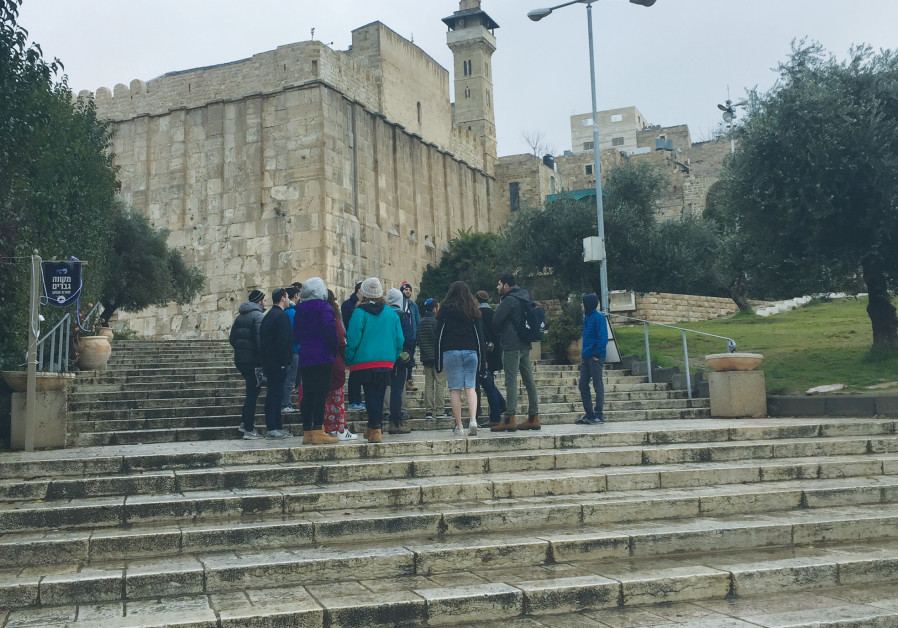
STUDENTS FROM the ATID student leadership program visit the Cave of the Patriarchs in Hebron. . (photo credit: SHIRLEY FINKELSTEIN)

Not everyone would consider spending Shabbat in Hebron, let alone a group of Anglo post-high school students trying to enjoy their gap year (a year between high school and college) in Israel. 

Students from the ATID student leadership program, however, boarded a bus at 6:40 a.m. on a recent Friday morning to learn about the Jewish and Palestinian communities in Hebron over the course of a Shabbat. While there, some cried during prayer services at the Cave of the Patriarchs, some fumed with anger during political discussions and many asked questions during discussions and talks with activists from both the far-left and far-right sides of the Israeli-Palestinian conflict. Program organizers extended the invitation to non-ATID participants, bringing in a handful of young professionals to the mix.

“A lot of times, people are either very stuck in their ways, or they’re completely swayed in one direction and dismiss anything else they hear. I think that most people on this trip were able to internalize something from everyone, even though it was difficult,” said Danit Felber, the program’s managing director.
    
ATID’s head educator, Rabbi Yehuda HaKohen, said that the weekend aimed to deepen participants’ sense of Jewish identity and connection to Hebron while exposing them to how Palestinians are experiencing life in the 20% of Hebron under full Israeli control known as H2. 

HaKohen stressed that the goal of the weekend was to empower students to create their own unique ideologies. 
“ATID is about creating the intellectual leadership of a 21st century Jewish liberation movement that can clean up Zionism’s mess while safeguarding its positive achievements,” he said.

“Participants are encouraged to go through a difficult process and come to their own conclusions. 

“One of the greatest barriers to peace, in my opinion, is the fact that both Jews and Palestinians feel threatened by each other’s stories. We’re both afraid that if the narrative of the ‘other’ is true, it makes our own narrative less true. I see it differently. I think both peoples are correct when we talk about ourselves and our experiences but tend to get it wrong when talking about the ‘other,’ which leads to us each superimposing identities and motivations on the ‘other’ that have little in common with how we each actually experience it ourselves. We’re both playing fantasy antagonists in one another’s stories and this leads to very counterproductive methods of struggle on both sides.”

IN ORDER to give people the opportunity to draw a conclusion, the group listened to a handful of speakers after setting up camp at the Hebron guest house. 

After conducting morning prayers at the Cave of the Patriarchs, the program picked up. First was a talk with Palestinian tour guide Mohammed al-Mohtaseb. The group then followed him to the rooftop of his family’s home in H2, which is above a souvenir store. It was an extremely brisk day and the group listened patiently as hail fell from the sky. 

Mohtaseb told the group about his life experiences. In under 20 minutes, the guide explained the difference between the Hebron territories, shared his view on military law versus civilian law, and expressed his experience that while Israeli citizens are innocent until proven guilty, he and his community are guilty until proven innocent. The guide shared a personal anecdote, detailing a time when he was arrested and jailed for throwing stones – before being able to prove he was innocent, as the man in the photo that the authorities offered him as evidence was 50 kilograms heavier than Mohtaseb.

Following the stories, students asked questions while Mohtaseb’s father brought up a large pot of tea, which made its rounds rather quickly as students warmed their hands. 

“What do you think of BDS?” 

“Do you think their language is extreme or helpful?” 

“Should people boycott Israeli companies that employ Palestinians?” 

The questions snowballed and Mohtaseb answered graciously, explaining that while he follows his own unique path, boycotting products is a nonviolent form of protest.

The tour continued. HaKohen stopped to show students monuments of Jews who had been killed in Hebron, providing details about the events. The group also stopped at the site of the ancient Roman markets, where Jews were taken, sold off as slaves and marched off to Europe. That spot, HaKohen explained, is the birthplace of Ashkenazi Jewry. HaKohen also led the students to a synagogue that dates back to 1540 and that is still operational.

These stories and stops were all on the way to a visit with Tzipi Schlissel, a woman who knows about the conflict firsthand. Her long ties to Hebron and her far-right views made her the perfect candidate to follow Mohtaseb. 
Schlissel recounted to the students the details of the 1929 Hebron massacre, in which nearly 70 Jews in Hebron were murdered, and how her grandmother was saved by an Arab family.

Schlissel painted the scene. Hebron was a mixed city at the time, with 18,000 Arabs and a small community of less than 1,000 Jews. Just 21 Arabs are known to have protected Jews during the riot.

“This was very hard for the community – the feeling that their friends killed them. This was all before there was any excuse of occupation. Before this was Israel’s state. Every time they find a different excuse why to incite the people of the Arab society to go and kill Jewish people,” Schlissel said. 

She then moved to the tragic story of how her father was murdered in 1998 in his own home at the hands of an Arab terrorist who came through his window with a knife and a Molotov cocktail.

“Only after they killed my father did the government give us permission to build. The Jews in Hebron don’t have the rights to build, to buy, to go to their own houses they owned from before the massacre. We have a strong connection to this place. There’s no other place in the world that we can see buildings 2,000 years old – big ones that are used for the same thing it was built for. And everyone knows this is where the Patriarchs – the fathers and the mothers of this nation – are buried.”

Immediately after listening to the painful story of Schlissel, the tour moved across the street to visit a Palestinian activist named Issa Amro, who seated the group in his backyard and spoke about the lack of human rights for his people. Similarly and yet oppositely to Schlissel, Amro said that the Jews had been violent to the Palestinians.
“You are not allowed to practice any kind of general assembly, you are not allowed to have visitors and there’s settler violence all the time. And people are completely alone and isolated and nobody hears about them. Nobody really knows what’s happening here in Hebron,” he opened.

During Amro’s speech, soldiers passed through his yard. Some yelled. Some laughed and some showed the lay of the land. Amro told the group that the soldiers were simply explaining to the newcomers how to proceed during Shabbat. Many of the students were visibly uncomfortable by the presence of the soldiers, turning around to watch them. Some bit their nails. Some stared at the floor.

One of the participants asked a question: “If you had to choose to live with Hamas, the PA (Palestinian Authority) or Israel, who would you choose?”

“I am for a country with full civil rights and democracy. And none of them is doing that right now. Let me say that I don’t want to see those soldiers there. During an attack, if somebody was attacking me and I would see a soldier and tell him to protect me. He would say I am with them. Not with you. I am against you, not against them,” Amro said.

Later, the activist talked about his Jewish neighbors, including Schlissel, who he referred to as “that angel,” but told the tour she had struck him using her hands earlier in the week during a dispute in which Amro said he would construct a low wall beside his house. 

After the discussion, I returned to Schlissel’s home and asked her if she had laid hands on Amro. She said the construction had been illegally done on property that didn’t belong to him and then asked me if I thought she looked like a woman who would attack a man twice her size.

At this point, the group headed back to the guest house for a talk about spirituality before having time to wash up for Shabbat. Friday evening services were held at the Cave of the Patriarchs. 

After the Shabbat dinner, a right-wing speaker addressed the room. Coming from Efrat, Yishai Fleisher expressed to the crowd that in order to gain respect in the Middle East, the Israeli army needs to be strong and feared. He added that in this world, the option is to be the oppressor or to be oppressed. For Fleisher, the best option is a one-state solution, in which all Palestinians become Israeli Arabs, living under Israeli law as citizens – without the right to vote. Fleisher got lots of comments from his speech, but as the night dwindled on, people stopped questioning politics and started making their way up the stairs to bed.

On Saturday morning, some slept in and some returned to pray near the Cave of the Patriarchs before an early lunch. Chris Whitman, a pro-Palestinian activist, spoke to the refreshed group. He went over how he became involved in the conflict, moving from the US to study at the Hebrew University of Jerusalem, before moving to Ramallah for a more authentic experience that would relate him to what he had studied. 

He described the long journeys by car on roads that were meant only for Palestinians. He described being hit in the head with a tear-gas canister fired by an Israeli soldier from 15 meters away during a protest. He painted a picture of what life is like on the other side. He did all this with a touch of humor.

What was his solution for the problem? For the Israeli government to begin making up for the way Israel was born – on the heels of removing Palestinians from land and leaving them to live in an area that is not a state. Instead, he suggested that Jews should have moved in seamlessly among the Arabs in 1948, and questioned the need for Jews to have identified the area as a Jewish state at all. “Do Kurds have a country?” he asked, answering “no.”
Later in the afternoon, the group had a debriefing. It had been an intense couple of days and HaKohen thought it was necessary to let participants get some of their feelings and their new views off their chests. Each person came away with a different viewpoint. One offered that there’s no way for Jews to properly work with Palestinians because “they have a sh*t culture.” One said she couldn’t face her friends anymore, who repeatedly choose to ignore the problems of Palestinians and blindly defend Israel. Another said he felt more committed to both furthering the Jewish presence in Hebron as well as to bettering the situation for Palestinians in the area.

Dan Amroussi from London is studying at Hebrew University. He joined ATID, where he hears from political speakers and activists every other week.

I came here obviously with an opinion about the conflict. But coming here with ATID and with the university, I gained a wider perspective and realized how ignorant I was and how ignorant other people are as well. I’ve always wanted to come to Hebron. This weekend showed the conflict in such a small area. You can see the tension in just this tiny place,” Amroussi said.

Another participant shared her opinion about the weekend, but wanted to withhold her name in order not to hinder her chance of gaining entrance to her desired university, which has a reputation for being antisemitic.

“It was eye-opening really. Some of it was very, very disturbing and sad and heartbreaking. But at the same time there was a lot of important stuff I think that I gained over the weekend. Hebron is an intense place. There’s really a lot of animosity between the two groups. And a lot of the people who live here – they seem to be really, really intense people with a little bit of a violent side to them, which on the one hand is kind of scary to see, but on the other hand proves itself to be necessary given the circumstances they’re living in. But one thing that I did notice that was kind of beautiful to see was that there was some kind of a brotherhood between some of the Arabs and Jews.”

Another student participant, Yeshaya Shapiro, asked if he could give his thoughts about the weekend.

“It really got deep into your bones about how complex the situation is here. I would say I already had a diverse opinion, but it seemed that I didn’t. It tickled that part of my brain – and made me think more.”


Zawartość publikowanych artykułów i materiałów nie reprezentuje poglądów ani opinii Reunion’68,
ani też webmastera Blogu Reunion’68, chyba ze jest to wyraźnie zaznaczone.
Twoje uwagi, linki, własne artykuły lub wiadomości prześlij na adres:
webmaster@reunion68.com


Tel Aviv-jaffa at sunrise

Tel Aviv-jaffa at sunrise dji phantom 4 pro

SKYPIC AERIAL PHOTOGRAPHY


Zawarto?? publikowanych artyku?ów i materia?ów nie reprezentuje pogl?dów ani opinii Reunion’68,
ani te? webmastera Blogu Reunion’68, chyba ze jest to wyra?nie zaznaczone.
Twoje uwagi, linki, w?asne artyku?y lub wiadomo?ci prze?lij na adres:
webmaster@reunion68.com