Archive | February 2019

10 Israeli companies scouring digital data to save our lives

Israel21c10 Israeli companies scouring digital data to save our lives

Brian Blum
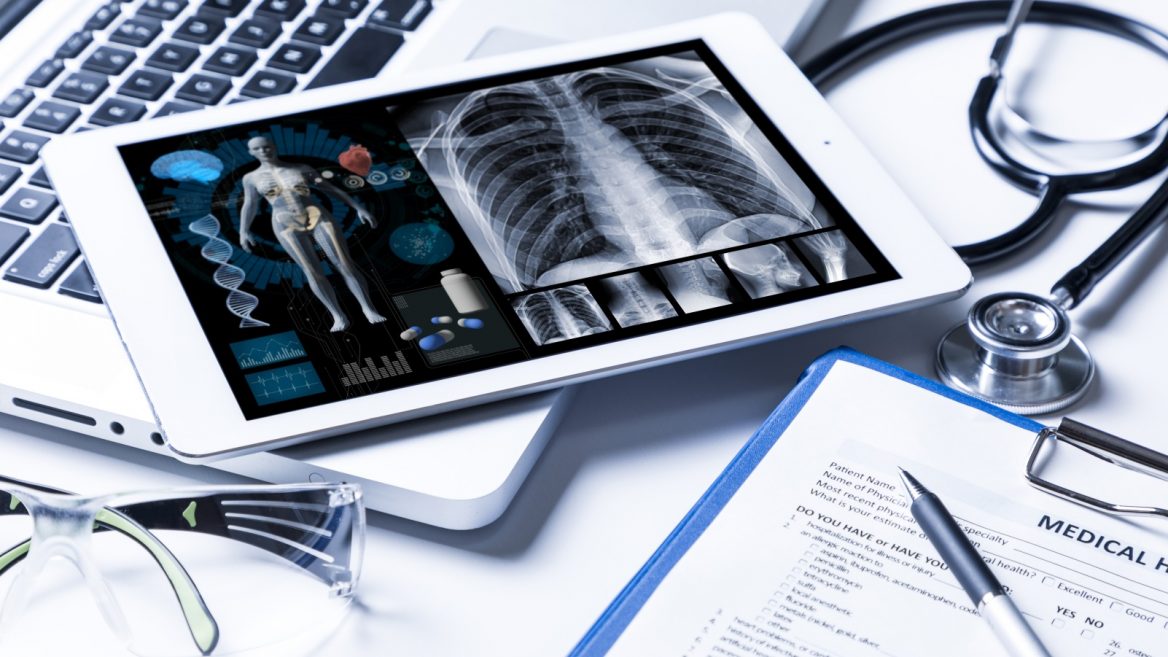

Medical records image by Metamorworks via Shutterstock.com

Making sense of the vast amount of data stored in our medical records and coming from the growing number of medical devices we use at home or in the hospital is a hot area for technological advances.

Running artificial intelligence algorithms on health data collected via HMOs, wearable devices or hospitals can aid with diagnoses, suggest unexpected ailments and prevent fatal complications.

Israel has a cluster of startups doing exactly that. ISRAEL21c looks at 10 of the most promising.

1. MonitHer

Jerusalem-based startup MonitHer doesn’t have a website yet, but we suspect it won’t be long: The company, founded by American immigrant to Israel Yehudit Abrams, won the $360,000 grand prize at the WeWork Creator Awards in Jerusalem in June 2018.

MonitHer is developing an ultrasound device that can be used by women at home to monitor for abnormalities in breast tissue. Women using the device will scan their breasts once a month for about 10 minutes. Software then monitors the images, looking for any changes over time. The images are also uploaded to MonitHer’s servers.

Once MonitHer has more than 100,000 users, artificial intelligence and machine learning will be able to compare tissue images in a woman’s offline MonitHer medical record with those in the cloud. The result: increased chances of early detection compared with monthly self-exams and more frequent scans than an annual mammogram at a much lower cost.

“We are changing the paradigm from breast cancer screening to breast health monitoring,” Abrams says.

2. MaxQ AI

A patient is admitted to the emergency room with a head injury. The care team will send the patient for a head CT to assess the possibility of a stroke or intracranial hemorrhage. That scan will become part of the patient’s permanent medical record. But meanwhile, doctors need to act fast because for every minute that passes, brain cells die.

That’s one reason why Tel Aviv-based MaxQ AI (formerly known as MedyMatch) was granted an “Expedited Access Pathway and Breakthrough Device” designation by the US FDA earlier this year. The company’s artificial intelligence-based Accipio software platform uses deep-learning technologies to alert physicians automatically of a potential brain bleed.

MaxQ AI has already signed agreements with IBM Watson, GE Healthcare and Samsung Electronics. Accipio received FDA clearance in November 2018.

3. Aidoc

Aidoc automatically pinpoints
areas of concern on the CT scan.
Photo: courtesy
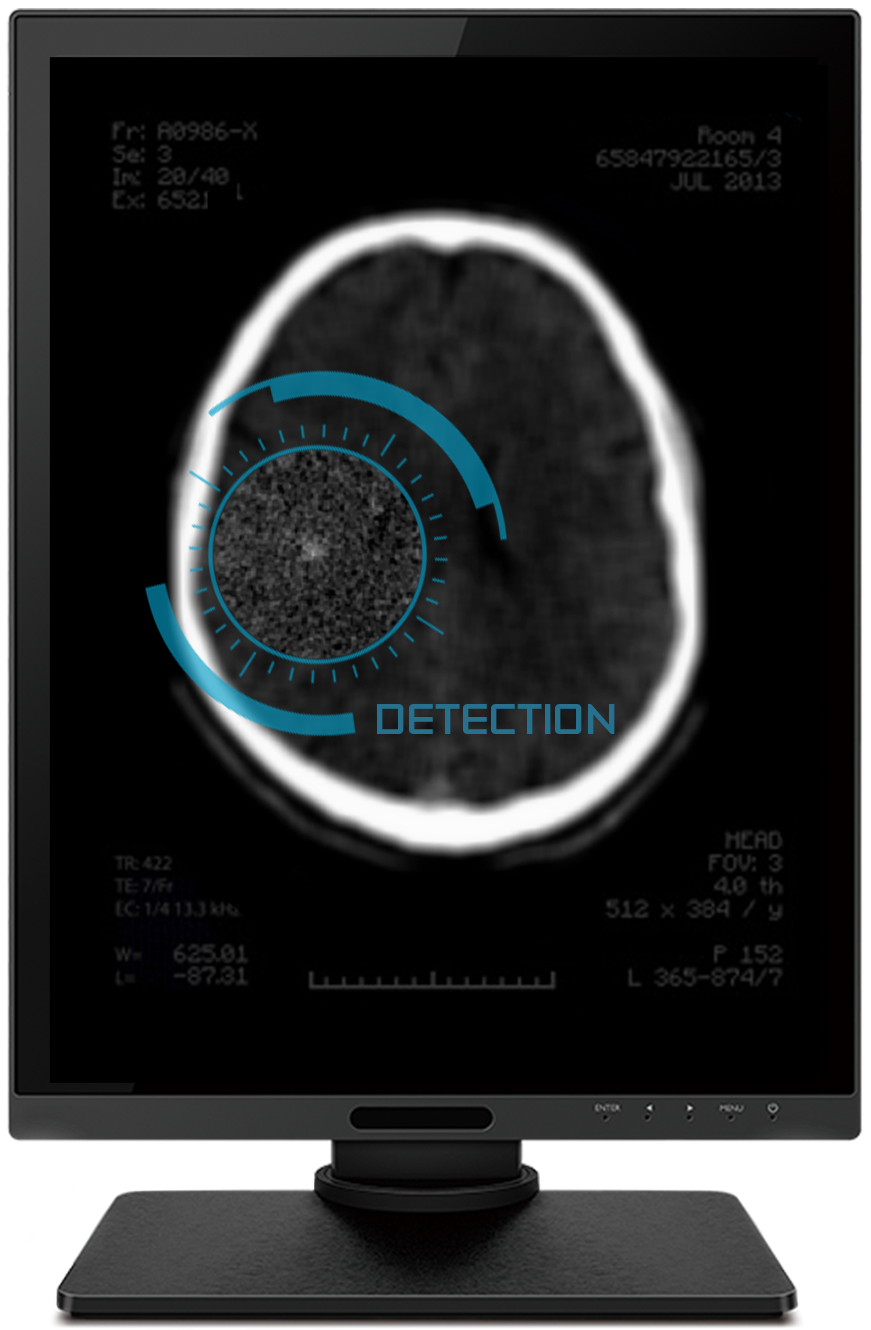
Aidoc takes what MaxQ AI does for head injuries and applies it to CT scans of all kinds. The company’s software uses artificial intelligence to help radiologists catch serious issues in real time. By comparing a fresh scan with the 300,000 patient images that have already been analyzed, Aidoc’s “always-on AI” displays an alert on the radiologist’s computer screen immediately if an abnormality is detected.

“The radiologist doesn’t have to click anything for this to happen,” the company’s CEO Eyal Walach told ISRAEL21c. That led TIME magazine to place the two-year-old company on its list of “50 genius companies of 2018” and has helped the company raise $13 million.

Aidoc says it has saved radiologists some 50,000 hours of work and flagged 140,000 abnormalities. X-rays and MRI analysis will be added in 2019. The company has already received US and European approval to assess scans of brain hemorrhages and spinal fractures.

4. ART Medical

If you are connected to a ventilator in the hospital ICU, your chance of contracting ventilator associated pneumonia (VAP) is 25 percent. VAP develops because, along with the ventilator, a patient must be hooked up to a feeding tube where gastric content from the stomach can flow into the lungs due to reflux and aspiration. Ten percent of patients with VAP never recover.

ART Medical’s advanced sensor-based feeding-tube solution enables automated and real-time intervention to avoid intubation-related medical complications. Photo: courtesy

ART Medical has developed smart feeding tubes laden with sensors that automatically collect patient data including reflux rates, food requirements, saliva and urine output to adjust the nutritional doses delivered through the tube. The eight-year-old company has raised $29 million to develop its Anti-Reflux Tube (that’s where the “ART” comes from).

The company’s algorithms also automate the placement of feeding tubes in the stomach – a process that currently must be done through X-ray imaging – as well as provide real-time monitoring to assure the tubes stay in place. ART Medical has been collaborating over the past year with hospitals in Israel and the United States.

5. Clew Medical

Two years ago, Gal Salomon’s mother developed sepsis during a stay in the hospital and died. “It was a big hospital with a lot of patients and no one saw or understood it was happening,” Salomon recalls.

Salomon now heads Clew Medical, which develops software that uses artificial intelligence to predict which patients in a hospital’s ICU are at the highest risk of imminent deterioration, and alerts staff so they can intervene early.

Clew’s software connects to the ICU’s systems – for example, those that track blood pressure and heart rate – and pairs it with data from a patient’s electronic medical record as well as data in the cloud that Clew has collected on patients with similar conditions. Clew can predict how long a patient will need to be connected to a ventilator or a dialysis machine, and when a patient will be ready for discharge.

The company is testing its software at Sheba and Ichilov hospitals in Israel, and the Mayo and Cleveland clinics in the United States. Clew has raised $30 million since it was founded in 2014.

6. Nucleai

If you’ve ever had a biopsy taken to check for cancer or a gastrointestinal disease, you know that waiting for results – which can take anywhere from a few days to a month – can be nerve-racking. Disease diagnosis is performed by pathologists who must examine the tissues and cells taken from the biopsy manually under a microscope.

Avi Veidman, a veteran of an Israeli intelligence unit specializing in computer vision, wondered if the kind of software his team had developed for decoding aerial and satellite images could work for detecting patterns on a cellular level. He started Nucleai with two other veterans of the same IDF unit in 2017 to make the painstaking work of pathologists faster and more accurate and, as a result, reduce patients’ wait times.

Nucleai’s software also factors in information drawn from patients’ medical records and their genomics data. The company has raised $5 million and is working on a prototype with a pilot expected to launch in the coming months.

7. Medial EarlySign

Medial’s algorithms analyze the data in a patient’s electronic health record to identify those at high risk for specific medical conditions. There’s no need to connect Medial’s software to an ICU system or a CT machine.

Medial’s first product, ColonFlag, uses its AlgoAnalyzer operating system to identify patients who might develop colorectal cancer by looking at their blood-test results, age and gender; it’s now being used in Israel by the Maccabi HMO. Of 80,000 patients evaluated in 2017, 690 were marked as high risk, with 20 cases of cancer confirmed.

Medial is also applying its predictive models to detecting diabetes among pre-diabetic patients where early care could make a real difference in their quality of life. High-risk individuals are only 5% of the total patient population but account for 50% of healthcare costs. Medial is conducting clinical data studies in 14 sites in the US, Israel, Europe and Asia, comprising some 20 million patients.

8. MilagroAI

MilagroAI does for hospital records what Medial EarlySign does for patients’ individual electronic health records. Combining deep-learning algorithms and text analysis, Milagro can parse the 70% of medical information that’s locked in unstructured data sources such as hospital documents and summaries of surgical and radiological procedures.

Milagro says its technology turns “all the relevant trapped and noisy data into simple, clear and actionable real-time information about a patient.” Medical staffers receive relevant alerts and the company’s software identifies patients at the highest risk for hospital-acquired infections.

Milago’s software is in use at several Israeli medical centers including Sheba, Assuta, Rambam and Tel Aviv Sourasky. The company changed its name from OpiSoftcare earlier this year. Milagro is Spanish for “miracle.”

9. MedAware

The straw that broke the camel’s back for Dr. Gidi Stein was when he encountered the case of a nine-year-old boy who was incorrectly prescribed an anti-coagulant instead of an asthma medicine. The boy fell off his bike and subsequently died as a result of a cerebral hemorrhage.

As Stein, who specializes in internal medicine, dug deeper, he discovered other cases: insulin prescribed to a patient without diabetes, chemotherapy given to a 28-year-old healthy male. Stein cofounded MedAware in response.
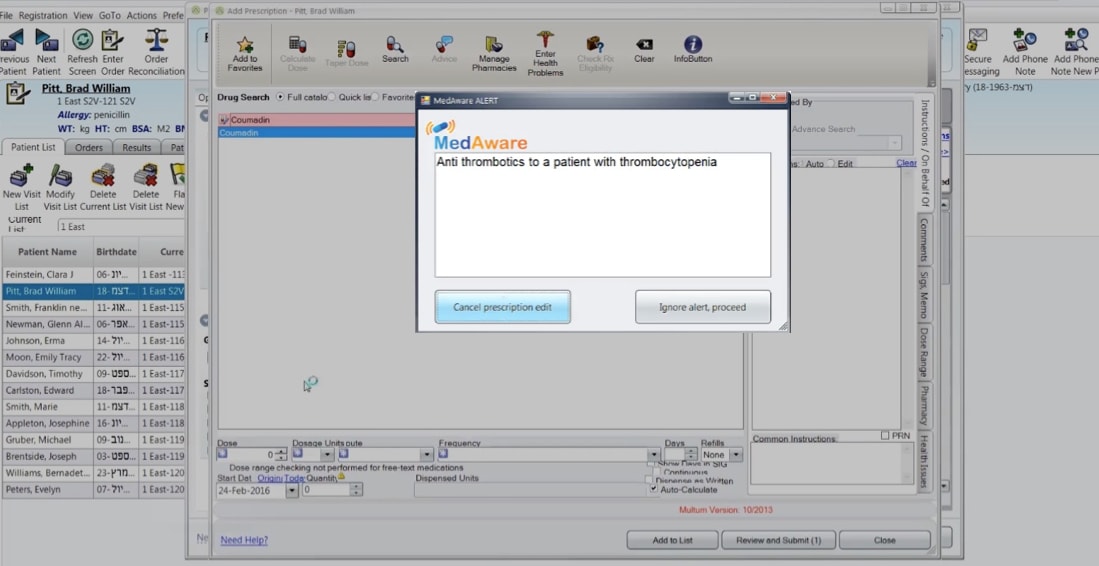
The company uses machine-learning algorithms and AI to prevent clinicians from issuing the wrong prescription. MedAware scours its database of millions of prescriptions and compares it to a patient’s medical record to flag “statistical outliers to normal behavior patterns.”

Using AI is key: other decision-support systems only alert physicians based on pre-programmed rules. During testing with 400,000 patients, MedAware turned up 6,000 incorrect prescriptions, “some of which were life threatening,” says Stein.

MedAware, which has an accuracy of up to 80%, is installed at sites in the US and Israel, including Sheba Medical Center. The company, founded in 2012, has raised $12 million.

10. Zebra Medical Vision

Making sense of radiology is becoming an Israeli specialty. Zebra Medical Vision, the most veteran firm on the imaging block, was founded in 2014 and is headquartered on a kibbutz. Its software parses patterns in medical images to identify diseases a radiologist might miss. Zebra’s chest x-ray analytics product was “trained” using 2 million images to help identify 40 common conditions.

Zebra charges its hospital clients $1 per image scanned – less than a medical center would have to pay a radiologist for the time spent. And the company’s structured clinical dataset of millions of images is available for researchers to use.

In November 2018, the company received FDA clearance for a coronary calcium scoring algorithm, critical in identifying heart disease. Zebra already has European CE approval for an additional seven algorithms. In June 2018, the company raised $30 million, bringing its total investment to $50 million.


Brian has been a journalist and high-tech entrepreneur for over 20 years. He combines this expertise for ISRAEL21c as he writes about hot new local startups, pharmaceutical advances, scientific discoveries, culture, the arts and daily life in Israel. He loves hiking the country with his family (and blogging about it). Originally from California, he lives in Jerusalem with his wife and three children.


Zawartość publikowanych artykułów i materiałów nie reprezentuje poglądów ani opinii Reunion’68,
ani też webmastera Blogu Reunion’68, chyba ze jest to wyraźnie zaznaczone.
Twoje uwagi, linki, własne artykuły lub wiadomości prześlij na adres:
webmaster@reunion68.com


Netanyahu: Bible is the ‘foundation for Israel’s eternity’ – TV7 Israel News 29.01.19

Netanyahu: Bible is the ‘foundation for Israel’s eternity’ – TV7 Israel News 29.01.19

  TV7 Israel News


Zawartość publikowanych artykułów i materiałów nie reprezentuje poglądów ani opinii Reunion’68,
ani też webmastera Blogu Reunion’68, chyba ze jest to wyraźnie zaznaczone.
Twoje uwagi, linki, własne artykuły lub wiadomości prześlij na adres:
webmaster@reunion68.com


Żyd. Instrukcja obsługi

Żyd. Instrukcja obsługi

Jan Hartman


Krucjata min. Piotra Glińskiego, zmierzająca do odbicia z rąk antychrystów wszystkich ważnych instytucji kultury, stanęła u bram Muzeum Historii Żydów Polskich Polin i przymierza się do przejęcia tej instytucji. Już dawno wszak mówił, że „trzeba zmienić tę instytucję”.

Pretekstem ma być zakończenie kadencji dyrektora tej placówki prof. Dariusza Stoli. Brak zgody Glińskiego na jej przedłużenie skutkuje konkursem, a przegrana kandydata PiS może z kolei spowodować mianowanie przez PiS na jeden rok osoby pełniącej obowiązki dyrektora. Fajny plan. Dobrozmianowy plan.

Tylko że Polin to nie jakieś tam muzeum, gdzieś tam w Polsce, z którym władza może sobie robić, co chce, bo cyrk jej i małpy takoż. To placówka tyleż polska (rządowa, miejska i prywatna), co żydowska (przez tematykę i część Rady oraz sponsorów), a przede wszystkim międzynarodowa i licząca się na globalnej mapie pamięci o diasporze żydowskiej i Holokauście. Jakiekolwiek zakusy na dyktowanie jej dyskursu, który mógłby zalatywać pseudoantyantysemicką propagandą „krystalicznie czystych, bohaterskich Polaków”, którzy dzielnie bronili ukochanych Żydów, za co ci wredni niewdzięcznicy (wiadomo, Żyd to jednak Żyd) odpłacają się szkalowaniem i oszczerstwem, to dla nas katastrofa.

Przejęcie Polin i głoszenie jakichkolwiek kłamstw lub krętactw na terenie tej placówki skutkować będzie ciężkim kryzysem dyplomatycznym na osi Polska–Izrael–USA. Z Żydami nie ma żartów, a Piotra Glińskiego igraszki z tym ogniem mogą być nader kosztowne, tak jak kosztowne były igraszki z nowelizacją ustawy o IPN. Wtedy na szczęście na jedno żydowskie tupnięcie Kaczyński wycofał się w popłochu, ale kolejna awantura może sprawić, że cierpliwość tych, co zdaniem antysemitów rządzą całym światem, może się wyczerpać na dłużej. A wtedy możemy się pożegnać z poklepywaniem po plecach przez wuja Sama – a przecież to bodajże ostatnia już rzecz, na którą nasza biedna ojczyzna, otoczona przez niechętnych, obojętnych i rozczarowanych sąsiadów, może jeszcze liczyć, wegetując sobie na przecięciu terytorium UE i „strefy wpływów” FR.

Gdy w sobotę 16 lutego zamieściłem na Twitterze wpis ostrzegający Glińskiego przed harcownictwem, hurmem rzucili się na mnie antysemici, zarzucając mi, że ośmielam się (ja, Żyd – element obcy a wrogi) grozić legalnej polskiej władzy, a przy okazji przywołując cały antysemicki dyskurs na temat Muzeum Polin (że niby to niepolskie muzeum, ale jak już polski rząd za nie zapłacił, to wara Żydom od tej niepolskiej, acz polskiej placówki itp. bzdury).

Otóż trzeba być bardzo niemądrym i zacietrzewionym, żeby mylić ostrzeżenia z pogróżkami. Ale dziękuję za przypisywanie mi takiej władzy i znaczenia. Nie, niestety nie mam władzy ani znaczenia. A nawet gdybym miał, to ani ja, ani żaden inny polski Żyd nie wykorzystałby jej do szkodzenia interesom Polski. Wręcz przeciwnie, my, polscy Żydzi, ciągle musimy przepraszać za polskie władze i polskich antysemitów, tłumacząc się z ich głupoty, jakbyśmy to my byli jej winni. Między innymi dlatego właśnie Żydzi na świecie mają nas, Żydów z Polski, za Żydów gorszego sortu, i nie bardzo chcą się z nami zadawać. Wyjątkiem są ocaleni z Holokaustu, na czele ze skromnym emerytowanym dziennikarzem POLITYKI Marianem Turskim, który w odróżnieniu od polskiego prezydenta może w każdej chwili rozmawiać w prezydentem USA i zostać wysłuchanym z szacunkiem. A tak się składa, że Marian Turski był (z ramienia Stowarzyszenia Żydowski Instytut Historyczny) spiritus movens powstania Polin.

Jeśli teraz wokół Polin – instytucji zbudowanej w znacznej mierze za żydowskie pieniądze – będzie jakaś głupia awantura, Turski zrobi, co w jego mocy, żeby gasić pożar. Tylko że jego możliwości są, mimo wszystko, ograniczone. Gdy wkurzą się żydowscy fundatorzy i sponsorzy, pójdą na skargę gdzie trzeba. A wtedy będzie źle.

Jeśli amatorzy dyplomatyczni z okolic PiS, MSZ i MKiDN czytują nasz serwis (a powinni), to może przyda im się w praktykowaniu relacji z Izraelem i amerykańskimi Żydami kilka prostych prawd, które tutaj, bez owijania w bawełnę, zamierzam wyłuszczyć. Dobrze by było, gdyby dotarły do nich, zanim ostatecznie nie zrujnują pozycji Polski w świecie. Postaram się być krótki i węzłowaty, żeby nie powiedzieć: karłowaty i gruzłowaty.

1. W Izraelu rządzi prawica, którą popiera z grubsza połowa ludności – i prawica ta jest niemal jak zwierciadlane odbicie PiS i jego wyborców. Kochają Polskę tak gorąco, jak pisowcy Izrael… Dla pisowskiej Polski Izrael to kraj, w którym znajdują się zabytki chrześcijańskie, a dla likudowego Izraela Polska to kraj, w którym znajdują się pozostałości po obozach zagłady. Tyle – świętość za świętość.

2. W USA Żydzi są niebywale wpływowi – tak jakoś ze sto razy bardziej niż Polacy, których jest tam mniej więcej tyle, co Żydów. Ja się z tego nie cieszę – ja to tylko przypominam. Częściowo jest tak dlatego, że kilkanaście procent wielkich biznesmenów i ludzi kultury/nauki to Żydzi, lecz przede wszystkim dlatego, że większość Amerykanów to protestanci. Jako protestanci żywią przekonanie, że Żydzi to naród wybrany, a Izrael chroni Ziemię Świętą przed Arabami i katolikami. Sorry, ale oni naprawdę tak myślą i każdy prezydent USA musi się z tą powszechną dość religijno-kulturową afirmacją Izraela w społeczeństwie amerykańskim liczyć.

3. Polska, zwłaszcza Polska PiS, nie znaczy nic. Nic, czyli tyle, co dla świata znaczy Grecja albo Rumunia. Albo tyle, co dla Polski znaczy Macedonia albo Mołdawia. Czujecie mniej więcej? No właśnie… A Izrael, ufff, Izrael to taki mały, ale wariat. Liczy się jak wrzód na czterech literach, jak brat w więzieniu, jak bank, w którym trzymam oszczędności. Po prostu się liczy. Jak się na kogoś wkurzy, to potrafi zaszkodzić. Izrael nie jest do lubienia. Nie zależy mu. Izrael jest do szanowania, a jak trzeba, to do bania się. I nie musi wstawać z kolan, tupać i piszczeć dyszkantem „macie nas szanować!”. To się dzieje samo.

4. Rząd Izraela traktuje Polskę do bólu utylitarnie. Żadnych sentymentów. Ostatnio zrobił sobie, razem z Amerykanami, rutynową imprezę propagandową w Warszawie, wykorzystując Polskę tak, jak wykorzystuje się hotel albo restaurację. Tyle że rachunek zapłacimy my. Interes Izraela w Polsce ogranicza się do tego, by miejsca żydowskie w Polsce, na czele z Auschwitz, nie były areną antysemickich ekscesów, wycieczki edukacyjne izraelskich uczniów mogły poruszać się bez przeszkód, a izraelski wywiad tropiący terrorystów mógł działać u nas bez przeszkód. Żeby osiągnąć ten cel, Izraelczycy chętnie fraternizują się z każdym polskim rządem, a nawet z Rydzykiem. Jest im wszystko jedno – byleby usłyszeli co jakiś czas deklarację, że Izrael jest wielkim naszym przyjacielem, a antysemityzm nie będzie akceptowany.

Żydzi wiedzą, że Polacy z wyższych sfer mają kompleksy na punkcie antysemityzmu swoich rodaków i własnych dziadków, wobec czego uwielbiają się snobować na filosemitów – dlatego też chętnie i z weselem pakują polskim dygnitarzom kipy na ich biedne katolickie głowy, jakoż kładą w łapki płonące szczapki, żeby sobie zapalili świeczkę na chanukę. Ani trochę nie przeszkadza im to uważać ich przy tym za nieuleczalnych antysemitów. Bo dla izraelskiego prawicowca „Polak zawsze będzie Polakiem” (czyli antysemitą), tak jak dla polskiego prawicowca „Żyd zawsze pozostanie Żydem” (czyli zdrajcą, kumuchem itp.). Dotyczy to również polskich Żydów – dla prawej połowy Izraelczyków są niemal tak samo podejrzani jak polscy goje, a dla polskich mas ów polski Żyd to jednak nie całkiem Polak, a raczej osobnik o konduicie i lojalności dość wątpliwej.

5. Obłuda Żydów sięga tak daleko, że dla utrzymania spokoju wokół miejsc żydowskich i bezpieczeństwa swej agentury gotowi są godzić się na zakłamany, nacjonalistyczny dyskurs, którego częścią jest negowanie lub umniejszanie polskich win oraz ignorancja bądź skrajna jednostronność pamięci historycznej w sprawach polsko-żydowskich. Skoro Polacy są nieuleczalni, to niech już sobie gadają, że antysemityzm to zjawisko marginalne, a szmalcownicy to były nieliczne czarne owce w pięknym polskim stadzie itp. Byleby tylko był porządek w kluczowych sprawach. Propaganda rządowa Izraela jest niewiele mniej bałamutna w swym nacjonalizmie i mitomanii niż propaganda polska, więc przynajmniej na płaszczyźnie mentalnościowej jest między rządami Polski i Izraela jakieś zrozumienie.

6. W tej wspólnocie mentalnej należy upatrywać szansy na zażegnywanie konfliktów i utrzymywanie dobrych stosunków między oboma krajami. Izraelem też rządzi PiS, tylko trochę bardziej inteligentny i profesjonalny. Niestety, ta sympatyczna syjonistyczna mentalité jest cokolwiek nerwowa. Jeśli w Polin będzie konflikt z narzuconym odgórnie dyrektorem, to nie skończy się jak we Wrocławiu upadkiem lokalnego teatru, lecz poważnymi międzynarodowymi interwencjami, po których upokorzona Polska znów będzie musiała podkulić ogon albo oberwie od Amerykanów.

Głupie ambicje Piotra Glińskiego, by podporządkować sobie Polin, mogą kosztować Polskę zatrzymanie na kilka lat programu rozwoju baz amerykańskich w Polsce oraz odwlec o kolejne lata zniesienie wiz dla Polaków. Bo w polityce, niestety, głupstwa i drobiazgi mają znaczenie. Kaczyński to niby wie, ale czy tam jeszcze ktoś go informuje i się z nim liczy? Coraz to bardziej wątpliwe. Wydaje się, że zaczyna się w Polsce komediodramat „Orgia warcholstwa, czyli kufrów pakowanie”, tyle że bez reżysera.

Reb Gliński kochany, ja proszy dacz pokój te Żydki i te muzeum. Pan to zostawysz w spokoju, to pan nie bedziesz miał kłopot. Git? A inaczy będzie niedobry. Aj waj! Mazal tow!


Zawartość publikowanych artykułów i materiałów nie reprezentuje poglądów ani opinii Reunion’68,
ani też webmastera Blogu Reunion’68, chyba ze jest to wyraźnie zaznaczone.
Twoje uwagi, linki, własne artykuły lub wiadomości prześlij na adres:
webmaster@reunion68.com


ANTISEMITISM IS ANTI-AMERICAN

ANTISEMITISM IS ANTI-AMERICAN

ADAM MILSTEIN


Now is the time to go on the offense against hate.

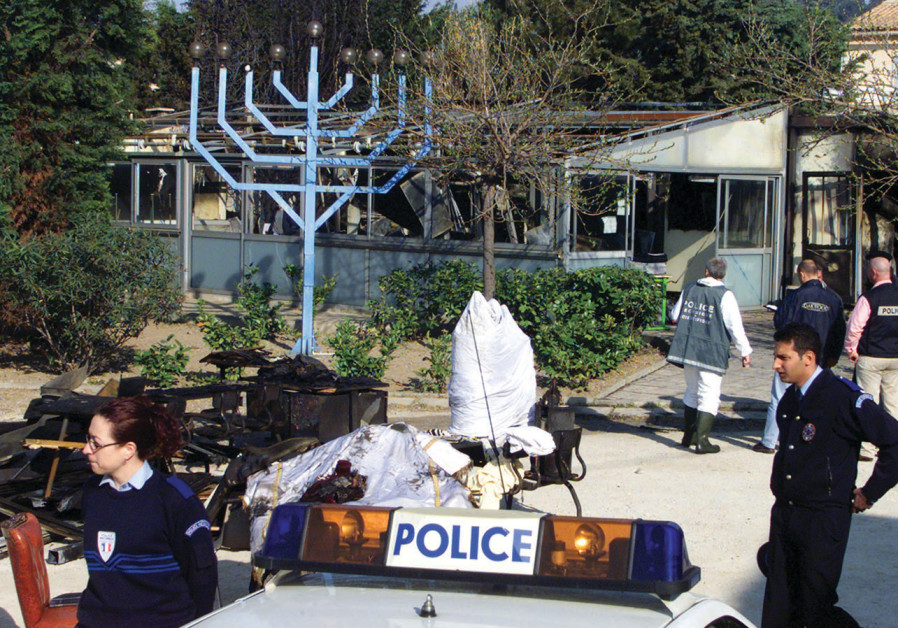
‘IN EUROPE, Jews increasingly experience hate and violence from radical Islamists and their allies.’ French police stand guard as investigators inspect damage to a synagogue after an arsonist set it ablaze overnight in the southern city of Marseille in 2002. (photo credit: REUTERS)

Antisemitism is the world’s oldest hatred, cultivated across cultures, continents and centuries by people with many different agendas. It led to enslavement of Jews in Egypt, forced expulsion during the Spanish Inquisition, pogroms in Poland and Russia, genocide in Nazi Germany, and near extinction in the Muslim world.

This history raises the question: Why do so many people over so many centuries hate Jews? What makes Jewish communities such vulnerable targets?

Many books, documentaries, articles and encyclopedias have been written about the origins of, and reasons for, antisemitism. But the real questions that we must ask today are whether this hatred is exclusively a problem for Jews, and what can the Jewish people do to fight back against and stop this evil.

The answers begin with understanding who antisemites are and what they ultimately want.

Today, antisemitism manifests globally like a monster with three faces, coming from the radical Right, the radical Left and radical Islamists. But a closer look reveals that Jews are not the only, or even the main, target of these extremists. Each one of these radical movements has a bigger vision for our civilization, and their hatred doesn’t discriminate just against the Jews.

In Europe, Jews increasingly experience hate and violence from radical Islamists and their allies – from the French-Syrian jihadist who shot and killed four Jews at a Brussels Jewish museum, to the random zealot, who happened to be a French ISIS member, who murdered Jews in a kosher Paris supermarket in the wake of the Charlie Hebdo shooting by his two close friends, which itself was lethal violence against a European satirical newspaper – a literal attack on freedom of speech.

In Alexandria, Virginia, James Hodgkinson, a radical leftist, attacked a group of congressmen during a baseball practice, seriously wounding US Rep. Steve Scalise, several police officers and bystanders.

At the same time, extremism on the radical Right in America has led to Nazi posters targeting Jewish students, and drove Robert Bowers, a white supremacist terrorist, to gun down 11 Jews at a Pittsburgh synagogue. Pursuant to the just released 2018 ADL Center on Extremism report, domestic right-wing extremists murdered 50 Americans, more people than in any year since 1995. Only one-third of these Americans were Jews.

ANTISEMITES, WHETHER on the far Right, on the far Left or among the radical Muslims, hate Jews for different reasons. However, and most importantly, their hatred is a threat to the core values of American society: democracy, free speech and freedom of religion.

We cannot sit idly by in the face of this imminent threat to not only the well-being of the Jewish people but the values at the heart of Western society.

Understanding, researching and documenting these radical movements are not enough to alert the American people and to motivate them to combat the threat. To stop the growing movements of hate, we need to switch from defense to offense.

In the past, Jews were not able to fight back. This time around, we Jews are better equipped to join our American brothers and sisters and go on the offensive to defeat these radical movements.

From a historical perspective, Jews today have three comparative advantages in the fight against those radical movements: the existence of a Jewish homeland – the State of Israel; the unique strength and resources of the Jewish community in America; and the opportunity to establish a large coalition of many communities that share American values and recognize common enemies.

First, the Start-Up Nation is the most dynamic and powerful shield that the Jewish people has ever known, dedicated to safeguard the Jewish people around the world. Israel is a strong American ally and shares American common values, at the same time that it faces common enemies. The US can draw on Israel’s knowledge and strength to combat radical movements at home.

Second, the Jewish-American community is the most successful immigrant community in the history of the US. Yet we are hesitant to utilize our resources and influence to fight against antisemitism. Jewish leaders must transform our mind-set from risk-averse to going on the offensive. We can use our leadership and resources to become a real game changer to put antisemites on the defensive.

Third, we must educate Jewish-Americans about our personal responsibility to seriously fight hate. The Jews in America need to become active members of the coalitions to fight hate. The Jewish people, better than any other, understands the horrific repercussions of hate, and as a result American Jews have the opportunity to build partnerships and fight shoulder to shoulder with others facing racism, discrimination and bigotry in America.

To combat these radical movements, we must use all legal resources at our disposal to research, analyze, document and act against extremist individuals and organizations that pose serious dangers to our community. We need to be familiar with their agenda, goals and objectives. We need to expose their illegal activities, learn about their plans, and alert the appropriate authorities, organizations and the media. We must create real-time tools to prevent and stop extremist attacks.

The Center for Combating Hate in America (C4CHA.org), a newly founded watchdog group and action center, is bringing these strategies together, leading the charge against violent radical movements in America. It will diminish the influence of hate groups and bigots by researching their members, networks and activities, exposing their work to the public, and alerting authorities to imminent threats stemming from radicals and extremists.

It’s about time we stop being passive and risk-averse. We must respond to all violent hate attacks with strength and unity. We should go on offense and join forces with other allies to combat this evil at all costs.


The writer is an Israeli-American philanthropist. adam@milsteinff.org


Zawartość publikowanych artykułów i materiałów nie reprezentuje poglądów ani opinii Reunion’68,
ani też webmastera Blogu Reunion’68, chyba ze jest to wyraźnie zaznaczone.
Twoje uwagi, linki, własne artykuły lub wiadomości prześlij na adres:
webmaster@reunion68.com


THREE INDICTED FOR POISONING, HANGING TO DEATH ISRAELI FARM DOGS

THREE INDICTED FOR POISONING, HANGING TO DEATH ISRAELI FARM DOGS

JERUSALEM POST STAF


Three people were indicted on charges of stealing 30 sheep from Moshav Yakhini in southern Israel, poisoning five dogs and strangling a sixth dog to death.

A dog is hung to death by a metal chain.. (photo credit: POLICE SPOKESPERSON’S UNIT)

Three people were indicted on charges of stealing 30 sheep from Moshav Yakhini in southern Israel, poisoning five dogs and strangling a dog to death, according to a report released by the Border Police spokesperson on Tuesday.

The indictment comes following an intensive investigation carried out by the Israel Police Border Police, the Border Police Intelligence Center, the National Center for Intelligence and Investigations of Agricultural Crime. Police used all available means to catch the defendants and connect them to the charges, which include killing six dogs, stealing sheep and other property.

The investigation began on December 19 when police received a complaint that 30 sheep has been stolen from the moshav.

“When we arrived at the scene, we saw a terrible sight,” recalled one of the responding officers. “Five dogs lay poisoned and dead and another dog was hanged to death. It was clear this was not just an act of theft, but serious animal murder.”

The investigation lasted around six weeks until police were able to identify a main culprit and two accomplices.

“From the moment we saw the bodies of the dogs we were restless,” said the officer in charge of the investigation. “We worked feverishly until the suspects were arrested and the indictments were filed.”

After the theft of the sheep in December, the central defendant and his accomplices committed several other offenses, the last of which took place as recently as earlier this month.

The main defendant was arrested at his home in southern Israel. The second and third defendants were arrested soon after.

On February 16, the Israel Police filed indictments against the three in the Ashkelon Magistrate’s Court.

The indictments indicate that the suspects arrived on Moshav Yakhini on the night of December 18 and together poisoned the farmer’s five dogs. Later, the central defendant wrapped a metal chain around a sixth dog, hanging him to death on a pole. After that, they stole 30 young sheep with an estimated worth of tens of thousands of shekels.

Later, the same group was caught trying to break into the agricultural farm in the settlement of Z’rua in the Negev, from where they planned to steal agricultural vehicles. When they were unsuccessful, they instead broke into the farm house and stole property, including a laptop, clothing and footwear.

That night, they also stole 10 sheep and five goats. The total estimated damage is NIS 45,000.

The indictment also shows that the main defendant arrived at Moshav Yakhini wearing a beekeeper suit. He opened four honey hives and stole 40 combs, causing extensive damage, which is estimated at NIS 6,000.

Another indictment describes the offenses of early February, in which the team broke into a store in Sderot and stole about 320 boxes of cigarettes and a bag of tobacco worth an estimated NIS 35,000.


Zawartość publikowanych artykułów i materiałów nie reprezentuje poglądów ani opinii Reunion’68,
ani też webmastera Blogu Reunion’68, chyba ze jest to wyraźnie zaznaczone.
Twoje uwagi, linki, własne artykuły lub wiadomości prześlij na adres:
webmaster@reunion68.com