
Archive | April 2019

Wokół spektaklu „Mein Kampf” w Powszechnym.

Spokojnie, to tylko kabaret – wokół spektaklu „Mein Kampf” w Teatrze Powszechnym w Warszawie

Jacek Wakar


Sceniczna wersja „Mein Kampf” nikogo nie przerazi, nie przejmie grozą, nie spełni więc roli ostrzeżenia. Takie podanie trujących treści tej książki sprawia, że obojętniejemy na nie, oswajamy je, zapominamy o ich skutkach. I wina nie leży po naszej stronie, ale artystów, którzy w ten sposób do nas mówią.

Pod Teatrem Powszechnym tłumek, te same co zazwyczaj w tym miejscu twarze, ale ślady aury zdarzenia wyjątkowego. O spektaklu napisały „Jerusalem Post” i „New York Times”, ale trudno oczekiwać, by tego nie zrobiły, skoro na afisz właśnie warszawskiego teatr trafia właśnie ten tytuł. Wszyscy jednak, którzy marzyli, że uda się wskrzesić atmosferę towarzyszącą „Klątwie” Olivera Frljicia, że przed budynkiem Powszechnego spotkają się przeciwnicy i zwolennicy spektaklu, a może nawet ktoś rozleje na widowni żrącą substancję, musieli obejść się smakiem. Premiera jak premiera, tylko przedstawienie… Hm, jakby to powiedzieć…

Zaczyna się najdosłowniej z grubej rury. Oskar Stoczyński wypina się w kierunku widowni gołą hm… i wygłasza wstęp do „Mein Kampf”, sugerując nadzwyczaj dowcipnie, że słowa Hitlera zasługują na to, by wyartykułować je nie ustami, a hm…  no właśnie, chyba się domyśliliście. Potem obrazoburczy gest kolegi powtarza Natalia Łągiewczyk. Robi to samo, by za pomocą hm… przekazać nam treść przedmowy do polskiego wydania z 1992 roku. Można jedynie zachwycić się odwagą artystów i po raz pierwszy zamyślić się, co w ich gronie robi Grzegorz Niziołek, profesor Uniwersytetu Jagiellońskiego oraz krakowskiej Akademii Sztuk Teatralnych, badacz Krystiana Lupy, Krzysztofa Warlikowskiego, Tadeusza Różewicza, autor niezwykle ważnej książki „Polski teatr Zagłady”. Postać nietuzinkowa, dla mnie najzwyczajniej w świecie ważna i nawet „Mein Kampf” w Powszechnym tego nie zmieni.

Teatr Powszechny wpisuje widowisko Jakuba Skrzywanka w obchody Roku Antyfaszystowskiego, szeroko wyjaśnia motywy wystawienia książki wodza III Rzeszy. Czytamy, że całe przedsięwzięcie ma „zbadać, do jakiego stopnia aktualne są dziś postulaty i idee zapisane przed ponad dziewięćdziesięciu laty. Analizując język i narrację Hitlera, zadajemy sobie pytanie o język współczesności i mowę nienawiści. Pytamy, ile musiało paść słów, zanim doszło do Holokaustu oraz ile jeszcze musi ich paść, żeby historia się powtórzyła”. I kawałek dalej: „Podejmując refleksję nad «Mein Kampf», nie zamierzamy jedynie oskarżać oraz wskazywać osób i środowisk odpowiedzialnych za tego typu działania. Być może społeczny pejzaż sprzyjający odrodzeniu idei narodowego socjalizmu jest szerszy, a nasze osobiste uwikłanie w ten proces większe niż myślimy”. A zatem i wilk syty, i owca cała. Wiemy, kto za tym stoi, ale bijemy się też we własne piersi. Jak w scenie, gdy aktorzy przywdziewają rysunkowe maski możnych współczesności. Jest Trump i Kaczyński, ale też Tusk, Merkel i papież Franciszek – żeby nikomu nie przyszło do głowy, że autorzy przedstawienia godzą tylko w ideowych przeciwników i aby łatwiej było oddalić zarzuty, że z tej sceny oskarża się jednego polityka, jednego papieża. Cóż poradzę, wygląda mi to na koniunkturalny unik, jeden z wielu odbierających spektaklowi Skrzywanka siłę rewolucyjnego gestu.

„Mein Kampf” w Powszechnym to blisko trzy godziny rozwleczonego ponad miarę niskich lotów kabaretu. Wychodzi cała literacka słabość manifestu Hitlera i fakt, że jest to rzecz doskonale niesceniczna.

rekomendował: Leon Rozenbaum

O jakiejkolwiek innej też nie może być mowy. „Mein Kampf” w Powszechnym to blisko trzy godziny rozwleczonego ponad miarę niskich lotów kabaretu. Wychodzi cała literacka słabość manifestu Hitlera i fakt, że jest to rzecz doskonale niesceniczna. Niziołek dokonał adaptacji, polegającej na cięciu całości, ale podpisywanie go mianem dramaturga wydaje się nieporozumieniem, gdyż o dramaturgii mowy tu nie ma. Inscenizacja Skrzywanka pozbawiona jest śladu napięcia, podstawowym uczuciem towarzyszącym mi na widowni Powszechnego była bezbrzeżna, przygnębiająca nuda. Działania aktorów – zwykle bezradne, czasem nieco bardziej efektowne (finał pierwszej części w wykonaniu Arkadiusza Brykalskiego) – nie mają w gruncie rzeczy większego znaczenia, bowiem mimo ich zaangażowania ze sceny leje się magma słów, pozbawionych większej wagi. Może to wina manifestowanego wobec nich dystansu, ale efekt jest wprost przeciwny do – jak sądzę – zamierzonego. Sceniczna wersja „Mein Kampf” nikogo nie przerazi, nie przejmie grozą, nie spełni więc roli ostrzeżenia. Takie podanie trujących treści tej książki sprawia, że obojętniejemy na nie, oswajamy je, zapominamy o ich skutkach. I wina nie leży po naszej stronie, ale artystów, którzy w ten sposób do nas mówią.

„Mein Kampf” w Powszechnym to dowód, że część polskiego teatru, a Teatr Powszechny w Warszawie w szczególności, czuje się zakładnikiem „Klątwy”. Co jakiś czas, a przy Zamoyskiego dość nagminnie, pojawia się reżyser z uporem starający się Frljicia przelicytować. Był Wiktor Rubin z „Neronem”, była Agata Błońska z „Mefistem”, a teraz mamy Skrzywanka. Tyle że próby te wypadają tak, jak pojedynek boksera wagi muszej z Evanderem Holyfieldem. Spierałem się z „Klątwą”, manipulacją i wizją Frljicia, ale była ona nie do zignorowania. Nie da się bez „Klątwy” mówić o polskim teatrze ostatnich lat. Poza tym nie można było odmówić jej siły wykonania na każdym realizacyjnym poziomie. „Mein Kampf” zaś zasługuje tylko na jak najszybsze zapomnienie.


Zawartość publikowanych artykułów i materiałów nie reprezentuje poglądów ani opinii Reunion’68,
ani też webmastera Blogu Reunion’68, chyba ze jest to wyraźnie zaznaczone.
Twoje uwagi, linki, własne artykuły lub wiadomości prześlij na adres:
webmaster@reunion68.com


‘STAND UP TO ZIONIST LOBBY’ SAID CORBYN IN DEFENSE OF BLOOD-LIBEL SHEIKH

‘STAND UP TO ZIONIST LOBBY’ SAID CORBYN IN DEFENSE OF BLOOD-LIBEL SHEIKH

JEREMY SHARON


“The sadness is that his is a voice of Palestinian people that needs to be heard,” wrote Corbyn.

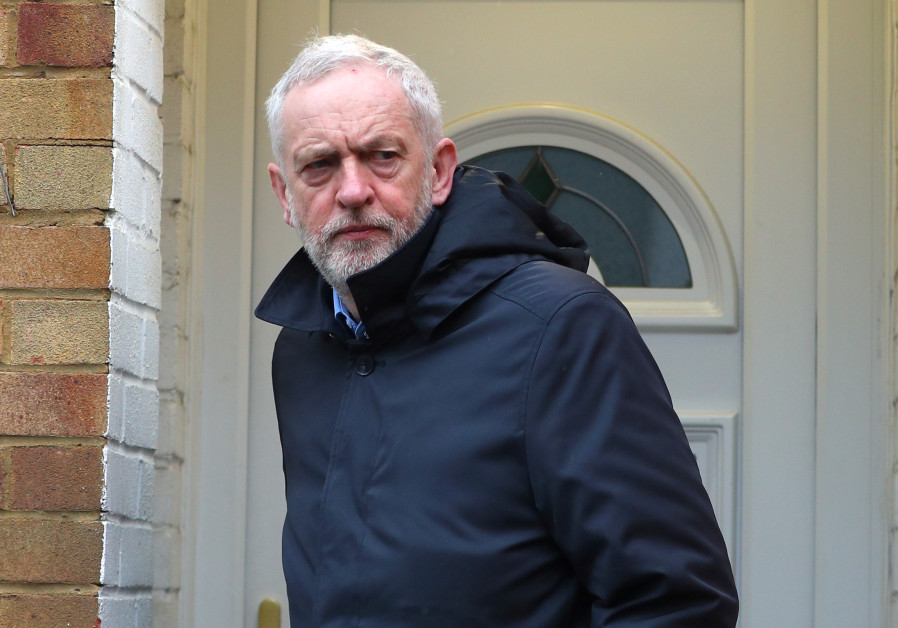
Britain’s opposition Labour Party leader Jeremy Corbyn leaves his home in London, Britain, April 2, 2018.. (photo credit: REUTERS / HANNAH MCKAY)

Leader of the UK Labour Party Jeremy Corbyn wrote in 2011 that Western governments should stand up to “the Zionist lobby” which he accused of conspiring to deport Israeli-Arab hate preacher Raed Salah from the UK.

Salah – the notorious extremist leader of the northern branch of the Islamic Movement in Israel – visited the UK in 2011 and was scheduled to attend a Palestine Solidarity Campaign meeting in the House of Commons where Corbyn was also to be in attendance, but was arrested and detained due to his prior extremist comments and activities.

However, Salah’s appeal against a deportation order by then UK home secretary and current Prime Minister Theresa May was eventually successful. 

Writing in the Communist newspaper The Morning Star three days after Salah’s arrest, Corbyn wrote that “despite the best efforts” of several newspapers he deemed to be “the right-wing press,” including The Jewish Chronicle, Salah had successfully been allowed in to the country, but protested against his arrest.

“The sadness is that his is a voice of Palestinian people that needs to be heard,” wrote Corbyn in the article, uncovered by UK-based freelance journalist Iggy Ostanin.

“It’s time that Western governments stood up to the Zionist lobby, which seems to conflate criticism of Israel with antisemitism.”

In 2007, Salah gave a speech in the east Jerusalem neighborhood of Wadi Joz in which he said that he and other Muslims never made their Ramadan bread with the blood of children, adding, “Whoever wants a more comprehensive explanation, should ask what happened to some of the European children whose blood was mixed with flour for use in holy bread.”

Salah was eventually convicted on charges of racist incitement for this speech in 2014.

Salah had previously been jailed for two years between 2003 and 2005 for channeling money to Hamas.

He has also implied that Jews or the State of Israel was behind the September 11 attacks, writing three weeks after the 9/11 attacks against the World Trade Center in 2001 “Were 4,000 Jewish clerks absent by chance, or was there another reason?”

Salah has also made comments against homosexuals, stating in 2001 that it is “a great crime.”

A Labour Party spokesperson said in response simply that “There was widespread criticism of the attempt to deport Raed Salah, including from Jews for Justice for Palestinians, and his appeal against deportation succeeded on all grounds.”


Zawartość publikowanych artykułów i materiałów nie reprezentuje poglądów ani opinii Reunion’68,
ani też webmastera Blogu Reunion’68, chyba ze jest to wyraźnie zaznaczone.
Twoje uwagi, linki, własne artykuły lub wiadomości prześlij na adres:
webmaster@reunion68.com


Israel paving the way in the defense industry

Israel paving the way in the defense industry

i24NEWS


STRICTLY SECURITY | Israel’s defense industry was born out of the need to be as self-sufficient as possible during times of war. In order to be self-sufficient, Israeli firms have to be competitive on the global market, where export sales sustain the capabilities that provide for Israel’s defense. In this evolving industry, one firm in particular is leading the way. Our Barbara Opall-Rome has the story.

Story:

It’s an industry built to sustain embargos, boycotts and wartime disruptions.

It’s an industry that launches satellites to space, detects tunnels underground
and defends citizens and soldiers against a full spectrum of threats.

It’s an industry that assures intelligence superiority and fortifies Israel’s long arm.

It’s also an industry that survives through export sales. For every 20 dollars of high-tech innovation aimed at Israel’s defense, it must sell 80 dollars abroad.

‘We have been compelled to create a permanent armaments industry of vast proportions…In the councils of government, we must guard against the acquisition of unwarranted influence, whether sought or unsought by the military industrial complex,’ former U.S. President Eisenhower once said.

Relative to Israel’s size, the industry here is vast. It consistently ranks among the world’s top-tier arms suppliers and provides employment for tens of thousands here and around the world.

Yet aside from fringe opposition, Israel’s military-industrial complex is not cause for the kind of concern voiced by Eisenhower nearly 60 years ago. Here, it’s a badge of honor.

But unlike the many dozens of firms that support other world-leading industries, in Israel, this vast complex is controlled by just three companies.

And then there’s Elbit

Privately-owned and publicly traded, Elbit leverages innovation borne of borne of necessity to the mutual benefit of Israel’s security establishment and its corporate shareholders.

State-owned IAI and Rafael, like Elbit, have leading-edge technology, respectable backlogs, and portfolios that span air, sea, land and space domains. But they’re not nearly as resilient or profitable as Elbit, which netted more than a billion shekels last year.

‘Elbit is a private company, and when the chairman of Elbit decides something at night, in the morning it’s done, while state-owned defense companies, there’s such a process. They have to go to Knesset committees and get approvals for every small thing. That’s why Elbit is years ahead,’ vetaren Israeli defense industry analyst Arie Egozi explained.

Through a series of strategic acquisitions, including its most recent purchase of state-owned IMI, Elbit now controls 95 percent of Israel’s non-government-owned market.

Elbit is Israel’s largest provider of unmanned aircraft; a field pioneered and long-dominated by IAI.

With all but five percent of the non state-owned market now firmly under the Elbit umbrella, what’s next? Is there anything left to satisfy Elbit’s appetite for growth?


Zawartość publikowanych artykułów i materiałów nie reprezentuje poglądów ani opinii Reunion’68,
ani też webmastera Blogu Reunion’68, chyba ze jest to wyraźnie zaznaczone.
Twoje uwagi, linki, własne artykuły lub wiadomości prześlij na adres:
webmaster@reunion68.com


Arab leaders did plan to eliminate Israel in Six-Day War

Arab leaders did plan to eliminate Israel in Six-Day War

Ben-Dror Yemini


Op-ed: During the 1967 war, Israel seized Egyptian and Jordanian operational documents with clear orders to annihilate the civil population. Nevertheless, different academics are distorting the facts in a bid to turn the Arabs into victims and Israel into an aggressor. Here’s the real story.

More than anything else, the Six-Day War has turned into a rewritten war. A sea of publications deal with what happened at the time. Gamal Abdel Nasser’s Egypt, the revisionists assert, had no ability to fight Israel, and anyway, he had no intention to do so.

It’s true that he made threats. It’s true that he sent more and more divisions to Sinai. It’s true that he expelled the United Nations observers. It’s true that he incited the masses in Arab countries. It’s true that the Arab regimes rattled their sabers and prepared for war. It’s true that he closed the Straits of Tiran. It’s true that Israel was besieged from its southern side. It’s true that this was a serious violation of international law. It’s true that it was a “casus belli” (a case of war).

IDF forces at the Western Wall during Six-Day War. When there is a narrative, who needs facts? (Photo: Bamahane)

All that doesn’t matter, however, because there is a mega-narrative that obligates the forces of progress to exempt the Arabs from responsibility and point the accusing finger at Israel. And when there is a narrative, who needs facts? After all, according to the mega-narrative, Israel had expansionist plans, so it seized the opportunity. Different scholars are distorting the facts in a bid to turn the Arabs into victims and Israel into an aggressor.

I was a child, an elementary school student. I remember fear, a lot of fear. There were no shelters in the house I lived in. It was clear that there would be bombings, so we dug pits in the yard.

Occasionally, we are reminded of the sound of thunder from Cairo to remind us of the annihilation threats. But in fact, they were much more serious. Both the Arab League and the leaders of all neighboring states announced in an unequivocal manner that the plan was annihilation. I repeat: Annihilation. Arrogant talk? Considering the fact that the Arab and Muslim world was engaged in endless self and mutual massacres, it was pretty clear that what they were doing to themselves—and it’s still going on—they would also do to Israel.

We must remember one thing, therefore: The alternative to victory was annihilation. So excuse us for winning. Because an occupation without an annihilation is preferable to an annihilation without an occupation.

‘Our goal is clear: To wipe Israel off the map’

The Arab states never accepted the State of Israel’s existence, not for a moment. There was no occupation from 1949 to 1967, but a Palestinian state wasn’t established, because the leaders of the Arab world didn’t want another state. They wanted Israel. They didn’t hide their intentions for a minute.

The new stage began in 1964. On the backdrop of a conflict over the water sources, the Arab League convened in Cairo and announced: “… collective Arab military preparations, when they are completed, will constitute the ultimate practical means for the final liquidation of Israel.”

Two years went by, and then-defense minister Hafez Assad, who went on to become Syria’s president, declared: “Strike the enemy’s settlements, turn them into dust, pave the Arab roads with the skulls of Jews.” And to erase any doubt, he added: “We are determined to saturate this earth with your (Israeli) blood, to throw you into the sea.”

Six-Day War. Those who rewrite history are winning

Nine days before the war broke out, Nasser said: “The Arab people want to fight. Our basic aim is the destruction of the State of Israel.” Two more days passed before Iraq’s president, Abdul Rahman Arif, joined the threats: “This is our chance…our goal is clear: To wipe Israel off the map.”

Two days before the war broke out, PLO founder and leader Ahmad Shukieri said: “Whoever survives will stay in Palestine, but in my opinion, no one will remain alive.” Yes, that was the atmosphere. Does anyone still seriously think that those were just declarations? Does anyone think that their intention was an enlightened occupation? Does anyone think that there would not have been a mass slaughter like the one Egypt carried out in Yemen and later on in Biafra?

Hussein: No annihilation orders, ‘as far as I know’
In order to understand that these were not false statements, it should be noted that in a meeting held after the war between Israel’s Ambassador to London Aharon Remez and British Foreign Secretary George Brown, Remez said that Israel had seized documents of the Jordanian army on operational orders, from May 25 and 26, about two weeks before the war’s outbreak, which included orders to exterminate the civil population in the communities that were planned to be occupied as well. They believed at the time that it was indeed going to happen.

It isn’t clear, Remez said at the time, whether Hussein was aware of these orders, but they were very similar to the annihilation orders issued by the Egyptian army. This appears both in Michael Oren’s book about the Six-Day war and in Miriam Joyce’s book about Hussein’s relations with the United States and Britain, as well as in Dr. Moshe Elad’s book (“Core Issues in the Israeli-Palestinian conflict”). At first, Hussein rejected the claims about the annihilation orders out of hand, but later added: “As far as I know.”

Clear and simple facts
The days passed. The threats increased. More and more forces were sent to Sinai. More Arab countries joined the war coalition. It’s unclear whether Nasser really wanted a war, Oren wrote in his book. But he and the Arab countries did everything in their power to deteriorate the situation. Nasser’s appetite kept growing, and immediately after blocking the straits, he declared: “If we managed to restore the conditions that existed before 1956 (the Straits of Tiran are blocked), God will surely help us and urge us to restore the situation that existed in 1948.”

The late Yitzhak Rabin, who served as IDF chief of staff at the time, told the government that “it will be a difficult war… There will be many losses.” He estimated that 50,000 people would be killed. And Oren, who had read almost every document that had been declassified, concluded: “The documentation shows that Israel wanted to prevent a war with all its might, and that up to the eve of the battles it tried to stop the war in every possible way—even at a heavy strategic and economic cost for the state.” These are the facts. But those who rewrite history are winning.

The political debate over the Israeli control of the territories has led to a situation in which political opinions disrupt the factual research. The political debate is important. It’s certainly legitimate. But there is no need to rewrite history to justify a political stance. It should be the other way around: Facts should influence political views. And the facts are clear and simple: The Arab states’ leaders did not only settle for declarations on an expected annihilation, they even prepared operational orders.


Zawartość publikowanych artykułów i materiałów nie reprezentuje poglądów ani opinii Reunion’68,
ani też webmastera Blogu Reunion’68, chyba ze jest to wyraźnie zaznaczone.
Twoje uwagi, linki, własne artykuły lub wiadomości prześlij na adres:
webmaster@reunion68.com


Nie używajcie słowa Żyd, mówcie syjonista

Nie używajcie słowa Żyd, mówcie syjonista

   Malgorzata Koraszewska


Palestyński pisarz, Muszir Al-Farra zaleca ostrożność, bo słowa są ważne. Więc nie należy przyznawać, że zabito bojowców Hamasu, bo to była pokojowa demonstracja i lepiej nie mówić słowa Żyd, bo oni słuchają i potem to idzie na cały świat.


Zawartość publikowanych artykułów i materiałów nie reprezentuje poglądów ani opinii Reunion’68,
ani też webmastera Blogu Reunion’68, chyba ze jest to wyraźnie zaznaczone.
Twoje uwagi, linki, własne artykuły lub wiadomości prześlij na adres:
webmaster@reunion68.com