Archive | April 2022

Matza maneuvers and Israel’s crumbling coalition – opinion

Matza maneuvers and Israel’s crumbling coalition – opinion

RUTHIE BLUM


MK Idit Silman resigned from the government, leaving four different scenarios for how it may turn out.
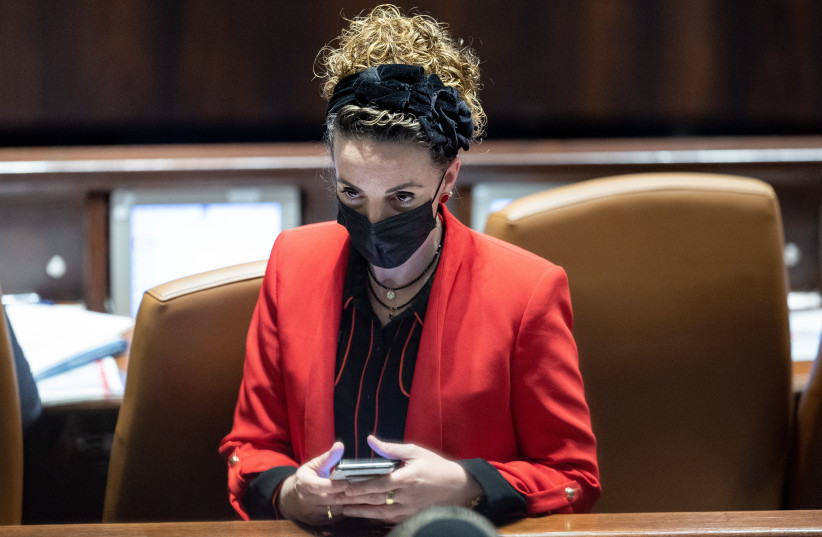
MK Idit Silman attends a plenum session for the 73rd establishment of the Knesset, in the assembly hall of the Israeli parliament in Jerusalem, January 17, 2022. / (photo credit: YONATAN SINDEL/FLASH90)

Israel’s national camp celebrated the resignation of Coalition Chair (majority whip) Idit Silman on Wednesday, and with good reason. The Yamina Party MK’s move not only robbed the government of its razor-thin majority in the Knesset. It also paved the way for additional defectors to follow suit.

The immediate upshot of what is being dubbed as a political earthquake is not yet clear. There are four possible scenarios, among them a reshuffling of the existing parliamentary constellation and another election.

But one thing is certain. The depiction of the impetus behind the move by Silman, who also serves as chairwoman of the Knesset Health Committee, is purposely misleading.

Ostensibly, she couldn’t take it anymore due to a debate with Health Minister Nitzan Horowitz over the entry of leavened goods into hospitals during the week of Passover. In fact, the current untenable union of contradictory ideologies goes far beyond points of religious ritual – at least where the public is concerned.

Silman’s particular case is different matter. She has been under serious and unpleasant pressure from her base ever since she allowed Bennett to woo her, with a cushy post, into joining him in the maneuver that required handing the mandates he received from his voters to the Left. Even her own husband came to regret backing her decision to accept the fantasy of a tenable partnership with post – and anti-Zionists – all in order to abet Prime Minister Naftali Bennett in his con.
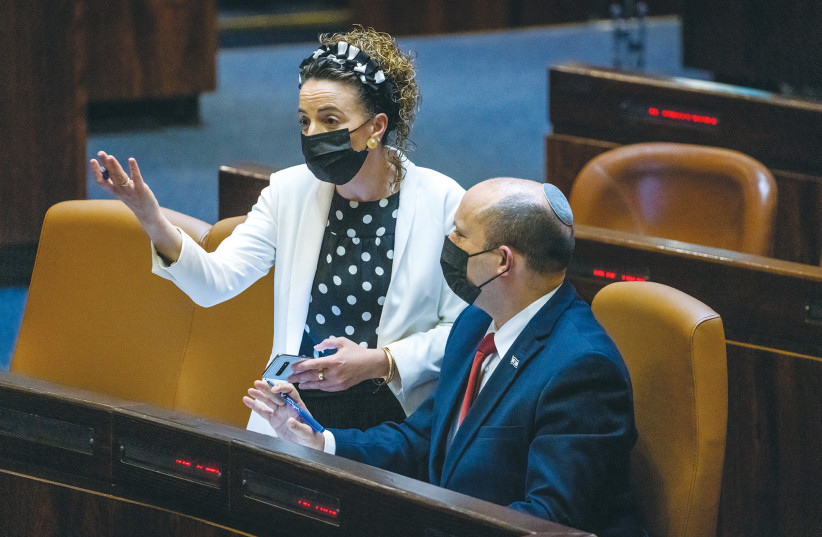
Prime Minister Naftali Bennett and MK Idit Silman seen in better days for them at a Knesset plenum session last July. (credit: OLIVIER FITOUSSI/FLASH90)

To get back at former supporters hurling epithets at her everywhere she went, she claimed to have been physically assaulted at a gas station by angry right-wingers. Her tale of woe backfired, however, as she kept altering the details of the alleged attack, which lacked both eyewitnesses and CCTV evidence.

Nor would she have jumped ship if Opposition leader Benjamin Netanyahu hadn’t promised her both the number 10 slot on the Likud list, guaranteeing her a seat in the next Knesset and the health portfolio, in place of her nemesis Horowitz.

In other words, the opportunism on her part that enabled the forming of the government a year ago is now catalyzing its demise. Upholding the ban on patients and their visitors bringing bread into medical facilities during Passover really has nothing to do with it. And she would have done well not to have argued that “people in the Holocaust fasted on Passover so as not to eat hametz [unleavened products], and a minister in the state of Israel within a coalition like ours unfortunately intends to introduce [it].” Jews starved by the Nazis didn’t have that luxury.

This is not to say that Silman was wrong for bolting, or that upholding Jewish tradition in the public sphere is unimportant to Israelis. Yet, with the uptick in deadly terrorism and out-of-control cost of living – alongside mass concern for atrocities committed in Ukraine – the hametz status quo wasn’t on anybody’s mind until Horowitz made a big issue of it.

UNWITTINGLY, HIS doing so gave Silman, an Orthodox Jew, a virtuous cause on which to pin her exit. Her resignation letter, reportedly formulated by Religious Zionism Party leader MK Bezalel Smotrich, thankfully doesn’t mention hametz-gate. On the other hand, it doesn’t refer to any other specific policy either.

“Some of our partners, who hold central positions in the coalition… are not willing to compromise on issues that are at the core of the worldview of the voters who put us in the Knesset,” she wrote. “Key values of my own do not jibe with the current reality. I am attuned to the protestations of those whose support we won… and to the pain of those who didn’t vote for us but who belong to the national camp. I can no longer bear the injury to [these] values… I call on you and the rest of my colleagues to admit the truth… The time has come to recalculate our route. To try to forge a nationalist, Jewish, Zionist government [and implement] the values on the basis of which we were elected and that represent most of the nation.”

The omission of the word religious in the list adjectives defining the kind of coalition she wants to see is not accidental. Contrary to what the local Left constantly contends and critics abroad believe, Israel is simultaneously proud of its Judaism and pluralistic. It is both the nation-state of the Jewish people and a vibrant mosaic made up of an ethnically diverse population.

Those who accuse it of apartheid and a slew of additional crimes might want to ask themselves why it’s such a magnet for tourists, refugees and foreign workers, including Palestinians. The same advice applies to the likes of Deputy Economy Minister Yair Golan, who bemoaned Silman’s “disastrous choice to strengthen the camp of the corrupt, extremist and ultra-Orthodox nationalists.”

This is the guy who in January called Jews demonstrating against plans to demolish the Homesh Yeshiva in northern Samaria and pleading with the government to rebuild the settlement destroyed there after the 2005 Gaza withdrawal “sub-humans.”

He then sneered about settlers “shouting [that plans to evacuate them are] a ‘shame’ and a ‘disgrace,’ yet failing to mention that they’ve been carrying out a pogrom [against Palestinians]. We, the Jewish people, who have suffered from pogroms throughout history, are now conducting pogroms against others.”

Such imagery wasn’t new for Golan. During his tenure as deputy chief of IDF staff, he used the occasion of Holocaust Remembrance Day to express fear that signs of the “revolting processes that occurred in Europe [during World War II]… are here among us [Israelis] today in 2016.”

Examples of this attitude abound in the current government. Such a dim view of the majority of the public has no place in the coalition ruling it.

It should be unnecessary to add a caveat about Israel’s flaws, as though anywhere else on earth is perfect or even necessarily preferable. Still, it’s worth noting in the context of the disintegrating coalition that the worst thing about the Jewish state – other than its dangerously liberal, interventionist Supreme Court – is its electoral system.

After all, it is the latter that furnished Bennett and the rest of the “anybody but Bibi” crowd with the legal means to prevent Likud – the largest single party whose leader consistently polls above his rivals – from taking its rightful place at the helm. In addition, according to the latest surveys, if elections were held today, the impasse that forced four consecutive rounds would remain pretty much intact.

Netanyahu, thus, is working tirelessly to reassemble the puzzle pieces. His efforts, naturally, are bringing to the fore a common mantra recited by his detractors: that if only he would bow out and step down, a nationalist government could be established with no difficulty. These paragons of principle need to be reminded that Netanyahu won the Likud primary by a landslide, and the party with him at its head garnered the most votes.

It is hard to conceive of any politician quitting under such circumstances. Indeed, it’s the less popular ones who should be practicing what they preach and break the stalemate. Despite her matza machinations, Silman deserves credit for providing the possibility.


Zawartość publikowanych artykułów i materiałów nie reprezentuje poglądów ani opinii Reunion’68,
ani też webmastera Blogu Reunion’68, chyba ze jest to wyraźnie zaznaczone.
Twoje uwagi, linki, własne artykuły lub wiadomości prześlij na adres:
webmaster@reunion68.com



Scientists find leg of dinosaur that was killed by the great asteroid

Scientists find leg of dinosaur that was killed by the great asteroid

JERUSALEM POST STAFF


A dig site at Tanis has proven to be a landmine of archaeological evidence about the day the asteroid hit Earth.

Image courtesy of NASA shows an artist’s concept of a broken-up asteroid. Scientists think that a giant asteroid, which broke up long ago in the main asteroid belt between Mars and Jupiter, eventually made its way to Earth and led to the extinction of the dinosaurs. / (photo credit: NASA/JPL-CALTECH/HANDOUT VIA REUTERS)

Scientists have found a perfectly preserved dinosaur leg in the Tanis fossil site in North Dakota that they believe belonged to a dinosaur who was killed by the giant asteroid that wiped out the dinosaurs, the BBC reported on Thursday.

The leg is not the only remains found at Tanis. Among the remains were fish that breathed in the debris from the destruction, a fossil turtle skewered on a wooden stake, small mammals and smaller parts of various dinosaur species.

These remains will feature in a BBC documentary about the work done at Tanis that will be released next week and is narrated by Sir David Attenborough. Some of the discoveries will be seen by the public for the first time by the public in the documentary.

“We’ve got so many details with this site that tell us what happened moment by moment, it’s almost like watching it play out in the movies,” Robert DePalma, a University of Manchester graduate student who is leading the dig, told the BBC. “You look at the rock column, you look at the fossils there, and it brings you back to that day.”

While the impact site of the asteroid was identified as the Gulf of Mexico, the devastation carried for thousands of k.m., creating a mixture of remains of both sea and land animals at Tanis.

Dinosaurs (credit: Wikimedia Commons)

The fish in this mixture were found with small particles in their gills which were found to be spherules of glass from molten rock that were chemically and radiometrically linked to the asteroid’s impact site.

“When we noticed there were inclusions within these little glass spherules, we chemically analyzed them at the Diamond X-ray synchrotron near Oxford,” DePalma’s supervisor Prof. Phil Manning explained to the BBC.

“We were able to pull apart the chemistry and identify the composition of that material. All the evidence, all of the chemical data, from that study suggests strongly that we’re looking at a piece of the impactor; of the asteroid that ended it for the dinosaurs.”

There is still much debate about whether the object that crashed into Earth was an asteroid or a comet, and according to The New York Times, the remains may be able to help definitively identify which it was.


Zawartość publikowanych artykułów i materiałów nie reprezentuje poglądów ani opinii Reunion’68,
ani też webmastera Blogu Reunion’68, chyba ze jest to wyraźnie zaznaczone.
Twoje uwagi, linki, własne artykuły lub wiadomości prześlij na adres:
webmaster@reunion68.com


Obejrzyj nagranie z konferencji „Einsatz Reinhard. Zapisy zbrodni, próba lektury”


Obejrzyj nagranie z konferencji „Einsatz Reinhard. Zapisy zbrodni, próba lektury”

Żydowski Instytut Historyczny


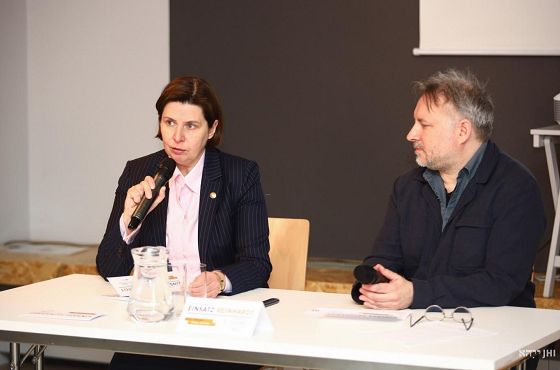
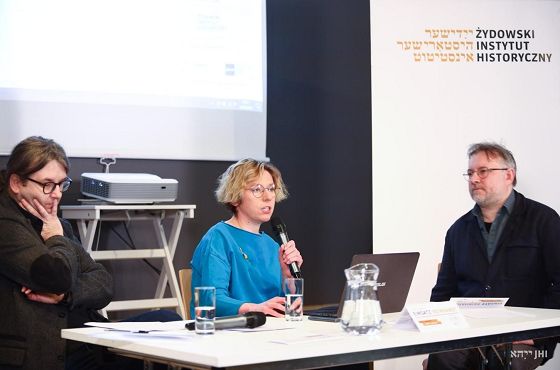
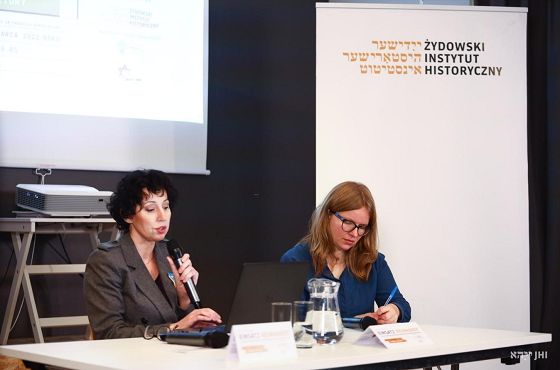
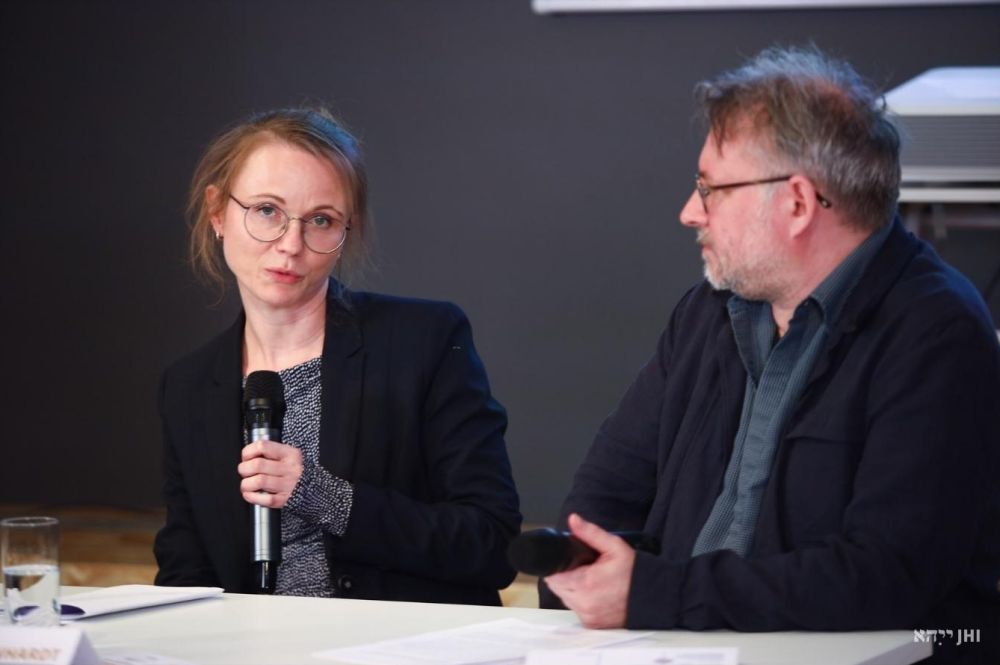
W zeszłą środę, 16 marca 2022 r., na konferencji „Einsatz Reinhard. Zapisy zbrodni, próba lektury” gościliśmy w Żydowskim Instytucie Historycznym im. Emanuela Ringelbluma naukowców: historyków, literaturoznawców, specjalistów w naukach społecznych, którzy pochylili się nad tekstami dotyczącymi planu Zagłady polskich Żydów, planu, którego realizację niemieccy naziści rozpoczęli 80 lat temu. Zachęcamy do obejrzenia nagrania z konferencji w serwisie YouTube. Dodaliśmy linki do poszczególnych referatów i dyskusji, żeby ułatwić Państwu korzystanie z nagrania.

Konferencja Einsatz Reinhard 16.03.2022, fot. Grzegorz Kwolek (ŻIH) (5).jpg

Konferencja Einsatz Reinhard 16.03.2022, fot. Grzegorz Kwolek (ŻIH) (1).jpg
Konferencja Einsatz Reinhard 16.03.2022, fot. Grzegorz Kwolek (ŻIH) (2).jpg

Konferencja Einsatz Reinhard 16.03.2022, fot. Grzegorz Kwolek (ŻIH) (3).jpg

fot. Grzegorz Kwolek (ŻIH)

„Ta konferencja jest szczególna, ponieważ dotyczy akcji «Reinhard»” – mówiła w otwarciu dyrektor ŻIH Monika Krawczyk. – „Otwiera liczne wydarzenia kulturalne i upamiętniające, które wiążą się z 80. rocznicą tej zbrodni”.
.

.
Referaty uczonych dotyczyły zapisków polskich świadków Zagłady, śladów zbrodni w oficjalnych dokumentach niemieckich (na ogół posługujących się eufemizmami i zacierających informacje o eksterminacji), wiadomości o deportacjach do obozów zagłady, które docierały do getta warszawskiego.

„Moje noce stały się koszmarem. Nieustannie nawiedzały mnie sny, nie było od nich odpoczynku. Wizje rodziców były w nich niezwykle realistyczne. Widziałem wnętrze wagonu. Ponure światło padało na ludzi siedzących na podłodze. Była wśród nich moja matka, o kamiennej twarzy, oczach, które niczego nie wyrażały, ustach skutych lodowatym milczeniem. Dokąd jechała? Czy to była jej ostatnia podróż?” – wspominał cytowany przez jednego z prelegentów Rafał Lemkin, twórca definicji ludobójstwa.


Zawartość publikowanych artykułów i materiałów nie reprezentuje poglądów ani opinii Reunion’68,
ani też webmastera Blogu Reunion’68, chyba ze jest to wyraźnie zaznaczone.
Twoje uwagi, linki, własne artykuły lub wiadomości prześlij na adres:
webmaster@reunion68.com

Why Chinese media keeps referencing the Holocaust

Why Chinese media keeps referencing the Holocaust

JORDYN HAIME / JTA


State media and diplomats have increasingly used its Holocaust narratives to position China as a savior of Jews at a time when the rest of the world neglected them.

The Forbidden City is seen from the top of Jingshan Park during a heavily polluted day in Beijing, China, November 29, 2015. Beijing plans to ramp up its already tough car emission standards by 2017 in a bid by one of the world’s most polluted cities to improve its often hazardous air quality. / (photo credit: KIM KYUNG-HOON/FILE PHOTO/ REUTERS)

Two months ago, shortly after the Olympics began in Beijing, the US Holocaust Museum took a shot at China for its treatment of the Uyghur minority group.

“At the Olympics you’ll see a well-known tradition—the torch relay—which the Nazis used at the 1936 Olympics for propaganda purposes,” the museum wrote on Twitter. “Today, we witness how the Olympics can still be used to distract from atrocities, such as the persecution of the Uyghurs.”

Days later, Chen Weihua, a columnist for the Chinese state-run media outlet China Daily, responded: “Shame on the Holocaust Museum. Are you saying Nazi Holocaust of Jews was nothing but vocational training? More than 30,000 Jews sought refuge in Shanghai during the war and this is now your appreciation to the Chinese people?”

Chen’s comments sparked outraged responses online and even made some headlines in American conservative news outlets. But the phenomenon — a Chinese official channeling the Holocaust and elevating China’s role in saving Jews who found refuge in Shanghai during World War II — was not new, experts say.

Several other countries, including Israel and the United States, often reference their Holocaust records for political clout. But as China’s relationship with the West continues to sour, state media and diplomats have increasingly used its Holocaust narratives to position China as a savior of Jews at a time when the rest of the world neglected them.

“Engagement with the Holocaust as a representation of bad European history, and the kind of bad representation of Europe, it’s certainly a way to construct China as a much more civilized place than Europe based upon the idea that it saved Jewish people during World War II,” said Mary J. Ainslie, a professor of communications at the University of Nottingham’s campus in Ningbo, China.

Russia’s invasion of Ukraine has offered the opportunity to advance that narrative. China has been walking a diplomatic tightrope as it has tried to balance its interests with both Russia and the West. But the country has definitively pushed and expanded on Russia’s “denazification” argument to rationalize the invasion, claiming that Ukrainian Nazis — trained by the United States — participated in the 2019 Hong Kong protests against China’s controversial law to extradite political dissenters.

Last week, the Global Times, a Chinese nationalist state media outlet, published a story claiming that an official WeChat account from the US embassy in China glorified Ukrainian Nazis, by sharing an article about the Ukrainian Congress Committee of America on the Chinese messaging platform.

Chinese diplomats have also evoked the Holocaust in response to sanctions from European states over Beijing’s treatment of Muslim Uyghurs in the Xinjiang region. As China’s relations with Lithuania declined last year, foreign ministry spokesman Zhao Lijian wrote on Twitter: “In #Lithuania, there was once massacre of Jews in history. Today, racism remains a grave problem in the country, with Jews and other ethnic minorities suffering serious discrimination.”

“That comment, I thought, was a way of diverting attention from persecution of ethnic minorities in China to persecution of ethnic minorities in other places,” said Steve Hochstadt, a professor emeritus of history at Illinois College who has conducted extensive research on Jewish refugees in Shanghai and whose grandparents found refuge there during World War II.

Since 2017, China has held a million Uyghurs — a mostly Muslim, Turkic-speaking ethnic group who live in the the western Xinjiang region — in what they call “reeducation” camps, forcing them to praise communism and learn Mandarin. Rape and suicides have been reported from the camps, and some observers have compared the compounds to Nazi concentration camps. Jewish activists around the world have been on the front lines of protesting the Uyghurs’ treatment.

The US Holocaust Museum has joined in the criticism, but it has also witnessed an increased use of Holocaust comparisons around the world in the past few years “with concern.”

“The Holocaust should be remembered, studied, and understood so that we can learn its lessons; it should not be exploited for opportunistic purposes,” the Museum wrote in a 2019 statement. In 2021, a group of Holocaust survivors who volunteer with the Museum wrote an open letter asking the public to stop using the Holocaust as a means to promote other agendas.

“What we survived should be remembered, studied, and learned from, but never misused,” the letter read.

China’s Shanghai Holocaust narrative leaves out important facts that do a disservice to survivors, Ainslie said.

“The reason why the Jews of Shanghai were able to survive was not due to the Chinese state,” she said.

The current Chinese state — the People’s Republic of China (PRC) — did not exist until 1949. The city at the time had been ruled by several different powers under the Shanghai Municipal Council, Shanghai’s joint governing body at the time. But the influx of Jews arrived in 1938, as power over the city shifted from Chinese to Japanese hands.

“​​In short, the chaos created by the war in China made the Jewish refugees’ flight to Shanghai possible,” Gao Bei of the University of North Carolina, Wilmington, wrote in 2011.

The number of Jews China claims to have rescued — 30,000 — also differs from the number most scholars agree upon: around 20,000, according to the Shanghai Jewish Refugees Museum.

China began exhibiting a renewed interest in the Holocaust and Judaism after 1992, when China and Israel established official diplomatic relations. At the time, China’s main native Jewish group, a community of fewer than 1,000 in the city of Kaifeng, were able to practice their religion relatively openly and receive visits from Westerners who traveled there to teach them Hebrew.

In 2007, a museum commemorating the Shanghai Jewish refugees opened at the Ohel Moshe synagogue. In 2020, it expanded to more than double its previous size, likely a bid for better international recognition of the site, experts say. Since its opening, the museum has served as a platform for constructing links between Israel and the PRC, either cultural or economic.

The Kaifeng Jews have since been forced underground as a result of government repression of many religious groups.

“At all points, official Chinese interest in Jews and Jewish history and the Holocaust had a political connection with state policies,” Hochstadt said.

Israeli diplomats fully benefit from and engage with China’s Holocaust narrative, Ainslie said. Take a 2015 video as an example, in which former Shanghai refugees and Israelis, including then-Prime Minister Benjamin Netanyahu, thank the Chinese people for “their friendship and hospitality during our darkest hour.”

China has continued to grow closer with Israel in the past few years, even as the United States has raised concerns. China was Israel’s largest source of imports in 2021.

“The reason why the Jews of Shanghai were able to survive was not due to the Chinese state. That’s the importance. And of course, to actually not recognize that does a disservice to the survivors,” Ainslie says.

“[Conditions were] very, very tough…and to say that this was a benevolent act on behalf of the Chinese state, undermines all of that.”


Zawartość publikowanych artykułów i materiałów nie reprezentuje poglądów ani opinii Reunion’68,
ani też webmastera Blogu Reunion’68, chyba ze jest to wyraźnie zaznaczone.
Twoje uwagi, linki, własne artykuły lub wiadomości prześlij na adres:
webmaster@reunion68.com


Israeli Actor Michael Aloni on ‘Jewish Revenge’ at US Premiere of ‘Plan A’ Film About Holocaust Survivors’ Plot Against Germans

Israeli Actor Michael Aloni on ‘Jewish Revenge’ at US Premiere of ‘Plan A’ Film About Holocaust Survivors’ Plot Against Germans

Shiryn Ghermezian


Israeli actor Michael Aloni (center) speaking during a panel discussion with “Plan A” filmmakers and Yoav and Doron Paz and chief historian of Yad Vashem Dina Porat at the film’s US premiere on March 31, 2022. Photo: The Algemeiner

Israeli actor Michael Aloni and the filmmakers behind his post-World War II-era film “Plan A” discussed moral justice, revenge and antisemitism during the movie’s US premiere in New York City on Thursday night.

“Plan A” is based on the true story of young Holocaust survivors and Jewish vigilantes in 1945 who formed a group called Nakam, which is the Hebrew word for revenge. They plotted to avenge the murder of 6 million Jews by the Nazis by killing 6 million Germans, in a scheme — called Plan A — to poison the country’s drinking water.

Aloni stars as Michael, a member of Israel’s Haganah — the main Zionist paramilitary organization of Jews in pre-state Israel — who attempts to stop Nakam before they carry out their plan. The film was written and directed by Israeli brothers Yoav and Doron Paz.

In a panel discussion after the film’s screening on Thursday night at The Temple Emanu-El Streicker Center, Aloni said his character was a way to honor to his grandfather, who was a partisan in Poland.

“My own personal family history dates back to kind of exactly the same point,” he explained. “My mom, when she watched this movie, she was very excited and brought up in tears because for her its kind of like a way to glorify the memory of my grandfather. He was a partisan in Poland that stayed after the war and was also a professor for international law. He was a representative in the Nuremberg Trials where he received the SS officers, recognized each and every one of them, and sat through all the trials.”

Doron said he and Yoav conceived of the idea for the film after learning about a friend’s grandfather who, after surviving the Holocaust, located the neighbor that informed the Nazis about him and his family — and then killed him.

“Me and Yoav thought about the story and started thinking, ‘Wow this is an amazing personal revenge story,’” Doron said. “Once we started diving into the research and read about the revenge side of the Holocaust, we encountered the story about Plan A and this blew our mind because it wasn’t a personal revenge story, it was a national revenge story. And then on the spot, me and Yoav decided this is going to be our next movie.”

The head of Nakam, Abba Kovner, who later became a poet laureate, traveled to pre-state Israel to obtain poison for the group’s scheme. He managed to get the poison from brothers Aharon and Efram Katzir, the latter of whom went on later in life to become the fourth president of Israel, said Yad Vashem’s chief historian Dina Porat, who also participated in Thursday’s panel discussion.

Porat, who previously published a book dedicated to Kovner and has another coming out later this year about Nakam, said the group of Jewish vigilantes was comprised of 50 men and women, and that she knew and interviewed 35 of them.

The Paz brothers also interviewed some of the Jewish avengers for “Plan A,” discussing their moral choices, the desire for justice and lust for vengeance.

“What interested us was the psychological aspect,” said Doron. “To be honest, I don’t know what I would chose 70 years ago if I was a hot-blooded young man, 20-something-years-old, who lost everyone around me. But I think as storytellers, that’s what intrigued us in this story. Just to throw the question out there.”

Yoav said the filmmakers were very careful in how they tackled the “delicate subject” of revenge on screen, and that they wanted audiences to understand why Nakam did what they did. He said, “Some people think this film should’ve never been made and others think it was an important one that needs to spread out around the world. It’s a discussion and we wanted to raise this discussion.”

Aloni instead spoke to the audience about the will to survive being stronger than the will to carry out revenge.

“This story of the Jewish revenge is the very untold story that so many people are not aware of,” he said. “We know the stories of people who tried to save their lives, resist the Nazis and fought against them, and prisoners who fought in their own minds how to survive in the camps. The amount of strength of life that you need to put yourself in and to be strong in your imagination to survive those death camps is enormous. It’s stronger than the force of revenge, to stay alive.”

“Plan A” was filmed in Ukraine and Yoav praised the amazing Ukrainian crew that helped with the film. He also commented on the country suffering under Russia’s ongoing invasion and said, “We see history repeating itself. It’s really mind-blowing to see this footage on the news, looking like something out of World War II.”

“When we were shooting and scouting for locations [in Ukraine], it was so difficult to find places that look like out of a war and now unfortunately it just keeps repeating itself,” Yoaz said. “Of course in Israel it’s an ongoing conflict zone that never ends and all these conflicts keep raising moral questions about revenge: what does it mean to take revenge? What good will it take you if you walk this path? And so on. So this subject is still relevant.”

Aloni added, “Hate and hatred will always be in this world, and antisemitism still exists and we need to still fight it. And we have to stand for equality and peace, and to push those shadows away from us. It’s still a mission.”

“Plan A” has already been screened in Germany, where Doron explained that the reaction from the audience “was very serious and emotional.”


Zawartość publikowanych artykułów i materiałów nie reprezentuje poglądów ani opinii Reunion’68,
ani też webmastera Blogu Reunion’68, chyba ze jest to wyraźnie zaznaczone.
Twoje uwagi, linki, własne artykuły lub wiadomości prześlij na adres:
webmaster@reunion68.com