 America’s Real ‘Special Relationship’ When the Pageantry Is Stripped Away
Jonathan Sacerdoti
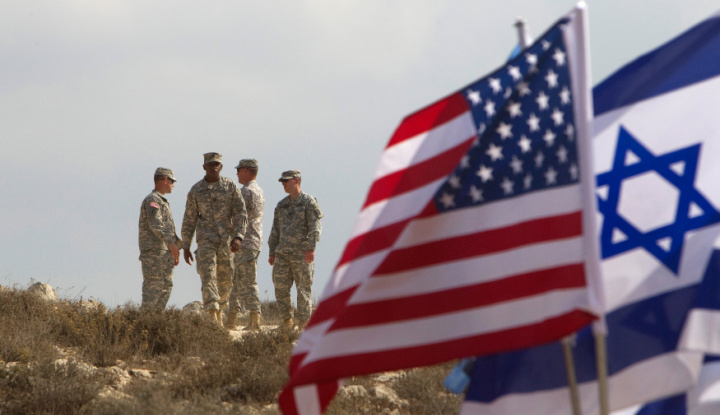 US soldiers stand next to a Patriot anti-missile battery (not seen) west of Jerusalem, Oct. 23, 2012. Photo: REUTERS/Ronen Zvulun
King Charles came to Washington this week to renew an old claim: that Britain remains America’s closest friend, joined by history, language, culture, and long alliance. There is truth in that. The ties are real. Yet the visit also exposed a tension no amount of ceremony could quite conceal. Beneath the pageantry, the handshakes, and the polished invocations of shared destiny, the old “special relationship” seemed less like a settled fact than a British hope. For today, America’s most “special” ally is surely Israel. Who says so? Britain’s own ambassador to the United States, caught in a leaked recording only weeks before the king arrived.
The royal visit was intended to mark 250 years of American independence, an anniversary born from rupture, and was tasked with displaying friendship between two nations whose elected leaders plainly have little warmth for one another.
For decades, the phrase “special relationship” has been used as a kind of Anglo-American incense, waved over every disagreement until the room smelled less of conflict. US President Donald Trump has battered British Prime Minister Keir Starmer for months, leaving the relationship between Washington and London looking bruised, transactional, even contemptuous. The royal visit was supposed to place something older and grander above that. And it nearly worked.
But Britain’s ambassador to Washington, Christian Turner, said the quiet part aloud.
The Financial Times obtained a leaked recording of Turner speaking to British students, in which he called the phrase “special relationship” nostalgic and backward-looking. But there was, he said, one country that could probably claim such a relationship with the United States: Israel. The Foreign Office insisted his remarks were informal and did not represent official policy, but the damage was done.
Turner’s point was awkward because it was true. The United States still values Britain. The historic and cultural ties remain deep. But a special relationship requires more than shared history and flags in matching colors. It requires instinctive trust in moments of danger. Under Starmer, that trust has more than frayed — it is in shreds.
Trump has been quite frank about his anger. He attacked Starmer over Britain’s hesitancy during the US-Israeli campaign against Iran, saying the prime minister was “not Winston Churchill” and criticizing the delay over the US use of its own Diego Garcia base in British territory. Britain initially withheld access to the strategic base for offensive operations.
Trump has also mocked Starmer’s caution, complaining that Britain was no longer what it had been, and treating the prime minister less as an indispensable ally than as a nervous functionary who cannot decide which way to face.
The contrast with Israel is stark. Trump recently praised Israel as a “GREAT Ally” on social media, calling the Jewish state “Courageous, Bold, Loyal, and Smart” and adding it “fights hard” and knows how to win.
US Secretary of War Pete Hegseth has been even sharper. In an official Pentagon briefing just three weeks ago, he thanked Israel for being a “brave, capable, and willing ally,” saying the “rest of our so-called allies saw what real capabilities look like” and should “take some notes.”
Britain gets nostalgia. Israel gets admiration.
Trump’s contempt for Starmer is mirrored back home, where the latter’s popularity has collapsed. YouGov’s March polling put him on a net favorability rating of minus 48, with 70 percent of Britons viewing him unfavorably. In April the same poll showed a similarly cringeworthy net favorability rating of minus 48, with 69 percent of the nation seeing the Labour leader negatively.
The public has watched a prime minister who promised seriousness lurch from one retreat to another: winter fuel payments, farming inheritance tax, digital ID, the two-child benefit cap, tax promises, the Muslim pedophilia rape-gangs inquiry, the Chagos deal … He appears like a man constantly dragged by events he failed to understand.
Even on the day of the king’s address to the US Congress, Starmer narrowly escaped a dangerous Commons vote over the Peter Mandelson affair — his disastrously chosen, Jeffrey Epstein-linked previous choice for US ambassador. Parliament rejected a Conservative motion to refer him to the Privileges Committee only after Labour MPs were instructed to vote against it. While the king spoke in Washington of continuity and alliance, the prime minister survived in London only by party discipline, whipping, and arithmetic.
Trump, for his part, played the royal moment beautifully. His White House speech was warm, even lavish. He called Charles “a very elegant man,” praised Britain’s ancient contribution to American liberty, invoked Runnymede, Churchill, Roosevelt, and yes, the special relationship. The president spoke of the two countries as heirs to a shared civilizational inheritance.
King Charles then took the same project to Congress, his speech masterfully wrapping political argument in historical courtesy. He joked about Parliament taking a hostage when the monarch visits Westminster, praised American democracy, Magna Carta, the Bill of Rights, and the Atlantic partnership. He was visiting, he said, in an era “more volatile and more dangerous” than the world his mother addressed in 1991.
This was royal diplomacy, but it was politics all the same. The king spoke under the protection of reverence. Americans treat the British monarch as a figure of ceremony, curiosity and continuity, almost outside the normal reach of partisan argument. That gave him room to press on the places where Britain differs from Trump’s America: Ukraine, NATO, climate, the global order, the Middle East, the language of shared democratic restraint.
Trump likes royalty. He respected the late queen. He was polite to her son, King Charles. But courtesy is not conversion. A historic royal speech in Congress cannot make an ailing prime minister look strong. A successful state visit cannot make Britain seem reliable if we are led by a prime minister who keeps failing the test when decisions arrive.
The ambassador’s leak cut through the bunting. Britain came to Washington trying to prove it was still America’s closest ally. Its own man in Washington had already suggested otherwise. Israel fights beside America. Britain explains itself to America. That is the difference, and everyone can see it.
The king’s visit brought out military bands and inspections: soldiers in dress uniforms — a spectacular display of ceremonial closeness. Speechwriters crafted their finest flourishes to describe historic ties, cultural affection, and family bonds across the Atlantic. But it was Britain’s most important diplomat, not our prime minister or even our king, who told the truth. His words were embarrassing not because they were shocking, but because he simply said what we already knew.
Just as President Trump and Secretary Hegseth have been saying for weeks, the real military display to demonstrate a truly special relationship was not on show on the South Lawn of the White House, but in the skies, the seas, and on the ground in the Middle East: Israeli and American brothers in arms, fighting barbarism and evil, bound by a common enemy, common goals, and common values. They are fighting for Israel, for America, for the West, and the entire civilized world. That is what a special relationship looks like when the pageantry is stripped away.
Jonathan Sacerdoti, a writer and broadcaster, is now a contributor to The Algemeiner.
Zawartość publikowanych artykułów i materiałów nie reprezentuje poglądów ani opinii Reunion’68,
ani też webmastera Blogu Reunion’68, chyba ze jest to wyraźnie zaznaczone.
Twoje uwagi, linki, własne artykuły lub wiadomości prześlij na adres:
webmaster@reunion68.com