Archives

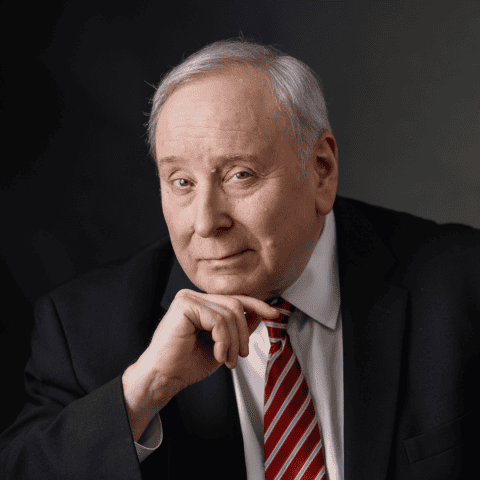
Wywiad z Alanem Dershowitzem

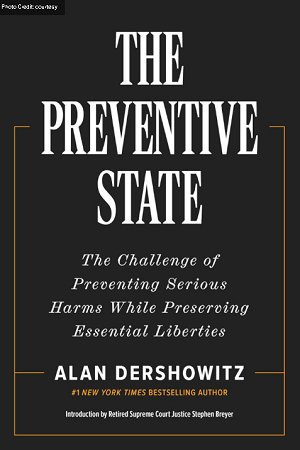
The Preventive State: The Challenge of Preventing Serious Harms While Preserving Essential Liberties [Państwo prewencyjne: wyzwanie zapobiegania poważnym szkodom przy jednoczesnym zachowaniu podstawowych wolności]


Wywiad z Alanem Dershowitzem

Bennett Ruda
Tłumaczenie: Małgorzata Koraszewska


Alan Dershowitz jest amerykańskim prawnikiem, profesorem prawa i autorem wielu książek. Wielokrotnie angażował się w obronę dysydentów. 

W tym miesiącu ukazała się jego najnowsza książka The Preventive State: The Challenge of Preventing Serious Harms While Preserving Essential Liberties . Miałem okazję porozmawiać z Alanem Dershowitzem o jego książce i bieżących wydarzeniach, których dotyczy.

Twoja nowa książka, The Preventive State, została opisana jako Twoje Magnum Opus. Jak to traktujesz?

Uczę tego przedmiotu na Harvard Law School i w innych miejscach od sześćdziesięciu lat, myślę, że to moja najbardziej kreatywna i najważniejsza książka. Dotyczy tego, jak rządy zmieniają swoje podejście z czekania na wystąpienie szkody na przewidywanie jej z wyprzedzeniem. Ta zasada opiera się na zaleceniu  Rodef Din z Tory: nie czekasz, aż ktoś zabije. Pierwszy go ścigasz. Mogę również zacytować to z innego przepisu Tory, części odczytanej podczas mojej Bar Micwy: Tzedek, Tzedek, Tirdof  [do sprawiedliwości, do sprawiedliwości będziesz dążył]. Nie mówi ona tylko raz „Tzedek”, że po fakcie szukasz Sprawiedliwości — jeśli możesz, zapobiegnij wystąpieniu niesprawiedliwości, zanim ona nastąpi.

Na przykład Tora mówi o „krnąbrnym synu” (Ben Sorer U’moreh, Księga Powtórzonego Prawa 21:18-21), a Tora zawiera również wiele środków zapobiegawczych, takich jak zapobieganie rozprzestrzenianiu się chorób poprzez umieszczanie osób chorych na trąd poza obozem. Estera i Mordechaj zaangażowali się w wojnę zapobiegawczą. Powstali i zabili zwolenników Hamana, zanim ci zdołali zabić Żydów. Tak więc kwestia zapobiegania sięga bardzo, bardzo dawno, czasów Tory.

W ostatnich latach zaczynamy to jednak widzieć w społeczeństwie obywatelskim z deportacjami, odmową zwolnienia za kaucją, wojną prewencyjną, jak potencjalny atak na irański reaktor jądrowy. Gdybyśmy mogli zapobiec 7 października, zabijając 10 przywódców Hamasu 6 października, zrobilibyśmy to i powinniśmy byli to zrobić. Więc to, czego potrzebujemy, to jurysprudencja prewencyjna. Tym, co próbowałem zrobić w The Preventive State, to skonstruowanie takiej jurysprudencji, dlatego jest to moja najważniejsza książka, moje Magnum Opus, to, które wymagało, bym stał się „Starszym” Syjonu, żeby ją napisać.


Równocześnie jednak wspominasz w książce o problemie przekroczenia granic. Można próbować przewidywać, ale są pewne ograniczenia. Jednym ze sposobów radzenia sobie z tym jest analiza kosztów i korzyści, którą wykonujesz. Mówisz o tym w całej książce, ale czy możesz krótko opisać, jak to działa?

Za każdym razem, gdy państwo robi coś, aby zapobiec szkodliwemu czynowi, odmawia komuś wolności. Pytanie brzmi: ilu osobom bylibyśmy skłonni odmówić wolności i do jakiego stopnia, aby zapobiec jakiemuś okropnemu czynowi?

Podam przykład: Izrael niedawno zaatakował szpital i według ostatnich doniesień, zabił od siedmiu do dziesięciu głównych przywódców Hamasu, którzy nielegalnie korzystali ze szpitala, ukrywając się wśród cywilów. Tak więc izraelskie wojsko musiało przeprowadzić analizę kosztów i korzyści. Zabijając przywódców Hamasu, zapobiegli zabiciu wielu, wielu ludzi, ale kosztem zabicia kilku innych. To jest rodzaj analizy kosztów i korzyści, jaką mamy.

To też zaczyna się w Torze, kiedy Abraham spiera się z Bogiem o zniszczenie Sodomy. Co jeśli jest 50 niewinnych, 40 niewinnych? Potem analizują, targują się i zawierają układ,  zatrzymując się ostatecznie na 10. Wynika z tego lekcja, że nie jest w porządku zabicie trzydziestu lub czterdziestu niewinnych osób, by ukarać winnych, ale może być konieczne zabicie siedmiu, ośmiu lub dziewięciu niewinnych osób. Nie ma nic za darmo; zawsze będzie to kompromis. I myślę, że ten kompromis jest dobrze odzwierciedlony w historii Abrahama i Sodomy.


Wspominasz w swojej książce, że ta historia stanowi podstawę tego typu analizy przyczyn.

Formuła Williama Blackstone’a, „Lepiej, żeby dziesięciu winnych uniknęło kary, niż żeby jeden niewinny cierpiał”, pochodzi bezpośrednio z tej historii, ponieważ użyto liczby dziesięć. Kiedy ludzie tacy jak Blackstone i inni, którzy bardzo dobrze znali Torę, konstruowali współczesną jurysprudencję anglo-amerykańską, zwrócili się do źródeł biblijnych.


Wspomniałeś o Hamasie i kwestii terroryzmu. Obecnie w prawie międzynarodowym jedną z najbardziej palących kwestii jest stosowanie prawa w wojnie z terroryzmem. Jak myślisz, w jaki sposób prawo międzynarodowe powinno odnosić się do terroryzmu, by mogło być zarówno skuteczne, jak i sprawiedliwe?

Cóż, nie może tego zrobić z jednego powodu: jeśli prawo stosuje się, to tylko do demokracji, a nigdy nie stosuje się do terrorystów. Hamas nawet nie udaje, że przestrzega prawa międzynarodowego. Przyklaskiwali zabiciu kobiety w ciąży, która miała urodzić. Nikt, zgodnie z prawem międzynarodowym, nie usprawiedliwiłby tego. Ale Hamas nie dba o to, więc stosowanie prawa międzynarodowego wiąże ręce demokracji, a dziś robi się to w bardzo, ale to bardzo niesprawiedliwy sposób.

Powiedziałbym, że główną funkcją prawa międzynarodowego jest dziś atakowanie Izraela i główną funkcją praw człowieka jest atakowanie Izraela. Nie widzisz prawa międzynarodowego ani praw człowieka stosowanych przeciwko Syryjczykom, gdy zabijali, ani przeciwko temu, co dzieje się w Sudanie, ani przeciwko temu, co Chińczycy robią Ujgurom. Międzynarodowe prawa człowieka są używane tylko przeciwko Izraelowi. Stały się bronią w wojnie przeciwko Izraelowi i syjonizmowi.


Masz oryginał listu Thomasa Jeffersona, w którym pisze: „Nie mamy się czego obawiać z powodu demoralizującego rozumowania niektórych, jeśli inni będą mieli swobodę pokazania ich błędów, a zwłaszcza, że prawo jest gotowe ukarać pierwszy czyn przestępczy wywołany fałszywym rozumowaniem”. Ale co się dzieje, gdy protestujący na kampusie uniemożliwiają pro-izraelskim mówcom przemawianie na terenie kampusu, a policja nie chce lub nie może ukarać tego pierwszego czynu przestępczego? 
Co powiedziałby Jefferson dzisiaj?

Cóż, Jefferson mylił się wtedy i napisałem o tym książkę zatytułowaną Finding Jefferson, w której krytykowałem to konkretne stwierdzenie widniejące w liście wiszącym na mojej ścianie. Mamy wiele do stracenia, wiele szkód, ale masz rację, rynek idei nie pomaga. Przykład: przez 11 lat odkąd przeszedłem na emeryturę z Harvardu, nie pozwolono mi ani razu mówić o Izraelu na terenie kampusu Harvardu. Rzadko zapraszano mnie na jakikolwiek kampus, aby mówić o Izraelu. Ale każdy mówca antyizraelski jest witany z otwartymi ramionami, a jego prawa wynikające z Pierwszej Poprawki są chronione, i chronione także przeze mnie. Ale moje prawo wynikające z Pierwszej Poprawki do przemawiania na terenie kampusów uniwersyteckich i prawa wynikające z Pierwszej Poprawki studentów pro-izraelskich do słuchania, jak przedstawiam swoje argumenty, nie są chronione na terenie kampusu. Dlatego zdecydowałem się napisać tę małą broszurkę i udostępniliśmy milion jej egzemplarzy rozdawanych bezpłatnie studentom w całym kraju, a właściwie na całym świecie: The 10 Big Anti-Israel Lies, and How to Refute Them With Truth [10 wielkich kłamstw antyizraelskich i jak obalić je prawdą]. Rozdajemy je, ponieważ nie mogę przemawiać na tych kampusach, ale mogę przemawiać przez moje książki. Nie mogą mnie powstrzymać ani powstrzymać grup pro-izraelskich na kampusie i Chabad przed rozdawaniem mojej broszury. Przynajmniej część moich myśli trafia na rynek idei na przynajmniej kilku kampusach uniwersyteckich.       

Jednym z narzędzi sprawiedliwego stosowania prawa międzynarodowego, jak zakładamy, są sądy międzynarodowe, MTK, MTS i sądy europejskie. Co sądzisz o pracy, jaką obecnie wykonują?

Są gorsze niż nic, dużo gorsze niż nic. Gdyby to było nic, można by przynajmniej powiedzieć, cóż, każdy kraj musi sam zdecydować, czym jest prawo międzynarodowe. Międzynarodowy Trybunał Sprawiedliwości nie jest międzynarodowy, nie jest sądem i nie rozumie sprawiedliwości. Nie jest międzynarodowy, ponieważ wyklucza wiele krajów z możliwości zasiadania w nim. Nie jest sądem, ponieważ sędziowie są wybierani przez kraje i nigdy nie wykazywali żadnego zainteresowania sprawiedliwością. To samo stało się teraz o wiele bardziej prawdziwe w przypadku Międzynarodowego Trybunału Karnego i Europejskiego Trybunału Sprawiedliwości. Wszystkie są stronnicze. Wszystkie są lewicowe. Wszystkie są antyizraelskie, antyamerykańskie, antychrześcijańskie i antyzachodnie i są hańbą. Byłoby lepiej, gdyby wszystkie zostały zlikwidowane. Teraz byłbym za zniesieniem Międzynarodowego Trybunału Karnego i Międzynarodowego Trybunału Sprawiedliwości. Byłbym również za zniesieniem Organizacji Narodów Zjednoczonych. Jeśli masz organizacje, które wyrządzają więcej szkody niż pożytku, które przyczyniają się do promowania wypaczonych wartości i podwójnych standardów, o wiele lepiej jest nie mieć żadnych instytucji, niż mieć złe instytucje.


Więc raczej całkowicie byś je zlikwidował niż zastąpił czymś innym.

Zniósłbym je całkowicie. Nie sądzę, aby istniała możliwość stworzenia sprawiedliwego sądu międzynarodowego, który sprawiedliwie osądzałby Izrael, Stany Zjednoczone i zachodnie demokracje. Myślę, że wydawanie sprawiedliwych wyroków dzisiaj przekracza nasze możliwości. Pozostawiłbym sądom krajowym egzekwowanie prawa międzynarodowego. Kraje takie jak Stany Zjednoczone, Izrael i Anglia egzekwowałyby prawo międzynarodowe. Oczywiście kraje takie jak Chiny i Iran tego nie zrobiłyby, ale tak jest również dzisiaj, ponieważ te kraje ignorują Organizację Narodów Zjednoczonych.


Cytuję z twojej książki: „prawie wszystkie agresywne ataki militarne można usprawiedliwić używając gładkiego języka prewencji”. A co z drugą stroną? Dzisiaj widzimy „gładki język” oporu – opór jako usprawiedliwienie tego, co Hamas zrobił 7 października, opór używany jako usprawiedliwienie dla licznych ataków terrorystycznych. Czy istnieje coś takiego jak prawo do stawiania oporu?

Nie ma prawa do stawiania oporu poprzez zabijanie niewinnych ludzi. Przede wszystkim opór jest w umyśle obserwatora. Palestyńczycy mogli mieć państwo w 1937, 1938, 1947, 1948, 1967, 2000, 2001, 2005 i 2007 roku. Za każdym razem je odrzucali. Mieli możliwość posiadania państwa na mocy prawa i negocjacji. Powiedzieli nie i zamiast tego użyli przemocy. To nie jest prawo w żadnym moralnym, prawnym ani praktycznym systemie prawa. Palestyńczycy zrzekli się swojego prawa do stawiania oporu lub posiadania państwa, odrzucając pokojowe oferty państwowości.

Posłuchaj Billa Clintona, kiedy mówi, że w latach 2000-2001 osobiście, wraz z Ehudem Barakiem, zaoferował Palestyńczykom 96% Zachodniego Brzegu, 4% obecnego Izraela, stolicę w Jerozolimie, całą Gazę i prawo powrotu dla części uchodźców. Arafat nie tylko to odrzucił, ale także rozpoczął intifadę, w której zginęło 4000 ludzi. Nie ma prawa stawiania oporu, gdy kraj odrzucił możliwość uzyskania tego, czego twierdzi, że chce. Powodem, dla którego Palestyńczycy nie akceptują żadnych procesów pokojowych, jest to, że nie obchodzi ich własne państwo; zależy im tylko na tym, żeby nie było państwa żydowskiego. Mówimy o rozwiązaniu w postaci dwóch państw, które Palestyńczycy odrzucili. Palestyńczycy zaakceptowaliby rozwiązanie bezpaństwowe: żadnego państwa palestyńskiego – pod warunkiem, że nie będzie państwa izraelskiego. Więc, jak powiedział Bill Clinton w swoich komentarzach, Palestyńczycy nie chcą państwa. Oni po prostu chcą zabijać Żydów – to ich przywództwo, nie mówię o przeciętnym Palestyńczyku. Zatem nie, nie istnieje prawo do stawiania oporu, ani moralnie, ani prawnie.


Piszesz również: „Istotne jest także to, że Izrael nie odpowiedziałby na nuklearne zniszczenie Tel Awiwu, niszcząc Teheran”. To oznacza, że istnieją pewne granice odwetu. A co z odwetem Izraela przeciwko Hamasowi i Gazie? Czy uważasz, że istnieją granice prawne dla Izraela do odwetu, a jeśli tak, czy Izraelowi udało się utrzymać te granice?

Najpierw odpowiem na drugie pytanie. Izrael pozostał w tych granicach. Izrael zabił mniej cywilów niż jakikolwiek inny kraj w nowoczesnej wojnie, w porównaniu do liczby zabitych uczestników walki. To, co robi Izrael, jest prewencyjne, a nie odwetowe; ma na celu uniemożliwienie Hamasowi dotrzymania obietnicy. Hamas obiecał wielokrotne powtórzenie  7 października i dopóki nie zrezygnuje ze swoich tuneli i nie zrezygnuje ze swoich morderczych działań Izrael ma prawo próbować zabić jego przywódców i członków. A jeśli jego przywódcy i członkowie ukrywają się wśród cywilów, Izrael ma prawo próbować zabić tych przywódców, nawet jeśli oznacza to proporcjonalną liczbę ofiar cywilnych. Izrael działa nie tylko w ramach prawa międzynarodowego, ale także lepiej radzi sobie ze zmniejszaniem liczby ofiar cywilnych niż jakikolwiek inny kraj w historii współczesnej, który stanął w obliczu porównywalnych zagrożeń.


Ludzie oskarżają Izrael o ludobójstwo, twierdząc, że liczba ofiar świadczy o zamiarze popełnienia przestępstwa lub że jest wystarczająca, nawet jeśli nie było takiego zamiaru.

Musi być coś więcej niż zamiar; musi być ludobójstwo. Nie ma ludobójstwa. Gdyby Izrael chciał zabić wszystkich Palestyńczyków w Strefie Gazy, mógłby to z łatwością zrobić. Populacja Strefy Gazy i populacja Palestyńczyków w Izraelu na Zachodnim Brzegu dramatycznie wzrosła. Więc, jak ktoś to ujął, jeśli Izrael próbował dokonać ludobójstwa, to jest najbardziej nieudolnym narodem ludobójczym w historii świata. Ponieśli w tej rzekomej próbie żałosną porażkę, ponieważ zwiększyli liczbę Palestyńczyków na całym Bliskim Wschodzie. Więc oczywiście twierdzenia o ludobójstwie nie mają nawet najmniejszego uzasadnienia. Nawet nie ma powodu do przywoływania zamiaru. Nie ma nawet znaczenia, jaki jest zamiar; nie było żadnego aktu, który stanowiłby cokolwiek zbliżonego do ludobójstwa. Gdyby Hamas odniósł sukces 7 października i opanował Tel Awiw i wkroczył do Ber-Szewy i innych miast, doszłoby do ludobójstwa, ale tak się nie stało. Izrael nigdy nie miał zamiaru zabijać niewinnych cywilów. Niewinni cywile zginęli, bo Hamas wykorzystał ich jako żywe tarcze.


W swojej książce opisujesz to, co nazywasz kontinuum cywilności. Jak to działa i jak stosuje się do tego, co dzieje się teraz w Gazie?

To działa idealnie w przypadku Gazy. Masz prawdziwych cywilów, dzieci, bardzo starych ludzi i ludzi, którzy sprzeciwiają się Hamasowi. To są prawdziwi cywile. Z drugiej strony masz prawdziwy Hamas. Wiesz, Sinwar, przywódcy i terroryści, ludzie, którzy rzucają bombami. Pośrodku masz całą masę ludzi. Na przykład 7 października nie tylko ludzie z Hamasu przekroczyli granicę, zabijali, gwałcili i ścinali głowy, ale cywile z Hamasu brali w tym udział. Tracą swój status cywilów, gdy biorą udział w zabijaniu innych cywilów, a potem masz ludzi, którzy pozwalają, aby ich domy były używane do przechowywania broni lub wystrzeliwania rakiet i do przetrzymywania zakładników. To wszystko są ludzie, którzy znajdują się na kontinuum przestępczości i terroryzmu. Nie ma absolutnej, jasnej, czarno-białej granicy między terrorystą a cywilem. Wiele osób podających się za cywilów jest tak głęboko zaangażowanych w działalność terrorystyczną Hamasu, że ich miejsce na tym kontinuum jest bliższe terrorystom niż cywilom.

W swojej książce krytykujesz Olivera Wendella Holmesa i odnosisz się do słynnego przypadku krzyczenia „pożar” w zatłoczonym teatrze, co nawet nie mieści się w kategorii wypowiedzi, wolnej czy innej. Piszesz: „Przekaz ‘pożar’ nie jest skierowany do umysłu i sumienia słuchacza, ale raczej do jego adrenaliny i stóp. Nie jest to zaproszenie do dyskusji, kłótni lub niezgadzania się. Jest to bodziec do natychmiastowego działania, a nie do przemyślanej refleksji”. A co z dzisiejszymi wydarzeniami na kampusach i ulicach, kiedy protestujący skandują, obrażają i jasno dają do zrozumienia, że nie zapraszają ludzi do dyskusji lub przedstawiania argumentów, ale raczej tworzą bodziec do natychmiastowego działania, zastraszania i nękania? Gdzie to pasuje do wolności słowa?

Kiedy na kampusach uniwersyteckich spotykasz ludzi, którzy krzyczą: „Śmierć Żydom”, którzy nawołują do uniemożliwienia Żydom chodzenie na zajęcia, którzy wołają o natychmiastowe ataki i nękanie Żydów – to nie jest to chroniona mowa. Z drugiej strony, jeśli wygłaszasz abstrakcyjne przemówienie i mówisz, że dobrze byłoby, gdyby nie było Izraela – to taka mowa nienawiści jest chronioną mową. Nie powinno się wytyczać granicy na podstawie  [takiego zjawiska jak] okrzyk „pożar” w teatrze. To bardzo głupia analogia, jedna z najgłupszych, najbardziej mylących rzeczy, jakie Oliver Wendell Holmes kiedykolwiek powiedział. Ale jest granica między bezpośrednim podżeganiem a bardziej abstrakcyjnym argumentem. Abstrakcyjne argumenty, nawet jeśli są pełne nienawiści, są dozwolone na mocy naszej Konstytucji. Ale bezpośrednie podżeganie do zabijania lub krzywdzenia innych ludzi lub blokowania im dostępu lub odmawiania im możliwości chodzenia na zajęcia – te nie są chronione przez Pierwszą Poprawkę.


Nadal czekamy, aż uniwersytety zaczną dostrzegać ten fakt.

Nadal czekamy i myślę, że dobrze, że rząd federalny wywiera pewną presję. Myślę, że same uniwersytety nie są skłonne do zmiany i alienowania swoich radykalnych wykładowców i radykalnych studentów, chyba że nie mają wyboru. Myślę, że administracja Trumpa postąpiła słusznie, wywierając presję. Nie sądzę, że powinniśmy kiedykolwiek wycofywać finansowanie badań medycznych i naukowych, ale wycofanie finansowania dla organizacji aktywistów na terenie kampusu, takich jak Intersectionality i DEI, Black Lives Matter i Critical Race Studies – to wszystko jest dobrą rzeczą.


Mówisz o mowie nienawiści, która jest chroniona. Ale żeby było jasne, jest chroniona tylko wtedy, gdy jest abstrakcyjna.

Kiedy jest abstrakcyjna, kiedy jest częścią dyskusji. Ale nikt nie chce debatować. Zaproponowałem debatę z najgorszymi izraelożercami, ale oni nie chcą ze mną debatować. Wiedzą, że nie mogliby wygrać w debacie, ponieważ ich strona jest tak słaba. Historia jest tak bardzo przeciwko nim. Jak wytłumaczysz fakt, że tyle razy odrzucali państwowość, a teraz są gotowi zabijać?

A tak nawiasem mówiąc, nie ma ani jednego demonstranta na żadnym kampusie uniwersyteckim na świecie, ani jednego demonstranta, który kiedykolwiek wzywał do rozwiązania w postaci dwóch państw. Nie, oni nie chcą rozwiązania w postaci dwóch państw. Są w pełni zadowoleni z rozwiązania w postaci jednego państwa. Tylko Palestyna, żadnego Izraela, lub choćby rozwiązania bezpaństwowego. Ale nigdy nie zaakceptują rozwiązania, które włącza i obejmuje prawo Izraela do istnienia jako państwa narodowego narodu żydowskiego.


Krytykujesz to, co nazywasz grą etykietowania, rozróżniając miedzy sankcjami prewencyjnymi i karnymi. A co z sugestią Trumpa dotyczącą deportacji mieszkańców Gazy? Czy deportacje byłyby bardziej legalne, gdyby były przedstawiane jako prewencyjne, a nie czysto karne?

Nie, ale myślę, że byłoby to bardziej legalne, gdyby było dobrowolne, gdyby administracja oferowała coś Palestyńczykom, którzy żyją pod rządami Hamasu w Gazie w nędznych warunkach. Gdyby dano im wybór, czy przenieść się do Libii lub innego państwa arabskiego, otrzymać pomoc finansową, z rodzajem planu Marshalla, żeby zbudować społeczność gdzie indziej, czy też opuścić Gazę tymczasowo i odbudować, pozwalając na powrót tylko tym, którzy nie są zwolennikami Hamasu. To mogłoby być rozsądne podejście. Pochwalam Trumpa za przedstawienie kilku sugestii i pomysłów. Status quo w Gazie jest nie do przyjęcia, ale myślę, że można być krytycznym wobec każdej z konkretnych propozycji i trzeba uważać, aby upewnić się, że będą one zgodne z moralnością i prawidłowym stosowaniem zasad prawnych.


A co z embargiem Izraela nałożonym na Gazę, które ma charakter prewencyjny, a nie karny?

Zacznijmy od obalenia kłamstwa. Nikt nie głoduje w Gazie. Od 8 października słyszeliśmy, że mieszkańcy Gazy głodują. To po prostu kłamstwo. Nikt nie głoduje i nikt nie głodował. Trzeba pamiętać, że mieszkańcy Gazy otrzymywali wiele żywności przez miesiące i robili zapasy. Bardzo dużo żywności trafiło do Hamasu. Bardzo dużo środków medycznych trafiło do Hamasu.

Żaden kraj nie jest zobowiązany do wysyłania żywności lub leków ludziom, którzy próbują ich zabić. Ostatecznie, jeśli Hamas chce dostać więcej żywności, niech wypuści zakładników. Ale teraz zakładnicy nie dostają posiłków. Dostają kawałek chleba, a wiemy, że wielu z nich zostało zabitych, wielu z nich zmarło. Trzeba mieć ogromną tupet, żeby ci, którzy zabijają niewinnych zakładników, narzekali, że być może nie dostają wystarczającej ilości jedzenia. Są zdjęcia otwartych targowisk, otwartych straganów, sprzedających świeże warzywa i owoce, a mieszkańcy Gazy mają mnóstwo okazji do uprawy własnej żywności. Jest nawet pozwolenie na połowy ryb w niektórych rejonach. Myślę, że media muszą obnażyć kłamstwo o głodzie i niedożywieniu w Gazie. To po prostu kłamstwo, które jest powtarzane od prawie dwóch lat.


Jakieś przemyślenia na koniec?

Myślę, że pytanie, które należy zadawać cały czas, brzmi: „Dlaczego Żydzi?” Dlaczego świat, szczególnie lewica, zwrócił się tak zaciekle przeciwko Żydom? Nie można obwiniać Izraela, ponieważ było tak przed Izraelem. To wydarzy się ponownie. Jest tu podwójny standard. Ludzie pytają mnie cały czas: jaka jest twoja definicja antysemityzmu? To takie proste: stosowanie podwójnych standardów wobec wszystkiego żydowskiego – państwa żydowskiego, narodu żydowskiego i organizacji żydowskich. Wszystko, w czym stosuje się podwójne standardy, które są negatywne wobec Żydów lub państwa żydowskiego, jest antysemityzmem. To takie proste, ale niezmiernie ważne. I to właśnie dzieje się na kampusach uniwersyteckich. Nie można powiedzieć złego słowa o pewnych faworyzowanych grupach, Afroamerykanach, kobietach i gejach. Powodem, dla którego Claudia Gay została zwolniona z Harvardu, nie było to, że powiedziała, że to kwestia kontekstu, gdy ktoś wzywa do ludobójstwa Żydów. To nie był powód. Wcześniej powiedziała, że to nie jest kwestia kontekstu. Nigdy nie można powiedzieć nic negatywnego o kobietach, gejach czy czarnoskórych i ona stosowała te podwójne standardy, i to bardzo słusznie doprowadziło do jej zwolnienia.


Zawartość publikowanych artykułów i materiałów nie reprezentuje poglądów ani opinii Reunion’68,
ani też webmastera Blogu Reunion’68, chyba ze jest to wyraźnie zaznaczone.
Twoje uwagi, linki, własne artykuły lub wiadomości prześlij na adres:
webmaster@reunion68.com

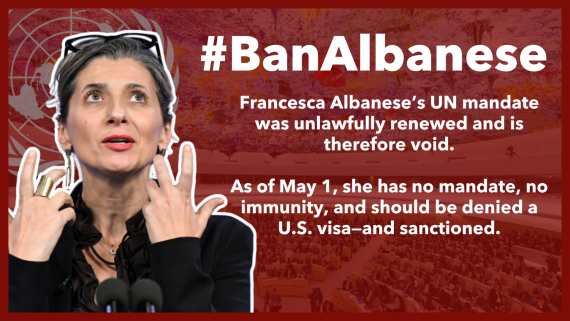

Battle to Defeat Hamas Apologist Francesca Albanese

Battle to Defeat Hamas Apologist Francesca Albanese

UN Watch


“Nothing to Hide”
How the UN and Francesca Albanese Engaged in a Concerted
Cover-Up to Conceal Her Funding by Pro-Hamas Lobby Groups


Download the PDF file .


Zawartość publikowanych artykułów i materiałów nie reprezentuje poglądów ani opinii Reunion’68,
ani też webmastera Blogu Reunion’68, chyba ze jest to wyraźnie zaznaczone.
Twoje uwagi, linki, własne artykuły lub wiadomości prześlij na adres:
webmaster@reunion68.com

The pope’s ‘divisions’ and the war against the Jews

The pope’s ‘divisions’ and the war against the Jews

Jonathan S. Tobin


Non-Catholics need to respect the powerful symbolism of the papacy. But neutrality about a genocidal struggle against Israel’s existence is neither moral nor acceptable.

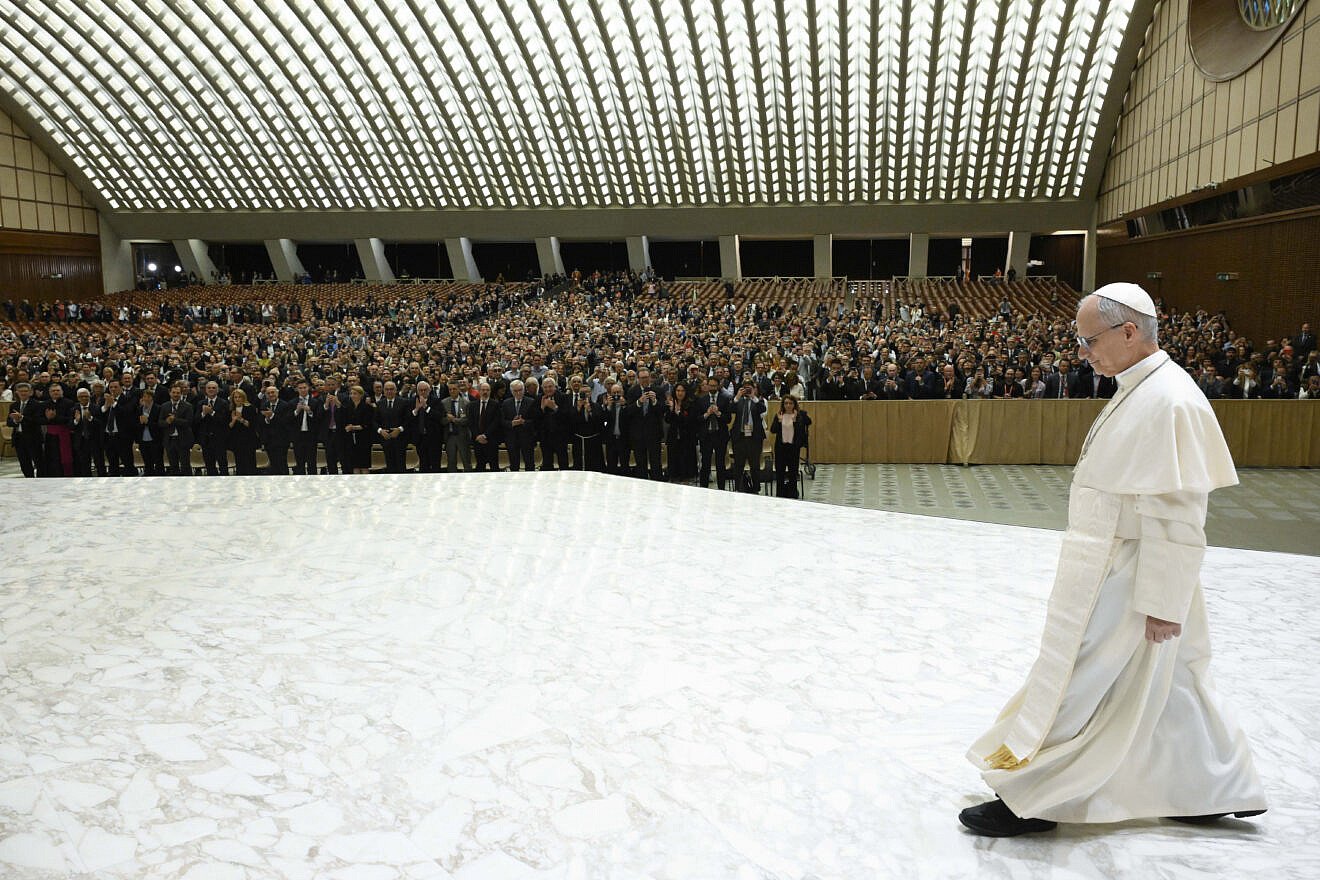
Pope Leo XIV attends an audience with thousands of journalists and media workers at Paul VI Hall in Vatican City, Vatican, on May 12, 2025. The audience with journalists has become a tradition among newly elected popes. Photo by Vatican Media via Vatican Pool/Getty Images.

In an era when religion seems to be in steep decline throughout Europe and North America, it might strike some people as curious that the election of a new pope would be treated as such an earth-shaking event. But even as secularism increasingly dominates public discourse, the persistence of faith and the attention devoted to the leadership of a denomination so integral to the history of Western civilization as Catholicism is a reminder that some things transcend popular culture—and that is something all people of goodwill should celebrate.

So, it is understandable that the accession of Pope Leo XIV, the first American pope, should be greeted with universal respect. That should also apply to the Jewish community, which now approaches the papacy with the sort of expectations of understanding and support that would have been unimaginable before the second half of the 20th century. The question is not where the church stands on the points of contention of the past, but how its spiritual leadership will be deployed in the present.

Soviet dictator Joseph Stalin’s much-quoted comment, in which he derisively asked “how many divisions” the pope had in his time, is generally and rightfully thought of as a clueless dismissal of the power that can stem from spiritual leadership. The Catholic Church and its new leader face many challenges, not least the fact that a growing percentage of its estimated 1.4 billion believers are in the Third World rather than Europe or the United States. It must also grapple with the conflicting demands that it be more accessible and modern while at the same time staying true to its core doctrines.

Yet the question is not whether Pope Leo XIV will be able to exercise considerable influence over world opinion on a variety of topics or whether it will be well-meaning, regardless of where people stand on the issues. Rather, it is whether the Vatican and the church it leads will play a role in combating one particularly pernicious problem with which its institutions were once closely associated. While we should not assume anything but good intentions from the pope, it is still apt to ask whether his “divisions” can or will be deployed to stem the rising tide of antisemitism sweeping across the globe as opposed to merely paying lip service to this plague—or worse, unwittingly abetting it.

Transcending the past

After the groundbreaking stands of the Second Vatican Council and then the papacy of John Paul II (1978-2005), the historic antagonism between the Church and the Jews, as well as the State of Israel, was put aside and replaced with a more open and respectful relationship. The publication of “Nostra Aetate,” the 1965 Catholic declaration on the relationship of the Church with non-Christian religions, rejected the deicide myth and established a new norm; the assumption that Catholics hated Jews became a relic of the past. That was followed up by the open philosemitism of John Paul II and the historic decision of the Vatican to recognize Israel in 1993. That put the unhappy history of relations between the papacy and the Jews firmly behind them.

Nevertheless, most Jews and Israelis were disappointed by the Church’s somewhat feeble response to the unprecedented increase in antisemitism that followed the Hamas-led Palestinian Arab terror attacks in southern Israel on Oct. 7, 2023.

To be fair, the late Pope Francis condemned antisemitism and the increase in Jew-hatred after Oct. 7. But in the last year and a half, the Vatican appeared as critical of Israel’s war of self-defense against genocidal Hamas terrorism as it was in stating its horror about the Oct. 7 atrocities against Israelis.

To many of its constituents in Europe, around the world, and particularly in the Middle East, that morally ambivalent stand about a conflict fundamentally rooted in a desire to destroy the Jewish state seems fair. It also conforms to the Church’s general opposition to war, no matter the cause or circumstances. So, it was not surprising that Pope Leo issued a call for a ceasefire in the Gaza Strip (as well as in the war between Russia and Ukraine) as part of his first Sunday sermon, even though that would essentially allow a terrorist regime to emerge triumphant from the destructive war it began.

Even more troubling, at times during the past 19 months, the Church has either seemed to endorse the false Hamas narrative about Israeli war crimes or harkened back to symbolism that is a reminder of its antisemitic past.

Some of this is connected to the Church’s worries about Middle Eastern Catholics, including the small remnant living under Islamist rule in Gaza, as well as the Latin Patriarchate in Jerusalem, which seems far more interested in promoting anti-Israel Palestinian nationalism than anything else.

In this case, an understandable concern for Catholic safety in a region where, outside of Israel, religious freedom is tenuous or non-existent has most often given way to something far more troubling: a belief that the Vatican’s chief obligation there is to not contradict Arab and Muslim hatred for Jews and the Jewish state.

That is the context for any discussion about the new pope and the future of Catholic-Jewish relations.

Assumptions about papal politics

Pope Leo is in a difficult position in speaking out on any issue, let alone one as fraught as antisemitism and the global war on Israel.

His election has led to a torrent of commentary in which he is being shoehorned into various secular and political debates. That is particularly true in the United States, where some on the left are hoping that he will assume the stance of a spiritual leader to the “resistance” to President Donald Trump, as, for example, New York Times columnist David French—a rabid Never Trumper—seems to want him to be. In turn, some on the political right are making the same assumption because of his background in advocating for illegal immigrants. Yet his stands on other issues, particularly those relating to traditional morality and gender ideology, may put him on the same side of the aisle as pro-Trump conservatives.

All those attempts to inject the papacy into U.S. cultural and political warfare are likely futile. The papal version of “soft power” can be formidable, but it doesn’t translate well into American partisan disputes. That is something that will likely prove to be true, even if Pope Leo dislikes Trump or Vice President JD Vance, who converted to Catholicism as an adult. The left may fantasize about Leo assuming the same role in aiding their campaigns against Trump that Pope John Paul II had in opposing Soviet despotism in Eastern Europe in the last years of the Cold War. But the papacy and the American church simply aren’t set up to be a religious auxiliary to the Democrats or any political party.

His need to avoid being drawn into partisan arguments in a democracy, however, is not the same thing as reluctance to play a role in stemming the current rising tide of antisemitism and support for Israel’s destruction.

Contemporary Jew-hatred

No one should expect the pope to endorse any military campaign or government. But the connection between those in the Catholic world who have embraced “liberation theology”—a Marxist-influenced variant of faith that is linked to other “progressive” causes aligned with the international movement to destroy the one Jewish state on the planet—and antisemitism is something that directly concerns the Church. That’s especially true since, while his predecessor was not an adherent of liberation theology, many of his positions, as well as those of the current pope, seem adjacent to them in some ways.

Contemporary antisemitism is something that is different from the sort of hatred of Jews with which the Church was long associated. That was also true of the racist prejudice of the Nazis, which directly contradicted Catholic doctrine. Today’s antisemites target Jews not because they think Jews killed Jesus or should convert to Christianity. Instead, they are part of a bizarre red/green alliance of Marxists and Islamists.

They view Jews as part of the class of “white oppressors” according to the tenets of woke ideology like critical race theory, intersectionality and settler-colonialism, who must be defeated. Or they despise them as a dhimmi minority of second-class citizens condemned to perpetual subjugation to Muslims, as well as having no right to sovereignty in the Middle East, even in their ancient homeland, where they are the indigenous people.

And as much as the Vatican opposes hatred of Jews, in general, it has been awfully quiet about specifically condemning the way supposed sympathy for the Palestinian Arabs has weaponized these ideas, as well as traditional antisemitic tropes.

A general abhorrence for all wars and concern about the fate of those who live in Gaza may have led many to wrongly condemn Israel’s justified effort to eradicate Hamas. Still, there is no excuse for allowing that to cause the Church to refuse to see how such moral equivalence is the foundation for an international movement that demonizes Jews and their state.

Anyone who comments on the papacy must do so with both respect and deference to its enormous symbolic importance to Catholics—something that transcends politics and culture. And there is no question that the contemporary Church is an institution that is vastly different from the one in the past that was rightly distrusted by Jews.

Nevertheless, neutrality about a war being fought by Palestinian terrorists and other Iranian proxies for the genocide of Jews and the end of Israel is neither moral nor in the interests of non-Muslim minorities in the Middle East. It is not unreasonable to expect the pope to use his influence to oppose those who act as the witting or unwitting allies of this despicable cause, whether or not they cloak themselves in the language of “human rights.”

It is a tribute to the courage and the righteousness of some of Pope Leo’s predecessors who fought against antisemitism that contemporary Jews can feel that they have a right to expect more from him than moral equivalence about a new war on the Jews. We should wish him well and hope he proves equal to their example.


Jonathan S. Tobin is editor-in-chief of the Jewish News Syndicate, a senior contributor for The Federalist, a columnist for Newsweek and a contributor to many other publications. He covers the American political scene, foreign policy, the U.S.-Israel relationship, Middle East diplomacy, the Jewish world and the arts. He hosts the JNS “Think Twice” podcast, both the weekly video program and the “Jonathan Tobin Daily” program, which are available on all major audio platforms and YouTube. Previously, he was executive editor, then senior online editor and chief political blogger, for Commentary magazine. Before that, he was editor-in-chief of The Jewish Exponent in Philadelphia and editor of the Connecticut Jewish Ledger. He has won more than 60 awards for commentary, art criticism and other writing. He appears regularly on television, commenting on politics and foreign policy. Born in New York City, he studied history at Columbia University.


Zawartość publikowanych artykułów i materiałów nie reprezentuje poglądów ani opinii Reunion’68,
ani też webmastera Blogu Reunion’68, chyba ze jest to wyraźnie zaznaczone.
Twoje uwagi, linki, własne artykuły lub wiadomości prześlij na adres:
webmaster@reunion68.com

The King’s Foils

The King’s Foils

Michael Doran


Patrick T. Fallon/AFP via Getty Images

Distrustful of a Republican foreign policy establishment that undermined him in his first term, Trump sourced a cohort of second-term staff from previously marginalized Libertarians and anti-interventionists. The problem? They don’t agree with him on policy.

When Donald Trump returned to office in January 2025, he moved fast. Within days, he had reinstated sweeping sanctions on Iran’s oil exports, financial institutions, and entities linked to the Islamic Revolutionary Guard Corps (IRGC).

On February 9, Benjamin Netanyahu became the first foreign leader to meet with Trump at the White House. The Israeli leader urged decisive action against Iran’s nuclear program. Tehran, he argued, was weaker than it had been in years. Now was the time to break its back. Trump listened and nodded but didn’t commit. According to U.S. and Israeli officials, he told Netanyahu he wanted to test diplomatic options first.

To further signal restraint, Trump sent a private letter to Iran’s Ayatollah Khamenei proposing new negotiations. On Truth Social he posted, “Reports that the United States, working in conjunction with Israel, is going to blow Iran into smithereens ARE GREATLY EXAGGERATED. I would much prefer a Verified Nuclear Peace Agreement, which will let Iran peacefully grow and prosper.”

But two weeks later, Trump revealed the limits of his inclination to bargain with Iran. On March 15, U.S. forces launched strikes on Houthi targets in Yemen after a series of attacks on commercial shipping in the Red Sea. Two days later, Trump posted, “Every shot fired by the Houthis will be looked upon, from this point forward, as being a shot fired from the weapons and leadership of IRAN. Iran will suffer the consequences, and those consequences will be dire.”

National Security Advisor Mike Waltz appeared on Face the Nation on March 23 to explain the wider context of the attack on the only major Iranian proxy that had escaped significant harm from Israel: “Iran has to give up its program in a way that the entire world can see. They will not and cannot be allowed to have a nuclear weapons program. That includes weaponization and strategic missiles.”

On Gaza, the contrast with Biden administration policy was even starker. Trump dropped the arms embargo Biden had imposed during his final months and green-lit Israeli operations in southern Gaza. He made no mention of a “day after” plan, no gestures toward the Palestinian Authority, no talk of a political horizon. Instead, he floated what he called a “Riviera” solution: The United States would take an “ownership position” in postwar Gaza, overseeing a reconstruction and development project that would begin after a major population transfer.

Whatever its feasibility, the plan made one thing clear: Trump had no intention of following the Obama-Biden playbook in the Middle East—not on Gaza, not on Iran, not on anything. These early actions reveal the core of Trump’s foreign policy approach on the Middle East: a willingness to leverage American power while avoiding entanglement, oscillating between shows of force and diplomatic outreach—a strategic zigzag that confounds both allies and adversaries but consistently advances America’s position.

Yet it is certainly possible to arrive at a very different apprehension of Trump’s approach to foreign policy based on the statements of some of his most prominent supporters and advisers, especially if one spends a lot of time on social media. In the view of many who offer themselves up as speaking for Trump, or for his voter base, the true Donald Trump isn’t a nationalist leader in the Teddy Roosevelt mode, who may speak softly but is by no means averse to using the big stick of American military and economic power. Rather, he is—or should be—a kind of cross between a 1930s right-wing isolationist and a 1960s antiwar protester. This highly visible version of Trumpism calls not for seeking global advantage by putting America’s interest first, but for a unitary global policy of withdrawal and restraint, to avoid getting sucked into future wars, which, in its view, inevitably damage America to advance the interests of corrupt cliques of globalists.

Trump’s foreign policy zigzags between Restraintists and hawks—not out of confusion, but by design. He’s executing the hybrid model he built in his first term: part Bush, part Obama—maximum pressure, minimal military footprint.

This version of Trumpism calls itself “Restraintism.” With respect to the Middle East, it advances four core propositions. First, the United States shares many strategic interests with Iran—interests that can, through deft American diplomacy, be realigned to mutual benefit. Second, Israel is the obstacle to this realignment, dragging the United States into needless and dangerous conflicts with Tehran. Third, given the increasing importance of competition with China, Washington should scale back its military commitments in the Middle East and pursue a thaw with Iran to help facilitate retrenchment. And fourth, the Palestinian-Israeli conflict is a strategic priority. It deserves much more attention from American leaders, who should offer the Palestinians greater support while forcing major concessions to them by Israel.

Restraintists present themselves as speakers of truth to power—voices that the legacy media and the corrupt establishment have long suppressed. They claim Restraintism is new, fresh, and popular. An expression of Trump’s “America First” vision, it represents ordinary Americans who are rising against the “uniparty.”

In fact, there is nothing new or uniquely Trumpian about this. Restraintism has flourished for decades within the foreign policy elite—inside the very uniparty it claims to oppose. In Progressive foreign policy circles, Restraintism reigns so supreme that, before now, some observers understood it only as a component of Progressive ideology. While it is that, it is also something more. For example, it is the default setting of Libertarians, like the Koch brothers and their aligned think tanks and networks.

How can it be on the right and left simultaneously? Restraintism is not so much a political ideology as a foreign policy persuasion. A permanent fixture in the American foreign policy debate, it resurfaces under different guises—sometimes as social justice, sometimes as free market Libertarianism, sometimes as populist revolt. It adapts its tone to the moment and to the setting, but its core claims remain intact. Some elites in both major political parties and in the career national security bureaucracy embrace its propositions, as do elements of the electorate. Kentucky Sen. Rand Paul and Vermont Sen. Bernie Sanders—despite coming from opposite ideological poles—are both leading representatives of the Restraintist persuasion.

The talking points of the Restraintists artfully mask the clash between the persuasion’s core beliefs and the instincts of ordinary Americans. Restraintism combines easily with Marxism, Progressivism, and Libertarianism, with which it shares a common appeal: the allure of the one big idea, the promise of hidden, superior knowledge. For underemployed young men or professionals in the tech economy, it provides a ready-made worldview: sleek, contrarian, and anti-establishment.

In its harsher expressions, it offers cover for darker impulses. It has become a favored mask for those who rail against shadowy elites and, at times, unmistakably, “the Jews.” According to the hardcore Restraintists, the mainstream press remains captive to “the neocons,” shorthand for entrenched elites who, often Jewish, champion strong U.S. support for Israel to promote senseless global engagement. With an air of certainty and intellectual superiority, Restraintists advance pseudo-solutions to complex problems—solutions that, as we’ll see, snap under pressure.

Just as Restraintism appealed to Progressives under Obama and Biden, it now appeals to a segment of the populist right—not so much as policy, but as posture. Trump shares some of their suspicions and some of their tone. He also shares some of their foreign policy prescriptions—but more so on Ukraine and NATO than on Israel and Iran.

Take Michael Dimino, Trump’s deputy assistant secretary of defense for the Middle East. Before entering government, Dimino was part of a Washington network funded in part by the Charles Koch Foundation, which has long advocated reducing U.S. involvement in the Middle East. Before taking office, he said on a podcast, “There are no vital or existential U.S. interests in the Middle East.” On the U.S. presence in Iraq and Syria, he added, “We’re really there to counter Iran, and that’s really at the behest of the Israelis and the Saudis.”

But Dimino is not the movement’s power center. Tucker Carlson, the conservative broadcaster and longtime Trump ally, has amplified Restraintist voices for years—and is arguably more influential than most officials with titles. The Washington rumor mill now names Vice President J.D. Vance, Donald Trump Jr., and Sergio Gor, director of the White House Office of Presidential Personnel, as fellow members of the Restraintist camp. Whatever the truth of those rumors, the movement has certainly gained proximity to power.

And a self-confident public voice. MAGA-aligned media now routinely host voices who echo the Restraintist view. One example: Economist Jeffrey Sachs recently told Carlson that Israel is dragging the United States into a war with Iran. “Netanyahu, I regard as one of the most delusional and dangerous people on the planet,” Sachs said. “He has engaged the United States so far in six disastrous wars, and he’s aiming to engage us in yet one more.”

So why has Trump stacked his administration with Restraintists—people who sometimes have loony ideas that he doesn’t follow? The answer is simple: He no longer trusts the traditional Republican foreign policy establishment, elements of which, in the first term, slow-walked his orders, leaked to the press, and quietly cheered his impeachment. The old guard is out, disqualified by its manifest public disloyalty and now stigmatized as “neocon.” Whoever is on record as opposing “the neocons” is therefore in line for a promotion from the margins to the power centers of D.C.

In place of the disloyal Republican old guard, Trump has tapped Libertarians and anti-interventionists who, until recently, lived on the margins of the Republican foreign policy community. They lived in the kinds of think tanks funded by the Koch brothers (who, ironically, opposed Trump in 2016, 2020, and again in 2024) and by heavyweight Democratic donors such as George Soros and Pierre Omidyar, whose political strategies involve creating Republican cover for leftist policies. They are young, eager, unentrenched. They owe their positions to Trump—and their futures depend on his favor, which makes them (in theory, at least) potentially more loyal than their predecessors. Their scorn for conventional expertise mirrors Trump’s instincts and flatters his base. They claim to speak for the common men and women who fought America’s wars in the past quarter-century, and some of them have served in the military.

Yet their influence on Trump’s Middle East policy remains limited. Trump listens to their views. He occasionally follows their tactical advice but never their strategic direction, and especially not when it comes to Iran and Israel.

To understand the limits of Restraintism’s influence, it’s useful to distinguish it clearly from the broader skepticism toward military intervention that swept the American public in the aftermath of the Iraq War. After years of costly and often unsuccessful operations, most American voters are wary of large-scale military deployments in the Middle East. “Let someone else fight over this blood-stained sand of the Middle East,” President Trump declared in 2019, playing to the sentiment.

The wave of public skepticism gave Restraintists an edge in the foreign policy debate. But their core propositions still clash with mainstream American opinion—especially among Republicans, both traditional and MAGA. Americans may reject large-scale military deployments in the Middle East, but they understand that leaving the Middle East altogether and thereby handing control of the global energy markets to China is lunacy. They still support Israel, distrust Iran, and don’t believe the United States can stand by while Tehran builds nuclear weapons—positions that Trump also holds.

The Signalgate episode revealed the split between Trump and the Restraintists. In March 2025, a senior Trump official mistakenly added a journalist to a Signal chat group for coordinating airstrikes against the Houthis. The group included Vice President Vance, Defense Secretary Pete Hegseth, National Security Advisor Waltz, and others. When the discussion turned to timing and escalation, Vance raised concerns. “I am not sure the president is aware how inconsistent this is with his message on Europe right now,” he wrote. “There is a further risk that we see a moderate to severe spike in oil prices.” He suggested delaying the operation for a month—but added, “I am willing to support the consensus of the team and keep these concerns to myself.”

The consensus moved ahead. Defense Secretary Hegseth shared targeting details. And then came the line that settled the debate. “POTUS is good to go,” wrote Homeland Security Advisor Stephen Miller. Vance’s concerns had been registered—but overruled. The strikes went forward. On the Middle East, Restraintists whisper from the wings. Trump listens. Then he goes his own way.

Which brings us to the deeper point. Trump’s foreign policy zigzags between Restraintists and hawks—not out of confusion, but by design. The zigzag reveals the strategy. Its purpose is leverage. He’s executing the hybrid model he built in his first term: part Bush, part Obama; maximum pressure, minimal military footprint. The Houthi strikes are just the latest example. They didn’t lock Trump into war; they gave him options. He can negotiate with Iran from a position of strength—or strike again, from that same position.

Unlike the commonly assumed chaos of Trump’s decision-making, this oscillation between conflicting approaches serves a coherent strategy: It creates uncertainty for adversaries and flexibility for the United States and gives Trump multiple pathways to advance American interests. By deliberately pitting opposing viewpoints against each other in his administration, Trump maintains control over the final decision while extracting maximum value from each perspective. The public nature of the oscillation allows Trump to appeal to domestic political constituencies with widely divergent perspectives.

In the Obama and Biden administrations, Restraintism shaped Middle East policy directly. Senior officials, however, masked that fact. They devised clever slogans to hide their appeasement of Iran and their decision to distance the United States from Israel. In the Trump administration, Restraintism calls more attention to itself but does not yet wield the same degree of influence. To be sure, it has occupied a few prominent cars on the Trump train—where it is popping champagne, beating drums, and blowing horns—but it is not driving the locomotive. To understand why it isn’t and why it won’t, we have to scroll back and review its role in Washington over the past two decades.

The era of restraint in American foreign policy—not to be confused with Restraintism—has a clear starting point: just after midnight on Sept. 6, 2007, when Israeli F-15s and F-16s destroyed Syria’s secret nuclear reactor at Al-Kibar in Operation Orchard. The strike marked a watershed not because of what the United States did, but because of what it didn’t. Months earlier, Mossad chief Meir Dagan had traveled to Washington to brief President George W. Bush on the facility, built with North Korean help. Israel urged the United States to act. Bush declined, and he advised Israel not to strike either. Jerusalem ignored the warning. The Israeli Air Force destroyed the reactor in a matter of hours, and the regime of Syrian dictator Bashar al-Assad did not retaliate.

America stood aside. The significance lay in the dog that didn’t bark: the American operation that never happened. With Israel forced to act alone, and in quiet defiance of Washington’s preferences, the era of contemporary U.S. restraint was born.

At the time, few recognized the shift. Operation Orchard remained classified for months. Reporters revealed Bush’s counsel to then Israeli Prime Minister Ehud Olmert only years later. On paper, U.S. policy still looked assertive: The Iraq surge was underway, and troop levels were at their post-invasion peak. But that appearance was misleading. The surge was not the beginning of a new phase; it was the end of an era. Just four days after the Al-Kibar strike, on Sept. 10, 2007, Gen. David Petraeus—then the top U.S. commander in Iraq—testified before Congress that the surge’s objectives had been met, and recommended drawing down American forces. That drawdown proceeded throughout the rest of Bush’s second term. Continuing it became a cornerstone of Obama’s foreign policy.

Bush’s refusal to act in Syria marked the unraveling of the doctrine that had shaped his post-9/11 Middle East strategy. That doctrine had been grounded in two questions the president asked himself while the smoke was still rising over the Pentagon and the rubble of the Twin Towers: What if a future 9/11-scale terrorist attack had the direct backing of a hostile state? What if the terrorists were to acquire weapons of mass destruction?

The thought of how much worse 9/11 could have been led Bush to try to prevent what we might call “Nexus”—the lethal intersection of hostile states, global terrorist networks, and weapons of mass destruction. By the logic of that strategy, Bush should have ordered the destruction of Syria’s reactor. The Assad regime checked every Nexus box: It was aligned with Iran, collaborated with North Korea, and maintained close ties to Hezbollah—raising the risk of a terror group acquiring a nuclear weapon. The Israeli proposal posed minimal risk to U.S. forces or Syrian civilians. It was a textbook Nexus scenario.

Yet Bush stayed his hand. He knew his domestic opponents would cast him as a reckless warmonger—a mad bomber expanding the Iraq war just as public support for intervention was collapsing. That moment of restraint had consequences. It changed U.S. policy toward Syria, certainly, but its most profound effects landed elsewhere. No American adversary benefited more from America’s pullback than the Islamic Republic of Iran. Al-Kibar made clear that as the United States stepped back from the region, friction between Iran’s “Resistance Axis” and Israel would only intensify. Managing that confrontation would become a central task of U.S. strategy.

Bush’s failure to strike Syria’s reactor opened the door for a Restraintist revival. Sensing opportunity, Restraintists moved quickly to advance their long-cherished goal: a “grand bargain” with Tehran. This fool’s gold solution promised to manage the Iran-Israel rivalry through a radical shift in U.S. policy—one that favored Iran. That vision led Obama to erase his “red line” in Syria in 2013, to tacitly recognize Syria as an Iranian-Russian sphere of interest and, most importantly, to pursue the 2015 nuclear deal—the Joint Comprehensive Plan of Action (JCPOA). The deal lifted U.S. opposition to Iranian control of the full nuclear fuel cycle and, in the process, offered Tehran a clear and legitimate pathway to a nuclear weapons program. That vision of the “rightly ordered” Middle East flourished under Biden—and now guides parts of Trump’s foreign policy apparatus as well.

While today’s Restraintists rail against “the neocons,” their ideas were alive and well inside the “neocon” Bush administration. As senior director for the Near East and North Africa at the National Security Council during that period, I saw firsthand how every attempt to crack down on the IRGC for killing Americans in Iraq met with internal resistance. Believers in Restraintism inside the administration argued that appeasing Iran—not confronting it—was the smarter way to curb its ambitions.

The Iraq Study Group, a congressionally mandated panel led by former Congressman Lee Hamilton and Bush loyalist and former Secretary of State James Baker, reflected their vision. In a report written by Obama’s future speechwriter, Ben Rhodes, the ISG recommended a troop withdrawal, engagement with Tehran and Damascus, and a restart of Israeli-Palestinian peace negotiations. It was Restraintism’s core propositions dressed up as bipartisan consensus. But the Restraintists on the Bush team never fully dictated policy—because the president rejected most of their ideas.

That tension—between a president who resists Restraintist logic even while embracing officials who quietly advance it—defined Bush’s second term. Under Obama, the equation flipped. Restraintism moved from the margins to the center of power.

In Barack Obama, the Restraintist persuasion found the most powerful devotee it has ever known. Obama quietly adopted the ISG’s report as the blueprint for his Middle East strategy. He implemented what we will dub “the Realignment,” a comprehensive shift in U.S. policy toward Iran that went far beyond nuclear negotiations. The Realignment envisioned a multipolar regional order in which Iran (and Russia) had a stake in maintaining stability—supposedly the key to reducing American military commitments. Convincing Tehran that the United States was willing to work with it required two moves: putting the nuclear dispute temporarily off to one side and lifting sanctions. The JCPOA, Obama’s nuclear deal, became the mechanism for both. Obama sold it to the public as a deal to halt Iran’s nuclear program. In reality, it merely parked the issue temporarily, giving the administration a pretext to lift sanctions and begin deeper cooperation with Tehran, casting Iran’s Ali Khamenei as America’s partner in maintaining regional order.

Unfortunately for Obama’s Realignment strategy, the Ayatollah never warmed to the part. Freed from economic pressure, Iran poured resources into its proxies—arming Hezbollah and the Houthis, entrenching itself in Iraq, and deepening its presence in Syria. The United States stood by as Russia and Iran propped up Assad, solidifying their hold on the Eastern Mediterranean. Far from stabilizing the region, the Realignment emboldened Iran, weakened U.S. allies, and undermined the American-led order. So much for restraint.

Yet Obama and his team remained proud of their project. Why were they so blind to its failures? First, they believed the core tenets of Restraintism. They were seduced by the illusion of having a more sophisticated view than the Republicans. If doubts did creep in, domestic politics swept them aside. The Iran thaw became a domestic political weapon. Treating Iran as a misunderstood partner, Progressives cast Iran hawks, Evangelicals, and the pro-Israel community as warmongers. These groups, the critics of Obama’s thaw, were the real source of Middle East instability.

Unlike Trump, who toggles between hawkish and Libertarian factions inside his base, Obama had foreign and domestic agendas that aligned seamlessly. He presented Americans with a false binary: Accept his concessions to Iran or choose war. “Let’s not mince words,” Obama declared in his 2015 JCPOA address. “The choice we face is ultimately between diplomacy and some form of war.” The framing didn’t just isolate domestic critics—it cast America’s traditional allies as obstacles to peace. Israel, Saudi Arabia, Turkey … each was portrayed as aggressive, uncompromising, and increasingly suspect. At Harvard in 2014, Vice President Biden summed it up: “Our biggest problem was our allies.”

Unsurprisingly, the allies balked at being thrown over the side of the ship. One voice grated on Obama more than the rest. Americans instinctively support Israel, regardless of who leads it. But Prime Minister Benjamin Netanyahu had a rare gift: He could speak directly to the American public, over the heads of U.S. presidents. Obama resented that gift. Diminishing Netanyahu—and weakening Israel’s ability to resist the Realignment—became White House priorities. The contempt ran deep. In October 2014, a senior Obama official, speaking anonymously, called Netanyahu “a chickenshit.” The official elaborated: “The good thing about Netanyahu is that he’s scared to launch wars … The bad thing about him is that he won’t do anything to reach an accommodation with the Palestinians or with the Sunni Arab states.”

Obama and his team believed Netanyahu’s moment to strike Iran had passed. They had boxed him in—and the Palestinian issue had been one of the levers. As Obama pursued diplomatic outreach to Tehran, he emphasized Israeli “failings”—especially on settlements. The push for a two-state solution served not only as moral positioning but also as a way to weaken the credibility of Israel’s advocates on Iran. The message was simple: The true threat to Middle East peace wasn’t Tehran. It was the status quo, and the people defending it: Netanyahu and his American boosters.

Donald Trump came to office in 2017 sharing Obama’s view that Bush had overreached in Iraq. Like Obama, he wanted to reduce America’s military footprint and had little patience for open-ended nation-building. But the similarity ended there. Whereas Obama reimagined America’s role as a mediator between traditional allies (in need of restraining) and enemies (deserving of empathetic understanding), Trump restored a more traditional conception of leadership.

Restraintism has flourished for decades within the foreign policy elite—inside the very uniparty it claims to oppose. On the left, it reigns so supreme that some observers understand it only as a component of Progressive ideology. But it is also the default setting of Libertarians, like the Koch brothers and their aligned networks.

He began his presidency by dismantling Obama’s Realignment. Gone was the roundtable vision that offered privileged seats to Tehran and Moscow. Trump brought back the rectangular table—America seated with its allies, leading them against its enemies. In May 2018, announcing the U.S. withdrawal from the Iran nuclear deal, he said it plainly: “The fact is this was a horrible, one-sided deal that should have never, ever been made. It didn’t bring calm, it didn’t bring peace, and it never will.”

But rejecting Obama didn’t mean returning to George W. Bush’s reliance on military power. While Trump’s vision was rooted in alliance and deterrence, his tools were different. A businessman, he saw economic pressure as the primary currency of power. His “maximum pressure” campaign against Iran led with sanctions and financial isolation, not planes and tanks. Nevertheless, he kept a credible military threat on the table—as shown in the 2020 strike that killed Qassem Soleimani.

Trump’s preference for leverage over firepower came into focus in June 2019, when he abruptly called off a planned strike on Iran after it downed a U.S. drone. “We were cocked & loaded to retaliate last night on 3 different sights,” he tweeted. “When I asked, how many will die. ‘150 people, sir,’ was the answer from a General. 10 minutes before the strike I stopped it.”

This tweet revealed what had always been true about Trump’s approach: He deliberately oscillated between hawkish positioning and restraint. While reasonable people may disagree about this specific decision, the pattern itself is unmistakable. Trump toggled between projecting strength and exercising caution—creating uncertainty for adversaries while maintaining flexibility for himself. This balancing act isn’t always pretty, but it consistently reflects his preference for keeping multiple options open rather than committing to rigid ideological positions.

Trump was riding two horses at once. He played to both the Restraintist wing of his coalition and to traditional hawks. John Bolton, his hawkish national security advisor, pushed for escalation; Restraintists counseled caution. Trump toggled between them purposefully. It looked chaotic to Washington. But Trump was using each camp as leverage against the other while keeping ultimate control in his own hands. “I like to have people who present different points of view,” he said. The through line wasn’t ideology; it was control.

Unlike Obama—whose views seemed preloaded from the Harvard Faculty Club—Trump’s instincts came from elsewhere. His base saw Israel not as just another country, but as America’s little brother. Trump never showed much familiarity with the temple of Palestine, which university administrators and professors have erected on elite campuses. For Obama, balance between Israel and the Palestinians was a central priority. Trump saw that pressure on Israel brought diminishing returns—and often empowered its enemies.

Instead, he moved decisively. He recognized Jerusalem as Israel’s capital. He moved the U.S. embassy. He brokered the Abraham Accords, normalization deals between Israel and Arab states that bypassed the Palestinian issue altogether. These moves strengthened the anti-Iran alliance and undermined the logic of Obama’s pressure strategy.

By the end of his first term, Trump had developed a new Middle East approach, one suited to the era of restraint. It blended Bush’s alliance structure with a more measured use of force. The “maximum pressure” campaign crippled Iran’s economy. It pushed the Gulf states closer to Israel. And it signaled that the United States, even in retreat, could still shape the region—through sanctions, alliances, and precision military strikes.

This approach—economic pressure backed by limited but decisive military action when necessary—represented a genuine alternative to both neoconservative interventionism and Restraintist isolationism. It acknowledged the United States’ desire to reduce its military footprint while maintaining its influence and protecting core interests.

Obama’s policies differed from the vision now circulating among Restraintists in and around Trump only in tone—not in substance. The perspective that gave us Obama’s Realignment lives on as a minority position in Trump world, but its advocates now pretend their ideas have never been tried before. In some cases, they probably aren’t pretending. They simply don’t know they are reinventing the wheel. Some are too new to the game and too steeped in ideological self-regard to realize they’re recycling the playbook of the very administration that Trump came to dismantle. They’re too blinded by their zeal to see that Trump is not half as doctrinaire as they are. A pragmatist and a realist, he has already chosen a different path—one that fits both the new map of the region and the instincts of the American public.

No sooner had President Joe Biden taken office in January 2021 than he dismantled Trump’s “maximum pressure” policy and reverted to Obama’s Realignment. Over time, he removed the Houthis from the terrorism list, lifted restrictions on Iranian arms exports, and systematically declined to enforce sanctions on Iranian oil sales to China, which surged to record levels. He also extended a sanctions waiver, granting Tehran access to $10 billion in frozen Iraqi electricity payments, helping to fund terror groups across the region. After Hamas attacked Israel on Oct. 7, Iranian proxies struck U.S. forces hundreds of times, even killing Americans. Washington’s response was feeble. With few exceptions, it aimed at “de-escalation” rather than deterrence. It treated the puppets with kid gloves while never touching the puppeteer.

“If you know the enemy and know yourself, you need not fear the result of a hundred battles,” wrote Chinese general and philosopher Sun Tzu. “If you know yourself but not the enemy, for every victory gained you will also suffer a defeat.” Biden’s conduct in Israel’s war failed both tests of strategic wisdom.

 While reasonable people might disagree about this or that specific decision by Trump, the pattern itself is unmistakable—creating uncertainty for adversaries while maintaining flexibility for himself. The balancing act isn’t always pretty, but it consistently reflects a preference for keeping multiple options open rather than committing to rigid ideological positions. 

“We want to de-pressurize, de-escalate, and ultimately integrate the Middle East,” said National Security Advisor Jake Sullivan in the fall 2023 issue of Foreign Affairs, using the administration’s preferred jargon to disguise its Iran appeasement. He claimed the region “is quieter than it has been for decades,” that Iranian proxy attacks on U.S. forces had “largely stopped,” and that diplomacy had de-escalated Gaza crises. His article hit the printer just as Hamas stormed out of Gaza to disprove every word. By the time hard copies reached subscribers, Sullivan had already scrubbed the most embarrassing lines from the digital version—without acknowledging the need to rethink strategy. Instead, he doubled down: “The approach … that we have pursued remains core to our posture and planning as we deal with this crisis,” the revised version read.

At the heart of that approach was preserving the diplomatic channel to Iran—which Biden, following Obama’s lead, believed was the key to regional stability. To protect it, the White House developed a multilayered strategy to constrain Israel’s military options.

First, the administration strongly discouraged Israeli preemptive strikes on Hezbollah and high-value Iranian targets. Instead, it urged Israel to keep operations focused solely on Gaza, restraining its actions at every stage to accelerate a cease-fire. Days after the Hamas attack, when Israeli leaders—including Defense Minister Yoav Gallant—argued that Hezbollah posed the greater threat, Biden intervened with his famous one-word warning: “Don’t.” Israelis and their supporters in the United States widely assumed that Biden directed this message to Iran and Hezbollah. In reality, it did double duty. Behind the scenes, Biden was also restricting Israeli military operations to Gaza.

Second, in Gaza, the administration worked to impose an early cease-fire. It opposed ground operations from the outset, then advised against entering Gaza City, later sought to prevent the incursion into Khan Yunis, and ultimately mounted a full diplomatic campaign to block operations in Rafah. At every phase, the White House pushed for limited engagements that would preserve Hamas’ infrastructure and fighting capacity—effectively steering Israel toward an outcome that would leave Hamas in power.

Third, the administration weaponized military assistance. By January 2024, Israeli officials had detected a pattern of delayed arms shipments—never publicly acknowledged by Washington but unmistakable to Jerusalem. The White House denied resorting to this tactic but used it as quiet leverage. Meanwhile, the most visible U.S. support—like dispatching aircraft carriers—functioned more as a bear hug on Israel than a backstop. These assets gave Washington veto power over any Israeli escalation against Hezbollah or Iran.

Fourth, Biden revived Obama’s tactic of using Israeli “moral failings” on the Palestinian issue as pressure points. Within days of the Oct. 7 massacre, the administration demanded an Israeli “day after” plan, insisting it include a “revitalized” Palestinian Authority and a two-state solution. Bureaucracies were directed to issue steady condemnations—over Gaza’s humanitarian crisis and West Bank settlements. Biden himself followed Obama’s playbook of denigrating Netanyahu. “He’s a fucking liar” and “a bad fucking guy,” he told aides—quotes that were immediately leaked, likely to appease Progressives, while serving to undermine Israel on the world stage.

This moral and personal leverage pressured Israel to limit its operations while positioning the White House as a neutral broker with Tehran rather than as Israel’s backer. The administration calculated that the Oct. 7 attack threatened not just to scuttle the diplomatic channel to Tehran, but also to empower Israel’s right wing and thereby collapse the two-state paradigm. Its response aimed to preserve both.

Signaling to Tehran that he was holding Israel back, Biden expected Khamenei to reciprocate by restraining Iran’s regional proxies. A quick cease-fire would follow, restoring the vision of regional “stability” that Sullivan had so confidently celebrated on the pages of Foreign Affairs. But this strategy violated Sun Tzu’s first rule: Know thine enemy. Biden underestimated Tehran’s hostility to the American-led order. By prioritizing de-escalation over deterrence, the U.S. simply invited calibrated Iranian escalation. First with Hezbollah, then with the Houthis and the militias in Iraq and Syria, Khamenei had encircled Israel with a ring of fire. Now he would fan the flames.

At the same time, Biden failed Sun Tzu’s second rule: Know thyself. His team overestimated its ability to restrain Israel—not because Washington lacked the tools, but because the American public would never tolerate it. Forcing Israel into a cease-fire that left Hamas in power and Israel exposed to missile threats from Lebanon and Iran would trigger a domestic backlash. American voters overwhelmingly see Iran as an adversary and Israel as America’s little brother. That made Biden’s position politically unsustainable.

Netanyahu understood Biden’s dilemma, and he played to American public opinion deftly. Quietly contesting the administration’s orders to stop the war, Israel steadily expanded its military operations in Gaza and across Iran’s entire proxy network. In July, it assassinated Hezbollah commander Fuad Shukr in a targeted airstrike in Beirut—the first such strike since the last major war with Hezbollah. Shukr had been linked to rocket launches that killed civilians in the Golan Heights. When Biden learned of the strike, he snapped at Netanyahu on a call: “Bibi, what the fuck?”—another presidential outburst that quickly found its way into the press. “You do not know what red lines you crossed,” Hezbollah leader Hassan Nasrallah declared in a televised speech. “The enemy, and those who are behind the enemy, must await our inevitable response.”

But Israel didn’t pause. In August, it pounded Hezbollah positions in southern Lebanon, escalated strikes in Syria, and in early September launched Operation Grim Beeper—a coordinated detonation of pagers and walkie-talkies used by Hezbollah operatives. Days later, while Netanyahu addressed the United Nations in New York, Israeli F-15Is dropped more than 80 tons of bunker-busters on Nasrallah’s underground command center in Beirut. The blast collapsed 60 feet of reinforced concrete, killing Nasrallah and his top lieutenants. When Defense Minister Yoav Gallant called U.S. Secretary of Defense Lloyd Austin to inform him, Austin replied, “Excuse me, what did you say?”

While Israel was decapitating Hezbollah, a second drama was playing out in its dialogue with Washington. In April, Iran launched more than 300 missiles and drones at Israel—the largest ballistic missile salvo ever fired by any country on another. Israeli and U.S. air defenses intercepted most of them. As Israel weighed a response, Biden urged restraint on Netanyahu: “You got a win. Take the win.”

Israel complied—formally—with strikes inside Iran that showed great restraint but were meant to signal to Tehran that no target was beyond the reach of the Israeli Air Force. In a more audacious demonstration of reach, on July 31, 2024, Israeli agents assassinated Hamas leader Ismail Haniyeh inside a presidential compound in Tehran. The operation embarrassed the regime and proved that even the Iranian capital was not off-limits. Yet again, Biden urged calm. Then came the second Iranian salvo in August. This time, Israel answered with a greater show of force. On Oct. 26, Israeli warplanes destroyed Iran’s air defense network—radars, launchers, interceptors—and severely damaged its ballistic-missile production infrastructure. The strike exposed Iran’s skies and weakened its ability to respond. The balance of power shifted decisively in Israel’s favor—because Netanyahu didn’t fully heed Biden’s demands for restraint.

Biden’s Realignment with Iran collapsed along with Nasrallah’s bunker. His administration watched from the sidelines as its strategy disintegrated. The forces of Hay’at Tahrir al-Sham (HTS), the leading Syrian opposition group, backed by Turkey, then advanced southward. They took Aleppo in days, discovering that Assad’s army—abandoned by Russia, sacked by years of attrition, and hollowed out by Israel—had collapsed. Pushing south, they quickly reached Damascus because there was no one left to stop them.

These dramatic events underscored the fundamental weakness of Restraintism: its assumption that cooperation with adversaries like Iran would lead to regional stability. Instead, the policy had emboldened Tehran, weakened America’s position, and ultimately fostered a chaotic transformation, unleashing forces damaging to the American national interest.

Under Biden, America’s traditional allies, Israel and Turkey, destroyed its traditional enemy, Iran, without speaking to one another, without U.S. support, and, indeed, in quiet defiance of Washington’s wishes. What might Biden have achieved if he had pursued a Trumpian strategy that worked with allies to defeat adversaries, instead of the other way around?

Nevertheless, the fall of the Assad regime and the near collapse of Iran’s regional project have created a historic opportunity for Trump to shape a new Middle East without having to deploy large numbers of American troops. To seize that opportunity, the president must complete two tasks.

First, he must finish the job against Iran and dismantle its nuclear program, along with the missile and drone infrastructure that threatens its neighbors and supplies its proxy network. The policy he has charted so far has positioned him for success, but much hard work remains.

Second, and perhaps more crucially for long-term regional stability, Trump must broker a modus vivendi between Israel and Turkey in Syria. This may be even harder than cutting Iran down to size. The two countries are on a collision course. Turkish President Recep Tayyip Erdogan and Netanyahu despise each other. And both are riding high. Netanyahu just presided over one of the most stunning military comebacks in Israeli history, after one of the most startling intelligence failures on Oct. 7. Erdogan, meanwhile, has silenced his domestic opposition and sees a new regional map emerging—one that places Ankara at the center. Russia and Iran, once Turkey’s natural counterweights, are diminished.

Not only is Turkey rising; Trump is giving it a leg up. He has turned to Ankara, which controls the second-largest military in NATO, to help broker a deal in Ukraine. He is weighing a full U.S. military withdrawal from northeast Syria. He is considering lifting sanctions tied to Turkey’s purchase of Russian air defenses. He is open to bringing Turkey back into the F-35 program. For Israel, the message is clear: Trump is elevating Turkey to the status of a privileged U.S. partner. Turkey’s consolidation of power threatens Israel most in Syria. Erdogan seeks a unified Syrian state under his hegemony. The Turks have signaled interest in seizing control of every major Syrian installation, including Palmyra Airport, the T4 air base, the Tartus naval facility, even the Hmeimim air base once used by Russia.

The Israel-Turkey rivalry represents the emerging central dynamic in the post-Iran regional order. Both countries are increasing their power and reach while viewing each other with deep suspicion. Without careful American management, this rivalry could replace the Iran-Israel conflict as the region’s most dangerous flashpoint.

With HTS—an al-Qaeda offshoot—now operating in Damascus under Turkish protection, Israel sees a jihadist-led push to turn Syria into a forward operating base aimed at Jerusalem. Erdogan has called Israel’s conduct “genocidal,” accused Netanyahu of making Hitler “jealous,” and welcomed Hamas leaders to Ankara. After Oct. 7, he declared, “Hamas is not a terrorist organization. It is a political movement born of resistance.” On March 30, he prayed aloud, “May Allah destroy and devastate Zionist Israel.”

To prevent such prayers from being fulfilled, Israeli forces have reoccupied the demilitarized zone in the Golan Heights. Mount Hermon is under full Israeli control. Jerusalem has extended quiet patronage to Druze communities south of Damascus. Israeli Foreign Minister Gideon Sa’ar has begun speaking in sectarian terms. Dismissing Syria’s new Turkish-backed government in Damascus as “a bunch of jihadists,” he said that “Israel should look to Kurds, Druze, and other minorities in neighboring countries … for support.”

“Israel sees every Arab and Muslim country as a threat,” responded Turkish Foreign Minister Hakan Fidan. “The strategy of keeping all its border states weak is untenable.” Each side accuses the other of trying to rig the post-Assad order. The Turks see Israel carving up Syria to keep it weak. The Israelis see Turkey empowering jihadists who will one day strike the Jewish state. These are not marginal disputes. They are foundational disagreements about the future of the region. One mistake by a nervous pilot could spark a serious clash.

And this is the heart of the matter: The Middle East is not a debating forum. It is a cockpit. Power is gained and kept by those who can generate violence—directly or by proxy. This observation may sound cynical, but it is a clinical diagnosis. In an age of restraint, vacuums will be filled not by the United States, but by others. And only three states in the region have the military capability to project power beyond their borders: Iran, Turkey, and Israel.

Call it the Golden Triangle: Tehran-Ankara-Jerusalem. One vertex—Tehran—is an enemy. Obama and Biden tried to work with it, to appease it. Both failed, dramatically. That leaves two: Turkey and Israel. The United States must cooperate closely with both, yet prevent them from clashing. The strategic logic of the triangle is elementary and inescapable: If Washington won’t act directly in the Middle East, it must act through allies—who hate each other. So the task is not simply to pick sides; it is to manage the geometry: weaken the adversary, empower the allies, and keep the allies from fighting.

Remaining focused on these basic realities is key to formulating an effective American strategy for the Middle East. Simply withdrawing from the region, as Restraintists advocate, would leave a vacuum that allies and adversaries would fill—often in ways that conflict with each other and with American interests. Managing the triangle requires wise engagement, not retreat.

Yet the American track record in managing this kind of military-strategic set piece does not inspire confidence. Instead, U.S. decision-makers habitually focus on secondary issues: Israeli-Palestinian relations; humanitarian crises in Gaza, Yemen, and Syria; Saudi-Israeli normalization. These issues—urgent, emotionally compelling, and politically weighty—require attention, to be sure, but they are not the architecture of regional power. They are the interior decorating.

Ignore the triangle, and you invite disaster. On Oct. 7, Iran, working through Hamas, drew Israel into a grinding war of attrition with its “Axis of Resistance.” In a single stroke, Iran derailed the Saudi-Israeli normalization project that Biden’s team had spent thousands of man hours pursuing. When you mistake interior decorating for architecture, you end up with neither.

This is where it becomes clear that the Restraintists, whether drawn from the ranks of the Obama team or from the Koch and Soros networks, have nothing to offer those who would aim to shape the Middle East to America’s benefit. Their strategy—less Israel, more Iran—has been tried, time and again, and it has repeatedly collapsed before our eyes. They missed the rise of Turkey, the fall of Assad, and the opportunity created by the convergence of Israeli and Turkish power. They simply ignore Israel’s very real destruction of Iran’s proxies, air defenses, and alliance structures since Oct. 7, 2023. They have no logic for what comes next. No vocabulary. No map. Their views are, at best, irrelevant; at worst, a drag on American thinking at a moment when strategic clarity is mandatory. The old game is over. Their moment has passed.

The catastrophic failure of Biden’s Iran-centric approach should have discredited Restraintism, but its capacity to wear the ideological colors of every party means it is not fully dislodged from the policy establishment. Its adherents now shelter under Trump’s banner, but his policies show a clearer understanding of the region’s power dynamics.

Trump knows that the role of the United States is not to draw up idealistic roadmaps. Will he also see that its role now is to buffer between America’s allies who don’t trust each other? That’s what it did in the Cold War when, for example, it shielded Israel and Saudi Arabia, both indispensable to American power, from each other. It has historically fulfilled the same function between its NATO allies Greece and Turkey. The same logic applies now. Israel and Turkey will clash unless the United States puts distance between them by stabilizing Syria. That country must serve—like Jordan—as a buffer state: neutral, minimally armed, not a platform for escalation. Only the United States can broker such an arrangement.

Doing so requires leverage, which Trump has. Turkey’s economy is not strong, with inflation high, productivity low, and its currency long in decline. Overcentralization has frightened away capital. Meanwhile, Syria is devastated beyond recognition: Large cities are in ruins and millions of people remain displaced. Reconstruction will require outside capital, and none of it will come without a green light from the United States.

Trump has the tools. Reconstruction in Syria cannot begin until the United States lifts sanctions on Damascus, and only Washington can coordinate a reconstruction plan that will mobilize American, European, and Gulf investment to maximum effect. But American leadership in this arena must come with a price: Turkish and Israeli de-escalation. Syria cannot become a Turkish base for threatening Israel.

That is the logic, and it fits Trump’s instincts perfectly. America should not police the region, Trump believes, but he is also unready to surrender it. His style of diplomacy is transactional, built around economic leverage—exactly what this moment requires.

If Trump brokers an understanding between Ankara and Jerusalem, while neutralizing Iran, he will have achieved what the Restraintists always promise but never manage to deliver. He will have shown that the United States can lead without overextending. It can lay the foundation for a regional order that doesn’t collapse under its own contradictions, an order that offers the United States control over oil resources, shipping lanes, investment capital, and intellectual property that are key to the economic future of most of the planet.

The real choice facing Trump is not between intervention and isolation, the false binary that Restraintists present. Rather, it is between strategic engagement that leverages America’s economic power and diplomatic reach, versus the ideological retreat that Restraintists advocate. His zigzag approach—alternating between forceful action and diplomatic outreach, maintaining hawks and Restraintists in tension within his administration—creates the strategic ambiguity and flexibility needed to manage complex regional dynamics without committing to large-scale military deployments.

By continuing this approach while focusing on the Golden Triangle of Israel-Turkey-Iran, Trump can establish a stable regional order that advances American interests without requiring American troops. This is the true “America First” foreign policy—one that recognizes American power and interests while acknowledging the public’s wariness of military entanglements. It represents a genuine alternative to both neoconservative interventionism and Restraintist isolation. It is within reach. If Trump pursues it, he can change the game—and win bigly.


Michael Doran is Director of the Center for Peace and Security in the Middle East and a Senior Fellow at the Hudson Institute in Washington, D.C.


Zawartość publikowanych artykułów i materiałów nie reprezentuje poglądów ani opinii Reunion’68,
ani też webmastera Blogu Reunion’68, chyba ze jest to wyraźnie zaznaczone.
Twoje uwagi, linki, własne artykuły lub wiadomości prześlij na adres:
webmaster@reunion68.com


Żydowska ambiwalencja w walce z antysemityzmem

Żydowska ambiwalencja w walce z antysemityzmem

Mitchell Bard
Tłumaczenie: Małgorzata Koraszewska


Gwiazda Dawida. Credit: Freepik.

Napięcie między niechęcią do tego, by postrzegano nas jako tłumiących debaty, a potrzebą stawienia czoła mowie nienawiści wydaje się wielu ludziom nie do zniesienia.

Żydzi od dawna są orędownikami wolności słowa w Stanach Zjednoczonych, jednak często nie wahają się opowiadać za odwołaniem mówców, którzy głoszą antysemityzm lub są zaciekle antyizraelscy. Wielu Żydów uważa, że ci, którzy szerzą nienawiść do nich lub Izraela, powinni ponieść konsekwencje, ale często niepokoją się mechanizmami stosowanymi do wymierzania tych konsekwencji. Ta ambiwalencja istniała przed powrotem Donalda Trumpa do Białego Domu, ale stała się bardziej powszechna, odkąd jego administracja zaczęła podejmować agresywne kroki przeciwko antysemitom i ich instytucjonalnym pomocnikom.

Obrońcy wolności słowa często przywołują słynne zdanie Louisa Brandeisa: „Światło słoneczne jest najlepszym środkiem dezynfekującym” (dokładny cytat brzmiał: „Mówi się, że światło słoneczne jest najlepszym środkiem dezynfekującym”). Przepraszam tego wielkiego żydowskiego prawnika, ale jeśli chodzi o antysemityzm, to jest to czysta bzdura. Pomysł, że ujawnienie zneutralizuje nienawiść, obaliły stulecia prześladowań Żydów. Nienawiść nie rozpływa się w świetle; mutuje i daje przerzuty. Pozwolenie antysemitom na szerzenie ich retoryki na terenie kampusu nie dezynfekuje; zamiast tego tworzy toksyczne środowisko dla żydowskich studentów i podważa uczciwość akademicką. Profesor Scott Galloway ujął to najlepiej: „Wolność słowa jest największa, gdy jest to mowa nienawiści wobec Żydów”.

Nawet wychwalając wolność słowa, Żydzi często są skłonni sprzeciwiać się wypowiedziom antysemitów na terenie kampusu. Na przykład w zeszłym roku absolwenci, wykładowcy, grupy społeczne i rodzice studentów na Brown University podpisali list wzywający administrację do wycofania zaproszenia Specjalnej Sprawozdawczyni ONZ Franceski Albanese (która niedawno została ponownie mianowana na swoje stanowisko mimo sprzeciwów Żydów i USA) z powodu jej historii antysemickich i antyizraelskich wypowiedzi.

To napięcie między niechęcią do tego, by postrzegano nas jako tłumiących debaty, a potrzebą stawienia czoła mowie nienawiści, wydaje się wielu ludziom nie do zniesienia. Żydzi często zadają sobie pytanie: Czy sprzeciwianie się prawu bigota do mówienia jest zdradą wartości liberalnych czy obroną wartości moralnych?

Choć nikt by się do tego nie przyznał, postawa protestujących na kampusach jest taka: mamy prawo być antysemitami i nikt nie ma prawa o tym mówić ani czegoś z tym zrobić. Dlatego jest zrozumiałe, że denerwują się, gdy ktoś nazywa ich bigotami lub dotykają ich jakiekolwiek konsekwencje. Dlatego tak wielu tchórzliwie chowa się za maskami, nie chcąc brać odpowiedzialności za swoje słowa lub czyny.

Antysemici narzekają na przykład, gdy grupy takie jak Canary Mission publikują ich publiczne wypowiedzi. To jak ściąganie kaptura z głowy członka Ku Klux Klanu. Publikowanie danych osobowych o antysemitach nie jest koszerne, ale ujawnianie tego, co mówią, jest całkowicie dozwolone. Studenci, którzy wspierają terrorystów, zasługują na zawstydzanie. Pierwsza Poprawka nie chroni ich przed nazywaniem ich niemoralnymi lub po prostu głupcami.

Jeśli pracodawcy odmawiają zatrudnienia osób, które popierają nienawiść, to nie jest to cenzura; to staranna polityka kadrowa. Studenci zagraniczni mogą wyrażać swoje zdanie, ale mogą zostać deportowani, jeśli popierają określone grupy terrorystyczne, takie jak Hamas. Korzystanie z tej możliwości nie jest prześladowaniem; to polityka państwa.

Kiedy po 7 października w kampusy uderzyło tsunami antysemitów, nic nie mogło powstrzymać tej fali. Teraz, gdy administracja Trumpa zaczęła deportować antysemitów i wstrzymywać fundusze rządowe dla uniwersytetów, w końcu widzimy, że uniwersytety traktują problem poważnie. To prawda, że administracja stosuje taktykę młota kowalskiego, która sprawia, że niektórzy Żydzi czują się niekomfortowo, ale podejście administracji Bidena wymierzania  w rzadkich przypadkach bardzo łagodnych kar, było nieskuteczne. Niektórzy Żydzi powiedzieli, że te obecne kroki pogorszą antysemityzm. Odzwierciedla to fundamentalne niezrozumienie natury antysemityzmu, które polega na tym, że nie potrzeba żadnego pretekstu, żeby nienawidzić Żydów. Trudno również ustalić, czy sprzeciw dotyczy kary, czy tego, że Trump spełnia swoją obietnicę wyborczą.

Ciągłe powtarzanie, że głosy pro-palestyńskie (nie przyznają, że popierają terrorystów) są tłumione, łatwo obala ich wszechobecność. Niektóre uniwersytety w końcu zawieszają grupy Students for Justice in Palestine (powinny wydalać członków), a mimo to znajdują oni inne sposoby na wyrażanie swoich poglądów. Doroczne tygodnie nienawiści przeciwko Izraelowi z udziałem mówców i pokazów filmów odbywały się na wielu kampusach w ciągu ostatniego miesiąca bez żadnych przeszkód.

Wielu z tych, którzy najgłośniej narzekają na tłumienie wolności słowa, popiera bojkot Izraela; to znaczy tłumienie wypowiedzi akademików i studentów, którzy chcą angażować się w sprawy Izraela. Wielu profesorów jest gotowych bronić „wolności akademickiej” swoich kolegów, aby mogli wykorzystywać swoje sale wykładowe do promowania antyizraelskich programów. Żydowscy profesorowie rzadko są skłonni zabierać głos.

Mimo że rząd USA i dziesiątki krajów na całym świecie przyjęły roboczą definicję antysemityzmu Międzynarodowego Sojuszu na rzecz Pamięci o Holokauście (IHRA) , wykładowcy, często pod przewodnictwem profesorów żydowskich, walczą z jej stosowaniem na terenie kampusu, fałszywie twierdząc, że ogranicza ona wolność słowa. Jednak odmowa zdefiniowania antysemityzmu zapewnia, że żadne zachowanie nie może zostać uznane za naruszenie. Bez granic nie ma egzekwowania reguł, a bezkarność rozkwita.

Jedna grupa Żydów wymyśliła definicję antysemityzmu Nexus, którą profesor Cary Nelson opisał jako próbę „oczyszczenia antysyjonizmu wszelkimi niezbędnymi środkami”. Teraz Nexus Project sprzeciwia się represjom Trumpa wobec studentów i uniwersytetów i przedstawia alternatywną strategię, która, jak można było przewidzieć, chroni antysemitów, sprzeciwiając się deportacji lub piętnowaniu antysemitów i broniąc różnorodności, równości i włączenia. Ich zalecenia koncentrują się mniej na obronie Żydów, a bardziej na kwestionowaniu autorytetu administracji i forsowaniu niezwiązanych z tym celów politycznych, takich jak zakończenie wojny w Gazie i promowanie państwa palestyńskiego.

Bądźmy szczerzy: kiedy dowiadujemy się o antysemitach przybywających na kampus lub gdzie indziej, nie zabraknie zasadniczych głosów żydowskich broniących ich prawa do mówienia. Ale czy chcemy dać im platformę? Czy neonaziści, islamiści, zwolennicy białej supremacji, zwolennicy Hamasu i inni antysemici nie powinni być anulowani, potępieni i zmarginalizowani bez przeprosin?

Niemcy to demokracja, w której wciąż obowiązują prawa przeciwko mowie nienawiści. Na przykład negowanie Holokaustu jest zabronione. Media społecznościowe są najniebezpieczniejszym medium do szerzenia antysemityzmu. W tym przypadku obrona nieuregulowanego rynku cyfrowego przez Trumpa zawodzi Żydów. Niemcy z kolei pociągają media społecznościowe do odpowiedzialności za nienawiść, którą wzmacniają. Amerykańscy Żydzi nie stanowią monolitu. Jedni są absolutnymi zwolennikami wolności słowa, podczas gdy inni wzywają do moderowania postów online. Co powiedzieli Żydzi, którzy spotkali Elona Muska? Czy powiedzieli mu — do diabła z wolnością słowa — żeby trzymał antysemitów z dala od X? Czy po prostu narzekali, że chcieliby, żeby nie było ich tak wielu?

Wolność słowa jest podstawową wartością żydowską, ale tak samo jest z obroną żydowskiego życia. Era ambiwalencji musi się skończyć. Nie możemy pozwolić, aby nasze zasady były wykorzystywane do podważania naszego bezpieczeństwa. Historia pokazała, dokąd to prowadzi.


Mitchell Geoffrey Bard – Amerykański analityk polityki zagranicznej, redaktor i autor, który specjalizuje się w polityce USA – Bliski Wschód. Jest dyrektorem wykonawczym organizacji non-profit American-Israeli Cooperative Enterprise i dyrektorem Jewish Virtual Library.


Zawartość publikowanych artykułów i materiałów nie reprezentuje poglądów ani opinii Reunion’68,
ani też webmastera Blogu Reunion’68, chyba ze jest to wyraźnie zaznaczone.
Twoje uwagi, linki, własne artykuły lub wiadomości prześlij na adres:
webmaster@reunion68.com