
Archives

Palestinian Leader Abbas Names Likely Successor in Bid to Reassure World Powers

Palestinian Leader Abbas Names Likely Successor in Bid to Reassure World Powers

Reuters and Algemeiner Staff


Palestinian Authority President Mahmoud Abbas attends the World Economic Forum (WEF) in Riyadh, Saudi Arabia, April 28, 2024. Photo: REUTERS/Hamad I Mohammed

Palestinian President Mahmoud Abbas named close confidant Hussein al-Sheikh as his deputy and likely successor on Saturday, the Palestine Liberation Organization said, a step widely seen as needed to assuage international doubts over Palestinian leadership.

Abbas, 89, has headed the Palestine Liberation Organization (PLO) and the Palestinian Authority (PA) since the death of veteran leader Yasser Arafat in 2004 but he had for years resisted internal reforms including the naming of a successor.

Sheikh, born in 1960, is a veteran of Fatah, the main PLO faction which was founded by Arafat and is now headed by Abbas. He is widely viewed as a pragmatist with very close ties to Israel.

He was named PLO vice president after the organization’s executive committee approved his nomination by Abbas, the PLO said in a statement.

Reform of the PA, which exercises limited autonomy in the West Bank, has been a priority for the United States and Gulf monarchies hoping the body can play a central role in resolving the Israeli-Palestinian conflict.

Pressure to reform has intensified since the start of the war in Gaza, where the PLO’s main Palestinian rival Hamas has battled Israel for more than 18 months, leaving the tiny, crowded territory in ruins.

The United States has promoted the idea of a reformed PA governing in Gaza after the war. Gulf monarchies, which are seen as the most likely source of funding for reconstruction in Gaza after the war, also want major reforms of the body.

CALL FOR HAMAS TO DISARM

Israel’s declared goal in Gaza is the destruction of Hamas but it has also ruled out giving the PA any role in government there. Israeli Prime Minister Benjamin Netanyahu has said he opposes the creation of a Palestinian state.

Hamas, which follows a militant Islamist ideology, has controlled Gaza since 2007 when it defeated the PA in a brief civil war after winning an election the previous year. It also has a large presence in the West Bank.

At a meeting of the PLO’s Central Council on Wednesday and Thursday that approved the position of vice president without naming an appointee, Abbas made his clearest ever call for Hamas to completely disarm and hand its weapons – and responsibility for governing in Gaza – to the PA.

Widespread corruption, lack of progress towards an independent state and increasing Israeli military incursions in the West Bank have undermined the PA’s popularity among many Palestinians.

The body has been controlled by Fatah since it was formed in the Oslo Accords with Israel in 1993 and it last held parliamentary elections in 2005.

Sheikh, who was imprisoned by Israel for his activities opposing the occupation during the period 1978-89, has worked as the PA’s main contact liaising with the Israeli government under Abbas and been his envoy on visits to world powers.


Zawartość publikowanych artykułów i materiałów nie reprezentuje poglądów ani opinii Reunion’68,
ani też webmastera Blogu Reunion’68, chyba ze jest to wyraźnie zaznaczone.
Twoje uwagi, linki, własne artykuły lub wiadomości prześlij na adres:
webmaster@reunion68.com
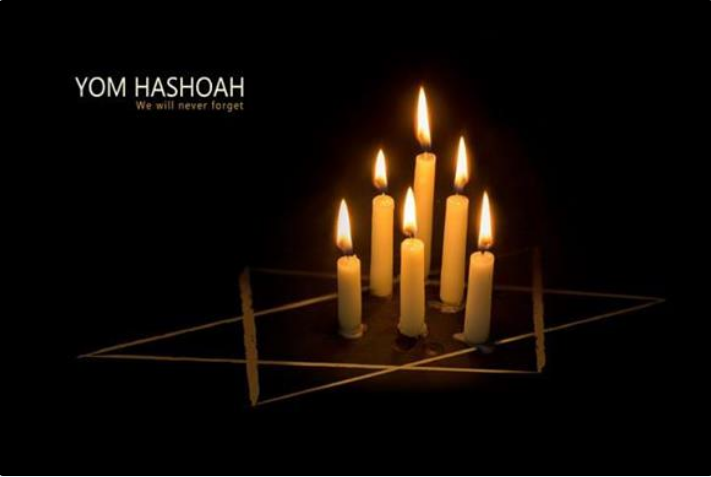

Holocaust Remembrance Day: Israel Marks Yom HaShoah


Holocaust Remembrance Day: Israel Marks Yom HaShoah


HonestReporting Videos


Zawartość publikowanych artykułów i materiałów nie reprezentuje poglądów ani opinii Reunion’68,
ani też webmastera Blogu Reunion’68, chyba ze jest to wyraźnie zaznaczone.
Twoje uwagi, linki, własne artykuły lub wiadomości prześlij na adres:
webmaster@reunion68.com


Lebanon Claims It Is Replacing Hezbollah in the South

Lebanon Claims It Is Replacing Hezbollah in the South

Yaakov Lappin / JNS.org


Lebanese Prime Minister-designate Nawaf Salam speaks at the presidential palace on the day he meets with Lebanese President Joseph Aoun, in Baabda, Lebanon, Jan. 14, 2025. Photo: REUTERS/Mohamed Azakir

Lebanon’s leadership declared in recent days that the Lebanese Army has begun replacing Hezbollah forces in the country’s southern region.

In an April 15 interview with The New Arab, Lebanese President Joseph Aoun announced that 2025 would be the year of the Lebanese state’s monopoly on arms.

Aoun pledged that only the state would have weapons, referring to the Lebanese Armed Forces (LAF), and stressed this goal would be achieved through direct dialogue with Hezbollah, while explicitly ruling out steps that could ignite conflict with Hezbollah.

“I told the Americans that we want to remove Hezbollah’s weapons, but we will not ignite a civil war in Lebanon,” Aoun said, referencing a meeting with US Deputy Envoy Morgan Ortagus.

Aoun added that Hezbollah members could potentially integrate individually into the LAF but rejected replicating the Iraqi model where Shi’ite, Iranian-backed paramilitary groups formed independent units within the military. He asserted the LAF was conducting missions throughout the country “without any obstruction from Hezbollah.”

Hezbollah member Mahmoud Qamat, however, responded by stating, “No one in the world will succeed in laying a hand on this weapon,” according to Lebanese media.

Hezbollah Member of Parliament Ali Fayyad stated the group was open to internal dialogue but warned against pressure on the LAF to disarm Hezbollah.

Col. (res.) Dr. Hanan Shai, a research associate at the Misgav Institute for National Security and Zionist Strategy and a former investigator for the IDF’s commission on the 2006 Second Lebanon War, told JNS on Wednesday that statements by Lebanese officials and the activities of the Lebanese army are “unequivocally an achievement for Israel.”

But Shai warned that due “the weakness of the Lebanese army, the IDF cannot rely on it and must back it up with its own parallel defense—mainly through detailed intelligence monitoring and targeted thwarting of any violation not only in Southern Lebanon but also [deep] within it, including at sea and air ports.”

The fragility of the situation was highlighted when a LAF soldier was killed, and three others were wounded while attempting to neutralize suspected Hezbollah ordnance in the Tyre district of Southern Lebanon on April 14.

Hezbollah’s real intentions were also apparent when its supporters reportedly burned billboards celebrating Lebanon’s “new era.”

Most tellingly, the Israel Defense Forces is continuing to detect intelligence of illegal Hezbollah activity in Southern Lebanon, and acting on that intelligence. Overnight between April 15 and 16, the IDF conducted strikes against Hezbollah infrastructure in Southern Lebanon.

In one strike near Aitaroun in Southern Lebanon, an IDF aircraft killed Ali Najib Bazzi, identified by the IDF as a squad commander in Hezbollah’s Special Operations unit. Other recent IDF actions included strikes and artillery fire targeting a Hezbollah engineering vehicle near Ayta ash-Shab in Southern Lebanon.

Meanwhile, reports emerged suggesting Hezbollah was actively adapting its methods for acquiring weapons. Reports indicated a shift towards sea-based smuggling routes utilizing Beirut Port.

The Saudi Al-Hadath news site reported on April 8 that Iran’s Quds Force created an arms smuggling sea route that bypasses Syria.

Amidst these reports, Aoun visited Beirut Port on April 11, calling for strict government cargo monitoring.

Karmon expresses skepticism

Senior research scholar Ely Karmon of the International Institute for Counter-Terrorism at Reichman University in Herzliya stated, “There’s no doubt there’s a change in Lebanon, first of all on the political level— the fact that President Joseph Aoun was elected—supported by the West, the United States, Saudi Arabia.”

In addition, he said, “Hezbollah’s political weight in parliament and in Lebanon in general has dropped significantly after the blow they received from the IDF.”

On the other hand, Karmon expressed deep skepticism about Aoun’s stated path to disarming Hezbollah. Aoun’s statement that he “isn’t interested in coming to military confrontation with Hezbollah,” and that it needs to be a “slow process,” as well as his call for Hezbollah to enter Lebanese army units, should not be taken at face value, according to Karmon.

“I don’t really believe it. First of all, because traditionally, in the Lebanese Army, most of the soldiers were Shi’ites, for a simple demographic reason. And therefore, the integration of thousands of Hezbollah fighters or personnel into the army—certainly at this stage in my opinion—it’s a danger that they’ll take control of the army from within, after they’ve already for years cooperated with the army.”

He added, “We know, for example, that they received weapons from the Lebanese Army—tanks and APCs—when they operated in Syria in 2013, 2010, and they even presented them publicly in Qusayr [in Syria]. On the other hand, we also heard one article from a Hezbollah representative who’s on their political committee, stating, ‘Absolutely not, we will not give up the weapons!’ It is clear there’ll be opposition.”

Karmon said he was skeptical about Lebanese government claims about taking over around 95 out of some 250 Hezbollah positions in Southern Lebanon. Karmon assessed that Hezbollah and its Iranian sponsors would be cautious but that they would continue to try “as usual, to act and to bring in weapons, to prepare some infrastructure in case, for example, there is a crisis in the negotiations on the Iranian nuclear issue.”


Zawartość publikowanych artykułów i materiałów nie reprezentuje poglądów ani opinii Reunion’68,
ani też webmastera Blogu Reunion’68, chyba ze jest to wyraźnie zaznaczone.
Twoje uwagi, linki, własne artykuły lub wiadomości prześlij na adres:
webmaster@reunion68.com


The Passover Story for Seder

The Passover Story for Seder


Joshua Huff


I love how this passage tells us of God’s love for His people and points us towards the ultimate Lamb of God, Jesus, who would free us from slavery to sin.


Zawartość publikowanych artykułów i materiałów nie reprezentuje poglądów ani opinii Reunion’68,
ani też webmastera Blogu Reunion’68, chyba ze jest to wyraźnie zaznaczone.
Twoje uwagi, linki, własne artykuły lub wiadomości prześlij na adres:
webmaster@reunion68.com


‘Patently Falsified’: Hamas Deletes Thousands From Gaza Death List, Including Over 1,000 Children

‘Patently Falsified’: Hamas Deletes Thousands From Gaza Death List, Including Over 1,000 Children

Debbie Weiss


Palestinian fighters from the armed wing of Hamas take part in a military parade to mark the anniversary of the 2014 war with Israel, near the border in the central Gaza Strip, July 19, 2023. REUTERS/Ibraheem Abu Mustafa

Hamas has quietly removed thousands of names from its official casualty reports in Gaza, prompting fresh scrutiny of the accuracy of the death toll figures that have been widely cited by media and international organizations since the start of the Palestinian terrorist group’s war with Israel.

An analysis, conducted by Salo Aizenberg of the US-based nonprofit Honest Reporting and first reported on by the Telegraph, revealed that 3,400 individuals listed as killed in earlier updates released by the Hamas-run Gaza Ministry of Health in August and October 2024 no longer appear in the March 2025 report. Among those missing from the latest list are 1,080 children.

“Hamas has manipulated the number of fatalities they report since the start of the war, overcounting civilian deaths and concealing combatant losses,” Aizenberg told The Algemeiner.

“I took all the unique deaths and ID numbers from the August and October lists. I combined them. I removed duplicates and then compared it to the March list. And there were 3,400 names that didn’t appear,” he said. “In my mind, the 1,080 children are particularly notable.”

Aizenberg said the systematic inflation of civilian death tolls by Hamas is not a new phenomenon. “They have done this in every round of conflict. For example, in 2009’s Cast Lead, Hamas initially claimed that 1,300 Palestinians died and only about 50 were combatants. Months later Hamas admitted that in fact 600-700 were their fighters,” he said.

The casualty lists compiled by the Gaza Ministry of Health are distributed as downloadable PDFs and include personal details such as names, identification numbers, and dates of death. These lists have been widely cited by international media and relied upon by humanitarian groups and United Nations agencies monitoring the toll of the war. The health ministry is under the control of Hamas, which governs the Gaza Strip.

The discrepancy in figures has raised questions about the continued reliance on these data sets, especially given mounting evidence of inconsistencies. 

“The evidence is now all out there in the public domain,” Andrew Fox, a former British paratrooper who has worked with Aizenberg on data-verification projects in the past, told The Algemeiner. “These Hamas numbers are error-strewn and clearly manipulated.”

Aizenberg built databases by converting the PDF lists into spreadsheets, allowing for comparative analysis across different time points. That process revealed the March 2025 report included significantly fewer names than earlier versions. The findings cast doubt on previously unchallenged casualty estimates.

Hamas has claimed that more than 50,000 people have been killed in Gaza since the war began in October 2023. The Israel Defense Forces (IDF) said it has killed 20,000 Hamas combatants during that time and maintains that it takes extensive precautions to avoid civilian casualties. “The IDF has never, and will never, deliberately target children,” the IDF said in a statement.

According to a December report authored by Fox and published by the Henry Jackson Society, nearly half of those killed in Gaza are combatants, directly contradicting claims that the vast majority of casualties are civilians. The report also pointed to demographic inconsistencies, including the repeated listing of women and children to support allegations of indiscriminate attacks, and the lowering of adult men’s ages to inflate the number of minors reported killed.

“You can’t say it’s a genocide when half the people that have died are combatants who are still fighting,” Fox told The Algemeiner at the time. 

The debate over casualty figures was intensified by a February 2025 article published in the medical journal The Lancet, which estimated that Gaza’s true death toll could be as high as 64,000. That estimate was based on a statistical extrapolation using “capture-recapture” methods applied to a subset of the ministry’s data. The researchers behind the study said they only used what they called “hospital-recorded deaths” from June 2024 and asserted that these records were the most verified.

But Aizenberg said that claim does not hold up to scrutiny. He reviewed the same June dataset used by the Lancet study and found that 881 names in that core group were later removed in the March update. In his view, this undermines the foundation of the statistical model used to estimate excess mortality. 

“They do this very careful statistical analysis, taking three lists and doing capture, recapture from vetted lists of hospital recorded deaths,” Aizenberg said. “And then I took their June list that they used again [in the February report] and I found 881 were also removed from the March list. So even after a really careful study [its] core data sources are not valid.”

Past reports have noted that the casualty forms used to populate the lists could be submitted online by anyone with access to a Google Form, raising concerns about verification protocols. 

Despite these issues, some international entities, including the United Nations, and news outlets have continued to cite the figures from the Gaza Ministry of Health, occasionally with the disclaimer that the numbers could not be independently confirmed.

Fox said such caveats are insufficient and that the deletions from Hamas’s own published records have, in his view, stripped away any plausible justification for continuing to rely on the ministry’s figures. “It is malpractice and deeply irresponsible on the part of any media organization still using them. There is simply no excuse for repeating them as credible,” he said.


Zawartość publikowanych artykułów i materiałów nie reprezentuje poglądów ani opinii Reunion’68,
ani też webmastera Blogu Reunion’68, chyba ze jest to wyraźnie zaznaczone.
Twoje uwagi, linki, własne artykuły lub wiadomości prześlij na adres:
webmaster@reunion68.com