Archives

In Rafah, ‘there is almost no home without a tunnel,’ says Nahal Brigade Commander

In Rafah, ‘there is almost no home without a tunnel,’ says Nahal Brigade Commander

TOVAH LAZAROFF


The IDF brought a small number of reporters to Gaza to speak with Nahal Brigade Commander Colonel Yair Zuckerman about the extent to which Hamas has integrated itself into civilian areas.

.
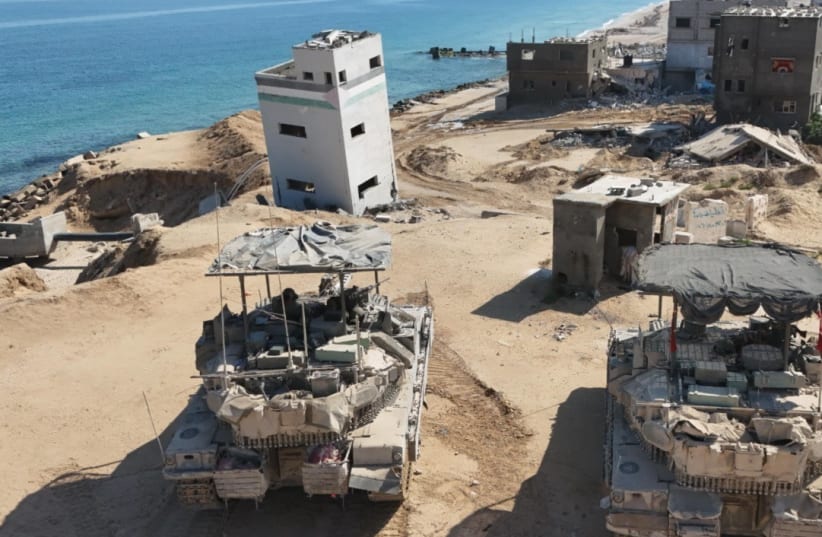
DF troops operate in Rafah, in the Gaza Strip. June 17, 2024.
(photo credit: IDF SPOKESPERSON’S UNIT)

A white cat walking across a partially destroyed building in Rafah’s Shabura refugee camp was the only civilian remnant of the Gaza neighborhood by the Egyptian border, which until the start of May had been crowded with Palestinians.

A bullet-riddled Sonol sign still hung on top of the rubble of what had once been a gas station.

Half destroyed concrete buildings stood, in some cases reduced to framed shells, intermixed with piles of rubble

Large swaths of sand, covered what had once been paved roads, giving Shabura a dustbowl appearance.

The IDF brought a small number of reporters in a Humvee into this desert landscape on Tuesday, to speak with Nahal Brigade Commander Colonel Yair Zuckerman about the extent to which Hamas has integrated itself into the civilian area.

Entrance of the 200 meter-long tunnel shaft in an agricultural area in the Gaza Strip, March 15, 2024. (credit: IDF SPOKESPERSON’S UNIT)

Just one week earlier, four IDF soldiers were killed when a bobby-trapped building exploded in this neighborhood. Now, however, an empty silence hung heavy under the bright afternoon sun, broken only by the soldiers on the road and the nearby tanks and tractors.

Zuckerman met with reporters on what he said was the 41st day of the battle for Rafah, in one of the more intact buildings in the neighborhood, whose occupants had fled.

Wearing a khaki uniform and flak jacket, he sat with them in what had once been a large second-floor apartment.

The windows were covered by blankets. The only civilian remnant in the room was a small sofa, with wooden trim and light brown fabric. 

Soldiers had written on the white walls directional signals in Hebrew: North, south, east, and west.

The electricity was run by a generator, which hummed during the entire conversation and was broken several times with distant sounds of explosions.

The table in front of Zuckerman was filled with computers. Using the wall as a screen he mapped out how, soldiers had been able to enter Rafah, staying one step ahead of Hamas strategically.

Never-ending tunnels in Rafah, posing challenges to the IDF

“Rafah is chalk-filled with tunnels,” he said, adding that, “During the last days alone, I found 17 tunnels.”

“There is almost no home without a tunnel,” he said, as he explained that the tunnels connected the homes in the neighborhood in one vast labyrinth. Holes were also broken through the walls to connect them, he said.

To illustrate his point, he showed a photograph with an open closet door and behind it, a hole in the concrete wall.

Homes are boobytrapped with wired explosives that can be detonated at a distance, Zuckerman said, as he referenced the incident last week in which four soldiers were killed when the bomb was set off in a home believed to be free of such devices.

This is a different kind of battlefield, as he described the methodical inch-by-inch fighting that has taken place in Rafah, where soldiers are battling above and below ground.

“It’s slow and painstaking,” he said, but the achievements “are significant.”

Soldiers have found caches of weapons, rocket-propelled grenades, and long-range rockets, Zuckerman explained, as he argued that it was important that the IDF be given time to complete its mission of demilitarizing the area.

The soldiers here “understand that this existential problem rests on their soldiers,” Zuckerman said, as he described a situation in which a myriad of small almost indiscernible successes, would ultimately lead to complete victory.

He did not want to quantify how long it would take to complete the mission, just that it was important to finish the job.

“We don’t want to leave until we have solved the problem,” he said.


Zawartość publikowanych artykułów i materiałów nie reprezentuje poglądów ani opinii Reunion’68,
ani też webmastera Blogu Reunion’68, chyba ze jest to wyraźnie zaznaczone.
Twoje uwagi, linki, własne artykuły lub wiadomości prześlij na adres:
webmaster@reunion68.com


Eight IDF soldiers killed in Rafah blast

Eight IDF soldiers killed in Rafah blast

UPDATE DESK | Israel At War


The deadly explosion was apparently caused by an improvised explosive device or an anti-tank missile.

.
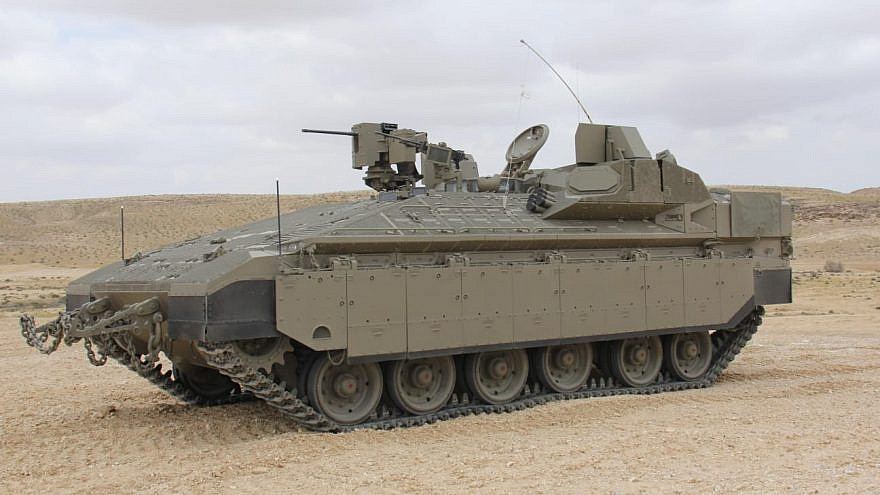
An IDF “Namer” armored personnel carrier. Credit: Rafael.

Eight Israel Defense Forces soldiers were killed early Saturday morning, during an operation in Tel Sultan in Rafah. Details were announced by the IDF late Saturday, after families of the deceased were notified.

The only one of the fallen whose name has been released thus far is Cpt. Wassem Mahmoud. The 23-year-old deputy company commander in the Combat Engineering Corps’ 601st Battalion was from the Druze town of Beit Hann in northern Israel.

According to IDF Spokesman Daniel Hagari, the incident occurred when one of the vehicles of a convoy exploded, killing Mahmoud and the other seven soldiers in the “Namer” armored personnel carrier.

The deadly blast, which Hagari said is under investigation, was apparently caused by an improvised explosive device or by an anti-tank missile.

Prime Minister Benjamin Netanyahu released a statement Saturday night following the incident: “Citizens of Israel, today we paid a heart-rending price in our just war in defense of our homeland,” adding that, “our hearts are shattered before this terrible loss. The entire people of Israel embraces the dear families in their most difficult hour of grief.” I stand by our brave fighters and commanders, who are imbued with the sacred mission to defeat our enemies and return our hostages.”

Netanyahu stated that, “despite the heavy and unsettling price, we must cling to the goals of the war: The destruction of Hamas’s military and governing capabilities, the return of all of our hostages, making certain that Gaza will never again constitute a threat to Israel and the return of our residents securely to their homes in both the north and the south.

“We are in the midst of a very difficult war. The war is being conducted on several fronts, including the international front. We are ready for many additional challenges. It is at this time that we must show our people’s strength of spirit, thanks to which we have overcome all of our enemies. So it will be this time as well.”

Defense Minister Yoav Gallant similarly released a statement adding: “The pain that comes with such loss is immense. My heart and my thoughts are with the families and loved ones of the fallen. I stand with the entire nation of Israel in remembering and honoring the heroes who fell while defending their people and their homeland.”


This is a developing story.


Zawartość publikowanych artykułów i materiałów nie reprezentuje poglądów ani opinii Reunion’68,
ani też webmastera Blogu Reunion’68, chyba ze jest to wyraźnie zaznaczone.
Twoje uwagi, linki, własne artykuły lub wiadomości prześlij na adres:
webmaster@reunion68.com


Iraq-Iran warn Israel-Hezbollah war to escalate regionally

Iraq-Iran warn Israel-Hezbollah war to escalate regionally

TV7 Israel News


1) Israel remains determined to achieve victory, as it faces enemies on seven separate fronts.
2) Iraq and Iran warn of prospects of wider escalation, as Hezbollah continues to launch repeated salvoes of rockets, missiles and UAVs against Northern Israel.
3) Israeli Defense Minister Yoav Gallant announced that Israel will not accept France as a mediator vis-à-vis Lebanon – Following French president Emannuel Macron’s tripartite proposal.


Zawartość publikowanych artykułów i materiałów nie reprezentuje poglądów ani opinii Reunion’68,
ani też webmastera Blogu Reunion’68, chyba ze jest to wyraźnie zaznaczone.
Twoje uwagi, linki, własne artykuły lub wiadomości prześlij na adres:
webmaster@reunion68.com


Izrael cierpi na nadmiar demokracji

Antyrządowe protesty w Tel Awiwie (Zrzut z ekranu wideo)


Izrael cierpi na nadmiar demokracji


Victor Rosenthal
Tłumaczenie: Małgorzata Koraszewska


Państwo Izrael jest dziś bardziej zagrożone niż kiedykolwiek od 1948 r., włącznie z 1973 rokiem. Ugrzęzło w Gazie, podczas gdy jego wrogowie czekają na swoją kolej w Libanie, Syrii, AP, Jemenie, Iraku i Iranie – który może już posiadać broń nuklearną. Bezprecedensowa kampania podżegania antysemickiego niszczy poparcie społeczne dla Izraela na całym świecie, a rząd za rządem karze go, uznając „Państwo Palestyna” na jego terytorium. Im bardziej ludobójczy są jego wrogowie, tym częściej jest fałszywie oskarżany o ludobójstwo. Jego decyzja o ustawieniu się jako satelita Stanów Zjednoczonych przyniosła gorzkie owoce, ponieważ o polityce USA w coraz większym stopniu decydują elementy pragnące zniknięcia Izraela; jednocześnie wrogowie USA traktują go jako forpocztę amerykańskiej potęgi, którą należy wyeliminować.

Elity polityczne, wywiadowcze i wojskowe Izraela okazały się niekompetentne. Nie udało im się przewidzieć, zapobiec, ani nawet skutecznie zareagować na inwazję z 7 października. Zamienili militarne sukcesy wojny w coś, co wydaje się być poddaniem się wszystkim żądaniom Hamasu.

Przez lata kreowali wizerunek Izraela jako worka treningowego, a nie dumnego i potężnego narodu, jakim jest. Pomimo naszej armii uzbrojonej w broń nuklearną, pozwolili Iranowi otoczyć nas swoimi grupami terrorystycznymi, a nawet ustanowić w Libanie siły odstraszające, którym boimy się rzucić wyzwanie. Pozwolili samemu Iranowi zdobyć broń nuklearną.

W dniu 13 kwietnia 2024 r. Iran przeprowadził atak na Izrael, w którym wykorzystano setki dronów, rakiet manewrujących i rakiet balistycznych, co było największym takim atakiem w historii wojskowości. Wszystkie oprócz kilku zostały przechwycone przez Izrael z pewną pomocą USA i innych; koszt tej operacji obronnej dla Izraela oszacowano na ponad 1 miliard dolarów. Gdyby atak się powiódł, cele wojskowe i infrastrukturalne uległyby ogromnym zniszczeniom, a także byłoby bardzo wiele ofiar śmiertelnych. Izrael odpowiedział kilka dni później, niszcząc jakieś instalacje radarowe w Iranie. Słabość reakcji Izraela była wynikiem nacisków USA i odstraszającego efektu irańskiego pełnomocnika Hezbollahu

W kraju nasi przywódcy pozwolili AP na systematyczne pożeranie części Strefy C w Judei/Samarii, która na mocy traktatu międzynarodowego powinna znajdować się pod pełną izraelską kontrolą. Zezwolili, a następnie legitymizowali nielegalne osadnictwo Beduinów na Negewie. Pozwolili na rozkwit arabskich syndykatów przestępczych na Negewie i w Galilei, a także w miastach arabskich i miastach mieszanych arabsko-żydowskich.

Dziesiątki tysięcy obywateli Izraela uciekło ze swoich domów: na południu ze strachu przed odradzającym się terroryzmem Hamasu, a na północy przed codziennymi bombardowaniami Hezbollahu rakietami i bronią przeciwpancerną, które spustoszyły miasta i miasteczka w okolicy. Kiedy to piszę, w północnych miastach płoną wielkie pożary wywołane rakietami Hezbollahu.

Nasze rządy są nieskuteczne, są sparaliżowane sporami w kwestiach takich jak reforma sądownictwa i projekt charedim, nękane przez potężne lobby i grupy, którymi manipulują różne podmioty polityczne. Dwie największe mniejszości, izraelscy Arabowie i charedim, utrzymują w naszym państwie autonomiczne „państwa”, w których prawa i nieformalne porozumienia regulujące resztę populacji niekoniecznie mają zastosowanie.

Wielu izraelskich Arabów, z godnym uwagi wyjątkiem Druzów i niewielkiej liczby Beduinów, nie akceptuje zasady, że Izrael jest państwem żydowskim, nie służy w wojsku i w wielu przypadkach unika płacenia podatków i innych obowiązków. Charedim odmawiają służby wojskowej i utrzymują system edukacji, w którym nie naucza się „świeckich” przedmiotów, takich jak matematyka i współczesny język hebrajski.

Z powodu wojny żołnierze rezerwy mają teraz służyć przez 90 dni w roku, co jest destrukcyjne dla życia rodzinnego, pracy, a zwłaszcza niezależnych przedsiębiorstw. Jednocześnie dziesiątki tysięcy uczniów jesziwy zostało zwolnionych z poboru. Próby zmiany tego stanu spotkały się z demonstracjami blokującymi główne drogi i groźbami obalenia rządu ze strony polityków charedich. Rządy izraelskie od dziesięcioleci bezskutecznie próbują znaleźć kompromis umożliwiający podział obciążeń związanych z bezpieczeństwem.

***

Co można zrobić? Co trzeba zrobić, aby zachować państwo żydowskie, zapobiec kolejnemu rozproszeniu Żydów i przywrócić Izraelowi rolę obrońcy społeczności żydowskich w diasporze? Jak zawsze, istnieją odpowiedzi krótkoterminowe i długoterminowe. Dziś naszym najważniejszym zmartwieniem musi być wojna w Gazie. Dopóki Hamas będzie nadal kontrolował Strefę, faktycznie stracimy dużą część naszego kraju, która pozostanie niezdatna do zamieszkania, a Siły Obronne Izraela będą unieruchomione i niezdolne do reagowania na inne zagrożenia. Co ważniejsze, jeśli Izrael zostanie pokonany przez taktykę terroru Hamasu – i nie dajcie się zwieść, porozumienie na wzór tego ogłoszonego w zeszłym tygodniu przez prezydenta USA będzie odebrane przez cały świat jako miażdżąca porażka – nasi wrogowie na wszystkich frontach przyniosą nam więcej 7 październików.

Strategia zwycięstwa Hamasu zależy od dwóch głównych słabości Izraela: publicznej troski o zakładników (i manipulacji tą obawą przez działaczy politycznych sprzeciwiających się rządowi) oraz podatności Izraela na naciski amerykańskie.

Okrucieństwo Hamasu i sytuacja zakładników rozdziera serca wszystkich Izraelczyków. Ale jeśli nie zdarzy się cud, nie ma rozwiązania, które sprowadzi ich do domu za cenę, na jaką naród może sobie pozwolić. Musimy powiedzieć ich rodzinom: nie możemy przehandlować państwa żydowskiego za waszych bliskich. Musimy zrobić wszystko, co w naszej mocy, aby ich ocalić, ale nie możemy w tym celu poddać się naszemu morderczemu wrogowi. Złudzeniem jest myślenie, że możemy zgodzić się na 6-tygodniowe zawieszenie broni (nie wspominając o innych żądanych ustępstwach), biorąc pod uwagę presję ze strony Ameryki i innych frontów wojny, a następnie powrócić, aby wykończyć Hamas. To się nie zdarzy.

Administracja USA zrobiła i nadal robi wszystko, co w jej mocy, poza interwencją wojskową po stronie Hamasu, aby uniemożliwić Izraelowi osiągnięcie zdecydowanego zwycięstwa. Izraelscy przywódcy muszą zrozumieć, że nie możemy wygrać, jeśli będziemy przestrzegać dyrektyw Waszyngtonu. Muszą powiedzieć Amerykanom wszystko, co chcą usłyszeć, ale rozkazać IDF dokończyć robotę, odsunąć Hamas od władzy i zniszczyć jego potencjał militarny.

***

Pisanie tego jest bolesne, ale obawiam się, że nasz obecny rząd może nie być w stanie podjąć działań niezbędnych do przetrwania państwa. Co gorsza, struktura polityczna naszego państwa może być źle przystosowana do przetrwania na dzisiejszym Bliskim Wschodzie.

Podsumowałbym problem stwierdzeniem, że Izrael cierpi na nadmiar demokracji. Jest wiele rzeczy wspaniałych w prawdziwie demokratycznym państwie: teoretycznie potrafi ono zachowywać się sprawiedliwie wobec jednostek o różnorodnych interesach i potrzebach. Jest to sposób na dostosowanie polityki kraju do „powszechnej woli” społeczeństwa, według słów Rousseau. Niestety są pewne szczególne sytuacje, w których demokracja nie jest optymalna.

Jednym z nich jest stan wojny. W czasie wojny należy podejmować decyzje, które sprzyjają zwycięstwu, ale powodują cierpienie społeczeństwa lub wpływowych grup. Często takich decyzji nie można podjąć w sposób demokratyczny.1 Przykładem jest pytanie, czy Izrael powinien zaakceptować porozumienie, które uwolni część zakładników, ale także uwolni wielu uwięzionych terrorystów i nałoży ograniczenia na prowadzenie wojny.

Innym problematycznym przypadkiem są duże mniejszości, które wykorzystują instytucje demokratyczne, takie jak wybory, do prowadzenia „polityki tożsamości”, a nie polityki zorientowanej na konkretne problemy. W Izraelu, oprócz podziałów etnicznych i religijnych, spotykamy ugruntowane podgrupy ideologiczne. W latach 2019–2021 w połączeniu z naszym skomplikowanym systemem wyborczym doprowadziły do czterech wyborów parlamentarnych w ciągu dwóch lat. Napięcie między wybranym Knesetem a niezależną biurokracją, która reprezentuje dawną elitę rządzącą Izraela, gwarantuje impas w ważnych kwestiach. Ponadto trwająca niemal dekadę próba obalenia premiera Netanjahu przy wykorzystaniu wymiaru sprawiedliwości, przy wsparciu większości mediów i środowiska akademickiego, odwracała uwagę i obciążała obie strony.

Izrael jest niemal stale pogrążony w wojnie i obdarzony dużymi mniejszościami etnicznymi/religijnymi. Zatem jego aspiracje do bycia państwem demokratycznym działają przeciwko możliwości stworzenia skutecznego rządu. A wyzwania stojące przed małym państwem żydowskim na Bliskim Wschodzie absolutnie wymagają przywództwa, które funkcjonuje optymalnie.

Biorąc pod uwagę stosunki władzy w naszym społeczeństwie politycznym, jest mało prawdopodobne, aby istniała gładka droga, (na przykład wspólnie wykuta konstytucja), do nowej formy rządów. Jednak odpowiedzialność państwa wobec obywateli i narodu żydowskiego jako całości wymaga, aby w każdym przypadku dokonało ono tej zmiany, niezależnie od zakłócenia normalnego życia, jakie może to za sobą pociągać.
________________________

1 Ale czy demokracje nie pokonały nazistów podczas II wojny światowej? W rzeczywistości zarówno Roosevelt, jak i Churchill zachowywali się jak dosłowni dyktatorzy. A Stalin…


Victor Rosenthal – Urodzony w Stanach Zjednoczonych, studiował informatykę i filozofię na University of Pittsburgh. Zajmował się rozwijaniem programów komputerowych. Mieszka obecnie w Izraelu. Publikuje w izraelskiej prasie. Jego artykuły często zamieszcza Elder of Ziyon.


Zawartość publikowanych artykułów i materiałów nie reprezentuje poglądów ani opinii Reunion’68,
ani też webmastera Blogu Reunion’68, chyba ze jest to wyraźnie zaznaczone.
Twoje uwagi, linki, własne artykuły lub wiadomości prześlij na adres:
webmaster@reunion68.com


Is the real Mount Sinai in Saudi Arabia instead of Egypt?

Is the real Mount Sinai in Saudi Arabia instead of Egypt?

BRIAN SCHRAUGER


There is virtually no evidence of human activity in the supposed Mount Sinai in Egypt. Is the real location for where God gave the Jews the Ten Commandments in Saudi Arabia?
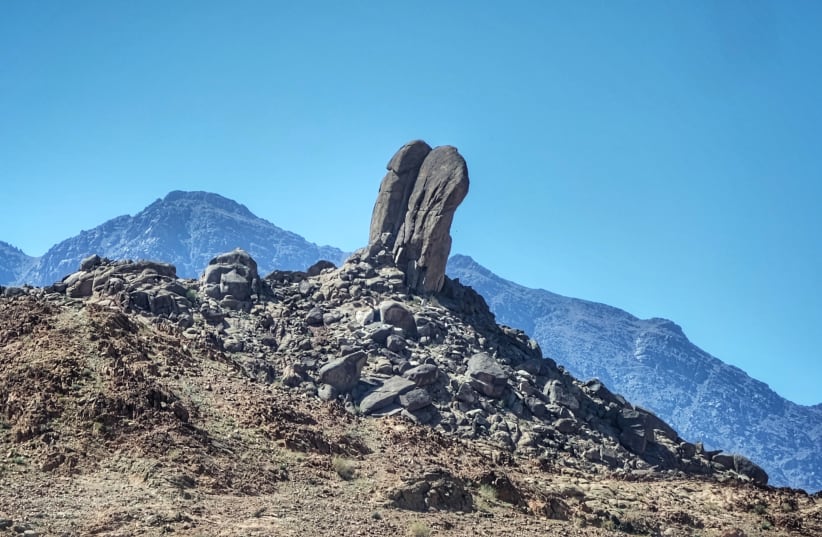
The split Rock of Horeb. / (photo credit: BRIAN SCHRAUGER)

“It just doesn’t fit,” I told my son in 2007. At the time, he was a student at the Hebrew University of Jerusalem. During a break in his classes, we decided to explore a coastal town in the Sinai Peninsula. One night, after a long, cold climb to a somewhat distant mountain peak, we witnessed a beautiful sunrise illuminating the desolate landscape of rock-strewn mountains with the golden hue of morning light.

The mountain we had climbed is the conventional location for Mount Sinai deep in the south-central part of Egypt’s Sinai Peninsula. What we saw that morning was stunning.

In the unforgiving desert light of day, what we did not see was perplexing.

In Israel, most ancient sites have left abundant evidence of the events that happened there. An outline of the 2,000-year-old site of Roman encampment around Masada is clear. Even older is the Jordan Valley footprint site, where Israelites gathered shortly after entering the land about 3,400 years ago.

In stark contrast, and in a place where there has been virtually no human activity for three and a half millennia, there was nothing to suggest that a large group of people had populated the area: no encampment outlines, no petroglyphs, and no apparent place where a large number of people and their livestock had settled.

Stars bursting above the triangular peak of the mountain that may be Mount Sinai in the middle of the night, in Saudi Arabia. (credit: BRIAN SCHRAUGER)

At the base of the mountain, we entered St. Catherine’s Monastery, established about halfway through the 6th century CE. Perhaps we would find evidence there.

Encompassed within its walls, it boasted the still-living burning bush and a tiny well said to be the Well of Moses, an unlikely size to supply herds of goats, thirsty camels, and a significant number of people for the daily water they would have needed. The monastery is about 1,500 years old but, regardless, had the taint of a sensationalist fabrication; holy relic bait to lure donations.

“This cannot be the real Mount Sinai,” I said to my son. “Maybe the real place is in Saudi Arabia.”

Is Mount Sinai in Saudi Arabia?

IN THE early 1980s, a Christian adventurist, Ron Wyatt, claimed to have found the real Mount Sinai in Saudi Arabia’s Tabuk Province near the country’s southwest border that abuts the Gulf of Aqaba. Because Wyatt was not an archaeologist and was known to claim melodramatic finds of biblical sites, his assertion was intriguing but not given a lot of credence by credentialed professionals.

The site was also fenced off by Saudi officials. It was not a place open for exploration. Regardless, a few years later, two more Christian explorers, Robert Cornuke and Larry Williams, snuck into the area, filmed what they saw, and released it to the public. Their documentary, The Search for the Real Mount Sinai, is available today on YouTube.

Thirty-six years later, in April of this year, I had the opportunity to visit the area with a group of five. Driving far afield from paved roads in a Toyota Land Cruiser, we followed dusty, bumpy tracks to the still undeveloped locations for Mount Sinai and its related landmarks of biblical events.

Would the area, like the site near St. Catherine’s Monastery, be interesting but not compelling?

Hardly. Unlike the Sinai Peninsula, everything we saw in Saudi Arabia fit the biblical narrative and did so with an abundance of archaeological and geographical evidence.

On the first day of exploration, we set out to find the Rock of Horeb, the rock split by Moses’ rod overlooking the plains of Rephidim. According to the biblical text, when the masses became angry with Moses for lack of water, God told him to make his way to “the rock at Horeb.”

Driving into jagged hills on the apparent plains of Rephidim, millions of rocks were everywhere. How is it that one rock among countless others would be a known landmark – then and now?

As we drove, rounding one hill after another, suddenly it appeared. Emerging from the peak of a stony platform, a solitary, huge, 12-meter torso-shaped rock towered over the plain below. Split down the middle, it was impossible to miss.

Climbing the natural platform on which it stood, we saw that its size was breathtaking. Standing at the base of the split, looking down at the landscape below, it was easy to see how hundreds of thousands, maybe more, were able to assemble and witness what, as instructed, Moses did.

Dry as a rock today as it was 3,500 years ago, there was a curious symmetry with the Red Sea crossing.

Only a few weeks earlier, Moses’ staff had split the Gulf of Aqaba. One key assumption for the proposition that Saudi Arabia is the place in which Mount Sinai towers is that Jewish refugees from Goshen had been led to a mountain-locked seashore delta, today called Nueiba, in the Sinai Peninsula. A solitary pillar still stands there, called the Pillar of Solomon, indicating that in millennia past, this was the commonly known place of crossing.

When the sea was split, it created a 17-km. path of dry land on which an entire population, including livestock, made their way to safety on the other side. If, in fact, this is where the crossing happened, its depiction in Cecil B. DeMille’s 1956 film The Ten Commandments is surprisingly accurate.

And the symmetry? From water, God made a solid, arid path. Days later, from an arid rock, He created a geyser of water. Both the water and the rock had been split in two.

ALLEGEDLY, THIS is also where Jewish refugees battled the Amalekites. They were victorious only as long as Moses held up his arms, perhaps the same posture as when he parted the sea. In this event, however, his arms grew weary. When they sagged, the warriors of Israel began to lose.

Recognizing the problem, Aaron and Hur gave him a rock to sit on, and then held up his arms. Accordingly, the Amalekites were defeated.

But is there evidence?

Huge stone altars adorn the nearby plain. And at a nearby place where non-combatants could easily witness the battle, there are dozens of petroglyphs: gazelles, lions, hunters, and… footprints.

The footprint as a Jewish symbol was reinforced by God just before the children of Israel entered the Promised Land.

“Every place on which the sole of your foot steps shall be yours,” God says in Deuteronomy 11:24.

Accordingly, the earliest gathering sites in the Promised Land were called gilgals. All of them are shaped like a footprint, visibly definable to this day.

Finding footprint petroglyphs on countless rocks is a provocative indicator, if not proof, that a lot of Jews were gathered here, on the plains of Rephidim – in Saudi Arabia.

The next place where “the sons of Israel” were led was to “the wilderness of Sinai,” where they encamped “in front of the mountain,” obviously another well-known landmark among an ocean of stony pinnacles.

The tallest of them all, today a blackened triangular peak, was called Mount Sinai. According to the Torah, when Moses was summoned there to meet with God and receive His law, he disappeared into a thick cloud resonating with continual thunder and lightning. When, after five or six weeks, he did not reappear, a movement began to merge, or syncretize, with the God who brought His people out of Egypt with the Egyptian goddess of love, Hathor.

Depicted as what can only be described as a very sexy cow, Hathor was worshiped by the Egyptians; also, it seems, by the Jewish slaves who lived there for 400 years.

The proposed Saudi site for the altar of the golden calf is a dramatic natural circle of rocks upon which, it seems, the glittering idol was set.

Proof? The rocks supporting the base are covered with petroglyphs and now faint paintings of cows. Portrayals include men dancing on the backs of cows, provocatively lifting their tails, and celebrating as if at a party. On a nearby mural, all the men are visibly aroused. Clearly, the art is not intended to depict farmers and their cattle.

If this is the right location, it is a dramatic witness to the lingering presence of Egypt inside the hearts of those only recently delivered from it.

TODAY, THE Saudi site for Mount Sinai remains a compelling geographical testament to its authenticity. Moving toward the mountain’s base, there are the remains of what appears to have been a bullpen, through which cattle were herded to a place of slaughter, butchering, and sacrifice. Scattered around the site are the cut-down marble bases of a structure that once was there, apparently sanctifying it.

Mount Sinai itself, including a cave of Elijah on its ascent, is the pièce de résistance, anchoring all the other sites in a terrestrial landscape, and perfectly fitting the biblical narrative.

In this area, still called Midian by Saudi archaeologists, there is a compelling case to be made: This is Mount Sinai.■


Zawartość publikowanych artykułów i materiałów nie reprezentuje poglądów ani opinii Reunion’68,
ani też webmastera Blogu Reunion’68, chyba ze jest to wyraźnie zaznaczone.
Twoje uwagi, linki, własne artykuły lub wiadomości prześlij na adres:
webmaster@reunion68.com