Archives

Noa Argamani Was Held Captive in Al Jazeera Contributor’s Home

Noa Argamani Was Held Captive in Al Jazeera Contributor’s Home

i24 News and Algemeiner Staff


The Al Jazeera Media Network logo is seen on its headquarters building in Doha, Qatar, June 8, 2017. Photo: REUTERS/Naseem Zeitoon

Noa Argamani, the Israeli hostage freed with three others in an audacious rescue operation by the Israel Border Police’s elite Yamam unit, was held captive in the family home of Gazan “civilians,” a report said on Sunday.

Rami Abdul, the chairman of the Euro-Med Human Rights Monitor, said that the organization’s initial evidence showed the Israeli special forces used a ladder to enter the home of Dr. Ahmed Al-Jamal and his family.

Several of the family members were killed during the operation including 36-year-old Al Jazeera contributor Abdullah Al-Jamal. According to the Quds news agency, Al-Jamal was also identified as a staff writer for the U.S. outlet The Palestine Chronicle. Al-Jamal’s wife was also killed during the rescue mission.


Meanwhile, Imran Khan, a senior correspondent on Al Jazeera‘s English channel published an Instagram post distancing the network from Al-Jamal, saying he was a freelancer in the past. Khan wrote, “The individual in question who was killed in the raid along with his family was, at one point, a freelance journalist. He has never worked for Al Jazeera Arabic or English.”

The operation, during which the three other hostages were also rescued from a separate location, has drawn condemnation for the high alleged death toll on the Palestinian side. However, these criticisms fail to address the responsibility of holding captives in populated areas deep inside Gaza’s residential areas.

Euro-Med Human Rights Monitor also failed to address why so-called “civilians” were in custody of Argamani, an Israeli hostage who was kidnapped along with her boyfriend during the Nova music festival on October 7. Hamas allegedly paid civilian families to hold Israeli hostages.

The organization also called for an investigation into claims that the Israeli forces used the U.S. humanitarian aid pier to enter. This claim has been denied by both the U.S. and Israel.

In response to this allegation, Palestinians have said they would boycott aid that was transferred via the pier, which only returned to operation this weekend after bad weather put it out of order in late May.


Zawartość publikowanych artykułów i materiałów nie reprezentuje poglądów ani opinii Reunion’68,
ani też webmastera Blogu Reunion’68, chyba ze jest to wyraźnie zaznaczone.
Twoje uwagi, linki, własne artykuły lub wiadomości prześlij na adres:
webmaster@reunion68.com


IDF signals War Cabinet ‘Ready for war with Hezbollah’; IRGC threatens Israel

IDF signals War Cabinet ‘Ready for war with Hezbollah’; IRGC threatens Israel

TV7 Israel News


1) Hamas rejects the latest Israeli-approved outline for a hostage-release deal.
2) The IDF announces that it is well prepared and ready for war with Hezbollah.
3) Commander of the Islamic Revolutionary Guards Corps pledges ‘Israel would pay for the bloodshed’ of an IRGC Adviser who was killed in an alleged Israeli strike in Syria, earlier this week.


Zawartość publikowanych artykułów i materiałów nie reprezentuje poglądów ani opinii Reunion’68,
ani też webmastera Blogu Reunion’68, chyba ze jest to wyraźnie zaznaczone.
Twoje uwagi, linki, własne artykuły lub wiadomości prześlij na adres:
webmaster@reunion68.com


‘Looming Disaster’: Hamas Releases Video of Operatives Shooting at Israeli Community From West Bank

‘Looming Disaster’: Hamas Releases Video of Operatives Shooting at Israeli Community From West Bank

Jack Elbaum


Palestinian fighters from the armed wing of Hamas take part in a military parade to mark the anniversary of the 2014 war with Israel, near the border in the central Gaza Strip, July 19, 2023. REUTERS/Ibraheem Abu Mustafa

Hamas has begun releasing videos of its operatives opening fire from the West Bank into Israeli villages, raising fears the Palestinian terror group will eventually try to stage a significant attack in the territory.

On Wednesday, Hamas terrorists in the West Bank city of Tulkarm opened fire into the Israeli village of Bat Hefer, which is in Israel proper. They staged the attack from the top of a hill. This is not the first time it has occurred. Last month, terrorists in the Al-Aqsa Martyrs Brigades — the armed wing of Fatah, the political party of Palestinian Authority President Mahmoud Abbas — fired into the Israeli community as well.


Yoav Zitun, a military correspondent for Ynet News, reported that Hamas is paying people in the West Bank between 500 and 1000 shekels who take a video of themselves shooting into Israeli communities and distribute the footage.

Seth Frantzman, an adjunct fellow at the Foundation for Defense of Democracies and executive director of the Middle East Center for Reporting and Analysis, responded to the report on X/Twitter, writing it “reminds me of the Great Return March antics of Hamas that paved the way to Oct. 7.”

For the march, Hamas mobilized more than 40,000 people to try and breach the fence between Gaza and Israel to attack its citizens. Rioters lit fires, threw stones at the Israel Defense Forces, and attempted to plant a bomb on the fence and breach it. Hamas paid people between $200 and $500 if they were injured and $3,000 if they were killed.

Terrorist attacks from the West Bank against Israeli targets have been on an upswing. Last month, terrorists shot from within the West Bank into the Israeli kibbutz Ma’ale Gilboa.

Beyond shooting attacks, a terrorist killed two Israeli soldiers in Nablus in a ramming attack this week.

The terror incidents in the West Bank began to increase more than a year ago, but they have continued to occur since Hamas’ Oct. 7 massacre across southern Israel.

Frantzman called the situation a “looming disaster.”

“The rising attacks in the West Bank using the masses of stolen weapons will eventually become more sophisticated and can lead to an Oct. 7-type event because Israel has ignored security in the West Bank as it did at the other borders and allowed terror groups to exponentially grow over the last years,” he wrote.

The concern has been made more acute by the fact that the Palestinian Authority, which controls the Palestinian areas of the West Bank, is increasingly weak. In certain cities, such as Jenin, terrorist groups have effectively made the PA police obsolete and now have a significant ability to operate.

This is compounded by the fact that Israeli Prime Minister Benjamin Netanyahu has threatened to take punitive measures against the PA, which could make it more likely to collapse and create a vacuum for terrorists to assert greater control.


Zawartość publikowanych artykułów i materiałów nie reprezentuje poglądów ani opinii Reunion’68,
ani też webmastera Blogu Reunion’68, chyba ze jest to wyraźnie zaznaczone.
Twoje uwagi, linki, własne artykuły lub wiadomości prześlij na adres:
webmaster@reunion68.com


Precise US munitions, which reduce casualties, used in Rafah strike

Precise US munitions, which reduce casualties, used in Rafah strike

JOSHUA MARKS


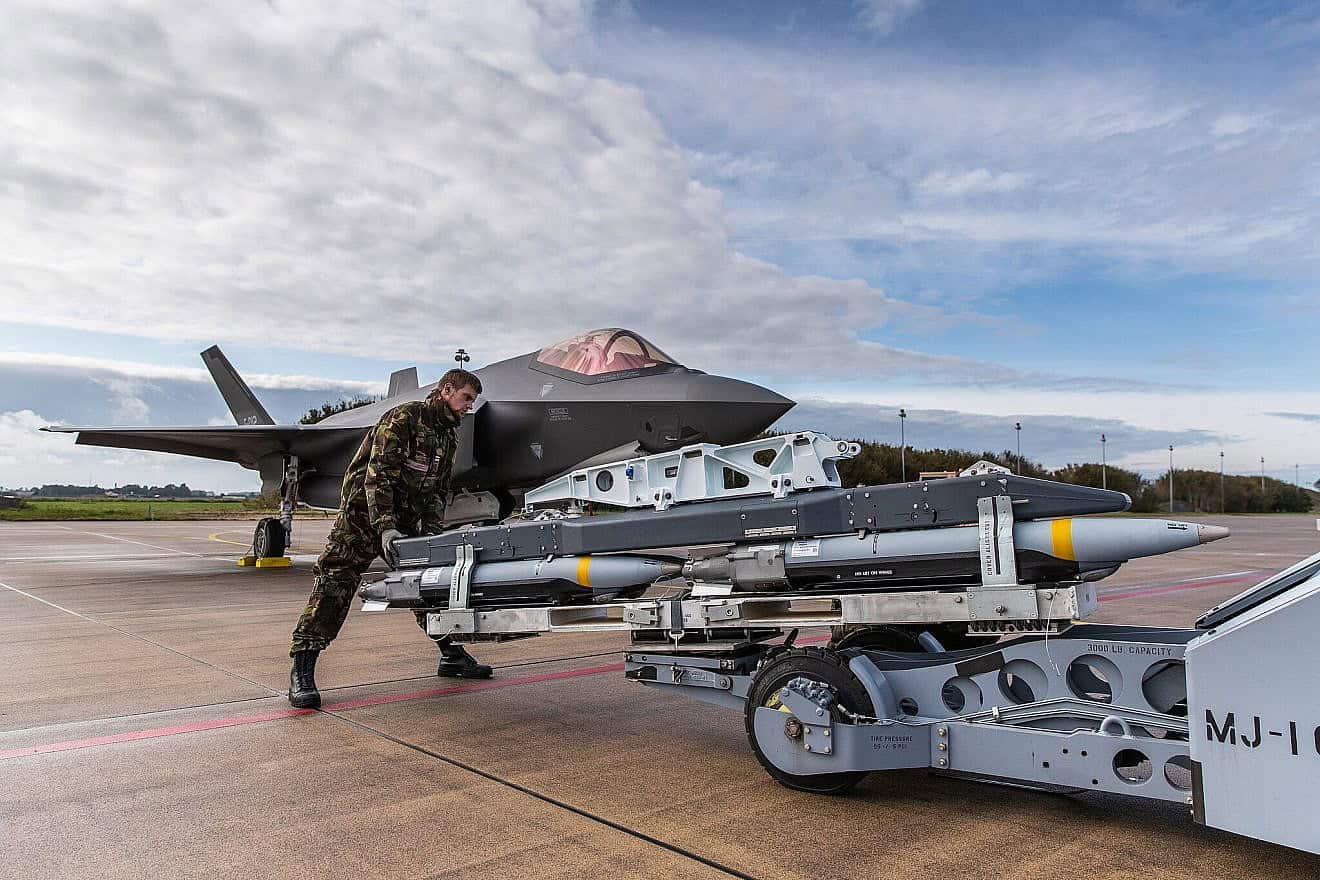
American officials have been urging Israel to increase use of the GBU-39 bombs in Gaza.

.
The GBU-39 Small Diameter Bomb. Source: Wikimedia Commons.

The precision weapon Israel used in Sunday night’s Rafah strike was designed and manufactured in the United States, according to investigations by CNN and The New York Times, the results of which were published on Wednesday.

Two senior Hamas terrorists responsible for Judea and Samaria terror operations were killed in the precision strike on a compound in Tal as-Sultan in northwest Rafah. According to the Hamas-run Gaza Health Ministry, dozens of noncombatants were killed and wounded.

Both news outlets analyzed video footage of munition debris from the scene of the attack, determining that the fragments belonged to a GBU-39 bomb, a 250-pound precision-guided glide bomb made by Boeing Integrated Defense Systems, which carries around 37 pounds of AFX-757 high explosive.

According to the Times, U.S. officials have been urging Israel to increase use of the GBU-39 bombs in Gaza because they can reduce civilian casualties, being more precise and better adapted to urban environments than larger bombs such as the 2,000-pound bombs that Israel also uses but that President Joe Biden said earlier this month he was pausing delivery of to the Jewish state.

“The Israelis have said they used 37-pound bombs,” U.S. National Security Council spokesperson John Kirby said on Tuesday. “If it is in fact what they used, it is certainly indicative of an effort to be discreet and targeted and precise.”

Kirby also said said the press briefing that the Biden administration has made no policy changes in the wake of Rafah strike, noting that the investigation into the incident was ongoing.

“As a result of this strike on Sunday, I have no policy changes to speak to. It just happened,” Kirby told reporters. “The Israelis are going to investigate it. We’re going to be taking great interest in what they find in that investigation. And we’ll see where it goes from there.”

Israeli officials reportedly told the Biden administration that shrapnel may have ignited a fuel tank, starting a fire that engulfed tents housing displaced Gazans.

On Tuesday afternoon, IDF Spokesperson Rear Adm. Daniel Hagari told reporters that “our munition alone could not have ignited a fire this size. … We used the smallest munition that our jets can use.

“The fire that broke out was unexpected and unintended. This was a devastating incident that we did not expect. We’re investigating what caused this fire,” Hagari said, stressing that the strike targeted a “closed” terrorist structure almost a mile from the Al-Mawasi humanitarian zone.

“There may have been weapons in the area. Our signals intelligence intercepted phone calls reinforcing this possibility that weapons stored in a nearby compound caught fire,” said Hagari.

He assured reporters that the “investigation will be swift, comprehensive and transparent. Our war is against Hamas, not the people of Gaza. This is why we convey deep sorrow over this loss of life.”


Zawartość publikowanych artykułów i materiałów nie reprezentuje poglądów ani opinii Reunion’68,
ani też webmastera Blogu Reunion’68, chyba ze jest to wyraźnie zaznaczone.
Twoje uwagi, linki, własne artykuły lub wiadomości prześlij na adres:
webmaster@reunion68.com


Palestinian Islamic Jihad Releases New Propaganda Video of Israeli Hostage

Palestinian Islamic Jihad Releases New Propaganda Video of Israeli Hostage

Algemeiner Staff


Israeli hostage Alexander (Sasha) Trufanov as seen in a propaganda video released by Palestinian Islamic Jihad. Photo: Screenshot

The Palestinian Islamic Jihad terrorist group on Tuesday released a short propaganda video featuring Israeli hostage Alexander (Sasha) Trufanov, 28, who was kidnapped by Palestinian terrorists during Hamas’ Oct. 7 massacre across southern Israel.

The 30-second undated video shows Trufanov, an Amazon employee, identifying himself and saying that he will soon discuss what has happened to him and other hostages in Gaza.

Similar videos have been released by terrorists groups in Gaza. Israel has lambasted them as psychological warfare.

Trufanov’s mother said in a video released by the family that she was happy to see her son after all this time, but “it was heartbreaking” that he had been a hostage for so long.

Trufanov was an engineer at the Israeli microelectronics company Annapurna Labs, which Amazon owns.

Hamas-led Palestinian terrorists abducted over 250 people during their Oct. 7 onslaught. Trufanov was kidnapped alongside his mother, grandmother, and girlfriend.

All three were released as part of a temporary ceasefire agreement negotiated in November. His father, Vitaly Trufanov, was one of the 1,200 people killed during the Hamas massacre.

“The proof of life from Alexsander (Sasha) Trufanov is additional evidence that the Israeli government must give a significant mandate to the negotiating team,” the Hostages Families Forum, which represents the families of the hostages, said in a statement.

More than 120 hostages remain in Gaza, which is ruled by Hamas. Islamic Jihad is a separate but allied terrorist organization in the Palestinian enclave. Both are backed by Iran, which provides them with money, weapons, and training.

Negotiations brokered by Qatar, Egypt, and the US to reach a ceasefire agreement between Israel and Hamas in Gaza have been stalled for weeks.


Zawartość publikowanych artykułów i materiałów nie reprezentuje poglądów ani opinii Reunion’68,
ani też webmastera Blogu Reunion’68, chyba ze jest to wyraźnie zaznaczone.
Twoje uwagi, linki, własne artykuły lub wiadomości prześlij na adres:
webmaster@reunion68.com