Archives

Israel uncovers ancient Christian inscription from Book of Psalms

Israel uncovers ancient Christian inscription from Book of Psalms

JUDY SIEGEL-ITZKOVICH


Unearthing ancient faith: A Byzantine Greek inscription paraphrasing verse 86 in the Book of Psalms was found in an ancient fortress in the Judean Desert.
.
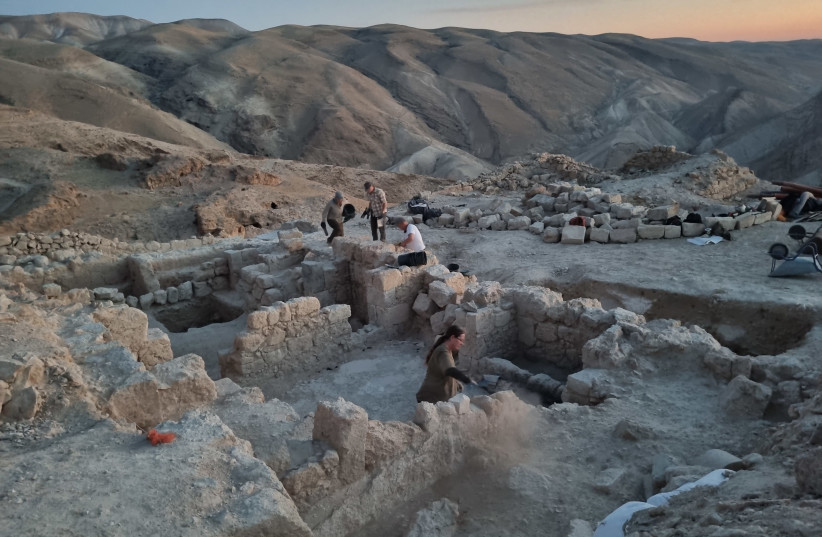
The archeological team cleans the Hyrcania site.
(photo credit: Dr. Oren Gutfeld and Michal Haber)

Archaeologists at the remote site of Hyrcania in the Judean Desert have unearthed a rare Byzantine Greek inscription paraphrasing a verse from the Book of Psalms. The excavation project is headed by archaeologists at the Hebrew University of Jerusalem.

Hyrcania was an ancient fortress built by Hasmonean ruler John Hyrcanus or his son Alexander Jannaeus in the second or first century BCE. The readable text is a paraphrase of Psalms 86: 1-2, known as “a prayer of David.” While the original lines are, “Hear me, Lord, and answer me, for I am poor and needy. Guard my life, for I am faithful to you,” the Hyrcania version reads: “Jesus Christ, guard me, for I am poor and needy.”

Built upon an imposing, artificially leveled hilltop situated about 17 kilometers southeast of Jerusalem and eight kilometers southwest of Qumran and the Dead Sea, it was one of a series of desert fortresses later rebuilt and enlarged by Herod the Great. The most famous of these strongholds are Masada and Herodion.

The inscription is in Koine Greek – biblical Greek or New Testament Greek that was the common supra-regional form of Greek that was spoken and written during the Hellenistic period, the Roman Empire, and the early Byzantine Empire that served as the lingua franca of much of the Mediterranean region and the Middle East during the following centuries.

Adorned with a cross, the Byzantine-era inscription was likely made by a knowledgeable monk and holds significance as a well-known prayer in the Masoretic text and Christian liturgy. An analysis of the script’s style suggests a dating no later than the first half of the sixth century CE, which was the height of the Byzantine era, and with minor grammatical errors, revealing the scribe’s mother tongue to be Semitic.
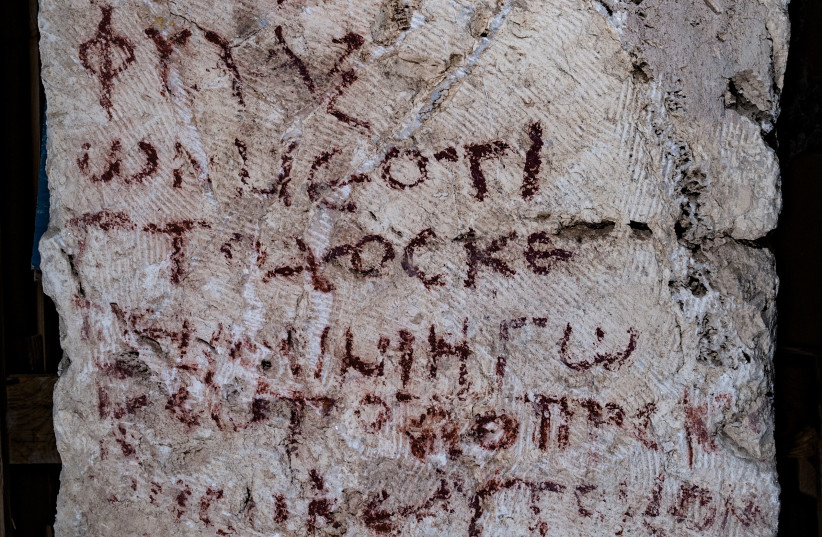
The Greek inscription at the Hyrcania site. (credit: Dr. Oren Gutfeld and Michal Haber)

Christian resettlement of the site

Shortly after the death of the latter in 4 BCE, Hyrcania lost its importance and was abandoned. It would then lie desolate for nearly half a millennium until the establishment of a small Christian monastery among its ruins in 492 CE by the monk Holy Sabbas, an expression of the monastic movement that took shape in the Judean Desert with the rise of the Byzantine period.

Dubbed Kastellion, or “Little Castle” in Greek, the monastery remained active past the Islamic conquest of Byzantine Palestine around 635 CE but was apparently abandoned by the early ninth century. The site is known also by its Arabic moniker, Khirbet el-Mird (“Ruins of the Fortress).” Attempts were made in the 1930s to revive the monastery, but harassment by local Bedouin cut short the venture.

Although a few isolated investigations of the site had been sporadically attempted in the past, no methodological, academic archaeological excavation had ever been conducted until now. Complex access and logistics have long played a role.

A Hebrew University team led by Dr. Oren Gutfeld and Michal Haber, with the support of Carson-Newman University (Jefferson City, Tennessee) and American Veterans Archaeological Recovery, recently spent four weeks at the site, uncovering key evidence of its remarkable history.

During this initial “pilot” season, efforts were focused mostly on two key areas. In the southeastern corner of the summit, a segment of the prominent upper fortification line was uncovered – a vital component of the Second Temple-period fortress dating back to the late second or first century BCE.

This discovery prompted Gutfeld to note: “There are certain architectural elements within these fortifications that strongly recall those of Herodium – all part of Herod’s extraordinary vision. It’s quite possible that the construction was even overseen by the same engineers and planners. It’s not by chance that we call Hyrcania ‘Herodium’s little sister.’”

In the northeast, the team peeled away a deep collapsed layer of building stones to unearth an elongated hall lined with piers, part of the lower level of an expansive compound constructed of finely drafted stones. Its original date of construction has yet to be determined, though it likely comprised part of the monastery.

Over the course of excavation, a sizable building stone was discovered lying on the plastered floor of the hall, bearing lines of text painted in red with a simple cross at its peak. Haber and Gutfeld immediately recognized the inscription as written in the New Testament’s Koine Greek but called on their colleague Dr. Avner Ecker of Bar-Ilan University, an expert epigraphist, to decipher it.

“This psalm holds a special place in the Masoretic text as a designated prayer and is notably one of the most frequently recited psalms in Christian liturgy,” Ecker said. “Thus, the monk drew a graffito of a cross onto the wall, accompanied by a prayer with which he was very familiar.”

Judging by the epigraphic style, he assigned the inscription a date within the first half of the sixth century CE.Ecker also cited the presence of a few grammatical errors typical of Byzantine Palestine that can be attributed to individuals whose native language was a Semitic one. He suggested that “these minor errors indicate that the priest was not a native Greek speaker, but likely someone from the region who was raised speaking a Semitic language.”

A few days following this initial discovery, an additional inscription was found in close proximity. It was also inscribed on a building stone from a collapsed wall and is currently undergoing analysis.

Haber emphasized the profound significance of these findings and said: “Few items hold such importance in the historical and archaeological record as do inscriptions, and it must be stressed that these are virtually the first examples from the site to have originated in an orderly, documented context. We are familiar with the papyrus fragments that came to light in the early 1950s, but they are all of shaky, unreliable provenance. These recent discoveries are truly exceptional.”

In addition, a child-sized gold ring, a little over one centimeter in diameter and adorned with a turquoise stone, was found on site. What adds to the special nature of the discovery is the miniature inscription incised in Arabic Kufic script on the stone.

Dr. Nitzan Amitai-Preiss, an expert in Early Arabic epigraphy at HU, was able to decipher the inscription as “Mashallah,” which translates to “God has willed it.” She dated the script style to the time of the Umayyad caliphate, which reigned during the seventh and eighth centuries CE.

Amitai-Preiss also observed a unique feature in the inscription: Two of the three words were mirror images, strongly suggesting that the ring may have originally served as a seal.

The origin of the turquoise stone itself adds another layer of historical intrigue. It was likely sourced in the newly conquered territory of the Sassanid Empire (modern-day Iran), part of the expanding Umayyad Caliphate. The exact path this remarkable artifact took to reach Hyrcania remains a mystery, as is the identity of whoever wore it.

The team is eagerly anticipating the next excavation season, which is scheduled for early 2024 in a continued collaborative effort with Carson-Newman University and American Veterans Archaeological Recovery.

Benny Har-Even, the staff officer for archaeology at the Civil Administration of Judea and Samaria, said: “The Civil Administration will continue its tireless efforts to preserve and develop the archaeological sites throughout Judea and Samaria. We are delighted to work in cooperation with leading Israeli academic institutions and all parties involved in the archaeology of the Land of Israel to reveal the ancient and rich past of the area.”

Dr. Stephen Humphreys, founder and CEO of American Veterans Archaeological Recovery, said: “Our organization serves to provide military veterans with challenging fieldwork opportunities, then gives them the support tools and training they need to excel… At Hyrcania, we saw the entire project team bond over the physical challenges and excitement of excavating this exceptional site. The training our veterans received at the site from the HU team will also make them more employable and better prepared to continue engaging with the field.”

Alongside their excitement, Haber and Gutfeld said they remained acutely aware of the complexities of safeguarding such a site. They emphasized the support they have received from the Staff Office of Archaeology of the Civil Administration in combating the ongoing phenomenon of antiquities looting.

“We are aware that our excavations will draw the attention of looters,” they said in a statement. “The problem persists; it was here before us and will likely continue after us, underscoring the need for academic excavation – particularly in such a sensitive site as Hyrcania, though this is just one example. We are simply trying to stay a few steps ahead.”


Zawartość publikowanych artykułów i materiałów nie reprezentuje poglądów ani opinii Reunion’68,
ani też webmastera Blogu Reunion’68, chyba ze jest to wyraźnie zaznaczone.
Twoje uwagi, linki, własne artykuły lub wiadomości prześlij na adres:
webmaster@reunion68.com
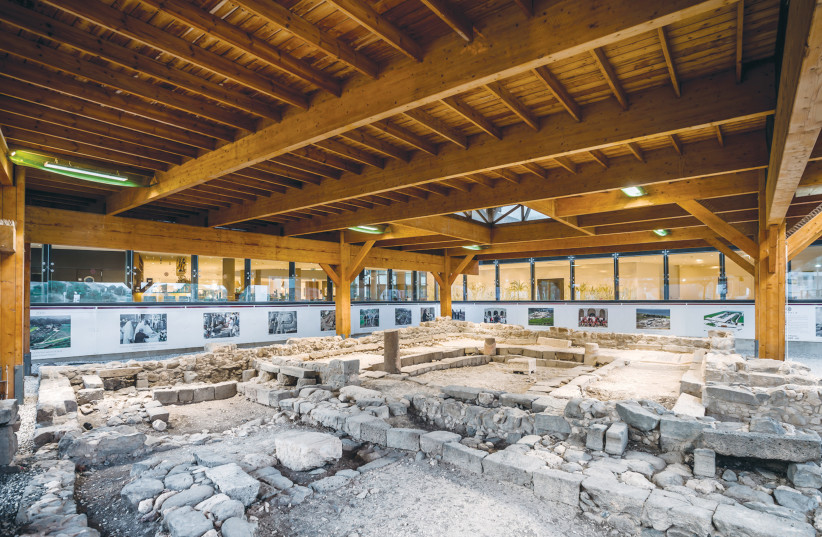

Archaeological treasures abound at the Magdala site

Archaeological treasures abound at the Magdala site

NERIA BARR


Perhaps the most exciting discovery at Magdala thus far, however, is the Magdala Stone, which has produced a lot of excitement among the archaeologists working at the site.
.

THE DISCOVERY of the Magdala Stone, found in a synagogue from the Second Temple period, has produced a lot of excitement among the archaeologists working at Magdala. / (photo credit: MAGDALA TOURISM CENTER)

In its prime, Magdala was a prominent city along the trade routes surrounding the Galilee.

This is evidenced by the extensive and well-designed marketplace unearthed by archaeologists.

A central paved street is flanked on its eastern side with shops that would likely have sold everything from pottery to woven goods to fresh produce.

One of the most impressive discoveries in the marketplace was the technologically advanced plumbing system which connected the shops with individual access to fresh groundwater.

This system, which would have been a marvel 2,000 years ago, is even more astonishing because it still functions today.

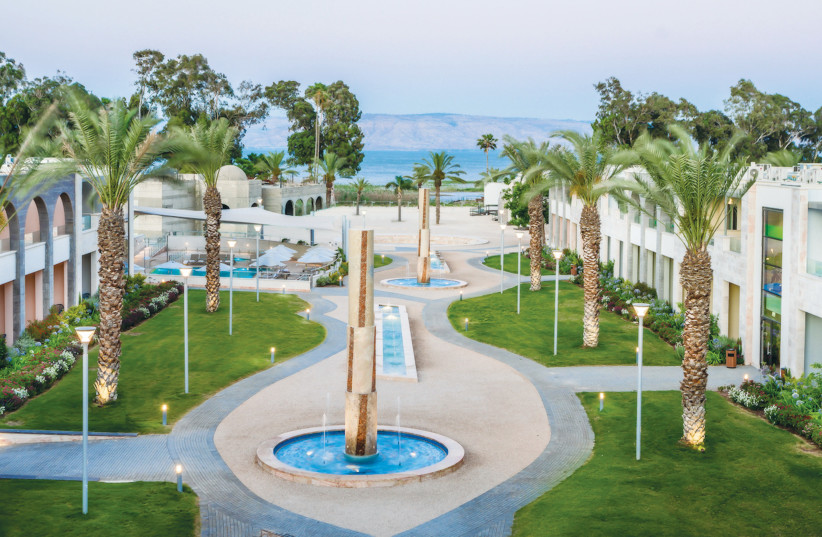
THERE ARE many good reasons to stay at Magdala, including the archaeological park, weekend concerts, and the hotel’s proximity to the beaches of Lake Kinneret. (credit: MAGDALA TOURISM CENTER)

Magdala Stone

Perhaps the most exciting discovery at Magdala thus far, however, is the Magdala Stone, which has produced a lot of excitement among the archaeologists working at the site. According to our tour guide, the stone, which was uncovered in the Migdal Synagogue during 2009 excavations, may hold clues that will help scholars establish a better picture of first century Judaism. Scholars believe that the stone was carved before the Romans destroyed the Second Temple in 70 CE. In 2017, the stone was displayed in Rome in Menorah: Worship, History, Legend, an exhibition jointly sponsored by the Vatican and the Jewish Museum of Rome.

The front of the stone depicts the oldest carved image of the Second Temple’s seven-branched menorah ever found, and the long sides of the stone depict a building with pillared archways. The rest of the stone is covered in decorative symbols relating

Prosperous city

Magdala was clearly an influential and prosperous city in its time, as evidenced by the elaborately decorated buildings which have been found there. Several buildings identified as mansions, most likely the homes of wealthy merchants, are located along a street south of the synagogue. These mansions were paved with colorful and intricate mosaic floors, which can still be seen today.

Another impressive feature of the city are the four mikvaot ritual baths, the earliest ever discovered in the country to use groundwater. The sophisticated plumbing of these mikvaot is proof that Magdala was at the forefront of regional commerce and culture in the first century.


The archaeological park at the site of the hotel is open every day from 8:00 a.m. to 6:00 p.m. for visitors – but as a guest you can walk around the reconstructed areas at all hours of the day, or join the daily guided tour.


Zawartość publikowanych artykułów i materiałów nie reprezentuje poglądów ani opinii Reunion’68,
ani też webmastera Blogu Reunion’68, chyba ze jest to wyraźnie zaznaczone.
Twoje uwagi, linki, własne artykuły lub wiadomości prześlij na adres:
webmaster@reunion68.com


‘Fauda’ Actor Idan Amedi Recovering From Wounds After Seriously Injured Fighting in Gaza

‘Fauda’ Actor Idan Amedi Recovering From Wounds After Seriously Injured Fighting in Gaza

Troy O. Fritzhand


Idan Amedi. Photo: Screenshot

Israeli actor Idan Amedi, who is best known for his role in the hit series Fauda on Netflix, was seriously wounded while fighting in Gaza as a reservist in the Israel Defense Forces (IDF).

Amedi, who is also one of Israel’s most popular singers, suffered shrapnel wounds while fighting terrorists on Monday before he was evacuated to the Sheba Medical Center by Tel Aviv.

Amedi’s father confirmed the injury to Hebrew-language media, saying his son would live but asked the public to pray for his recovery. The actor is reportedly in stable condition after being sedated and intubated at the hospital.

After Hamas terrorists attacked southern Israel from Gaza on Oct. 7, killing 1,200 people and taking 240 others as hostages, Amedi jumped into action, joining the IDF as a reservist. He has been actively fighting in the Hamas-ruled Palestinian enclave.

“I am ready not to perform or sing a song for a year,” he told his fans in a social media post after a month of fighting. “We must not abandon the citizens of the south and the north. We will not stop fighting [until] the elimination of Hamas in Gaza and Hezbollah in southern Lebanon.”

As Israel fights Hamas to its south in Gaza, the Jewish state has been clashing with Hezbollah forces to the north with increasing intensity. The Iran-backed terror group based in Lebanon has been targeting northern Israel since Oct. 7.

In November, Amedi shared a video on Instagram of him directing a strike on a building in Gaza, dedicating the military action to the victims of the Oct. 7 onslaught.

The actor previously paid tribute to victims of the terror attacks when he visited a beach in Gaza with fellow Israelis and raised the flag of the Supernova music festival, where Hamas killed hundreds of young people.

Lior Raz, the main star of Fauda, issued a statement with his co-creator Avi Issacharoff on the news of Amedi’s injury.

“Our dear brother Idan is a true hero. From the first day of the war he decided to put everything aside and go out to fight, first in the north and then in the south,” they said. “We pray for his speedy recovery and are sure that he will be fine. The Fauda family sends our condolences to the families of the victims, and to the families of the injured a full recovery.”

Amedi’s wife on the show, Rona Lee Shimon, wrote: “You are the most noble man I have ever known. There are no other people like you. There are no partners like you. Your pure and generous heart always beats strong. Your human love always goes a moment. Before your shy smile. I’ve been holding a prayer tight for hours … From Oct. 7, you fight like a lion. With all our best children. You are a hero of an era. I love you … Idan get well soon. We are waiting for you.”

Well wishes also came from the United States, where Israeli professional basketball player Deni Avdija, who plays forward for the NBA’s Washington Wizards, wore shoes that he signed with the words: “Recovery for Idan ben Tova Amedia,” in reference to his Hebrew name, which is typically used in prayers for recovery.

Fauda crew member Matan Meir, 38, was killed in action in November while fighting in Gaza as an IDF reservist.


Zawartość publikowanych artykułów i materiałów nie reprezentuje poglądów ani opinii Reunion’68,
ani też webmastera Blogu Reunion’68, chyba ze jest to wyraźnie zaznaczone.
Twoje uwagi, linki, własne artykuły lub wiadomości prześlij na adres:
webmaster@reunion68.com


Netanyahu taps Aharon Barak to represent Israel in ICJ genocide case

Netanyahu taps Aharon Barak to represent Israel in ICJ genocide case

DAVID ISAAC


The government’s choice of one of its biggest opponents has surprised observers and has met with mixed reactions from ministers.

.
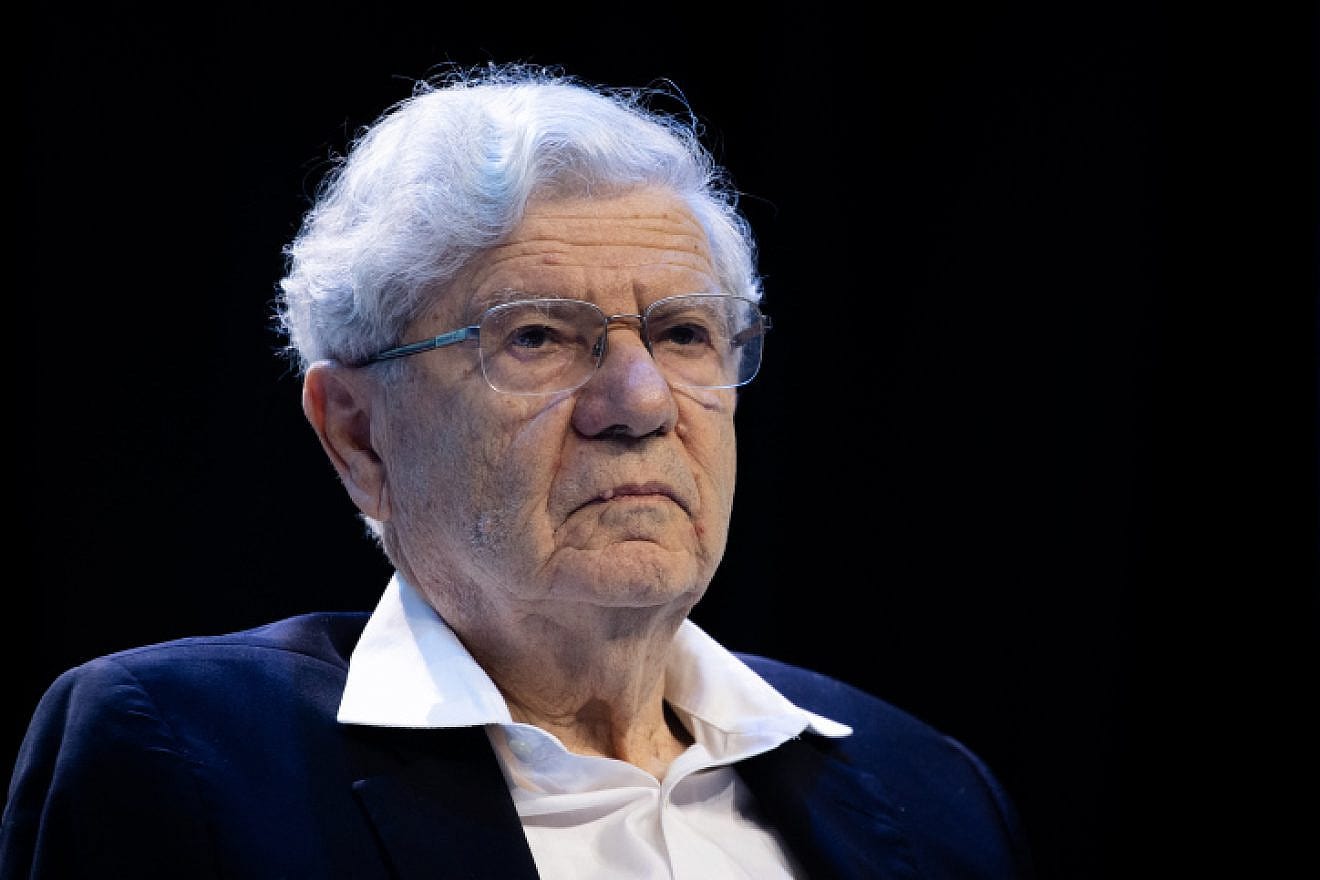
Former Supreme Court President Aharon Barak. Photo by Yonatan Sindel/Flash90.

Israel has chosen Aharon Barak, 87, a former president of the Israeli Supreme Court, to sit as its representative on the judges’ panel at the International Court of Justice in the Hague to hear proceedings brought by South Africa against Israel, which the former accuses of violating the Genocide Convention.

The hearings are scheduled for Jan. 11-12. The first day South Africa will present its oral argument. Israel will present on the second day.

The hearings will be devoted to South Africa’s request for “provisional measures” to be brought against Israel, meaning an emergency suspension of Israel’s war against Hamas in Gaza while the court decides the case.

The 15-judge panel will be expanded by two additional judges, one from each side in the case.

The choice of Barak has surprised observers and has been met with mixed reactions from government members as he led Israel’s “constitutional revolution” in the 1990s—In the eyes of Israel’s political right a power grab which has led to a decades-long expansion of the court’s power.

When the Netanyahu coalition introduced its judicial reform plan in January, arguing that it would restore a growing imbalance between the three branches of government, the ensuing battle consumed Israel’s political discourse for the next 10 months, ceasing only with the Hamas attack in October.

During the contest, which saw opponents of reform take to the streets in weekly protests, Barak became a bogeyman of the right, as he helped the opposition undermine the government’s efforts by warning that the reform posed a threat to Israel’s democracy.

Perhaps the most outspoken critic of the choice of Barak to represent Israel at the ICJ has been Knesset member Tali Gottlieb of the Likud, who tweeted on Sunday, “With all due respect, I don’t agree that retired [Supreme Court] President Aharon Barak will be the judge on behalf of the State of Israel at the Hague tribunal, even at the request of Prime Minister Netanyahu.”

She added: “One who came out against the government last year and presented it in such a negative light now represents the country? And under the auspices of a right-wing government? Indescribable.”

According to Kan News, Heritage Minister Amichai Eliyahu of the Otzma Yehudit Party wrote on the government’s WhatsApp group that Netanyahu had asked that Israel’s views be represented at the hearing, but that “I am not sure that the presence of the former president, Aharon Barak, will promote the correct views on the issue.”

Transportation Minister Miri Regev told Kan News, “I wouldn’t choose [Barak]. He is not in the consensus. …There are other professors, maybe not from the right, who could represent the state.”

However, others in the coalition supported the move. Interior Minister Moshe Arbel of the Shas Party, replying to Eliyahu, saying that Barak’s appointment was a lesson that at the moment of truth and despite differences of opinion, Israel stands united.

Opposition members, including National Unity Party chairman Benny Gantz and Yesh Atid Party chairman Yair Lapid, also supported Barak’s selection.

South Africa filed charges at the ICJ on Dec. 29 that Israel was violating its obligations under the Convention on the Prevention and Punishment of the Crime of Genocide (or “Genocide Convention”), to which it is a signatory.

In its application, South Africa said Israel’s acts “are genocidal in character, as they are committed with the requisite specific intent…to destroy Palestinians in Gaza as a part of the broader Palestinian national, racial and ethnical group.”

Israel’s Foreign Ministry denounced the move, saying, “Israel rejects with disgust the blood libel spread by South Africa and its application to the International Court of Justice.”

Israeli Prime Minister’s Office spokesman Eylon Levy said, “In giving political and legal cover to the Oct. 7 massacre and the Hamas human-shield strategy, South Africa has made itself criminally complicit with Hamas’s campaign of genocide against our people.”

The Biden administration also criticized South Africa. “We find this submission meritless, counterproductive, completely without any basis in fact whatsoever,” U.S. National Security Council Spokesperson John Kirby said last week.

Legal observers tell JNS that the court’s decisions are legally binding, but that many nations, including the United States, which have run afoul of the court have ignored its rulings.

The ICJ is the principal judicial organ of the United Nations. Its seat is at the Peace Palace in The Hague in the Netherlands. It deals with legal disputes between states, whereas the International Criminal Court (ICC) prosecutes individuals.


Zawartość publikowanych artykułów i materiałów nie reprezentuje poglądów ani opinii Reunion’68,
ani też webmastera Blogu Reunion’68, chyba ze jest to wyraźnie zaznaczone.
Twoje uwagi, linki, własne artykuły lub wiadomości prześlij na adres:
webmaster@reunion68.com

The Gospel According to Berkeley. Meet the Palestinian Jesus.

The Gospel According to Berkeley. Meet the Palestinian Jesus.

Tikva International


A special Christmas sketch from Israeli satire show #eretznehederet (A Wonderful Country) featuring #brettgelman

Take a stand, share this, the world should know the truth 🙏


Zawartość publikowanych artykułów i materiałów nie reprezentuje poglądów ani opinii Reunion’68,
ani też webmastera Blogu Reunion’68, chyba ze jest to wyraźnie zaznaczone.
Twoje uwagi, linki, własne artykuły lub wiadomości prześlij na adres:
webmaster@reunion68.com