Archives

Libyan PM Fires Foreign Minister as Row Over Israel Meeting Grows

Libyan PM Fires Foreign Minister as Row Over Israel Meeting Grows

TOVAH LAZAROFF


Following Foreign Minister Eli Cohen’s diplomatic uproar, Netanyahu will need to approve all secret diplomatic meetings ahead of time.
.

Prime Minister Benjamin Netanyahu with Foreign Minister Eli Cohen assembly hall of the Knesset, the Israeli parliament in Jerusalem, on March 13, 2023 / (photo credit: YONATAN SINDEL/FLASH90)

Prime Minister Benjamin Netanyahu seized control of Israel’s back-channel diplomacy after the incident with Tripoli in which Foreign Minister Eli Cohen prematurely published information about a secret meeting with his Libyan counterpart.

News of the meeting set off a wave of violent protests in Libya and threatened to destroy behind-the-scenes endeavors to normalize ties between Jerusalem and Tripoli which currently do not have full diplomatic relations.

On Tuesday, Netanyahu declared that all secret diplomatic meetings by any government ministry must be approved by his office in advance. 

His office stated that “the publication of any secret meeting will require the personal approval of ..Netanyahu.”

Cohen has been accused of “burning down the house” in search of a headline.

Is Israel destroying diplomatic relationships for a headline?

“It was a disaster,” former Israeli consul general to New York Asaf Zamir told Israel Radio. He himself was fired by Cohen for statements he made against the government’s judicial reform plan, and he is now running in the Tel Aviv Mayoral election.

He continued, adding that what is “happening today in the Foreign Ministry is very sad. Yesterday all of Israel saw how one can destroy diplomatic relations for a headline.. but the Israeli people should know that this happens on a daily basis in places where most people are not paying attention.”

He mentioned specifically comments by Finance Minister Bezalel Smotrich and National Security Minister Itamar Ben Gvir.

“Day-to-day these fiascos” are costing Israel on the global stage, he said.

Former foreign minister Avigdor Liberman (Yisrael Beytenu) told Radio 103. FM that this is what happens when one “turns the Foreign Ministry into a public relations ministry.”

Liberman charged that Cohen has been busy in the last year advancing himself rather than the promotion of foreign relations so that he can make his mark before he is replaced by Yisrael Katz, who is now the minister of energy and infrastructure.


Zawartość publikowanych artykułów i materiałów nie reprezentuje poglądów ani opinii Reunion’68,
ani też webmastera Blogu Reunion’68, chyba ze jest to wyraźnie zaznaczone.
Twoje uwagi, linki, własne artykuły lub wiadomości prześlij na adres:
webmaster@reunion68.com


Israel Daily news August 27, 2023

Israel Daily news August 27, 2023

ILTV Israel News


A breaking incident near the Dead Sea with one person pronounced dead. Also, is Israel misreading the situation when it comes to normalization with Saudi Arabia? And much more.


Zawartość publikowanych artykułów i materiałów nie reprezentuje poglądów ani opinii Reunion’68,
ani też webmastera Blogu Reunion’68, chyba ze jest to wyraźnie zaznaczone.
Twoje uwagi, linki, własne artykuły lub wiadomości prześlij na adres:
webmaster@reunion68.com


There is no such thing as an Israeli ‘settler’ in the West Bank – opinion

There is no such thing as an Israeli ‘settler’ in the West Bank – opinion

DAVID S. LEVINE


Jews meet the UN definition of indigenous people. Therefore, they are not “settlers,” and the places they live are not “settlements.” So why are there “Arab villages” but “Jewish settlements?”
.

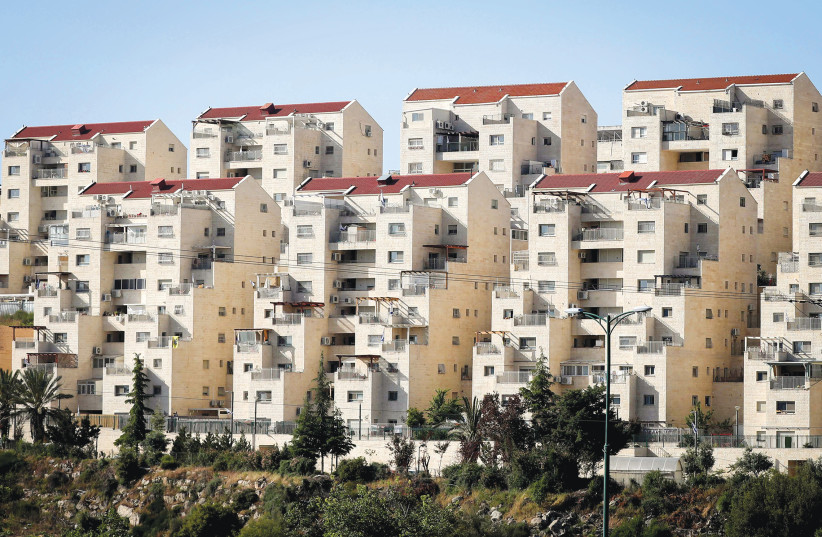
KIRYAT ARBA: ‘As citizens of the State of Israel, we are Israelis; period,’ says the writer. / (photo credit: Wisam Hashlamounn/Flash90)

According to the Cambridge Dictionary, a settler is, “a person who arrives, especially from another country, to a new place in order to live there and use the land.” A settlement, according to vocabulary.com, is, “a colony or any small community of people.”

However, these definitions take on negative connotations when it pertains to Israel and Israelis. Even Israeli media have headlines such as, “Settlers arrested after deadly clash in Palestinian village.”

Various biblical texts refer to Israel as a “land flowing with milk and honey.” This description is in stark contrast to Mark Twain’s observations in 1867 that Israel (then called Palestine) was a desolate and barren country in both people and vegetation.

It was only after the start of the aliyah movement in the late 1800s, when many Jews joined their fellow Jews who had maintained a continuous presence in the Jewish homeland, did the land begin to bloom again with people and agriculture. The phrase “a land flowing with milk and honey” can be applied both in reality and metaphorically.

Jews meet the UN definition of indigenous people. Therefore, they are not “settlers,” and the places they live are not “settlements.” Which raises the rhetorical question: Why are there “Arab villages” but “Jewish settlements?”

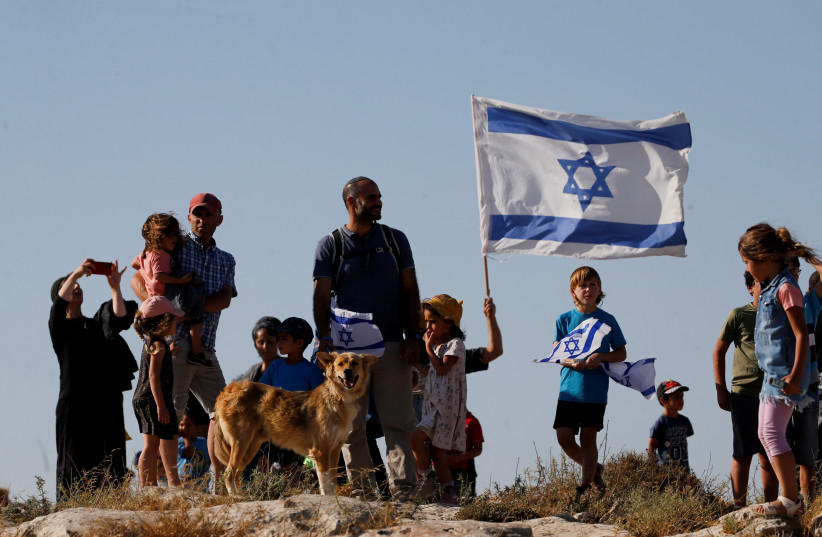
Jewish settlers look on during a march near Hebron in the West Bank, June 21, 2021 (credit: REUTERS/MUSSA QAWASMA)

Why are Jews settlers if they are indigenous people?

One unfortunate reason is a mistranslation of the Hebrew word Yishuv. The root of this word is shuv, to return. According to Wikipedia, the term Yishuv came into use in the 1880s to denote the body of Jewish residents in the Land of Israel, and became the word to describe the Jewish population of Israel prior to the establishment of the modern State in 1948.

The Hebrew word Yishuv translates to “community” in the form of towns, population, inhabitants, neighborhoods, villages, etc.

LET’S LOOK at another misuse of terms that carry with it political overtones: migrant vs illegal alien.

The definition of “migrant” is, “a person who moves from one place to another, especially in order to find work or better living conditions.” An example is a “migrant farm worker.” Those workers migrate for work as the seasons and crops change. Importantly, it is implied that the individual is either a citizen or a foreign worker on a visa. While the definition of an “illegal alien” is “a foreign national who is living in a country without official authorization.”

Yet the current American administration, and mainstream US media, now call all those who enter the US illegally via their southern border, the nicer word “migrant” rather than the more negative term “illegal alien.” Sounds like “village” vs “settlement,” right?

Words have meaning. And choice of words has nuance.

As citizens of the State of Israel, we are Israelis. Period. You might be an Israeli-[fill in the blank], but if you’ve earned citizenship, then you are an Israeli, not a “settler.” Period.

While we may not be able to convince The New York Times, the Israeli media should start using other words such as town, neighborhood, or village, instead of the stigmatized word “settlement.” They should also use terms such as members, citizens, or Israelis instead of the derogatory and stigmatized word “settlers.”

We may not be able to elevate Israel in world opinion. But at the very least, we should speak the truth and be honest about our own identity.


The writer is a former NYC advertising & marketing executive and retired Rutgers University professor who lives in Israel. He is author of Hey Israel You’re Perfect. Now Change! (free download: https://bit.ly/455DIT2). Follow his blogs at: thetruthfulproject.blogspot.com. Twitter: @DavidsLevine


Zawartość publikowanych artykułów i materiałów nie reprezentuje poglądów ani opinii Reunion’68,
ani też webmastera Blogu Reunion’68, chyba ze jest to wyraźnie zaznaczone.
Twoje uwagi, linki, własne artykuły lub wiadomości prześlij na adres:
webmaster@reunion68.com


Archaeological discoveries shed light on early urbanization in the Kingdom of Judah

Archaeological discoveries shed light on early urbanization in the Kingdom of Judah

JERUSALEM POST STAFF


The findings have revealed fortified cities and common urban pattern characterized by casemate walls, houses abutting the walls and peripheral roads.
.

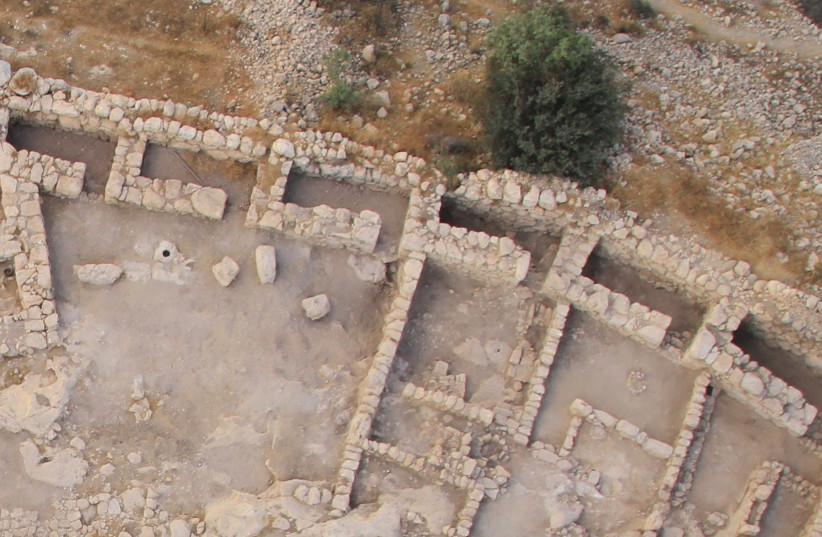
Aerial view of the casemate city wall of Khirbet Qeiyafa / (photo credit: SKYVIEW LTD)

In recent archaeological excavations in the Judea region, significant discoveries have been made that provide new insights into the early urbanization process and urban planning of the kingdom during the 10th century BCE.

The findings, spanning multiple sites including Khirbet Qeiyafa, Bet Shemesh 4, Tell en-Naṣbeh, Khirbet ed-Dawwara and Lachish V, have revealed fortified cities and common urban pattern characterized by casemate walls (double city walls with space between the walls separated into chambers), houses abutting the walls, and peripheral roads.

The peer-reviewed study was published by The Hebrew University of Jerusalem.

The Kingdom of Judah’s expansion into the Shefela (lowlands), the favorable ecological zone southwest of Jerusalem, has long been a topic of debate among scholars.

However, these recent excavations challenge the prevailing notion that this expansion occurred in the middle or late 9th century BCE.

Instead, the findings suggest that the process was already underway in the early 10th century BCE, significantly earlier than previously believed.

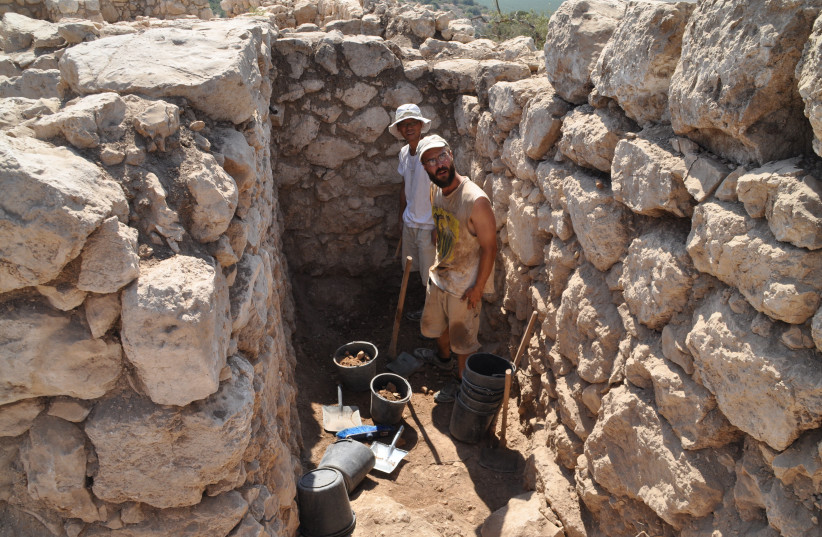
A close-up of one of the casements in the city wall of Khirbet Qeiyafa (credit: PROF. YOSEF GARFINKEL)

At Khirbet Qeiyafa, located on a prominent hill overlooking the Valley of Elah, archaeologists uncovered a 2.3-hectare fortified city.

What did the excavation show?

The excavation revealed a casemate city wall, houses that incorporated the casemates as rear rooms and a peripheral belt of buildings abutting the city wall.  The presence of Canaanite inscriptions at the site indicates an increasing demand for communications and suggests centralized authority.

Bet Shemesh 4, situated in the northern Shefela, yielded similar findings. The excavations at Bet Shemesh 4 revealed an early Iron Age II city enclosed by a casemate wall.

The houses in this city were built in a rounded arrangement, distinct from later structures. Excavators also discovered a casemate city wall at Tell en-Naṣbeh, emphasizing the common urban pattern found across multiple sites in the region.

Khirbet ed-Dawwara, a small fortified site on the desert fringe of the Benjaminite hill country, provided valuable insights despite its size. The excavations revealed a short-lived settlement with four-room houses and a casemate fortification. 

The pottery assemblage suggests a dating to the early 10th century BCE, aligning it with the urbanization process of the larger cities in the region.

Tel Lachish V played a crucial role as a regional center during the early Iron Age. Excavations at Lachish V uncovered an early Iron Age fortification, featuring a brick construction encircling the entire site.

The recent findings of a newly discovered city wall constructed with medium-sized stones further support the city’s importance in the second half of the 10th century BCE.

These discoveries challenge previous assumptions about the timing and extent of the kingdom of Judah’s early urbanization. The presence of fortified cities and the common urban pattern found across multiple sites highlight the strategic importance of these locations and the organized expansion of the kingdom.  


Zawartość publikowanych artykułów i materiałów nie reprezentuje poglądów ani opinii Reunion’68,
ani też webmastera Blogu Reunion’68, chyba ze jest to wyraźnie zaznaczone.
Twoje uwagi, linki, własne artykuły lub wiadomości prześlij na adres:
webmaster@reunion68.com


US Marine Corps moves forward with purchase of Israel’s Iron Dome

US Marine Corps moves forward with purchase of Israel’s Iron Dome

JERUSALEM POST STAFF


As part of the deal, the Marine Corps will purchase 44 Iron Dome launchers and 1,840 Tamir interceptors.
.

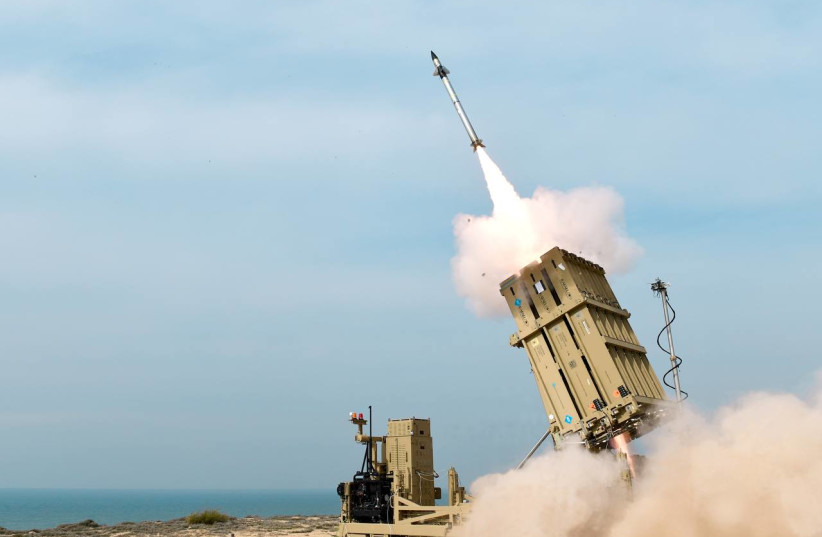
The Iron Dome air defense missile systems is seen during operational trials conducted following the conclusion Operation Shield and Arrow on May 14, 2023 / (photo credit: DEFENSE MINISTRY)

The United States Marine Corps (USMC) plans to purchase dozens of Iron Dome launchers and thousands of interceptor missiles in a deal that could be worth hundreds of millions of dollars, the War Zone reported on Saturday citing a procurement notice of intent publicly available online.

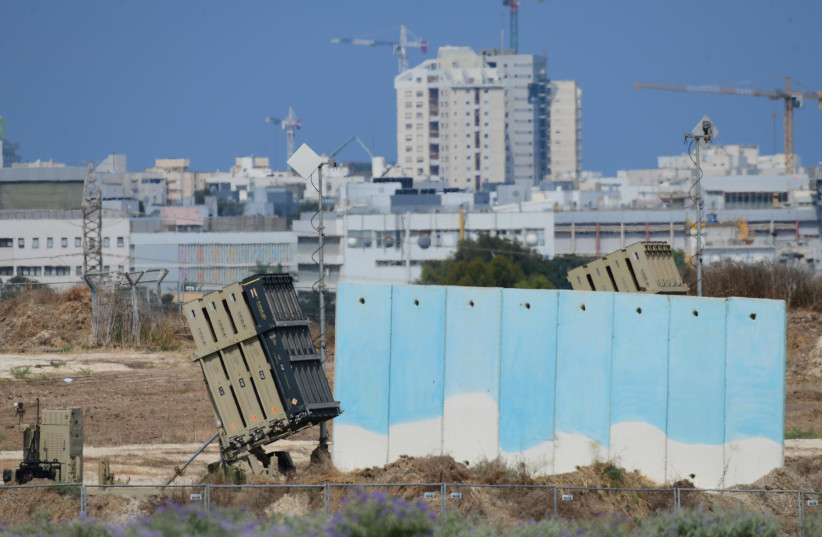
The deal, which would see the USMC purchase some three batteries’ worth of the Iron Dome system, would be conducted with Raytheon, which has a deal with Israeli manufacturer Rafael Advanced Defense Systems to distribute the system to the United States.

The prime contractor for the development and production of the Iron Dome is Rafael, who adapted the system to USMC requirements and assisted with testing support.

As part of the deal, the USMC will purchase 44 launchers and 1,840 Tamir interceptors.

View of Iron Dome Missile Defense battery deployed near the southern Israeli city of Ashdod, August 5, 2022. (credit: TOMER NEUBERG/FLASH90)

Marine Corps’ Iron Dome deal has been in the works

Last year, the Jerusalem Post reported that completed a series of interception tests on an air defense system using Israel’s Tamir Interceptor.

The experiment included a series of three tests carried out over the course of several months. The system successfully intercepted a variety of targets. 


Zawartość publikowanych artykułów i materiałów nie reprezentuje poglądów ani opinii Reunion’68,
ani też webmastera Blogu Reunion’68, chyba ze jest to wyraźnie zaznaczone.
Twoje uwagi, linki, własne artykuły lub wiadomości prześlij na adres:
webmaster@reunion68.com