Archives

Israel Daily news Full episode- August 23, 2023

Israel Daily news Full episode- August 23, 2023


ILTV Israel News


The security cabinet gathered together to discuss escalating security in the region. Four Arab Israelis were murdered mob style in the northern town of Abu Snan. and an historic soccer signing. Also Chemi Peres and Ilan Greenfield to discuss their extraordinary new book ‘My Israel, And much more


Zawartość publikowanych artykułów i materiałów nie reprezentuje poglądów ani opinii Reunion’68,
ani też webmastera Blogu Reunion’68, chyba ze jest to wyraźnie zaznaczone.
Twoje uwagi, linki, własne artykuły lub wiadomości prześlij na adres:
webmaster@reunion68.com


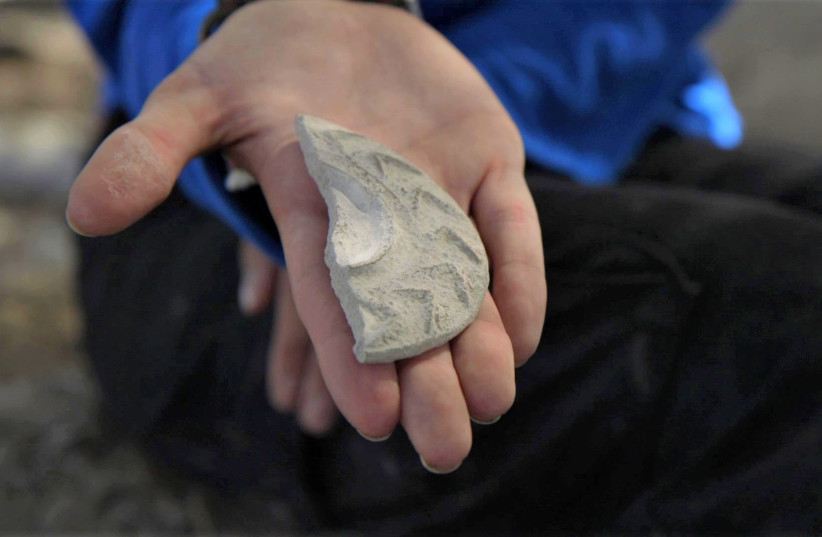
Ancient ‘magic mirror’ discovered in northern Israel by youth leader

Ancient ‘magic mirror’ discovered in northern Israel by youth leader

JERUSALEM POST STAFF


Magic mirrors were used to protect against the Evil Eye in ancient times.
.

Youth leader Aviv Weizman holding the magic mirror plaque she discovered at Usha (photo credit: EMIL ALADJEM/ISRAEL ANTIQUITIES AUTHORITY) / Youth leader Aviv Weizman holding the magic mirror plaque she discovered at Usha / (photo credit: EMIL ALADJEM/ISRAEL ANTIQUITIES AUTHORITY)

A 1,500-year-old “magic mirror” from the Byzantine period was discovered by a 17-year-old Israeli taking part in a Young Leaders’ Survival Course at the Usha archaeological site in northern Israel, the Israel Antiquities Authority announced on Thursday.

Aviv Weizman, the youth leader who found the mirror, was taking part in a 90-km survival trek from Mount Meron to Mount Hermon as part of the Education Ministry’s Shelah Young Leaders’ Survival Course. During the trek, the young leaders participate in archaeological digs at sites located around the country.

While taking part in a dig directed by the Israel Antiquities Authority archaeologist Hanaa Abu Uqsa Abud at Usha, a site near Kiryat Ata, Weizman spotted an unusual pottery shard sticking out of the ground between the walls of a building.

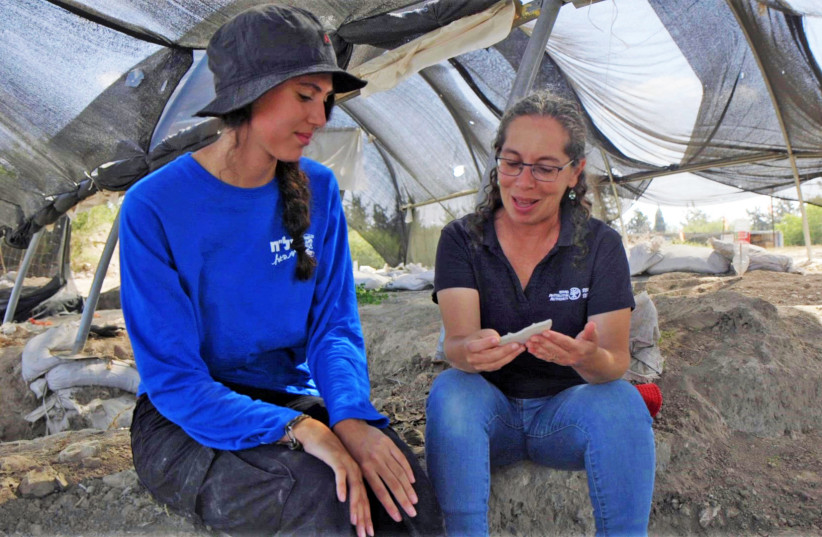
Weizman showed the sherd to Dr. Einat Ambar-Armon, director of the Israel Antiquities Authority Northern Education Center, who identified it as the plaque of a “magic mirror.”

What is a magic mirror?

“The fragment is part of a ‘magical mirror’ from the Byzantine period, the 4th–6th centuries CE,” explained Navit Popovitch, Israel Antiquities Authority curator of the classical Periods. “A glass mirror, for protection against the Evil Eye, was placed in the middle of the plaque: The idea was that the evil spirit, such as a demon, who looked in the mirror, would see his own reflection, and this would protect the owner of the mirror. Similar mirror plaques have been found in the past as funerary gifts in tombs, in order to protect the deceased in their journey to the world to come.”

Dr. Einat Ambar-Armon explains what the ”magic mirror” is to Aviv Weizman, who found the mirror. (credit: EMIL ALADJEM/ISRAEL ANTIQUITIES AUTHORITY)

“The participation of the pupils in the archaeological excavations deepens their feeling of belonging to the country and its heritage,” said Eli Shayish, director of the Education Ministry’s Shelah and Land of Israel Studies.

“During the week-long trek, the young leaders discovered additional finds, including pottery jars, coins, decorated stone fragments, and even a water aqueduct,” Eli Escusido, director of the Israel Antiquities Authority, added. “History, usually taught in the classroom, comes to life from the ground. A pupil who uncovers a find in the course of an excavation will never forget the experience. There is no better way to connect the youth to the country and the heritage.”

Saar Ganor, coordinator of the project on behalf of the Israel Antiquities Authority, explained that “this find embellishes the two-way contribution of the cooperation between the Israel Antiquities Authority and the Education Ministry’s Shelah Project: At the same time, uncovering the country’s past, and also providing the youth with a personal empowering experience, connecting them to their roots.”


Zawartość publikowanych artykułów i materiałów nie reprezentuje poglądów ani opinii Reunion’68,
ani też webmastera Blogu Reunion’68, chyba ze jest to wyraźnie zaznaczone.
Twoje uwagi, linki, własne artykuły lub wiadomości prześlij na adres:
webmaster@reunion68.com


Palestinian Militants Use Teenage Girls as Combat Spotters: Report

Palestinian Militants Use Teenage Girls as Combat Spotters: Report

Andrew Bernard


Militants stand during the funeral of two Palestinian Islamic Jihad gunmen who were killed in an Israeli raid, in Jenin refugee camp, in the West Bank on May 10, 2023. Photo: REUTERS/Raneen Sawafta

Armed Palestinian extremist groups in the West Bank have recruited teenage girls as spotters to report on Israeli troop movements, according to a new report.

The Jerusalem Center for Public Affairs, an Israeli think tank, released a report this week citing posts on the messaging app Telegram in a channel used by fighters in the West Bank town of Jenin, which has been a focus of Israeli counterterrorism operations in recent months as extremist groups have expanded their presence in the town. 

One post from April 2022 addressed to “the jihad fighters” of Jenin encourages them to “use children and residents to observe and gather information” in order to ambush Israeli soldiers.

“Young people, do not take your eyes off the [Israeli] Dotan checkpoint,” says another of the Telegram posts from February 2022. “There are special observation units to monitor Dotan, and the checkpoint is subject to 24-hour observation. We will keep you informed of any new [development]. Monitor [the checkpoints] al-Salam and al-Jalameh.”

Such activity raises questions about whether unarmed people observing soldiers on behalf of a militant group — so-called spotters — can be considered combatants who have lost the protections afforded to civilians. According to the US Department of Defense’s Law of War Manual, “providing or relaying information of immediate use in combat operations” or “acting as a guide or lookout for combatants conducting military operations” would make someone a valid target for attack.

One alleged spotter flagged in the Jerusalem Center’s report is Sadil Naghnaghia, a 15 year-old girl who was killed by the Israeli military in Jenin in June.

Video from Naghnaghia’s phone indicates that immediately before she was shot, she was recording video of an Israel Defense Forces (IDF) armored personnel carrier.

While the report doesn’t conclusively show that Naghnaghia was transmitting the video to militant groups, at her funeral she was draped in the regalia of Palestinian Islamic Jihad, a widely designated terrorist group, and had sent messages and posted on social media indicating her desire to become a “martyr.”

The use of child spotters in Jenin is the latest example of the radicalization of Palestinian children by militant groups. Hamas, Palestinian Islamic Jihad, and other extremist organizations in both the West Bank and Gaza actively recruit children into the ranks of their fighters.

This year some 65,000 Palestinian children attended “summer camps” that included combat training and anti-Israel indoctrination.

Meanwhile, despite pressure from the US Congress and European Parliament on the Palestinian Authority to reform its curricula or risk losing aid money, watchdog groups continue to find antisemitic and anti-Israel content in Palestinian school textbooks.

The Israeli education watchdog Impact-se, for example, has tracked examples of antisemitic material provided to children living in territory controlled by the Palestinian Authority. These include study cards for 11th graders accusing Jews of being “in control of global events through financial power,” assignments instructing 7th graders to describe Israeli soldiers as “Satan’s aides,” and a textbook chapter imploring Muslims to “liberate” the Al-Aqsa Mosque in Jerusalem.


Zawartość publikowanych artykułów i materiałów nie reprezentuje poglądów ani opinii Reunion’68,
ani też webmastera Blogu Reunion’68, chyba ze jest to wyraźnie zaznaczone.
Twoje uwagi, linki, własne artykuły lub wiadomości prześlij na adres:
webmaster@reunion68.com


New tech reveals ancient Israelis were ‘highly capable’ and resourceful

New tech reveals ancient Israelis were ‘highly capable’ and resourceful

JUDY SIEGEL-ITZKOVICH


Very capable early humans in the Hula Valley systematically sought raw materials hundreds of thousands of years ago – much earlier than previously assumed.
.
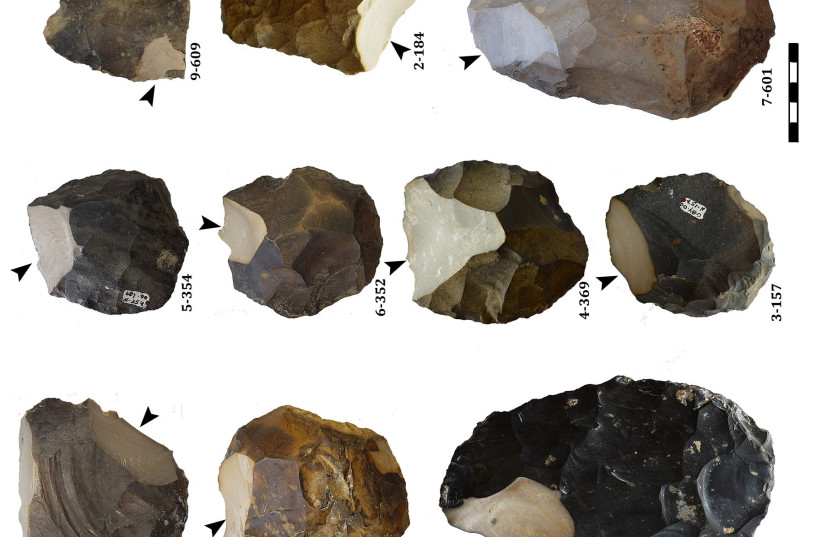
Handaxes from Gesher Benot Ya’aqov tested geochemically. Arrows indicate the striking of flakes sampled
(photo credit: TEL AVIV UNIVERSITY)

Archaeologists have long contemplated an old mystery – where did early humans in the Hula Valley get flint to make the prehistoric tools known as handaxes?

Now a new study from Tel Aviv University (TAU) and Tel-Hai Academic College in the Upper Galilee has applied advanced methods of chemical analysis and artificial intelligence (AI) to identify the geochemical fingerprints of handaxes from the Hula Valley’s oldest prehistoric sites – Ma’ayan Baruch and Gesher Bnot Ya’acov. 

Their findings prove that the raw material came from exposures of high-quality flint in the Dishon Plateau about 20 kilometers to the west and hundreds of meters above the Hula Valley.

The researchers said that their findings indicated that “these early humans had high social and cognitive abilities. They were familiar with their surroundings, knew the available resources and made great efforts to obtain the high-quality raw materials they needed. For this purpose, they planned and carried out long journeys, and transferred this essential knowledge to subsequent generations.”

The researchers added that early humans were highly capable. “They planned and implemented complex strategies and passed on essential information from one generation to the next.”
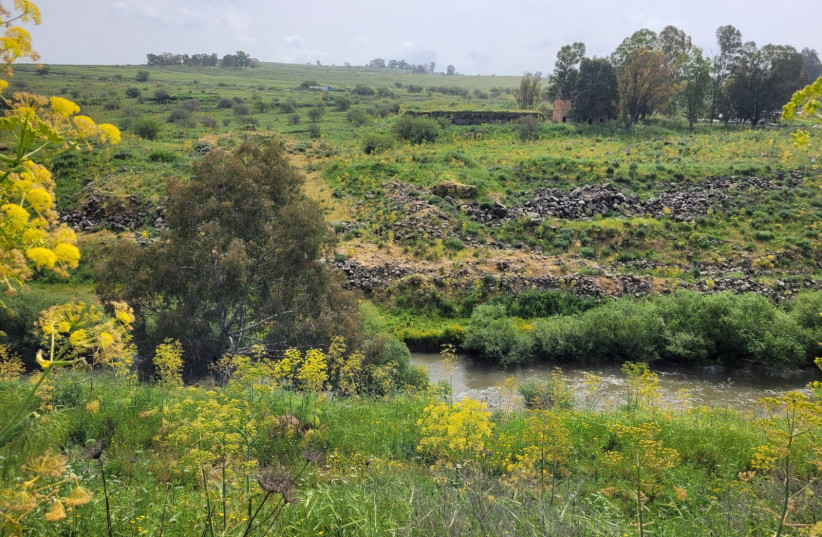
The Gesher Benot Ya’aqov area (credit: TEL AVIV UNIVERSITY)

The study was led by Dr. Meir Finkel of TAU’s archaeology and ancient Near East cultures departments and Prof. Gonen Sharon of the master’s degree program in Galilee studies at Tel-Hai, in collaboration with TAU Prof. Erez Ben-Yosef, Dr. Oded Bar and Dr. Yoav Ben Dor of the Geological Survey of Israel and Ofir Tirosh of the Hebrew University of Jerusalem (HU). 

They published their findings in the journal Geoarchaeology under the title “Evidence for sophisticated raw material procurement strategies during the Lower Paleolithic-Hula Valley case study.”

Ancient secrets in the Hula Valley

The Hula Valley, located along the Dead Sea Transform Rift, is well known for its many prehistoric sites, the oldest of which date back to 750,000 years YBP (years before present), said Finkel. The valley offered early humans rich sources of water, vegetation and game, right on the northward migration route from Africa – the Great African Rift Valley. “These early inhabitants left behind them many artifacts, including thousands of handaxes – flint stones chiseled to fit the human hand. One of the earliest and most universal tools produced by humans, the handaxe may have served as a multipurpose penknife for many different tasks from cutting game meat to digging for water and extracting roots. It was used in many different parts of the Old World, in Africa, Asia, and Europe, for about 1.5 million years.”

In the present study the researchers looked for the source of the raw material used to produce thousands of handaxes found at two prehistoric sites in the Hula Valley: Gesher Bnot Ya’acov, dated to 750,000 YBP and Ma’ayan Baruch, dated to 500,000 YBP, both of the Acheulian culture (relating to a Lower Paleolithic culture originating in Africa).

Sharon added that some 3,500 handaxes were found scattered on the ground at Ma’ayan Baruch, and several thousand more were discovered at Gesher Bnot Ya’acov. The average handaxe, a little over 10 centimeters long and weighing about 200 grams, was produced by reducing stones that are five times larger – at least one kilo of raw material. In other words, to make the 3,500 handaxes found at Ma’ayan Baruch alone, early humans needed 3.5 tons of flint. 

But where did they obtain such a huge amount of flint? Many researchers have tried to answer this question, but the new study was the first to use innovative 21st-century technologies including advanced chemical analysis and an AI algorithm developed specifically for this purpose.

The researchers took samples from 20 handaxes – 10 from Gesher Benot Ya’acov and 10 from Ma’ayan Baruch, ground them into powder and dissolved the powder in acid in a clean lab. For each sample they measured the concentration of approximately 40 chemical elements, using an inductively coupled plasma mass spectrometer (ICP-MS) – a state-of-the-art device that accurately measures the concentration of dozens of elements, down to a resolution of one particle per billion.

To locate possible flint sources available to the Hula Valley’s prehistoric inhabitants, the researchers conducted a field survey covering flint exposures in the Safed mountains, Ramim ridge, Golan Heights and Dishon plateau, as well as cobbles from streams draining into the Hula Valley – the Jordan, Ayun, Dishon, Rosh Pina and Mahanayim. This methodical survey was combined with a comprehensive literature review led by Bar of the Geological Survey. Flint samples collected from all potential sources were then analyzed using ICP-MS technology to enable comparison with the handaxes. 

The complex process, from collecting and preparing the samples to the chemical analysis, produced a very large amount of data for each sample, recalled Ben-Dor. To enable optimal matching between data from the archaeological artifacts and data from the flint exposures, we developed a dedicated algorithm based on several computational steps, alongside machine learning models. Thus, we were able to classify the archaeological artifacts according to the database derived from the geological samples.”

“Through the computational process, we discovered that all 20 archaeological artifacts were made of flint from a single source – the Dishon plateau’s flint exposures dating back to the Eocene geological epoch, about 20 km west of the Gesher Bnot Ya’acov and Ma’ayan Baruch sites,” said Finkel. At the Dishon plateau, we also found a prehistoric flint extraction and reduction complex, indicating that the place served as a flint source for hundreds of thousands of years.” The team also showed that cobbles from streams draining into the Hula Valley were too small to be used as raw material for handaxes, ruling out this possibility.

“Our findings clearly indicate that humans living in the Hula Valley hundreds of thousands of years ago, probably hominids of the homo erectus species, possessed high cognitive and social capabilities,” said Ben-Yosef.

“To procure suitable raw materials for producing their vital handaxes, they planned and carried out 20-kilometer hikes that included an ascent from 70 to 800 meters above sea level. Moreover, they passed on this important knowledge from one generation to the next, over many millennia. All these suggest a high level of sophistication and ability, which modern researchers do not usually attribute to prehistoric humans from such an early period.”


Zawartość publikowanych artykułów i materiałów nie reprezentuje poglądów ani opinii Reunion’68,
ani też webmastera Blogu Reunion’68, chyba ze jest to wyraźnie zaznaczone.
Twoje uwagi, linki, własne artykuły lub wiadomości prześlij na adres:
webmaster@reunion68.com

Israel Daily News – August 15, 2023

Israel Daily News – August 15, 2023

ILTV Israel News


Hassan Nassallah warns Israel if a war develops. A security operation occurred near Jericho. And a three-day Arab summit was held in El Alamein. And much more


Zawartość publikowanych artykułów i materiałów nie reprezentuje poglądów ani opinii Reunion’68,
ani też webmastera Blogu Reunion’68, chyba ze jest to wyraźnie zaznaczone.
Twoje uwagi, linki, własne artykuły lub wiadomości prześlij na adres:
webmaster@reunion68.com