Archives

Rebel Jewish coin dating to anti-Roman revolt discovered in Israel

Rebel Jewish coin dating to anti-Roman revolt discovered in Israel

JUDY SIEGEL-ITZKOVICH


A rare half-shekel coin dug up in the Ein Gedi nature reserve was inscribed with the words “The Holy Jerusalem” in Hebrew.
.
The silver coin, as found, showing the obverse face with the chalice in the center, and above it the letter “Aleph” marking Year 1 of the outbreak of the revolt, and the inscription “half-shekel”, the value of the coin. / (photo credit: Emil Aladjem, Israel Antiquities Authority)

A rare half-shekel silver coin from the first year of the First Jewish Revolt against the Romans about two millennia ago has been discovered in the Judean Desert. The rare coin, discovered in the area of the Ein Gedi nature reserve, had the words “The Holy Jerusalem” in ancient Hebrew on the coin’s face.

The coin, dated to 66/67 CE when the Second Temple was destroyed in Jerusalem, was found in the Judean Desert Survey led by the Israel Antiquities Authority together with the Heritage Ministry and the staff officer of the Civil Administration Archaeology Unit in Judea and Samaria carried out over the last six years with the aim of retrieving these ancient finds before the antiquity looters.

Recently, in the course of examining every cave and crack in the rock, Israel Antiquities Authority inspectors reached a cliff in a wadi near En Gedi when they came across the coin on the ground at the entrance of one of the caves.

One explanation for this find is that the Jerusalem-minted coin fell from the pocket of a rebel who escaped to the desert during the revolt – perhaps on his way to nearby En Gedi.

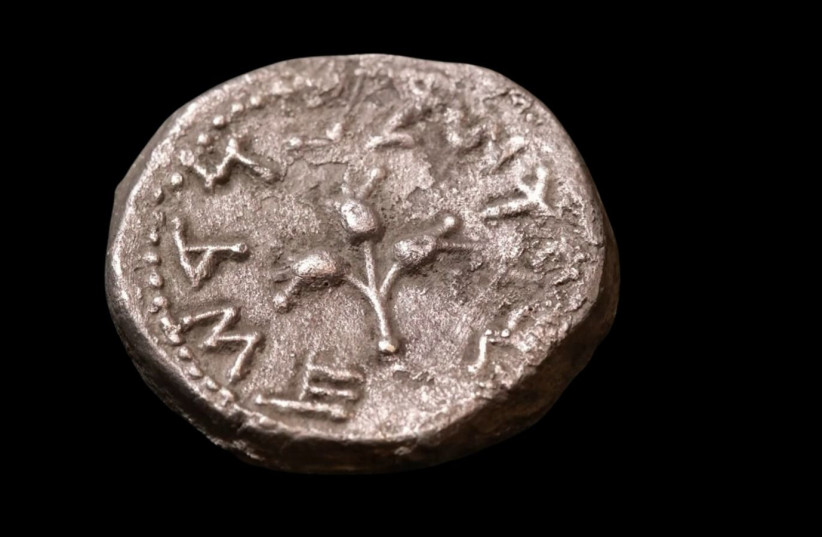
On one side of the coin, “The Holy Jerusalem” appears – the word “Holy” spelled without a vowel, reflecting the development of the writing on the coins that appeared later on in the Revolt as “The Holy Jerusalem” with the vowel. Three pomegranates are depicted on the center of the coin – a familiar symbol as it was adopted on the old Israeli lira coin that was currency in the State of Israel until 1980.
.

The Judean Desert Cave Survey. / (credit: Emil Aladjem, Israel Antiquities Authority)

On the other side of the coin, a chalice (goblet) is depicted, above which the letter “Aleph” appears marking the first year of the outbreak of the Revolt and the value “Half-Shekel.” The chalice is a characteristic symbol on Jewish coins in currency towards the end of the Second Temple period.

Jewish rebels minted their own coins

These coins were minted in the values of shekel and half-shekel at the time of the First Revolt of the Jews against the Romans in Judea between the years 66 to 70 CE. 

In line with the Torah commandment prohibiting the depiction of images, the Jews used vegetal motifs and cultic and religious symbols on their coins, while the pagan population depicted symbols such as animals and the portrait of the ruling emperors and the Greek language that was the common language employed at the time. 

As part of the Jewish defiance, and the creation of an internal “Jewish Revolt economy,” the rebels minted their own silver and bronze coins depicting Jewish symbols.

The rebels decided to use the archaic Hebrew script that was current several hundred years earlier at the time of the First Temple Period instead of the Greek script that was used by the population in the country and the region at the time of the Second Temple. 

The leaders of the Jewish Revolt decided to defy the rulers and to mint silver coins autonomously, using the Hebrew script and without the image of the ruling Emperor. It seems that the coins were minted in Jerusalem, possibly in the Temple area.

According to Yaniv David Levy, the Israel Antiquities Authority’s numismatic scholar, “coins from the first year of the Revolt such as this one, are rare. During the Second Temple period, Jewish pilgrims used to pay a Temple Tax in half-shekel coins.

For about 200 years, Tyrian-minted coins (tetradrachms from Tyre, which in the Roman Empire took on an unusual role as the medium of payment for the Temple tax in Jerusalem) made of fine silver and a status symbol in the region, were used for this contribution. 

In the course of the revolt the rebels minted alternative coins inscribed with “Shekel Israel,” “Half-Shekel,” and “Quarter-Shekel” coins. It seems that the rituals in the Temple continued during the revolt and these coins were now used by the rebels.

The silver coin as found, showing the reverse face with three pomegranates and the surrounding inscription “The Holy Jerusalem”. (credit: Emil Aladjem, Israel Antiquities Authority)

Amir Ganor, a director of the Judean Desert Survey and Excavation Project noted that “the find of the silver Year-One half-shekel in the course of a controlled archaeological activity is a rare event in Israel and in the Judean Desert in particular.

This find emphasizes the importance of the controlled professional survey of the whole area. Every new find contributes to the history of the people and the country. Were it not for the survey, the coin may have been found by antiquity looters and sold on the antiquity market for the highest price offered. Over the six years of the project, we have recorded over 800 caves and have found thousands of significant finds.”

Heritage Minister Rabbi Amichai Eliyahu added that “the exciting discovery brings further evidence of the deep and indisputable connection between the Jewish people and Jerusalem and the Land of Israel. This amazing find is another strong sign of our people’s roots in the Land of Israel.”

Israel Antiquities Authority director Eli Escusido concluded that the discovery of the half-shekel coin is yet another gift that we have bestowed on the Israeli nation – first-hand evidence of a turbulent period in the history of our people 2,000 years ago, in a period of extremity and discourse that divided the nation and led to destruction.

After two millennia, we have returned to our country, and Holy Jerusalem is again our capital. The find of the coin at these times, is a reminder for us of what happened in the past, teaching us the importance of working towards unity.”    


Zawartość publikowanych artykułów i materiałów nie reprezentuje poglądów ani opinii Reunion’68,
ani też webmastera Blogu Reunion’68, chyba ze jest to wyraźnie zaznaczone.
Twoje uwagi, linki, własne artykuły lub wiadomości prześlij na adres:
webmaster@reunion68.com


Israeli Protests Were Decades in the Making; Now the Country Must Determine Its Future

Israeli Protests Were Decades in the Making; Now the Country Must Determine Its Future

Lev Stesin


David Ben-Gurion declares Israel’s independence, at the Tel Aviv Museum, May 14, 1948. Photo: Wikimedia Commons.

The dramatic events in Israel are not just the result of proposed judicial reforms. They are not caused by the bill to eliminate application of the “reasonableness doctrine.” The reforms are the catalyst of the crisis, which has been slowly building over the past few decades, and finally erupted in full force with the legislative initiatives of the current government. Just like the bankruptcy process, so vividly described by Ernest Hemingway, it first occurred gradually and then suddenly. The genesis of the problem lies at the moment of Israel’s creation and the genius of Israel’s founding father, David Ben-Gurion.

From the destruction of the Second Temple until the creation of the State of Israel, Jews had not existed as one nation. The Jews of the Holy Land, on the eve of Israel’s declaration of independence in 1948, were a group of very different communities tied together by the history and the great catastrophe of the Holocaust. Ben-Gurion understood that very well. It was an issue that had to be successfully solved, even if temporarily, for the new state to win the war and survive in the inhospitable environment of the Middle East and the Cold War. The future first prime minister was one of the best students of history this world has witnessed, and he applied his knowledge to solve the problem to the best of his abilities.

By the end of the Second World War, it was clear that the most prosperous and successful form of state structure was a stable democracy. Not just a democracy, but one that can survive and grow without imploding, disintegrating, or becoming a tyranny of the majority. Yet the question of what democracy represents is not simple. Some would argue that it is a system of government that guarantees freedom to individuals under its jurisdiction. It does do that, but only indirectly.

Unless one believes in direct democracy, along the lines of the Ancient Greek city states, that guarantee is unattainable and practically destructive. A democracy is a complex written, or unwritten as is the case with Israel, agreement between diverse social, cultural, and economic groups. A democracy balances at times diverging interests of each of those groups, maintaining an equilibrium and stability necessary for any social structure to exist. That creates an environment that all groups want to maintain, because it benefits each group separately and all groups together. Personal freedoms are a direct byproduct of this very delicate balance of forces, even if one’s personal freedom is part of the written compact between the groups.

However, every stable democracy is different, because its contours depend on the groups comprising it. Israel is no exception. Back in 1948, Ben-Gurion faced daunting tasks: there were a myriad Jews of different cultural, social, and economic backgrounds comprising the nascent nation (if one believes Polish and Romanian Jews are similar, one really needs to wake up).

It is fashionable nowadays to accuse Ben-Gurion of making a tragic mistake by exempting the Haredim from military service, and, for all practical purposes, allowing them semi-autonomy. Ben-Gurion did not like that choice. Yet he understood that at that junction of Jewish history, he was obligated to make everyone, no matter how reluctant, part of the democracy of the new state.

The makeup of the Israeli people have been changing, and the old assumptions, the pillars of democracy, have started to crumble. The compact of 1948 was made with the Israeli people, but the Jewish state’s population has changed. In this regard, Israel’s situation is not unique. The United States is undergoing a very similar process. The American system of government, with its peculiar characteristics such as the Federal system and the Electoral College, was designed and worked very well for the people who for centuries called themselves Americans. But Americans have changed dramatically in the past 50 years, and the previous stability of American democracy is under enormous stress. In Israel’s case, the minority groups previously satisfied with the status quo are asking for more power due to many reasons, the demographic one being of great importance. The problem is they are not the majority, as the current government misleadingly claims. Yet, the old compact appears to be broken for good.

The old divide of Israel’s politics was about war and peace. It is clear, based on the makeup of the pro- and anti-reform camps, that this is no longer the case. The question of what Israel is, not even who is a Jew, is the new political divide. No matter if some or all proposed reforms pass, the crisis will only deepen. Historically, the societies finding themselves in situations similar to today’s Israel have found only a few options out of the crisis. One is the civil war. After blood is spilled, either the country falls apart or, exhausted by the strife, people find a new paradigm for coexistence. Fortunately, Israel is not ready for that. The other option is a dramatic political realignment with the clear majority, via a compromise with the minority, setting new parameters for the democracy, perhaps a constitution. Israel is back to the drawing board of 1948, but without the wisdom of Ben-Gurion.


The author lives and works in Silicon Valley, California. He is a founding member of San Francisco Voice for Israel.


Zawartość publikowanych artykułów i materiałów nie reprezentuje poglądów ani opinii Reunion’68,
ani też webmastera Blogu Reunion’68, chyba ze jest to wyraźnie zaznaczone.
Twoje uwagi, linki, własne artykuły lub wiadomości prześlij na adres:
webmaster@reunion68.com

What is the next stage of the Israeli government’s judicial reform?

What is the next stage of the Israeli government’s judicial reform?

MICHAEL STARR


The next bill that the coalition will likely promote is on the Judicial Selection Committee, perhaps the most contentious issue of judicial reform.
.

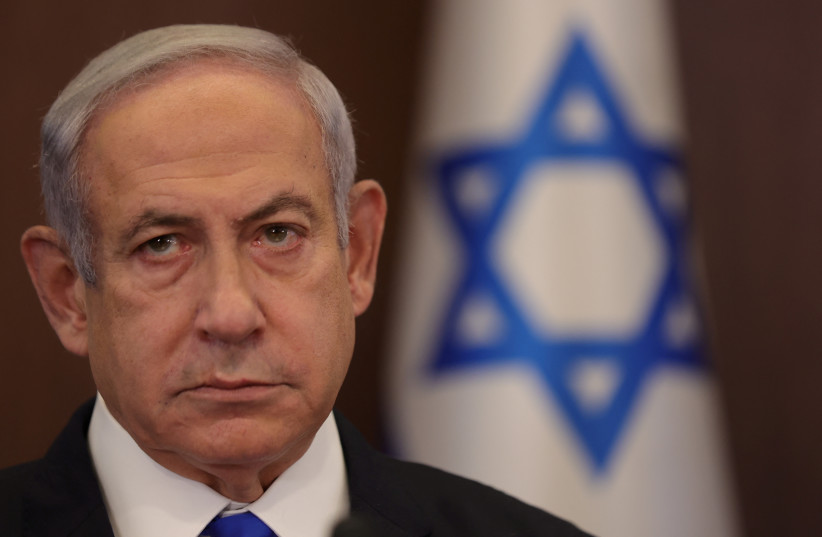
Israeli Prime Minister Benjamin Netanyahu attends the weekly cabinet meeting at the prime minister’s office in Jerusalem, 25 June 2023. / (photo credit: ABIR SULTAN/POOL/VIA REUTERS)

With the passing of the reasonableness standard bill on Monday, leaders on both sides of the debate have indicated that they believe that it is a non-decisive battle in a longer war.

The next bill that the coalition will likely promote, if negotiations don’t resume as Prime Minister Benjamin Netanyahu proposed on Monday night, is on the Judicial Selection Committee.

The Judicial Selection Committee is perhaps the most contentious issue of judicial reform, a matter where experts, NGOs and negotiating parties have said were unable to even approach consensus.

Critics of the current system believe that the panel for appointing judges is not accountable enough to voters, and that the Israel Bar Association and judiciary representatives on the panel form a self-interested majority block that in essence allows judges to self-select their replacements and promotions.

The coalition submitted a bill to change the composition and rules of the committee at the beginning of the year, but its legislative path was blocked by Prime Minister Benjamin Netanyahu in later March just before its final Knesset readings, in response to massive protests that brought the country to a standstill.

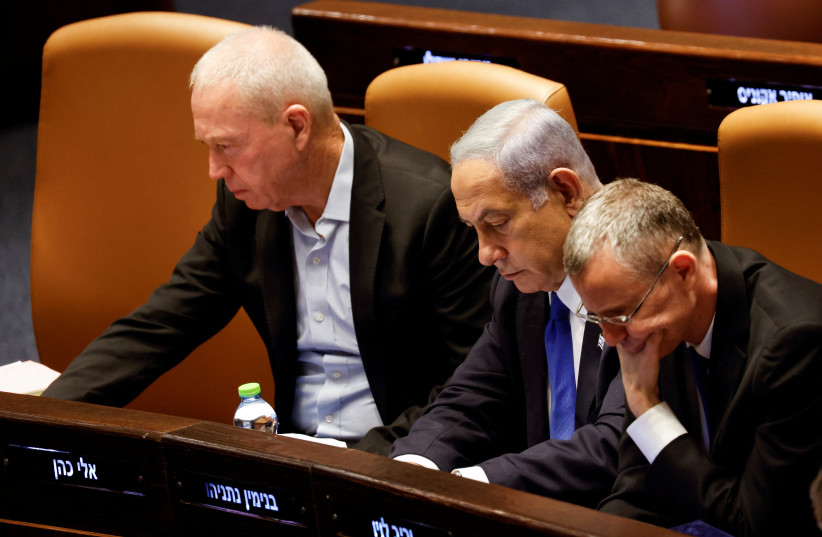
Prime Minister Benjamin Netanyahu sits between Justice Minister Yariv Levin and Defense Minister Yoav Gallant at the Knesset plenum in Jerusalem July 24, 2023 (credit: REUTERS/AMIR COHEN)

The bill would have removed the Bar Association representatives and introduced an expanded panel with more elected officials. Anti-reformists have noted that the roster and new voting rules would have created an automatic majority for any coalition.

Israeli media reported that Justice Minister Yariv Levin, who first announced the reform plan in January, said in closed conversations that after the Knesset recess that starts on July 30, they coalition would next advance the proposal on the Judicial Selection Committee.

Levin is also under pressure to alter the composition as soon as possible. The justice minister said that he would not convene the Judicial Selection Committee until the panel had been reformed.

Legislation amid judicial reform negotiations

Judicial reform negotiations broke down in June over the coalition’s refusal to convene the judicial selection committee to begin appointing judges. This came after the June 20 Bar election saw an anti-reformist camp assume the chairmanship and the majority of the National Council that selects the Bar’s Judicial Selection Committee representatives.

Following this, the Knesset was set to choose its own representatives. Only an opposition member, Yesh Atid MK Karine Elharrar was chosen, while the second seat remained vacant for weeks until Otzma Yehudit MK Yitzhak Kreuzer was elected. The opposition claimed that the delays were part of measures to avoid convening the committee.

Levin has continued to delay the convening of the committee, but now faces added pressure with Yesh Atid and NGOs on Tuesday filing petitions to the High Court of Justice demanding that the panel be assembled. 

The opposition previously said that it would not return to the negotiation table until the committee was convened, the commitment to this precondition may waver with the passing of the first judicial reform bill. If the opposition remains steadfast about this precondition, Netanyahu’s proposal for negotiations until November may remain unheeded, and another bill may be put forward.

It is unlikely, however, that the coalition will advance the previous Judicial Selection Bill. The old bill has been on the Knesset table since March, and could have been advanced with a renewed judicial reform push, but the coalition declined to do so – instead opting for a new bill on a less contentious issue.

At the end of June, Netanyahu told the Wall Street Journal that he would seek to revise the Judicial Selection Committee. This is supported by the coalition’s decision not to advance the old legislation.

While the reasonableness saga is over with the Knesset recess at the end of the month — pending High Court petitions — and dependent on what happens in the months leading up to the Knesset’s return, a new Judicial Selection Committee chapter may begin for the reform.


Zawartość publikowanych artykułów i materiałów nie reprezentuje poglądów ani opinii Reunion’68,
ani też webmastera Blogu Reunion’68, chyba ze jest to wyraźnie zaznaczone.
Twoje uwagi, linki, własne artykuły lub wiadomości prześlij na adres:
webmaster@reunion68.com


Israel is entering a civil war, former prime minister Ehud Olmert says

Israel is entering a civil war, former prime minister Ehud Olmert says

JERUSALEM POST STAFF


Ehud Olmert, the only Israeli prime minister who was convicted of a criminal offense and served a prison sentence, has hitched his cart of a political comeback to the horses of the anarchy, alongside another has been, former prime minister Ehud Barak. On Monday, their side was handed a clear defeat which no burning of bonfires in the streets and clashes with police can erase. And so, without hesitation, Olmert declared a civil war on UK TV’s Channel 4, shocking his interviewer.

Here are the full 58 seconds of his declaration, please note the host’s shock, to which Olmert responds by softening the term from “civil war” to “civil disobedience.” But don’t let that fool you, the man who’s been watching Netanyahu with dripping envy since 2006, like Barak, who’s been dripping the same envy juice since 2000, wants a civil war.


“There is a threat. This is a serious threat,” the former prime minister said. “It’s never happened before and we are going into a civil war now.”
.

Ehud Olmert at the Jerusalem Post Conference in New York, September 12, 2022 / (photo credit: MARC ISRAEL SELLEM)

In an interview with British news outlet Channel 4 News, former Israeli prime minister, Ehud Olmert, declared that Israel is going into a civil war following Monday’s vote to pass a bill severely restricting the use of the reasonableness standard.

“There is a threat. This is a serious threat,” Olmert said. “It’s never happened before and we are going into a civil war now.”

Many within Israeli society have been expressing their displeasure regarding the government’s judicial reforms. Hundreds of thousands of Israelis have taken to the streets over recent weeks, thousands of IDF reservists have threatened to quit volunteer service, and following the passing of the bill, Israeli medical personnel have elected to strike in protest of the new law. Still, civil war has not broken out in Israel, and Olmert appeared to walk back his statement.


“Civil war?” the Channel 4 News anchor asked Olmert.

“Yeah, I mean, civil disobedience with all the possible ramifications to the stability of the state and to the ability of the government to perform and to the obedience of the large part of the Israeli population,” Olmert clarified.

Ehud Olmert at the Netanyahu’s defamation trial against him, June 12, 2022. (credit: AVSHALOM SASSONI/MAARIV)

Olmert went on to explain that the civil disobedience is being directed toward “a government which is perceived by a large part of the population to be illegitimate. [The] government has decided to threaten the foundations of Israeli democracy. And this is not something that we can accept or that we can tolerate.”

Commenters slam Olmert’s conviction

Many comments on the Channel 4 News Twitter video appeared unimpressed by Olmert’s remarks.

“This old man is a convicted criminal who was in prison because he took a bribe! in cash envelopes, and you believe such a man?!” replied the commentator. Other comments similarly slammed the former prime minister for his conviction.

“Prisoner number 9032478,” another comment read. 

Olmert is not the first to suggest that Israel is on the path to civil war. Many of Israel’s opponents have celebrated what they see as Israel being on its path to destruction. Others have proposed courses of action that Israeli leadership could take in order to mollify that large portion of the country that is upset over the passing of the judicial reform.


Zawartość publikowanych artykułów i materiałów nie reprezentuje poglądów ani opinii Reunion’68,
ani też webmastera Blogu Reunion’68, chyba ze jest to wyraźnie zaznaczone.
Twoje uwagi, linki, własne artykuły lub wiadomości prześlij na adres:
webmaster@reunion68.com

Israel Daily News– July 24, 2023

Israel Daily News– July 24, 2023

ILTV Israel News


A dramatic day in Israel today..unprecedented scenes outside the Israeli Knesset which saw protestors laying down in the streets in Jerusalem as the coalition advanced with the reasonableness bill – a part of its legal reform. And in the midst of everything, Prime Minister Benjamin Netanyahu was released from the hospital with doctors ordering 48 hours of rest following the implantation of a pacemaker. And much more


Zawartość publikowanych artykułów i materiałów nie reprezentuje poglądów ani opinii Reunion’68,
ani też webmastera Blogu Reunion’68, chyba ze jest to wyraźnie zaznaczone.
Twoje uwagi, linki, własne artykuły lub wiadomości prześlij na adres:
webmaster@reunion68.com